Skip to content

Virginia

Williamsburg with Kids

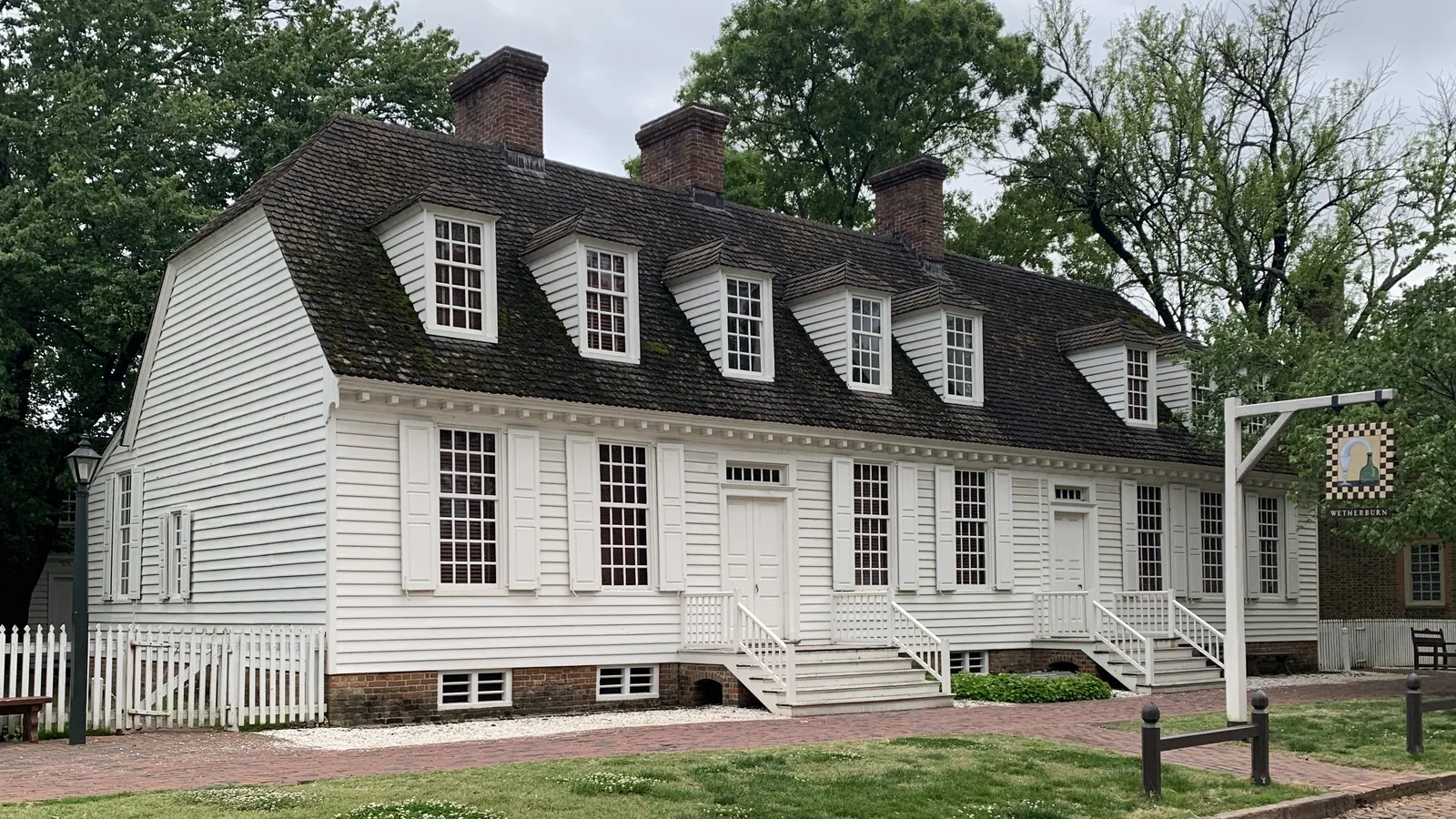
Williamsburg was Virginia's colonial capital, and its centre has been restored and partly reconstructed as a working eighteenth-century town: several hundred acres of houses, taverns and trade shops staffed by costumed interpreters who blacksmith, print, cooper and argue politics in character. It sits at one corner of the Historic Triangle with Jamestown and Yorktown, linked by a parkway that carries no lorries and no advertising, and a large theme park with a water park beside it is fifteen minutes away — which is the unusual combination that makes the area work for a family with children of different ages. The history here is not decorative. About half of Williamsburg's eighteenth-century population was enslaved, the Foundation has interpreted that directly since the late 1970s, and its programmes on slavery, on the town's Black church and on the lives of enslaved tradespeople are part of the main site rather than an annexe to it. The trade-offs are heat and humidity from June to August, an admission structure that rewards multi-day tickets and punishes a single afternoon, and almost total dependence on a car outside the historic streets themselves.

Best for ages
5+
Suggested stay
3–5 days
Best months
Apr–Jun, Sep–Oct
Daily budget
€330

Mid-range, family of four

Why Williamsburg works with children

  • History demonstrated rather than displayed

    Trade shops work with period tools and materials, so a child watches a gun being stocked or a wig being made rather than reading a label about one.

  • A theme park and a colonial capital in one base

    Fifteen minutes separates the Historic Area from a large seasonal theme park and a summer water park, which is what keeps mixed-age families together.

  • A parkway built as the link between the three sites

    Twenty-three miles of the Colonial Parkway join Jamestown, Williamsburg and Yorktown, with no commercial traffic, no junctions and no billboards.

  • The streets themselves are free to walk

    Admission buys the building interiors and the programmes; walking the length of the main street, watching the fife and drum and visiting the shops does not require a ticket.

  • Slavery interpreted at the main sites, not at the margins

    The archaeology of the town's First Baptist Church and the lives of enslaved residents are part of the core programme, with the Foundation publishing its own age guidance for the harder material.

Where to stay

Best areas in Williamsburg for families

4 areas cover most trips here; the difference is mainly families who want to walk to the eighteenth century versus a quieter, waterside base.
  • Merchants Square and the Historic Area edge

    Best for families who want to walk to the eighteenth century

    The shopping square at the western end of the Historic Area, with the university campus beside it and inns and guesthouses on the surrounding streets. The most expensive base, and the only one where an evening programme does not require driving back in the dark.

  • Richmond Road and Lightfoot

    Best for budget stays and self-catering

    The highway strip north-west of town, lined with suite hotels, supermarkets, pancake houses and outlet centres. It is cheap and practical and there is nothing to walk to — every single outing starts with the car.

  • Route 60 East and Kingsmill

    Best for theme-park-led trips

    The corridor between the Historic Area and the theme park, with condo and villa rentals, golf-resort accommodation and pools. It suits families whose centre of gravity is the park rather than the town.

  • Yorktown and the York River

    Best for a quieter, waterside base

    A small waterfront village at the far end of the parkway with a public beach on the river, about twenty-five minutes from Williamsburg. Calmer and cheaper, with far fewer places to eat.

Family hotel picks in Williamsburg

  • Inn or guesthouse at the edge of the Historic Area
    Merchants Square / Historic AreaHigher-end

    Inn or guesthouse at the edge of the Historic Area

    Walking into the eighteenth-century streets from the door is what makes the evening programmes and the early-morning empty town possible without driving and parking twice a day.

    • Walking distance to the Historic Area and Merchants Square
    • Evening programmes reachable on foot
    • Pools and lawns at the larger properties
    • Some packages include Historic Area admission

    Fitting a family in

    Two-queen rooms sleeping four are standard; colonial-style guesthouses within the Historic Area itself are small, individually shaped and often only sleep two or three.

    Watch out. The most expensive base in the area by a clear margin, and the theme park is still a fifteen-minute drive away, so a car is needed regardless. Historic guesthouses mean stairs, period furniture and occasionally no lift, and some have restrictions that suit couples rather than families with young children.

  • Suite hotel with a kitchenette on the Richmond Road strip
    Richmond Road / LightfootBudget

    Suite hotel with a kitchenette on the Richmond Road strip

    The cheapest practical base for a family doing several days of ticketed attractions, with a kitchenette that cuts the food bill and free parking for the car that every outing needs anyway.

    • Kitchenette or full kitchen in most suites
    • Free parking and easy access to the Historic Area and the theme park
    • Outdoor pools
    • Supermarkets, outlets and family restaurants along the same road

    Fitting a family in

    One- and two-bedroom suites with sofa beds sleeping four to six are the common product, and some properties have two-room layouts aimed squarely at families.

    Watch out. This is a highway strip: there is nothing to walk to, every outing including dinner starts with the car, and the road is busy and unattractive. Quality varies sharply between properties on the same stretch, and the older motels here are much older than their photographs suggest.

  • Condo or villa rental with a pool near the theme park
    Route 60 East / KingsmillMid-range

    Condo or villa rental with a pool near the theme park

    Separate bedrooms, a full kitchen and a pool close to the theme park, which suits families whose trip is built around park days with the history as the second half.

    • Full kitchen and laundry
    • Pools, often several on a single resort property
    • Five to ten minutes from the theme park
    • Two and three bedrooms for the price of one hotel room in the Historic Area

    Fitting a family in

    Two-bedroom villas sleeping six with a sofa bed are the standard unit across the resort developments on this corridor.

    Watch out. Many of these are timeshare developments, and booking directly sometimes comes with a sales presentation attached — worth confirming before arrival. The complexes are spread out, so the pool can be a walk from the unit, and resort fees are frequently charged on top of the nightly rate.

All family stays in United States

Some links on this page are affiliate links. If you book through one, the price is the same for you and we may earn a commission. How this works.

Things to do in Williamsburg with kids

  • Colonial Williamsburg Historic Area
    Culture

    Colonial Williamsburg Historic Area

    Williamsburg

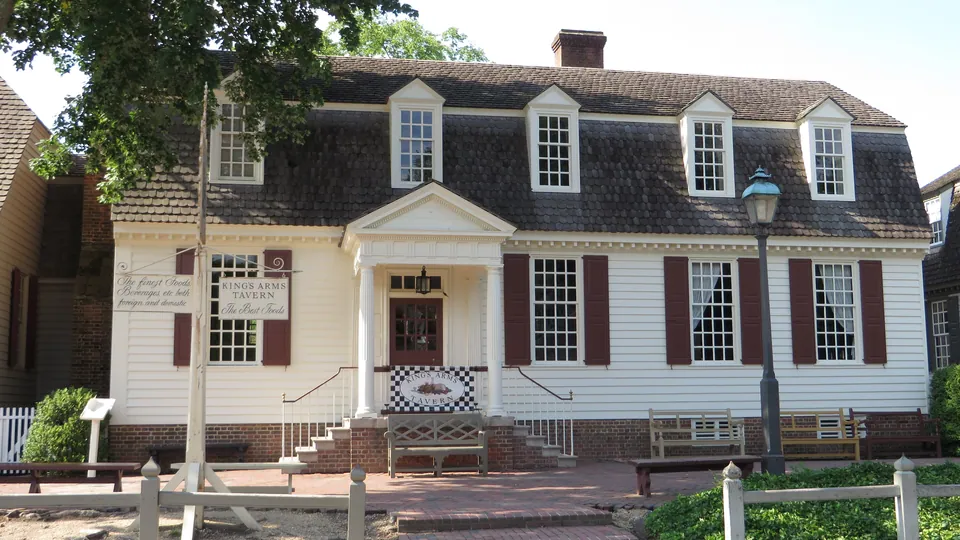
    Several hundred acres of restored and reconstructed eighteenth-century town — a mile-long main street of houses, taverns, a capitol and a governor's palace, with costumed interpreters running working trade shops in blacksmithing, printing, bookbinding, gunsmithing, cooperage and tailoring. Slavery is interpreted throughout, including archaeology at the site of the town's First Baptist Church, one of the oldest Black congregations in the country.

    Ages
    6–17
    Time
    7h
    Adult, from
    €50

    Good to know. The streets, the militia drills and the exteriors are free to walk; admission covers building interiors, trade shops and programmes, and the per-day cost drops steeply on a multi-day pass. It is an unshaded mile of open ground, which is hard in July and August humidity. The Foundation publishes guidance on which programmes it considers suitable for younger children, and some evening first-person programmes about slavery are explicitly aimed at older children and adults.

  • Busch Gardens Williamsburg
    Theme parkBook ahead

    Busch Gardens Williamsburg

    Williamsburg

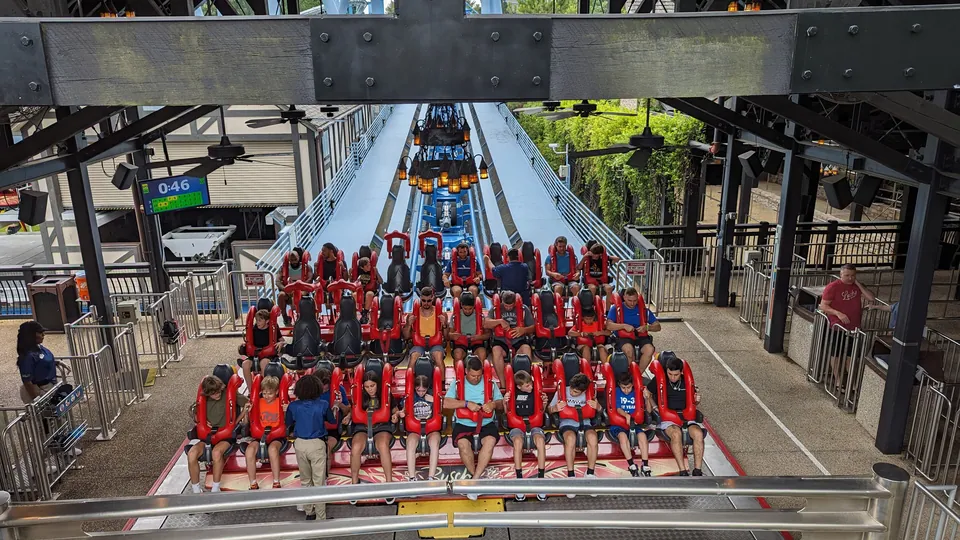
    A large theme park laid out as a set of European villages across steep wooded ravines, with a substantial coaster line-up, a well-developed area for small children, live shows and a railway and skyride that link the sections.

    Ages
    3–17
    Time
    8h
    Adult, from
    €75

    Good to know. Height, not age, decides what a child can ride, and several of the headline attractions sit in the region of 100 to 140 cm — worth measuring at home against the park's published minimums before committing to a ticket. The terrain is genuinely hilly and the walking is more demanding than at a flat park. The park operates on a season rather than year-round, and afternoon thunderstorms in summer suspend outdoor rides while lightning is close.

  • Jamestown: the settlement and the original site
    Culture

    Jamestown: the settlement and the original site

    Williamsburg

    Two separate attractions a mile apart. Jamestown Settlement is a state-run living-history museum with full-size replicas of the three ships that arrived in 1607, a recreated palisaded fort and a Powhatan village. Historic Jamestowne is the actual archaeological site, with the excavated fort footprint, ongoing digs and the artefacts recovered from them.

    Ages
    5–16
    Time
    4h
    Adult, from
    €25

    Good to know. They are different products with separate admissions and are frequently confused: under-tens get far more from the Settlement, where they can board ships and handle reproductions, while the original site suits older children interested in archaeology. Both are largely outdoors on exposed riverside ground with mosquitoes in summer. The museums here interpret the arrival of the first enslaved Africans in English North America in 1619 at nearby Point Comfort.

  • Yorktown Battlefield and waterfront
    Culture

    Yorktown Battlefield and waterfront

    Williamsburg

    The field where the 1781 siege ended the fighting of the American Revolution, with earthworks, artillery positions and a driving tour, alongside a state museum with an outdoor army encampment and farm, and a small waterfront village with a river beach below it.

    Ages
    6–16
    Time
    3h 30m
    Adult, from
    €18

    Good to know. The battlefield itself is a driving loop with stops on open ground and reads as empty fields to a young child; the museum's living-history encampment, where interpreters fire muskets and cannon, is what holds attention. The York River beach at the foot of the village is a genuinely useful way to end the day. It is a twenty-five-minute drive from Williamsburg along the parkway.

Some links on this page are affiliate links. If you book through one, the price is the same for you and we may earn a commission. How this works.

Getting around Williamsburg

A car is effectively required: the Historic Area, the theme park, Jamestown and Yorktown are separate places and nothing links them usefully by public transport. Within the Historic Area itself, private vehicles are excluded from the main street and shuttle buses run a loop between the visitor centre and the town, which is the sensible way to arrive — the visitor-centre car park is free with admission and the on-street parking around Merchants Square is not. The Colonial Parkway connects the three historic sites at a low speed limit with no commercial traffic, and its exposed-aggregate surface is noticeably noisy inside a car. Amtrak and long-distance buses reach Williamsburg's small station near Merchants Square, which is useful for arriving without a car and useless for getting around once there.

Williamsburg tips for families

  • Money & costs

    The admission structure rewards more than one day

    Colonial Williamsburg sells single-day and multi-day passes, and the per-day cost falls steeply with length. A family that buys a single day usually finds it covers a third of the trade shops and none of the evening programmes. Combination tickets that add Jamestown Settlement and the Yorktown museum exist and are worth pricing against separate entries before arriving.

  • With kids

    There are two Jamestowns, and they are different products

    Historic Jamestowne is the actual archaeological site of the 1607 fort, with excavations, foundations and a small museum of what came out of the ground. Jamestown Settlement, a mile away, is a state-run living-history museum with full-size ship replicas, a recreated fort and a Powhatan village that children can climb into. Under-tens almost always get more from the Settlement; older children with an interest in archaeology get more from the original site.

  • With kids

    Read the Foundation's own age guidance before booking

    Colonial Williamsburg interprets slavery directly, including first-person programmes in which interpreters portray enslaved people and the events of their lives. The Foundation flags which of these it considers suitable for younger children and which it does not, and that published guidance is a better basis for a decision than guessing from a title. The daytime trade shops and the archaeology at the First Baptist Church site are accessible to any age; some evening programming is deliberately not.

  • When to go

    Plan the outdoor half for the morning in summer

    Tidewater Virginia is hot and humid from June to August, the Historic Area is an unshaded street of open ground, and the theme park is built across steep wooded ravines with a lot of climbing between sections. Afternoon thunderstorms are common in high summer and suspend outdoor rides while lightning is nearby.

Williamsburg with kids: common questions

What age is Colonial Williamsburg good for?
From about six, and best from eight. The value is in demonstrations, conversation and detail, all of which need a child old enough to ask questions. Younger children enjoy the horses, the fife and drum, the militia muster and the open space, but the ticketed interiors are largely wasted on them.
How does Colonial Williamsburg deal with slavery?
Directly, and as part of the main site. About half the town's eighteenth-century population was enslaved, and the Foundation's programmes cover the work, family life, resistance and sale of enslaved people, alongside archaeology at the site of the town's First Baptist Church, one of the oldest Black congregations in the country. Some first-person programmes are explicitly intended for older children and adults, and the Foundation publishes guidance saying which.
Is Busch Gardens Williamsburg worth a day with young children?
It depends on height rather than age. The park has a well-developed area for small children, but several of its headline rides carry minimums in the region of 100 to 140 cm, so a family with a small child is buying access to a fraction of the park at a full-price ticket. Measuring against the park's published minimums before booking is the step that avoids the disappointment.
Do you need a car in Williamsburg?
Yes. The Historic Area, the theme park, Jamestown and Yorktown are separate destinations several miles apart, and there is no useful public transport between them. Shuttle buses only cover the Historic Area itself.
How many days does the Historic Triangle need?
Three to five. Two full days in the Historic Area, one for Jamestown or Yorktown and one for the theme park is the usual shape. Fewer than three days means either the history or the park gets dropped.

More of United States