 7 days€€Italy
Dolomites & Lake Garda
Mountains first, then swimming and a theme park
- Best for ages
- 5+
- Pace
- Moderate
- Driving
- Moderate driving
NatureTheme parksBeach
View trip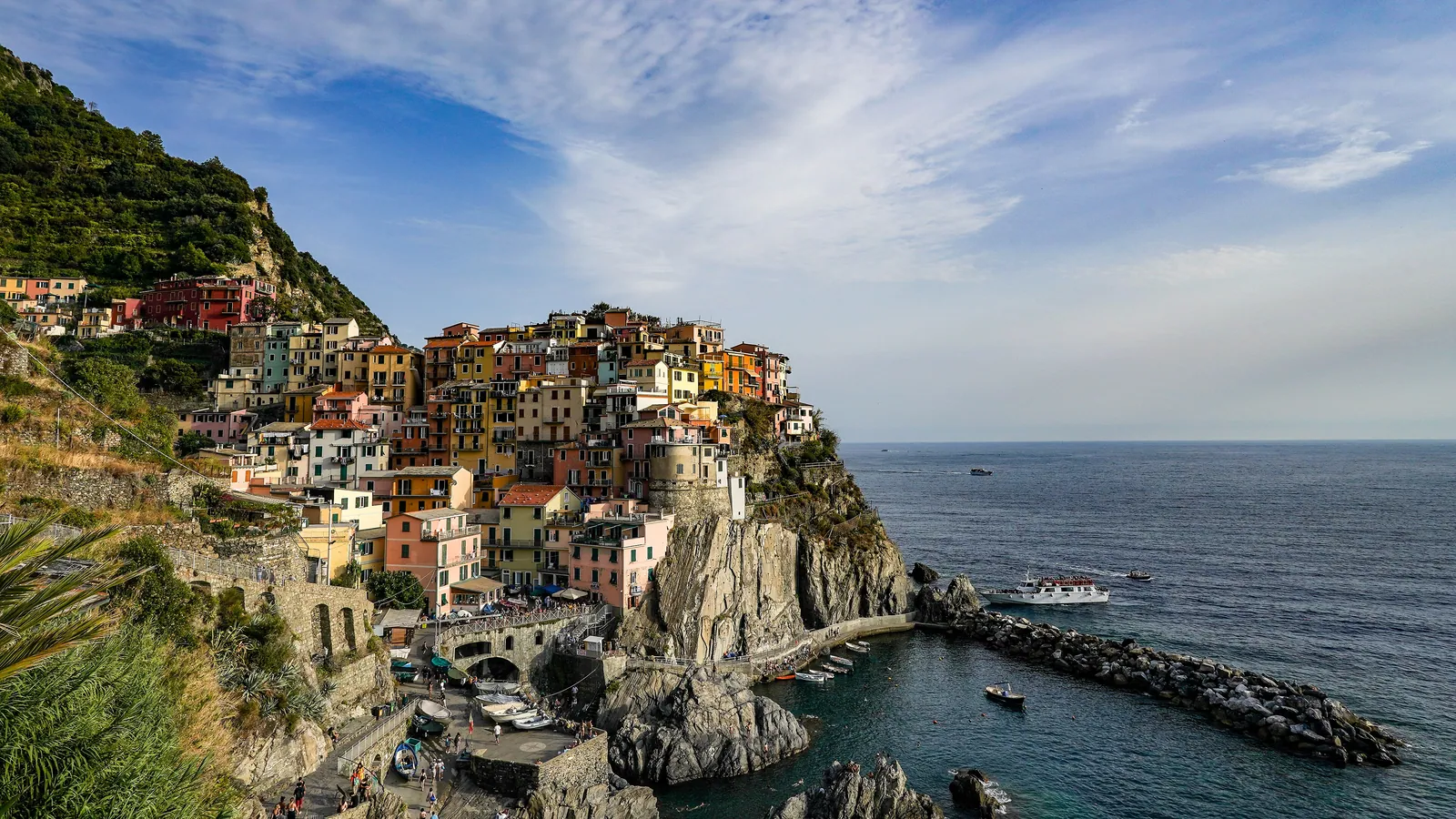
Europe · 10 destinations
Italy is unusually forgiving with children. Restaurants welcome them at any hour, the food needs no negotiation, and the country packs mountains, lakes, beaches and major cities into short distances. The main decision is which Italy you want: the Dolomites and the northern lakes give nature and cooler summers with a car; Rome and Florence give history at the cost of heat and queues. Many families combine one of each.
Suits up to 17
Mid-range
Pizza, pasta and gelato remove the daily negotiation that derails other destinations.
The Dolomites, Lake Garda and Venice are within a few hours of each other.
Restaurants seat families late without comment; most sites have reduced or free child entry.
Multiple airports mean you rarely need a long transfer on arrival day.
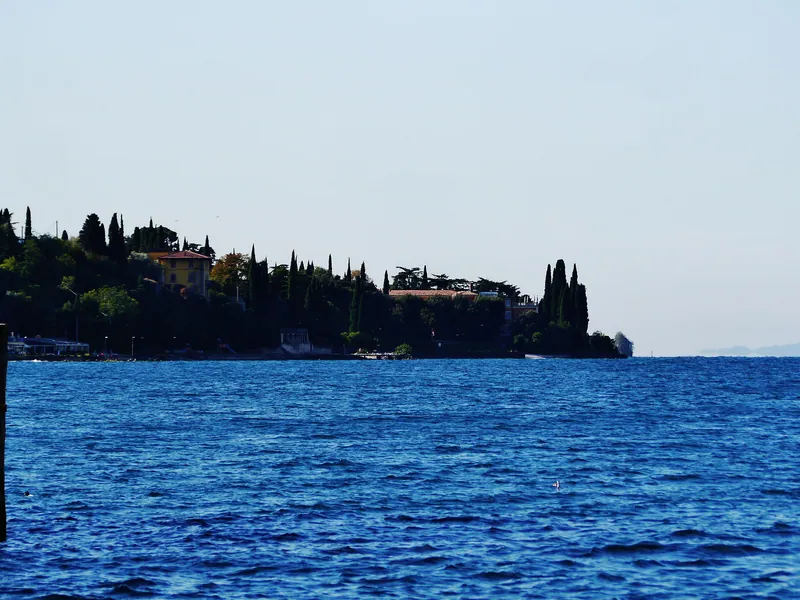
Lake Garda combines swimming, cable cars and one of Europe's better theme parks.
Northern towns and the lakes cost noticeably less than Rome, Venice or Florence.
7 days€€ItalyMountains first, then swimming and a theme park
 4 days€€Italy
Ancient history in short, well-timed doses
Pompeii, a volcano and a vertical coast
Where to stay
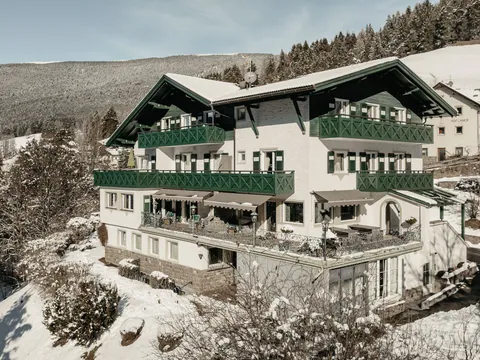
Alpine half-board hotels are built for families: large rooms, a pool, an early children's dinner and a lift station within walking distance.
Fitting a family in
Family rooms and interconnecting doubles are standard in this region, unlike most Italian cities.
Watch out. Many hotels close entirely between the summer and ski seasons, roughly October to early December and April to June.
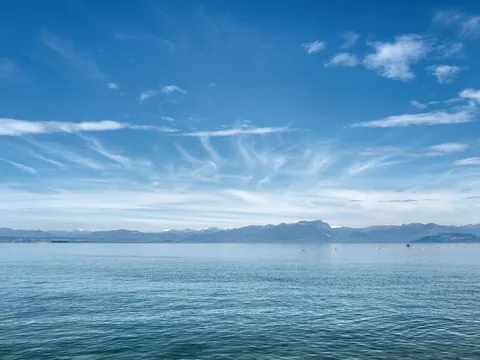
Self-catering with a pool is the most practical setup for a week on the lake, and the southern shore is closest to the theme parks and the flattest beaches.
Fitting a family in
Two-bedroom apartments are widely available and usually cheaper than two hotel rooms.
Watch out. August books out months ahead and carries minimum-stay rules, usually a full week starting Saturday.
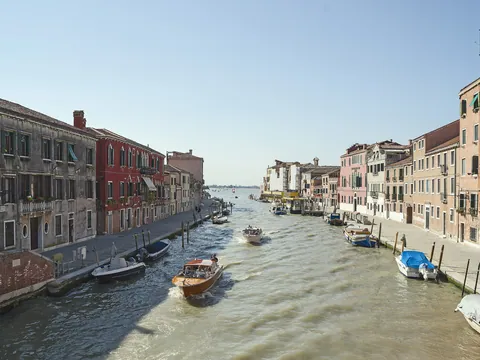
Venetian hotel rooms rarely sleep four and carry a premium near St Mark's. An apartment in the northern district gives space, a kitchen and everyday shops, with the station and the vaporetto stops a short walk away.
Fitting a family in
Two-bedroom apartments are widely available and cost less than two hotel rooms. Check how many bridges lie between the nearest vaporetto stop and the front door before booking.
Watch out. Almost no building has a lift, and luggage has to be carried over stepped bridges from the nearest boat stop. Ask for the exact walking route rather than the straight-line distance.
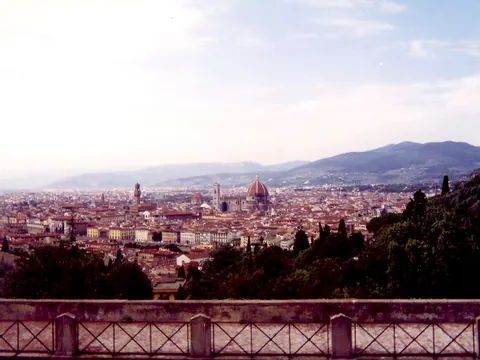
Five minutes' walk from the Ponte Vecchio but a working neighbourhood rather than a tourist centre, with quieter nights, lower prices and apartments that sleep four in a city where hotel rooms rarely do.
Fitting a family in
Two-bedroom apartments cost less than two hotel rooms and are far more common here than family rooms are anywhere in the city.
Watch out. Historic buildings, which usually means several flights of stairs and no lift. Santo Spirito square is lively and loud late on summer evenings.
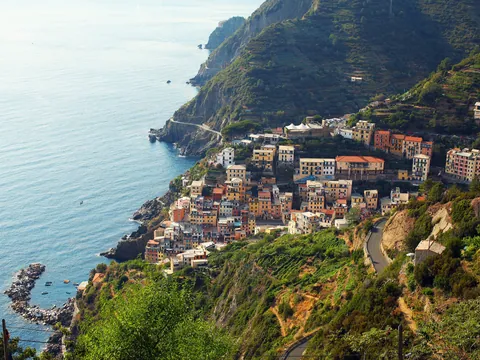
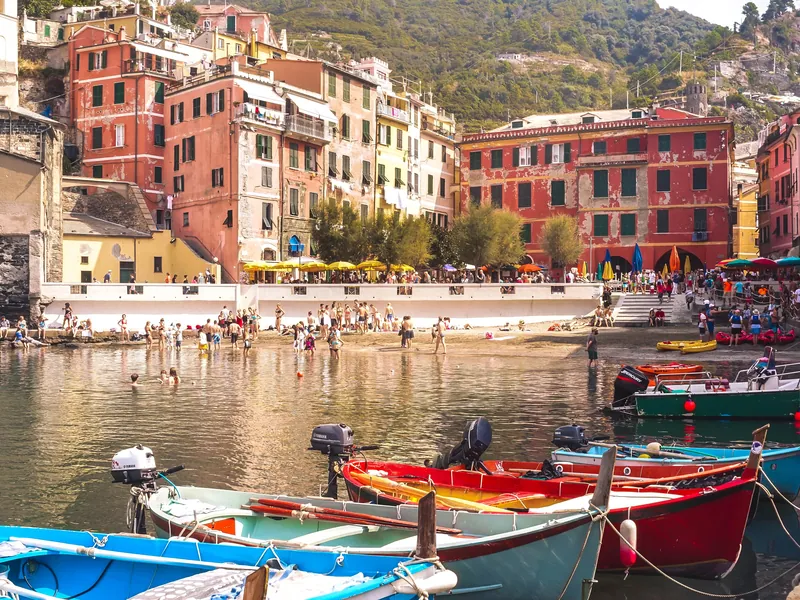
It is the only one of the five villages where luggage does not have to be carried up a staircase, and the only one with a real beach — which turns the afternoon into a swim rather than another train.
Fitting a family in
Triples and quads exist here but are limited in number, and family rooms sell out for the summer months well in advance.
Watch out. The most expensive of the five villages and the busiest beach in the park. The old town and the newer half are separated by a pedestrian tunnel, so check which side a property sits on before booking.
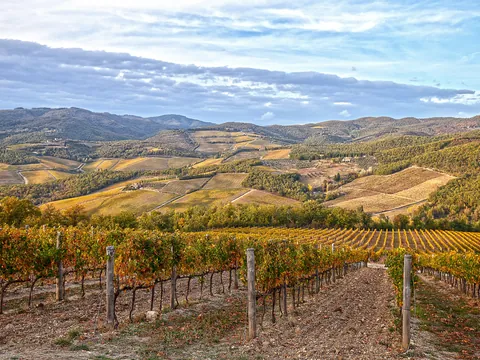
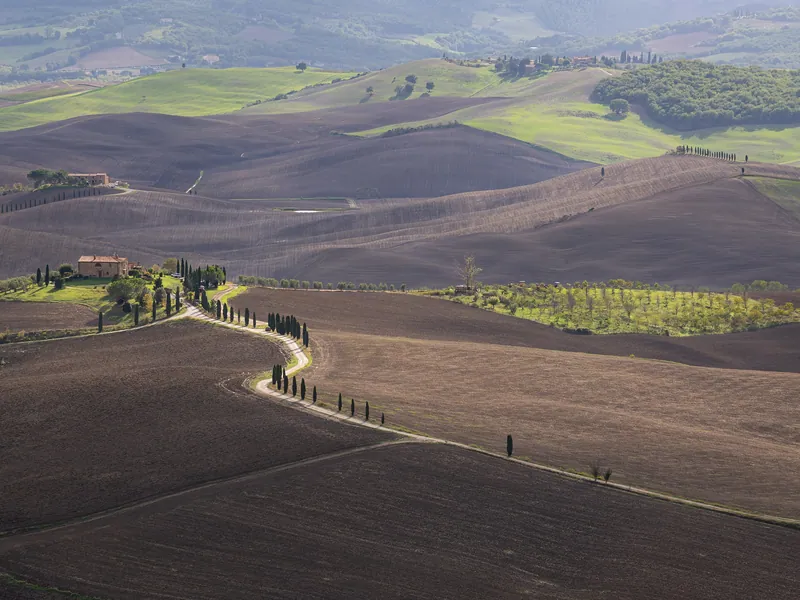
A working farm with self-catering apartments and a pool is the setup the whole region is built around: space for children, a kitchen, somewhere to swim in the afternoon, and Florence and Siena both within an hour.
Fitting a family in
Two-bedroom farm apartments are the standard unit here and cost less than two hotel rooms in either city.
Watch out. July and August are usually sold Saturday to Saturday only and book out months ahead. Access is often several kilometres of unlit gravel road, and farm pools are frequently unfenced and unsupervised.
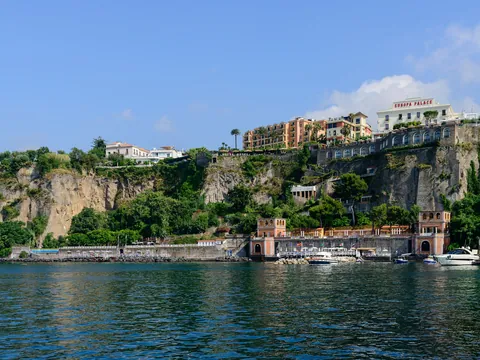
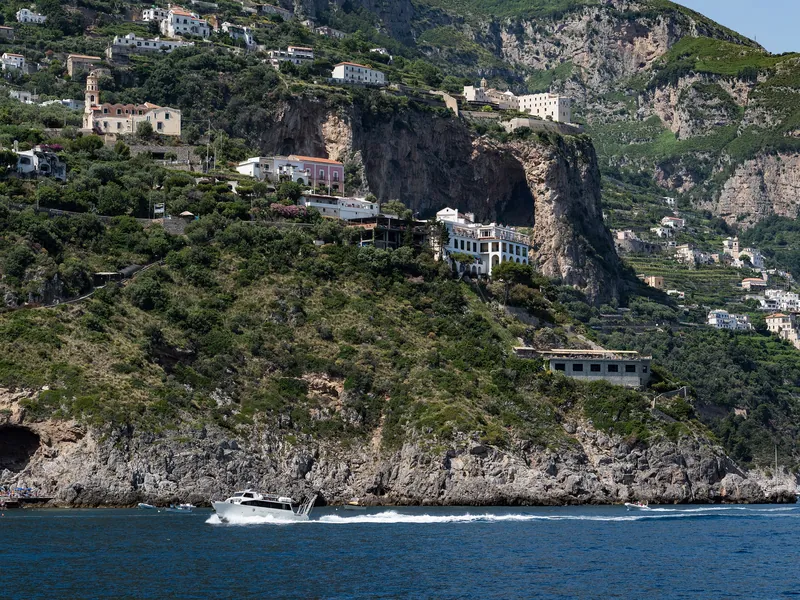
Sorrento is the one flat, walkable town on the peninsula and the hub for everything else: trains to Pompeii and Naples, ferries to Positano, Amalfi and Capri, and buses along the coast road for the days the boats are not running.
Fitting a family in
Triples, quads and connecting rooms are far more common here than anywhere on the Amalfi side, where most properties are small and stepped.
Watch out. Sorrento has no conventional beach — swimming is from wooden platforms over the rocks, reached by lifts or long staircases. The town is busy and loud in summer, and the cliff-top position means a lift or a climb every time you want the water.
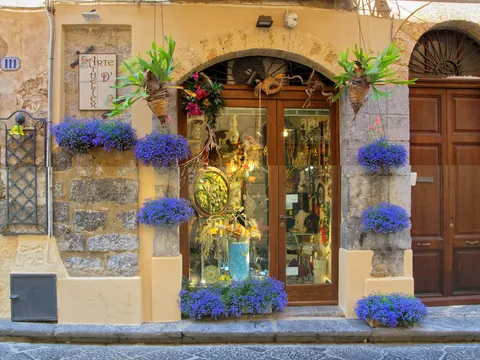
It is the rare Sicilian base that works without driving every day: a long sandy beach, a walkable town with an ordinary high street and a Norman cathedral, and a station on the Palermo line for the days that need a change of scene.
Fitting a family in
Two-bedroom apartments are the standard local product and cost less than two hotel rooms; hotel family rooms exist mainly in the larger properties outside the old town.
Watch out. The old town is a grid of stepped lanes closed to vehicles and almost entirely without lifts, so luggage is carried the last stretch and parking is a paid lot on the edge. The beach is packed and the restaurants are at capacity through August, and the Rocca above the town is a steep unshaded staircase rather than a walk.
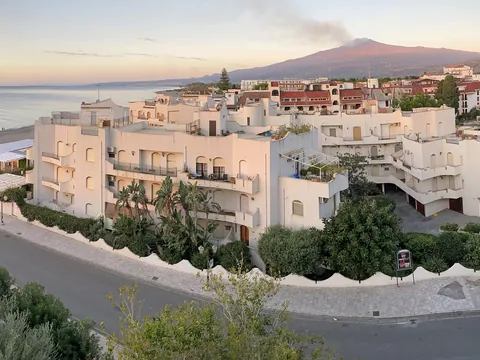
Taormina itself is steep, costly and short of family rooms. The seafront towns underneath it have half-board hotels with pools, a level promenade and a bus or cable car up to the town, which is the practical way to combine Etna, the theatre and a swim in one stay.
Fitting a family in
Family rooms, triples and interconnecting doubles are standard in the larger seafront properties, unlike in Taormina's small hillside hotels.
Watch out. The beaches are pebble and coarse sand rather than fine sand, so water shoes are close to essential. The coast road and the railway run directly behind the seafront in places, which makes a sea-facing room quieter than a road-facing one, and many properties close entirely from roughly November to March.
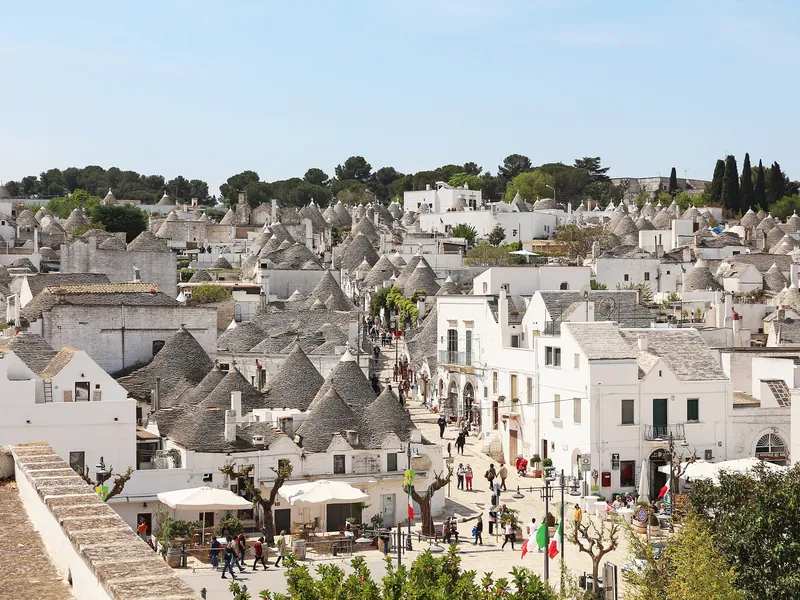
A converted farmhouse with a pool is the setup the whole region is built around: grounds to run in, a kitchen or an on-site restaurant, and the trulli towns 15 to 30 minutes away, so a day can be one town and a swim rather than a drive.
Fitting a family in
Two-bedroom apartments and family suites sleeping four to six are common, and some masserie let as a whole house, which works for two families travelling together.
Watch out. Most sit several kilometres down an unlit country lane with nothing walkable nearby, so every evening is either the on-site restaurant or a drive. Pools are often unheated and unfenced, the coast is a 30 to 40 minute drive, mosquitoes are a real nuisance on summer evenings, and July and August are usually sold as Saturday-to-Saturday weeks booked months ahead.
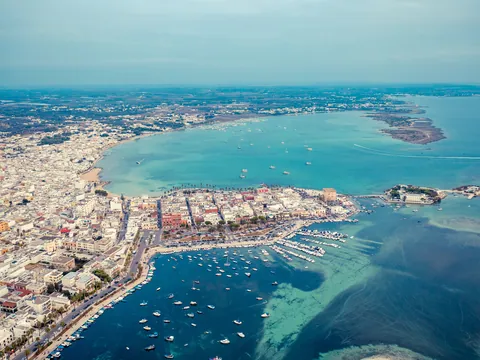
The long shallow beaches are the reason to come this far south, and a self-catering house within walking distance of one removes the beach car-park problem that defines July and August here.
Fitting a family in
Two- and three-bedroom holiday houses sleeping four to eight are the standard product, usually with a terrace or a garden and often a second bathroom.
Watch out. This is the far corner of the region — roughly two hours from Bari airport and an hour and a half from Brindisi — and it is emphatically seasonal, with many properties, restaurants and beach clubs shut from October to May. August books out months ahead at roughly double the June rate, air conditioning is not universal in older houses, and some listings described as near the sea are a ten-minute drive from it.
Some links on this page are affiliate links. If you book through one, the price is the same for you and we may earn a commission. How this works.
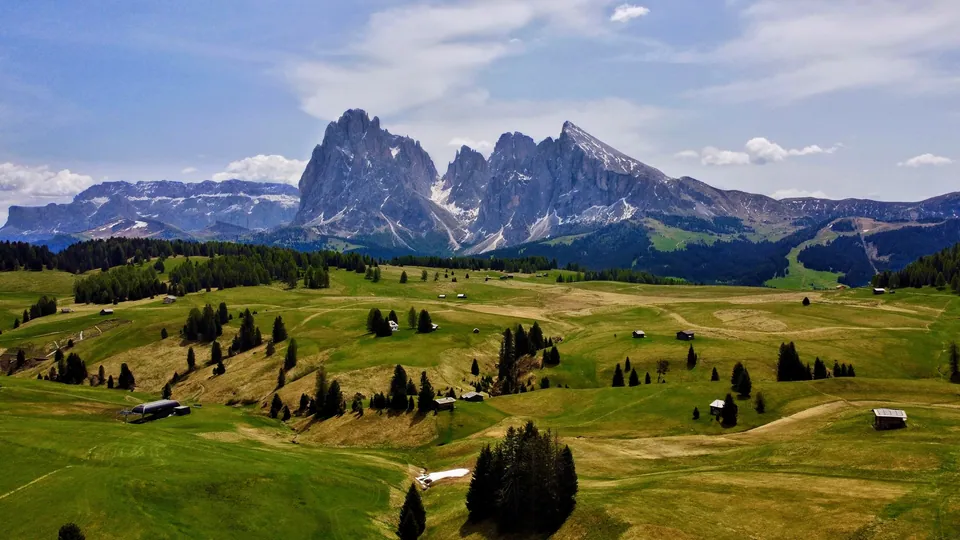
The Dolomites
Europe's largest high-altitude alpine meadow, reached by cable car from Ortisei. Near-level walking trails across open pasture with Dolomite peaks on all sides.
Good to know. Road access is closed to non-residents during the day in summer; use the cable car.
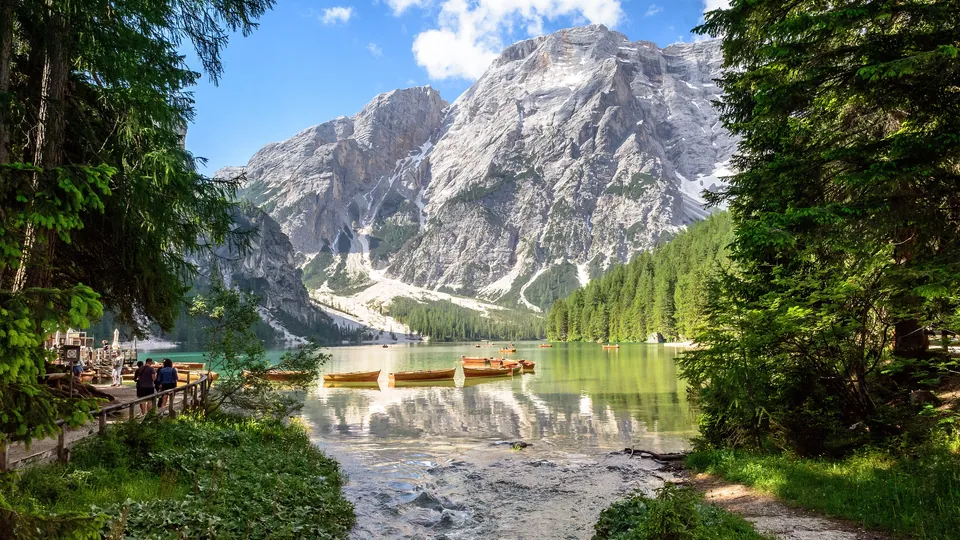
The Dolomites
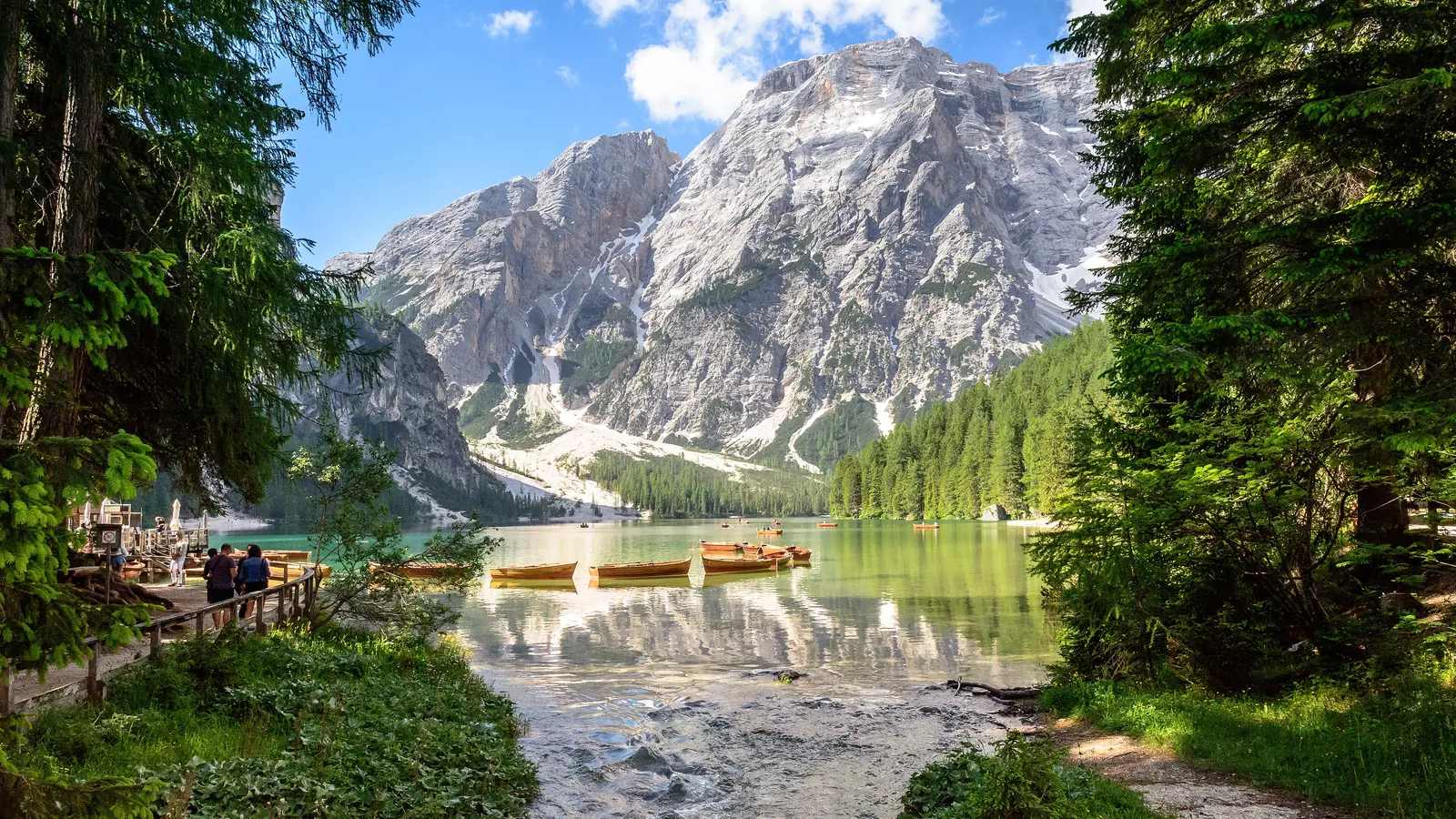
An emerald lake below sheer cliffs, with a flat 3.5 km loop path and rowing boats for hire — one of the few Dolomite walks a young child can complete unaided.
Good to know. Vehicle access is restricted in peak season, with pre-booked parking slots or a shuttle bus.
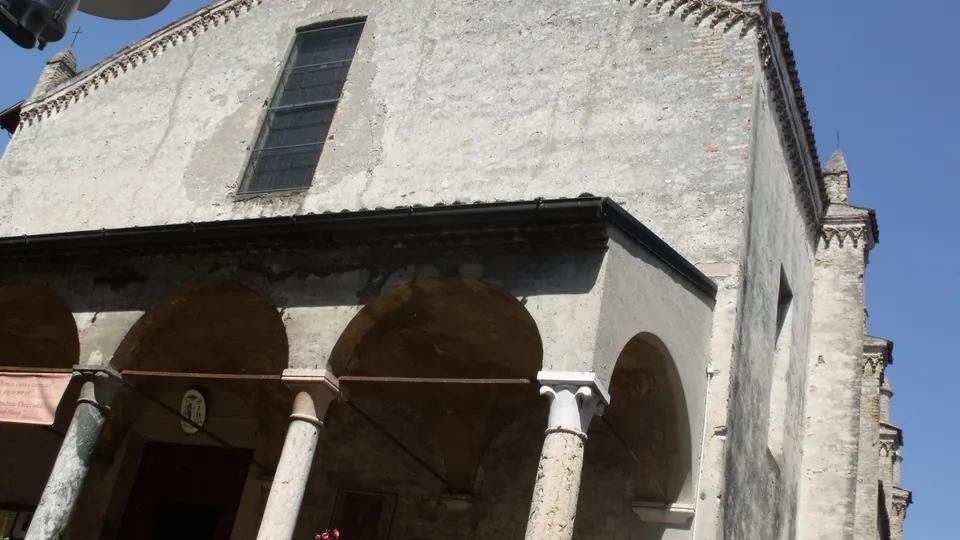
Lake Garda
Italy's largest theme park, on the south-eastern shore, with a separate sea-life aquarium and a large water park nearby.
Good to know. Several rides have 120–140 cm height minimums. Queues are long on weekends and throughout August.
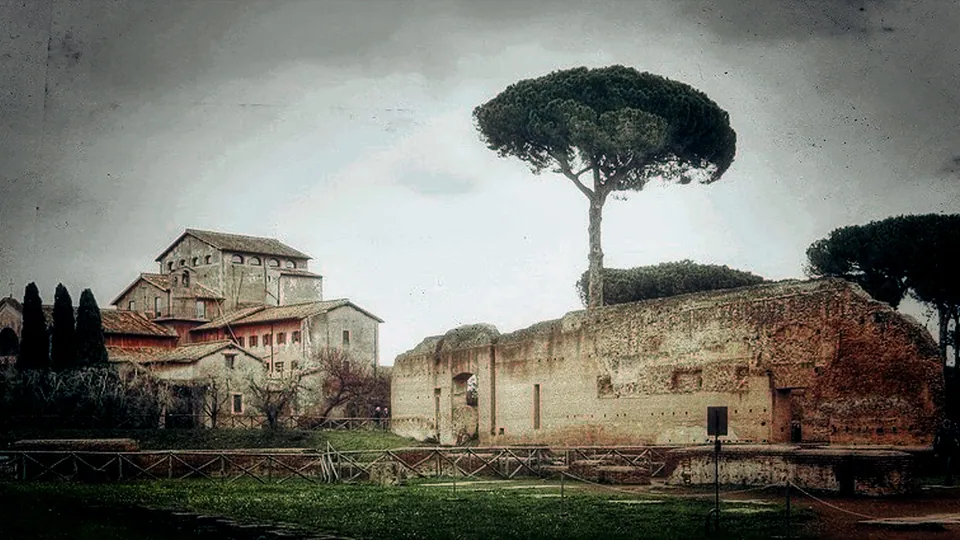
Rome
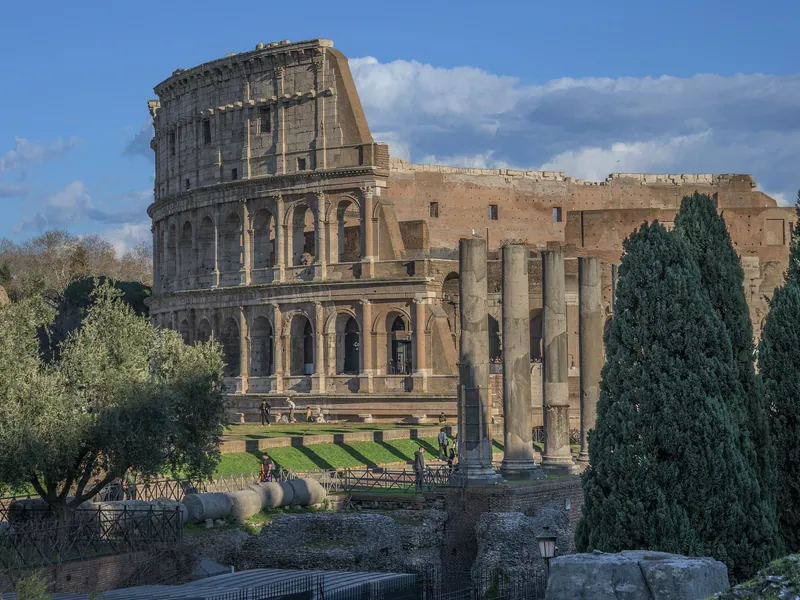
The Roman amphitheatre and the adjacent archaeological park, sold on a single timed-entry ticket valid across all three sites.
Good to know. Almost no shade on the Forum and Palatine. In summer, go at opening or late afternoon.
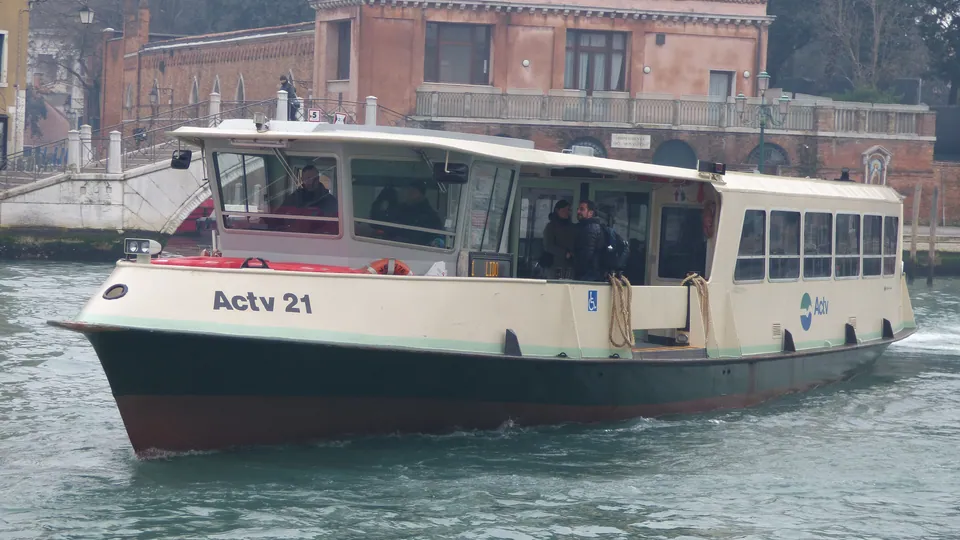
Venice
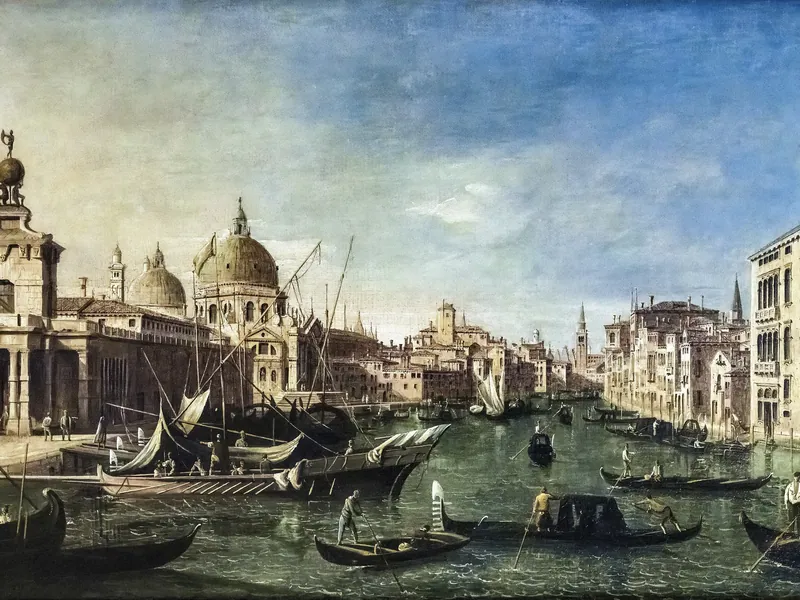
The slow waterbus that runs the length of the Grand Canal from the station to St Mark's and on to the Lido, stopping at every jetty and passing the palace facades at walking speed. It runs on an ordinary public transport ticket or travel card.
Good to know. The open bow seats are the ones children want and they are taken first, so board at a terminus rather than mid-route. Boats are packed between mid-morning and late afternoon in summer, and a full standing boat shows a small child nothing at all.
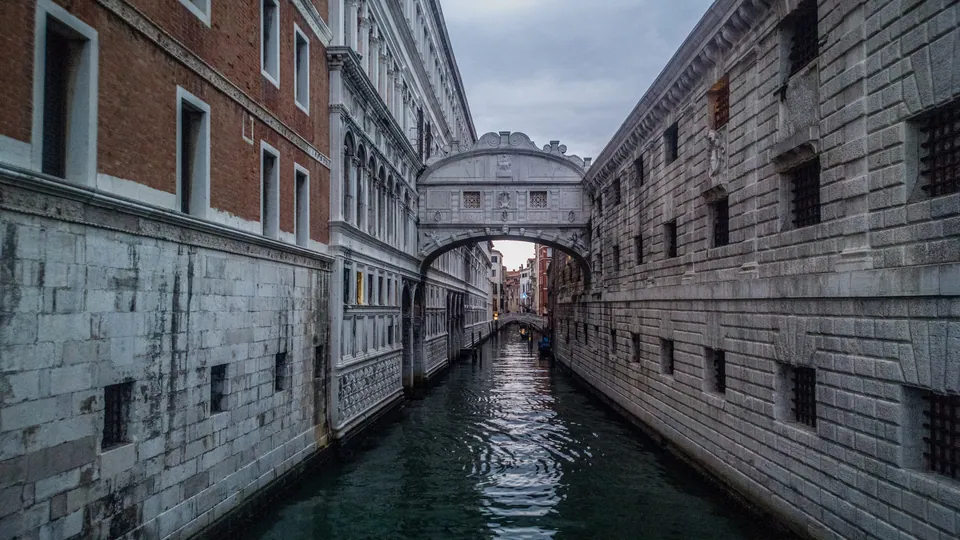
Venice
The seat of the Venetian republic on St Mark's Square: state rooms, an armoury, and a covered bridge crossing to the old prisons, which is usually the part children remember.
Good to know. Timed entry, and the on-the-day queue on the square is long and unshaded. The route is long, with many stairs and no shortcut once you are inside. The behind-the-scenes Secret Itineraries tour is a separate ticket and sets a minimum age, so check before booking it for a younger child.
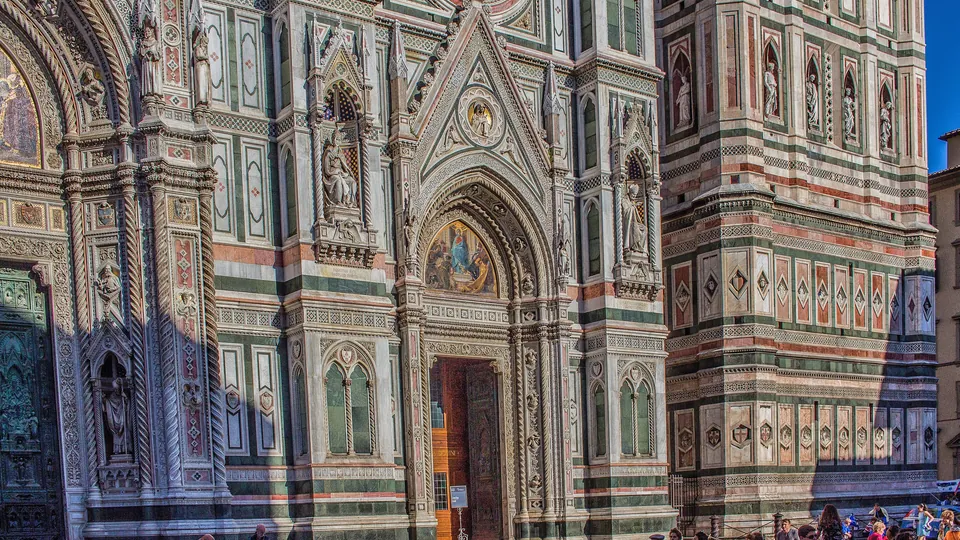
Florence
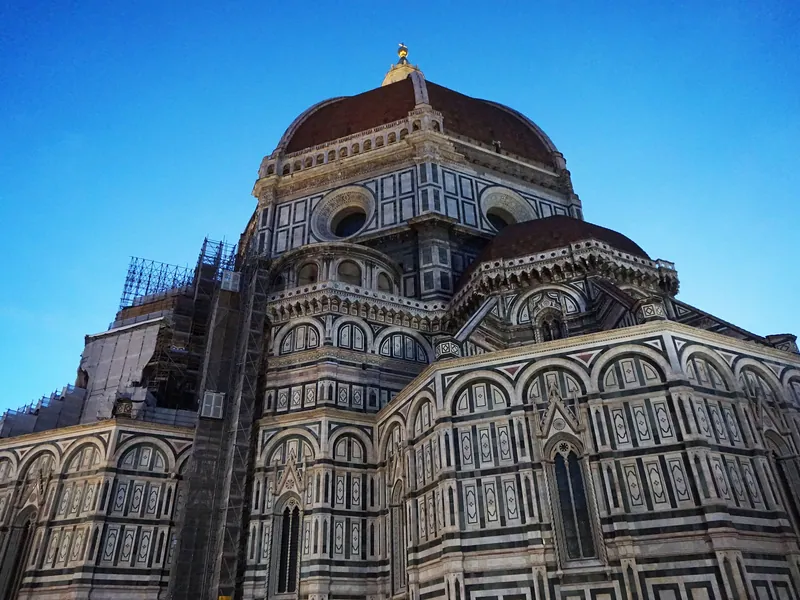
The cathedral, its bell tower, the baptistery and the dome climb, sold together on a single pass. The dome is climbed between its inner and outer shells and emerges on a walkway high above the city.
Good to know. 463 steps with no lift, a narrow one-way passage near the top and no way to turn back once committed — a poor idea for anyone uneasy in enclosed spaces. Dome slots are timed, released in advance and sell out in summer. The cathedral floor itself is free but has its own separate queue.
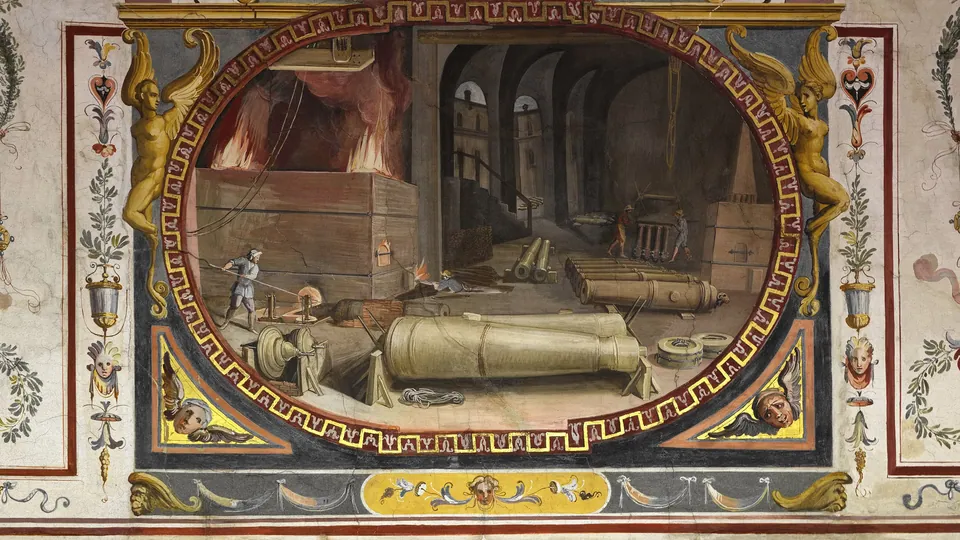
Florence
The Renaissance collection of the Medici, arranged chronologically along two long corridors above the Arno, holding Botticelli's Birth of Venus and Primavera.
Good to know. Long, crowded and entirely indoors, on a route of roughly two hours that cannot be shortened by much. Timed entry sells out weeks ahead in summer. State museums are free on the first Sunday of the month, which removes booking altogether and creates very long queues.
Cinque Terre
The coastal footpath linking the five villages, walked one section at a time with the train as the way back. The Monterosso–Vernazza and Vernazza–Corniglia stretches are the classic sections, each roughly 90 minutes of cliffside walking.
Good to know. Sections close after heavy rain and for landslide repairs, sometimes for years, so check the day's status with the national park before setting out. The main sections need a trail card, checked at staffed gates. Narrow stepped paths with unfenced drops: impossible with a buggy and unwise with a child who wanders.
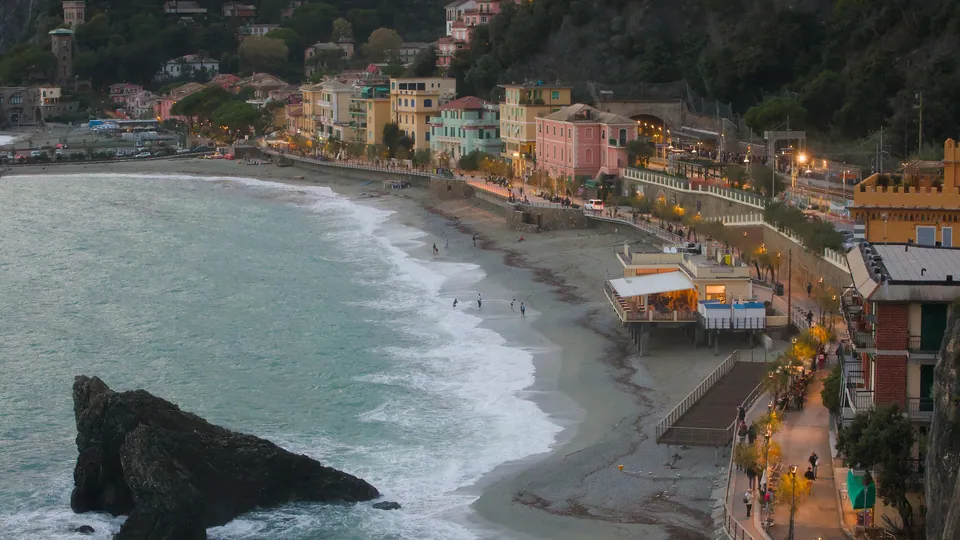
Cinque Terre
The only substantial sandy beach in the five villages, split between free stretches and rows of paid loungers and umbrellas, with the old town at one end of the promenade and the station at the other.
Good to know. Paid sections take most of the sand in summer and the free strips fill early in the morning. The water shelves quickly in places, and there is no shade at all outside the hired umbrellas.
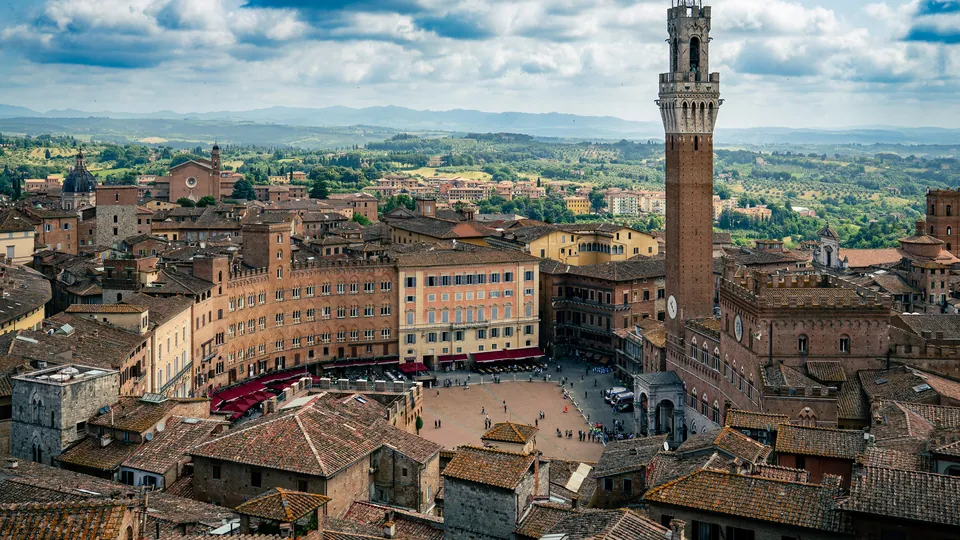
Tuscany
A shell-shaped brick square sloping down to the medieval town hall, with a striped marble cathedral a few streets above it and a tower climb from the square for anyone who wants the view over the rooftops.
Good to know. The city is closed off and completely full around the Palio horse race on 2 July and 16 August. The Torre del Mangia climb is roughly 400 narrow steps with a capacity limit and a queue at the foot. The square itself is one of the few places in an Italian city centre where children can simply run.
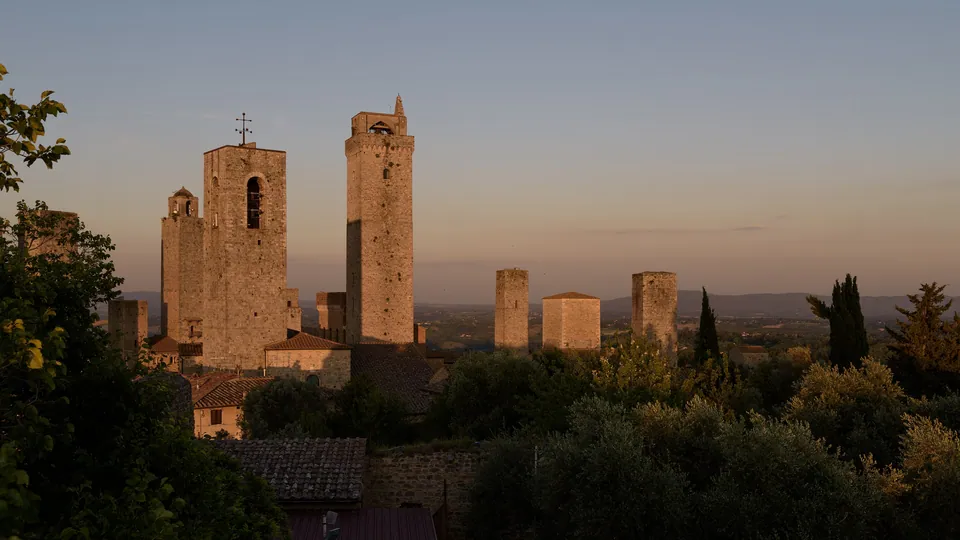
Tuscany
A walled hill town that kept more than a dozen of its medieval family towers, walkable end to end in twenty minutes, with the tallest tower open to climb and views across the Val d'Elsa.
Good to know. Coach groups fill the main street from mid-morning to late afternoon; before 10:00 or after 17:00 it is a different town. Cars stop at car parks below the walls and the walk up is steep. The tower climb is a long narrow staircase ending on an open platform with low parapets.
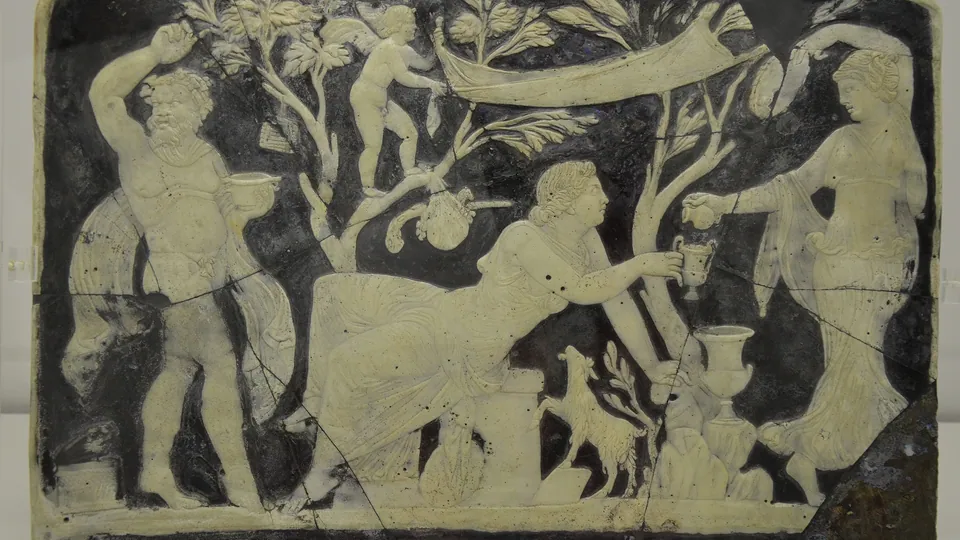
Naples & the Amalfi Coast
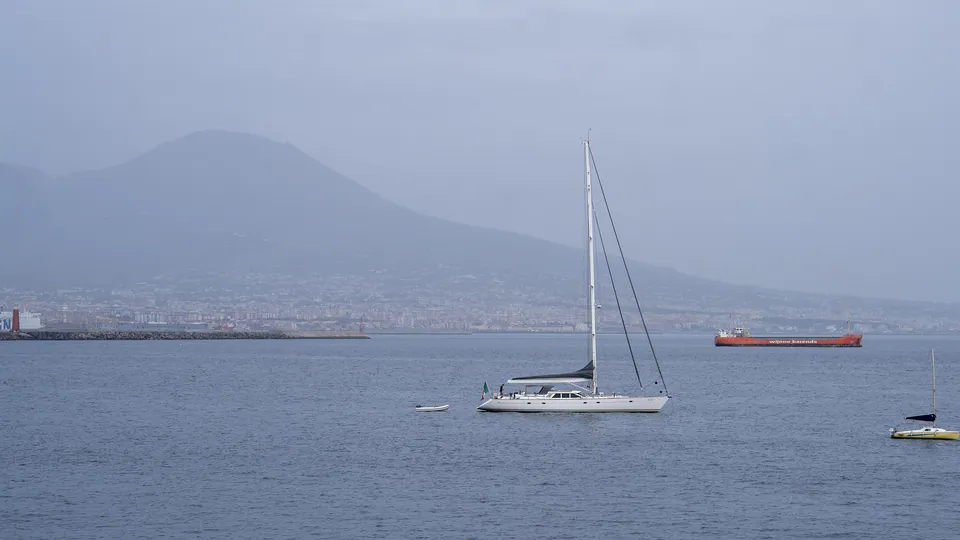
A Roman town buried by the eruption of Vesuvius in AD 79 and excavated as a full street grid: houses, shops, bakeries, a forum, two theatres and an amphitheatre, on the local railway between Naples and Sorrento.
Good to know. Roughly 44 hectares of open ruins with almost no shade, paved in large uneven basalt blocks — hard going with a pushchair and very hot from late morning in summer. Drinking fountains inside are free. A guide or a children's audio guide is the difference between a ruin and a story.
Naples & the Amalfi Coast
The volcano that buried Pompeii, inside a national park. A road and shuttle carry visitors most of the way up, leaving a walk of around half an hour to the crater rim and a path along part of its edge.
Good to know. Entry is by pre-booked timed slot and the path closes in high wind, storms or poor visibility, so keep an indoor alternative for that day. The climb is on loose volcanic gravel with no shade and a steady gradient, and the summit is noticeably colder and windier than the coast below.
Sicily
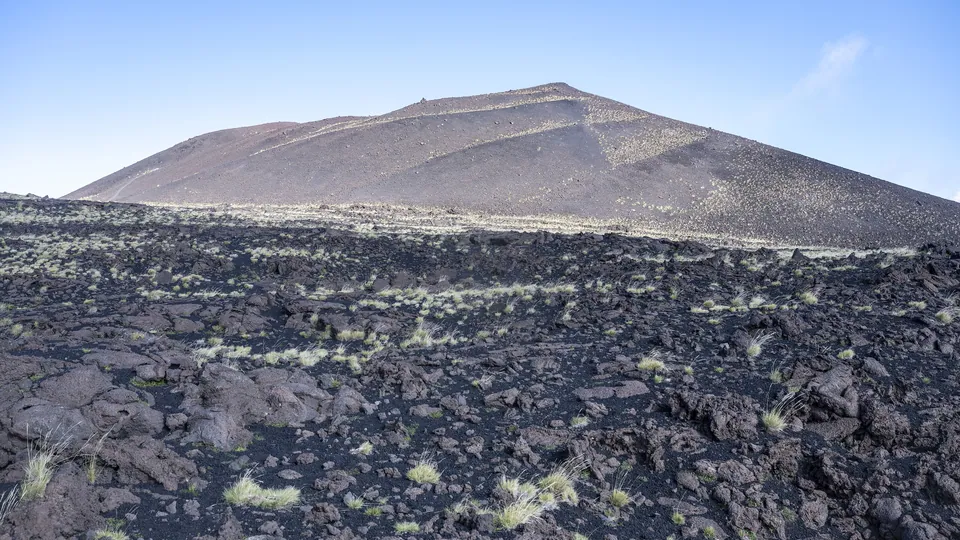
One of the most active volcanoes in the world, over 3,300 metres high and approached by road to the Rifugio Sapienza car park at around 1,900 metres, where a cable car climbs to roughly 2,500 metres and guided 4x4 buses continue higher across the lava fields towards the summit craters.
Good to know. The upper station is typically 15 to 20 °C colder than the coast with strong wind, and families routinely arrive in shorts and turn back — warm layers and closed shoes matter as much in August as in April. Going above the cable car is only permitted with an authorised guide, and the cable car, the 4x4 tracks and the summit zone all close during eruptive activity, ash fall or high wind. The ground is loose volcanic gravel throughout, which rules out a pushchair.
Sicily
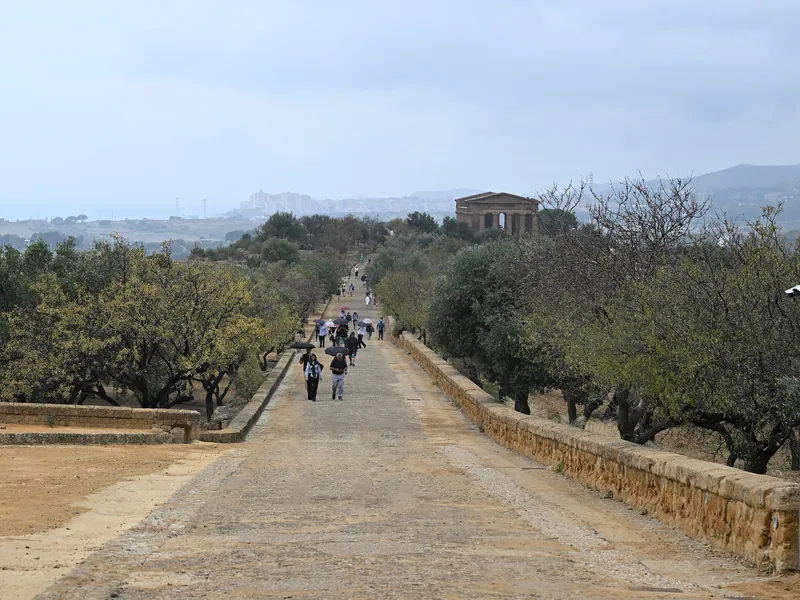
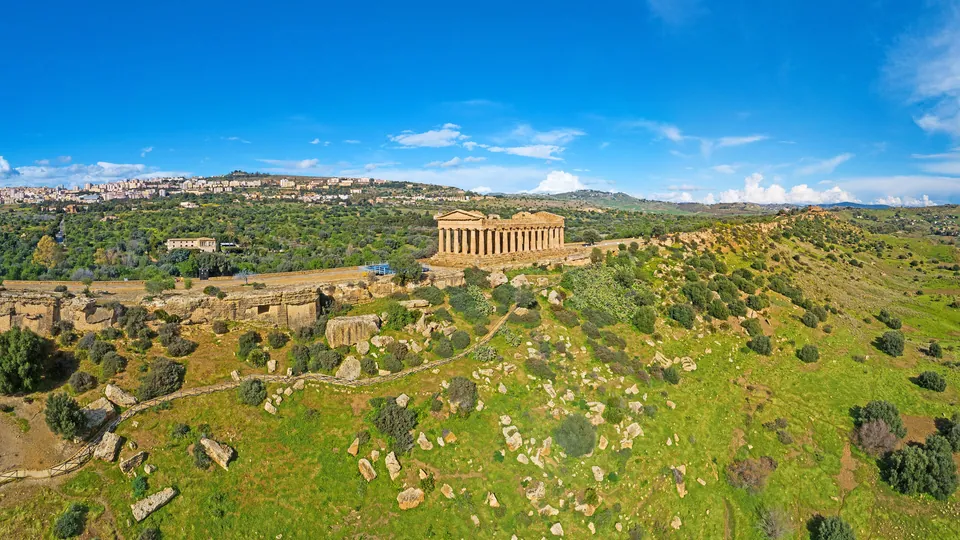
A line of Greek Doric temples along a ridge above Agrigento, several of them substantially intact, set in a large archaeological park with an almond and olive garden at one end and a museum of the finds alongside.
Good to know. The site is a linear walk of around three kilometres along a slope with almost no shade, and the two entrances sit at different heights — going in at the top and out at the bottom means a shuttle bus or a taxi back to the car. From late morning in summer it is punishing rather than merely hot; an opening-time or late-afternoon visit is a completely different experience.
Sicily
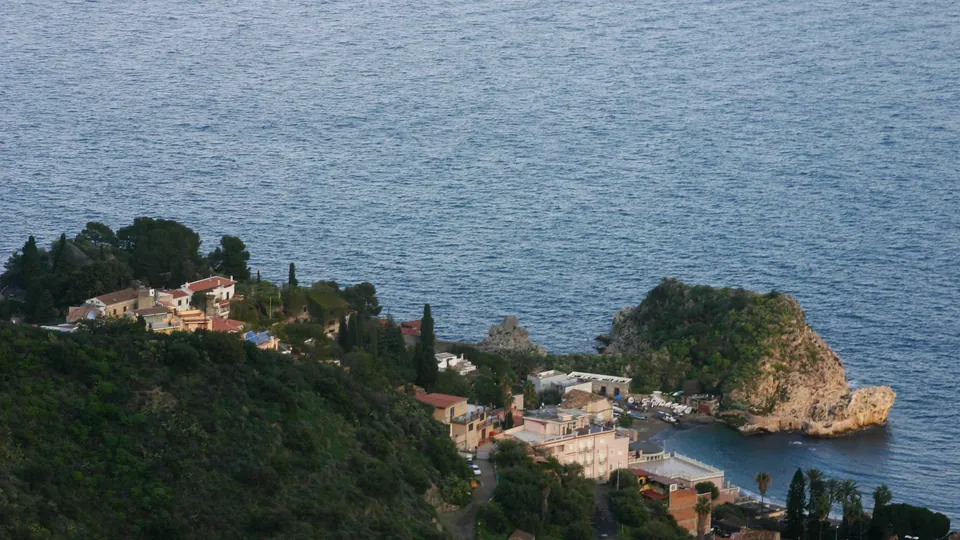
A Greek theatre rebuilt by the Romans and cut into the hillside above Taormina, with Etna framed in the gap where the stage wall has fallen away, and a cable car down to the pebble beach and tied island of Isola Bella below the town.
Good to know. Taormina is a hilltop town reached by hairpins, with small expensive car parks that fill by mid-morning and stepped, steep streets inside. The theatre is open and unshaded and is sometimes partly occupied by staging for the summer concert season, which hides a good deal of the stone. The beach below is pebble, and the cable-car queue can run to half an hour in season.
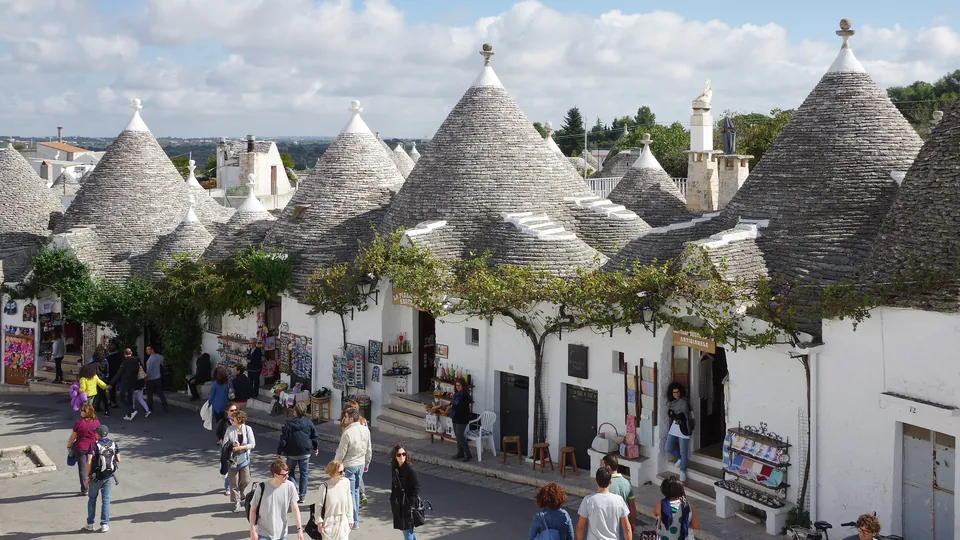
Puglia
Two neighbourhoods of dry-stone houses with conical limestone roofs, more than a thousand of them in total, built without mortar and now protected. Rione Monti is the steep, busy half where most trulli are shops; Aia Piccola across the road is residential and quiet.
Good to know. The lanes are steep, cobbled and stepped, which is hard work with a pushchair, and there is no shade in the middle of the day. Coach groups fill Rione Monti from mid-morning until late afternoon, and almost all of its trulli are now souvenir shops. Walking the districts is free; entering the furnished example trulli and the small museums is not.
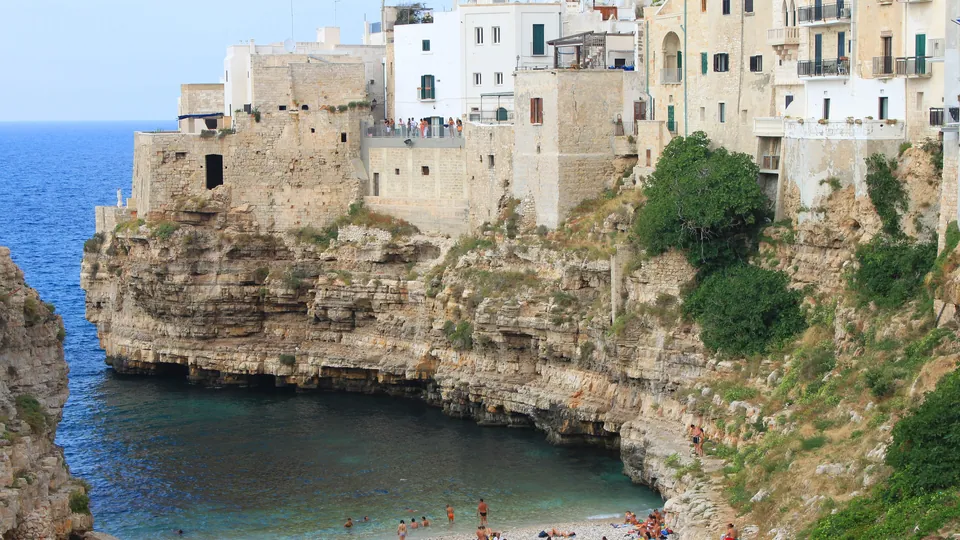
Puglia
A white town built along the lip of a limestone cliff, with a small pebble cove — Lama Monachile — wedged at the bottom of a ravine beneath an old bridge, and sea caves along the coast that are visited by boat from the harbour.
Good to know. The cove is small, entirely pebble and reached by a long flight of steps; it is full by mid-morning through the summer and has no shade whatsoever. Several clifftop viewpoints are unfenced, and the town's lanes and car parks are congested from June to September. Cliff diving happens here and is not something to copy.
Puglia
The stretch of Salento coast from Porto Cesareo and Torre Lapillo down to Pescoluse, where fine pale sand shelves very gradually into calm shallow water. It is the flattest and shallowest swimming in Puglia and the reason families travel to the far south of the region.
Good to know. Private lidos occupy much of the best sand and charge by the day for a sunbed and umbrella; the free stretches between them are narrower, unshaded and taken early. Car parks are small, paid and full by mid-morning in July and August, when the entire coast is on Italian domestic holiday. Afternoon onshore wind is common, and the very shallow water warms quickly but also weeds up in places.
Some links on this page are affiliate links. If you book through one, the price is the same for you and we may earn a commission. How this works.
Fast trains link Rome, Florence, Bologna, Milan and Venice at speeds that make city-hopping easy without a car. The Dolomites and the quieter parts of the lakes are the opposite: valley-to-valley bus services are infrequent, so a car is effectively required there. City centres are restricted-traffic zones (ZTL) with automatic fines, so a car is a liability in Rome, Florence and Venice.
Moderate driving. It depends entirely on the region. Cities are best without a car — ZTL zones carry automatic fines and parking is expensive. The Dolomites, the lake shores and rural Tuscany are impractical without one.
€
€130
Budget · per day, family of four
€€
€230
Mid-range · per day, family of four
€€€
€400
Higher-end · per day, family of four
Planning estimates based on published prices at the time of writing, in shoulder season. Peak months, school holidays and city-centre accommodation all push the figure higher.
Straightforward with children: pizza, simple pasta, grilled meat and fish. Vegetarians are well served everywhere. Lunch runs roughly 12:30–14:30 and dinner rarely starts before 19:30, which is worth planning around with younger children — a late-afternoon gelato bridges the gap.
Getting around
ZTL restricted zones are camera-enforced and fines arrive months later, one per entry. Park outside the centre and walk or take a bus in.
When to go
The Colosseum, the Uffizi and the Vatican Museums all sell timed entry that sells out in summer. Turning up on the day means either a long queue or no entry.
With kids
Many smaller towns close shops and kitchens between roughly 13:00 and 16:00. In July and August that gap is also the hottest part of the day, which makes it the natural pool or nap window.
Packing
Rome and most northern towns have free public fountains running continuously. Carry refillable bottles rather than buying water all day.
Some links on this page are affiliate links. If you book through one, the price is the same for you and we may earn a commission. How this works.