Skip to content

Tuscany with Kids

Rural Tuscany is the counterweight to an Italian city trip: a farmhouse with a pool as a base, hill towns half an hour apart, and days that can be as short as one town and a swim. Agriturismi — working farms licensed to let rooms and apartments — are the reason it works with children, because they combine self-catering, space to run and somewhere to cool off in the afternoon. It requires a car, and it requires accepting that the last stretch of the drive home is often an unlit gravel road.

Best for ages
3+
Suggested stay
5–7 days
Best months
May–Jun, Sep–Oct
Daily budget
€220

Mid-range, family of four

Why Tuscany works with children

  • A pool at the end of every day

    Almost every agriturismo has one, which is what makes an August afternoon inland survivable.

  • Hill towns in half-day doses

    Siena, San Gimignano and Volterra each take a morning rather than a day, so culture never becomes the whole trip.

  • Self-catering with a farm shop attached

    Farms sell their own oil, wine and cheese on site, which removes one restaurant meal a day.

  • Cheaper than the cities it sits between

    A two-bedroom farm apartment costs less than two hotel rooms in Florence or Siena.

Where to stay

Best areas in Tuscany for families

4 areas cover most trips here; the difference is mainly first-time visitors versus adding a beach to the countryside.
  • Chianti (Greve, Radda, Castellina)

    Best for first-time visitors

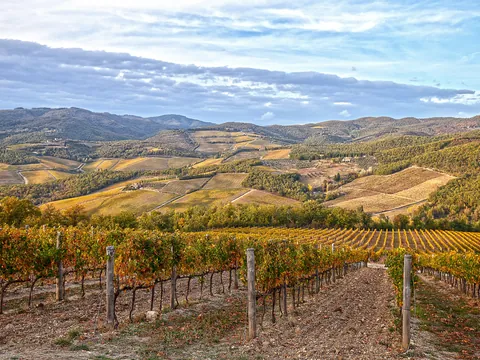
    The densest concentration of agriturismi, within an hour of both Florence and Siena and twenty minutes of a village with a shop.

  • Val d'Orcia (Pienza, Montalcino, San Quirico)

    Best for the landscape itself

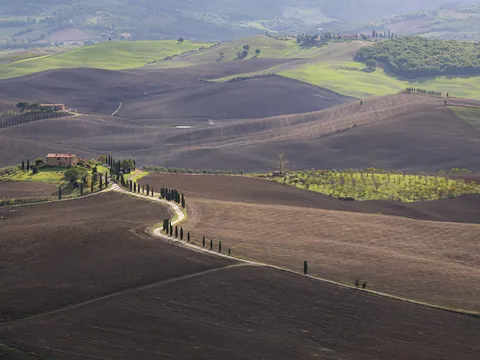
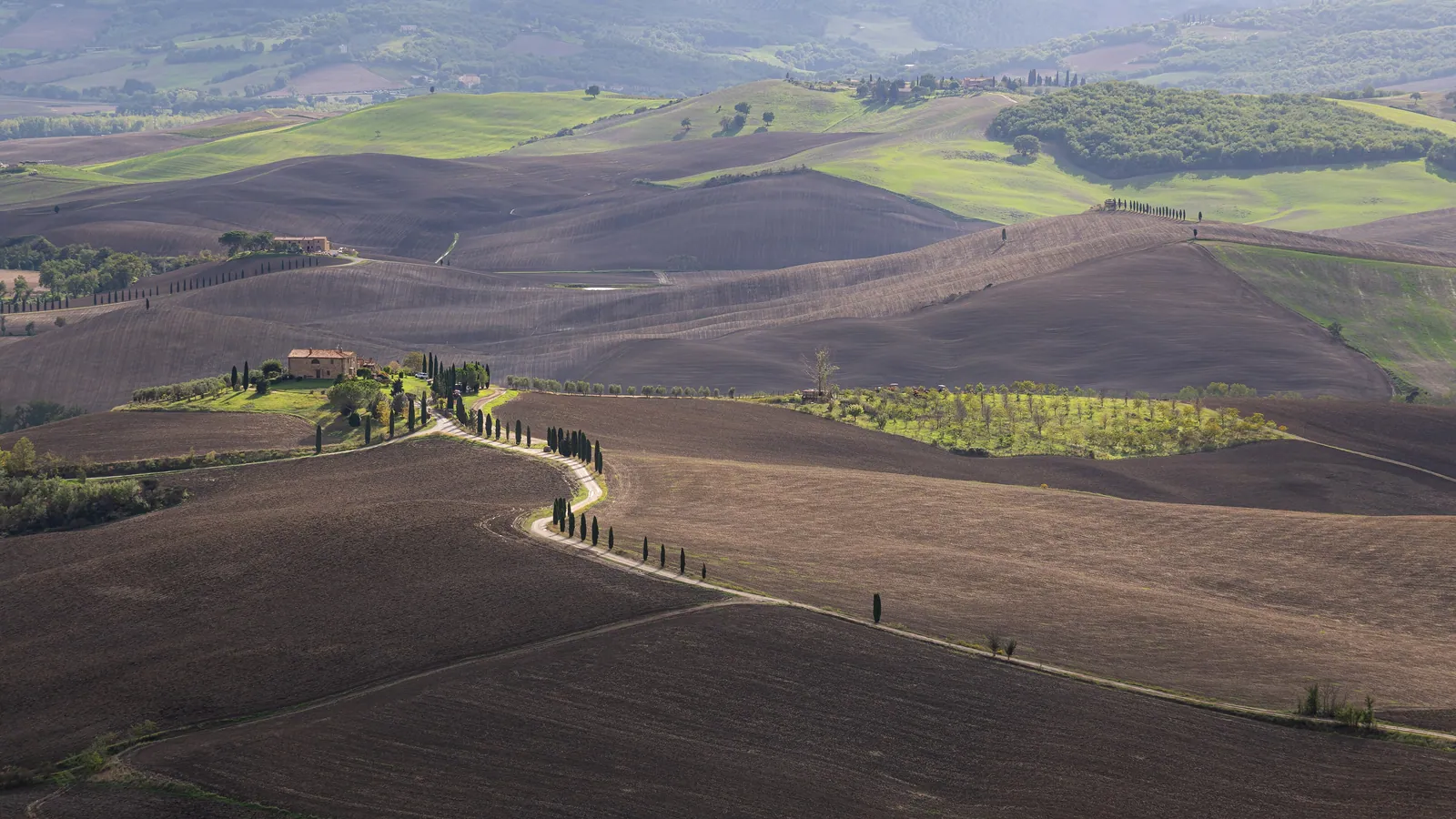
    The cypress-lined hills of the photographs, plus thermal pools at Bagno Vignoni. More remote, with longer drives to anywhere else.

  • Val d'Elsa (San Gimignano, Volterra, Colle)

    Best for towns within easy reach

    Central for Florence, Siena and Pisa as well as the towers of San Gimignano, and the shortest average drive in the region.

  • Maremma coast

    Best for adding a beach to the countryside

    Southern Tuscany's coast has pine-backed sandy beaches and lower prices, around two hours from Florence.

Family hotel picks in Tuscany

  • Chianti — agriturismo with a pool
    Chianti (Greve, Radda, Castellina)Mid-range

    Chianti — agriturismo with a pool

    A working farm with self-catering apartments and a pool is the setup the whole region is built around: space for children, a kitchen, somewhere to swim in the afternoon, and Florence and Siena both within an hour.

    • Pool on site for the hottest part of the day
    • Self-catering apartments with a kitchen and outdoor space
    • Farm produce — oil, wine, sometimes cheese — sold on site
    • Within an hour of Florence, Siena and San Gimignano

    Fitting a family in

    Two-bedroom farm apartments are the standard unit here and cost less than two hotel rooms in either city.

    Watch out. July and August are usually sold Saturday to Saturday only and book out months ahead. Access is often several kilometres of unlit gravel road, and farm pools are frequently unfenced and unsupervised.

  • Val d'Orcia — farmhouse apartments in the hills
    Val d'Orcia (Pienza, Montalcino, San Quirico)Mid-range

    Val d'Orcia — farmhouse apartments in the hills

    The most striking landscape in Tuscany, with hill towns small enough to walk in half an hour and thermal pools nearby — a slower base for families who would rather look at the countryside than drive to cities.

    • Farmhouse apartments with kitchens and shared pools
    • Pienza, Montalcino and San Quirico each within 20 minutes
    • Thermal pools at Bagno Vignoni and open-air springs nearby
    • Quiet roads with very little traffic

    Fitting a family in

    Converted farmhouses are usually let as whole apartments sleeping four to six, often with a second bathroom.

    Watch out. Further from everything: Florence is around two hours and Siena an hour, so this is a base for the region rather than for city days. Shops and restaurants can be a 15-minute drive away and almost nothing is walkable.

All family stays in Italy

Some links on this page are affiliate links. If you book through one, the price is the same for you and we may earn a commission. How this works.

Things to do in Tuscany with kids

  • Siena: Piazza del Campo & the Duomo
    Culture

    Siena: Piazza del Campo & the Duomo

    Tuscany

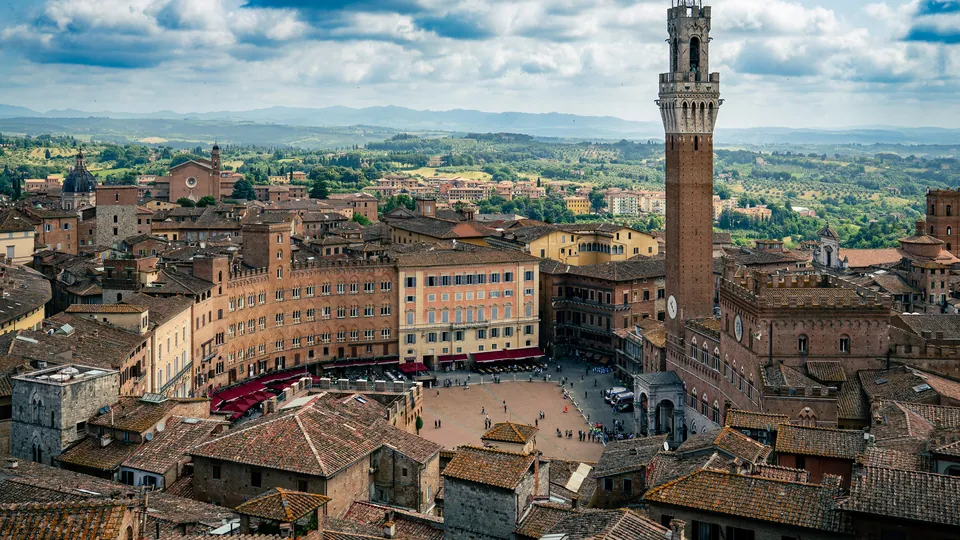
    A shell-shaped brick square sloping down to the medieval town hall, with a striped marble cathedral a few streets above it and a tower climb from the square for anyone who wants the view over the rooftops.

    Ages
    5–16
    Time
    3h
    Adult, from
    €15

    Good to know. The city is closed off and completely full around the Palio horse race on 2 July and 16 August. The Torre del Mangia climb is roughly 400 narrow steps with a capacity limit and a queue at the foot. The square itself is one of the few places in an Italian city centre where children can simply run.

  • San Gimignano and its towers
    Culture

    San Gimignano and its towers

    Tuscany

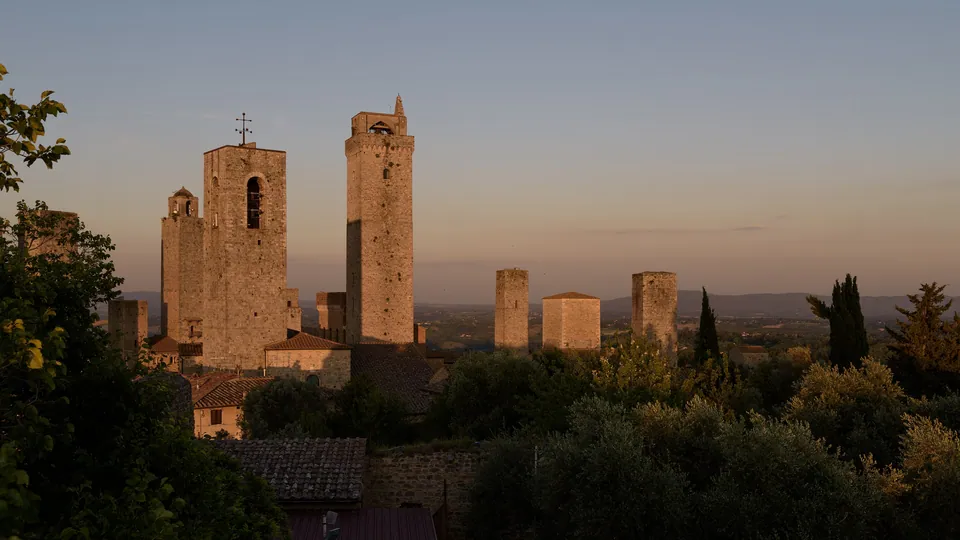
    A walled hill town that kept more than a dozen of its medieval family towers, walkable end to end in twenty minutes, with the tallest tower open to climb and views across the Val d'Elsa.

    Ages
    4–16
    Time
    3h
    Adult, from
    €10

    Good to know. Coach groups fill the main street from mid-morning to late afternoon; before 10:00 or after 17:00 it is a different town. Cars stop at car parks below the walls and the walk up is steep. The tower climb is a long narrow staircase ending on an open platform with low parapets.

  • Pisa: the Leaning Tower & Piazza dei Miracoli
    CultureBook ahead

    Pisa: the Leaning Tower & Piazza dei Miracoli

    Tuscany

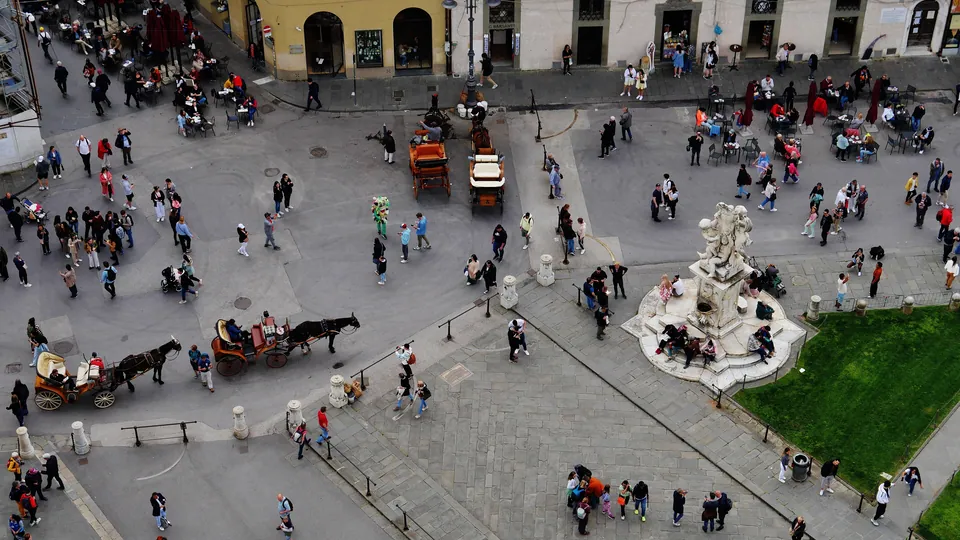
    The cathedral, the baptistery and the leaning bell tower on one walled lawn, an hour by direct train from Florence and a straightforward half-day out from anywhere in northern Tuscany.

    Ages
    8–17
    Time
    2h 30m
    Adult, from
    €20

    Good to know. The tower climb has a minimum age of eight, under-eighteens must be accompanied by an adult, and slots are timed and limited. Bags cannot be carried up and have to be left at a nearby deposit. The staircase is narrow, spiral and noticeably tilted underfoot, which unsettles some children.

Some links on this page are affiliate links. If you book through one, the price is the same for you and we may earn a commission. How this works.

Getting around Tuscany

A car is the trip. The hill towns are connected by buses built around commuters rather than visitors, and most agriturismi sit at the end of a strada bianca — an unsurfaced white gravel road, sometimes several kilometres long and unlit at night. Check the access description before booking and take the higher-clearance car if one is offered. Every hill town is a limited-traffic zone: park in the signed car parks below the walls and walk up rather than driving through a gate.

Tuscany tips for families

  • Money & costs

    Summer stays are sold by the week, not the night

    Most agriturismi sell Saturday-to-Saturday weeks in July and August and book out months ahead. Outside those months the same properties take short stays at much lower rates.

  • Getting around

    Ask how long the gravel drive is

    Two or three kilometres of unlit white gravel is a normal access road here, and it turns a late arrival with tired children into a slow, careful one. Decline the smallest, lowest car if the property is remote.

  • When to go

    Siena is a different city around the Palio

    The horse race is run on 2 July and 16 August. In the days around each date the centre is closed off, accommodation is booked out across the province and prices rise sharply.

Tuscany with kids: common questions

Do you need a car in Tuscany?
Yes, for the countryside. Bus services between hill towns are built around commuters, and the farm stays that make the region work with children sit several kilometres from the nearest village.
What is an agriturismo?
A working farm licensed to let rooms or self-catering apartments, usually with a pool, often with animals, and frequently selling its own produce on site. It is the standard family accommodation in rural Italy and generally cheaper than hotels of equivalent size.
How many days should you spend in rural Tuscany?
Five to seven. That allows three or four hill-town mornings with pool afternoons between them, which is the pace the region is genuinely good at. Below four nights the driving dominates.
Is Tuscany too hot in summer with children?
Inland July and August regularly exceed 35°C, and the hill towns are stone streets with little shade. It is manageable because of the pools — mornings out, afternoons at the farm — but May, June and September are far more comfortable.