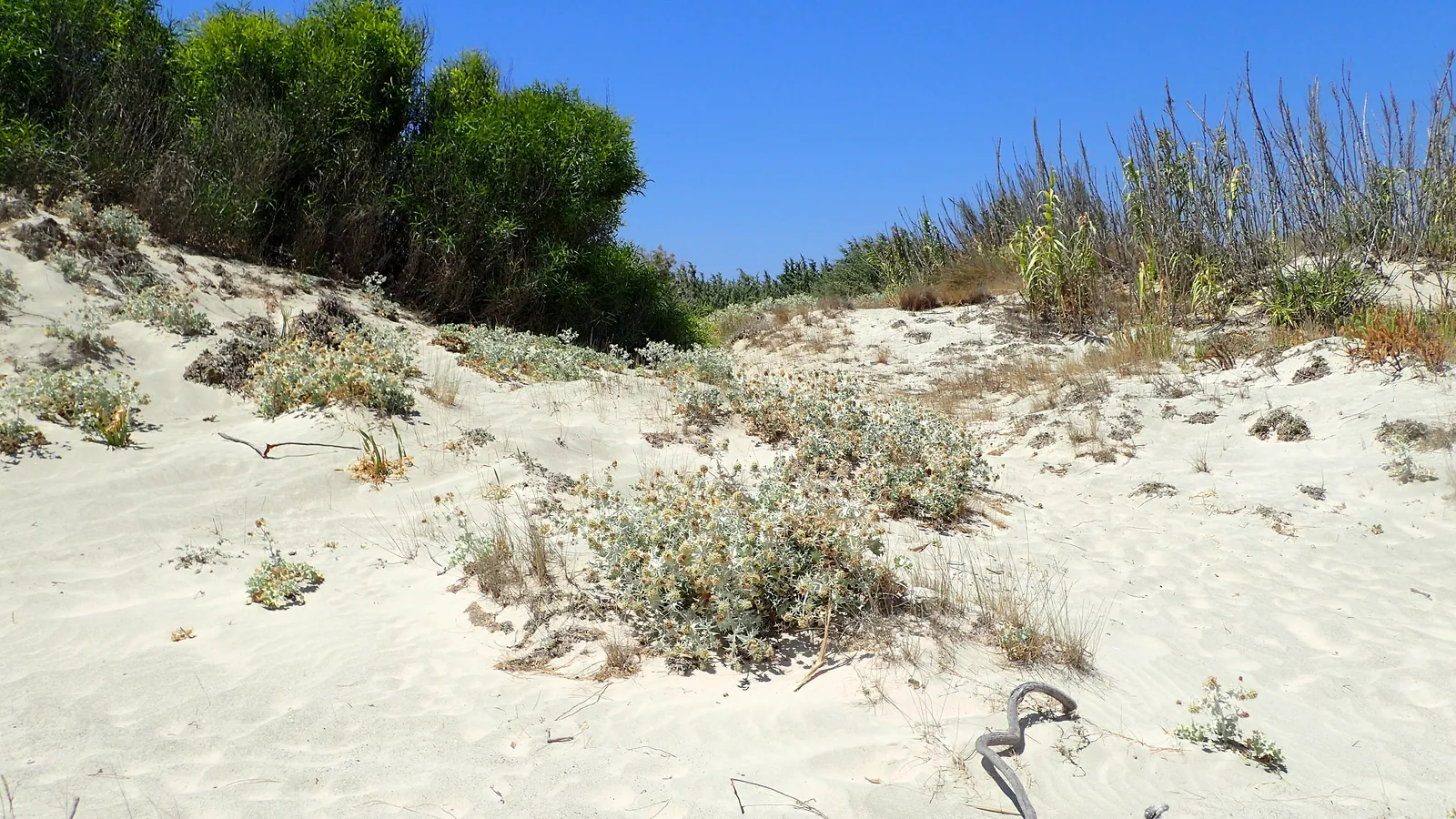
 7 days€€Greece
Crete Family Week
Beaches, ruins and a hire car
- Best for ages
- 3+
- Pace
- Relaxed
- Driving
- Moderate driving
BeachCultureNature
View trip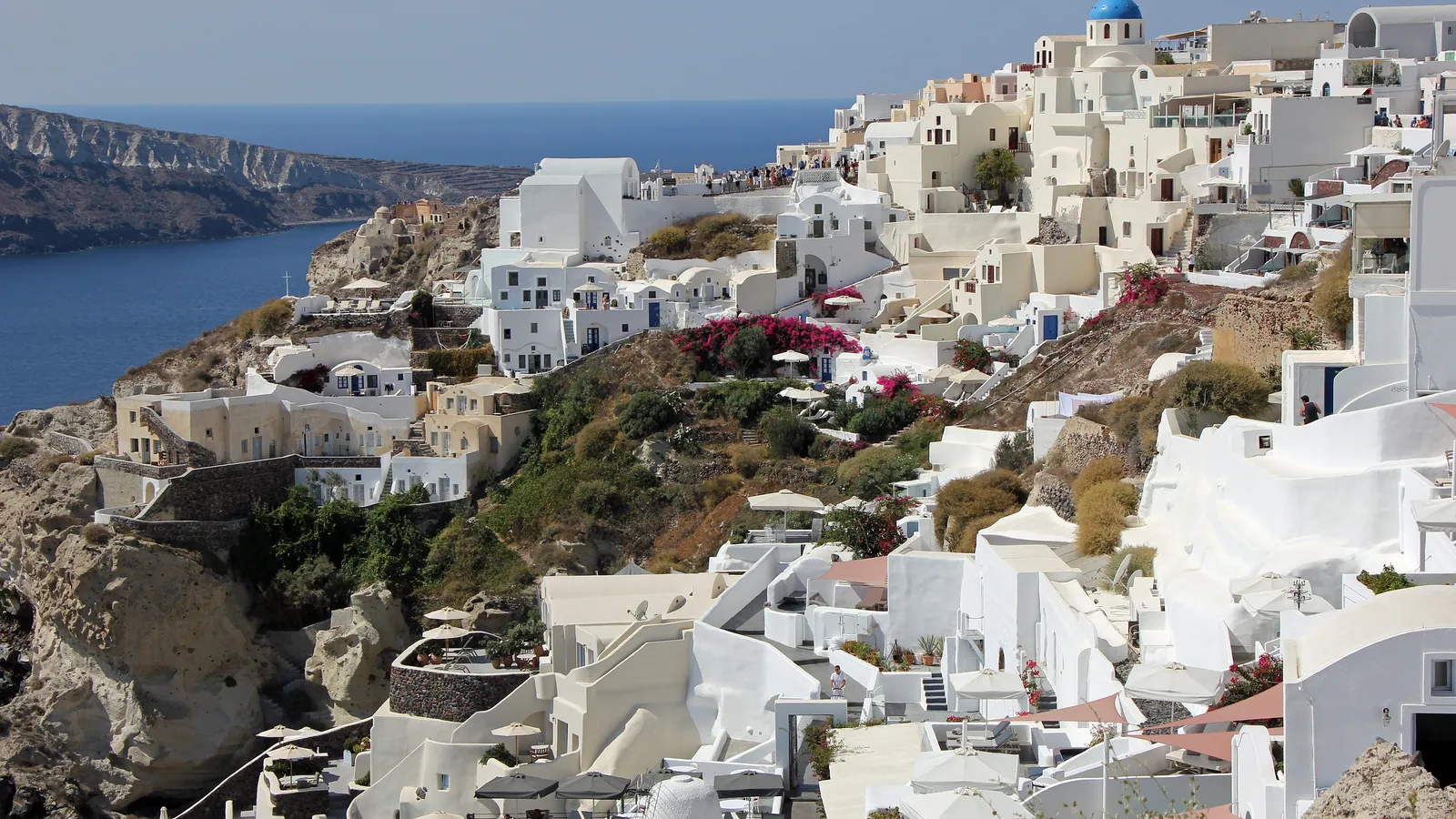
Europe · 9 destinations
Greece is a dependable family choice for one reason above the beaches: the country is genuinely relaxed about children. They are welcome in restaurants at any hour, tavernas will happily produce plain food, and the pace suits families who do not want a schedule. The decision that matters is which island. The large ones — Crete and Rhodes — have real infrastructure, airports and enough variety for a week or more. The small, famous ones are photogenic, expensive and often awkward with young children.
Suits up to 16
Mid-range
The larger islands have plenty of gently shelving sandy beaches, not just dramatic coves.
Plain grilled meat, chips, bread and salad on request, at any hour.
Knossos, the Acropolis and the medieval old town of Rhodes are all walkable and tangible.
Crete and Rhodes cost markedly less than the Cyclades for the same standard.
Charter and scheduled routes from most of Europe straight to the island airports.
7 days€€GreeceBeaches, ruins and a hire car
 7 days€€Greece
A resort week with a medieval city attached
 10 days€€Greece
Two days of history, then a week of sea
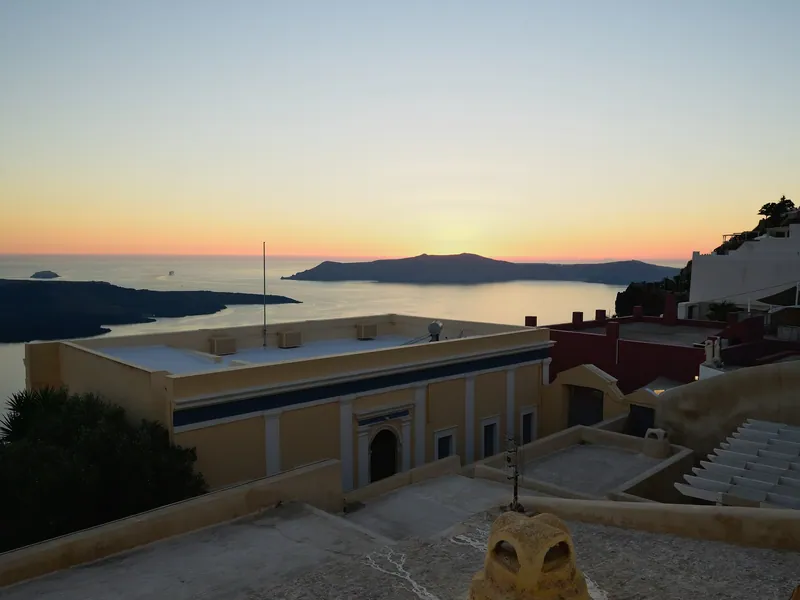
Caldera views, and the hardest Greek island with young children
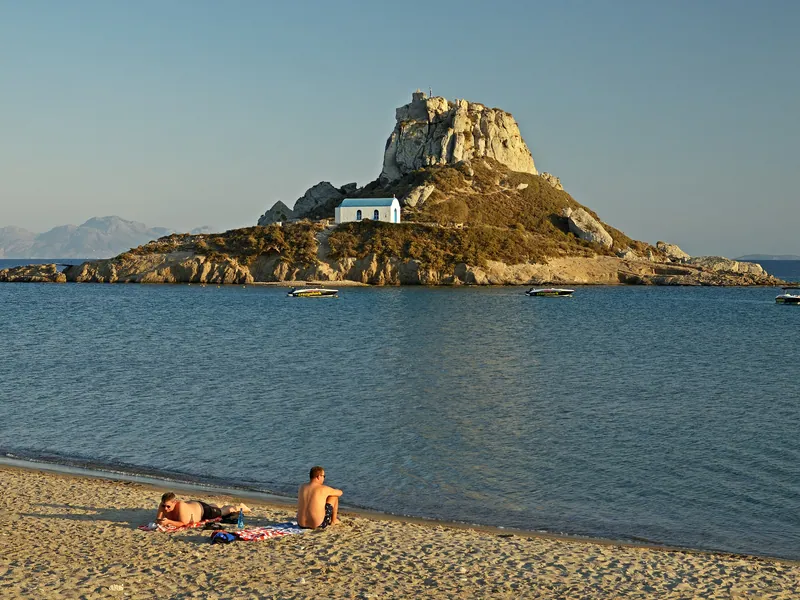
Flat, cycleable and shallow — the easy island with toddlers
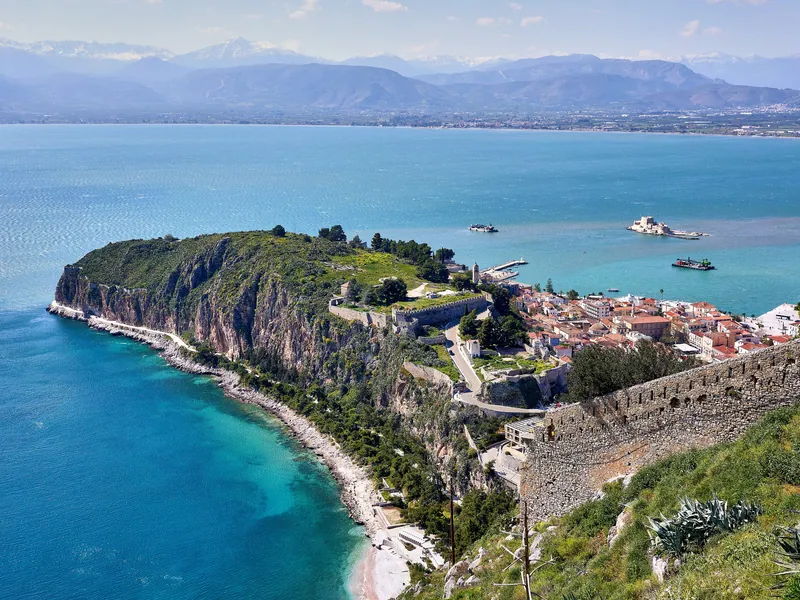
Ancient sites, harbour towns and mainland beaches, by car
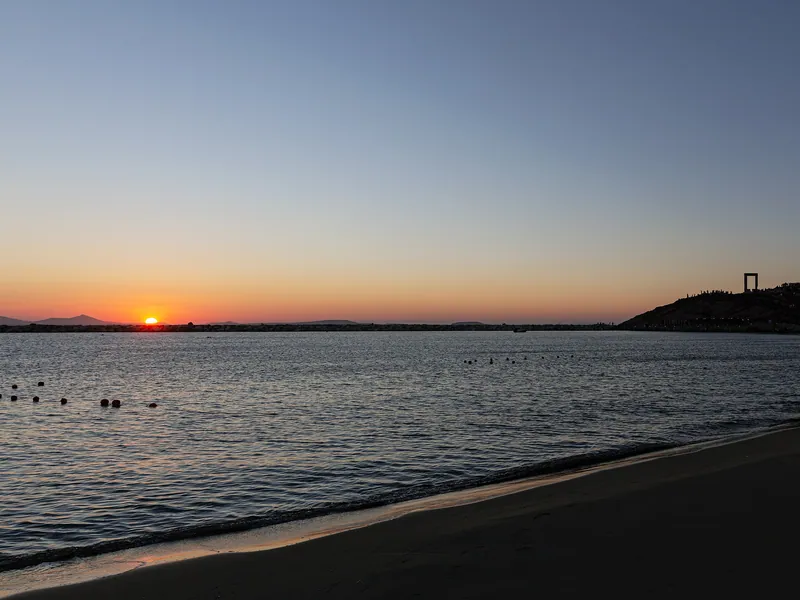
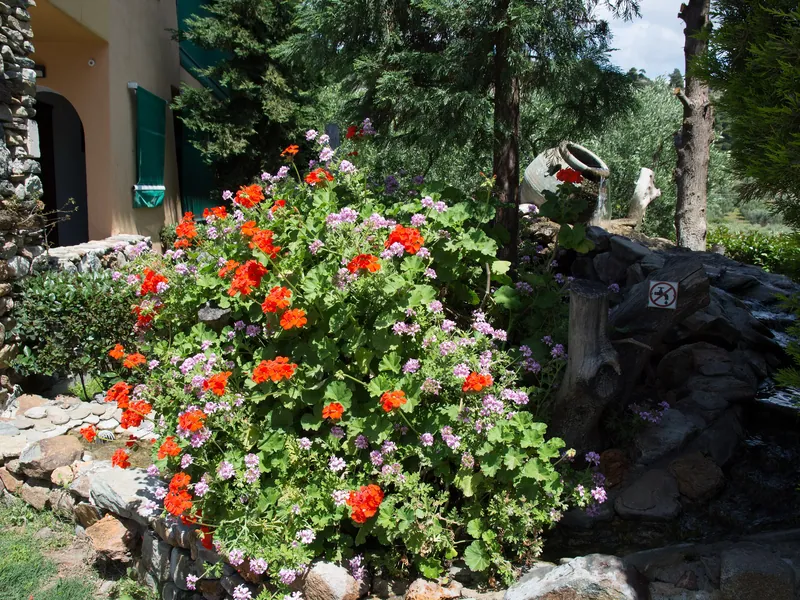
Pine-backed bays on the mainland, an hour from an airport
Where to stay
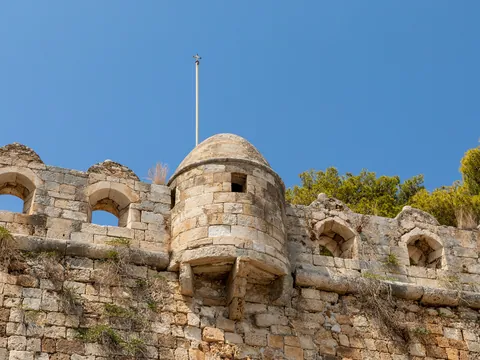
The north coast has the sandy town beaches, the airports and the widest range of hotels, from all-inclusive resorts to apartments with a pool.
Fitting a family in
Family rooms and two-bedroom apartments are both widely available and reasonably priced outside August.
Watch out. The north coast catches the summer meltemi wind. If calm water matters, check which way your beach faces.
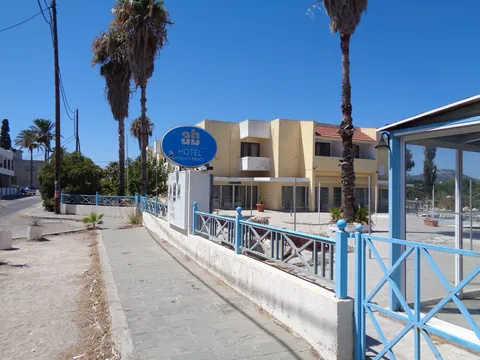
The highest concentration of family all-inclusive hotels in Greece, on the sheltered side of the island, with the water park and the old town both a short bus ride away.
Fitting a family in
Family rooms sleeping four are standard; interconnecting rooms are common at the larger properties.
Watch out. Faliraki has a nightlife strip as well as family hotels. Check which end of the resort you are booking.
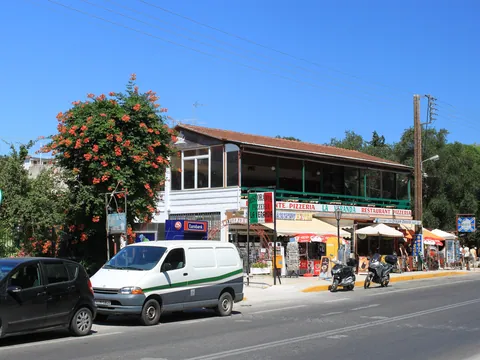
The sheltered channel side of the island keeps the water calm, and this strip is the only part of Corfu where a family can manage a whole week without hiring a car.
Fitting a family in
Family rooms sleeping four are standard, and two-bedroom apartments with a shared pool are common a street back from the sea.
Watch out. The beaches along this strip are narrow and a mix of sand and shingle rather than wide sand, and the coast road runs directly behind several of the hotels.
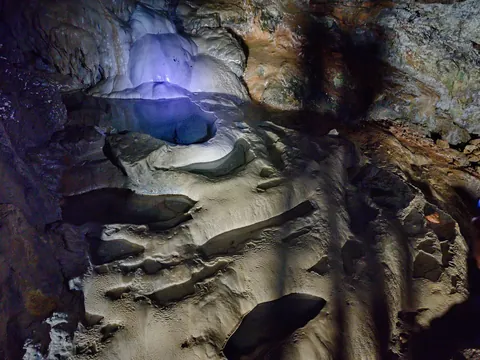
This is the only side of Santorini where a family can walk from the room to a pool and a beach on level ground, without stairs or a cliff edge anywhere in the equation.
Fitting a family in
Family rooms and studios with kitchenettes are both common, and interconnecting rooms are far easier to find here than on the rim.
Watch out. There is no caldera view, the beach is coarse black sand that becomes too hot to walk on, and the strip itself is functional rather than pretty.
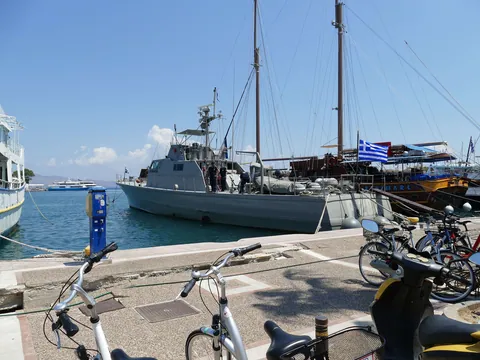
Basing in town means the cycle network starts at the door, dinner is a walk rather than a drive, and the Asklepion is a short ride away instead of an excursion.
Fitting a family in
Family rooms sleeping four are widely available, with apartment-style studios common at the Lambi end.
Watch out. The beaches immediately around town are narrow and pebblier than the north coast, and the harbour end is noisy late into the night in high season.
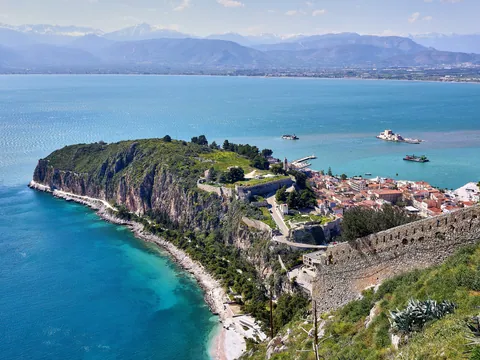
Nafplio is the one base in the region that works on foot in the evening, and it puts Mycenae, Epidaurus and Corinth all within an hour's drive the next morning.
Fitting a family in
Two-bedroom apartments in the old town and small family-run hotels just outside the walls both sleep four comfortably.
Watch out. Old-town buildings frequently have steep stairs and no lift, the marble paving is slippery when wet, and parking inside the old town is effectively impossible — book somewhere with a dedicated space.
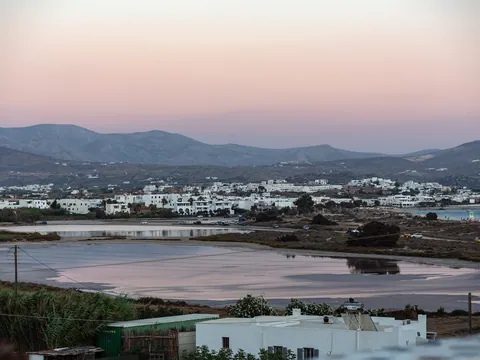
Staying directly behind the shallowest sand on the island removes the daily drive or bus ride that makes a beach day with small children hard work, and a kitchenette covers breakfast and the meal that has to happen before a Greek dinner starts.
Fitting a family in
Studios sleeping three and two-room apartments sleeping four to five are the standard product along this strip; a genuine second bedroom is worth confirming, as many listings count a sofa in the living area.
Watch out. The strip is fully exposed to the meltemi, much of it sits on unlit sand roads that are awkward with a pushchair after dark, choice thins sharply outside the June to September window, and the liveliest evening options are back in Chora.
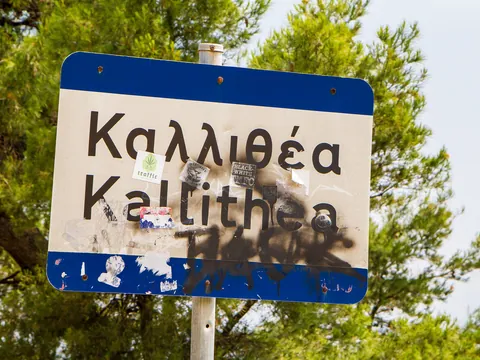
This is where the region's family infrastructure is concentrated: organised shallow beaches, pools and children's clubs, shops and tavernas within walking distance, and the shortest transfer from the airport in Halkidiki.
Fitting a family in
Family rooms sleeping four are standard and interconnecting pairs are common at the bigger hotels; apartment-style units with a kitchenette are widely available a street back from the sea.
Watch out. The main road runs the length of the peninsula immediately behind the hotels, the resort towns merge into a single strip of shops and bars, the beaches are sunbed-to-sunbed in August, and much of the strip closes from October to May.
Some links on this page are affiliate links. If you book through one, the price is the same for you and we may earn a commission. How this works.
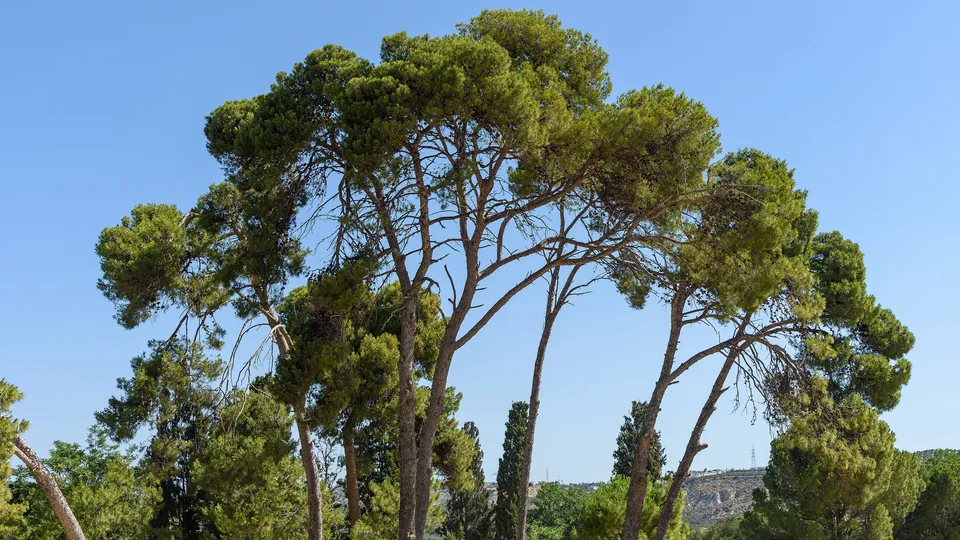
Crete
The largest Bronze Age site in Crete and the centre of Minoan civilisation, with partially reconstructed halls and frescoes that make the layout legible.
Good to know. Open, exposed and very hot by mid-morning in summer. A guide makes a substantial difference with children.
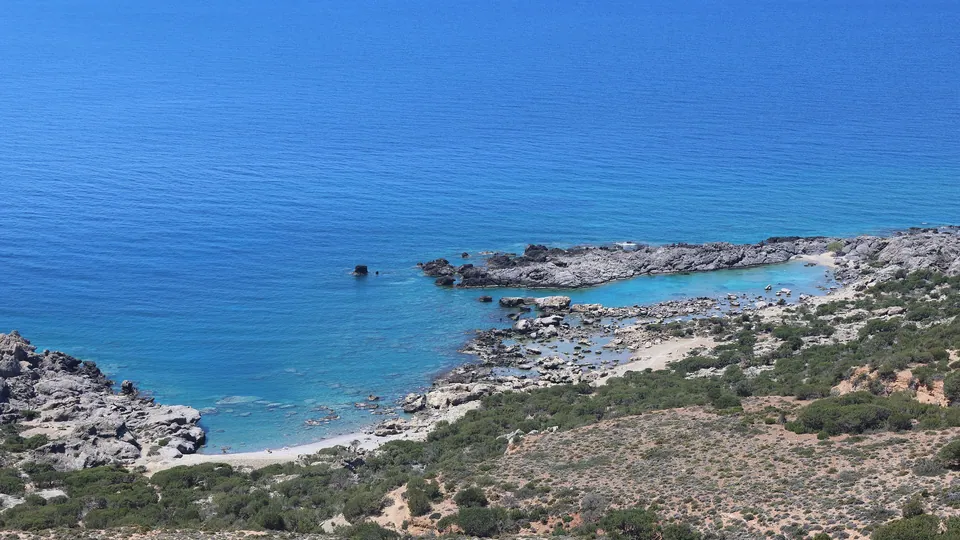
Crete
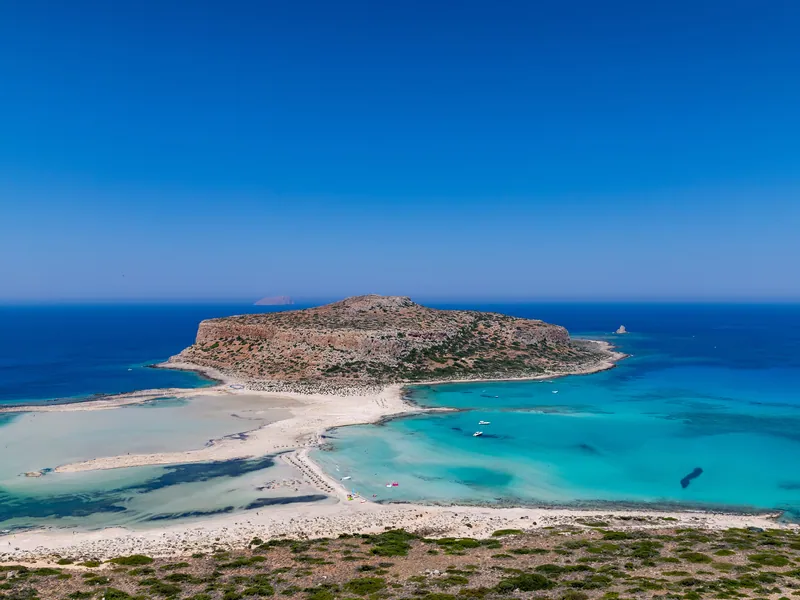
A shallow pink-sand lagoon at the south-western tip of Crete, warm and knee-deep a long way out — one of the best beaches in Europe for small children.
Good to know. A long, winding drive from most bases, with parking that fills by mid-morning in summer.
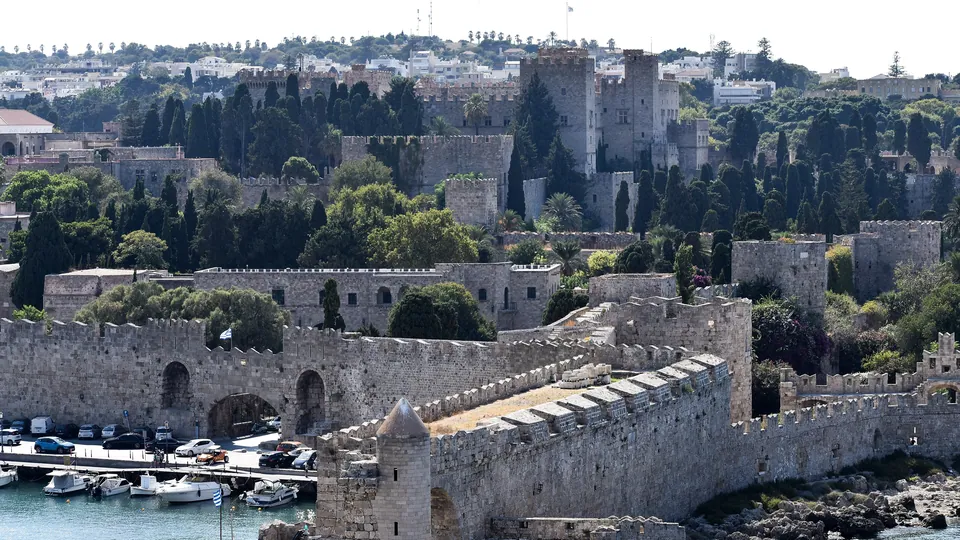
Rhodes
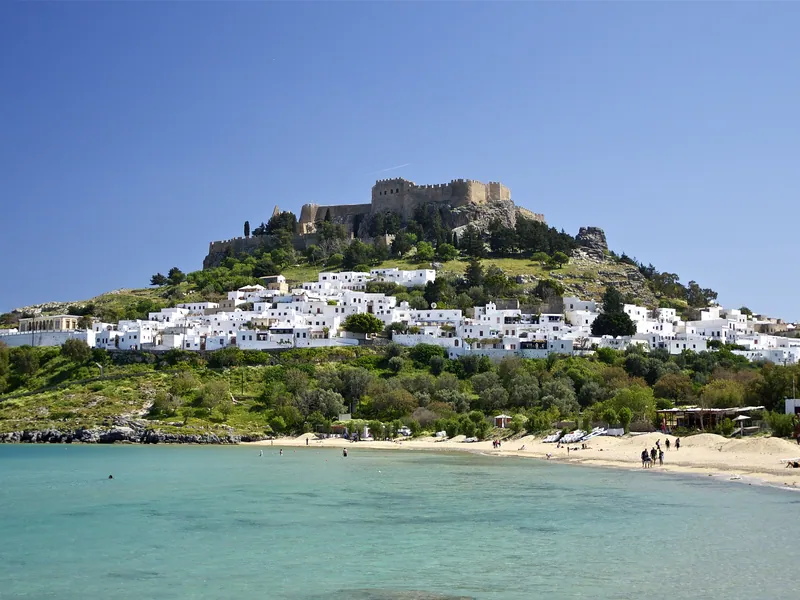
A walled, inhabited medieval city with a moat, gates and the Palace of the Grand Master — a UNESCO site you walk through rather than queue for.
Good to know. Cobbled throughout and hard work with a pushchair.
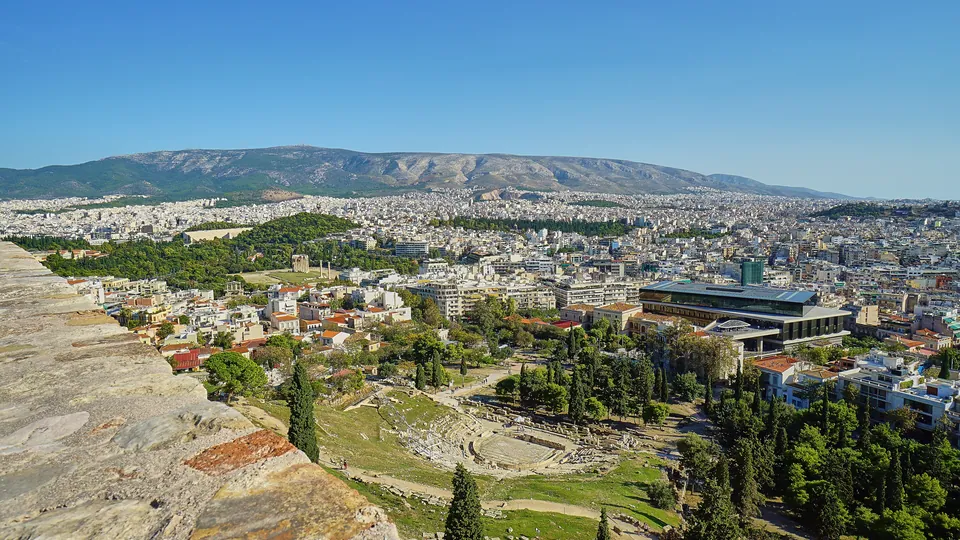
Athens
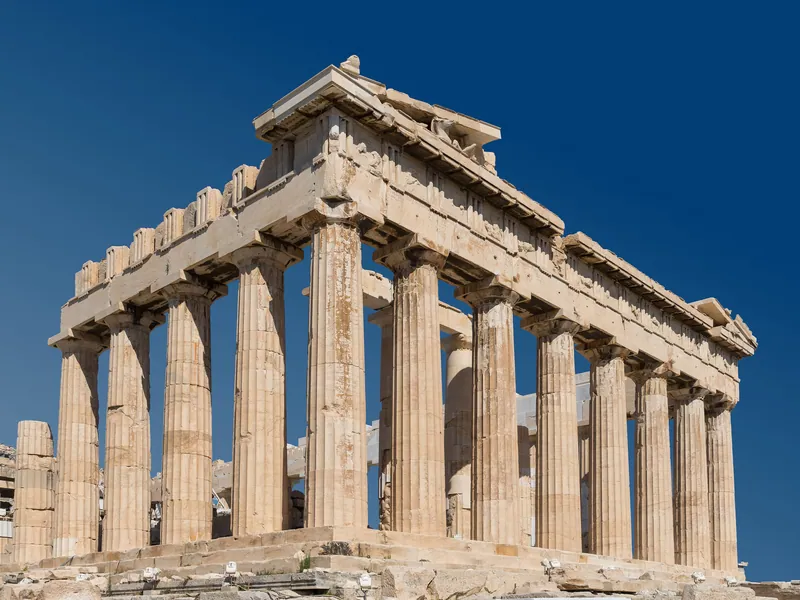
The Parthenon and its surrounding monuments, plus the modern museum below, built over a live excavation with glass floors.
Good to know. No shade on the rock and polished marble underfoot. Open at 08:00 in summer — take that slot.
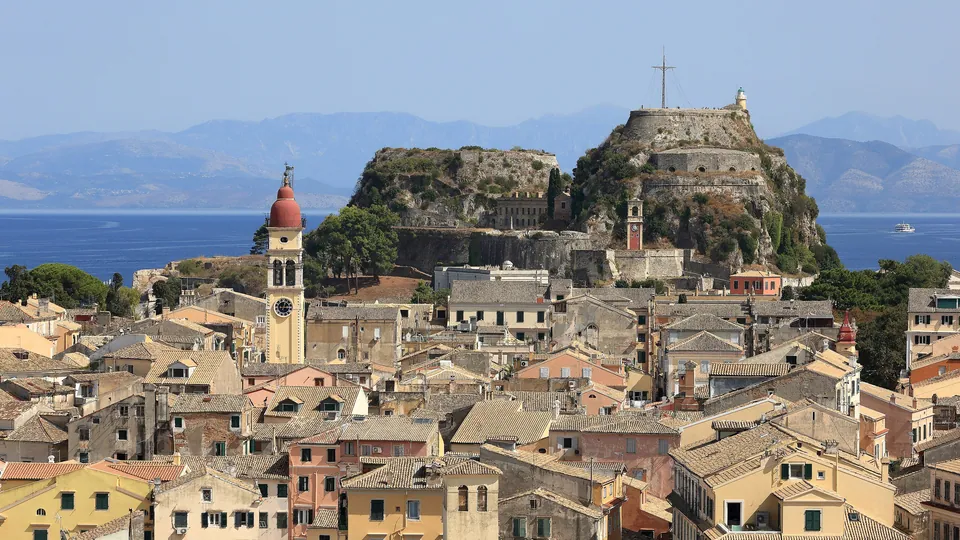
Corfu
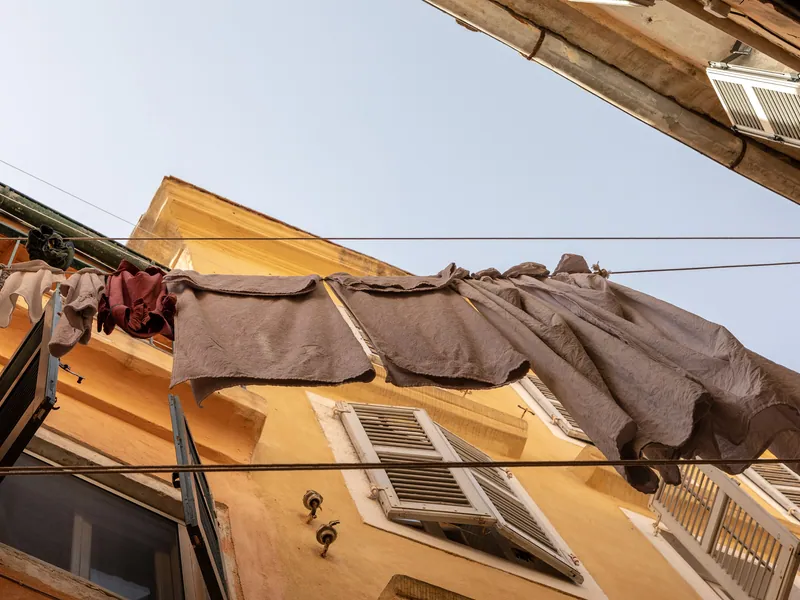
A UNESCO-listed Venetian town of arcaded streets, shuttered lanes and two fortresses, with the Liston esplanade and a cricket ground at its centre — walked through rather than queued for.
Good to know. Marble and cobbled lanes throughout, which is hard work with a pushchair, and the climb through the Old Fortress to the lighthouse is steep and fully exposed.
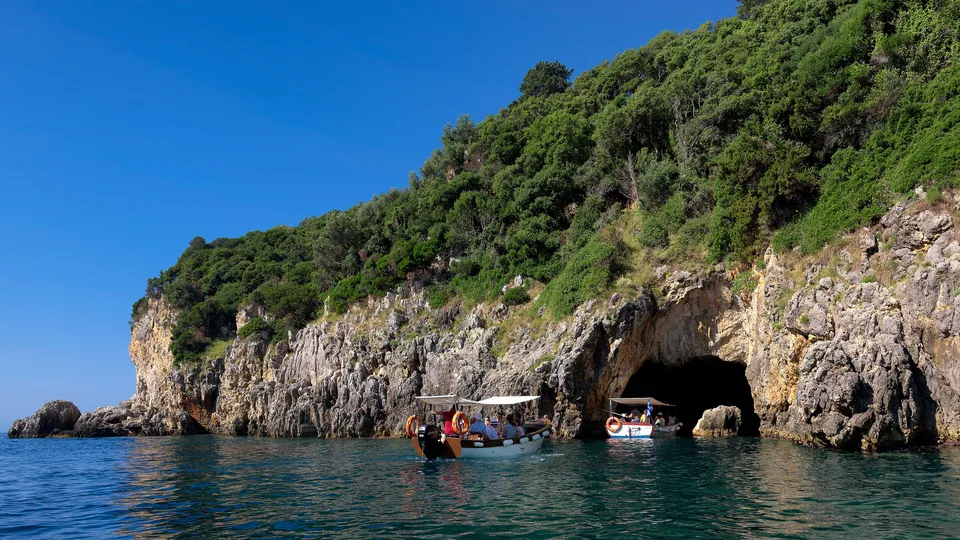
Corfu
A cluster of small coves beneath green headlands on the west coast, with small boats running from the main bay to sea caves and beaches that have no road access.
Good to know. The coves are shingle and the water deepens quickly, so it suits confident swimmers more than paddlers. The approach road is a long series of hairpins and afternoon swell can cancel the boats.
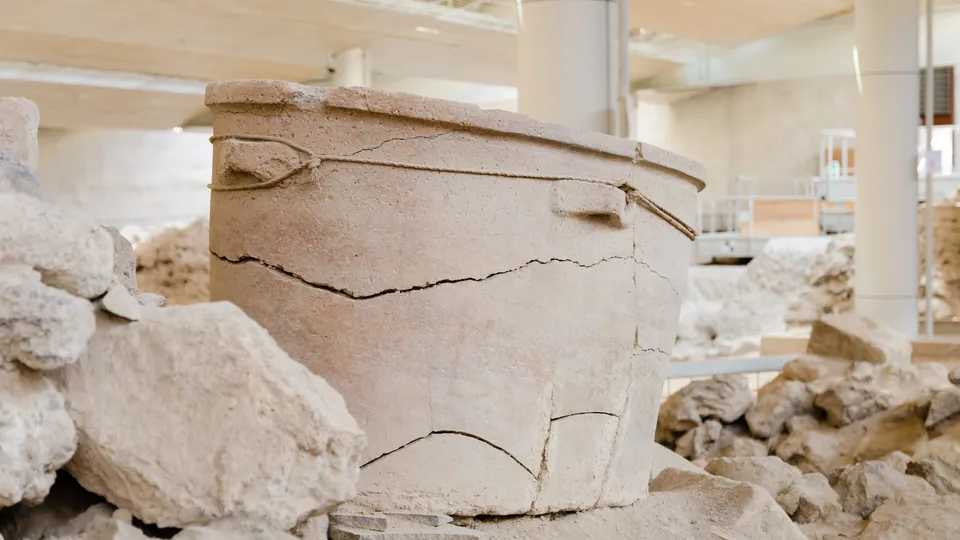
Santorini
A Bronze Age town buried by the volcanic eruption and preserved with streets, staircases and two-storey houses standing, now under a protective roof and crossed on raised walkways.
Good to know. The roof makes this the one major site on Santorini that is comfortable in summer heat, and the walkways are largely level — the exception on an island of steps.
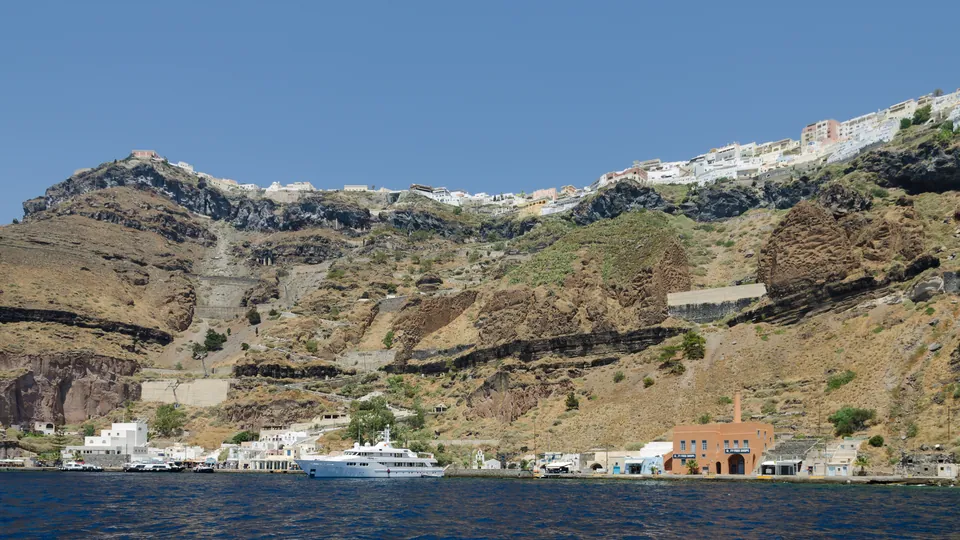
Santorini
The three cliff-top villages strung along the caldera rim, linked by a marked path that runs roughly 10 km end to end, with shorter and easier stretches between each pair.
Good to know. Stepped, uneven and unshaded, with unfenced drops in several places, and severely crowded at the Oia end before sunset. Not a pushchair route and not a safe one for children who wander.
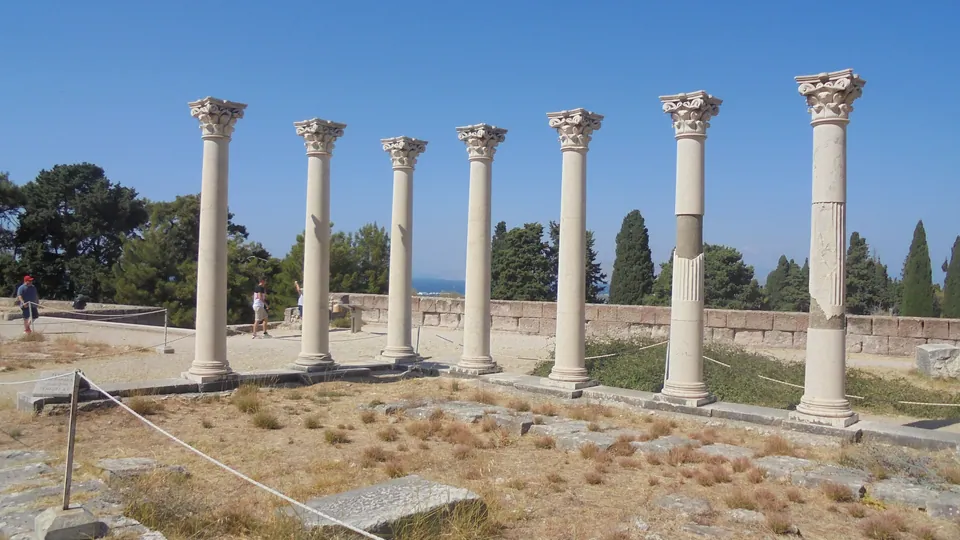
Kos
A terraced ancient healing sanctuary four kilometres above Kos Town, associated with Hippocrates, rising over three levels with a view across the strait to the Turkish coast.
Good to know. Steep stone staircases link the terraces and there is no shade anywhere on the site. Reachable by bicycle from town, which is part of its appeal.
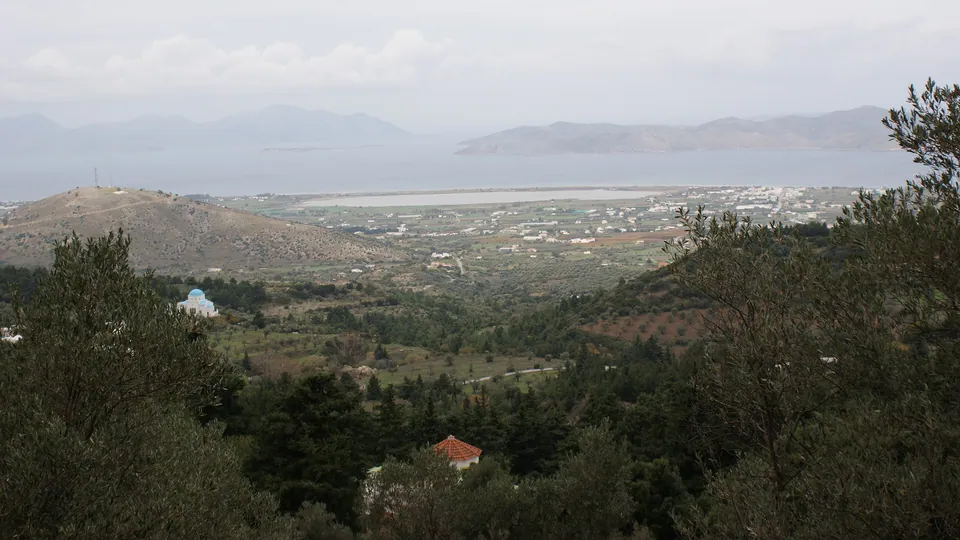
Kos
A long, wide strip of pale sand on the north coast where the water stays shallow far out, with a seasonal salt lake immediately behind it that draws flamingos in spring.
Good to know. Exposed to the afternoon breeze and prone to washed-up seagrass after a windy spell. The salt lake dries out through the summer, so the birds are a spring sight.
Peloponnese
The sanctuary where the ancient games were held, with the stadium and its stone starting line, the remains of the temple of Zeus, and a museum holding the sculpture excavated from the site.
Good to know. The ruins are spread through an open valley with patchy pine shade and none at all in the stadium. The museum is air-conditioned and makes the better middle of the day.
Peloponnese
The fortified Bronze Age citadel of the Mycenaean kings, entered through the Lion Gate, with the beehive-vaulted Treasury of Atreus tomb a short distance down the road.
Good to know. A bare hillside with no shade at all and uneven, ankle-turning stone underfoot. The underground cistern is steep, unlit and best skipped with children.
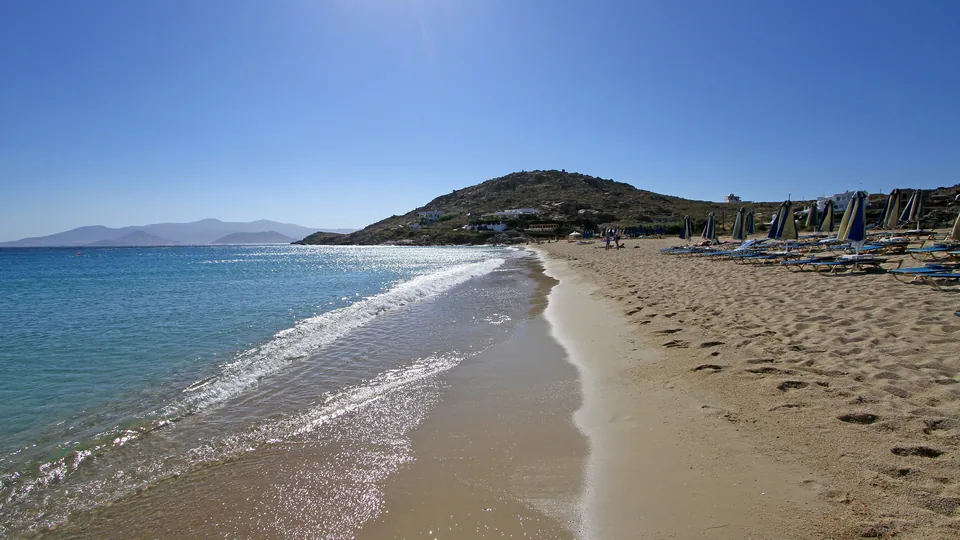
Naxos & Paros
Several kilometres of continuous wide, fine sand on the west coast of Naxos, split into three named stretches, where the water stays shallow a long way out and the organised sections have sunbeds, shade and tavernas behind them.
Good to know. The whole coast faces the open sea and takes the meltemi directly, so on a windy day the sand blows and the shallows churn. Shade and facilities stop well before the southern end of Plaka, where the beach is undeveloped and partly naturist.
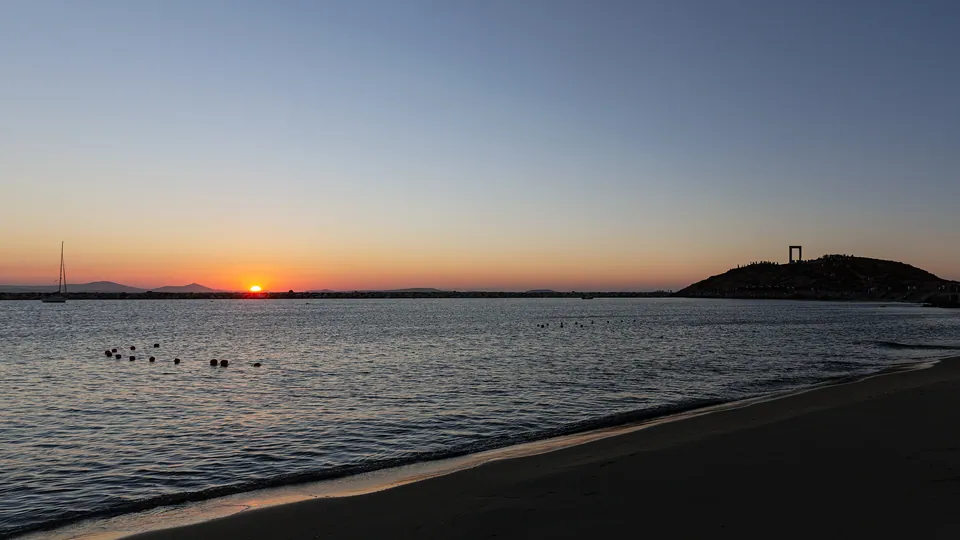
Naxos & Paros
The surviving marble doorway of an unfinished ancient temple, standing on an islet joined to Naxos town by a low causeway, with the stepped lanes of the Venetian old town and its hilltop castle immediately behind the harbour.
Good to know. The causeway and the islet are bare unfenced rock with no railing and no shade, and the marble underfoot is uneven and slippery when wet. The old town above is a stepped maze with no pushchair route through it.
Naxos & Paros
A bay on the north coast of Paros where wind-worn granite has been sculpted into a series of small shallow pools and coves, with the fishing harbour and lanes of Naoussa a short drive or a small-boat hop across the bay.
Good to know. The pools are small and fill up quickly in high season, the rock is smooth but sharp at the waterline so water shoes help, and there is very little natural shade. Reaching it from Naxos means a ferry crossing that is a separate booking and the first thing cancelled in strong wind.
Halkidiki
A cluster of shallow, sheltered coves on the east side of Sithonia, backed by pine and scattered with small islands, where the water is calm and knee-deep well out from the shore and small boats run out to the islets.
Good to know. Most of the smaller bays have no organised shade, no sunbeds and unsurfaced access tracks, so shade and water have to be carried in. Boat trips out to the islets are cancelled once the afternoon breeze builds, which it does most days in high summer.
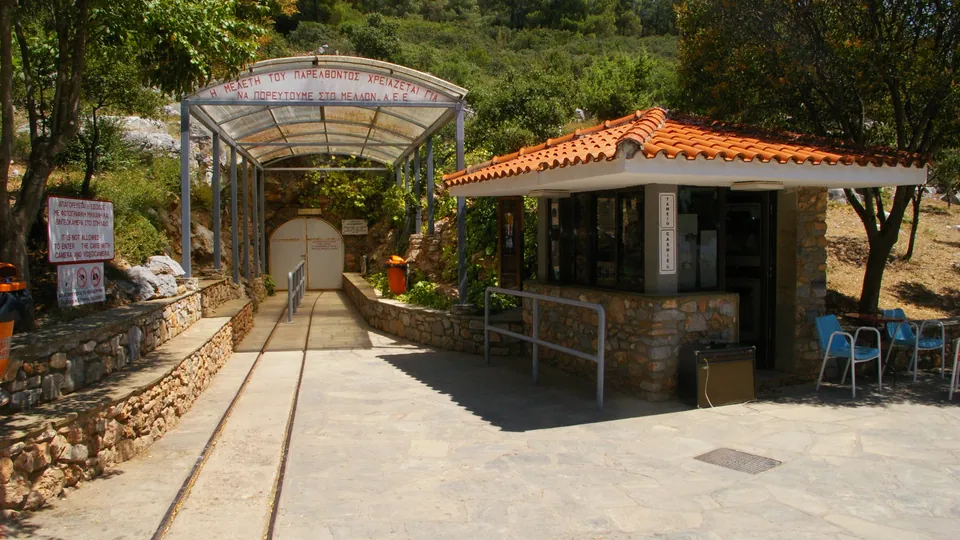
Halkidiki
A large limestone cave on the slope of Mount Katsika, hung with stalactites and known for the hominid skull found in it, visited on a guided circuit of raised walkways with a small museum beside the entrance.
Good to know. Visits follow a fixed guided route with steps, low headroom and no pushchair access, and the cave holds a steady temperature far cooler than the coast, so a layer is needed even in August. It is a 45-minute stop rather than a half-day, best paired with something else inland.
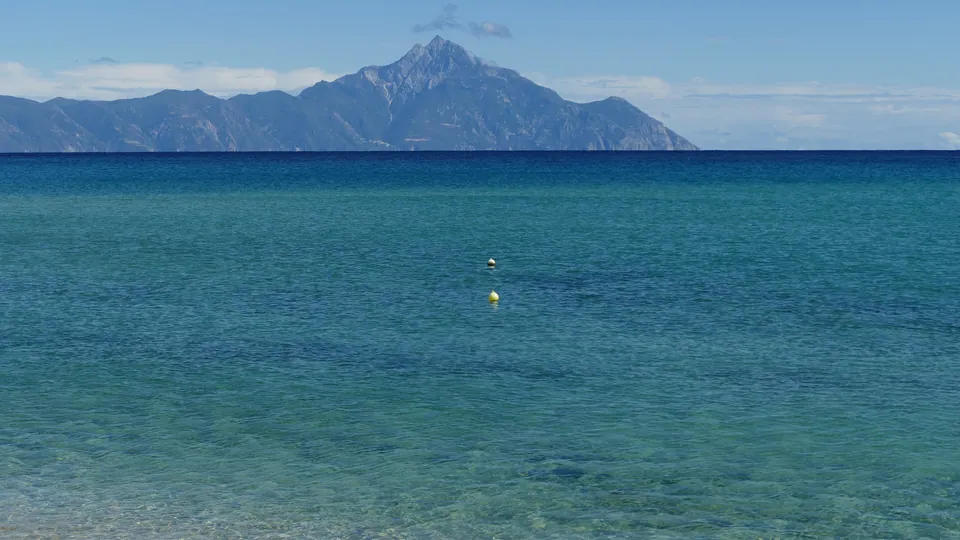
Halkidiki
A boat trip from Ouranoupoli along the western shore of the Athos peninsula, passing the monasteries built above the water while a commentary explains them, and usually calling at a nearby island or a swimming stop instead of landing on Athos.
Good to know. Nobody lands. Athos is a monastic territory closed to women and children and open to adult men only by permit, so the monasteries are seen from a legally required distance offshore. The boats are exposed, the swell builds in a northerly wind, and sailings are cancelled outright when it does.
Some links on this page are affiliate links. If you book through one, the price is the same for you and we may earn a commission. How this works.
Fly directly to the island where possible; ferry hopping is slower and more tiring than it looks on a map, and cancelled sailings in windy weather are common in summer. On Crete and Rhodes a rental car is the practical way to reach the better beaches. Athens has a good metro and needs no car at all.
Moderate driving. On the larger islands a car is what gets you to the quieter beaches and the ancient sites; bus networks are sparse outside the main resort strips. In Athens, or at a single all-inclusive resort, you do not need one.
€
€110
Budget · per day, family of four
€€
€190
Mid-range · per day, family of four
€€€
€330
Higher-end · per day, family of four
Planning estimates based on published prices at the time of writing, in shoulder season. Peak months, school holidays and city-centre accommodation all push the figure higher.
Among the easiest cuisines for children in Europe: grilled meat, chips, bread, tomato salad, pasta and yoghurt. Tavernas will make something plain on request without ceremony. Dinner starts late by northern European standards, though resort areas serve from around 19:00.
With kids
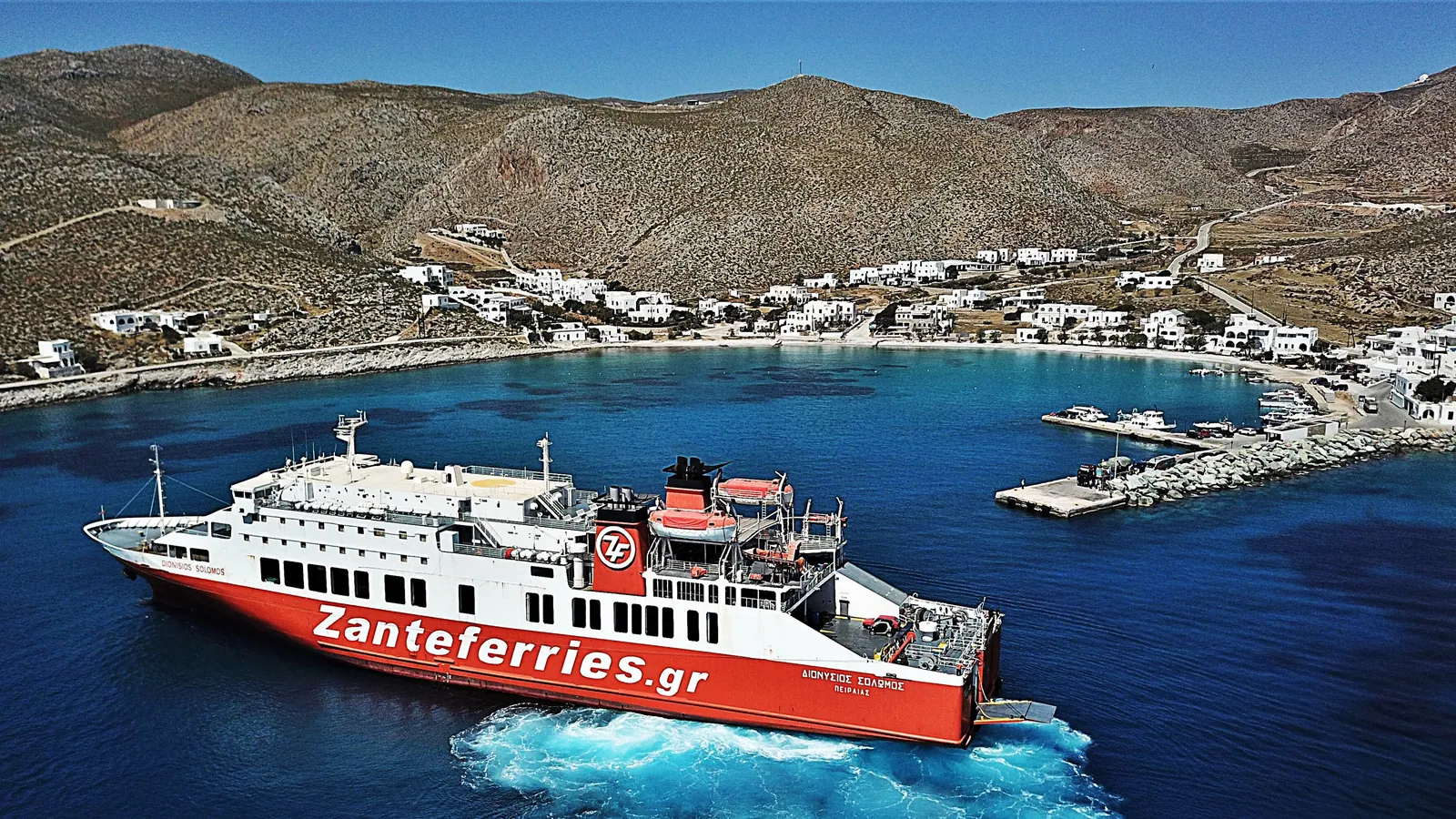
Ferry connections are slow, sailings are cancelled in wind, and each move costs the better part of a day. One base with day trips beats island hopping with young children.
Getting around
On Crete and Rhodes the best family beaches are outside the resort strips and poorly served by buses. Book automatic transmission early — the fleet is mostly manual.
When to go
The meltemi blows hard across the Aegean in July and August, making north-facing beaches unusable and cancelling ferries. South coasts are usually sheltered.
When to go
Knossos and the Acropolis have almost no shade. Arrive at opening or in the last two hours before closing.
Some links on this page are affiliate links. If you book through one, the price is the same for you and we may earn a commission. How this works.