Europe · 7 destinations
Spain with Kids: Where to Stay, Costs & When to Go
Spain is one of the easiest European countries to travel with children. Flights are short from most of Europe, the high-speed rail network joins the big cities without a car, and children are treated as ordinary restaurant customers rather than a problem to be seated quickly. The range is unusual too: a city beach in Barcelona, quiet coves on the Costa Brava, a Mediterranean island with a mountain railway, an Andalusian city built around shaded courtyards, and a volcanic Atlantic island that works in January. The trade-offs are real — inland summers are punishing for young children, the eating clock runs two to three hours later than northern Europe, and the headline sights now run on timed tickets that sell out weeks ahead.
- Best for ages
- 0+
- Recommended trip length
- 7–14 days
- Budget level
- €€
- Best time to visit
- Apr–Jun, Sep–Oct
Suits up to 16
Mid-range
Why Spain works for families
Eating out is genuinely easy
Shared small plates let a cautious eater try three things without committing to a whole dish, and children are welcome in ordinary restaurants rather than only in tourist ones.
Calm, shelving, patrolled beaches
Most resort beaches on the Mediterranean coast shelve gently, are flagged and lifeguarded through the summer, and have showers and shade to rent on the sand.
High-speed rail replaces the car
Madrid, Barcelona, Seville, Valencia and Málaga connect by AVE, so a two-city trip needs no rental, no parking and no motorway driving with tired children.
A winter option as well as a summer one
The Canaries hold roughly 20 °C through the winter, which makes Spain one of the few European countries that works for a beach week in February.
Costs below most of western Europe
Family apartments, eating out and museum tickets all sit noticeably cheaper than France or Italy, and many municipal attractions are free for under-sixes.
Where to go in Spain
The areas worth building a family trip around, and how long to give each.

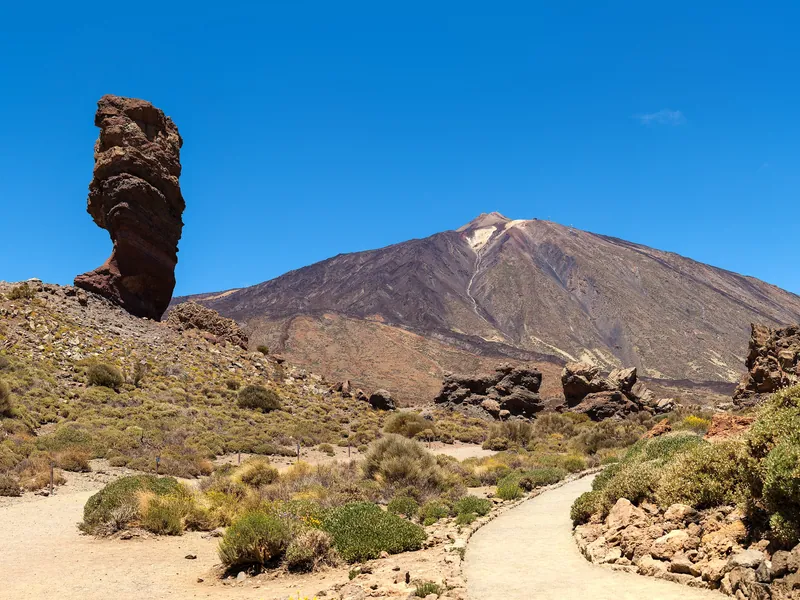
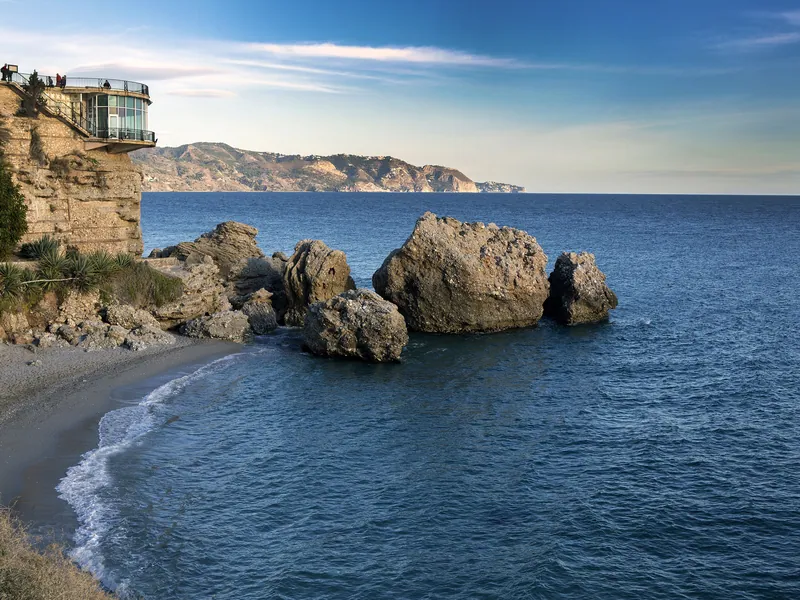
Costa del Sol
A built-up resort strip with a real city at one end
- Suggested stay
- 5–10 days
- Best for ages
- 0+

When to visit Spain with kids
May, June and September are the sweet spot on the mainland and the Balearics: the sea is warm enough to swim, cities are walkable, and prices sit below the August peak. The Canary Islands invert this and are at their best from October to May.
- Jan
- Feb
- Mar
- Apr
- May
- Jun
- Jul
- Aug
- Sep
- Oct
- Nov
- Dec
Where to stay
Family hotels in Spain
We list areas and property types rather than single hotels: family-room availability changes constantly, and the area plus the room requirement is what survives contact with a booking engine.
 EixampleMid-range
Apartment in the Eixample grid
Two-bedroom apartments in the nineteenth-century grid cost less than two hotel rooms and add a kitchen, a washing machine and a living room to sit in once the children are asleep — which is what makes a five-night city stay sustainable rather than cramped.
- Kitchen and washing machine
- Metro within five minutes on foot
- Walking distance to the main Gaudí houses and the old town
- Wide, flat, pushchair-friendly pavements
- Supermarkets and bakeries on every block
Fitting a family in
Two-bedroom units routinely sleep four to five without a rollaway. Original flats in this district are large by European standards, often with a long corridor and two street-facing rooms.
Watch out. Older blocks have a very small lift or none at all, which is a significant problem on a fourth floor with a pushchair — confirm both the floor and the lift before booking. Rooms facing Gran Via, Aragó or Balmes carry heavy traffic noise, so an interior-facing or courtyard bedroom is worth asking for. Licensed tourist apartments are legally required to display a registration number; listings without one are operating outside the rules and can be cancelled at short notice.
Check hotel prices — opens Klook in a new tab (affiliate link)Live availability for your dates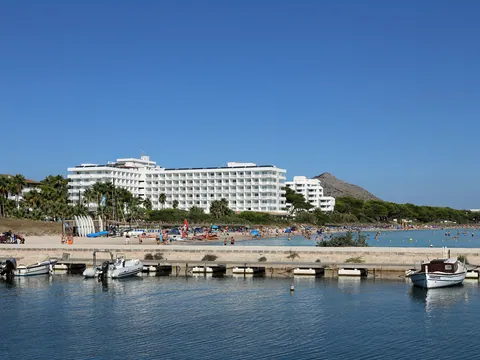 Platja de Muro / Bay of AlcúdiaMid-range
Beachfront family resort behind Platja de Muro
This stretch of the Bay of Alcúdia is the most reliably suitable family beach on the island — several kilometres of fine sand that shelves very gradually — and the hotels directly behind it were built for families rather than adapted for them.
- Direct or near-direct access to a shallow, lifeguarded beach
- Children's pools and shallow splash areas as standard
- Half-board and all-inclusive boards widely available
- Flat terrain and a level promenade for pushchairs
- Cycle hire and a flat coastal cycle path
Fitting a family in
Family rooms and two-room suites sleeping four to five are the standard product in this area rather than an exception, and apartment-style units with a kitchenette are common.
Watch out. This is a purpose-built resort strip: it delivers convenience and very little local character, and the nearest working town is a drive or a bus ride away. Many properties close entirely from roughly November to April, and prices in August can be double those of June or September. Some hotels sit on the far side of the coast road rather than on the sand, which is a meaningful difference with a toddler.
Check hotel prices — opens Klook in a new tab (affiliate link)Live availability for your dates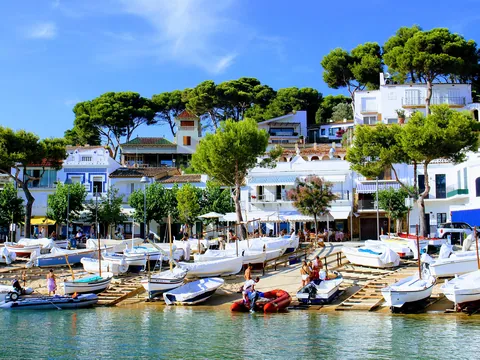 Llafranc / Calella de PalafrugellMid-range
Apartment above Llafranc bay
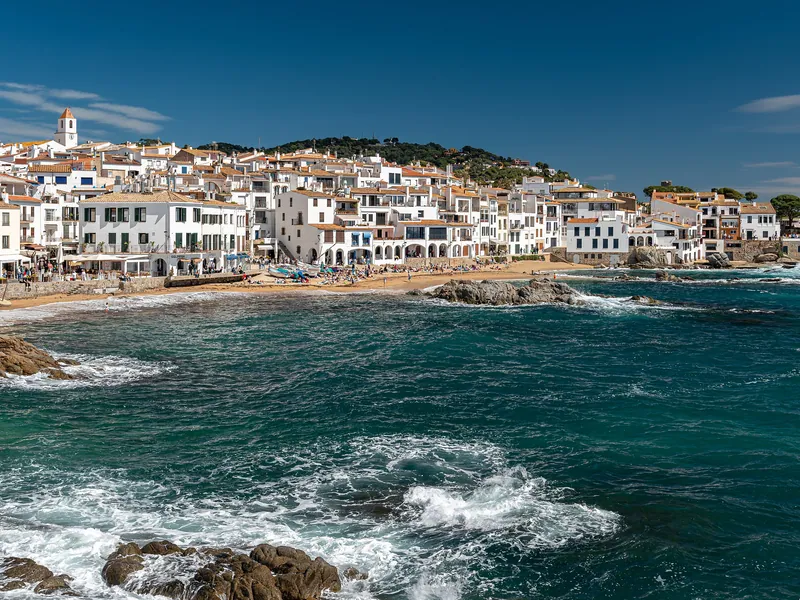
Staying in one of the linked cove villages means the coast path replaces the car for most of the week: two beaches, a lighthouse headland and a handful of restaurants are all reachable on foot, which removes the daily parking problem that defines this coast.
- Walking distance to two or three coves via the Camí de Ronda
- Kitchen for the early suppers that the Spanish dinner clock makes necessary
- Sheltered, calm bay with lifeguards in season
- Small seafront promenade rather than a resort strip
Fitting a family in
Two-bedroom holiday apartments are the standard local product, usually with a terrace and sleeping four to six. Many are let Saturday to Saturday in July and August.
Watch out. The village is built on a slope, so an apartment with a sea view almost always means a steep climb back from the beach, often up steps. Parking is scarce and frequently paid, the bay is small and completely full in August, and the choice of restaurants shrinks sharply outside the summer season. Air conditioning is not universal in older blocks.
Check hotel prices — opens Klook in a new tab (affiliate link)Live availability for your dates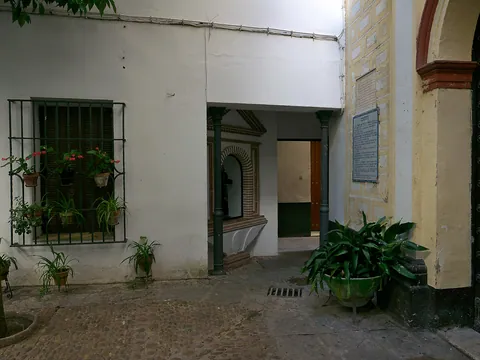 Barrio Santa CruzMid-range
Patio house in Barrio Santa Cruz
A traditional courtyard house puts the family inside the old quarter, a few minutes on foot from the Alcázar and the cathedral, and the central patio is a genuinely practical feature rather than a decorative one — it stays cool and gives children somewhere enclosed to be in the afternoon.
- Two to five minutes' walk from the Alcázar and the cathedral
- Shaded central patio that stays cool through the afternoon
- Whole-house and multi-room lets sleeping a family in one booking
- No transport needed for any of the main sights
Fitting a family in
Converted houses in this quarter let as whole properties or as a handful of rooms around the patio, so a family of four or five can usually be accommodated without splitting across floors of a hotel.
Watch out. The lanes are too narrow for a taxi or a car to reach most doors, which means carrying luggage the last few hundred metres over cobbles. Sound echoes badly around an open patio, so one late group affects the whole house. Lifts are rare in buildings of this age and air conditioning should be confirmed explicitly rather than assumed — from June to September it is not optional here.
Check hotel prices — opens Klook in a new tab (affiliate link)Live availability for your dates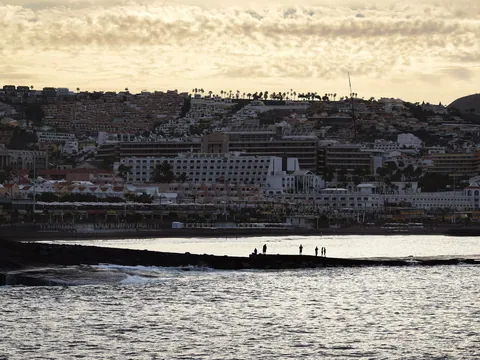 Costa AdejeMid-range
All-inclusive resort on the Costa Adeje seafront
The southern resorts exist because this is where the sun is most reliable and the sea is most sheltered, and a seafront all-inclusive removes the two hardest parts of a winter family week: finding safe swimming and feeding four people on a Spanish dinner clock.
- Sheltered beaches behind breakwaters rather than open Atlantic swell
- Heated pools, which matter between November and March
- Children's clubs and buffets serving at European mealtimes
- Long level promenade linking the resorts on foot
Fitting a family in
Family rooms, junior suites and two-room apartments sleeping four to five are the standard product in this area, and many complexes are apartment-style with a kitchenette as well as a board basis.
Watch out. Costa Adeje is entirely purpose-built and dense, so there is no local town character within walking distance. Many complexes are terraced up a steep hillside, which means a long climb back from the beach and a genuine problem with a pushchair — sea-level or promenade-level properties cost more for that reason. Confirm the pool is heated rather than assuming it, and note that afternoon wind off the Atlantic is normal here even on hot days.
Check hotel prices — opens Klook in a new tab (affiliate link)Live availability for your dates Benalmádena Costa / TorremolinosMid-range
Beachfront family hotel or aparthotel at Benalmádena
This is the stretch the coast was developed for: half-board and all-inclusive hotels with children's pools directly behind a shallow patrolled beach, a level promenade running for kilometres in both directions, and a train station that reaches Málaga and the airport in under half an hour.
- Children's pools and shallow splash areas as standard
- Half-board and all-inclusive boards serving at European mealtimes
- Level seafront promenade for pushchairs and scooters
- Cercanías train to Málaga, the airport and Fuengirola
- Water parks, a marina and a cable car within a short bus ride
Fitting a family in
Family rooms, two-room suites and aparthotel units with a kitchenette sleeping four to five are the standard product here rather than an exception.
Watch out. Much of the accommodation dates from the 1970s and 1980s and has been refurbished to wildly varying standards, so the age of the building and the date of its last refit matter more than the published category. Many hotels sit on the inland side of the coast road or well above the promenade, which means a walk or a lift down to the sand; the beaches are dark, coarse sand rather than fine; and the bar strips behind Benalmádena Costa and central Torremolinos are loud until late in August.
Check hotel prices — opens Klook in a new tab (affiliate link)Live availability for your dates Centro histórico / Soho, MálagaMid-range
Apartment in Málaga's old centre
A centre apartment turns the eastern end of the coast into a city break with a beach attached: the museums, the market, the Alcazaba and the pedestrianised streets are all on foot, La Malagueta beach is a fifteen-minute walk, and the airport and the resorts are on the train.
- Pedestrianised centre with the museums and the market on foot
- Kitchen and washing machine for a longer stay
- Cercanías train to the airport and the resort strip
- City beach and the port promenade within walking distance
Fitting a family in
Two-bedroom apartments in converted centre buildings sleep four to five and cost less than two hotel rooms, usually on one floor with a small balcony.
Watch out. Almost nothing in the centre has a pool, which is a real gap in July and August. Older buildings often have a very small lift or none at all, the pedestrian lanes carry restaurant terraces that are noisy until well after midnight — an interior-facing bedroom is worth asking for — and the centre sits inside a restricted-traffic and low-emission zone that a hire car cannot drive into.
Check hotel prices — opens Klook in a new tab (affiliate link)Live availability for your dates Sol / Ópera / Plaza MayorMid-range
Apartment near Sol and Plaza Mayor
The dead centre puts the royal palace, the main squares, the market halls and three metro interchanges on foot, and an apartment adds a kitchen — which matters in a city where restaurant dinner starts at 20:30.
- Every metro line within a few minutes on foot
- Kitchen and washing machine for early suppers and laundry
- Walking distance to the Royal Palace, the markets and the Prado
- Supermarkets and bakeries open late
Fitting a family in
Two-bedroom apartments sleeping four to five are widely available in converted centre buildings and cost less than two hotel rooms.
Watch out. This is the loudest part of Madrid — bars and street activity run past 02:00 at weekends, so a courtyard-facing bedroom is worth insisting on. Older blocks have a very small lift or none at all, the flats themselves are often narrow and dark, and air conditioning should be confirmed explicitly rather than assumed: from June to September it is not optional here.
Check hotel prices — opens Klook in a new tab (affiliate link)Live availability for your dates Jerónimos / Paseo del PradoHigher-end
Hotel family rooms by the Retiro and the museum boulevard
The most comfortable base in a hot city: the park is across the road for an hour before the museums open, the Prado, Thyssen and Reina Sofía are all within a ten-minute walk, and the streets are wide, shaded and quiet at night.
- The Retiro park and its playgrounds across the road
- All three major museums within a ten-minute walk
- Wide shaded pavements and quiet evenings
- Lifts, reliable air conditioning and a reception desk
Fitting a family in
Triples and connecting doubles are the usual way to sleep four; genuine four-person rooms exist but are limited, so booking early matters more here than in a coastal resort.
Watch out. The most expensive district in the city, and a museum and office quarter rather than a neighbourhood — the evening choice of restaurants is thinner and more formal than in Chamberí or La Latina, and a good deal of it closes on Sunday evening. Pools are rare and small where they exist at all.
Check hotel prices — opens Klook in a new tab (affiliate link)Live availability for your dates
Some links on this page are affiliate links. If you book through one, the price is the same for you and we may earn a commission. How this works.
Top family attractions in Spain
What each one costs, how long it takes, which ages it suits and whether you need to book ahead.
 CultureBook ahead
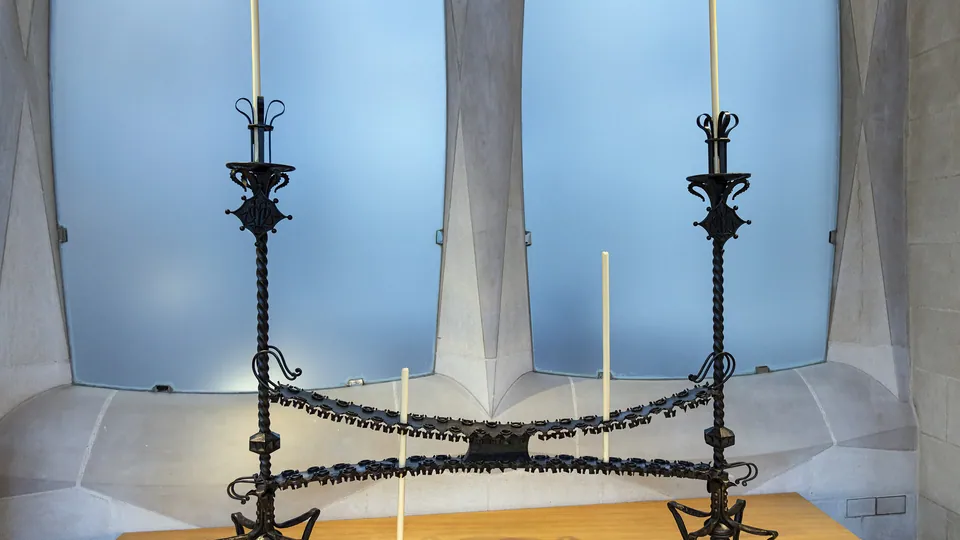
Sagrada Família
Barcelona
An unfinished basilica whose interior columns branch like trees and whose stained glass throws bands of blue and orange light across the floor. The scale and the strangeness register with children immediately, without any historical explanation.
- Ages
- 4–17
- Time
- 1h 30m
- Adult, from
- €26
Good to know. Timed entry sells out days or weeks ahead from spring to autumn. The tower add-on carries a minimum age of around six and the descent is by a narrow, enclosed spiral staircase, which is a poor combination for anyone uneasy with heights or confined spaces.
 CultureBook ahead
Park Güell
Barcelona
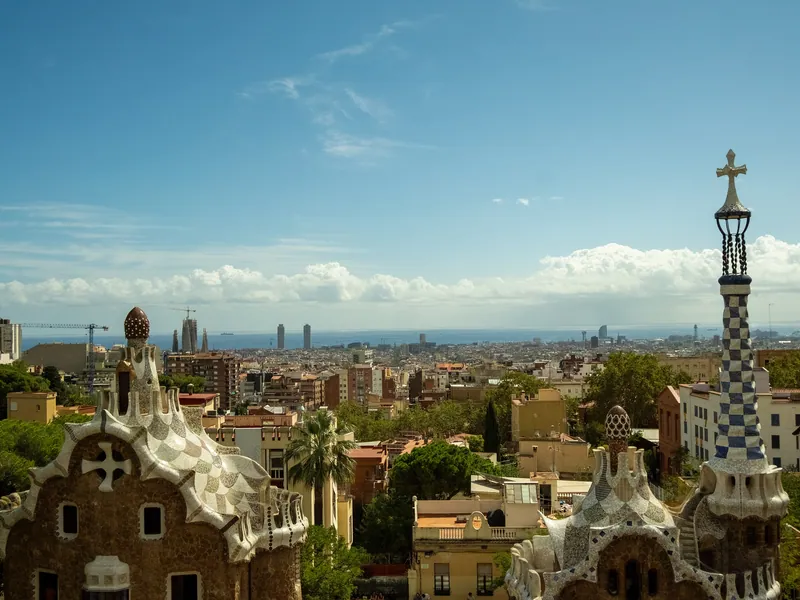
A hillside park of mosaic terraces, a tiled lizard fountain and leaning stone colonnades, with a view over the whole city. The ticketed monumental zone is a small part of a much larger free park.
- Ages
- 3–16
- Time
- 2h
- Adult, from
- €10
Good to know. The approach from the nearest metro stations is a steep uphill walk; outdoor escalators cover part of it from Vallcarca and a city bus climbs closer. The monumental zone has very little shade and entry is by timed slot, so a hot midday booking is the worst of both problems.
 AdventureBook ahead
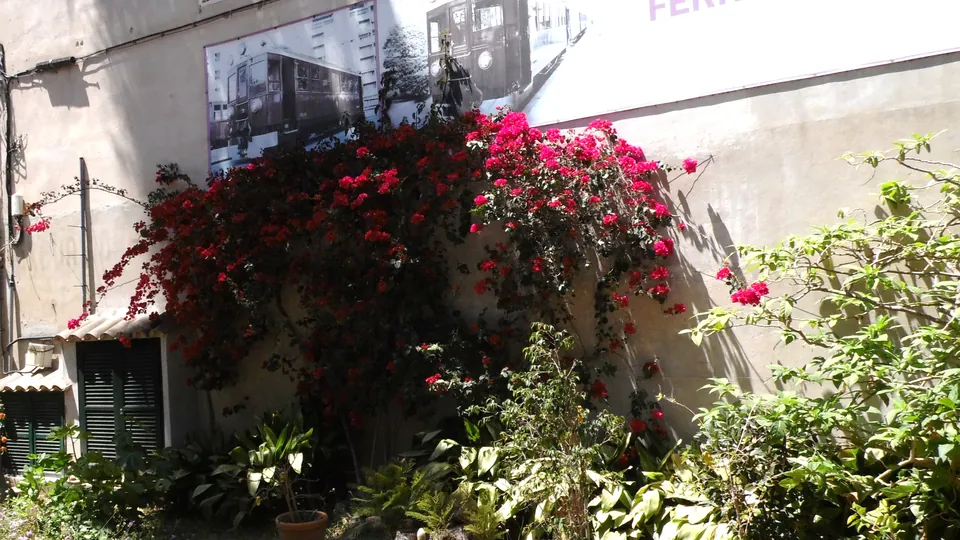
Palma–Sóller railway and tram
Mallorca
A narrow-gauge railway opened in 1912 that climbs from Palma through orange groves and thirteen tunnels into the Sóller valley in wooden carriages, connecting to a vintage open-sided tram down to the port.
- Ages
- 2–16
- Time
- 5h
- Adult, from
- €30
Good to know. The historic carriages have no air conditioning and open windows instead, which makes an August afternoon departure uncomfortable. The journey is around an hour each way with no facilities on some services, and summer departures sell out, so seats are worth securing in advance.
 NatureBook ahead
Coves del Drach
Mallorca
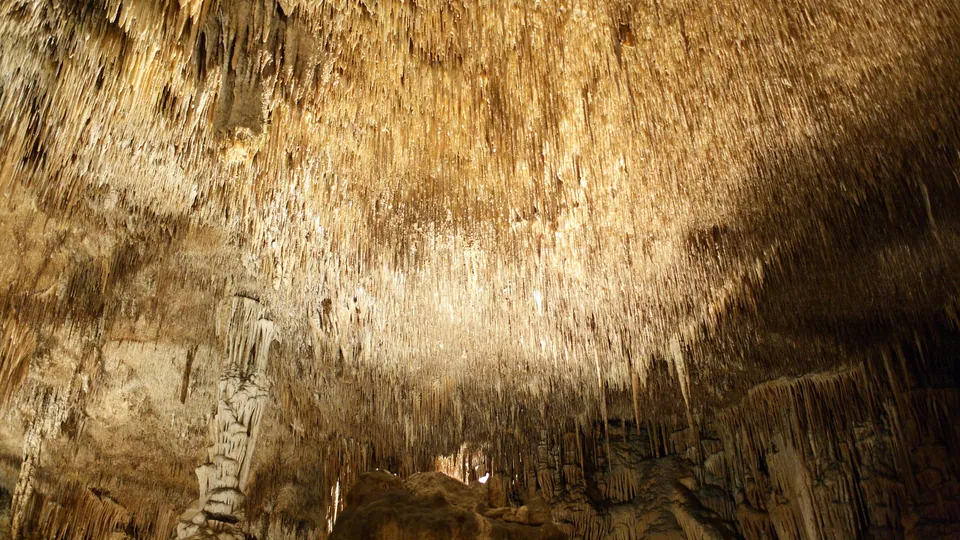
A large cave system near Porto Cristo containing one of the biggest underground lakes in Europe, where a short classical concert is performed from illuminated rowing boats before visitors can be rowed across.
- Ages
- 5–16
- Time
- 1h 30m
- Adult, from
- €18
Good to know. The route involves several hundred steps up and down with no lift and no pushchair access, and the floor is damp. The concert is performed in near-darkness and the lights go fully down beforehand, which frightens some younger children. Entry is by timed session and the summer sessions sell out.
 Nature
Camí de Ronda: Calella de Palafrugell to Llafranc
Costa Brava
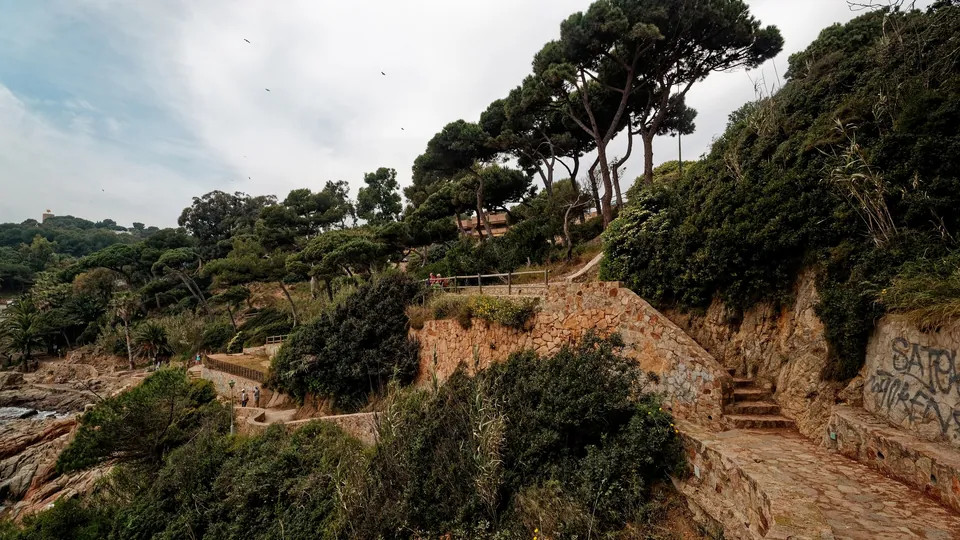
A cliff-edge section of the old coastguard footpath linking two small bays, passing above pine-backed coves, rock pools and a lighthouse headland. One of the shortest and most scenic stretches of the long-distance path.
- Ages
- 5–16
- Time
- 1h 30m
- Adult, from
- Free
Good to know. The path includes steps cut into the rock, short unfenced sections above drops and almost no shade, and it is not passable with a pushchair. It is walkable in around 25 minutes each way at an adult pace, considerably longer with children stopping at the coves.
 WaterBook ahead
Medes Islands boat and snorkelling trips
Costa Brava
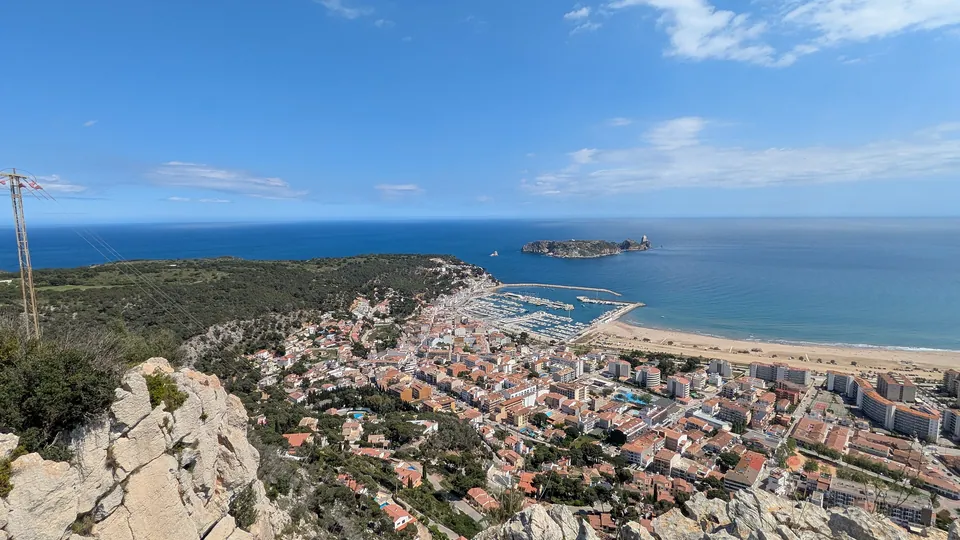
A protected marine reserve of seven small islands off L'Estartit, visited by glass-bottom boats that pass through coastal caves, with guided snorkelling trips over the seagrass and rock for older children.
- Ages
- 5–16
- Time
- 3h
- Adult, from
- €25
Good to know. Trips are cancelled outright in strong tramuntana wind, sometimes for several consecutive days, so an early-in-the-stay booking leaves room to rebook. The crossing is short but exposed and swell is common, which matters for anyone prone to seasickness. Guided snorkelling usually carries a minimum age and requires confident swimming.
 CultureBook ahead
Real Alcázar
Seville
A working royal palace of tiled courtyards, carved plasterwork, water channels and a large walled garden with a maze, an underground bath chamber and peacocks. It is walked through rather than viewed, which is why it holds children far better than a museum.
- Ages
- 4–17
- Time
- 2h 30m
- Adult, from
- €15
Good to know. Timed tickets sell out several days ahead for most of the year and longer around Easter. The gardens have limited shade and become uncomfortable from late morning in summer, so an early slot is worth more than a cheaper one. Surfaces are cobbled and uneven in places and a few chambers have steps.
 City
Plaza de España and Parque de María Luisa
Seville
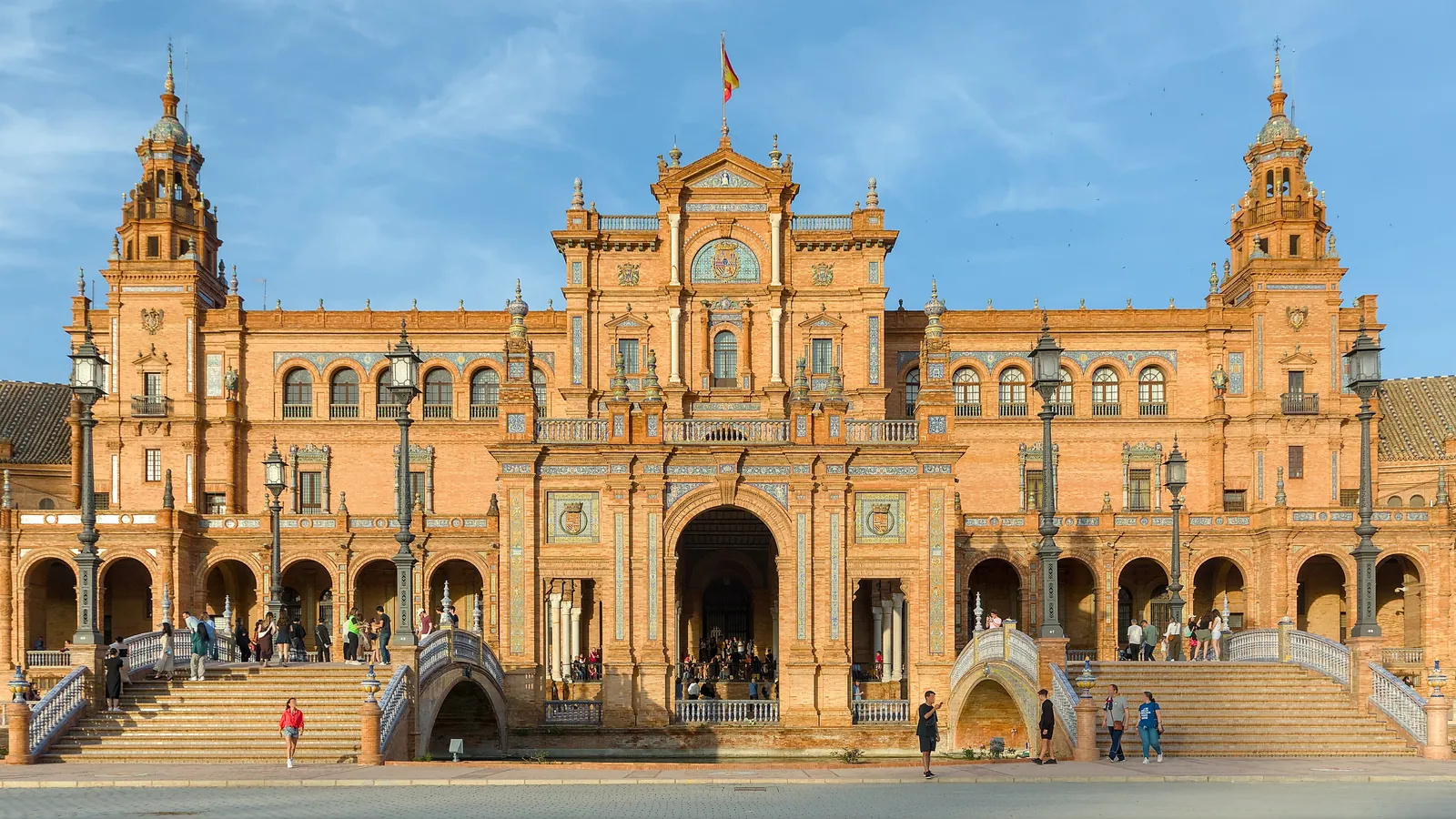
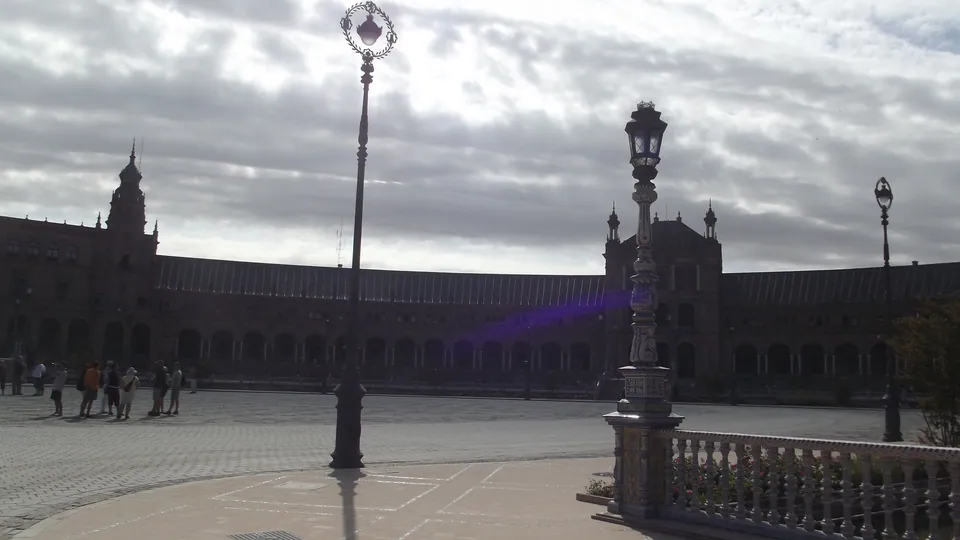
A vast semicircular pavilion built for the 1929 exposition, with a canal running around it where rowing boats are hired by the half-hour, tiled alcoves for each Spanish province and a large shaded park with ponds directly alongside.
- Ages
- 2–16
- Time
- 2h
- Adult, from
- Free
Good to know. The plaza itself is a huge open expanse of stone with essentially no shade, which makes it unbearable in the middle of a summer day and lovely in the early evening. The plaza is free to enter; the boats are hired separately and queue at weekends. Horse carriages work the surrounding roads and are persistently touted.
 NatureBook ahead
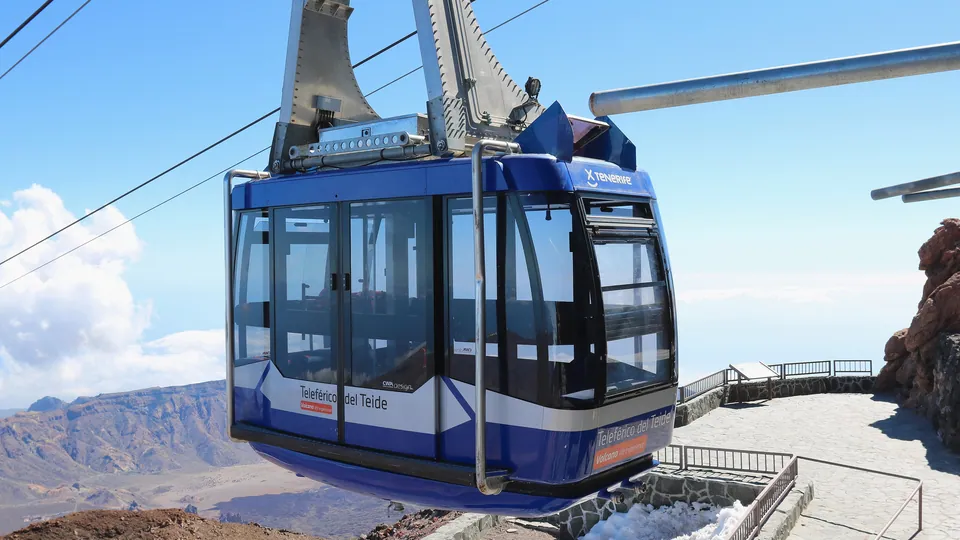
Teide National Park and cable car
Tenerife
A high-altitude volcanic landscape of lava flows, rock towers and a caldera floor, with a cable car climbing from around 2,350 metres to just over 3,500 metres on the flank of Spain's highest mountain.
- Ages
- 5–16
- Time
- 5h
- Adult, from
- €40
Good to know. The upper station sits above 3,500 metres, where thin air causes headaches and breathlessness in some children and is not advised for anyone with a heart or lung condition. Temperatures are typically 15 to 20 °C below the coast with strong wind, and the cable car closes at short notice in high wind or snow. Walking the final stretch to the summit requires a free permit booked well in advance and separately from the cable car.
 WaterBook ahead
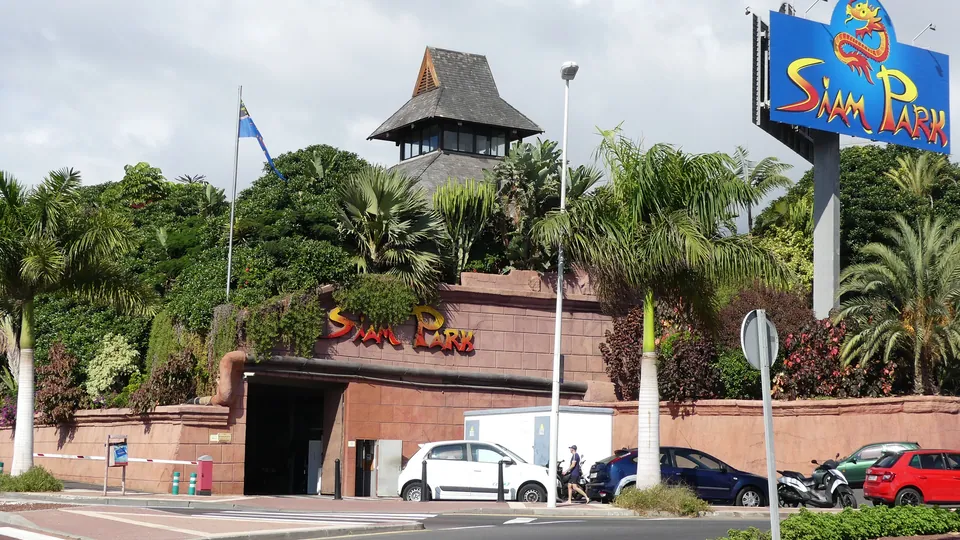
Siam Park water park
Tenerife
A large Thai-themed water park above Costa Adeje with a wave pool, a long lazy river, a dedicated children's area and several steep headline slides. Designed as a full-day destination rather than a hotel add-on.
- Ages
- 3–17
- Time
- 7h
- Adult, from
- €42
Good to know. Most of the headline slides carry a minimum height of around 1.10 metres and a few set it higher, so a younger child may be limited to the children's zone and the wave pool on a full-price adult-equivalent ticket. Queues are almost entirely unshaded, the site is built on a slope with a lot of stair climbing between rides, and individual attractions close in high wind.
 AdventureBook ahead
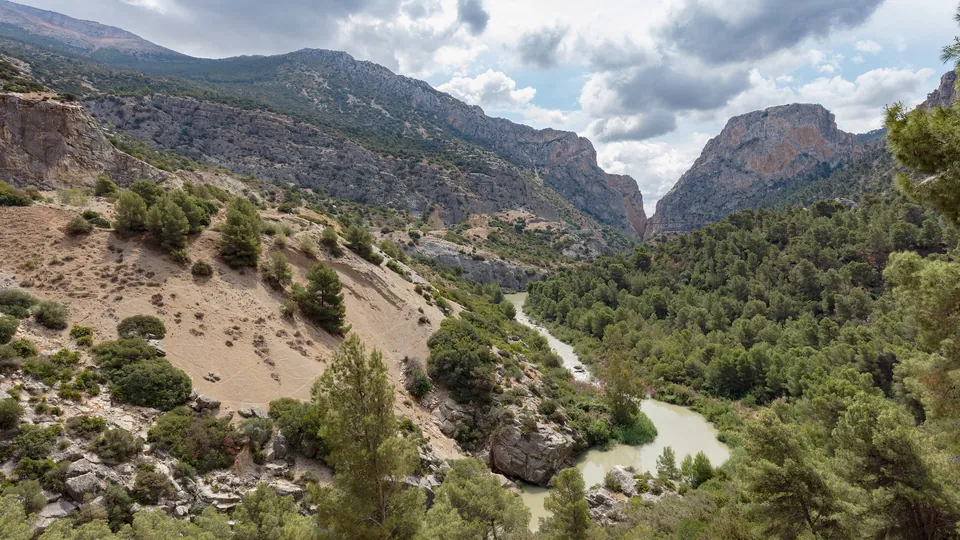
Caminito del Rey
Costa del Sol
A walkway bolted to the wall of the Gaitanes gorge about an hour inland from the coast: several kilometres of boardwalk and path along the cliff face, ending on a suspended bridge high above the river, walked one way with a shuttle bus back to the start.
- Ages
- 8–17
- Time
- 4h
- Adult, from
- €18
Good to know. Entry is timed, capped daily and strictly one way, and it sells out weeks ahead for weekends and school holidays. There is a minimum age of eight, children must be accompanied, and pushchairs and baby carriers are not permitted. The route is exposed with very little shade, closes in high wind or storms, and the shuttle bus at either end adds most of an hour to the day.
 NatureBook ahead
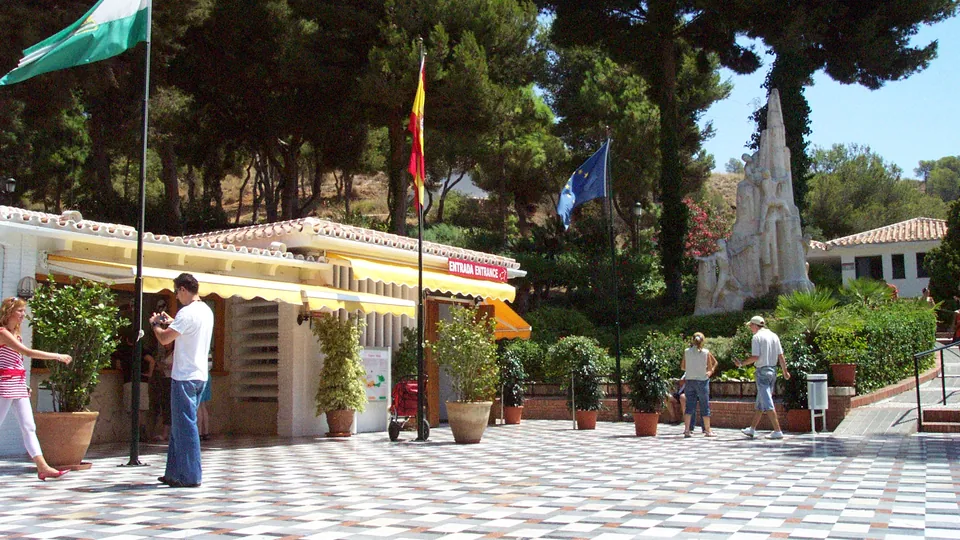
Nerja caves
Costa del Sol
A cave system in the hills behind Nerja, opened as a visitor route through a sequence of very large chambers that includes one of the tallest natural stone columns anywhere, laid out as a self-guided walk on lit concrete paths.
- Ages
- 4–16
- Time
- 1h 30m
- Adult, from
- €15
Good to know. The route is a near-continuous sequence of steps and ramps with no lift and no pushchair access, and the air stays cool and damp all year, so a layer is needed even in August. Entry is by timed slot and the summer sessions sell out. Lighting is deliberately dim in places, which some younger children dislike, and the site sits above the town rather than in it.
 Animals
Bioparc Fuengirola
Costa del Sol
A compact immersive zoo in the middle of Fuengirola, built as four dense tropical habitats where the planting rather than the fencing does most of the separating, a few minutes' walk from a station on the Málaga–Fuengirola line.
- Ages
- 2–14
- Time
- 3h 30m
- Adult, from
- €24
Good to know. The site is small, so it is a half-day rather than a full one, and the walkways are narrow and congested at weekends. The dense planting gives genuine shade, but the indoor sections are deliberately hot and humid and are unpleasant with a sleeping toddler. Many animals are inactive in the middle of a summer day, so the first or last two hours are worth more than the middle.
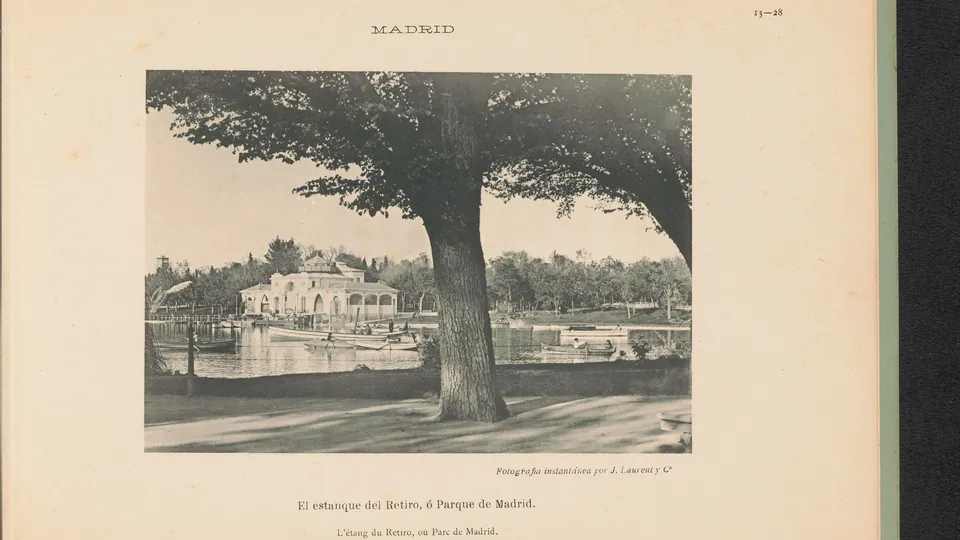 City
Parque del Retiro and the rowing boats
Madrid
Around 120 hectares of park immediately behind the Prado, with a rectangular lake where rowing boats are hired by the session, a glass palace used for exhibitions, shaded avenues, playgrounds, and puppet shows and street musicians at weekends.
- Ages
- 1–16
- Time
- 3h
- Adult, from
- Free
Good to know. The park is free; the rowing boats are hired separately by the session and queue at weekends and in the early evening. There is almost no shade on the lake itself, so a July afternoon on the water is hard going. Madrid closes its large parks during high-wind and storm warnings, sometimes at short notice, because of falling branches.
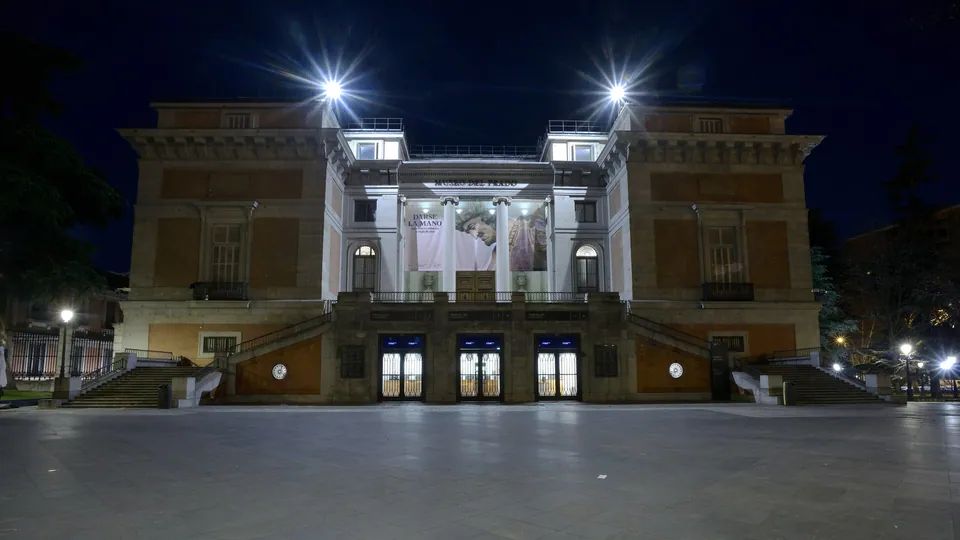 MuseumBook ahead
Museo del Prado
Madrid
The Spanish royal collection — Velázquez, Goya, El Greco, Bosch's Garden of Earthly Delights and a large Italian and Flemish holding — in one long building on the museum boulevard, with the Retiro park directly behind it.
- Ages
- 7–17
- Time
- 2h
- Adult, from
- €15
Good to know. Entry is free for under-eighteens at any time, and the whole museum is free for the last two hours of the day, which is also the busiest slot of the week. The collection is far too large to attempt in one visit and there are few places to sit: a planned list of six or eight paintings works where a general wander does not. Photography is not allowed and larger bags go to the cloakroom.
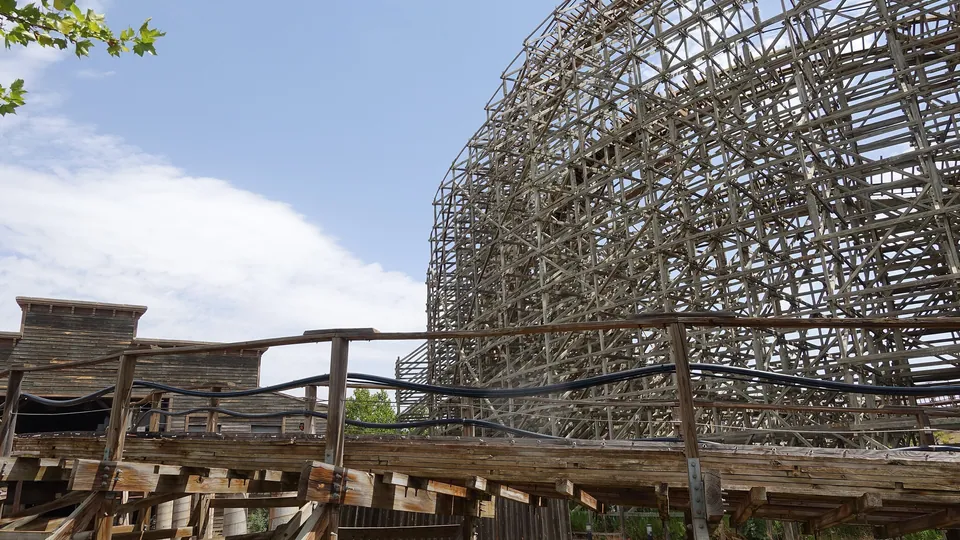 Theme parkBook ahead
Parque Warner Madrid
Madrid
A large film-themed park about 25 kilometres south of the city, with several big roller coasters, a cartoon-branded children's area, stunt and character shows, and a separate water park alongside that opens for the summer months only.
- Ages
- 5–16
- Time
- 8h
- Adult, from
- €45
Good to know. The headline rides carry height minimums from roughly 1.10 to 1.40 metres, so a younger child can be excluded from most of them on a full-price ticket. The park runs a reduced calendar outside the summer and closes on many winter weekdays, so the operating days need checking before the day is planned. Queues have very little shade and the park sits on the open plain south of Madrid, where summer afternoons regularly pass 38 °C. It is reached by suburban train and a shuttle bus, or by car in about half an hour.
Some links on this page are affiliate links. If you book through one, the price is the same for you and we may earn a commission. How this works.
Getting around Spain
High-speed AVE trains link the major cities and are the simplest way to combine two of them; fares are cheapest months ahead and rise steeply close to departure. Regional trains and coaches reach most of the coast, but the Costa Brava and rural Mallorca are served by buses that thin out sharply outside July and August. The Balearics and Canaries are reached by short domestic flights or, for the Balearics, overnight ferries from Barcelona and Valencia that take a car.
Do you need a rental car?
A little driving. A Barcelona-and-Seville trip needs no car at all — the cities are walkable and the train between them is faster than driving. A car earns its cost on the Costa Brava, in the Mallorcan mountains and on Tenerife, where the good beaches, coves and viewpoints sit between infrequent bus stops.
Is the Eurail / Interrail Spain Pass worth it?
Rarely the cheapest option for a family. Renfe sells heavily discounted advance fares on the AVE routes, children aged 4–13 travel at a reduced fare and under-fours free on a lap, and pass holders still have to pay for and secure a compulsory seat reservation on every high-speed train. Price the two or three actual legs before buying passes for four people.
What Spain costs with a family
Typical daily spend for a family of four, excluding flights. Accommodation, food, local transport and one paid activity a day.
€
€140
Budget · per day, family of four
€€
€250
Mid-range · per day, family of four
€€€
€450
Higher-end · per day, family of four
Planning estimates based on published prices at the time of writing, in shoulder season. Peak months, school holidays and city-centre accommodation all push the figure higher.
Food in Spain
Tapas work for families because the portions are small and shared, so a child can reject something without wasting a meal. Tortilla de patatas, jamón, croquetas, grilled fish, arroz and plain pasta are on almost every menu, and the fixed-price menú del día at lunch is the cheapest good meal of the day. The genuine shock is the clock: lunch runs roughly 14:00 to 16:00 and most kitchens do not open for dinner before 20:30, so families used to a 18:00 meal either shift later or plan an early supper from a bakery or supermarket.
Practical tips for Spain
The things that are easy to get wrong and expensive to fix once you have arrived.
When to go
Plan around the afternoon heat, not against it
From June to September, inland afternoons belong to a pool, a siesta or an air-conditioned museum. Front-load sightseeing before 13:00, break until about 17:00, then go out again in the evening when the squares and playgrounds fill up. Fighting this rhythm is the single most common reason a family day in Spain collapses.
Food
Solve dinner before the first evening
Most kitchens do not start serving dinner until 20:30, which is bedtime for a younger child. The workable answers are an early tapas bar that serves from about 19:30, a late and large lunch followed by a light supper in the room, or an apartment with a kitchen.
Getting around
Child seats are a legal requirement, not an upsell
Children under 135 cm must travel in an approved restraint and cannot sit in the front. Rental-desk seat hire is charged per day and often approaches the cost of a new seat over a fortnight, and the seat supplied is whatever is left on the shelf. Bringing a familiar seat or booking one at the time of reservation avoids both problems.
Staying connected
An eSIM removes the roaming question
Most Spanish attractions now issue tickets as a QR code and the transport apps need data. Travellers from outside the EU have no bundled roaming, so a data plan arranged before departure keeps maps, tickets and boarding passes working from landing.
Packing
Shade has to be brought or rented
Spanish beaches and plazas are deliberately open and unshaded. Sunbeds and umbrellas are rented by the day on most resort beaches, but wild coves, city squares and archaeological sites have nothing at all — a pop-up shade, hats and high-factor sunscreen matter more here than swimwear does.
Some links on this page are affiliate links. If you book through one, the price is the same for you and we may earn a commission. How this works.
Spain with kids: common questions
Is Spain a good destination with toddlers?
Yes, with one caveat. Restaurants accommodate small children as a matter of course, beaches shelve gently, and pushchair access is good in newer districts and along the seafronts. The caveat is heat: an inland city in July and August is genuinely unsuitable for a toddler, so a summer trip should stay on the coast or the islands.
Do you need a rental car in Spain?
Not for a city trip. Barcelona, Seville, Madrid and Valencia are walkable and joined by high-speed rail, and city parking is expensive. A car is close to essential on the Costa Brava, in the Mallorcan mountains and on Tenerife, where bus frequencies drop off sharply outside the summer season.
When is the best time to visit Spain with kids?
May, June and September for the mainland and the Balearics — warm enough to swim, cool enough to walk, and cheaper than August. The Canary Islands are the reverse: October to May is their best family window, which is what makes Spain a winter option as well as a summer one.
How many days do you need in Spain?
Seven to fourteen. A week comfortably covers one city plus a stretch of coast or one island. Fourteen days allows two cities and a beach week without a travel day every third morning. Trying to combine a mainland city, an island and Andalusia in a week means spending most of it in transit.
Is Spain expensive for a family of four?
Less than France, Italy or the UK for the same standard. Apartments with a kitchen are widely available and usually cheaper than two hotel rooms, the fixed-price lunch menu keeps eating out affordable, and many municipal museums and parks are free or nearly free for children. Flights and August accommodation are where the budget actually goes.
Is it safe to travel in Spain with children?
Violent crime is rare and healthcare is good and widely accessible. The realistic risks are opportunistic pickpocketing in the tourist cores of Barcelona, Madrid and Seville, strong summer sun, and Atlantic surf on the Canary and northern beaches, where the flag system should be treated as binding rather than advisory.
Other destinations to compare
Every guide answers the same questions in the same order, so two countries take five minutes to compare rather than five evenings.
- Japan with Kids: Itineraries, Where to Stay & When to GoCulture, nature & adventure
- Italy with Kids: Itineraries, Where to Stay & When to GoMountains, lakes & cities
- Austria with Kids: Itineraries, Where to Stay & When to GoAlps, lakes & charming towns
- Cyprus with Kids: Itineraries, Where to Stay & When to GoSun, sea & family resorts