Skip to content

Costa Brava with Kids

The Costa Brava is the stretch of Catalan coast north of Barcelona where the pine-covered hills meet the sea in a series of small coves rather than one continuous beach. Its defining feature for families is the Camí de Ronda, an old coastguard footpath that links bay to bay along the cliffs, so a beach day can include a genuine walk that takes twenty minutes rather than two hours. The coast also splits in two: the southern end around Lloret and Platja d'Aro is a built-up resort strip, while the centre and north around Begur, Palafrugell and Cadaqués stay small-scale. The trade-offs are that the small coves have small car parks that fill early, most of the coastline has no railway, and the sea is noticeably cooler than the Balearics until mid-June.

Best for ages
4+
Suggested stay
4–8 days
Best months
May–Jul, Sep
Daily budget
€240

Mid-range, family of four

Why Costa Brava works with children

  • A footpath that links the beaches

    The Camí de Ronda runs along the cliffs from cove to cove, turning the walk between two beaches into the outing itself.

  • Sheltered coves rather than open sand

    Most bays are small, rocky-edged and protected from swell, which makes for calm water and easy snorkelling close to shore.

  • Close to two airports and to Barcelona

    Girona is under an hour from most of the coast and Barcelona around ninety minutes, so a city stop and a beach week combine without a long transfer.

  • A Dalí trail for older children

    The museum in Figueres, the house at Portlligat and the castle at Púbol give a rainy or windy day a genuine alternative to the beach.

Where to stay

Best areas in Costa Brava for families

4 areas cover most trips here; the difference is mainly cove-hopping and walking families versus older children and scenery.
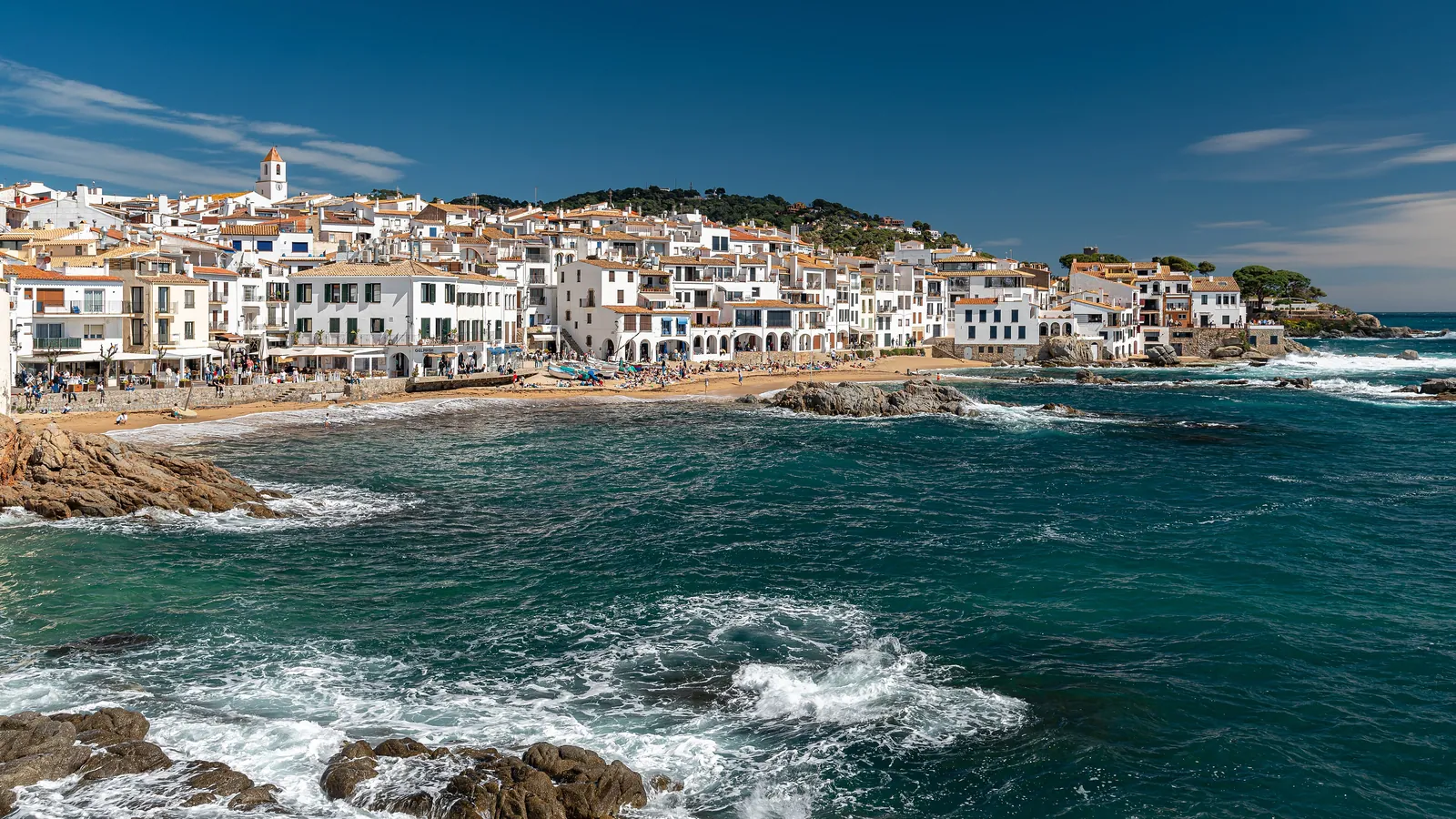
  • Calella de Palafrugell, Llafranc & Tamariu

    Best for cove-hopping and walking families

    Three small bays strung together by the Camí de Ronda, with whitewashed seafronts and calm water. Accommodation is smaller-scale and pricier per night, and the streets behind the bays are steep.

  • Platja d'Aro & Sant Antoni de Calonge

    Best for resort convenience and longer beaches

    A continuous sandy beach with a promenade, aparthotels, supermarkets and a water park nearby. It is the most developed part of the central coast and the nightlife strip is loud in August.

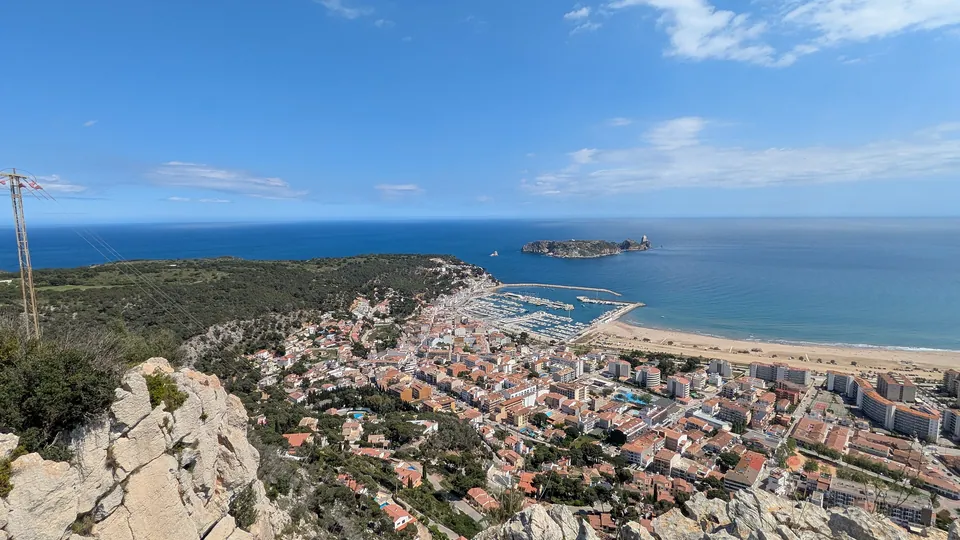
  • L'Escala, L'Estartit & the Bay of Roses

    Best for water sports and marine life

    Flatter, wider beaches with the Medes Islands marine reserve offshore for snorkelling and glass-bottom boat trips, plus the Greek and Roman site at Empúries. More exposed to the tramuntana wind than the southern coves.

  • Cadaqués & Cap de Creus

    Best for older children and scenery

    A whitewashed village at the end of a mountain road inside a rugged natural park. Beautiful and quiet, but the beaches are pebble, the drive in is winding, and there is very little for a toddler to do.

Family hotel picks in Costa Brava

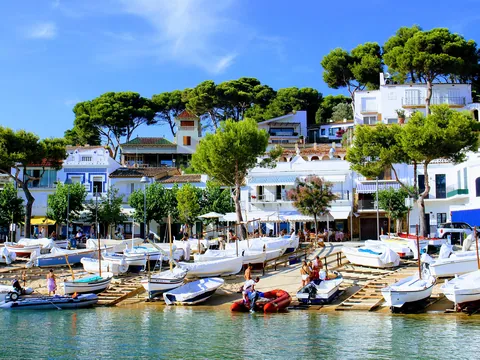
  • Apartment above Llafranc bay
    Llafranc / Calella de PalafrugellMid-range

    Apartment above Llafranc bay

    Staying in one of the linked cove villages means the coast path replaces the car for most of the week: two beaches, a lighthouse headland and a handful of restaurants are all reachable on foot, which removes the daily parking problem that defines this coast.

    • Walking distance to two or three coves via the Camí de Ronda
    • Kitchen for the early suppers that the Spanish dinner clock makes necessary
    • Sheltered, calm bay with lifeguards in season
    • Small seafront promenade rather than a resort strip

    Fitting a family in

    Two-bedroom holiday apartments are the standard local product, usually with a terrace and sleeping four to six. Many are let Saturday to Saturday in July and August.

    Watch out. The village is built on a slope, so an apartment with a sea view almost always means a steep climb back from the beach, often up steps. Parking is scarce and frequently paid, the bay is small and completely full in August, and the choice of restaurants shrinks sharply outside the summer season. Air conditioning is not universal in older blocks.
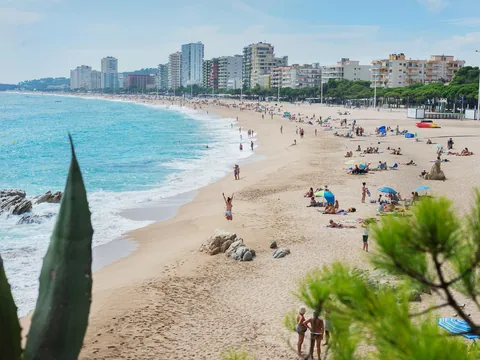
  • Aparthotel on the Platja d'Aro seafront
    Platja d'AroMid-range

    Aparthotel on the Platja d'Aro seafront

    For families who want a long flat beach, a pushchair-friendly promenade and a supermarket rather than a picturesque cove, this is the practical end of the coast — and the aparthotel format combines a kitchen with a pool and a reception desk.

    • Two kilometres of continuous sandy beach with a level promenade
    • Kitchenette plus hotel pool and cleaning
    • Supermarkets, pharmacies and a water park nearby
    • Bus links along the coast and to Girona

    Fitting a family in

    One and two-bedroom apartments sleeping four to six, with a sofa bed in the living area as the usual configuration for the fourth and fifth person.

    Watch out. Platja d'Aro is the most developed town on the central Costa Brava, with a main street of bars that is loud well into the night in August — a road-facing balcony is a mistake here. The beach is exposed and gets a real shore break in wind, and the town has more concrete than character compared with the villages 20 minutes north.

All family stays in Spain

Some links on this page are affiliate links. If you book through one, the price is the same for you and we may earn a commission. How this works.

Things to do in Costa Brava with kids

  • Camí de Ronda: Calella de Palafrugell to Llafranc
    Nature

    Camí de Ronda: Calella de Palafrugell to Llafranc

    Costa Brava

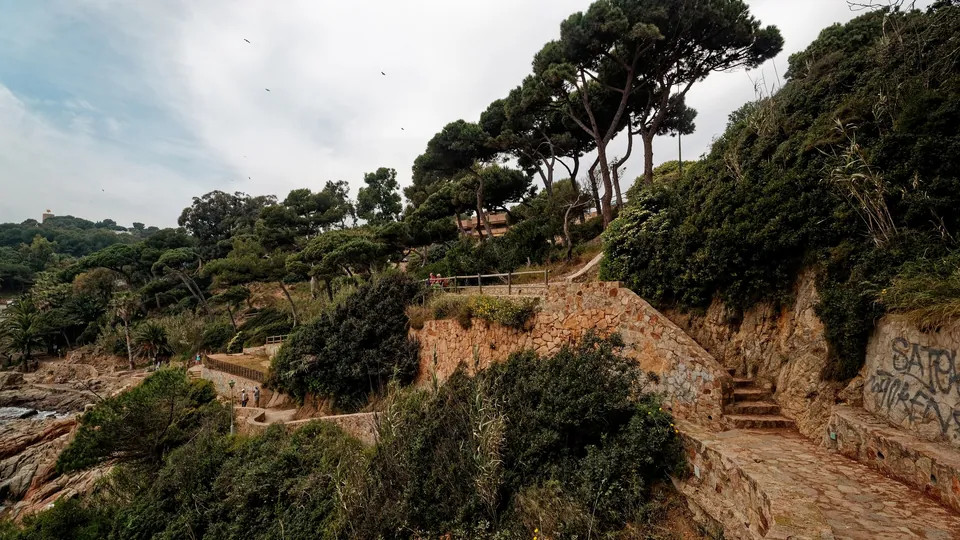
    A cliff-edge section of the old coastguard footpath linking two small bays, passing above pine-backed coves, rock pools and a lighthouse headland. One of the shortest and most scenic stretches of the long-distance path.

    Ages
    5–16
    Time
    1h 30m
    Adult, from
    Free

    Good to know. The path includes steps cut into the rock, short unfenced sections above drops and almost no shade, and it is not passable with a pushchair. It is walkable in around 25 minutes each way at an adult pace, considerably longer with children stopping at the coves.

  • Medes Islands boat and snorkelling trips
    WaterBook ahead

    Medes Islands boat and snorkelling trips

    Costa Brava

    A protected marine reserve of seven small islands off L'Estartit, visited by glass-bottom boats that pass through coastal caves, with guided snorkelling trips over the seagrass and rock for older children.

    Ages
    5–16
    Time
    3h
    Adult, from
    €25

    Good to know. Trips are cancelled outright in strong tramuntana wind, sometimes for several consecutive days, so an early-in-the-stay booking leaves room to rebook. The crossing is short but exposed and swell is common, which matters for anyone prone to seasickness. Guided snorkelling usually carries a minimum age and requires confident swimming.

  • Dalí Theatre-Museum, Figueres
    MuseumBook ahead

    Dalí Theatre-Museum, Figueres

    Costa Brava

    A former theatre rebuilt by Salvador Dalí into a museum of his own work, full of optical illusions, a room that resolves into a face from one viewpoint and a car with rain falling inside it. Designed as a spectacle rather than a gallery.

    Ages
    7–17
    Time
    2h
    Adult, from
    €21

    Good to know. Timed entry is required in the high season and slots sell out. The building is split across many small levels connected by stairs, so it is awkward with a pushchair and slow when busy. Figueres is inland — around 45 minutes to an hour's drive from most of the coast — so it is a half-day commitment, not a beach-morning add-on.

Some links on this page are affiliate links. If you book through one, the price is the same for you and we may earn a commission. How this works.

Getting around Costa Brava

A car is close to essential. The R1 railway only reaches Blanes at the southern end and the RG1 serves Figueres inland, so the coves themselves are served by regional coaches that run every hour or two in summer and far less often outside it. Within a single base — the Calella–Llafranc–Tamariu triangle, or the Platja d'Aro promenade — the Camí de Ronda and a bicycle cover most days without driving at all, which is a good argument for staying put rather than touring.

Costa Brava tips for families

  • Getting around

    Cove car parks fill before mid-morning

    The small bays have car parks measured in dozens of spaces, and several villages close their centres to non-resident traffic in August. Arriving before 10:00, parking once and walking the coast path between beaches works far better than driving between them.

  • When to go

    The tramuntana wind decides the day

    A strong northerly can blow for several days, cancelling boat trips, closing beaches to swimming and making the exposed northern bays unusable while the south-facing coves stay calm. Checking the wind, not just the temperature, is what makes a beach plan hold.

  • Packing

    Pack water shoes for the coves

    Many of the prettiest bays are coarse sand or pebble with rocky entries and sea urchins on the submerged rocks. Cheap water shoes remove the single most common reason a young child refuses to get in.

  • Getting around

    The coastal boat is a transport option, not just a trip

    Seasonal passenger boats link several of the resorts and coves along the coast in summer. Using one in place of a drive turns a transfer into part of the day and avoids the car park problem entirely.

Costa Brava with kids: common questions

Is the Costa Brava good for young children?
From about four upwards, yes. The coves are sheltered and shallow at the edge, but most have rocky entries, steps down from the road and steep streets behind them — which is why a pushchair-dependent family is usually better served by the long flat beaches at Platja d'Aro or in the Bay of Roses.
Do you need a car on the Costa Brava?
Practically, yes. There is no coastal railway, and the buses that link the villages run every hour or two in summer and much less often outside it. The exception is staying in one resort and using the coast path and a bicycle, which works well for a week.
How far is the Costa Brava from Barcelona?
Between about 75 and 160 kilometres depending on the stretch — roughly an hour to Lloret de Mar and around ninety minutes to two hours to Palafrugell or Cadaqués. Girona airport is considerably closer to most of the coast than Barcelona is.
Which part of the Costa Brava is best for families?
The Calella de Palafrugell, Llafranc and Tamariu triangle for cove-hopping and walking, and Platja d'Aro or the Bay of Roses for a conventional long beach with a promenade and easy supplies. The far north around Cadaqués is scenic but the least practical with small children.
When is the sea warm enough to swim?
Mid-June to early October for most children, with late July to September the most comfortable. May and early June are excellent for the coast path and the villages but the water is still cold enough that a long swim is unlikely.