Europe · 7 destinations
France with Kids: Where to Stay, Costs & When to Go
France packs more variety into short distances than almost anywhere else in Europe: a capital city, Europe's largest theme park, an Atlantic coast, a Mediterranean hinterland, the highest Alps and a river valley full of castles all sit within a few hours of each other by train or car. Children are welcomed in restaurants, bakeries solve breakfast and lunch anywhere in the country, and most national museums admit under-18s free. The trade-offs are real: kitchens serve at fixed hours and almost nothing is cooked between them, August is when France itself goes on holiday so the coast and the motorways fill up, and Paris plus a Disneyland day is one of the most expensive weeks in this catalog.
- Best for ages
- 0+
- Recommended trip length
- 7–14 days
- Budget level
- €€
- Best time to visit
- Feb, May–Jul, Sep–Oct
Suits up to 17
Mid-range
Why France works for families
Bakeries remove the daily food argument
Every village has a boulangerie, and a baguette sandwich, a croissant or a crêpe is a meal that no child has to be persuaded into.
High-speed rail replaces most of the driving
TGV lines reach Provence, Brittany, the Alps and the Loire from Paris in one to three hours, so a two-region trip needs a car only at the far end.
Under-18s enter national museums free
The Louvre, Orsay, Versailles and the national châteaux admit under-18s to the permanent collections at no charge, which changes the cost of a culture-heavy week.
A short hop from most of Europe
Flights from the UK, Ireland and the near continent run under two hours, and Eurostar and TGV connections avoid an airport entirely.
Four different holidays in one country
A city break, a theme park, a ski week and a coastal campsite are all domestic journeys here, which is what makes a mixed-age family trip work.
Mountains, coast and river valleys at short range
Lake Annecy, the Emerald Coast and the Loire are each a half-day from Paris, so scenery does not cost a whole travel day.
Where to go in France
The areas worth building a family trip around, and how long to give each.
French Alps
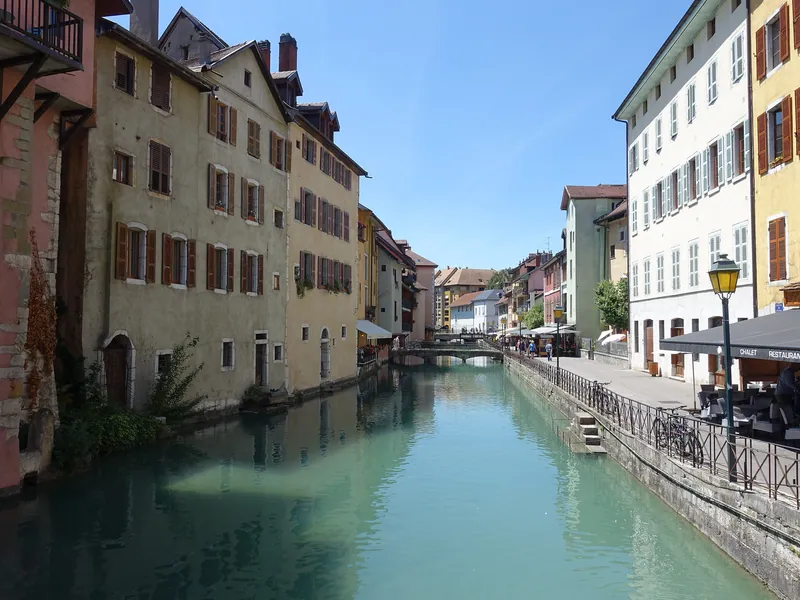
Two different holidays — lakes in summer, snow in winter
- Suggested stay
- 5–8 days
- Best for ages
- 3+
Alsace
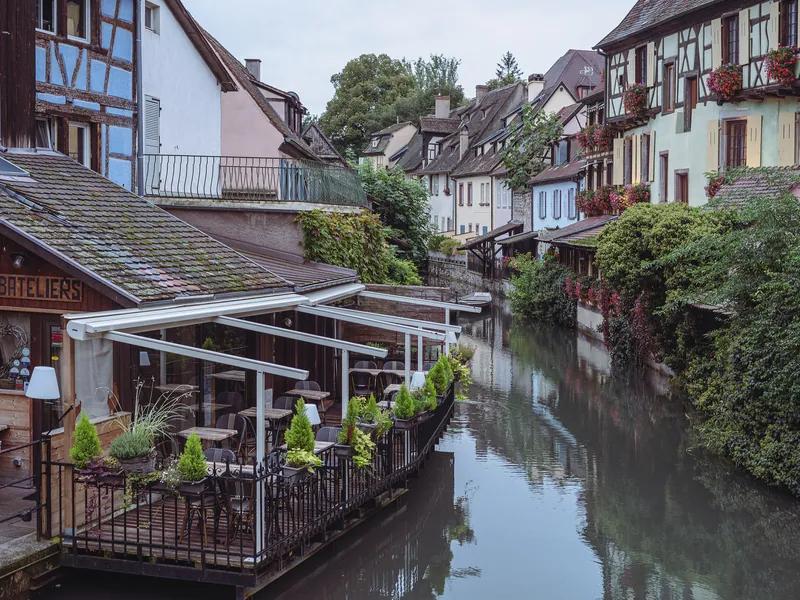
Half-timbered villages, storks and a Christmas market month
- Suggested stay
- 4–6 days
- Best for ages
- 3+
When to visit France with kids
May, June and September are the most comfortable everywhere — warm, open and below peak prices. July works well in the mountains and on the Atlantic coast but is hot inland. August is the French domestic holiday, with full resorts, heavy motorway traffic and city bakeries and restaurants closed for two or three weeks. February is the Alpine ski month and also the busiest and priciest one, because French school holidays run through it.
- Jan
- Feb
- Mar
- Apr
- May
- Jun
- Jul
- Aug
- Sep
- Oct
- Nov
- Dec
Where to stay
Family hotels in France
We list areas and property types rather than single hotels: family-room availability changes constantly, and the area plus the room requirement is what survives contact with a booking engine.
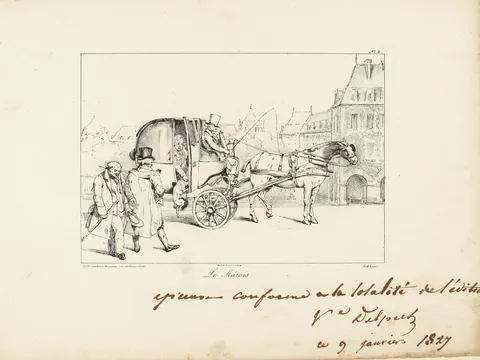 Le Marais / Bastille (3rd, 4th, 11th)Mid-range
Apartment in the Marais or around Bastille
A two-bedroom apartment in the central arrondissements costs less than two hotel rooms, adds a kitchen and a washing machine, and puts a family within walking distance of the river, the Pompidou and several playgrounds — which removes the metro from most of the day.
- Kitchen and washing machine for a longer stay
- Two or three metro lines within five minutes
- Walkable to the river, the Pompidou and the Place des Vosges
- Bakeries and markets rather than hotel breakfast prices
Fitting a family in
Two-bedroom units sleep four without a sofa bed; three-bedroom conversions exist but are scarce and expensive. Confirm the stated occupancy rather than assuming the living room converts.
Watch out. Many Haussmann-era buildings have a tiny lift or none at all, and a fourth-floor walk-up with a pushchair and luggage is a genuine problem. Check the floor and the lift before booking, and confirm the property is registered for short lets.
Check hotel prices — opens Klook in a new tab (affiliate link)Live availability for your dates- Luberon villages (Gordes, Roussillon, Bonnieux)Mid-range
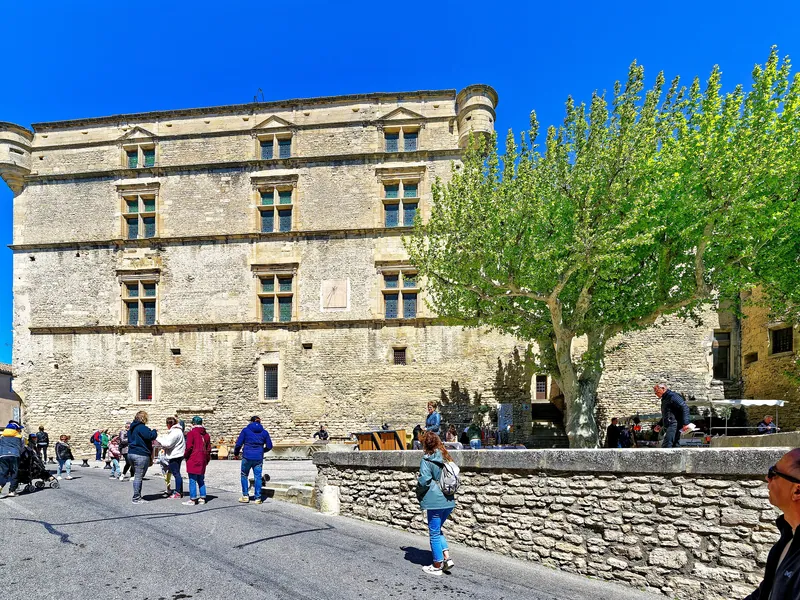
Gîte with a pool in the Luberon
A private pool is not a luxury in Provence in summer — it is the thing that makes the middle of the day survivable with children, and a stone house with one turns an unusable 14:00–17:00 window into the best part of the day.
- Private or shared pool for the afternoon heat
- Kitchen and outdoor table for market lunches
- Space for four to six without adjoining rooms
- Within twenty to forty minutes of several market towns
Fitting a family in
Most gîtes sleep four to six across two or three bedrooms, often with one room in a converted outbuilding. Confirm whether the advertised capacity includes a sofa bed and whether cots are provided or hired.
Watch out. High-season bookings usually run Saturday to Saturday with no flexibility, many stone houses have no air conditioning despite 35°C afternoons, and the nearest shop can be several kilometres of narrow road away. Check how the pool is fenced or alarmed if there are toddlers in the group.
Check hotel prices — opens Klook in a new tab (affiliate link)Live availability for your dates  Annecy-le-Vieux / Veyrier-du-LacMid-range
Apartment near the lake in Annecy
Being able to walk or cycle to a beach removes the summer parking problem entirely, which is the single biggest friction in an Annecy week — the lakeside car parks are full by mid-morning from July onwards.
- Walking or cycling distance to a public beach
- Direct access to the lakeside cycle path
- Kitchen for breakfasts and picnic lunches
- Old town and its restaurants a short bus or bike ride away
Fitting a family in
Two-bedroom apartments sleeping four to five are the standard unit here. Many list a mezzanine as a bedroom, which suits older children rather than toddlers.
Watch out. Very few summer apartments have air conditioning, and top-floor units get hot in an August heatwave. The lakeside road is congested at weekends, and properties on the eastern shore are pretty but slower to reach the town from.
Check hotel prices — opens Klook in a new tab (affiliate link)Live availability for your dates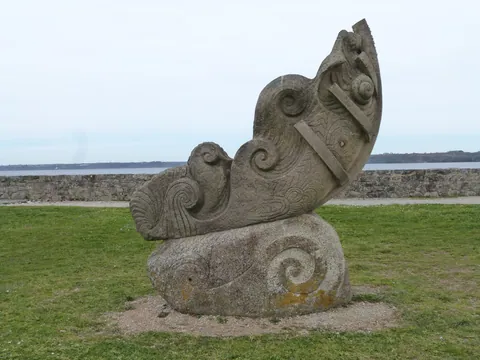 Le Sillon / ParaméMid-range
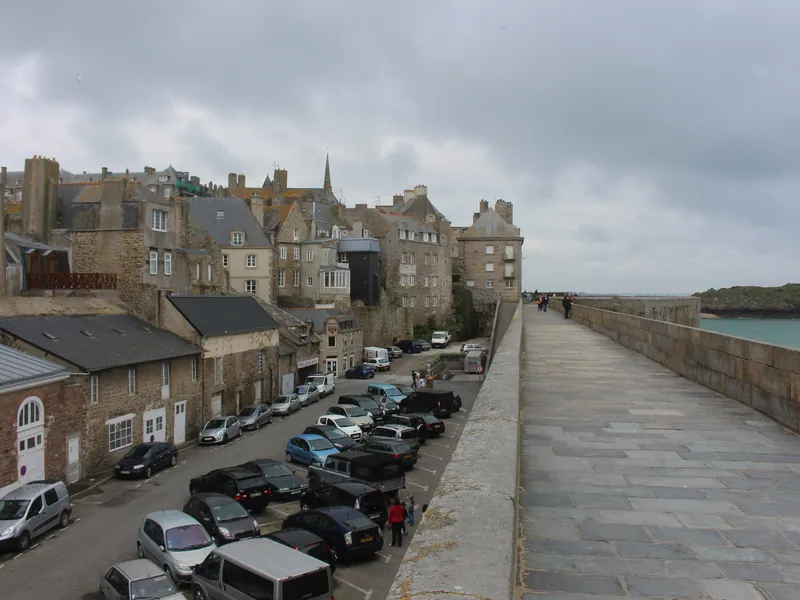
Apartment on the Saint-Malo seafront
A seafront flat within walking distance of both the beach and the walled city means the tide dictates the day rather than the car does — children can go down to the rock pools for an hour and come back, which is how a Brittany week actually works.
- Beach directly across the road at low tide
- Walking distance to the walled city and the ramparts
- Kitchen and washing machine for wet clothes and sandy kit
- Train station and ferry terminal within the town
Fitting a family in
Two-bedroom seafront flats sleeping four to six are the common unit, often in older blocks. Check whether the sea view comes with a lift, as many of these buildings do not have one.
Watch out. The Sillon seafront takes the full force of Atlantic storms and spray, and the beach in front of it disappears entirely at high tide. Parking near the walled city is limited and paid, and the seafront road is busy through the summer.
Check hotel prices — opens Klook in a new tab (affiliate link)Live availability for your dates- Rural Touraine, east of ToursMid-range
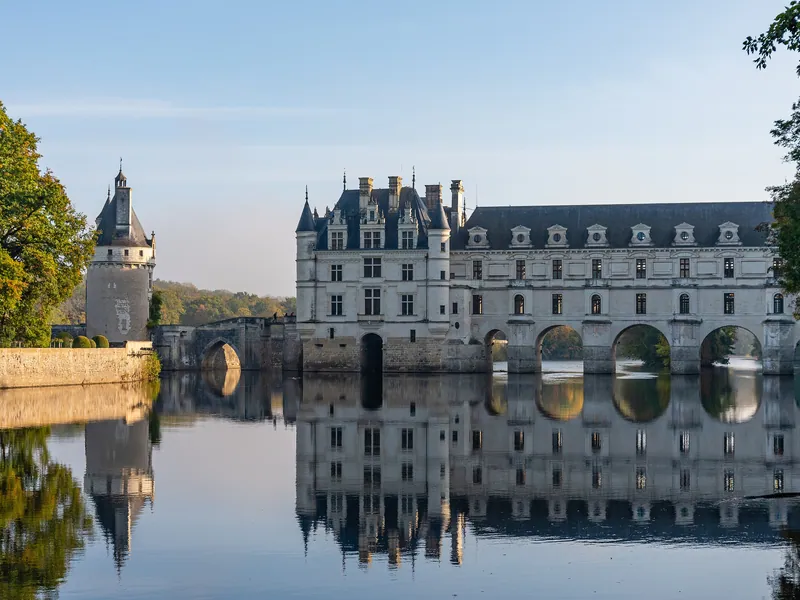
Gîte between Amboise and Chenonceau
Basing between the two best châteaux for children puts most of the valley within a thirty-minute drive, and a house with a garden gives somewhere to decompress after a castle morning rather than going straight to another one.
- Garden or pool for the afternoon
- Within half an hour of the main cluster of châteaux
- Kitchen, which matters where rural restaurants close early
- Close to the signed riverside cycle route
Fitting a family in
Converted farm buildings usually sleep four to eight across two or three bedrooms, sometimes on two levels with steep stairs. Confirm cot and highchair availability rather than assuming it.
Watch out. Rural gîtes mean driving to every meal and every shop, and village restaurants stop serving early. High-season lets run Saturday to Saturday, and most of these houses have no air conditioning despite genuinely hot July and August afternoons.
Check hotel prices — opens Klook in a new tab (affiliate link)Live availability for your dates 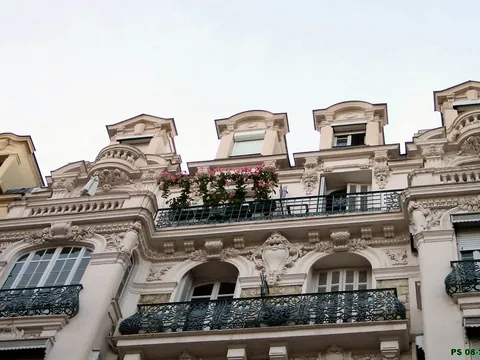 Nice — Musiciens / Carré d'Or / old-town edgeMid-range
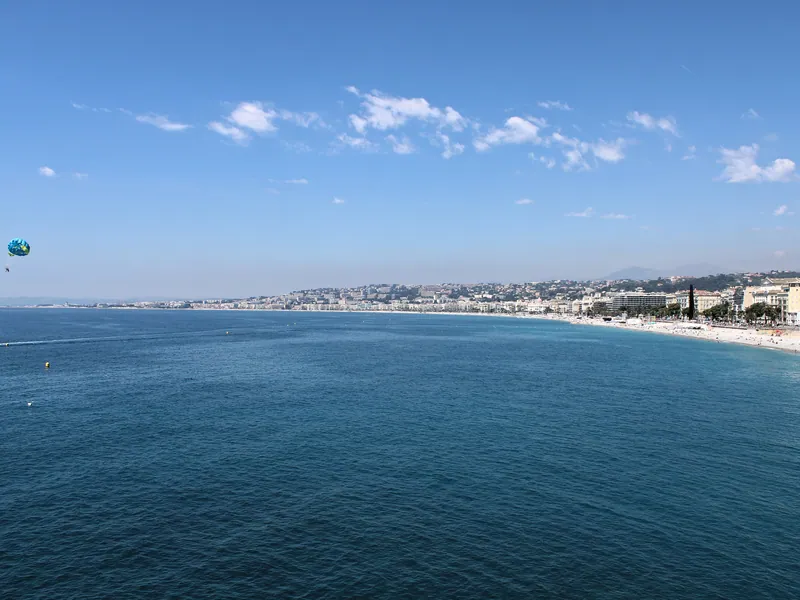
Apartment near the Nice seafront
An apartment a few streets behind the promenade removes both the car and the transfer from the trip: the airport tram arrives at the door, the coastal railway covers every day trip, and a kitchen and washing machine matter on a coast where eating out three times a day is expensive.
- Tram from the airport rather than a taxi transfer
- Beach and the promenade within a few minutes' walk
- Mainline station for the coastal train to Antibes, Cannes and Monaco
- Kitchen and washing machine for beach kit and sandy clothes
Fitting a family in
Two-bedroom flats in the older blocks sleep four without a sofa bed; three-bedroom units are scarce. Check whether a listed second bedroom is a genuine room or a partitioned alcove.
Watch out. The streets behind the promenade are noisy until late through the summer, air conditioning is not standard in older buildings, lifts are small or absent, and short-let registration rules in Nice are enforced — a legitimate listing displays its number.
Check hotel prices — opens Klook in a new tab (affiliate link)Live availability for your dates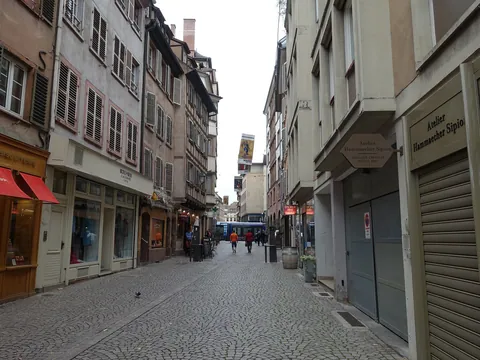 Grande Île / Krutenau / Petite France edgeMid-range
Apartment on Strasbourg's Grande Île or in Krutenau
A flat in the island centre or just across the water puts the cathedral, the boat quay, the covered market and the trams within walking distance, so the car can be left parked for the city days and collected only for the village drives.
- Walk to the cathedral, the markets and the boat quay
- Trams and separated cycle paths from the door
- Kitchen and washing machine for a longer stay
- Park with stork enclosures a short tram ride out
Fitting a family in
Two-bedroom flats sleeping four are the common unit; apartments in the oldest buildings are small and often split over two levels with low beams.
Watch out. Many old-town buildings are walk-ups with steep narrow stairs and no lift, the Grande Île is cobbled throughout, and the Petite France lanes are packed from late morning. In December prices roughly double, rooms go months ahead, and the island's entrances are checked, which means queues at the bridges.
Check hotel prices — opens Klook in a new tab (affiliate link)Live availability for your dates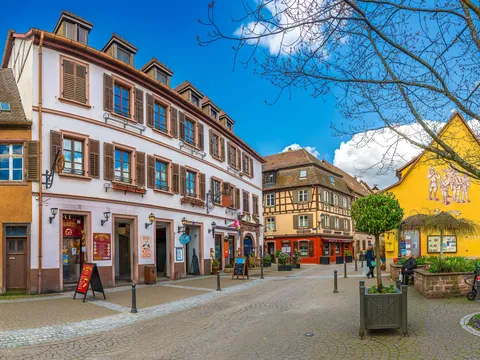 Ribeauvillé / Riquewihr / KaysersbergMid-range
Gîte or winegrower's guest rooms on the wine route
Sleeping in one of the villages is what buys the hours before the coaches arrive and after they leave, which is when these places are actually pleasant, and a courtyard or garden gives children somewhere to be between outings.
- A village to walk around in the early morning and the evening
- Courtyard or garden and a kitchen
- Parking included, which the villages otherwise charge for
- Bakery and a handful of restaurants within a few minutes
Fitting a family in
Converted outbuildings and upper floors typically sleep four to six across two bedrooms, often on two levels. Confirm cot and highchair availability rather than assuming it.
Watch out. Old houses mean steep narrow stairs, low beams and no lift, there is nothing within walking distance beyond the village itself, and village restaurants close one or two full days a week and stop serving early. December stays in these villages are booked out and priced up well in advance.
Check hotel prices — opens Klook in a new tab (affiliate link)Live availability for your dates
Some links on this page are affiliate links. If you book through one, the price is the same for you and we may earn a commission. How this works.
Top family attractions in France
What each one costs, how long it takes, which ages it suits and whether you need to book ahead.
 Theme parkBook ahead
Disneyland Paris
Paris
Europe's largest theme-park resort, forty minutes east of central Paris on the RER, with two adjacent parks: a classic castle park and a film-studio park. Tickets are dated, and a one-park or two-park choice is made at purchase.
- Ages
- 3–16
- Time
- 10h
- Adult, from
- €70
Good to know. A full day is the minimum for one park, and two parks genuinely need two days. Queues for the headline rides routinely run over an hour in school holidays, and several of them set height minimums between 102 cm and 140 cm — check each child's height against the specific rides before paying for a two-park ticket.
 CityBook ahead
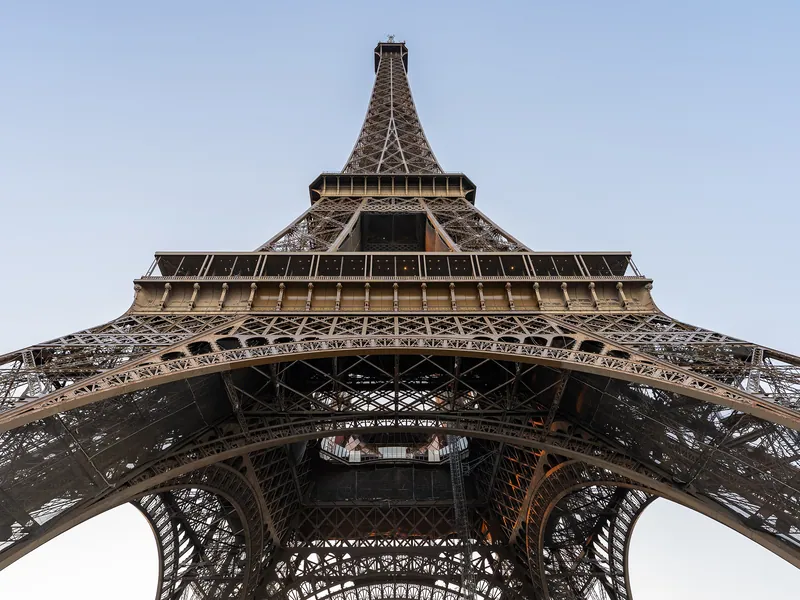
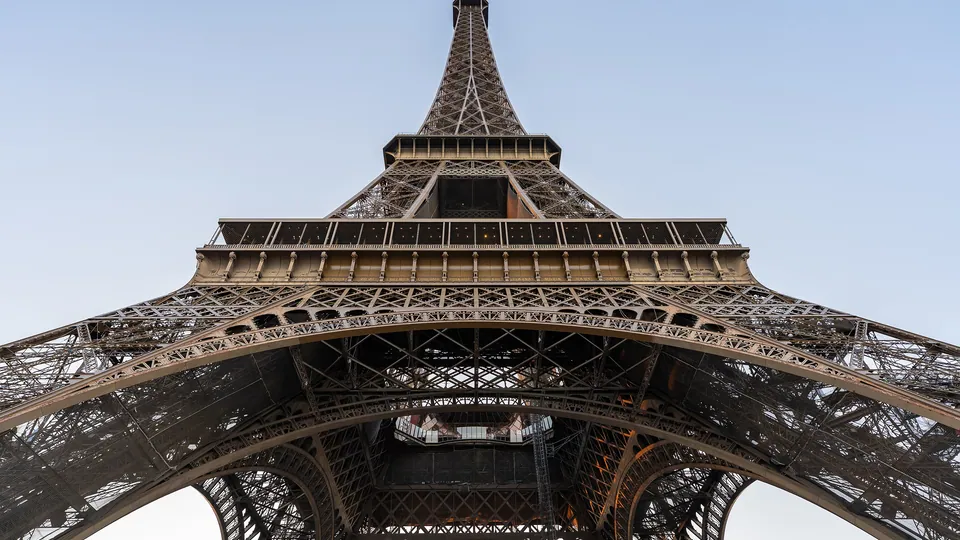
Eiffel Tower
Paris
The city's defining landmark, with two viewing floors reached by lift or stairs and a summit level served by a separate lift. The park beneath it is a free alternative when tickets have gone.
- Ages
- 4–17
- Time
- 2h 30m
- Adult, from
- €29
Good to know. Summit tickets sell out well ahead and the airport-style security queue is separate from the lift queue, so the visit takes far longer than the time spent looking at the view. Stairs reach only the second floor and run to over six hundred steps; the upper levels are exposed and cold in wind.
 Culture
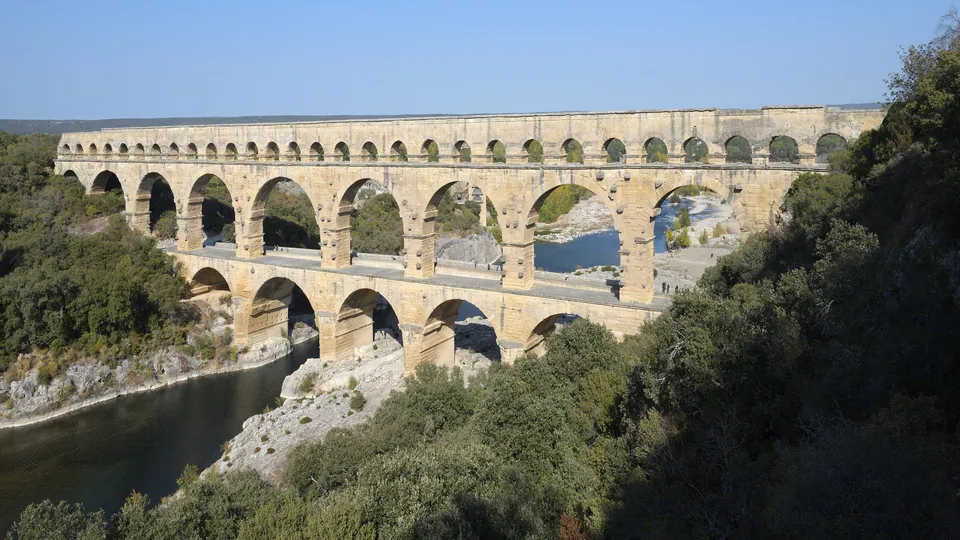
Pont du Gard
Provence
A three-tier Roman aqueduct bridge nearly fifty metres high, spanning a river with shingle beaches on both banks. A museum and a children's discovery space sit beside the site, and swimming below the bridge is permitted.
- Ages
- 4–16
- Time
- 3h
- Adult, from
- €10
Good to know. The car parks sit ten to fifteen minutes' walk from the bridge on each bank, with very little shade on the approach — difficult in July and August afternoons. The river is unsupervised, and the current is stronger than it looks in spring.
 Nature
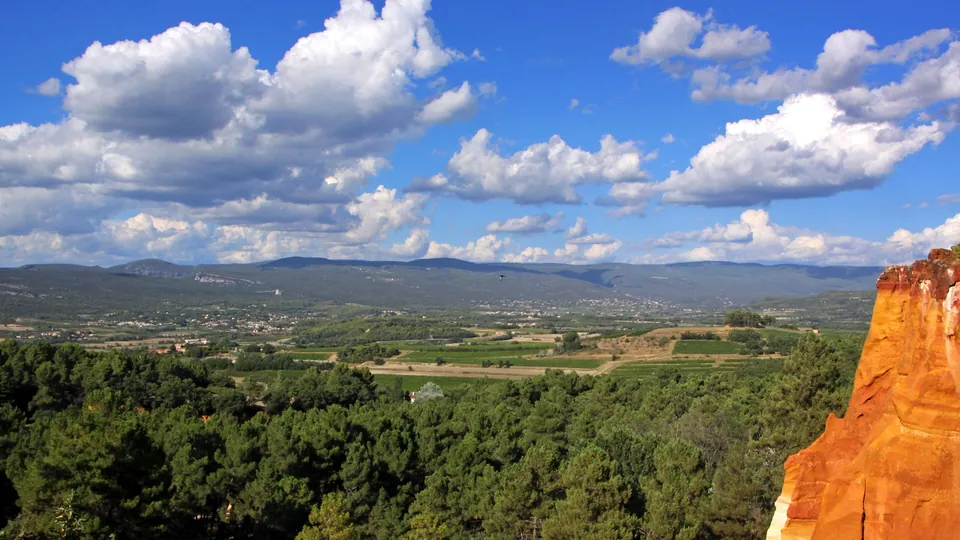
Sentier des Ocres, Roussillon
Provence
A short waymarked trail through a former ochre quarry of orange, red and yellow cliffs on the edge of a hilltop village, with two loop options of roughly thirty and fifty minutes.
- Ages
- 3–14
- Time
- 1h
- Adult, from
- €4
Good to know. Ochre dust stains shoes and clothing permanently — this is not a trail for white trainers. There is no shade, the path has steps and loose sand underfoot so a pushchair is unusable, and the site closes in bad weather and for part of the winter.
 NatureBook ahead
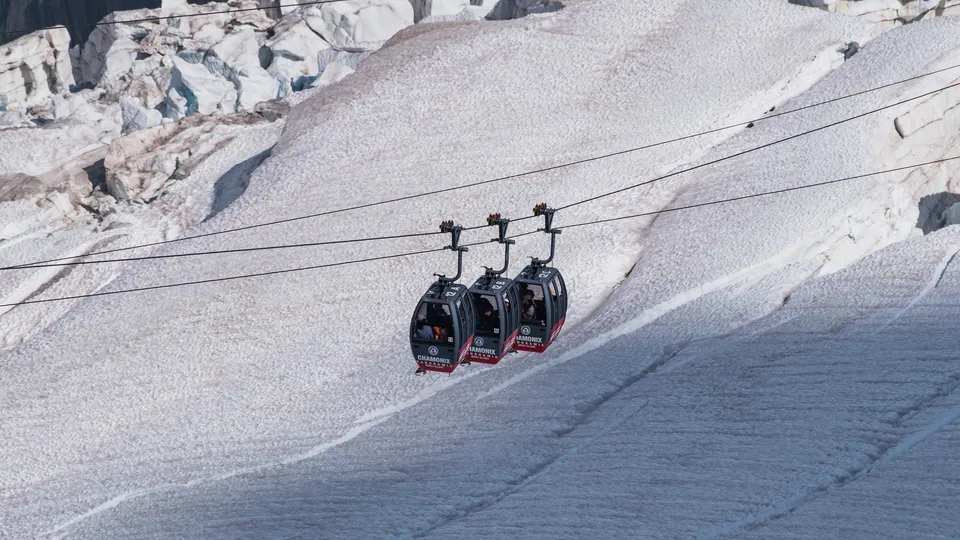
Aiguille du Midi cable car
French Alps
A two-stage cable car from Chamonix at around 1,035 metres to a rock spire at 3,842 metres, with terraces, a tunnel through the mountain and a glass-floored box looking down the face.
- Ages
- 6–16
- Time
- 4h
- Adult, from
- €75
Good to know. The ascent gains nearly 2,800 metres in about twenty minutes and headaches, breathlessness and nausea are common in children at the top. Temperatures stay below freezing there year-round, the upper stage closes in high wind, and slots must be reserved for a specific time.
 Water
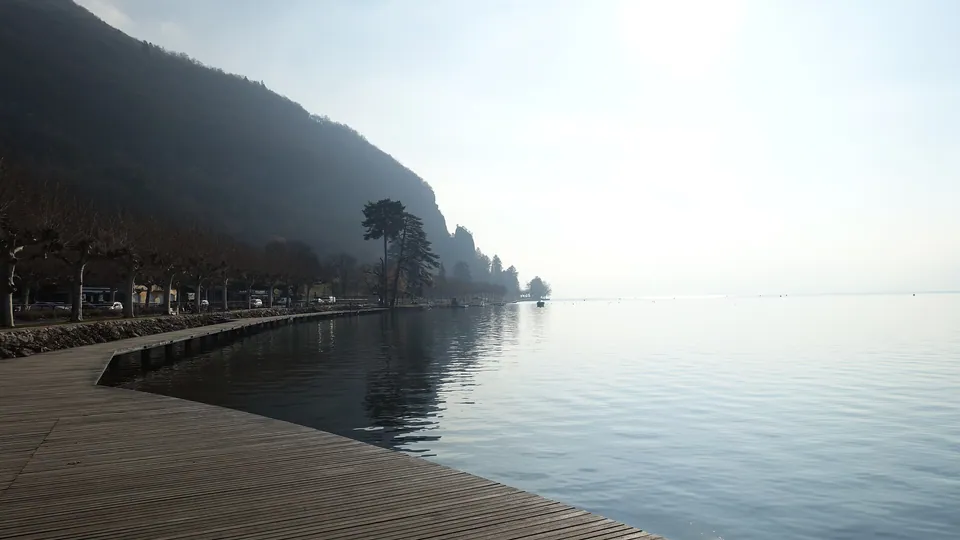
Lake Annecy beaches and cycle path
French Alps
A clear alpine lake ringed by public and paying beaches with gentle entries, pedalo and paddleboard hire, and a flat former-railway cycle path running roughly thirty kilometres down the western shore.
- Ages
- 2–16
- Time
- 5h
- Adult, from
- Free
Good to know. The water stays cold until roughly July. The cycle path is level but has almost no shade and is crowded with families and e-bikes in August, and the car parks near the popular beaches fill by mid-morning in summer.
 City
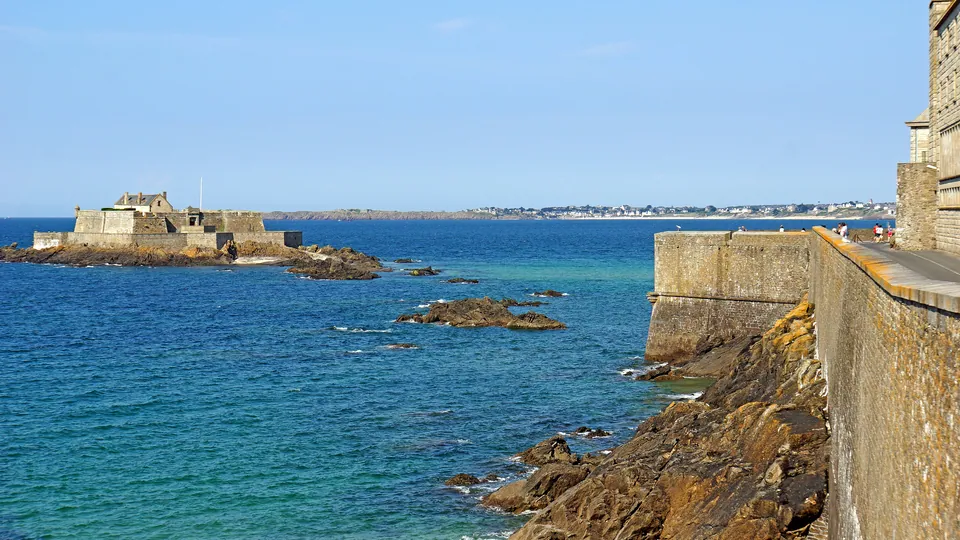
Saint-Malo ramparts and tidal islands
Brittany
A complete walled circuit of roughly two kilometres above the sea and the beaches of a granite corsair city, with two fortified islands offshore that can be reached on foot when the tide is out.
- Ages
- 3–16
- Time
- 2h 30m
- Adult, from
- Free
Good to know. The causeways to the islands are covered by the tide for much of the day and visitors are cut off every season — check the posted tide table before crossing. The rampart walk has unfenced drops in places and is reached by steps, so it is not pushchair accessible.
 CultureBook ahead
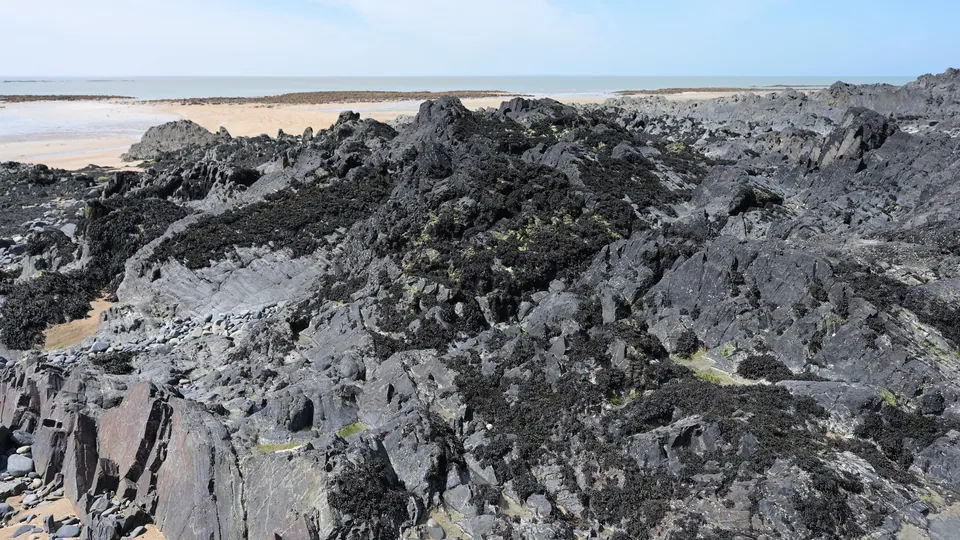
Mont-Saint-Michel
Brittany
An abbey on a rocky tidal island, just over the border in Normandy and about an hour from Saint-Malo, reached by a shuttle from mainland car parks and climbed through a single village street.
- Ages
- 6–16
- Time
- 5h
- Adult, from
- €13
Good to know. This is a steep, crowded, all-day outing: parking is several kilometres away with a shuttle or a long walk, and the abbey itself is reached by roughly 350 steps with no lift and no route for a pushchair. Under-18s enter the abbey free but still need a reserved slot in high season.
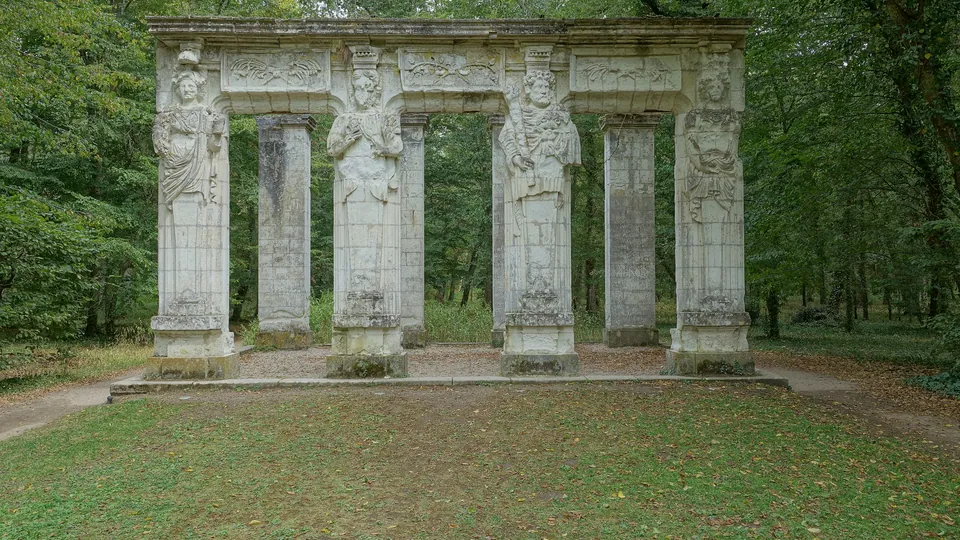 Culture
Château de Chenonceau
Loire Valley
A château built out across the river Cher on a series of arches, with a gallery spanning the water, two formal gardens, a maze and a working farm in the grounds.
- Ages
- 4–16
- Time
- 3h
- Adult, from
- €17
Good to know. The interior is a single-file route that backs up badly between about 11:00 and 15:00 in summer, when the gallery becomes a slow-moving queue. The walk from the car park takes around ten minutes and the gardens, maze and farm are what hold younger children — leave time for them rather than the rooms.
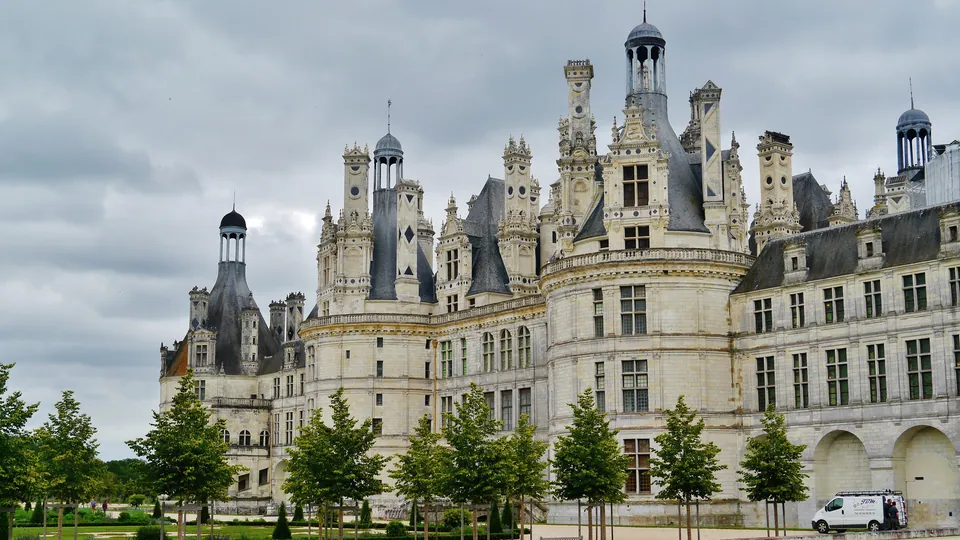 Culture
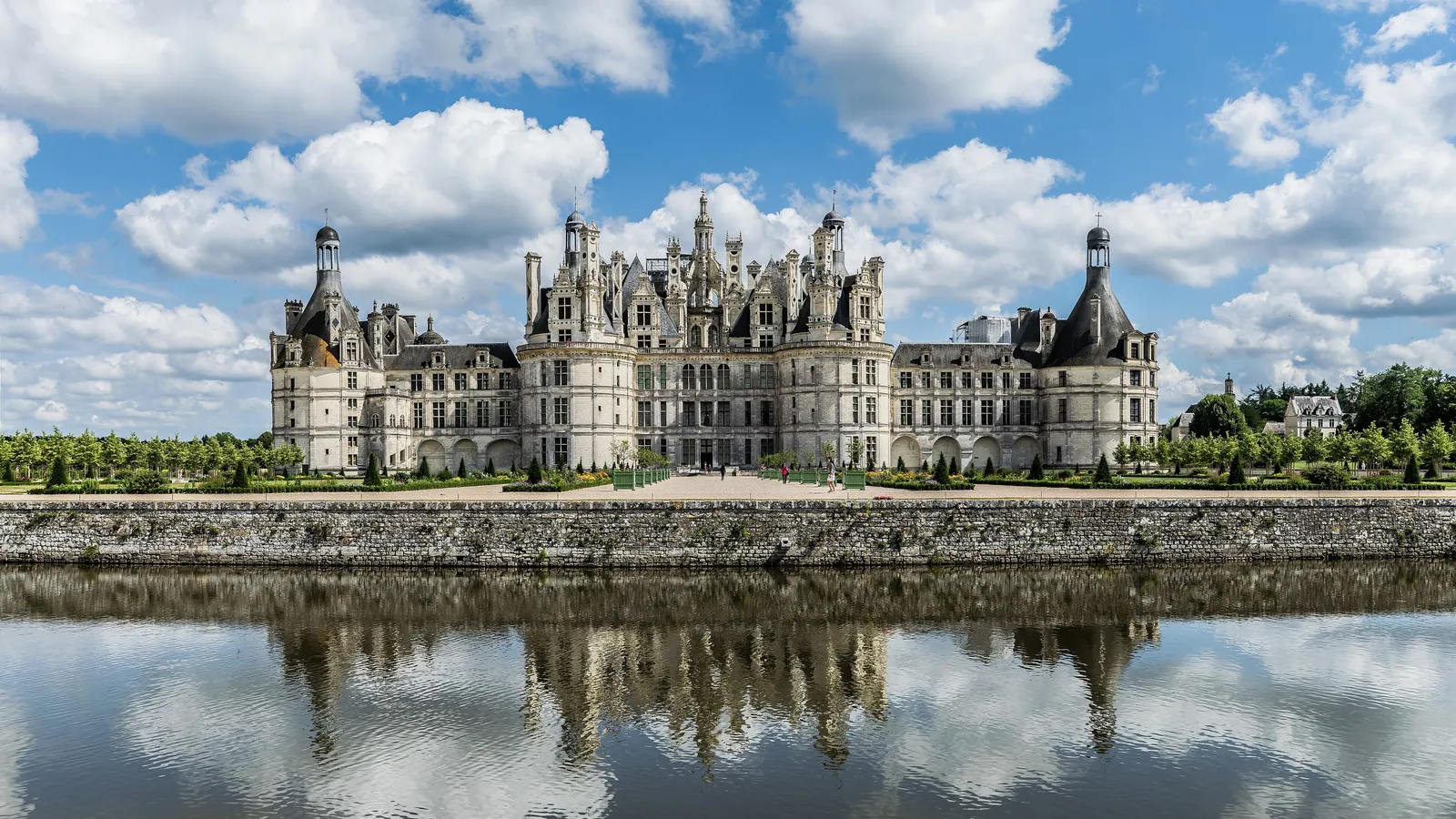
Château de Chambord
Loire Valley
The largest château in the valley, set inside a walled forest estate, with a double-helix staircase in which two people can climb without meeting and a roof terrace of chimneys and turrets. Bikes, boats and electric carts can be hired on the estate.
- Ages
- 4–16
- Time
- 3h 30m
- Adult, from
- €16
Good to know. Much of the interior is bare, and the parts children remember are the staircase and the roof rather than the rooms. Parking is a paid car park about ten minutes' walk away, the roof terrace is exposed in wind and rain, and the estate is large enough that a family should decide in advance whether to add the bike or boat hire.
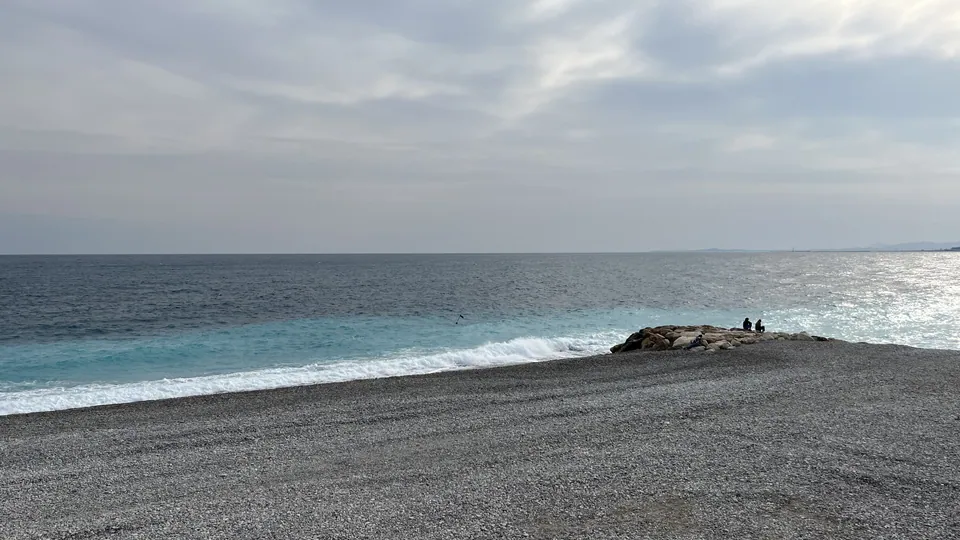 City
Promenade des Anglais & the Nice beaches
Côte d'Azur
A seven-kilometre seafront walkway along the Baie des Anges, separated from the traffic for its whole length, with free public beach sections and paying beach clubs alternating along the shore below it.
- Ages
- 2–17
- Time
- 4h
- Adult, from
- Free
Good to know. The beach is entirely large smooth pebbles, painful barefoot and awkward to enter the water over, so water shoes matter as much as sun cream here. The shore also drops away quickly in places, and the free sections fill from mid-morning in summer.
- City
Antibes old town, ramparts & Plage de la Salis
Côte d'Azur
A walled seaside town with a daily covered market, a rampart walk above the rocks and, immediately south of it, one of the few genuinely sandy public beaches on this coast, looking back at the old walls.
- Ages
- 3–16
- Time
- 5h
- Adult, from
- Free
Good to know. The sandy beach is narrow and fills early on August mornings, and the covered market shuts for the middle of the day. The ramparts walk is exposed, with unfenced sections above the rocks, and the old-town lanes are cobbled.
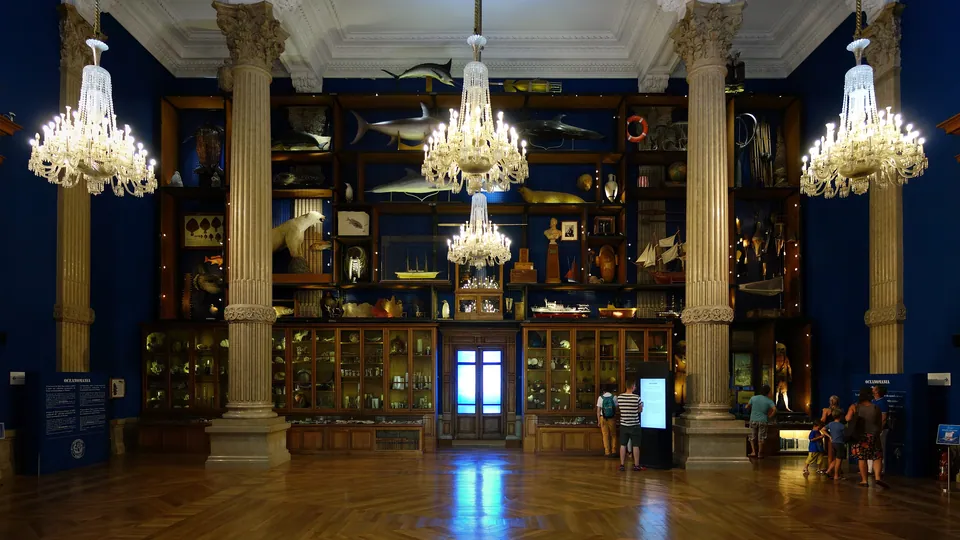 Museum
Monaco: the Oceanographic Museum & the old town
Côte d'Azur
A cliff-face museum of aquariums, tanks and a shark lagoon on the rock of Monaco, a short walk from the palace square, the cathedral and the harbour, all about twenty minutes from Nice by regional train.
- Ages
- 4–16
- Time
- 4h
- Adult, from
- €20
Good to know. Monaco is built up a cliff and the walk from the station to the rock is long and steep; the public lifts and escalators built through the hillside are the only comfortable route with a pushchair or tired children. The museum's lower halls are busiest in the middle of the day.
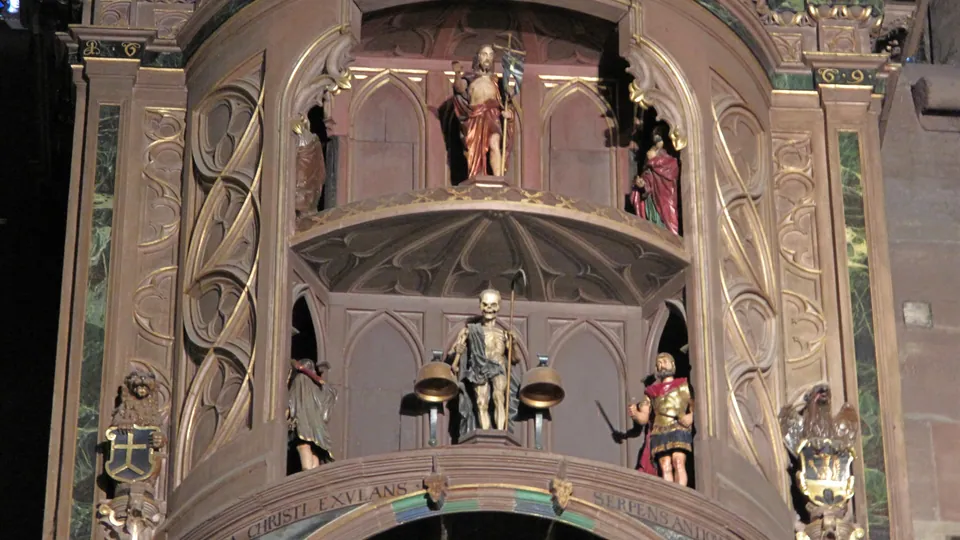 Culture
Strasbourg cathedral & its astronomical clock
Alsace
A sandstone gothic cathedral in the middle of Strasbourg's island centre, holding a Renaissance astronomical clock whose figures move in a daily performance, with a tower platform reached on foot for a view over the city and the Rhine plain.
- Ages
- 5–16
- Time
- 2h
- Adult, from
- €5
Good to know. The clock's figures perform once a day and the ticket is sold only for that showing, shortly beforehand, and it goes quickly in school holidays. The tower platform is a spiral staircase of over three hundred steps with no lift, and the nave is cold even in summer.
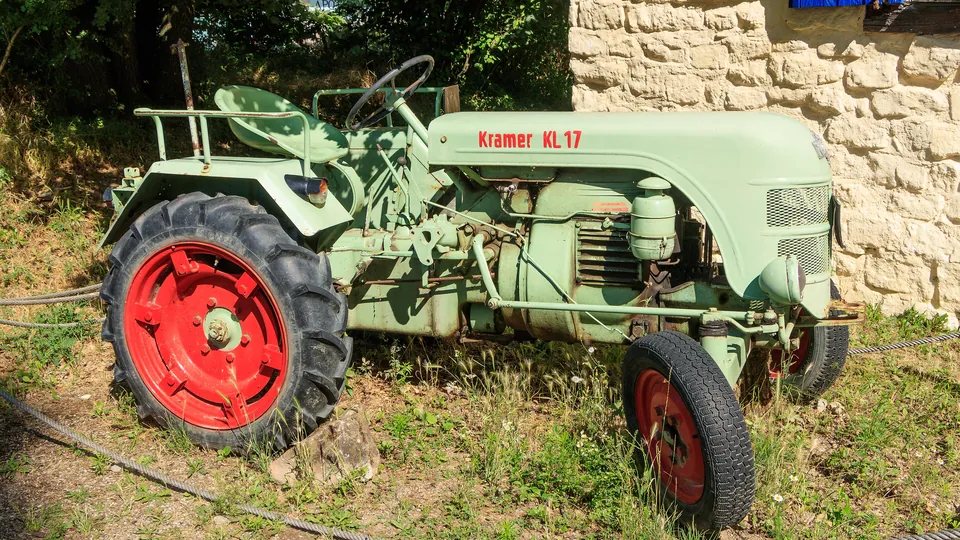 Museum
Écomusée d'Alsace
Alsace
An open-air museum built as a working Alsatian village from dozens of relocated timber-framed houses, with farm animals, craft workshops, horse-drawn carts, rowing boats and a period carousel spread across a large site in the south of the region.
- Ages
- 3–14
- Time
- 6h
- Adult, from
- €17
Good to know. Almost all of it is outdoors, so a wet day is a wet day and there is little shelter between the houses. The site is large enough that a family walks several kilometres in a visit, and it closes for much of the winter apart from a Christmas season.
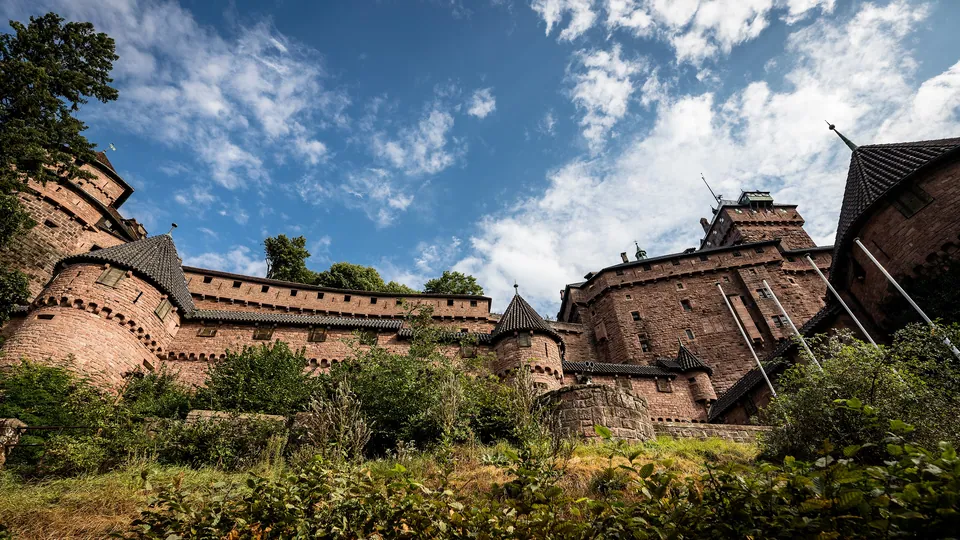 Culture
Château du Haut-Koenigsbourg
Alsace
A rebuilt hilltop castle above the plain near Sélestat, complete with drawbridge, keep, ramparts, a well and furnished halls, reached by a road of hairpins and a short climb from the car parks below the walls.
- Ages
- 5–16
- Time
- 2h 30m
- Adult, from
- €10
Good to know. The approach from the car park is steep and the interior is cobbles, spiral staircases and ramparts with drops behind low parapets, so it needs watching with small children and is not a pushchair route. Car parks fill by mid-morning in summer, and low cloud can remove the view the castle is climbed for.
Some links on this page are affiliate links. If you book through one, the price is the same for you and we may earn a commission. How this works.
Getting around France
TGV services link Paris to Avignon, Rennes, Tours, Annecy and Chamonix's valley in one to four hours, and seat reservations are compulsory, so a family books together or sits apart. Children under four travel free on a lap and four to eleven at a reduced fare. Ouigo is the low-cost TGV brand and is genuinely cheap booked early, but it sometimes uses outlying stations. Paris has a dense metro and RER network, including the line out to the theme parks and both airports; the rest of the country thins out fast once the TGV stops.
Do you need a rental car?
Moderate driving. Paris and Disneyland need no car at all, and rail reaches every regional hub. A car becomes necessary the moment the trip leaves those hubs: the Luberon villages, the Loire châteaux, the Brittany coastal paths and most ski resorts have infrequent bus services that thin further outside July and August.
Is the France Rail Pass (Eurail / Interrail) worth it?
Rarely the cheapest option for a family. Advance-purchase TGV and Ouigo fares undercut it on the routes families actually use, compulsory TGV seat reservations cost extra on top of a pass, and children already travel at a reduced fare. Price the specific legs before buying passes for four people.
What France costs with a family
Typical daily spend for a family of four, excluding flights. Accommodation, food, local transport and one paid activity a day.
€
€150
Budget · per day, family of four
€€
€260
Mid-range · per day, family of four
€€€
€460
Higher-end · per day, family of four
Planning estimates based on published prices at the time of writing, in shoulder season. Peak months, school holidays and city-centre accommodation all push the figure higher.
Food in France
Eating out is easy in substance and rigid in timing. Kitchens generally serve roughly 12:00–14:00 and from about 19:30, and between those windows a family will find bakeries, crêperies and brasserie snacks rather than a cooked meal. Most restaurants offer a menu enfant of steak haché and chips or pasta, bread arrives free and unasked, and tap water is free if requested as a carafe d'eau. Vegetarians should plan ahead outside the cities: lardons, stock and anchovy turn up in dishes that read as meat-free, and rural menus can be thin on alternatives.
Practical tips for France
The things that are easy to get wrong and expensive to fix once you have arrived.
Getting around
Book TGV seats the day the fares open
Fares are released several months ahead and rise steadily as trains fill. Booking early is also the only reliable way to get four seats together, which matters more with young children than the saving does.
Food
Eat when France eats
Lunch runs roughly 12:00–14:00 and dinner starts around 19:30. Arriving at 15:00 expecting a cooked meal ends in a bakery. Carry bread, fruit and a drink for the gap, and feed children earlier rather than fighting the schedule.
Getting around
Check the Crit'Air sticker before driving into a city
Paris, Lyon, Grenoble and several other cities run low-emission zones that require a windscreen sticker. Cars hired inside France normally carry one; a car driven in from abroad needs one ordered online well in advance.
When to go
Treat August as a different country
French school holidays run through July and August, resorts and campsites sell out, motorway traffic peaks on the changeover weekends, and many city restaurants and bakeries close for two to three weeks. June and September deliver the same weather with none of this.
Money & costs
Under-18s go free, but still need a ticket
Permanent collections at national museums and châteaux are free for under-18s, and for EU residents under 26. A free ticket still has to be reserved for timed-entry sites, so book the children's places alongside the adults'.
When to go
Check the weekly closing day, not the hours
Many museums close one full day a week, most often Monday or Tuesday, and small-town shops shut from Sunday lunchtime until Tuesday morning. A closing day wrecks a plan far more thoroughly than an early finish.
Health & safety
A pharmacy handles most small problems
Pharmacies are marked by a green cross and pharmacists advise on minor illness, bites and rashes without an appointment. When one is shut, the door lists the pharmacie de garde on duty that night.
Staying connected
Sort data before arrival if travelling from outside the EU
EU and UK plans usually roam here without extra charge; other plans do not. An eSIM activated before departure covers maps, TGV apps and timed-entry tickets from the moment the plane lands.
Some links on this page are affiliate links. If you book through one, the price is the same for you and we may earn a commission. How this works.
France with kids: common questions
How long should a first family trip to France be?
Seven to fourteen days. A week covers Paris plus one theme-park day or one region. Ten to fourteen days allows Paris and a second region — Provence, Brittany, the Alps or the Loire — with a real base in each rather than a run of one-night stops.
Do families need a car in France?
Not for Paris or Disneyland, and not for travelling between regions, which the TGV does faster than driving. A car is close to essential inside Provence, the Loire and rural Brittany, where the sights are spread out and bus services are sparse.
Is France expensive with children?
It varies more by region than by season. Paris and an Alpine ski week sit at the top of this catalog's range; a gîte in the Loire or a coastal campsite in Brittany costs less than the equivalent in Italy. Free museum entry for under-18s and free water and bread in restaurants pull the daily figure down.
What age suits France best?
It works from toddlers upwards, but the mix changes. Under-sixes do well with beaches, lakes, campsites and châteaux gardens and will miss the height limits on the bigger theme-park rides. From about seven, the full range opens up, including the Alps cable cars and city days on foot.
When is the best time to visit France with kids?
May, June and September almost everywhere. July suits the mountains and the Atlantic coast. August is the French domestic holiday and should be booked months ahead or avoided. For snow, February is the reliable month and also the most crowded and expensive one.
Is the food a problem for fussy eaters?
Rarely. Bakeries, crêperies, roast chicken, steak haché with chips and pasta are available everywhere, and a menu enfant is standard. The genuine difficulty is timing rather than taste — kitchens close between services, so a hungry child at 16:00 gets a snack, not a meal.
Other destinations to compare
Every guide answers the same questions in the same order, so two countries take five minutes to compare rather than five evenings.
- Japan with Kids: Itineraries, Where to Stay & When to GoCulture, nature & adventure
- Italy with Kids: Itineraries, Where to Stay & When to GoMountains, lakes & cities
- Austria with Kids: Itineraries, Where to Stay & When to GoAlps, lakes & charming towns
- Cyprus with Kids: Itineraries, Where to Stay & When to GoSun, sea & family resorts