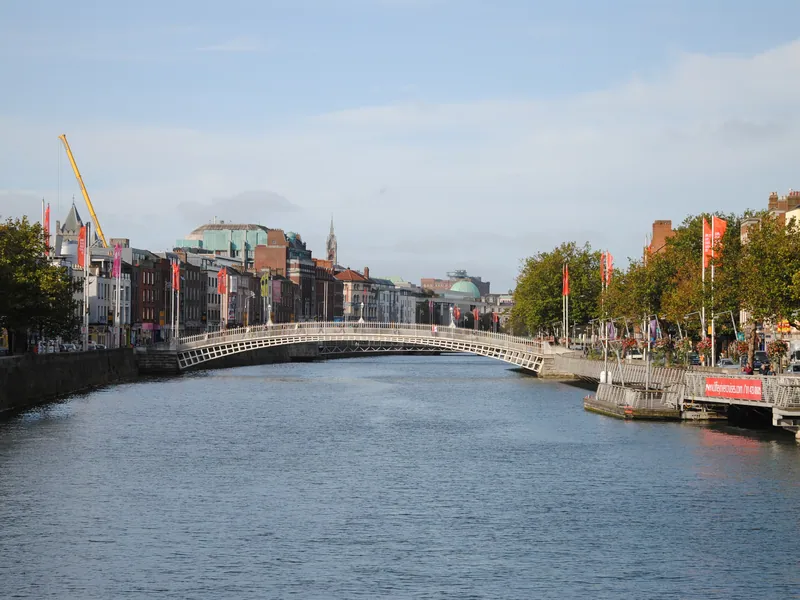
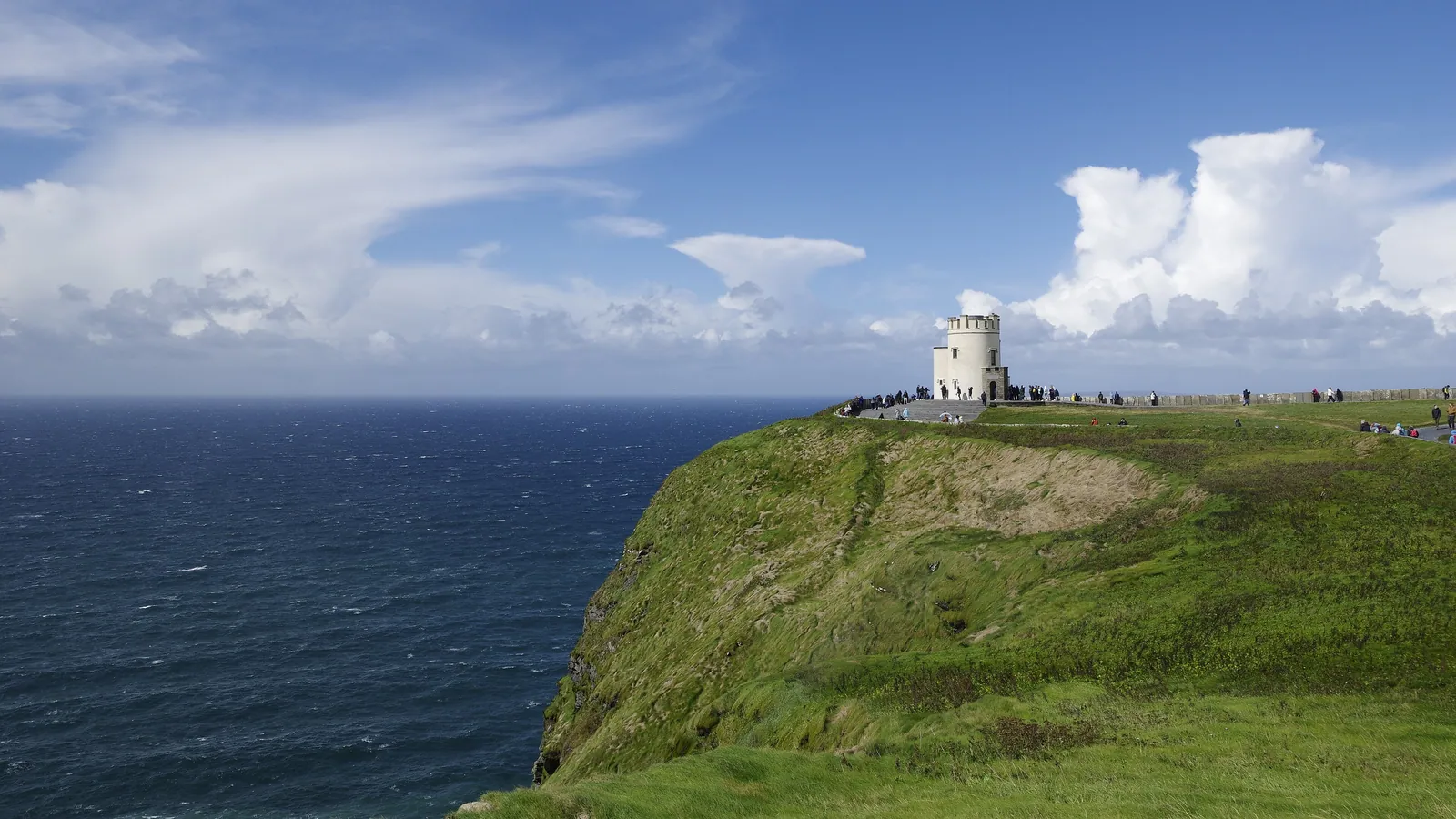
Europe · 4 destinations
Ireland with Kids: Where to Stay, Costs & When to Go
Ireland is a small country with a very long coastline, and almost everything a family comes for sits on it: Atlantic strands, mountain passes that drop to sea level within a few kilometres, stone forts on headlands with no ticket office, and a capital city whose national museums charge nothing to walk into. English is spoken everywhere, tap water is drinkable, and children are expected in pubs at lunchtime, on trains and in guesthouse dining rooms. Two constraints dominate the planning and neither of them goes away. The weather is genuinely unreliable from May to September — rain on any given day is normal rather than unlucky, and the west can be roughly twice as wet as Dublin — so every outdoor plan needs a named indoor alternative rather than optimism. And distances that look trivial on a map are not: outside the motorway corridors radiating from Dublin, roads are narrow, winding and slow, and an eighty-kilometre hop across a peninsula can take the best part of two hours.
- Best for ages
- 3+
- Recommended trip length
- 7–12 days
- Budget level
- €€€
- Best time to visit
- May–Sep
Suits up to 16
Higher-end
Why Ireland works for families
Coast, mountain and lake within one short drive
The south-western peninsulas pack the scenery tightly, so a single day can take in a beach, a mountain pass and a lake shore without a long transfer between them.
Nothing is heat-limited
Summer afternoons rarely climb past the low twenties, so sightseeing is never rationed the way it is around the Mediterranean and a late start costs nothing.
Pubs and guesthouses feed children early and properly
Most pubs serve food from around midday, chowder and carveries suit cautious eaters, and guesthouse rates usually include a cooked breakfast that removes a meal from the daily budget.
Ruins that are walked into rather than queued for
Stone circles, ring forts, abbeys and signal towers sit in fields and on headlands with no gate and no timed entry, which holds a child's attention far better than a guided interior.
No language barrier and low crime
English is spoken everywhere and road signs are bilingual; the practical risks on a family trip here are weather, tides and narrow roads rather than personal safety.
Where to go in Ireland
The areas worth building a family trip around, and how long to give each.
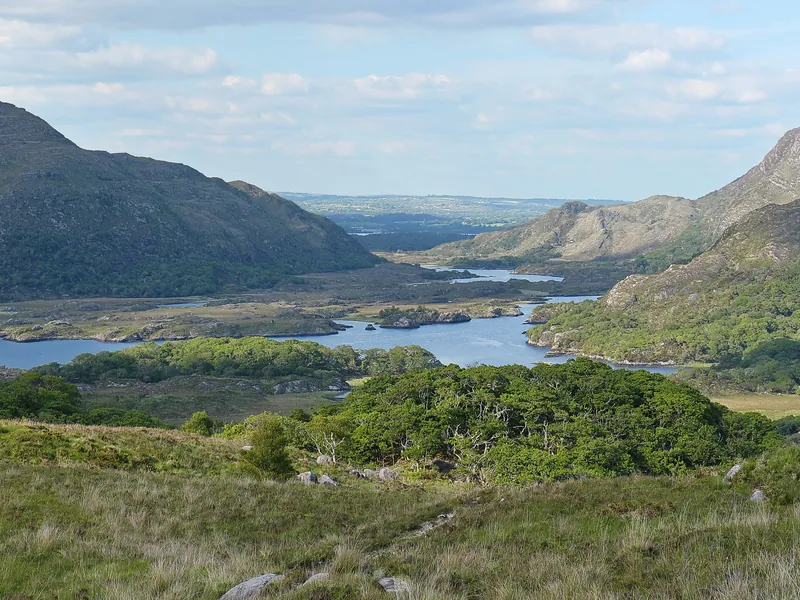
Ring of Kerry
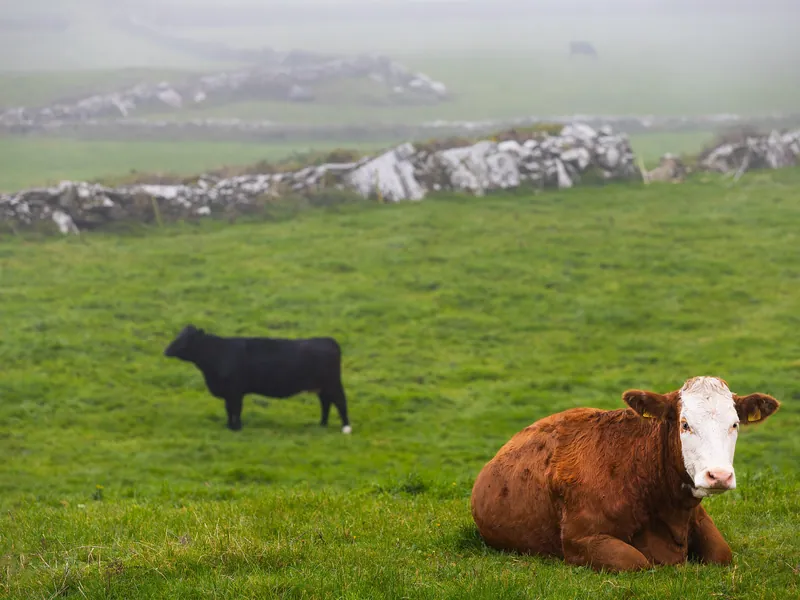
A coastal loop, a car-free national park and cold beaches
- Suggested stay
- 3–5 days
- Best for ages
- 4+
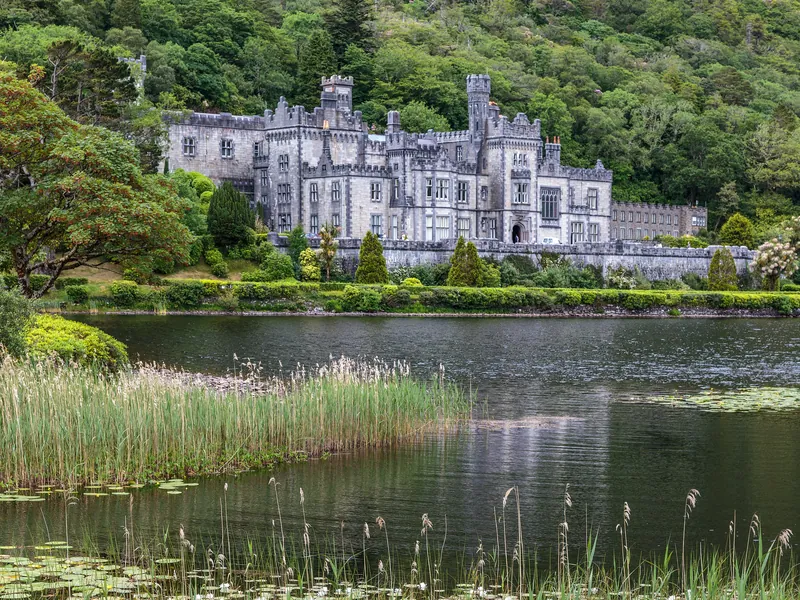
Galway & Connemara
A walkable city and an empty, weather-beaten west
- Suggested stay
- 3–5 days
- Best for ages
- 4+
When to visit Ireland with kids
May, June and September give long days without the July–August price peak, and daylight is the underrated variable: midsummer evenings in the west stay usable past 22:00, while December darkness closes in before 16:30. The shoulder-season cost is not weather but opening: island ferries, boat trips and rural kitchens drop to a few days a week or stop entirely outside the summer months.
- Jan
- Feb
- Mar
- Apr
- May
- Jun
- Jul
- Aug
- Sep
- Oct
- Nov
- Dec
Where to stay
Family hotels in Ireland
We list areas and property types rather than single hotels: family-room availability changes constantly, and the area plus the room requirement is what survives contact with a booking engine.
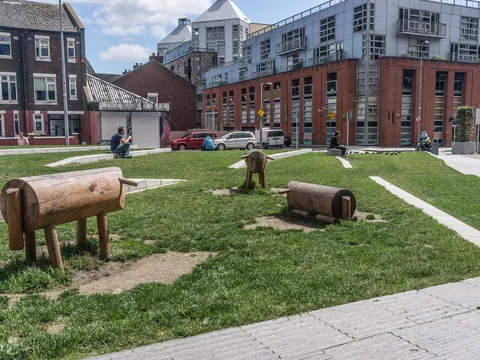 Smithfield / StoneybatterMid-range
Apartment in Smithfield or Stoneybatter
A two-bedroom apartment on this side of the river costs less than two central hotel rooms and adds a kitchen and a washing machine, which is what makes several days in an expensive city affordable rather than merely possible. Phoenix Park and the zoo are a walk away rather than a journey.
- Kitchen and washing machine
- Luas red line into the centre in under ten minutes
- Phoenix Park and the zoo within a 15–20 minute walk
- Supermarkets rather than tourist-priced cafés
Fitting a family in
Two-bedroom apartments sleep four to five without a rollaway, and sofa beds in the living area are common for a fifth.
Watch out. The tram is the only quick link to the south side, so museum days start with a transfer, and the blocks between here and the north quays are patchy — some back onto late-night premises. On-street parking is scarce and mostly permit-only.
Check hotel prices — opens Klook in a new tab (affiliate link)Live availability for your dates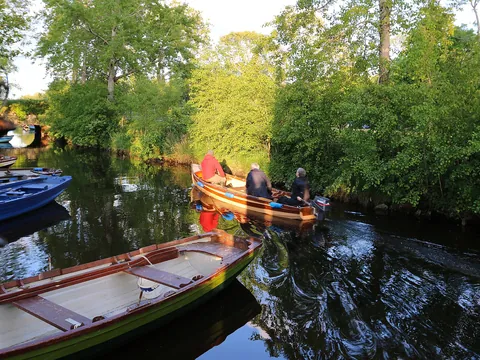 KillarneyMid-range
Family room in Killarney town
Killarney is the one base on the peninsula where a family can have a car-free day: the national park starts at the end of the main street, and bike hire, boat trips and jaunting cars all leave from the town. It also has the only real choice of food and wet-weather options for an hour in any direction.
- National park, bike hire and jaunting cars within walking distance
- The widest choice of restaurants in the region
- Indoor options for a wet day
- Clockwise start for the Ring without a transfer
Fitting a family in
Rooms sleeping four are relatively common here compared with the rest of the peninsula, often as a double plus two singles; family suites and interconnecting rooms are the option for five and are limited in number.
Watch out. Killarney is the coach hub for the whole south-west, so the town centre is busy from mid-morning and the main street is a drinking street in the evening. Rooms that sleep four fill from early spring for July and August, and the cheapest rates are often on the ring road rather than in the walkable centre.
Check hotel prices — opens Klook in a new tab (affiliate link)Live availability for your dates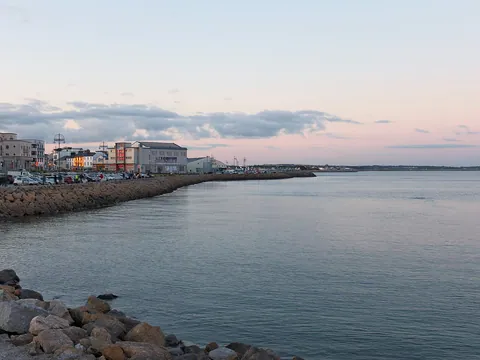 SalthillMid-range
Family rooms on the Salthill promenade
A flat two-kilometre seafront with a playground, an aquarium and diving boards gives children an hour of running that costs nothing and needs no planning, and the area has the parking and the family-sized rooms that Galway's medieval centre cannot offer.
- Two-kilometre promenade with a playground and an aquarium
- Parking at most properties
- City bus and a 25–30 minute walk into the centre
- Rooms sleeping four more widely available than in the centre
Fitting a family in
Seafront properties here carry a reasonable stock of rooms sleeping four, and larger apartment-style units for five appear away from the promenade itself.
Watch out. The promenade is fully exposed to Atlantic wind and rain, and a sea-view room carries a premium for a view that is often grey. The walk back from the centre is long with tired children, and the coast road is busy enough that crossing it needs care.
Check hotel prices — opens Klook in a new tab (affiliate link)Live availability for your dates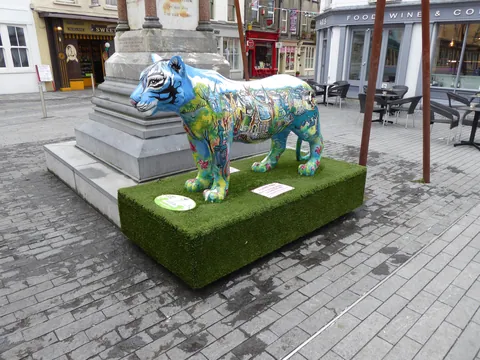 Clonakilty / InchydoneyMid-range
Self-catering house near Inchydoney
A beach week here produces wet wetsuits, sandy towels and salty clothes every single day, and a house with a washing machine, an outdoor tap and somewhere to hang things is what keeps that from taking over. Clonakilty adds playgrounds, a supermarket and enough restaurants that self-catering is a choice rather than an obligation.
- Kitchen, washing machine and drying space
- Off-street parking, which the beach car park cannot guarantee
- Lifeguarded strand a few kilometres away
- Working town with shops and playgrounds
Fitting a family in
Three-bedroom houses sleeping five or six are the common stock here, usually with one bunk room.
Watch out. High-season lets run week to week with a Saturday changeover and rates well above the shoulder season. Houses on the Inchydoney road share one route in and out with everyone heading for the beach, which is slow on a hot weekend, and the properties closest to the sand are the first to book and the dearest.
Check hotel prices — opens Klook in a new tab (affiliate link)Live availability for your dates
Some links on this page are affiliate links. If you book through one, the price is the same for you and we may earn a commission. How this works.
Top family attractions in Ireland
What each one costs, how long it takes, which ages it suits and whether you need to book ahead.
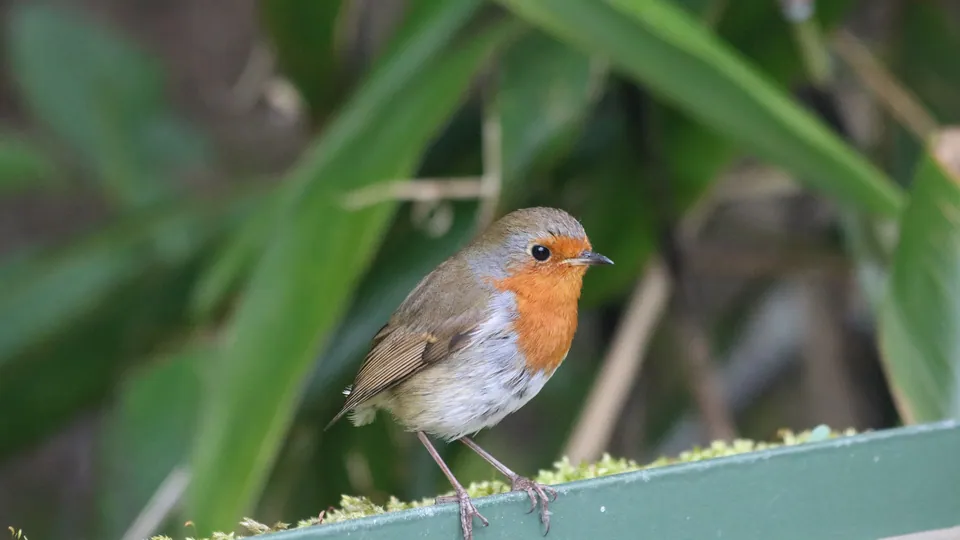 AnimalsBook ahead
Dublin Zoo
Dublin
A large zoo inside Phoenix Park, laid out as habitat areas with an African savanna section, an Asian forest with elephants, and a separate small-animal area aimed at younger children.
- Ages
- 1–14
- Time
- 4h
- Adult, from
- €24
Good to know. Timed entry slots sell out on fine weekends and through school holidays, and the online price is lower than the gate. The site is almost entirely outdoors with two or three kilometres of walking and few sheltered buildings, so it is the one Dublin plan a wet forecast should move rather than keep.
 Museum
National Museum of Ireland – Archaeology
Dublin
A free museum on Kildare Street holding Iron Age bog bodies, Viking-era finds from the Dublin excavations, and the best-known pieces of early Irish metalwork including the Tara Brooch.
- Ages
- 6–16
- Time
- 1h 30m
- Adult, from
- Free
Good to know. The bog bodies are genuinely preserved human remains, displayed frankly, and some children find them distressing — the gallery is arranged so it can be skipped. The building is Victorian, with the upper galleries reached by stairs and lift access more limited than in a modern museum.
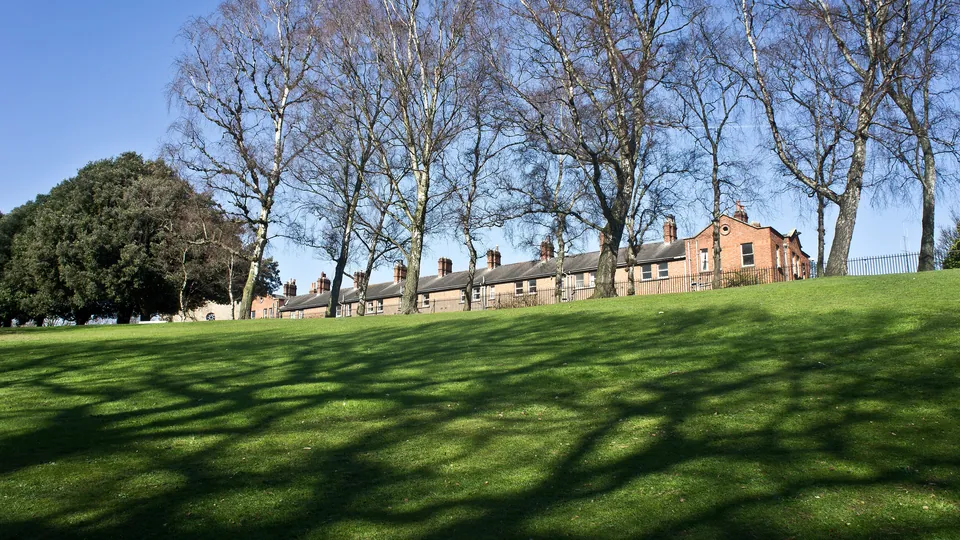 Nature
Phoenix Park
Dublin
One of the largest enclosed city parks in Europe at around 700 hectares, holding a free-roaming fallow deer herd, playgrounds, a walled Victorian flower garden, a visitor centre and the zoo.
- Ages
- 0–16
- Time
- 3h
- Adult, from
- Free
Good to know. The scale is the catch: two to three kilometres separate the main gate, the zoo and the deer pastures, so a visit needs a plan or a bike rather than a wander. The deer are wild animals that should not be approached or fed, and there is very little shelter anywhere in the park when the weather turns.
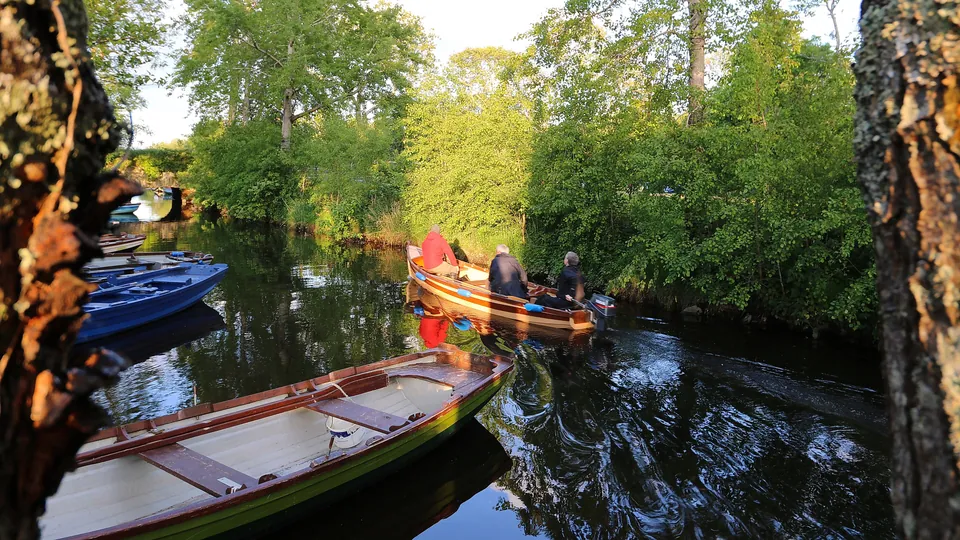 Nature
Killarney National Park
Ring of Kerry
Around ten thousand hectares of lakes, oak woodland and mountain on the edge of Killarney town, with traffic-free estate roads linking Muckross House and gardens, Muckross Abbey and Torc Waterfall, and boat trips from Ross Castle.
- Ages
- 0–16
- Time
- 4h
- Adult, from
- Free
Good to know. Entry to the park is free but Muckross House and the traditional farms are separately ticketed. The Torc Waterfall car park is small and fills by mid-morning in summer, and while the estate roads are wide and pushchair-friendly, the climb above the waterfall is steps and tree roots. Rain improves the waterfall and makes those steps slippery.
 AdventureBook ahead
Gap of Dunloe
Ring of Kerry
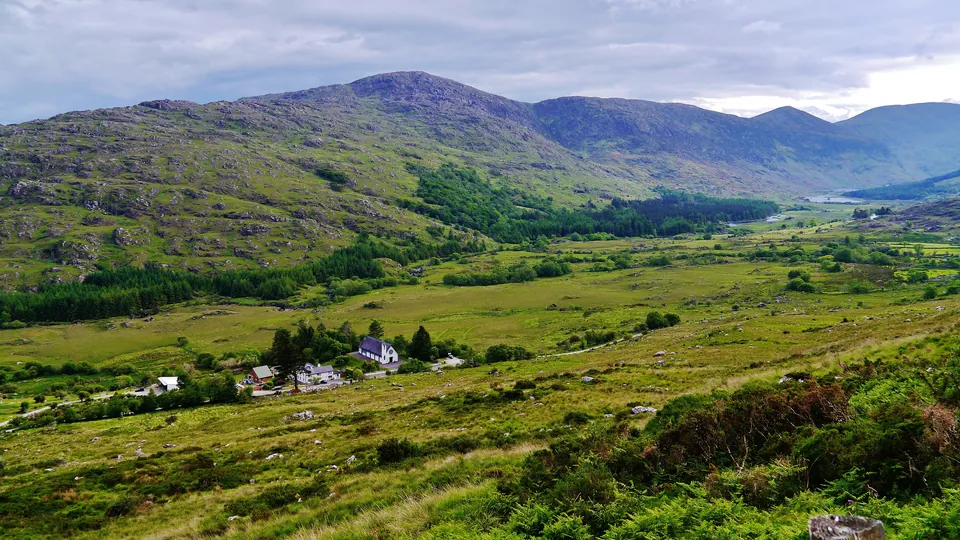
A narrow glacial mountain pass between MacGillycuddy's Reeks and the Purple Mountain, traditionally crossed by pony and trap from the northern entrance near Beaufort and returned by open boat across the Killarney lakes to Ross Castle.
- Ages
- 5–16
- Time
- 5h 30m
- Adult, from
- €45
Good to know. The pass is a single-track road shared with walkers and pony traps and is not a sensible route for a hire car. The boat leg is in an open craft with no shelter and is cancelled in rough weather, and the full trap-and-boat combination is a five to six hour commitment with no way to shorten it once started.
 Nature
Connemara National Park
Galway & Connemara
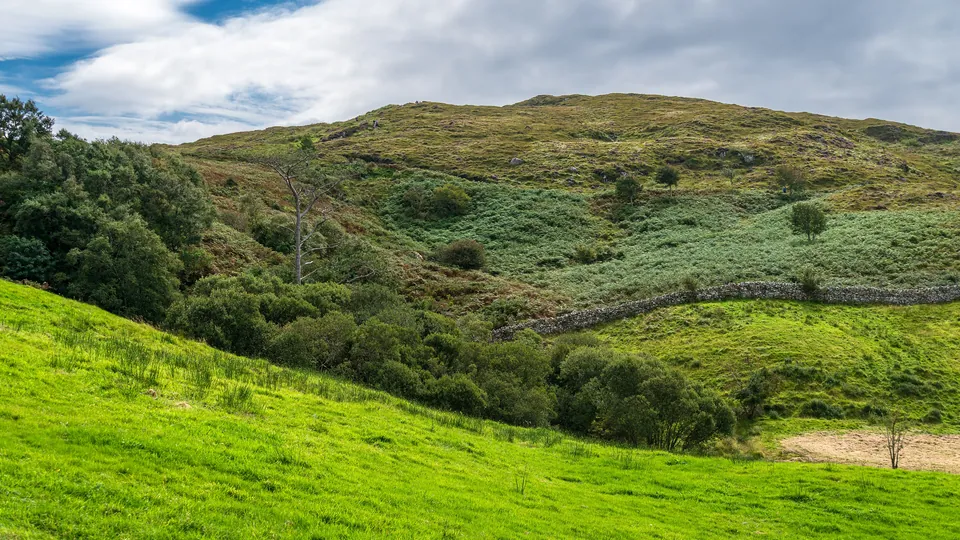
Bog, heath and mountain at Letterfrack with a visitor centre and a set of graded waymarked loops on Diamond Hill, running from a short lowland boardwalk to a rocky circuit of the summit.
- Ages
- 3–16
- Time
- 3h
- Adult, from
- Free
Good to know. Admission is free but the loops differ sharply: the lower boardwalk suits small children while the upper circuit is a few kilometres of stone steps and loose rock with an exposed, windy summit and no shelter. Cloud sits on the hill often enough that the view should be treated as a bonus, and the boardwalk is slick when wet.
 CultureBook ahead
Kylemore Abbey and Victorian walled garden
Galway & Connemara
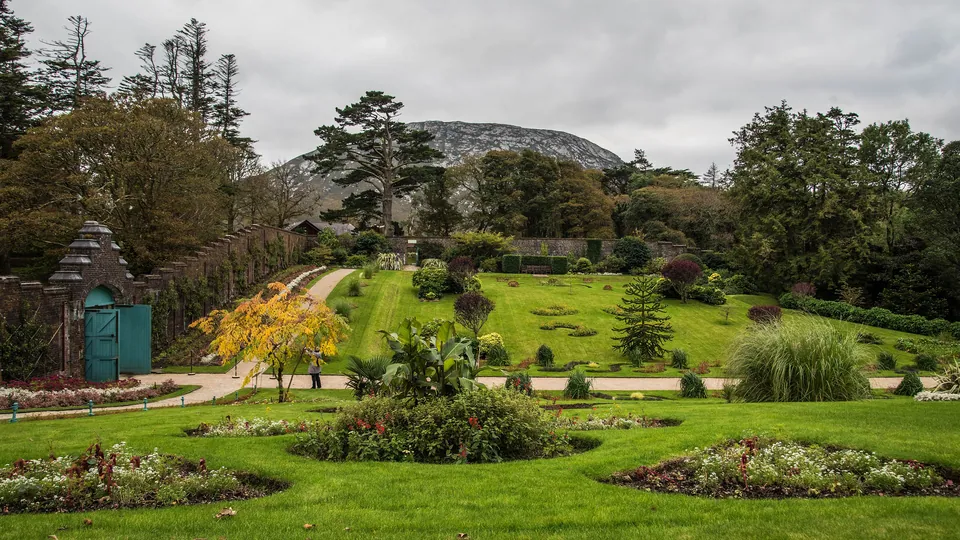
A Victorian castle on a lake shore in Connemara, later a Benedictine abbey, with a handful of restored rooms, a neo-Gothic church, lakeside woodland paths and a large restored walled kitchen garden.
- Ages
- 4–16
- Time
- 3h
- Adult, from
- €17
Good to know. The walled garden is about a kilometre from the abbey, reached on foot or by a shuttle bus that queues badly in summer, and the grounds are where most of the time goes — the interior is a small number of rooms. Almost everything here is outdoors and there is very little cover, so a wet day means the shuttle and the tea rooms.
 Water
Inchydoney Beach
West Cork
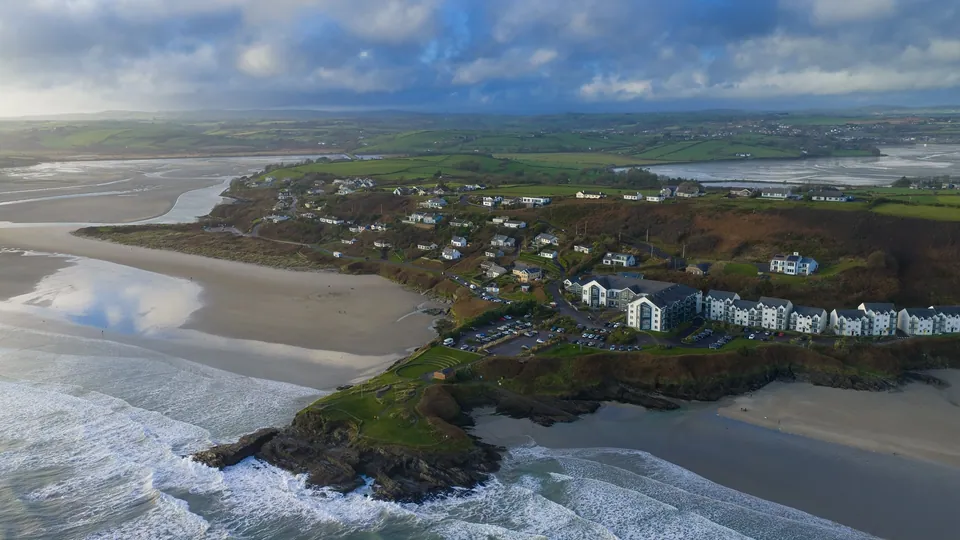
Two wide sandy strands either side of a low headland a few kilometres from Clonakilty, with gently shelving water, a large car park and surf schools operating through the summer.
- Ages
- 0–16
- Time
- 4h
- Adult, from
- Free
Good to know. Lifeguards are on duty only through the summer months and the currents near the headland strengthen on a falling tide, so swimming belongs between the flags rather than anywhere on the sand. The water stays in the mid teens even in August, and the single beach road queues on the rare hot weekend.
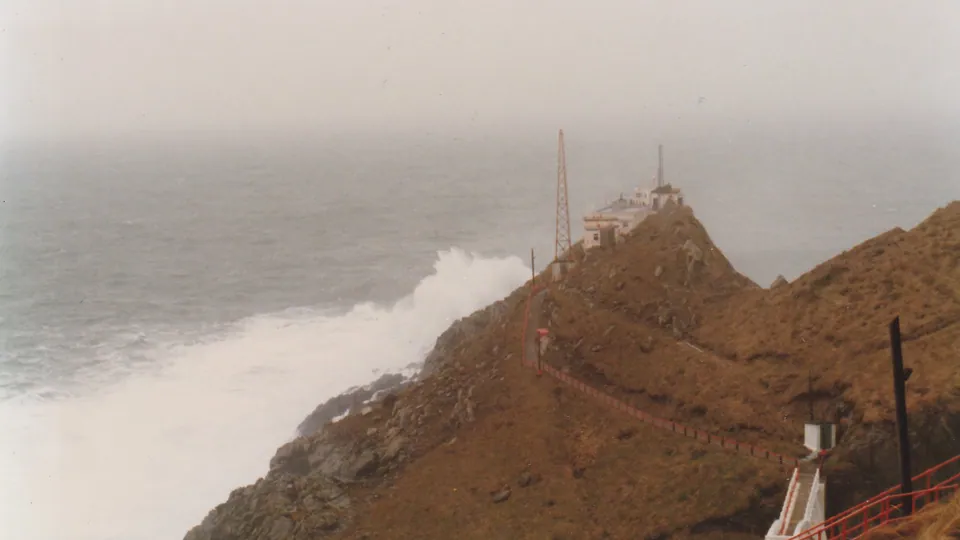 Adventure
Mizen Head Signal Station
West Cork
A former fog-signal station on the cliffs at the south-western tip of the mainland, reached by a concrete arched bridge over a chasm, with exhibition rooms in the old keepers' buildings and seabirds below.
- Ages
- 6–16
- Time
- 2h
- Adult, from
- €8
Good to know. Reaching the station means a long flight of steps down and the same climb back up, with no lift and no pushchair route. The bridge and the path are fully exposed to wind and spray and the site closes in a gale; the drive out along the Mizen is slow enough that this is a half-day rather than a stop.
Some links on this page are affiliate links. If you book through one, the price is the same for you and we may earn a commission. How this works.
Getting around Ireland
Intercity rail radiates from Dublin and is comfortable on those spokes — Cork, Galway, Killarney, Tralee, Westport and Sligo are all direct — but there are almost no useful links between them, so Galway to Killarney by train means changing at Limerick Junction and spending most of a day on it. Bus Éireann and private coach operators fill some of the gaps between towns, while rural Local Link services run a handful of times a day and not at all in the evenings. In the Dublin area a Leap Card covers buses, the two Luas tram lines, the DART and commuter rail on one charge. There is no rail link to Dublin Airport at all: it is served by buses, which take 30–45 minutes into the city and longer in traffic.
Do you need a rental car?
Driving-led. Dublin needs no car and paying to park one there is money burned, but everything else on a family route does. The Ring of Kerry, Connemara and the West Cork peninsulas have beaches, trailheads, piers and viewpoints that no bus reaches, and rural evening services frequently do not exist. The real constraint is the driving rather than the distance: traffic keeps left with the driver on the right, regional roads are two narrow lanes with hedges or stone walls hard against the edge and no hard shoulder, and local lanes are single-track with passing places. Automatics are a minority of Irish rental fleets, cost noticeably more and sell out in summer, which matters for a driver adjusting to the left-hand side at the same time.
What Ireland costs with a family
Typical daily spend for a family of four, excluding flights. Accommodation, food, local transport and one paid activity a day.
€
€170
Budget · per day, family of four
€€
€300
Mid-range · per day, family of four
€€€
€530
Higher-end · per day, family of four
Planning estimates based on published prices at the time of writing, in shoulder season. Peak months, school holidays and city-centre accommodation all push the figure higher.
Food in Ireland
Children eat well here on pub menus, seafood chowder with brown bread, fish and chips, carveries and the cooked breakfast most guesthouses include in the rate. Allergen information is a legal requirement and staff are used to being asked about it. Two things catch families out. Rural kitchens stop serving earlier than visitors expect, often by around 20:00, so arriving in a village at 20:30 means crisps and little else. And children are generally required to leave licensed premises by 21:00, a little later in the summer months, which makes a pub dinner an early-evening plan rather than a late one.
Practical tips for Ireland
The things that are easy to get wrong and expensive to fix once you have arrived.
Money & costs
Read the hire-car insurance wording before relying on a credit card
Ireland is one of the countries most commonly excluded from the car-hire cover bundled with credit cards, and Irish rental desks routinely ask non-residents for written proof of cover before allowing the collision waiver to be declined. Checking the policy wording before travelling avoids an expensive decision at the counter with tired children in the queue.
Getting around
Give the first driving day much less to do
Traffic keeps left and the driver sits on the right, and on regional roads there is no room for error — walls and hedges sit at the edge of the tarmac. Posted limits on those roads are higher than the road warrants, so treat them as a ceiling that rarely applies, and plan a short first leg rather than collecting a car and immediately driving three hours.
Getting around
The Dublin ring-road toll has nothing to stop at
The M50 around Dublin is tolled by camera with no barrier and no booth, and the charge has to be paid online or in a shop within a short window before it becomes a penalty. Some rental companies handle it automatically and some pass it on, so ask which at collection rather than after the fact.
Money & costs
A heritage card pays off from about the third site
The state heritage service sells an annual card, including a family option, covering entry to the sites it runs — among them Muckross House, Kilmainham Gaol and Derrynane House. It starts saving money at roughly the third or fourth ticketed stop and saves nothing at all on a trip built around beaches and mountains, so count the paid sites before buying.
Packing
One waterproof each, plus a spare pair of shoes
Irish rain is usually persistent drizzle rather than a downpour, which a proper waterproof jacket defeats entirely. Wet shoes are what actually ends a day with children, so a second pair each earns its luggage space, and a swim towel is worth carrying even on days with no beach planned.
Staying connected
Download offline maps, not just a data plan
EU roaming bundles cover Ireland, but a UK plan may not, so check rather than assume. More usefully, mobile coverage has real gaps in Connemara, on the Beara and along the Kerry peninsulas, which is exactly where the navigation is hardest, so offline maps matter more here than the size of the data allowance.
Some links on this page are affiliate links. If you book through one, the price is the same for you and we may earn a commission. How this works.
Ireland with kids: common questions
Do you need a car in Ireland with kids?
Not in Dublin, where a car is a liability and parking is expensive. Almost everywhere else, yes: the beaches, trailheads and headlands that make the west worth the trip sit beyond the bus network, and rural evening services often do not run. The main alternative that genuinely works is a day coach tour from Killarney or Galway.
How long should a first family trip to Ireland be?
Seven to twelve days. A week covers Dublin plus one region of the south-west at a workable pace. Ten to twelve days allows two regions without spending every second day behind the wheel, which is the mistake most first itineraries make.
When is the best time to visit Ireland with children?
May, June and September. Days are long, ferries and boat trips are running, and prices sit below the July–August peak when coastal accommodation is both fullest and dearest. Outside those months the weather is not much worse but a lot more of what a family wants is closed.
What is the weather actually like in summer?
Mild rather than hot, typically in the mid to high teens, with rain possible on any day and considerably more of it in the west. Plans built on a forecast fail here; plans with a named indoor alternative do not.
Is Ireland expensive for a family?
Accommodation is the expensive part, particularly Dublin and anywhere coastal in high summer, and family rooms are scarce enough that they book out first. Food, fuel and attractions are mid-range by western European standards, and Dublin's free national museums genuinely lower the cost of a city stay.
Is Ireland good for toddlers?
Dublin is, being flat, compact and full of free indoor space. The rural west is harder: the days are structured around driving, cliff paths and headlands are frequently unfenced, and many of the better walks are rough underfoot rather than pushchair-friendly. A carrier travels better here than a full pram.
Other destinations to compare
Every guide answers the same questions in the same order, so two countries take five minutes to compare rather than five evenings.
- Japan with Kids: Itineraries, Where to Stay & When to GoCulture, nature & adventure
- Italy with Kids: Itineraries, Where to Stay & When to GoMountains, lakes & cities
- Austria with Kids: Itineraries, Where to Stay & When to GoAlps, lakes & charming towns
- Cyprus with Kids: Itineraries, Where to Stay & When to GoSun, sea & family resorts