Europe · 3 destinations
Czechia with Kids: Where to Stay, Costs & When to Go
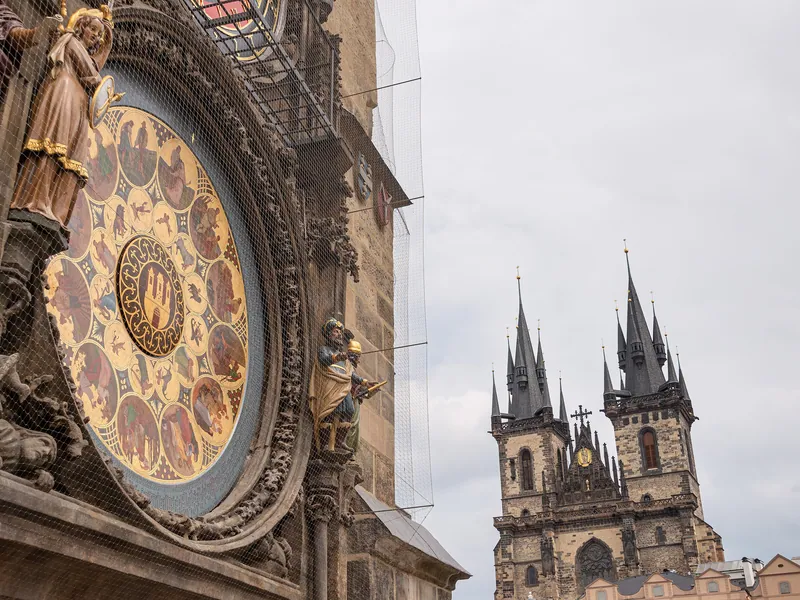
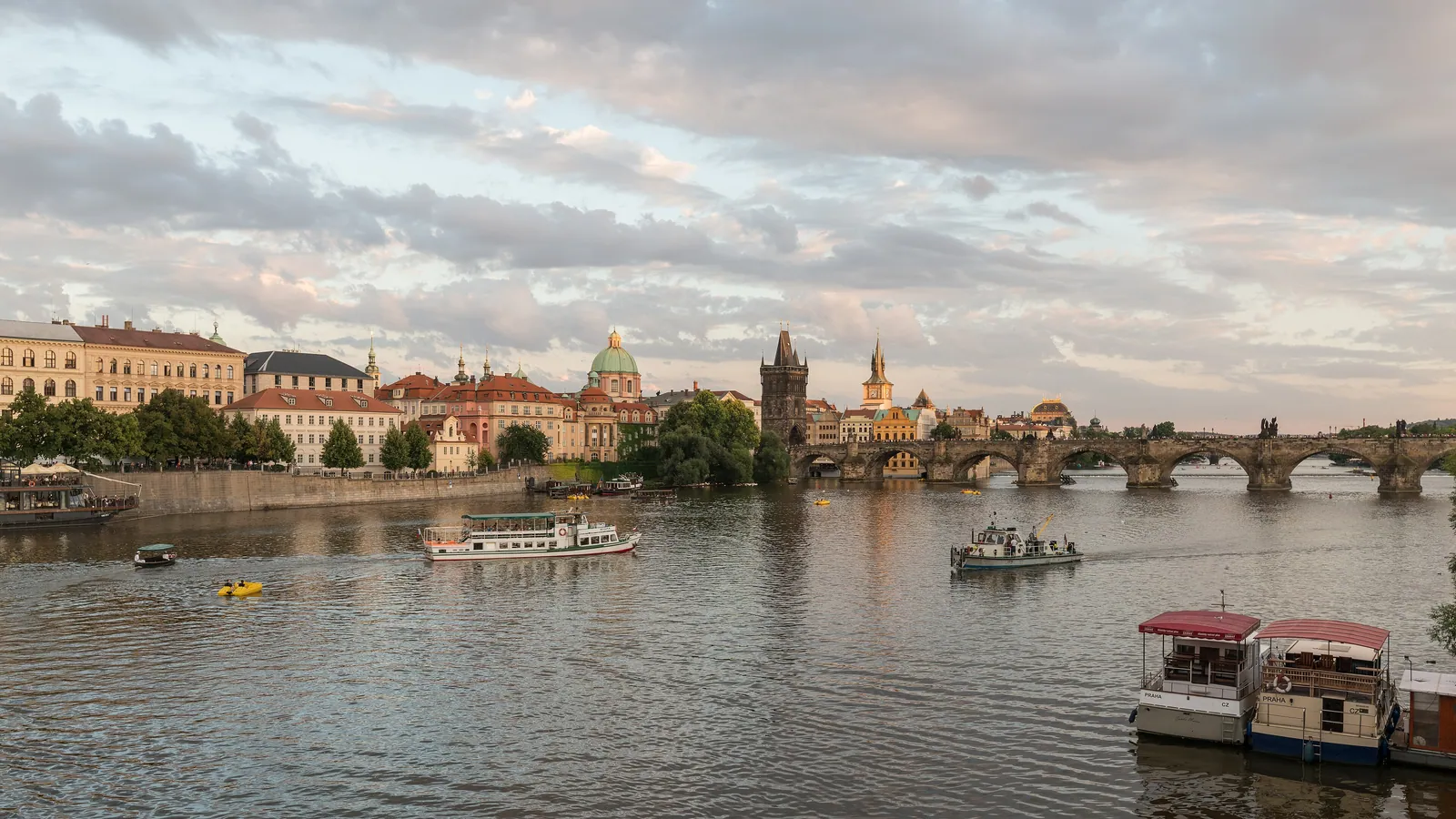
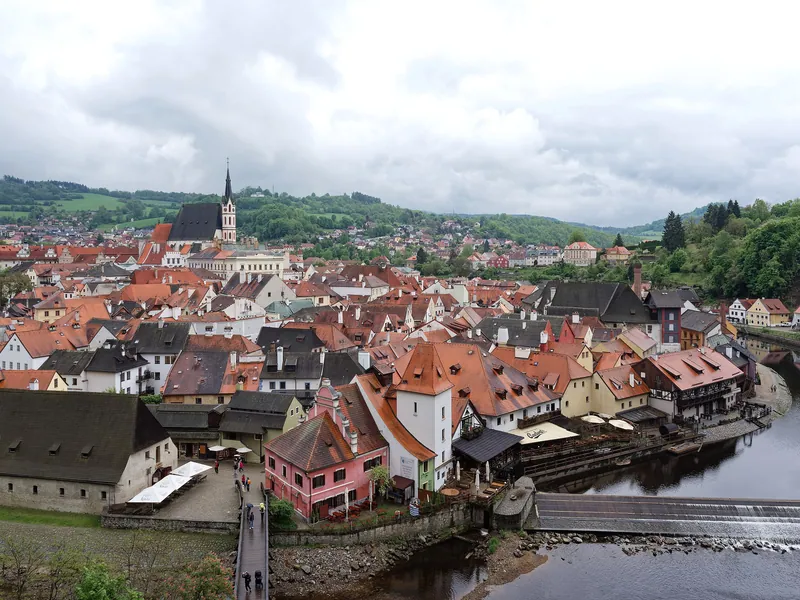
Czechia packs a capital city, a river-bend medieval town and a sandstone rock wilderness into a country smaller than England, and the trains and coaches between them are cheap, frequent and comfortable enough that a family never needs a car. Prices are the other reason families come: a restaurant meal, a family room and an attraction ticket all cost visibly less than in Germany or Austria next door, without the infrastructure feeling any rougher. The trade-off is the surface underfoot. Historic centres are paved in granite setts, the good buildings are old buildings with stairs rather than lifts, and the famous corners of Prague and Český Krumlov are crowded to the point of unpleasantness through the middle of the day. Families who plan around both — early starts, a carrier instead of a pushchair — get an easy country; families who do not spend a week fighting it.
- Best for ages
- 3+
- Recommended trip length
- 7–10 days
- Budget level
- €€
- Best time to visit
- May–Sep, Dec
Suits up to 16
Mid-range
Why Czechia works for families
Western-European quality at central-European prices
Family rooms, sit-down meals and attraction tickets all sit well below the German and Austrian equivalents.
The whole country works without a car
Dense rail plus intercity coaches with reserved seats reach Český Krumlov and the national parks directly from Prague.
Castles that are physical rather than curated
Bears in a moat, painted towers that can be climbed, a medieval silver mine walked into on foot — the interest is in things children can look at and do.
Sandstone rock towns and gorges
Rock labyrinths, punt boats poled through a gorge and the largest natural rock arch in Europe, all within two hours of Prague.
Menus children actually eat
Breaded pork or chicken cutlets, dumplings, goulash and pancakes are on nearly every menu, and the weekday lunch menu is the cheapest hot meal of the day.
Where to go in Czechia
The areas worth building a family trip around, and how long to give each.
When to visit Czechia with kids
May, June and September are the sweet spot: warm enough for the rivers and the rock parks, cool enough to walk a city, and short of the July peak. July and August are hot and very busy in Prague but they are also the only months the Vltava rafting and the gorge boats reliably run. December is a separate, deliberate season for the Christmas markets; January to March is cold, dark and largely without the outdoor attractions.
- Jan
- Feb
- Mar
- Apr
- May
- Jun
- Jul
- Aug
- Sep
- Oct
- Nov
- Dec
Where to stay
Family hotels in Czechia
We list areas and property types rather than single hotels: family-room availability changes constantly, and the area plus the room requirement is what survives contact with a booking engine.
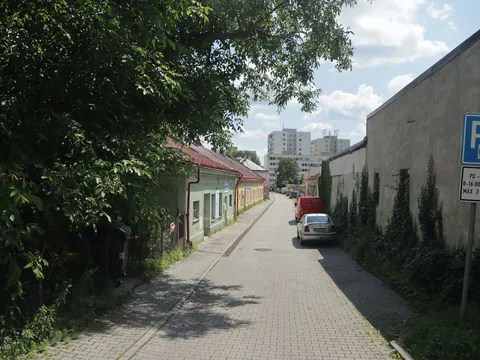 VinohradyMid-range
Apartment in Vinohrady
A residential district of large pre-war apartments ten minutes from the centre by metro or tram, where a two-bedroom flat with a kitchen and a washing machine costs less than two hotel rooms in the old town and comes with two proper parks and playgrounds within walking distance.
- Kitchen and washing machine
- Metro and tram into the centre in about ten minutes
- Parks with playgrounds a few streets away
- Supermarkets and neighbourhood restaurants rather than tourist menus
Fitting a family in
Two-bedroom apartments are the normal product here and sleep four to five without a rollaway.
Watch out. The district climbs a hill, and many of the handsome older blocks have either a tiny lift or none at all. Check the floor and the lift before booking with a pushchair.
Check hotel prices — opens Klook in a new tab (affiliate link)Live availability for your dates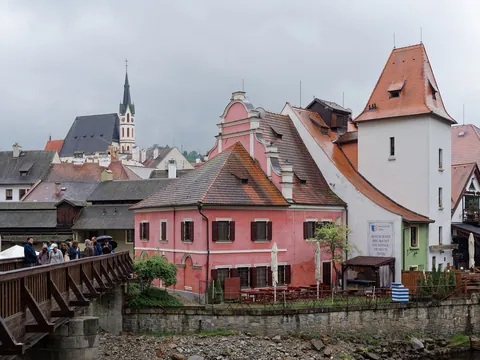 Old townMid-range
Guesthouse inside the river bend
Being inside the loop is the entire argument for staying rather than day-tripping: the castle courtyards, the bear moat and the lanes are empty before nine and again after five, and a family staying here gets both ends of the day for the price of one night.
- Two or three minutes' walk from the castle bridge
- Breakfast before the coach groups arrive
- The river, the weirs and the raft landings at the bottom of the street
Fitting a family in
Small guesthouses in historic houses typically have a few family rooms or triples with an extra bed; four in one room is common, two connected rooms much less so.
Watch out. Vehicle access is restricted, so luggage is carried in from a car park on the slope, and small wheeled cases do badly on the setts. Buildings are centuries old, with steep stairs and no lifts, and rooms over the main lanes get restaurant and bar noise until late.
Check hotel prices — opens Klook in a new tab (affiliate link)Live availability for your dates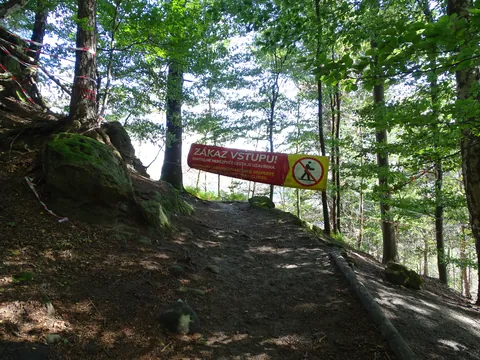 Mezní Louka / HřenskoMid-range
Chalet or guesthouse at the trailhead
Sleeping where the paths start is what makes the arch workable with children: the plateau route can be walked before the coaches from Prague and Dresden reach the gorge, and a tired child is twenty minutes from a bed rather than two hours.
- Marked trails to the arch and the gorges from the door
- Half board or a restaurant on site, which matters where there is nothing else
- Park buses to the other trailheads in season
Fitting a family in
Chalets and guesthouse family rooms sleep four to five; a few sites add cabins and pitches, which suits older children in summer.
Watch out. Hřensko is squeezed onto one narrow through road with very limited parking and a strip of souvenir stalls that sets the tone. Eating options are few and kitchens close early, and older guesthouses are stairs-only.
Check hotel prices — opens Klook in a new tab (affiliate link)Live availability for your dates
Some links on this page are affiliate links. If you book through one, the price is the same for you and we may earn a commission. How this works.
Top family attractions in Czechia
What each one costs, how long it takes, which ages it suits and whether you need to book ahead.
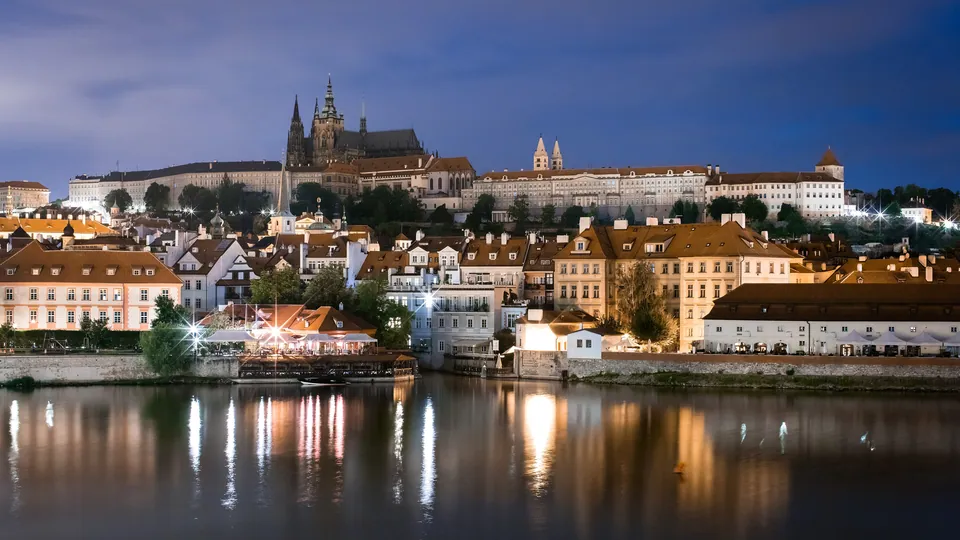 Culture
Prague Castle
Prague
The largest castle complex in the world by area, spread along the ridge above the river: courtyards, a gothic cathedral, a medieval palace and a lane of small houses built into the fortification wall. Tram 22 stops at the gates, so the visit begins at the top rather than after a climb.
- Ages
- 5–16
- Time
- 3h
- Adult, from
- €18
Good to know. The courtyards, lanes and viewpoints are free; only the interiors need the combined circuit ticket. There is a security check at the gates that queues badly between ten and two in summer, the whole complex is cobbled, and the cathedral has no seating for a tired child.
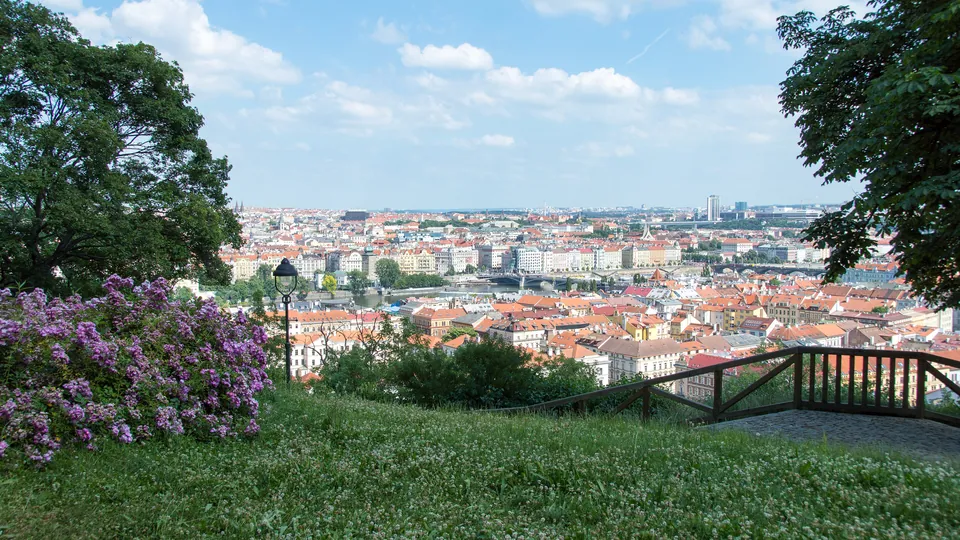 City
Petřín hill, lookout tower and mirror maze
Prague
A wooded hill above Malá Strana holding a steel lookout tower modelled loosely on the Eiffel Tower, a mirror maze in a mock castle beside it, and an observatory. The funicular from Újezd is part of the city transport system, so a normal ticket covers the ride up.
- Ages
- 3–14
- Time
- 2h 30m
- Adult, from
- €10
Good to know. The tower is a long spiral staircase of roughly 300 steps; a lift exists but costs extra and has its own queue. The funicular closes for maintenance periods, occasionally for months, and the alternative is a steep walk up through the orchards.
 Animals
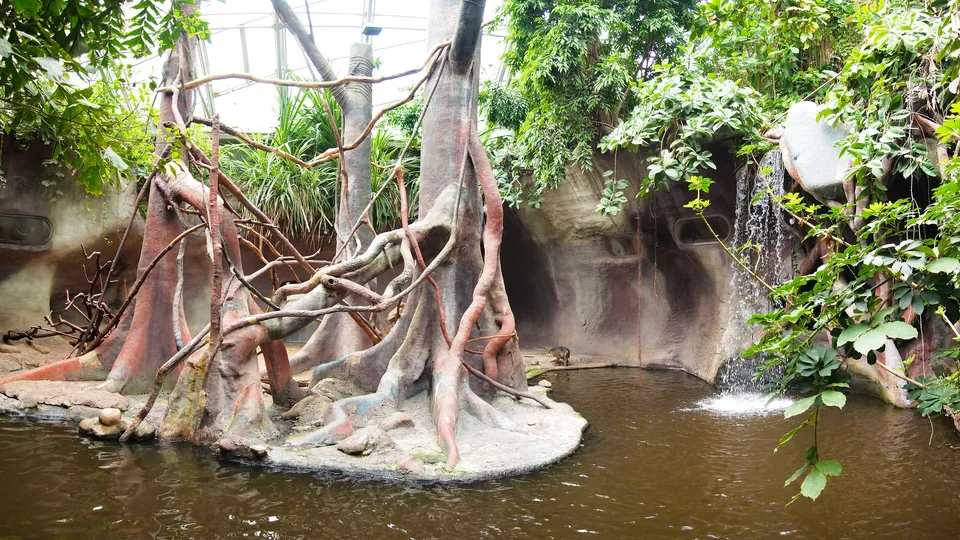
Prague Zoo
Prague
A large zoo laid out across a hillside in Troja on the northern edge of the city, with a chairlift linking the lower and upper sections and a children's area near the entrance. Bus from the Holešovice metro terminus, or a river boat in summer.
- Ages
- 2–14
- Time
- 5h
- Adult, from
- €16
Good to know. Built on a genuine slope — the upper half involves sustained climbing unless the chairlift is running, and it stops in bad weather. Allow thirty to forty minutes each way from the centre, and expect it to absorb a full day rather than a morning.
 Culture
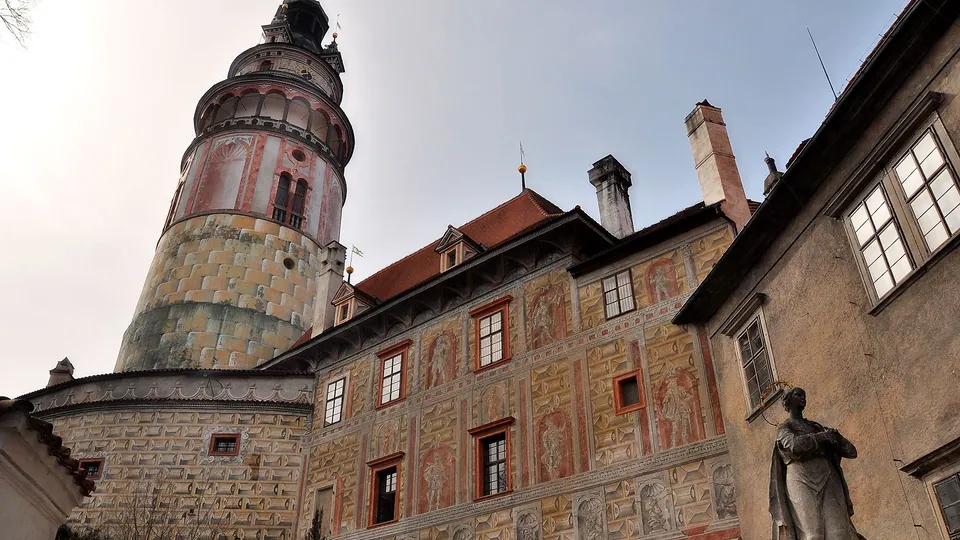
Český Krumlov Castle, tower and bear moat
Český Krumlov
A very large castle and chateau complex on the ridge above the town, entered across a bridge over a dry moat where bears have been kept since the 18th century. The painted Renaissance tower can be climbed for the best view of the river bend, and the terraced gardens above are open parkland.
- Ages
- 4–16
- Time
- 2h 30m
- Adult, from
- €9
Good to know. The courtyards, the bear moat and the gardens are free to walk through; the tower has its own ticket and the state rooms are sold only as timed guided circuits. The approach is a cobbled ramp and stairs, and the tower is a narrow spiral climb with no passing places.
 CultureBook ahead
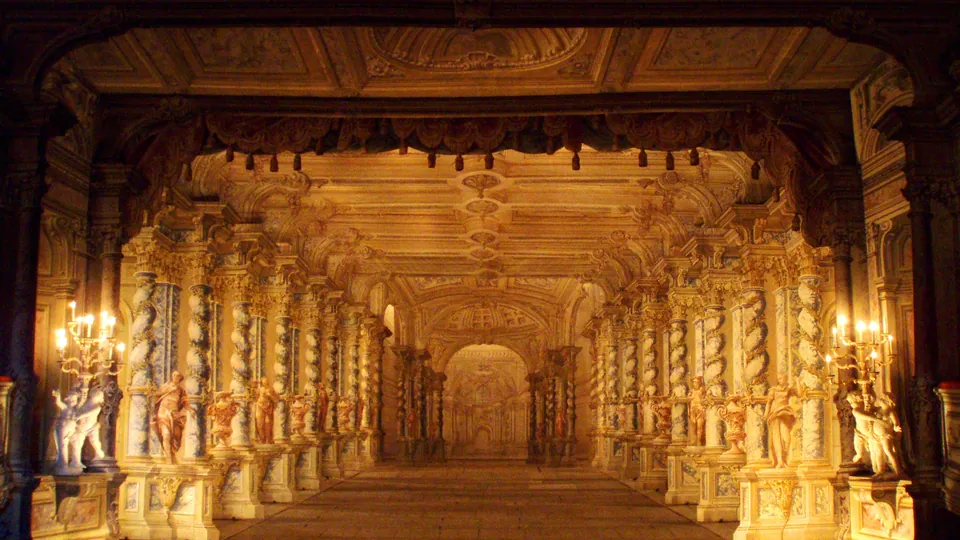
Castle Baroque Theatre
Český Krumlov
One of a very small number of 18th-century theatres anywhere that still has its original auditorium, painted scenery and wooden stage machinery, shown on a guided tour that includes the workings below the stage.
- Ages
- 8–16
- Time
- 1h
- Adult, from
- €14
Good to know. Group sizes are kept tiny to protect the interior, so tours sell out days ahead in summer, English-language slots are limited and the season does not run through the winter. It is a static, mostly spoken 45 minutes in a cool room, which does not suit under-sixes.
 Nature
Pravčická brána rock arch
Bohemian Switzerland
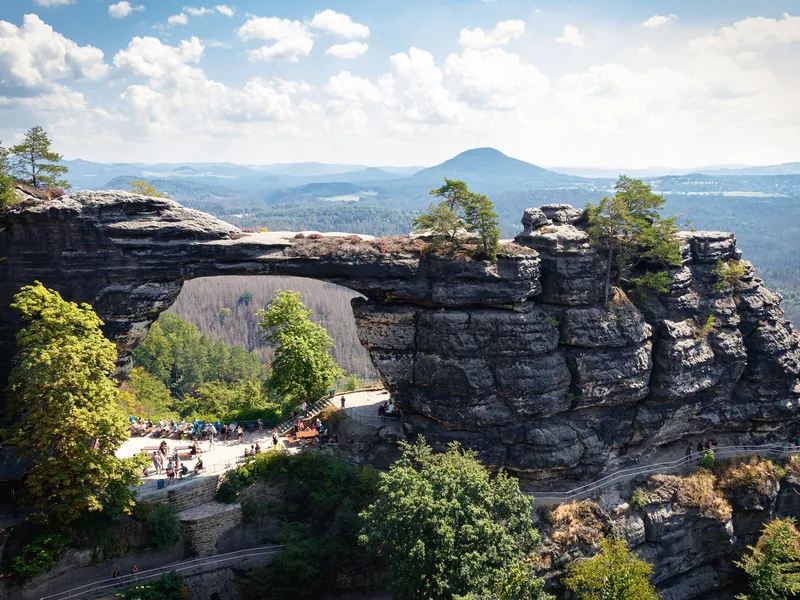
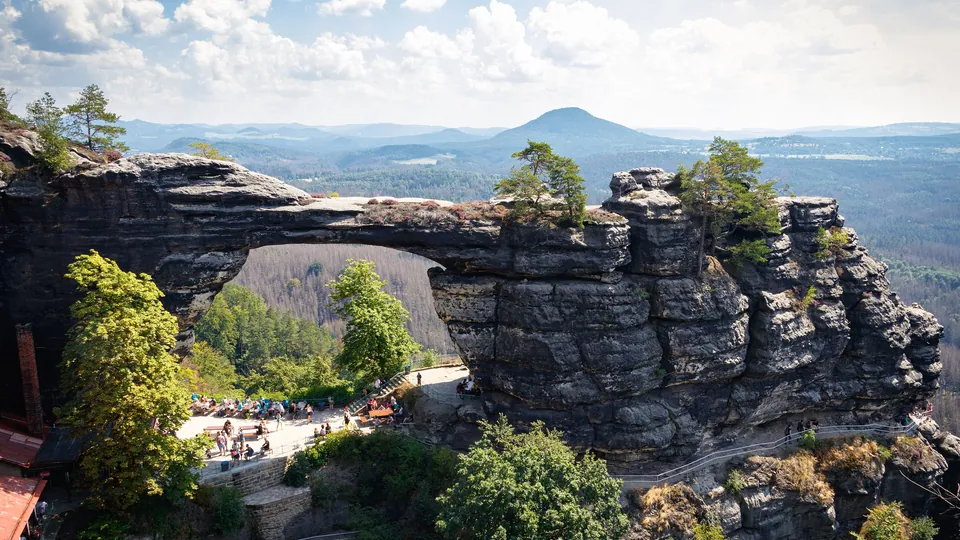
The largest natural sandstone arch in Europe, roughly 26 metres across, with a chateau built beneath it in the 1880s that now houses the viewing terraces, a small exhibition and a restaurant. Reached on foot from Hřensko below or across the plateau from Mezní Louka.
- Ages
- 6–16
- Time
- 4h
- Adult, from
- €6
Good to know. The arch cannot be walked on — it was closed to foot traffic in the 1980s to stop the sandstone eroding — and is seen from terraces beneath and beside it. The climb from Hřensko is well over a kilometre of sustained ascent with long flights of steps, about an hour each way with children, and the site closes in ice and storm conditions.
 Water
Kamenice gorge punt boats
Bohemian Switzerland
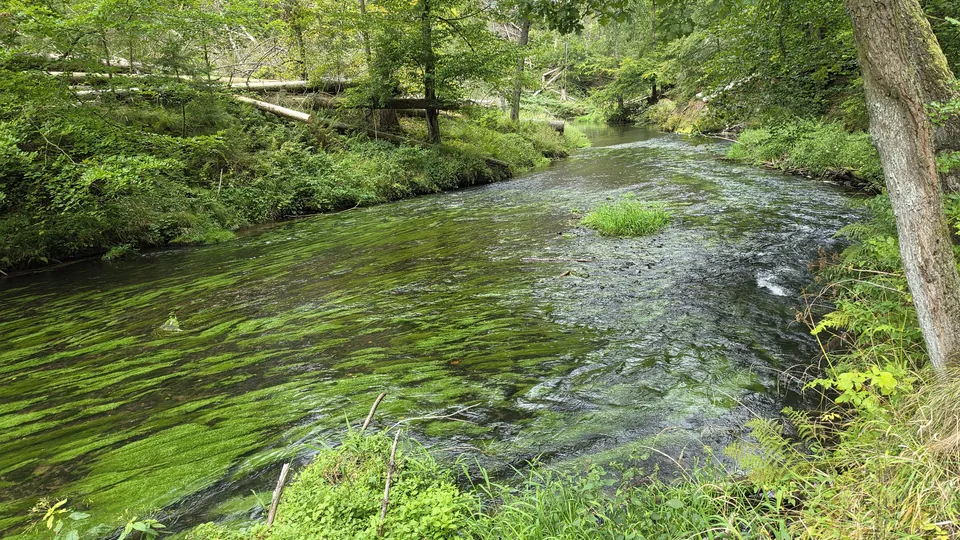
Two short sections of the Kamenice river, walled in by sandstone hundreds of metres high, are crossed in open flat-bottomed boats poled by a boatman, with an easy riverside path linking the landing stages.
- Ages
- 3–16
- Time
- 3h
- Adult, from
- €7
Good to know. Seasonal — the boats run roughly from spring to autumn and are suspended when the river is high after rain. Tickets are sold only at the landings, which queue between eleven and three, and the walk in from Hřensko plus the path between the two sections still adds up to about an hour on foot.
Some links on this page are affiliate links. If you book through one, the price is the same for you and we may earn a commission. How this works.
Getting around Czechia
The rail network is dense and cheap, and the Prague hub reaches Děčín for the rock parks in about ninety minutes. Southwards, private intercity coaches with reserved seats and onboard staff are faster and simpler than the train, which needs a change at České Budějovice for Český Krumlov. Prague itself runs an integrated ticket covering metro, trams, buses and the Petřín funicular; trams are the useful mode for families because the metro sits deep below long escalators.
Do you need a rental car?
A little driving. Prague emphatically does not need a car — the historic centre is largely pedestrianised, parking is expensive and the tram network goes everywhere a visitor wants. A car earns its keep only for the sandstone country in the north, where it reaches the Tisá rock labyrinth and the outlying trailheads that buses serve infrequently, and for the lake villages near Český Krumlov. Trains, park buses and the Elbe ferries reach the main gateways without one.
What Czechia costs with a family
Typical daily spend for a family of four, excluding flights. Accommodation, food, local transport and one paid activity a day.
€
€100
Budget · per day, family of four
€€
€180
Mid-range · per day, family of four
€€€
€310
Higher-end · per day, family of four
Planning estimates based on published prices at the time of writing, in shoulder season. Peak months, school holidays and city-centre accommodation all push the figure higher.
Food in Czechia
Straightforward and filling: breaded cutlets, roast pork with dumplings, goulash, potato soup, bread-bowl soups and thin pancakes for pudding. Portions are large, so two children can often share one main. The weekday lunch menu, chalked up between roughly 11:00 and 14:00, is the best value meal in the country and the reason to eat the big meal in the middle of the day. The surprise for families is the other end: outside Prague, small-town kitchens stop serving food well before the bar closes, so an 8pm arrival in a village can mean no dinner.
Practical tips for Czechia
The things that are easy to get wrong and expensive to fix once you have arrived.
Money & costs
Czechia uses the koruna, not the euro
Prices are in Czech koruna (CZK), and although tourist businesses in Prague accept euro they set their own rate for it, which is always worse than a card. Pay by card in koruna and decline any offer to be charged in your home currency. Avoid the standalone exchange kiosks around the old town; Czech law gives a short window during which a currency exchange can be cancelled and the money returned, which is the backstop if a rate turns out to be terrible.
Getting around
Compare the coach with the train before booking
Rail is the default and works well northwards, but the fast intercity coaches heading south from Prague are cheaper, direct, and avoid the change that the train to Český Krumlov requires. Both sell reserved seats online, which is worth doing in summer when families are travelling in the same direction at the same time.
With kids
Cobbles decide the pushchair question
Historic centres are paved in granite setts, often laid unevenly and set on slopes. A buggy with large air-filled wheels survives them; a lightweight travel stroller rattles a sleeping toddler awake. For a child who can be carried, a carrier is the better answer, and it also solves the stairs in older buildings, where a lift is the exception rather than the rule.
Staying connected
An eSIM covers maps and ticket apps
Useful for travellers arriving from outside the EU, where roaming is not bundled. Transport tickets, coach reservations and trail closure notices are all handled online, so data matters more here than in a country where everything is sold at a counter.
Some links on this page are affiliate links. If you book through one, the price is the same for you and we may earn a commission. How this works.
Czechia with kids: common questions
Do you need a car in Czechia with kids?
No, for almost every family trip. Prague is worse with a car than without one, and trains and coaches reach Český Krumlov, Děčín and the national-park gateways directly. A car is only worth hiring for the outlying sandstone trailheads and the lakes south of Český Krumlov, where buses run a few times a day.
Is Czechia cheap for a family?
Cheaper than its neighbours, yes, though Prague hotel prices have closed much of the gap. The visible savings are in eating out, transport and tickets rather than in accommodation, and they are largest outside the capital.
When is the best time to visit Czechia with children?
May, June and September for walking weather and thinner crowds. July and August if the trip is built around the rivers and the gorge boats, which are seasonal. December for the Christmas markets, which suit younger children particularly well.
Is Czechia manageable with a pushchair?
Partly. New tram fleets are low-floor, riverside promenades and newer districts are flat, and larger museums have lifts. The historic cores are cobbled and hilly, and the older apartment buildings that make up most family rentals frequently have stairs only.
Other destinations to compare
Every guide answers the same questions in the same order, so two countries take five minutes to compare rather than five evenings.
- Japan with Kids: Itineraries, Where to Stay & When to GoCulture, nature & adventure
- Italy with Kids: Itineraries, Where to Stay & When to GoMountains, lakes & cities
- Austria with Kids: Itineraries, Where to Stay & When to GoAlps, lakes & charming towns
- Cyprus with Kids: Itineraries, Where to Stay & When to GoSun, sea & family resorts