Europe · 4 destinations
Sweden with Kids: Where to Stay, Costs & When to Go
Sweden is a country whose public infrastructure openly assumes children: changing tables in both sets of toilets, high chairs as standard, children's menus almost everywhere, and city buses that carry an adult with a pram for free. It also has a legal right of public access — allemansrätten — which lets anyone walk, swim, forage and camp a night on uncultivated land, so a lake shore or a berry wood is a legitimate afternoon rather than someone's private property. The range is unusual for one country: a ferry-served archipelago capital, a theme-park city, a flat cycling-and-castles south, and an Arctic north that runs on a completely different calendar. The trade-off is cost, which is high in absolute terms and highest at restaurant tables, and a summer season that does most of the work — much of what makes Sweden good with children is outdoors, and outdoors is a narrow window.
- Best for ages
- 0+
- Recommended trip length
- 7–12 days
- Budget level
- €€€
- Best time to visit
- Jun–Sep
Suits up to 17
Higher-end
Why Sweden works for families
A legal right to be outdoors
Allemansrätten allows walking, swimming, berry-picking and one night's wild camping on most uncultivated land, provided nothing is disturbed or damaged.
Infrastructure built around small children
Changing tables in men's and women's toilets, high chairs everywhere, and free city-bus travel for an adult pushing a pram.
Cautious eaters are catered for by default
A barnmeny of meatballs, pancakes, sausage or pasta is near universal, and the weekday dagens lunch is the cheapest hot meal of the day.
Water in every direction, mostly shallow
Tens of thousands of low, rocky islands and a hundred thousand lakes, with swimming spots that shelve gradually rather than dropping away.
Several state museums charge nothing
The national history, natural history and art collections have free permanent entry, which offsets the paid family attractions.
Where to go in Sweden
The areas worth building a family trip around, and how long to give each.

When to visit Sweden with kids
June to August is the dependable family window: long daylight, lake and sea swimming that is actually possible in the south, and every outdoor attraction running. Early September is quieter and cheaper with the water still warm. Swedish Lapland runs on the opposite calendar, with its snow season from roughly December into early April.
- Jan
- Feb
- Mar
- Apr
- May
- Jun
- Jul
- Aug
- Sep
- Oct
- Nov
- Dec
Where to stay
Family hotels in Sweden
We list areas and property types rather than single hotels: family-room availability changes constantly, and the area plus the room requirement is what survives contact with a booking engine.
 Norrmalm / VasastanMid-range
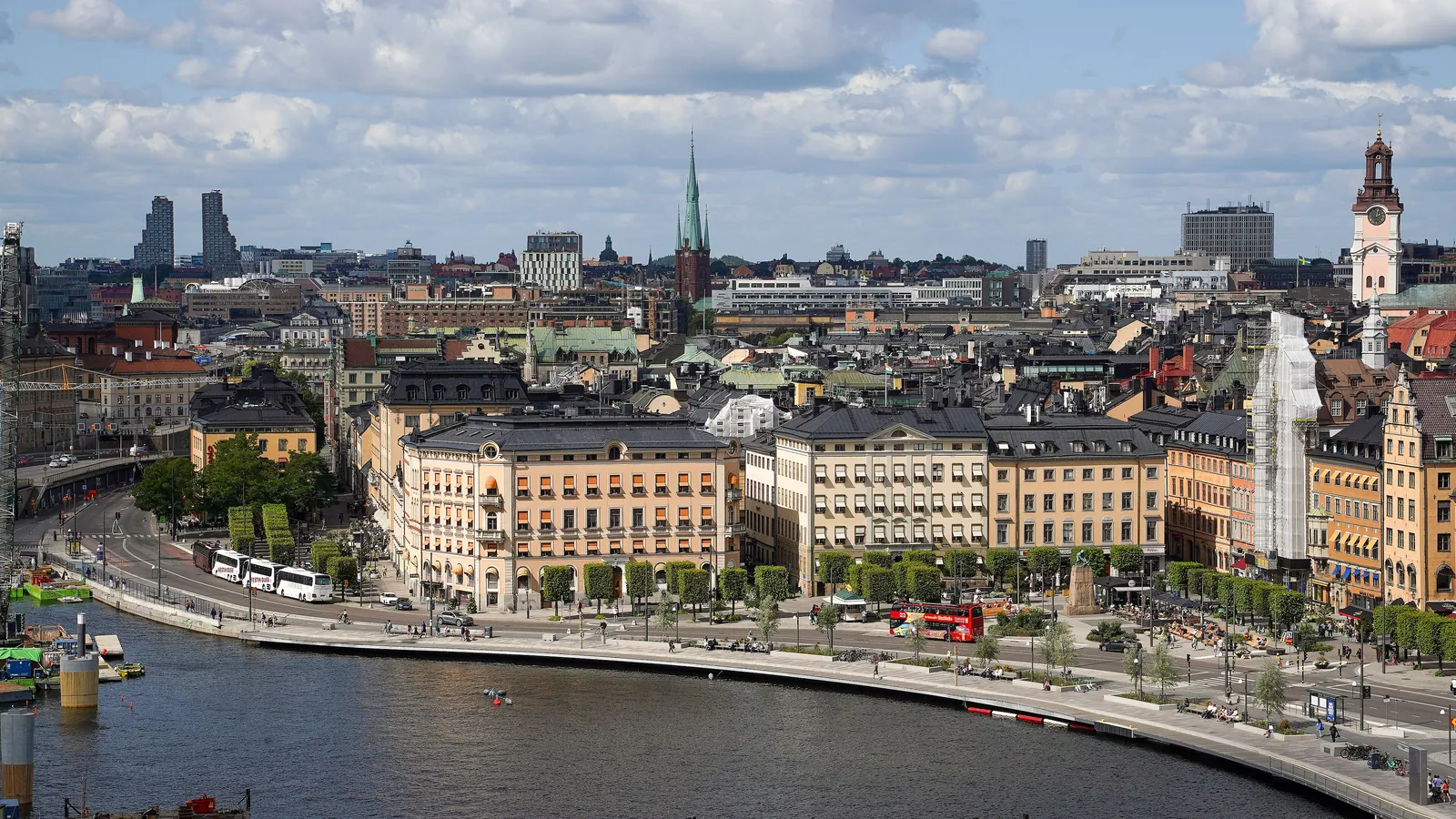
Stockholm — apartments in Norrmalm and Vasastan
A flat with a kitchen near Central Station solves the two things that make Stockholm expensive and tiring with children: restaurant bills and the journey back at the end of a long day.
- Kitchen and washing machine
- Walk to Central Station and the airport trains
- Every metro line within a few minutes
- Supermarkets rather than tourist cafés
Fitting a family in
Two-bedroom apartments sleeping four to five are widely available and cost less than two hotel rooms in the same district.
Watch out. Blocks in the older streets around Odenplan often have a small lift or a half-flight of steps to the entrance, which matters with a pram. Check-in is frequently a key code rather than a desk, so a late or delayed arrival needs arranging in advance.
Check hotel prices — opens Klook in a new tab (affiliate link)Live availability for your dates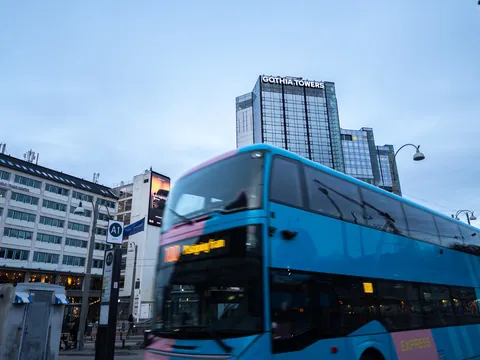 Korsvägen / LisebergMid-range
Gothenburg — family rooms around Korsvägen
The park gate, the science centre and a tram interchange all sit within a few hundred metres, so a theme-park day can be broken in the middle and picked up again — the difference between one exhausting day and two manageable ones.
- Walk to the theme-park entrance
- Science centre next door for a wet day
- Tram interchange for the rest of the city
- Breakfast included at most properties
Fitting a family in
Rooms for four are common but often mean two adults and two children in bunks; connecting rooms or apartment-style units are the dependable way to sleep five.
Watch out. This is an events and transport district: concert and match nights are loud and push room rates up sharply, and there is little to eat nearby that is not aimed at visitors.
Check hotel prices — opens Klook in a new tab (affiliate link)Live availability for your dates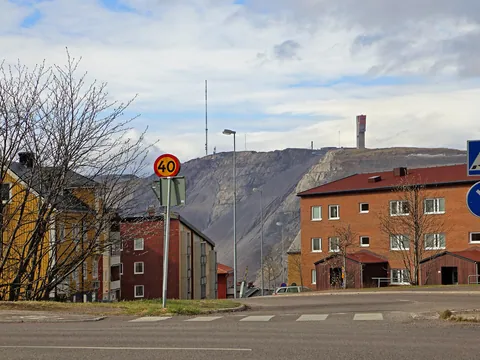 KirunaMid-range
Swedish Lapland — Kiruna town hotels and apartments
Staying in the town means a supermarket, restaurants within walking distance in the dark, and being on the pick-up list for nearly every operator — which is what removes the need to drive a hire car at −25 °C.
- Operator pick-up and drop-off from reception
- Shops and restaurants on foot
- Airport and railway station a short transfer away
- Heated or block-heater parking where a hire car is involved
Fitting a family in
Hotel rooms for four exist but are limited in number; two-bedroom apartments are the more reliable way to sleep four or five in a single booking.
Watch out. Kiruna is a working mining town in the middle of relocating its centre, so construction sites and diversions are part of the picture. Winter high-season beds sell out months ahead, and the town itself is not the reason anyone comes.
Check hotel prices — opens Klook in a new tab (affiliate link)Live availability for your dates Malmö centre / Västra HamnenMid-range
Skåne — apartments in central Malmö
A flat with a kitchen within walking distance of the station puts the whole region — and Copenhagen — on a train from the door, which is what takes the hire car out of a Skåne trip.
- Kitchen and laundry
- Walk to Malmö Central for regional and Öresund trains
- City beach and a long seafront path nearby
- Bike hire, including child seats and trailers
Fitting a family in
Two-bedroom apartments sleeping four to five are common and cost well under two hotel rooms.
Watch out. Västra Hamnen is modern, exposed and short of cheap places to eat, while the streets immediately around the station are noisy. Neither is a fault, but they make for quite different stays, so the address matters more here than the description.
Check hotel prices — opens Klook in a new tab (affiliate link)Live availability for your dates
Some links on this page are affiliate links. If you book through one, the price is the same for you and we may earn a commission. How this works.
Top family attractions in Sweden
What each one costs, how long it takes, which ages it suits and whether you need to book ahead.
 Museum
Vasa Museum
Stockholm
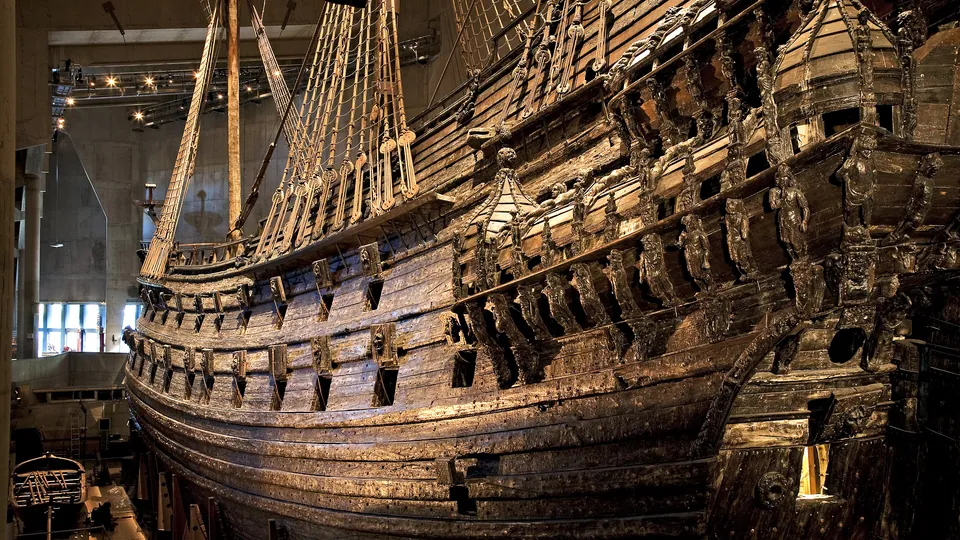
A purpose-built hall around the Vasa, a warship that capsized on her maiden voyage in 1628 and was raised largely intact in 1961. Walkways run the length of the hull at several heights, with scale models and recovered objects on the surrounding floors.
- Ages
- 4–17
- Time
- 1h 30m
- Adult, from
- €19
Good to know. Busiest in the middle of the day through the summer, when the ship hall is loud and the walkways crowded; under-18s enter free, so the saving is smaller than it looks. The lower levels are deliberately dim to protect the timber, which some young children dislike.
 Animals
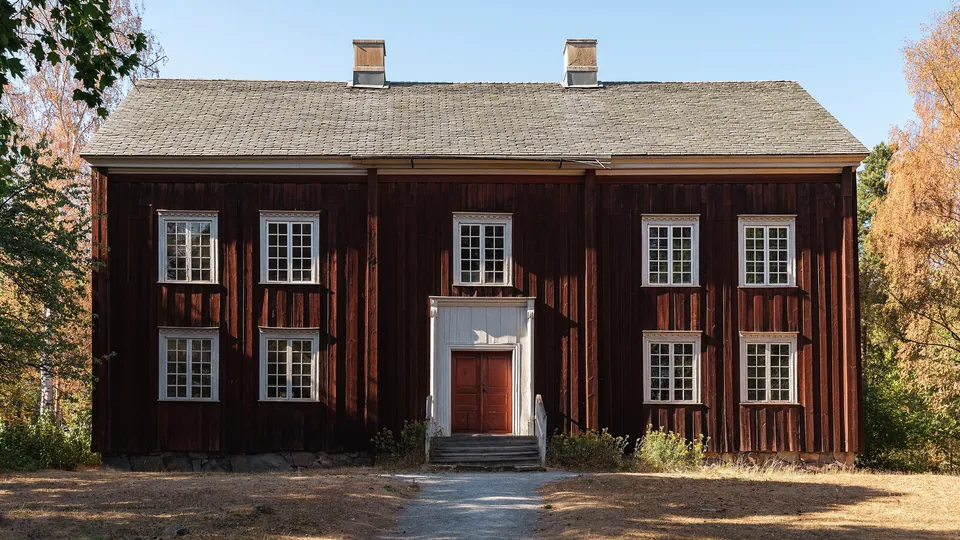
Skansen
Stockholm
An open-air museum on Djurgården, founded in 1891, combining historic buildings moved here from across the country with an enclosure zoo of Nordic species — bears, wolves, lynx, wolverine and elk — plus a children's farmyard.
- Ages
- 2–14
- Time
- 4h
- Adult, from
- €22
Good to know. The site is large and hilly and a full visit is several kilometres of walking, much of it on gravel. The animals are in big naturalistic enclosures so sightings are a matter of luck, and the bears are in hibernation through the winter months. Ticket prices shift with the season.
 Culture
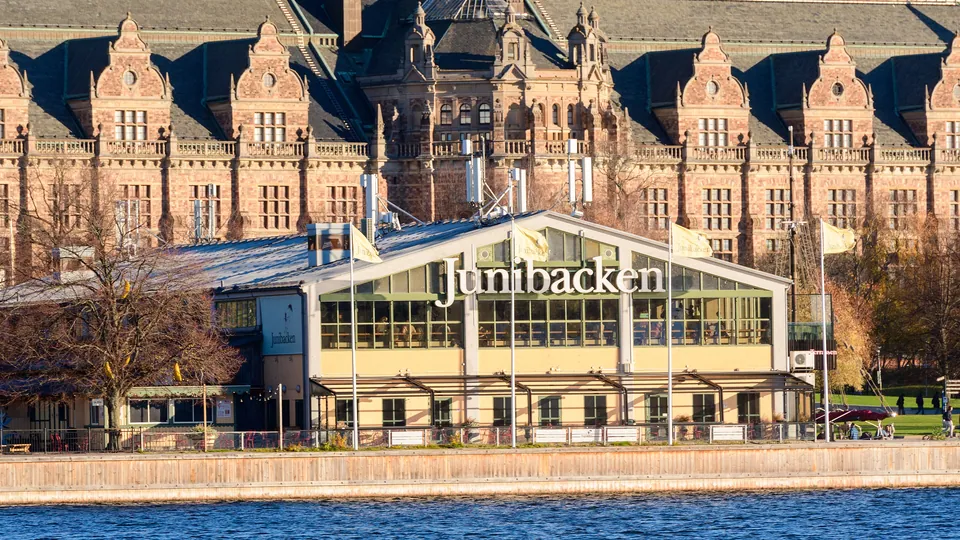
Junibacken
Stockholm
An indoor attraction built around Astrid Lindgren's stories, with a suspended story train that carries visitors through illustrated scenes and a large free-play house modelled on Pippi Longstocking's home.
- Ages
- 3–9
- Time
- 2h
- Adult, from
- €20
Good to know. Pitched squarely at roughly three to eight; older children finish it quickly and will not thank anyone for the ticket price. Being almost entirely indoors makes it the obvious wet-weather choice, and therefore extremely busy on rainy days and in the school holidays. The story-train narration is offered in several languages.
 Theme parkBook ahead
Liseberg
Gothenburg
A theme park inside the city, reached by tram and laid out in gardens rather than across asphalt, with wooden and steel coasters, a large section of gentle rides for younger children, and a separate winter season built around a Christmas market.
- Ages
- 2–16
- Time
- 7h
- Adult, from
- €35
Good to know. The headline coasters carry height minimums in the region of 130–140 cm, which excludes most under-tens; entry and ride access are sold separately in parts of the season, so the wrong combination is easy to buy. The park also closes for stretches between its summer and winter seasons.
 Museum
Universeum
Gothenburg
A science centre over several floors, with an indoor rainforest walked from the canopy downwards, a large aquarium section including sharks and rays, and hands-on physics, space and technology exhibits.
- Ages
- 3–15
- Time
- 3h
- Adult, from
- €26
Good to know. The rainforest floor is kept hot and very humid, which is hard going for children still in outdoor clothing — the lockers exist for that reason. It is the city's default wet-weather destination, so rainy days and school holidays fill it, and the aquarium tanks are the part with the queues.
 Nature
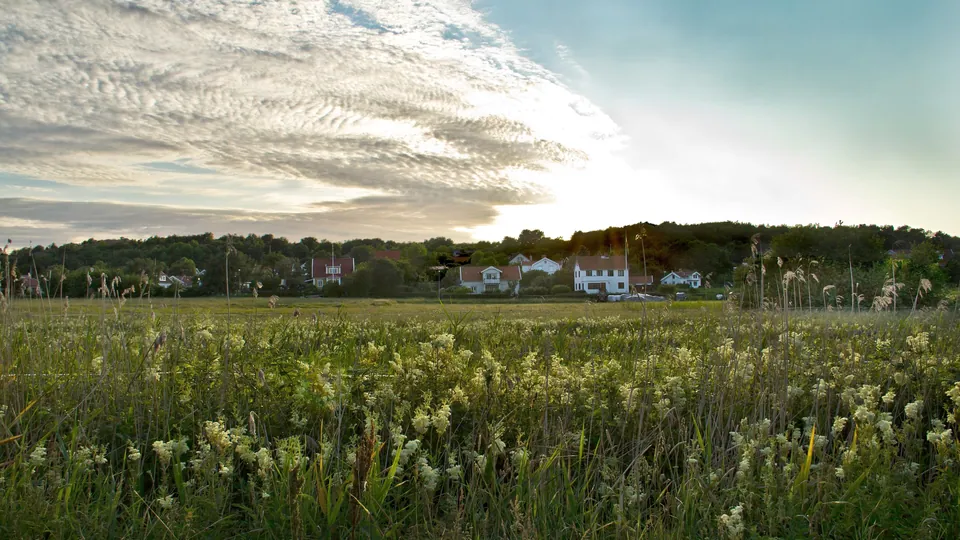
Southern archipelago islands
Gothenburg
A group of car-free islands — Styrsö, Brännö, Donsö and Vrångö among them — reached by ferry from the end of a tram line, with swimming rocks, small sandy coves and lanes used by bicycles and service vehicles rather than cars.
- Ages
- 2–16
- Time
- 6h
- Adult, from
- €4
Good to know. The water on this coast is cold and swimming is realistic mainly in late July and August. Ferries run to a timetable that thins outside summer, and the smaller islands have very little in the way of shops, so food and water travel with the family. Private cars are not permitted on the islands at all.
 AdventureBook ahead
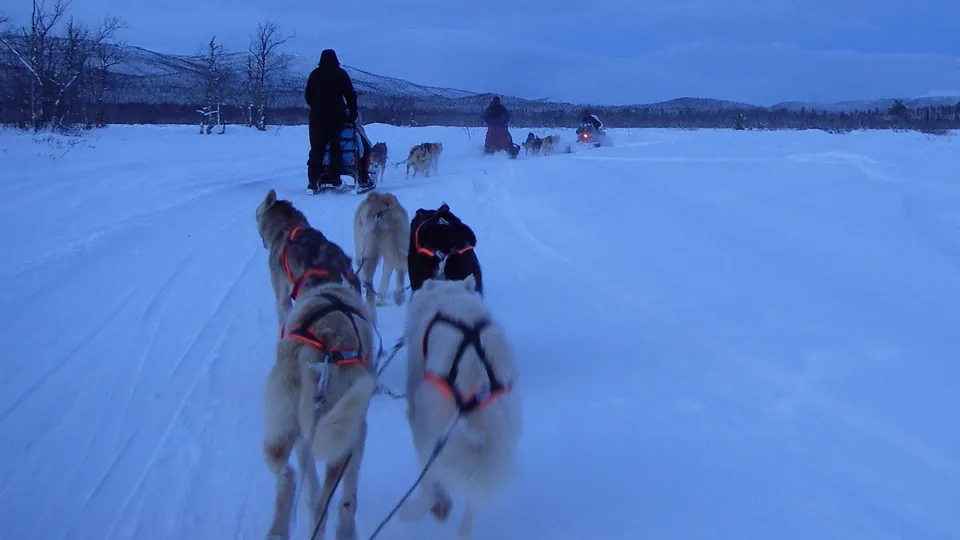
Dog-sled trips from Kiruna
Swedish Lapland
Half-day and full-day trips run by kennels around Kiruna and the Torne river villages, with children riding in the sledge basket while a guide drives the team, a kennel visit beforehand, and a meal cooked over a fire in a heated tent.
- Ages
- 5–17
- Time
- 5h
- Adult, from
- €180
Good to know. Children almost always ride as passengers — operators' minimum ages for driving a team are usually in the mid-teens. The limiting factor is not the length of the trip but a child's tolerance for sitting still in deep cold, so the shorter option is often the better one first time.
 NatureBook ahead
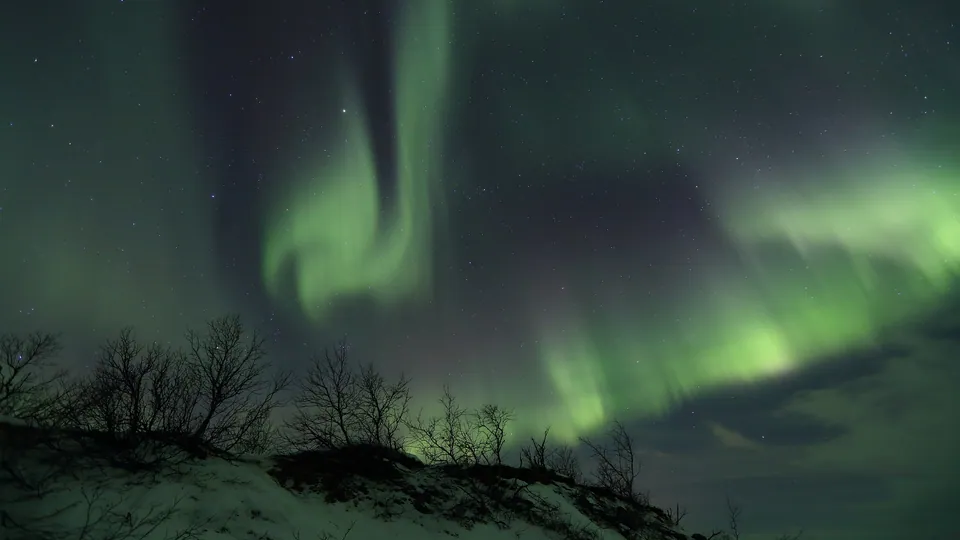
Abisko aurora viewing
Swedish Lapland
Abisko sits in a mountain rain shadow that leaves it with more cloud-free nights than the land around it, which is why aurora watching concentrates there. A chairlift runs to a viewing station above the valley, and guided night trips drive to whichever spot has the clearest sky.
- Ages
- 6–17
- Time
- 4h
- Adult, from
- €95
Good to know. Nothing about a sighting can be promised: it needs a clear sky, a dark month and activity on the night. Sessions run late in temperatures well below freezing, so younger children are often better served watching from near the accommodation than committing to a four-hour trip.
 CultureBook ahead
Sámi reindeer camp visit
Swedish Lapland
Visits hosted by reindeer-herding families, usually including feeding and harnessing the animals, a short sledge ride in winter, and an explanation of the herding year told around a fire inside a lávvu tent.
- Ages
- 4–17
- Time
- 3h
- Adult, from
- €130
Good to know. Reindeer are semi-wild working animals rather than petting-zoo stock: they spook easily and children are asked to move slowly and stay quiet, which is harder for some than for others. Sledge rides depend on snow cover, so the shoulder weeks of the season can lose them entirely.
 Museum
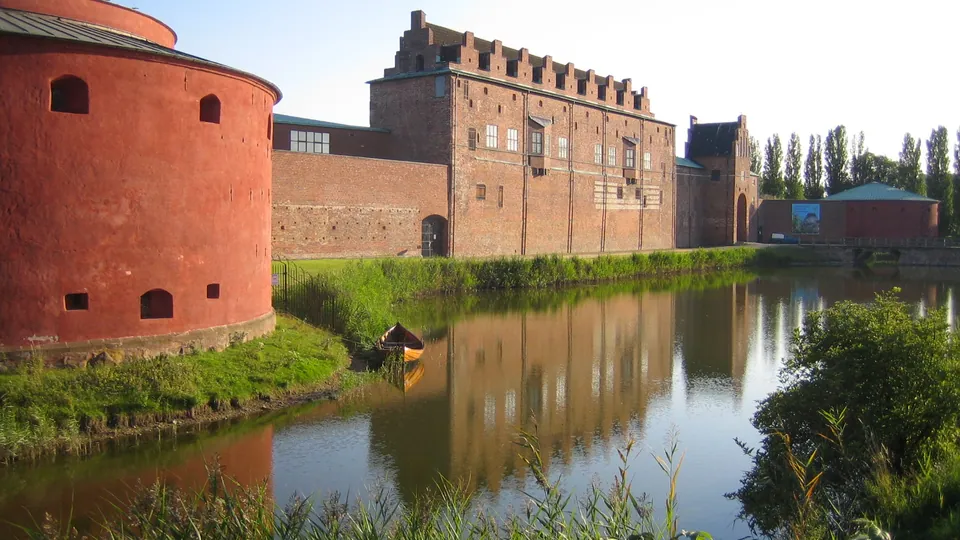
Malmöhus Castle & Malmö Museum
Skåne
A sixteenth-century fortified castle with a moat and earth ramparts, holding the city museum: natural-history halls, a small aquarium and reptile section, and a separate technology and maritime building with a submarine that can be climbed into.
- Ages
- 3–14
- Time
- 3h
- Adult, from
- €8
Good to know. The collection is split across buildings on either side of a road and takes longer than its footprint suggests. The submarine is entered down a vertical ladder through a hatch — no use with a pushchair, and tight enough to unsettle children who dislike confined spaces. Parts of the castle are stone-floored, cold and dimly lit.
 Water
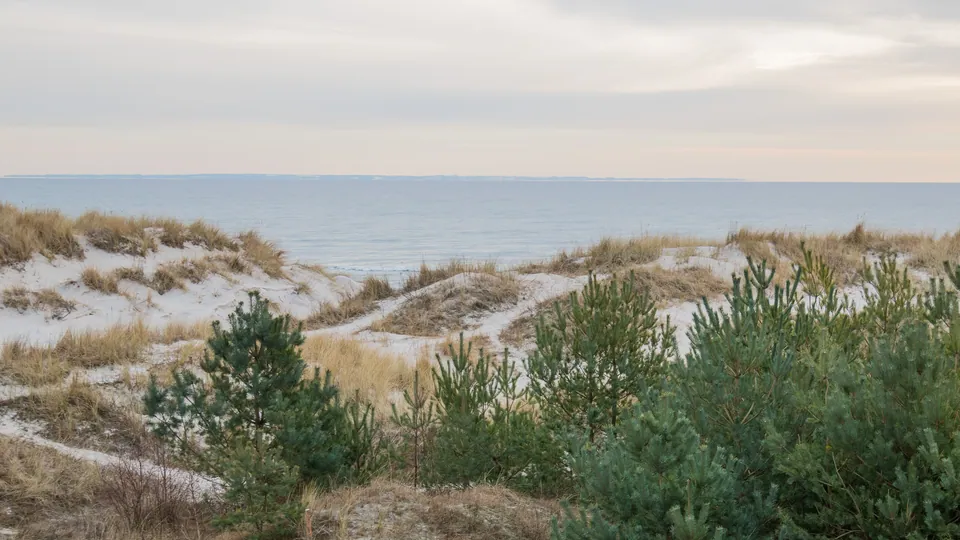
Sandhammaren & the Österlen beaches
Skåne
A long run of pale sand backed by pine woods and marram dunes on the south-east corner of the region, with water that shelves very gradually. Smaller coves further north along the Österlen coast sit below low cliffs and pine.
- Ages
- 0–16
- Time
- 5h
- Adult, from
- Free
Good to know. There is almost no infrastructure: parking is limited and fills by mid-morning in July, toilets are few and there is no shade at all, so food, water and sunscreen come in with the family. The wind that makes this a windsurfing coast also makes it cold the moment the sun goes behind cloud.
 Culture
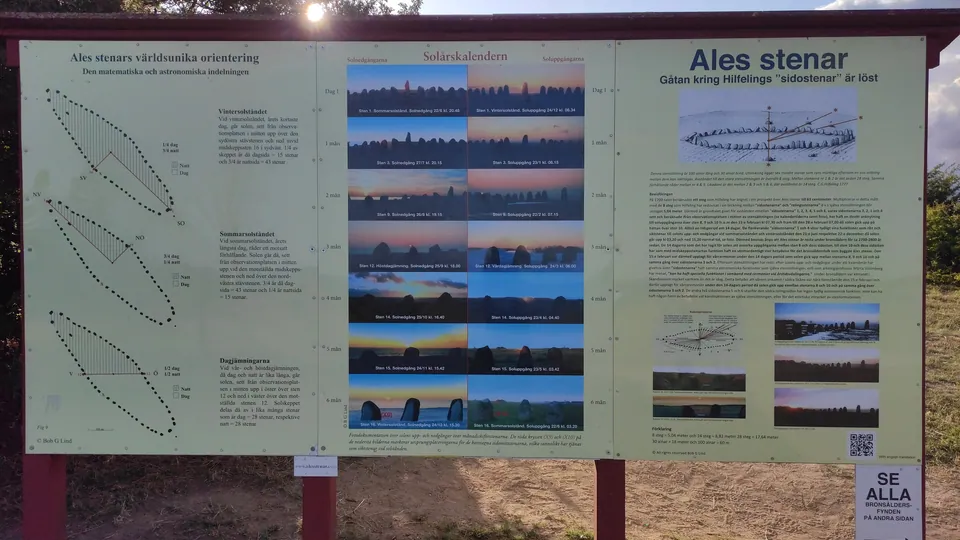
Ales stenar
Skåne
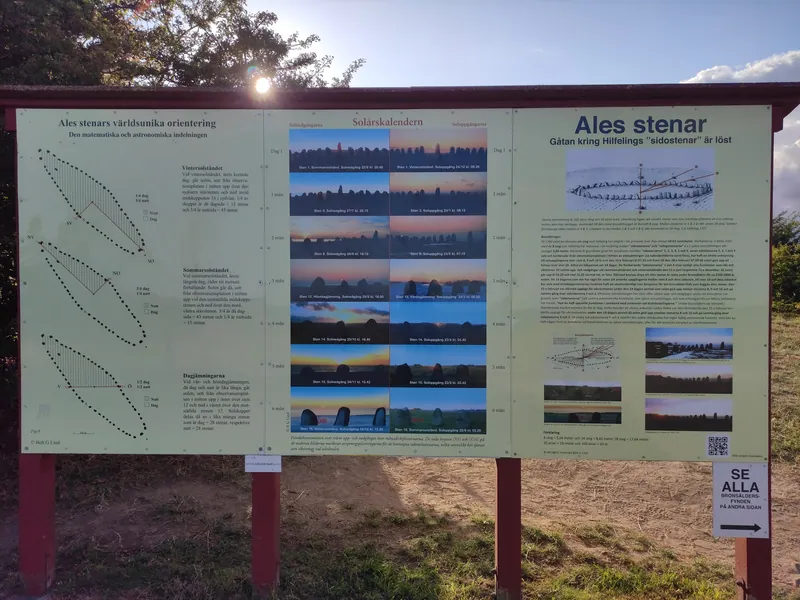
Fifty-nine boulders set in the outline of a ship on a clifftop above the sea near Kåseberga — the largest stone ship in Scandinavia, thought to date from around the late Iron Age. The setting does much of the work: open grass, a long sea view and room to run.
- Ages
- 3–14
- Time
- 1h
- Adult, from
- Free
Good to know. The approach from the car park is a few hundred metres of steep path and steps with no shelter, and the clifftop is fully exposed to the wind. This is a short stop rather than an afternoon, so it works best combined with the beaches or with Ystad rather than as a destination in itself.
Some links on this page are affiliate links. If you book through one, the price is the same for you and we may earn a commission. How this works.
Getting around Sweden
Trains work well across the south and the middle of the country: Stockholm to Gothenburg takes a little over three hours, Stockholm to Malmö around four and a half, and children and teenagers travel at heavily reduced fares. City transport is integrated per region — one Stockholm ticket covers the metro, buses, trams and the inner-harbour ferries, and one Gothenburg ticket covers the trams and the archipelago boats. North of Sundsvall the network thins to a handful of long services a day, including overnight sleeper trains to Lapland, and from there distances stop being a rail question and become a driving one.
Do you need a rental car?
A little driving. Stockholm and Gothenburg are both worse with a car than without one — parking is expensive, weekday congestion charges apply, and the train between them beats driving. A car earns its cost in Skåne, where the castles, the Österlen coast and the beaches sit off the rail line, and in Swedish Lapland, where activities are spread across long distances with almost no public transport between them.
What Sweden costs with a family
Typical daily spend for a family of four, excluding flights. Accommodation, food, local transport and one paid activity a day.
€
€160
Budget · per day, family of four
€€
€275
Mid-range · per day, family of four
€€€
€470
Higher-end · per day, family of four
Planning estimates based on published prices at the time of writing, in shoulder season. Peak months, school holidays and city-centre accommodation all push the figure higher.
Food in Sweden
Restaurant prices are the main cost shock, and the way around it is dagens lunch — a weekday set lunch, served in the middle of the day, at a fraction of the evening price for the same kitchen. Children's menus are near universal and the staples suit reluctant eaters: meatballs with mashed potato and lingonberry, pancakes, sausage, pasta, and bread that children tend to like. Fika, the mid-afternoon coffee and cinnamon bun, is a genuine institution and a useful way to break a day on foot. Tap water is safe and free everywhere; alcohol away from restaurants is sold only through the state monopoly shops, which keep shorter hours than supermarkets.
Practical tips for Sweden
The things that are easy to get wrong and expensive to fix once you have arrived.
Culture & etiquette
The right of public access is real, and it has rules
Allemansrätten permits walking, swimming, picking berries and mushrooms and pitching a tent for a single night on uncultivated land. It does not extend to gardens, farmyards, fields under cultivation or the ground immediately around a house, and open fires are banned outright during a fire warning. The summary taught to Swedish children — disturb nothing, destroy nothing — is the whole test.
Food
Eat the main meal at lunchtime
A weekday dagens lunch typically includes a hot dish, salad, bread and a drink for a fraction of what the same restaurant charges in the evening. For a family this single habit changes the daily food budget more than any other decision.
Money & costs
Cash is close to useless
A great many Swedish businesses, including museums, cafés and buses, accept no cash at all. A contactless card or phone covers everything, and arriving with a wallet of krona notes solves a problem that does not exist.
Getting around
Check the child fares before buying four adult tickets
Young children travel free on the city networks with a paying adult, an adult pushing a pram boards city buses free in Stockholm, and the long-distance trains price children and teenagers well below the adult fare. Family and youth fares are rarely the default option offered at a machine.
Packing
Pack a warm layer and repellent for July
Even in high summer, evenings by the water and open ferry decks are cold enough to need a fleece for each child. Inland and in the north, mosquitoes from late June to early August are dense enough to end an evening outdoors without repellent, and head nets are worth having for the youngest.
Staying connected
Sort data before departure
Tickets, ferry timetables and museum entry are largely handled in apps here, so a working connection matters more than in cash-and-paper countries. An eSIM activated before the flight covers it from landing; EU and EEA residents already have roaming included.
Some links on this page are affiliate links. If you book through one, the price is the same for you and we may earn a commission. How this works.
Sweden with kids: common questions
Is Sweden good for travelling with a baby or toddler?
It is one of the easier countries in Europe for it. Changing facilities are standard in both sets of toilets, prams are expected on public transport rather than tolerated, an adult with a pram travels free on Stockholm city buses, and high chairs are normal. The limits are cost and weather, not facilities.
How expensive is Sweden for a family?
Expensive, with restaurant meals the sharpest line. It sits below Norway and broadly alongside Switzerland. Families that take the weekday set lunch as the main meal, book an apartment with a kitchen and use the free state museums bring it much closer to Germany or France.
Do you need a car in Sweden?
Not for Stockholm, Gothenburg or a train trip between them — both cities charge for parking and for weekday access, and the train is faster. A car is what makes Skåne's coast and castles workable, and in Swedish Lapland it is either a hire car or paying for operator transfers.
When is the best time to visit Sweden with kids?
June to August for everything except the Arctic north, with early September a quieter alternative while the sea is still warm. Swedish Lapland's snow season runs from roughly December into early April, and late winter is easier with children than midwinter because the daylight has come back.
Can you see the northern lights in Sweden with children?
It is possible in the far north on clear, dark nights between roughly late September and late March, and it is never guaranteed — cloud alone ends an attempt. A trip built on sled dogs, reindeer and snow play with the aurora as a bonus is the version that works with children.
Other destinations to compare
Every guide answers the same questions in the same order, so two countries take five minutes to compare rather than five evenings.
- Japan with Kids: Itineraries, Where to Stay & When to GoCulture, nature & adventure
- Italy with Kids: Itineraries, Where to Stay & When to GoMountains, lakes & cities
- Austria with Kids: Itineraries, Where to Stay & When to GoAlps, lakes & charming towns
- Cyprus with Kids: Itineraries, Where to Stay & When to GoSun, sea & family resorts