Skip to content

Swedish Lapland with Kids

Swedish Lapland is the far north of the country, above the Arctic Circle, where Kiruna and the villages along the Torne river and out at Abisko serve as the practical bases. The winter product is snow-based and tightly organised: sled-dog teams, reindeer herding with Sámi guides, snow play, and a chance of aurora on clear nights. It is not a soft trip — midwinter has weeks in which the sun does not rise at all, temperatures below −25 °C are ordinary, and the distances between activity bases are long enough that a hire car or booked transfers are part of the plan rather than an upgrade. In high summer the same region flips to round-the-clock daylight and easy hiking, at the price of mosquitoes dense enough to end an evening outdoors.

Best for ages
5+
Suggested stay
3–5 days
Best months
Feb–Mar, Jul–Aug
Daily budget
€360

Mid-range, family of four

Why Swedish Lapland works with children

  • Aurora is a chance, not a fixture

    Clear, dark nights between roughly late September and late March are when it is possible at all; several nights in the region improve the odds, and no operator can promise a sighting.

  • The daytime activities carry the trip

    Sled dogs, reindeer sledges and snow play fill the short winter daylight, which is what stops a week of cloud from being a wasted one.

  • Sámi-run reindeer experiences

    Herding visits are run by the herding families themselves, so children meet a working indigenous culture rather than a display of one.

  • Two opposite seasons

    A sun that does not set in June and July, and weeks in December when it does not rise.

Where to stay

Best areas in Swedish Lapland for families

3 areas cover most trips here; the difference is mainly a base with shops and an airport versus better aurora odds and summer hiking.
  • Kiruna

    Best for a base with shops and an airport

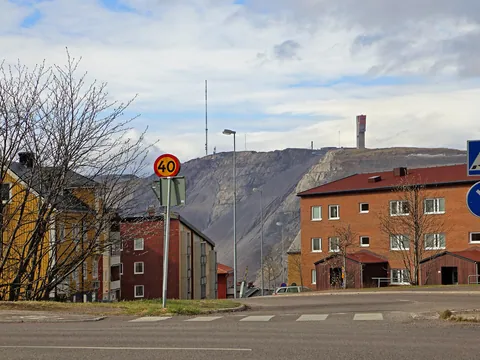
    The town has an airport with direct flights from Stockholm, supermarkets, restaurants within walking distance in the dark, and a pick-up list that nearly every operator uses. It is a working mining town whose centre is being physically relocated because of the mine, so it is practical rather than pretty.

  • Jukkasjärvi & the Torne river villages

    Best for activity-first stays

    Small riverside settlements a short drive east of Kiruna, where much of the dog sledding and the ice-based activity is based. Almost nothing is within walking distance, so every meal depends on the property or a car.

  • Abisko & the Torneträsk valley

    Best for better aurora odds and summer hiking

    A national park about ninety kilometres west of Kiruna on the railway to Narvik, sitting in a mountain rain shadow that leaves it with more cloud-free nights than the surrounding area. Accommodation is limited and fills far ahead in the winter season.

Family hotel picks in Swedish Lapland

  • Swedish Lapland — Kiruna town hotels and apartments
    KirunaMid-range

    Swedish Lapland — Kiruna town hotels and apartments

    Staying in the town means a supermarket, restaurants within walking distance in the dark, and being on the pick-up list for nearly every operator — which is what removes the need to drive a hire car at −25 °C.

    • Operator pick-up and drop-off from reception
    • Shops and restaurants on foot
    • Airport and railway station a short transfer away
    • Heated or block-heater parking where a hire car is involved

    Fitting a family in

    Hotel rooms for four exist but are limited in number; two-bedroom apartments are the more reliable way to sleep four or five in a single booking.

    Watch out. Kiruna is a working mining town in the middle of relocating its centre, so construction sites and diversions are part of the picture. Winter high-season beds sell out months ahead, and the town itself is not the reason anyone comes.

  • Swedish Lapland — riverside lodges and wilderness cabins
    Jukkasjärvi / Torne river / AbiskoHigher-end

    Swedish Lapland — riverside lodges and wilderness cabins

    Lodges outside the town put the activities and a dark sky at the door, which matters when a child's patience for a minibus is short and an aurora attempt means stepping outside rather than driving for an hour.

    • Activities based on site or a few minutes away
    • Dark skies without a night drive
    • Half or full board at most properties
    • Wood-fired sauna is common

    Fitting a family in

    Cabins typically sleep four to six across two rooms; the smaller lodge rooms often take only three, so a family of five should confirm the sleeping arrangement rather than assume one room covers it.

    Watch out. There is usually nothing within walking distance, so every meal and every forgotten item depends on the property or a car. Snow-and-ice accommodation is marketed heavily in this region — as a category it is a novelty worth at most one night with children, and a poor idea with a toddler; a warm room for the rest of the stay is not optional.

All family stays in Sweden

Some links on this page are affiliate links. If you book through one, the price is the same for you and we may earn a commission. How this works.

Things to do in Swedish Lapland with kids

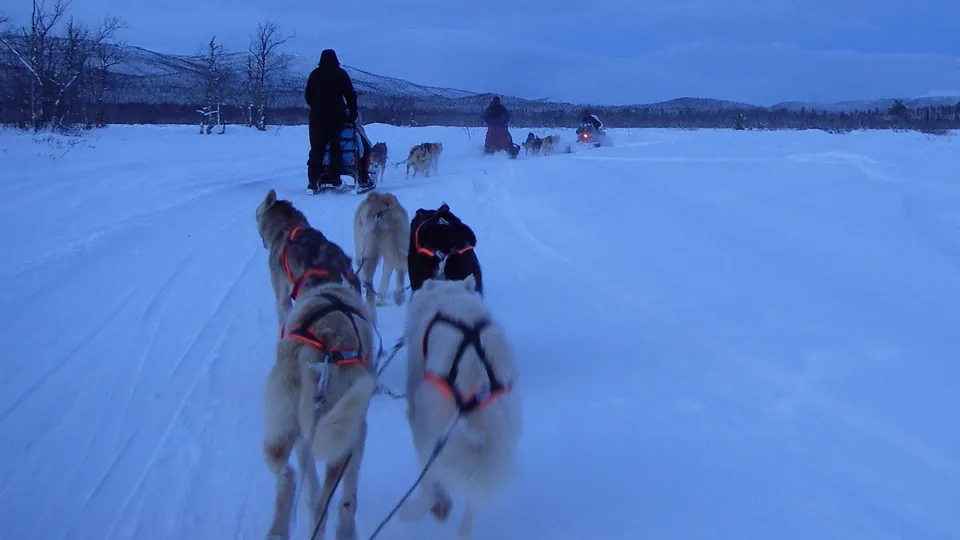
  • Dog-sled trips from Kiruna
    AdventureBook ahead

    Dog-sled trips from Kiruna

    Swedish Lapland

    Half-day and full-day trips run by kennels around Kiruna and the Torne river villages, with children riding in the sledge basket while a guide drives the team, a kennel visit beforehand, and a meal cooked over a fire in a heated tent.

    Ages
    5–17
    Time
    5h
    Adult, from
    €180

    Good to know. Children almost always ride as passengers — operators' minimum ages for driving a team are usually in the mid-teens. The limiting factor is not the length of the trip but a child's tolerance for sitting still in deep cold, so the shorter option is often the better one first time.

  • Abisko aurora viewing
    NatureBook ahead

    Abisko aurora viewing

    Swedish Lapland

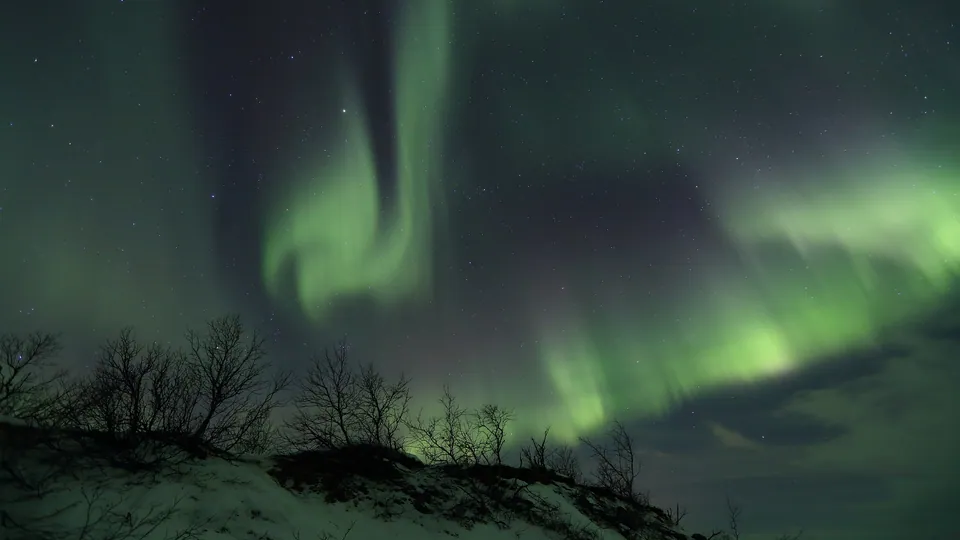
    Abisko sits in a mountain rain shadow that leaves it with more cloud-free nights than the land around it, which is why aurora watching concentrates there. A chairlift runs to a viewing station above the valley, and guided night trips drive to whichever spot has the clearest sky.

    Ages
    6–17
    Time
    4h
    Adult, from
    €95

    Good to know. Nothing about a sighting can be promised: it needs a clear sky, a dark month and activity on the night. Sessions run late in temperatures well below freezing, so younger children are often better served watching from near the accommodation than committing to a four-hour trip.

  • A snow-covered valley of low birch and frozen water under pale light
    CultureBook ahead

    Sámi reindeer camp visit

    Swedish Lapland

    Visits hosted by reindeer-herding families, usually including feeding and harnessing the animals, a short sledge ride in winter, and an explanation of the herding year told around a fire inside a lávvu tent.

    Ages
    4–17
    Time
    3h
    Adult, from
    €130

    Good to know. Reindeer are semi-wild working animals rather than petting-zoo stock: they spook easily and children are asked to move slowly and stay quiet, which is harder for some than for others. Sledge rides depend on snow cover, so the shoulder weeks of the season can lose them entirely.

  • Abisko National Park
    Nature

    Abisko National Park

    Swedish Lapland

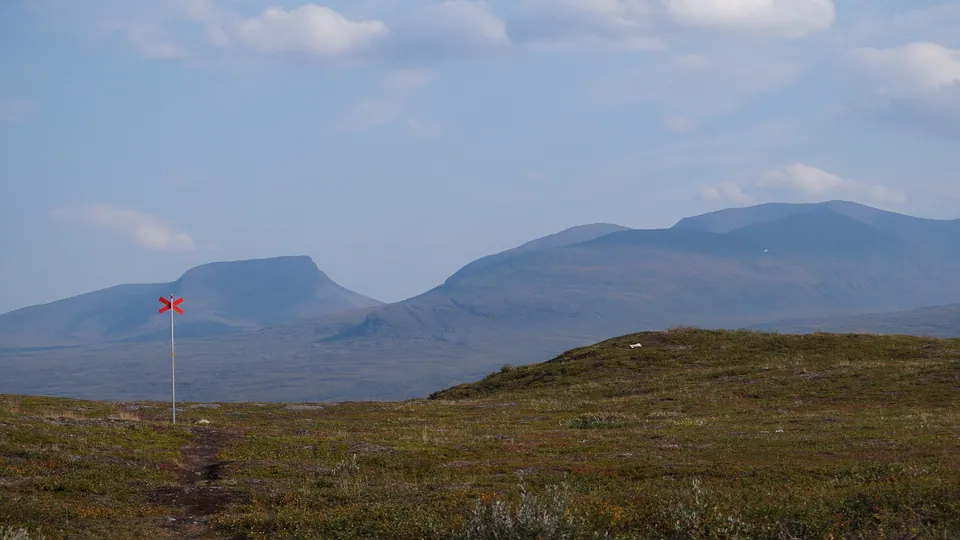
    A valley park at the northern end of the Kungsleden long-distance trail, with a canyon walk beside the Abiskojåkka river, boardwalked sections on the flat, and a chairlift that gains height without a climb. For weeks either side of midsummer the sun does not set.

    Ages
    4–17
    Time
    4h
    Adult, from
    Free

    Good to know. The trails are exposed and the weather changes fast in any season; the famous long trail starts here but is not a family day walk. Mosquitoes from late June to early August are severe enough to need head nets rather than repellent alone, and the visitor facilities close outside the two main seasons.

Some links on this page are affiliate links. If you book through one, the price is the same for you and we may earn a commission. How this works.

Getting around Swedish Lapland

Kiruna has a small airport with direct flights from Stockholm, and an overnight sleeper train runs from Stockholm to Kiruna and on to Abisko in roughly sixteen hours, with family compartments — some children treat that as the highlight of the trip and others as an ordeal. On the ground there is no useful public transport between the activity bases, so the real choice is a hire car on studded winter tyres, or booking activities that include hotel pick-up and paying for the convenience. Winter driving here means block heaters, ice and daylight that runs out early; with young children the operators' transfers are the lower-stress option.

Swedish Lapland tips for families

  • When to go

    Book for the activities, and treat the aurora as a bonus

    A sighting needs a clear sky, a dark month and solar activity on the night, and cloud alone ends it. Three nights in the region are materially better odds than one, and no tour can guarantee anything. Families who come for the sledding and the snow go home satisfied whatever the sky does.

  • Packing

    Outer layers are usually lent; base layers are not

    Most winter operators supply thermal overalls, boots, mittens and balaclavas in children's sizes, which removes the need to buy them. What still has to be packed is wool or synthetic base layers, thick socks and spare mittens, because one set of wet mittens ends an afternoon.

  • Health & safety

    Plan the day around the cold, not the clock

    At −25 °C a child's tolerance is measured in minutes. Operators build warming huts and fires into their itineraries for exactly that reason; an independent plan needs the same, and a thermos does more for morale than another viewpoint.

  • Health & safety

    Summer in the north means mosquitoes

    From late June to early August the inland mosquito density is high enough to drive a family indoors in the evening. Repellent, head nets for the youngest and accommodation with insect screens are the difference between a good evening and an unbearable one.

  • When to go

    Winter capacity is small and sells out months ahead

    There are only so many sled teams, guides and beds up here. Christmas, New Year and the February school holidays are booked out long in advance, and late-season weeks in March are both easier to get and easier on children because the daylight has returned.

Swedish Lapland with kids: common questions

Are the northern lights guaranteed in Swedish Lapland?
No, and any offer that implies otherwise should be read carefully. Sightings need a clear, dark sky between roughly late September and late March plus activity on the night. Abisko's rain-shadow position gives it more cloud-free nights than most of the region, which improves the odds without removing the risk.
How cold does it get, and is that manageable with children?
Midwinter temperatures below −25 °C are normal and colder spells happen. It is manageable because it is planned for: operators lend full thermal kit in children's sizes and build warming stops into every trip. What is not manageable is improvising a long day outdoors without either.
What age do children need to be for Swedish Lapland?
Around five and up gets the most from a winter trip, riding in the sledge basket and joining reindeer and snow activities. Driving a dog team is usually restricted to the mid-teens. Under-fives cope with the cold far less well and the darkness disrupts sleep.
Do you need a car in Swedish Lapland?
Either a hire car with proper winter tyres, or activities booked with hotel pick-up included. There is no practical public transport between the villages where the activities are based, and the distances are too long to walk or cycle in winter.
Is summer worth it in Lapland with children?
Yes, as a different trip: round-the-clock daylight, marked valley trails, a chairlift for height without the climb, and no cold to plan around. The cost is mosquitoes, which between late June and early August are a genuine constraint rather than a nuisance.