Europe · 5 destinations
Portugal with Kids: Where to Stay, Costs & When to Go
Portugal packs an unusual amount of variety into a small, cheap and genuinely safe country: two walkable capitals a three-hour train apart, a southern coast built around family resorts, and an Atlantic island that works in months when the rest of Europe has closed its pools. Children are welcome in restaurants as a matter of course, portions are large and plain, and costs sit noticeably below Spain, France or Italy. The two trade-offs that shape a family trip are the terrain and the water. Lisbon and Porto are built on steep hills paved in polished limestone cobbles, which is hard work with a pushchair, and the Atlantic is cold — only the south-facing Algarve beaches warm up enough for small children to stay in for long.
- Best for ages
- 0+
- Recommended trip length
- 7–12 days
- Budget level
- €€
- Best time to visit
- Apr–Jun, Sep–Oct
Suits up to 16
Mid-range
Why Portugal works for families
Costs below its western European neighbours
Eating out, family apartments, museum tickets and intercity trains all price lower than Spain, France or Italy.
A short flight from most of western Europe
Two to three hours to Lisbon, Porto or Faro, so the first and last days of the trip are not lost to travel.
Plain food in large portions
Grilled chicken, bread, rice dishes, soup and custard tarts are on almost every menu, and half portions for children are a normal request.
A coast with two different characters
The south-facing Algarve is sheltered and swimmable; the west coast is cold, windy and built for surfing rather than paddling.
Low crime outside the tourist core
Violent crime is rare. The realistic risk is opportunistic pickpocketing on Lisbon's trams and in crowded queues.
Where to go in Portugal
The areas worth building a family trip around, and how long to give each.
When to visit Portugal with kids
Late spring and September are the sweet spot: the cities are comfortable to walk rather than hot, the Algarve sea has warmed up, and prices sit well below the July–August peak when the whole country is on holiday at once.
- Jan
- Feb
- Mar
- Apr
- May
- Jun
- Jul
- Aug
- Sep
- Oct
- Nov
- Dec
Where to stay
Family hotels in Portugal
We list areas and property types rather than single hotels: family-room availability changes constantly, and the area plus the room requirement is what survives contact with a booking engine.
 Baixa / ChiadoMid-range
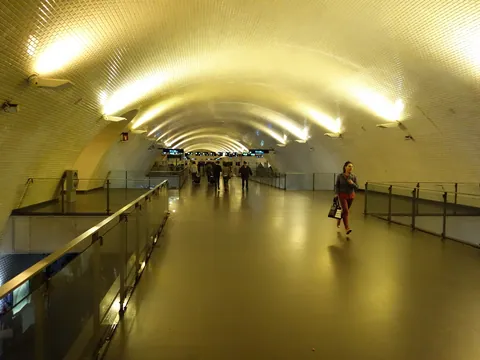
Apartment in the Baixa grid
The Baixa grid is the only genuinely flat part of central Lisbon, which matters more here than in most cities. A two-bedroom apartment costs less than two hotel rooms, adds a kitchen and a washing machine, and puts every metro line, the trams and the riverside square within a few minutes on level ground.
- Kitchen and washing machine
- Flat walking to metro, trams and the river
- Supermarkets and markets at street level
- Two separate bedrooms rather than one shared room
Fitting a family in
Two-bedroom units sleep four to five without a rollaway. Confirm whether the second bedroom has a real window — interior rooms are common in these 18th-century blocks.
Watch out. The buildings are old: lifts are small, slow or absent altogether, and a fourth-floor walk-up is a different holiday with a pushchair. Weekend nights are noisy towards Cais do Sodré, and street-facing rooms hear it.
Check hotel prices — opens Klook in a new tab (affiliate link)Live availability for your dates Albufeira / VilamouraMid-range
Aparthotel with a pool near Albufeira
A self-catering apartment with a shared pool is the cheapest way to house and feed four people on this coast, and the central Algarve has the densest supply of them. Breakfast at home, lunch by the pool and one meal out is a rhythm that works with small children and halves the food bill.
- Kitchen, so breakfasts and picky-eater dinners happen in the apartment
- Shared pool for the hours when the beach is too hot or too far
- Supermarkets and family restaurants within walking distance
- 30–45 minutes from Faro airport
Fitting a family in
One- and two-bedroom apartments are the standard unit; a two-bedroom sleeps four to six. Check whether the second 'bedroom' is a separate room or a curtained alcove off the living area.
Watch out. The Oura strip is loud until the early hours through the summer, and blocks marketed as quiet are usually quiet because they sit further uphill from the beach — which means carrying everything back up in the afternoon heat. Many complexes are largely closed and half-empty outside May to September.
Check hotel prices — opens Klook in a new tab (affiliate link)Live availability for your dates Baixa / AliadosMid-range
Apartment in Baixa near Trindade
Staying at the top of the hill rather than at the bottom of it decides how the days feel in Porto. From the Aliados area everything is downhill on the way out, the metro hub at Trindade puts the airport half an hour away, and apartment rates here are well below Lisbon's for the same space.
- Kitchen and washing machine
- Metro to the airport from Trindade in about 30 minutes
- Walking distance downhill to the old town and the river
- Bakeries and tascas that open early
Fitting a family in
Two-bedroom apartments in converted 19th-century blocks sleep four comfortably. Check the floor number and whether there is a lift before booking.
Watch out. Many of these buildings are tall and narrow with steep internal stairs and no lift at all. The main avenue and the streets around it are noisy on weekend nights, and the return walk from Ribeira is uphill however good the day was.
Check hotel prices — opens Klook in a new tab (affiliate link)Live availability for your dates Lido / São Martinho, FunchalMid-range
Aparthotel in the Lido hotel zone
Madeira has almost no sand, so the pool is not an extra here — it is where the children will actually swim. The Lido belt is built around that: sea-water lido complexes, hotel pools, and a flat seafront promenade that runs towards the centre without a single hill.
- Pools and sea-water lidos as the main swimming
- Flat promenade along the coast
- Buses and tour pick-ups from the main road
- Kitchens in aparthotel units for breakfasts and simple dinners
Fitting a family in
Aparthotel studios and one-bedroom units with a kitchenette are the norm; one-bedrooms with a sofa bed sleep four, with the usual compromise on privacy.
Watch out. The walk into Funchal along the promenade is flat but long, around 30–40 minutes each way, and the streets inland climb steeply. Sea access from the lidos is by ladder down into deep water rather than a shelving beach, which does not suit non-swimmers.
Check hotel prices — opens Klook in a new tab (affiliate link)Live availability for your dates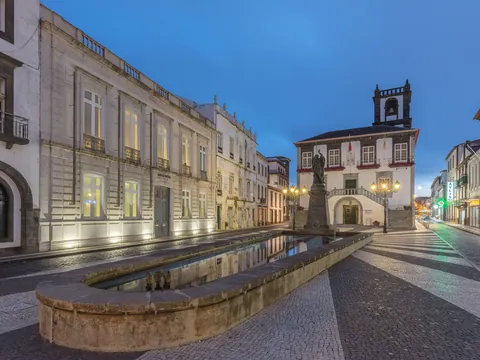 Ponta DelgadaMid-range
Apartment in central Ponta Delgada
Ponta Delgada is the only place on the island with a real choice of restaurants, a supermarket within walking distance and somewhere to go when it rains for a whole day. An apartment adds a kitchen and somewhere to dry wet coats, which matters more in this climate than in most, and the whale boats and tour minibuses both leave from a few minutes' walk away.
- Kitchen, washing machine and space to dry wet clothes
- Flat seafront and marina within walking distance
- Boat trips and guided tours picking up in town
- Airport around ten minutes away
Fitting a family in
Two-bedroom apartments in the converted centre sleep four to five without a rollaway. Confirm which floor the unit is on and whether there is a lift, because a good number of these buildings have neither.
Watch out. Swimming in town means a built sea-water pool rather than a beach, and every lake, hot spring and viewpoint is a 30 to 60 minute drive, so the car gets used every day regardless. The streets behind the marina are loud at weekends.
Check hotel prices — opens Klook in a new tab (affiliate link)Live availability for your dates
Some links on this page are affiliate links. If you book through one, the price is the same for you and we may earn a commission. How this works.
Top family attractions in Portugal
What each one costs, how long it takes, which ages it suits and whether you need to book ahead.
 AnimalsBook ahead
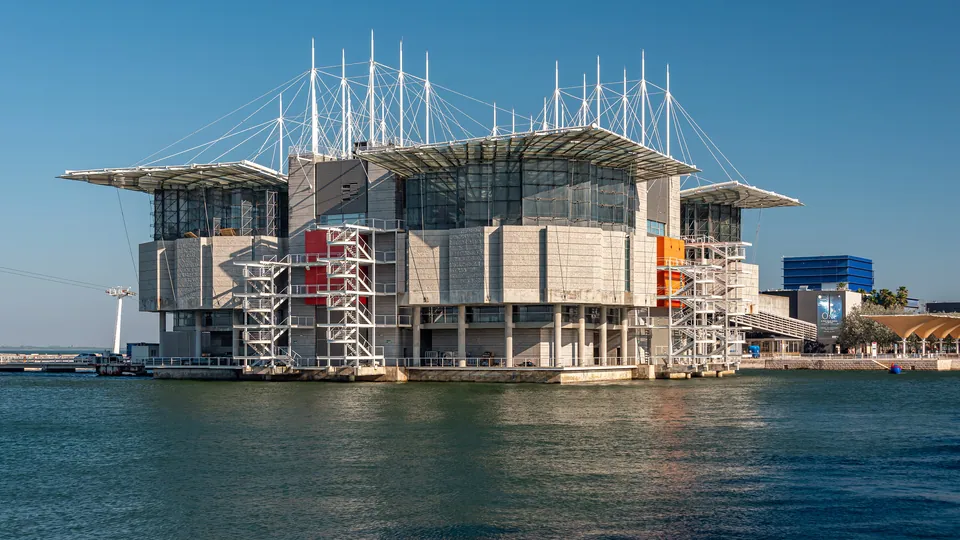
Oceanário de Lisboa
Lisbon
One of Europe's largest aquariums, built around a single vast central tank that is visible from two levels, with themed habitats arranged around it. Entry is by timed slot and the whole route is step-free.
- Ages
- 2–14
- Time
- 2h 30m
- Adult, from
- €25
Good to know. The busiest slots are late morning at weekends and on any rainy day. The route is a one-way spiral, so backtracking to a tank a child wants to see again means walking the loop; the darker habitat rooms can unsettle toddlers.
- City
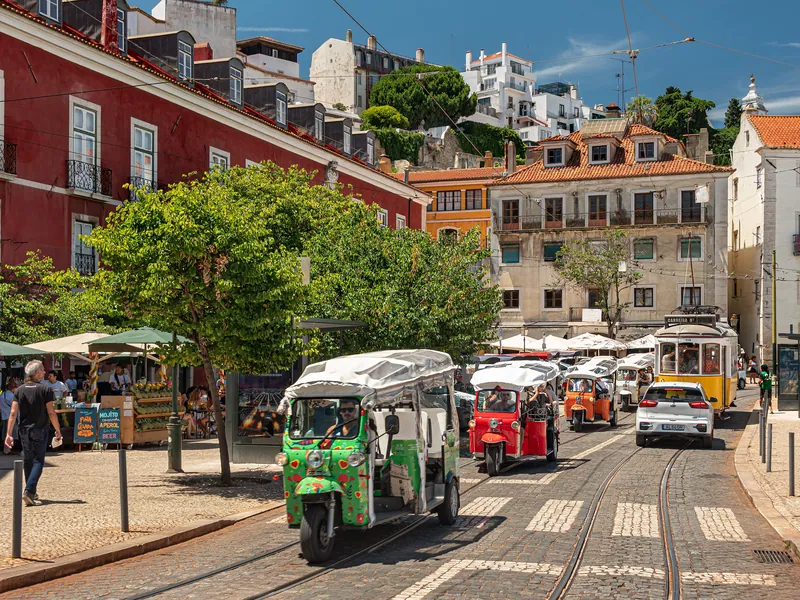
Tram 28 and the Alfama hills
Lisbon
A working wooden tram on a 1930s route that climbs through Alfama, Graça and the Estrela district on streets too narrow for buses. It is public transport rather than a tourist service, covered by an ordinary Viva Viagem fare.
- Ages
- 4–16
- Time
- 1h
- Adult, from
- €3
Good to know. From mid-morning in season the queue at Martim Moniz is long and the tram is standing-room only, with no space for a pushchair and a known pickpocket problem. Boarding at the Graça end in the opposite direction avoids most of both.
 Nature
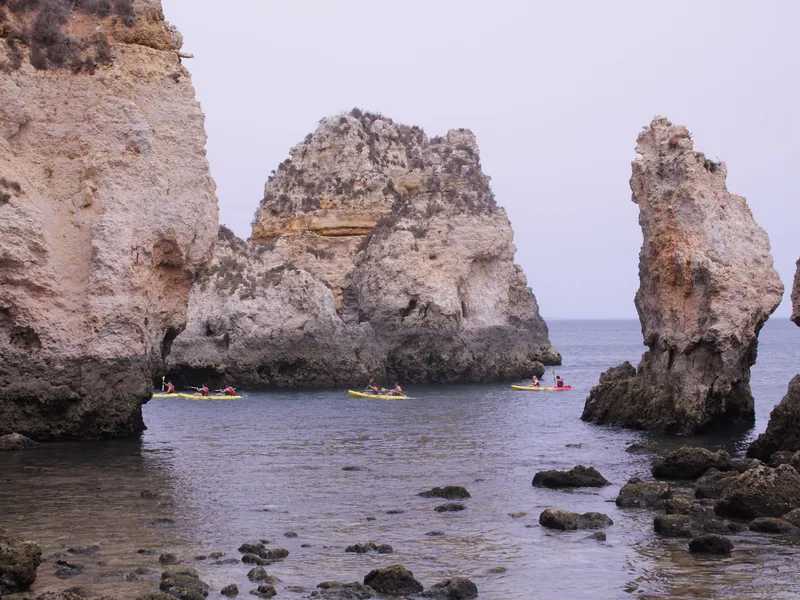
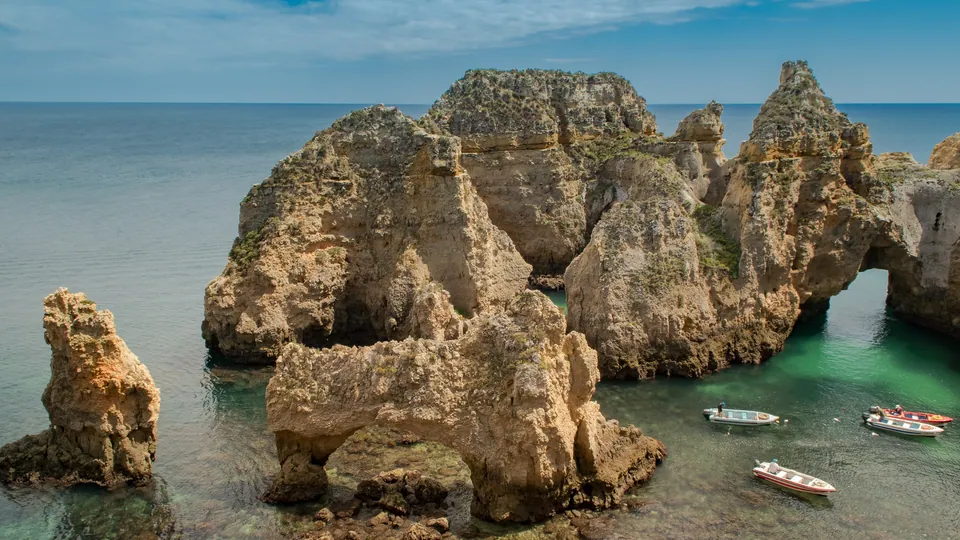
Ponta da Piedade cliffs and grottoes
Algarve
A headland of sandstone stacks, arches and sea caves just south of Lagos, seen either from a cliff-top path or from a small boat that runs in among the formations.
- Ages
- 5–16
- Time
- 1h 30m
- Adult, from
- €20
Good to know. The cliff path is unfenced in places with sheer drops, and the staircase down to the boat jetty is around two hundred steps with no alternative. The small boats have no shade and no toilet, and they do not run when there is swell — a factor for anyone prone to seasickness.
 Water
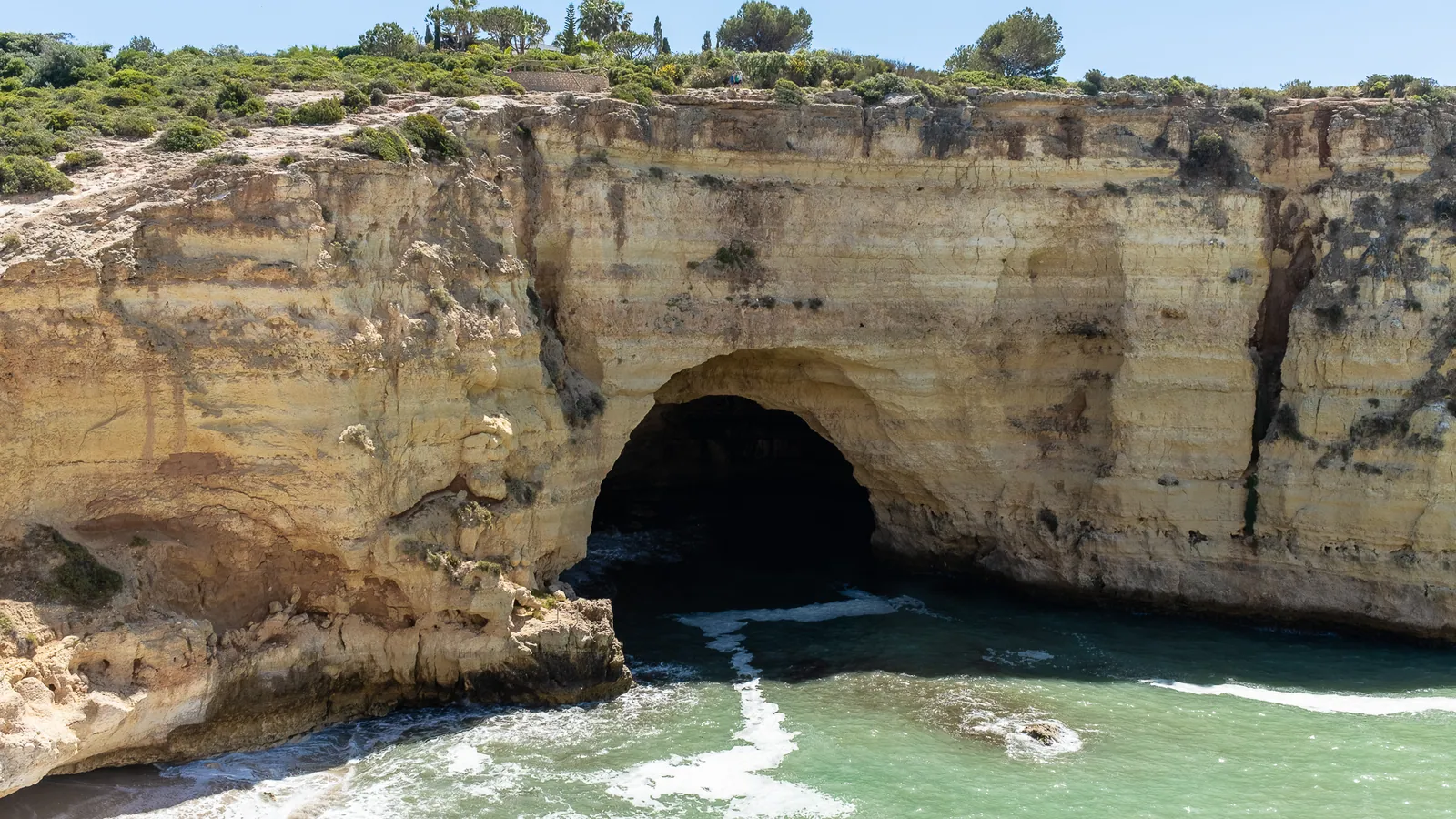
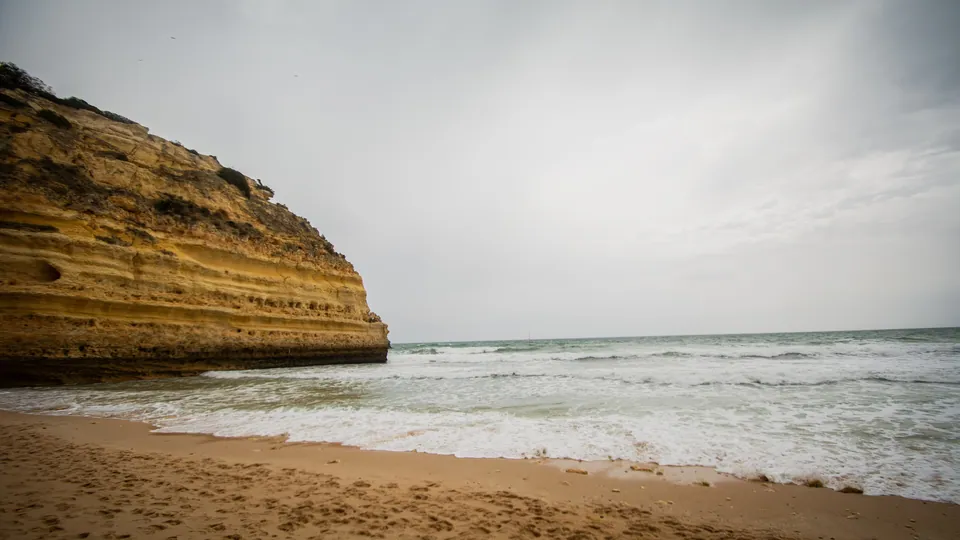
Praia da Marinha
Algarve
A cliff-backed cove between Carvoeiro and Armação de Pêra, with clear sheltered water and rock arches at either end. The cliff-top walk above it continues along the coast in both directions.
- Ages
- 5–16
- Time
- 3h
- Adult, from
- Free
Good to know. Access is a long flight of steps down the cliff with no ramp, which rules out a pushchair and makes a cool box a two-person job. There is little natural shade, the sand shrinks considerably at high tide, and lifeguards are on duty only through the official bathing season.
 Water
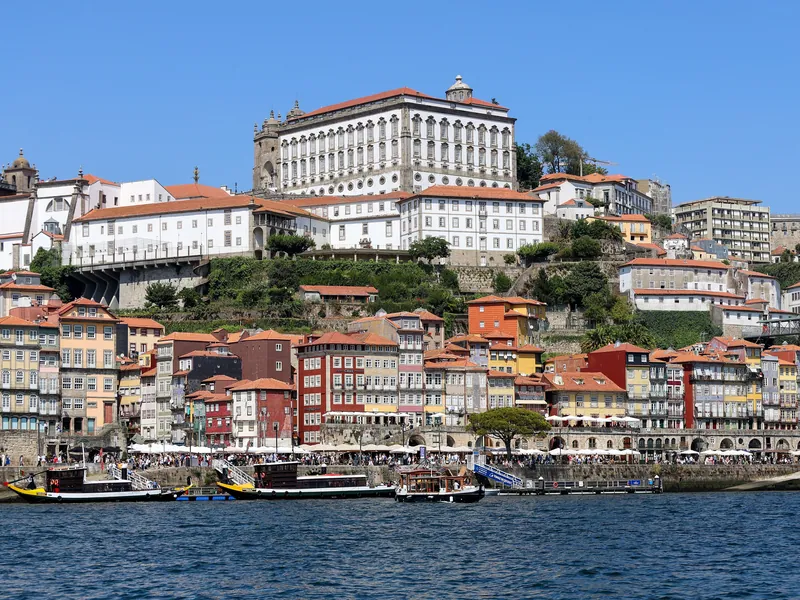
Six Bridges Douro cruise
Porto
A short river cruise from the Ribeira or Gaia quays that passes under Porto's six road and rail bridges and turns back near the river mouth, on boats styled after the traditional rabelo wine barges.
- Ages
- 3–16
- Time
- 1h
- Adult, from
- €18
Good to know. Boarding is over a floating gangway with a step and no handrail on some quays, which is awkward with a pushchair. The open upper deck has no shade and the commentary loops through several languages, so the actual narration in any one of them is brief.
 Museum
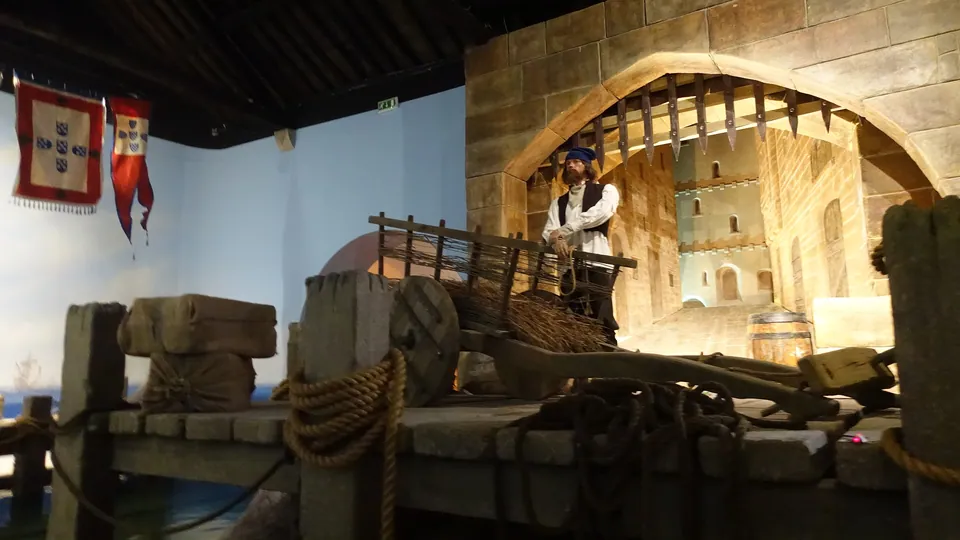
World of Discoveries
Porto
An interactive museum about the Portuguese maritime expeditions, built as a series of walk-through sets with a short indoor boat ride through recreated ports and landscapes.
- Ages
- 5–12
- Time
- 2h
- Adult, from
- €15
Good to know. The boat section is dark with sudden sound and lighting effects, which unsettles some younger children. The exhibits tell the story from a celebratory Portuguese perspective, which is worth framing for older children who have covered colonial history at school.
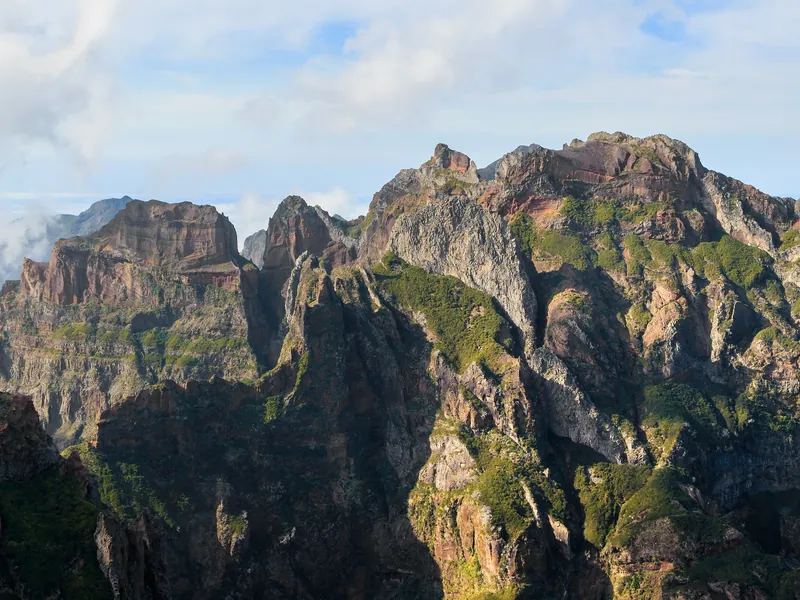 Nature
Levada dos Balcões walk
Madeira
A short, almost level levada path through laurel forest from Ribeiro Frio to a railed viewpoint over the Ribeira da Metade valley, and one of the few island walks that a young child can complete comfortably.
- Ages
- 5–16
- Time
- 1h 30m
- Adult, from
- €3
Good to know. The path is wide and flat by Madeira standards but still runs alongside an open water channel with a drop on the outer side in places, and the surface is slick after rain. Madeira's official signposted trails carry a small per-person fee, and the car park at the trailhead is tiny.
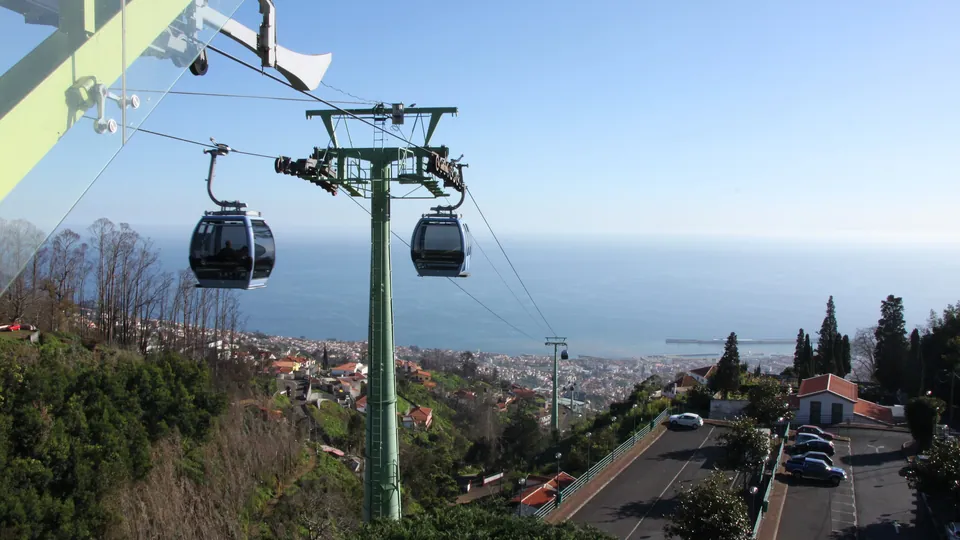 Adventure
Monte cable car, gardens and toboggan run
Madeira
A cable car climbs from the Funchal seafront to the hill village of Monte, where a tropical garden and a church sit at the top and wicker toboggans steered by two runners slide back down a section of public road.
- Ages
- 5–16
- Time
- 3h
- Adult, from
- €18
Good to know. The toboggan is a short downhill run on an open road with no seatbelts or restraints, steered by the two runners on foot, and it is charged separately per sledge rather than per person. It finishes at Livramento, well short of Funchal, so the return needs a taxi or a bus. The cable car is enclosed but the ascent is steep and exposed.
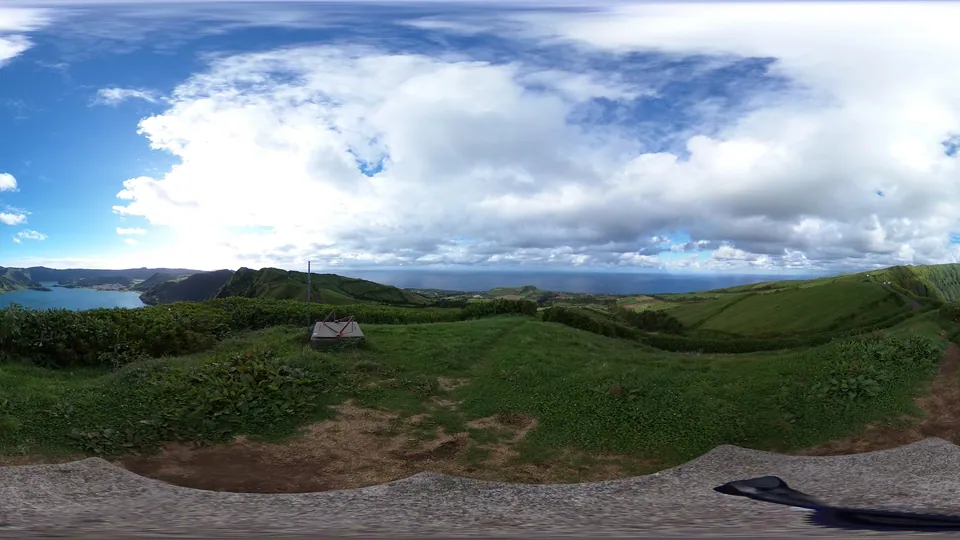 Nature
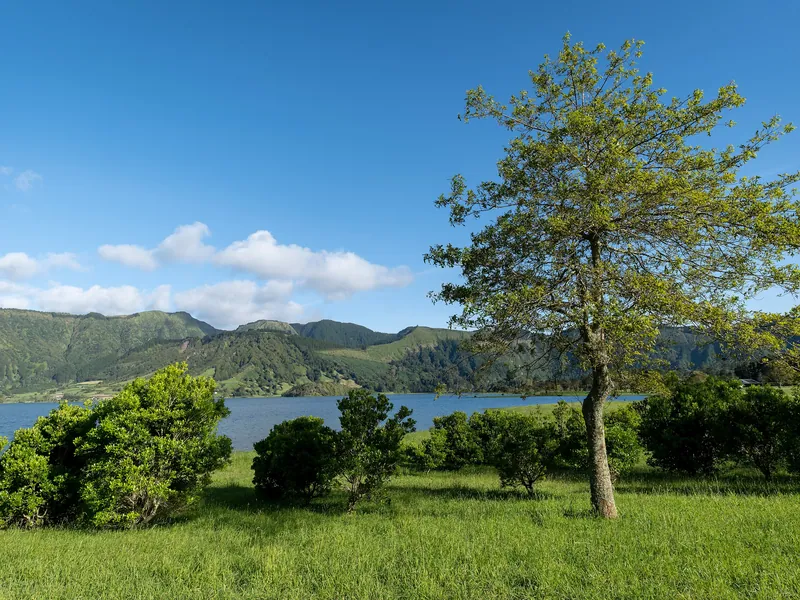
Sete Cidades crater lakes
The Azores
Twin lakes — one usually reading green and one blue — filling a collapsed volcanic caldera at the western end of São Miguel, with a village on the shore, a road down into the crater and a chain of viewpoints along the rim above it.
- Ages
- 4–16
- Time
- 2h 30m
- Adult, from
- Free
Good to know. The rim sits around 500 metres up and spends much of the year inside cloud, so the view is a matter of timing rather than effort. Vista do Rei is roadside and step-free, but the ridge path from it and the abandoned hotel beside it involve unfenced edges and a long drop. The roads down at lake level are narrow, with passing places rather than two lanes.
 Water
Terra Nostra Park thermal pool
The Azores
A large iron-rich thermal pool, opaque ochre in colour and held at roughly body temperature, at the centre of a mature botanical garden in Furnas, with smaller hot pools and shaded paths around it.
- Ages
- 3–16
- Time
- 3h
- Adult, from
- €10
Good to know. The water is warm but completely opaque, so a child's footing cannot be seen from the side, and the main pool is deep enough away from the steps that non-swimmers need floats and an adult in the water with them. The iron permanently stains swimwear and can tint fair hair, so an old costume is the right one to pack. The changing rooms and the walk between pools are cold and wet by comparison with the water.
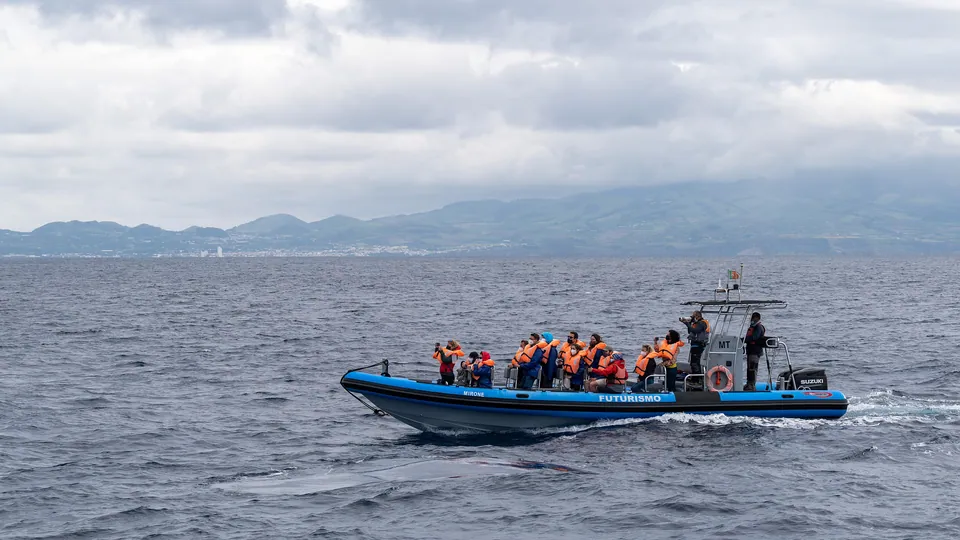 AnimalsBook ahead
Whale and dolphin watching off Ponta Delgada
The Azores
Boat trips from the south-coast harbours, directed onto animals by shore-based spotters with telescopes, looking for resident sperm whales and several dolphin species year-round and for migrating baleen whales in spring.
- Ages
- 6–16
- Time
- 3h
- Adult, from
- €60
Good to know. This is two to three hours on open Atlantic swell with no shelter and no way to cut it short, so seasickness is the constraint that decides whether it works for a family at all. Rigid inflatables are rougher than the catamarans and set their own minimum ages. Trips are cancelled outright in strong wind, and nothing is ever guaranteed to be found — operators normally offer a repeat trip rather than a refund.
Some links on this page are affiliate links. If you book through one, the price is the same for you and we may earn a commission. How this works.
Getting around Portugal
Intercity trains run the spine of the country: Lisbon to Porto takes about three hours centre to centre on an Alfa Pendular or Intercidades service, with reserved seats and reduced child fares. Both cities have cheap, modern metros, and Porto's airport line reaches the centre in about half an hour. The Algarve is reached by train, coach or a short flight into Faro, but moving around once there needs a car. Madeira is a separate flight of roughly 1h40 from Lisbon and cannot be reached by land or on a day trip.
Do you need a rental car?
A little driving. Lisbon and Porto are better without a car — parking is scarce and expensive, the hills make short drives pointless, and both metros reach the airport. A car earns its keep in the Algarve, where beaches, towns and supermarkets are spread along 150 km of coast, and on Madeira outside Funchal. Hiring at the destination for those legs rather than for the whole trip is usually cheaper.
Is the Interrail Portugal Pass worth it?
Rarely pays off for a family. Portugal is small, point-to-point fares are low, and children travel at reduced fares or free, so a single Lisbon–Porto return per person usually costs less than the pass. Price the actual legs before buying.
What Portugal costs with a family
Typical daily spend for a family of four, excluding flights. Accommodation, food, local transport and one paid activity a day.
€
€120
Budget · per day, family of four
€€
€220
Mid-range · per day, family of four
€€€
€400
Higher-end · per day, family of four
Planning estimates based on published prices at the time of writing, in shoulder season. Peak months, school holidays and city-centre accommodation all push the figure higher.
Food in Portugal
Portuguese food suits cautious eaters better than most: grilled chicken, bifanas (a pork sandwich), rice dishes, bread, soup and grilled fish are everywhere, and pastéis de nata solve a lot of afternoon arguments. Fish is often served whole and bone-in, so ask for it filleted or choose a rice or meat dish for younger children. Two habits catch families out. The bread, olives and cheese placed on the table unasked — the couvert — are charged for, and sending them back is completely normal. And meals run later than in northern Europe: lunch from roughly 12:30, dinner from about 19:30, which is still earlier than Spain.
Practical tips for Portugal
The things that are easy to get wrong and expensive to fix once you have arrived.
Money & costs
The bread on the table is not free
Bread, olives, cheese and cured meat arrive unordered in most restaurants and appear on the bill as the couvert. Refusing them or handing them straight back is normal and costs nothing, which is worth knowing before four covers of it are charged every meal.
Getting around
Buy a transport card each, not one for the family
Lisbon's Viva Viagem and Porto's Andante are rechargeable cards that cover metro, bus, tram and funicular. Unlike some city passes elsewhere, they cannot be shared between travellers on the metro gates, so each person needs their own. Young children travel free and school-age children at reduced fares.
With kids
Assume the Atlantic is cold
West-coast water near Lisbon, Porto and Sagres stays around 16–19°C even in August, which is fine for a ten-minute splash and miserable for an afternoon. The sheltered, south-facing Algarve beaches are the exception at roughly 21–23°C in late summer. A rash vest or shorty wetsuit doubles how long children stay in.
Getting around
Sort out electronic tolls with the hire car
Several Portuguese motorways, including the A22 that runs the length of the Algarve, are barrier-free and charge electronically with no cash option. Take the transponder the rental desk offers, or expect a bill with administration fees months later.
Staying connected
Sort data before you fly
Useful if you are travelling from outside the EU, where roaming is not bundled. Maps matter more here than in most places, because the Algarve's beach access points and Madeira's trailheads are poorly signposted from the road.
Some links on this page are affiliate links. If you book through one, the price is the same for you and we may earn a commission. How this works.
Portugal with kids: common questions
Is Portugal a good destination with young children?
Yes, on the whole. It is safe, cheap by western European standards, restaurants accommodate children without fuss, and flights are short. The constraints are the steep cobbled hills in both main cities and a cold Atlantic that limits swimming outside the southern Algarve.
Do you need a car in Portugal?
Not for Lisbon, Porto or the train between them — both cities are better without one. A car is close to essential in the Algarve and on Madeira outside Funchal. Hiring only for those legs usually costs less than hiring for the whole trip.
How long should a first family trip to Portugal be?
Seven to ten days. A week covers Lisbon and an Algarve beach base, or Lisbon and Porto with the train between them. Ten to twelve days lets you do all three without a travel day every other morning.
When is the sea warm enough for children to swim?
On the south-facing Algarve coast, roughly late June to early October, peaking around 21–23°C in August and September. Everywhere else on the mainland the Atlantic stays cold all year and children tend to paddle rather than swim.
Can Madeira be combined with a mainland trip?
Yes, but as a separate flight of about 1h40 from Lisbon, not a day trip or a drive. Most families treat it as its own week rather than a side trip, and it works in shoulder months when the mainland coast is too cold for swimming.
Lisbon or Porto with kids?
Lisbon has more built specifically for children — a large aquarium, a flat modern riverside district, bigger parks — and better weather. Porto is smaller, cheaper and coverable on foot in two days, but steeper and considerably wetter. Three hours by train between them means the choice is often unnecessary.
Other destinations to compare
Every guide answers the same questions in the same order, so two countries take five minutes to compare rather than five evenings.
- Japan with Kids: Itineraries, Where to Stay & When to GoCulture, nature & adventure
- Italy with Kids: Itineraries, Where to Stay & When to GoMountains, lakes & cities
- Austria with Kids: Itineraries, Where to Stay & When to GoAlps, lakes & charming towns
- Cyprus with Kids: Itineraries, Where to Stay & When to GoSun, sea & family resorts