Sliema & St Julian's
The seafront base for Valletta — rock swimming, not sand
- Suggested stay
- 3–5 days
- Best for ages
- 4+
Europe · 3 destinations
Malta is a small, dense, English-speaking archipelago where nothing is more than about an hour from anything else, which is the single biggest advantage it has for families: one base covers the whole country. The islands are also mostly rocky coast, and that is the fact to absorb before booking — genuine sandy beaches are few, and the main family sand is Mellieħa Bay (Għadira) and Golden Bay in the north-west, plus Ramla Bay on Gozo. Everywhere else, swimming means flat rock, ladders and concrete lidos, which suits confident swimmers and is hard work with toddlers. Against that, the walled cities are compact enough for short visits, the sea stays warm into late autumn, and driving is on the left with road signs and menus in English. High summer is the other trade-off: heat with very little shade, and the few sandy beaches absorbing the whole island at once.
Suits up to 16
Mid-range
Road signs, menus, bus information, pharmacies and hospitals all work in English, so nothing needs translating.
The main island is roughly 27 km long, so a single hotel can cover beaches, Valletta and the Gozo ferry without moving.
Mellieħa Bay, Golden Bay and Gozo's Ramla Bay are the family sand; the rest of the coast is flat rock with ladders.
Valletta, the Three Cities, Mdina and the Gozo Cittadella are walled, compact and visitable in an hour or two each.
Two to four hours from most of Europe, with sea warm enough to swim from roughly May to late October.
The seafront base for Valletta — rock swimming, not sand
Where to stay
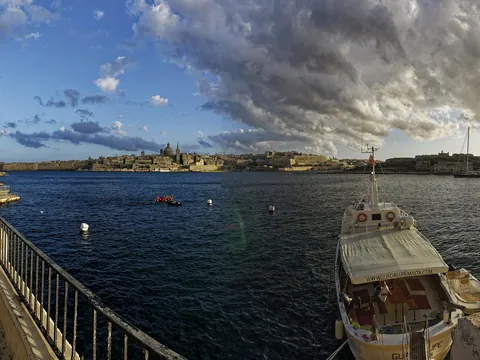
A kitchen and a separate bedroom for well under the price of two hotel rooms, within walking distance of the Valletta ferry and the flat promenade, which together remove the transport from most sightseeing days.
Fitting a family in
One- and two-bedroom apartments sleep four to five without a rollaway; studios with a sofa bed are common and tight for four.
Watch out. There is no sandy beach here — swimming is off flat rock with ladders. Seafront rooms face a busy road, and this strip is the most actively redeveloped part of the country, so ask which way the room faces and what is being built next door.
A private pool and a courtyard change the shape of a family week on an island whose beaches need a drive: the default plan becomes swimming at home, with the beach as an outing rather than an obligation.
Fitting a family in
Three- and four-bedroom conversions sleeping six to eight, which works out cheaper per head than two family hotel rooms on Malta.
Watch out. Almost all of them need a car — the lanes they sit on have no useful bus service. Pools are unheated and usually unfenced, and the internal stone stairs are steep and often without a handrail.
Being level with the beach rather than on the hill above it is the whole argument: the country's largest stretch of shallow sand is a walk across the road, which removes the daily climb that defines staying in the village.
Fitting a family in
Family rooms sleeping four are the standard product and interconnecting doubles are common; confirm whether a sofa bed is included in the stated occupancy.
Watch out. The coast road passes between the hotels and the beach, and both fill from mid-morning in July and August. Some properties marketed as Mellieħa Bay actually sit up the hill and rely on a shuttle, so check the map rather than the name, and compare what each all-inclusive package covers.
Some links on this page are affiliate links. If you book through one, the price is the same for you and we may earn a commission. How this works.
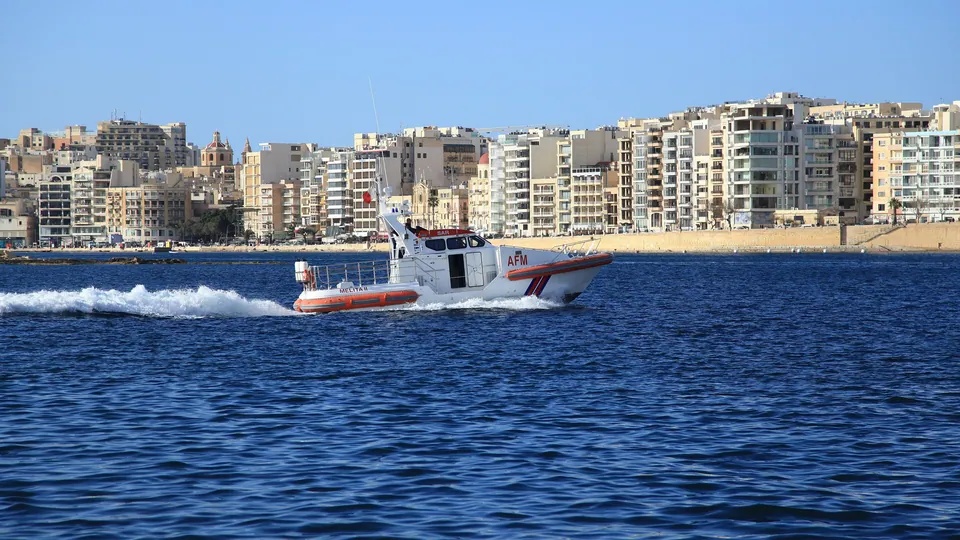
Sliema & St Julian's
The crossing of Marsamxett Harbour between the Sliema seafront and Valletta, roughly ten minutes each way, with the full length of the capital's bastions in view. Cheap enough to use as transport and short enough to count as the ride.
Good to know. The open deck is exposed and sailings are suspended in strong northerly wind, which is the reason to keep a bus plan in reserve. The Valletta landing sits at the foot of the bastions, so the way up into the city is a steep ramp and steps; the separate Three Cities ferry, on the Grand Harbour side, lands beside the Barrakka lift instead.
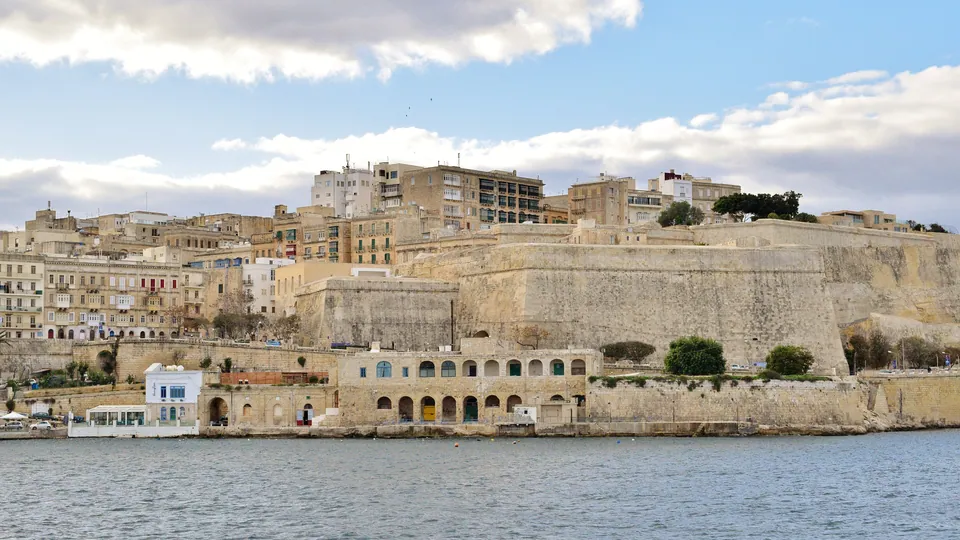
Sliema & St Julian's
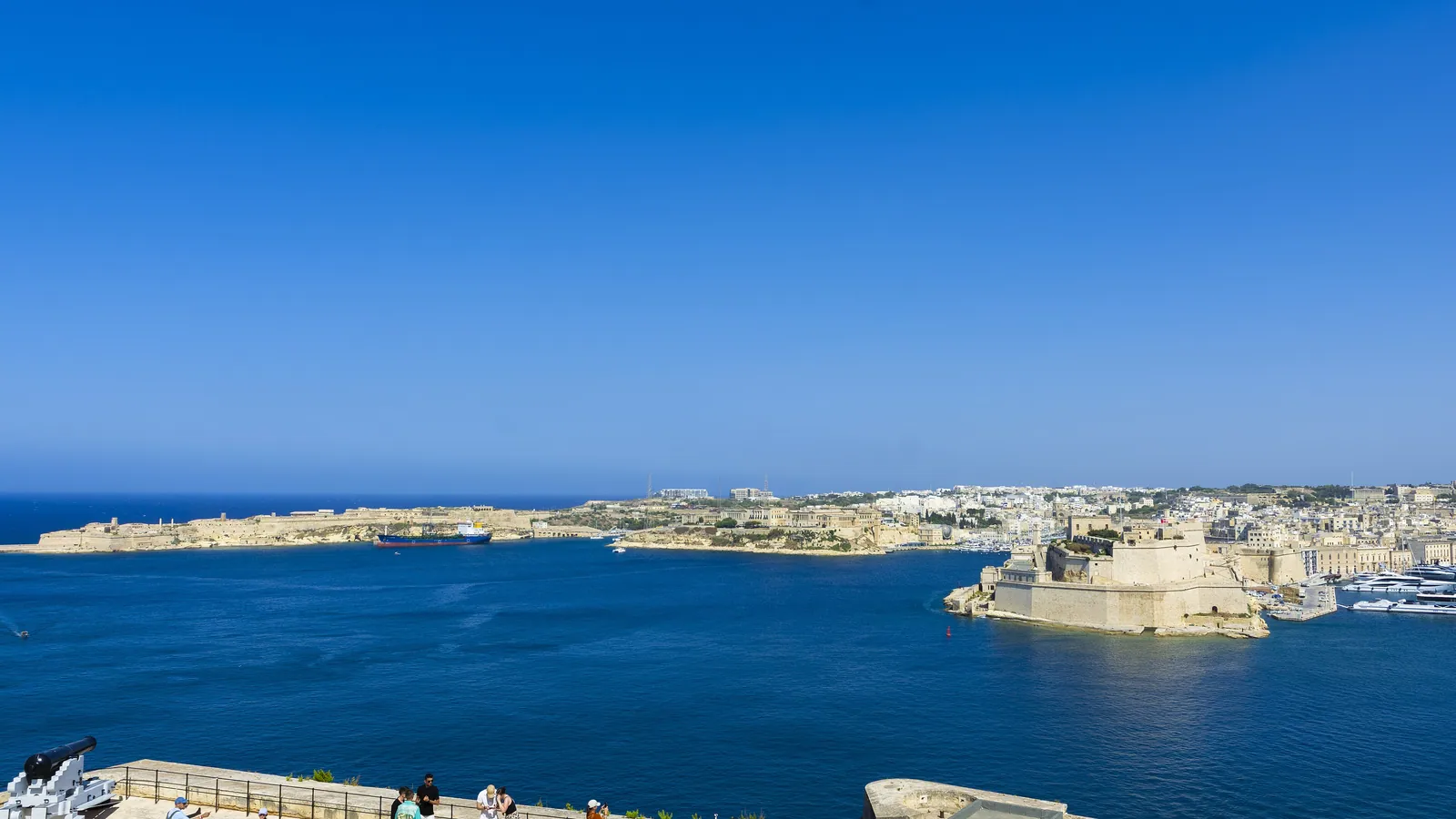
A walled sixteenth-century capital laid out as a grid on a peninsula, small enough to cross on foot in twenty minutes. The bastion gardens look down over the Grand Harbour, a cannon battery below them is fired daily, and the side streets are lined with enclosed timber balconies.
Good to know. The grid runs across a ridge, so roughly half the cross-streets are flights of steps — a pushchair only works along the two level main streets. There is almost no shade at midday, and the bastion edges in the gardens are low walls rather than railings.
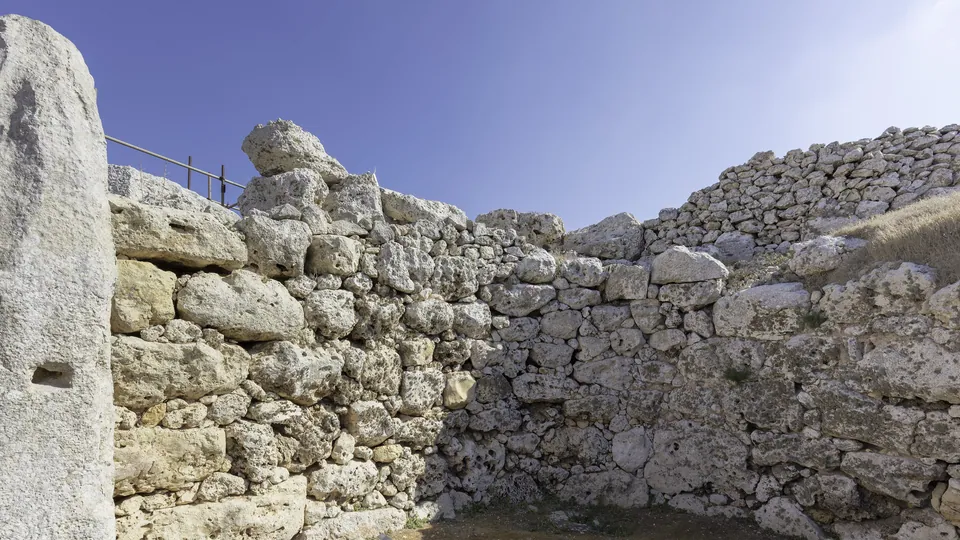
Gozo
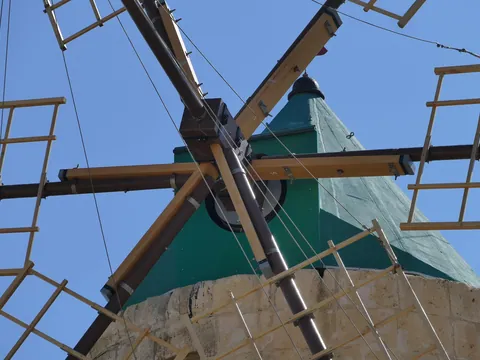
Two Neolithic temples at Xagħra built from megaliths, among the oldest free-standing structures anywhere and older than the Egyptian pyramids. The same ticket covers Ta' Kola windmill a few minutes away.
Good to know. Visitors follow raised walkways around the outside rather than entering the chambers, so the site rewards a short visit with an explanation more than a long wander. Open ground, no shade, and the interest drops sharply for children under about six.
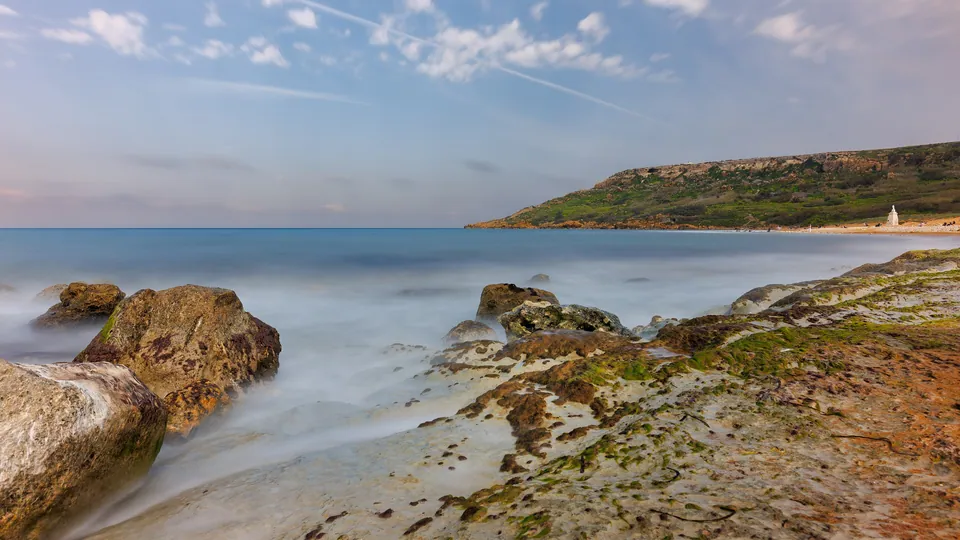
Gozo
The largest sandy beach on Gozo, a wide crescent of deep red-orange sand with a gentle entry and terraced fields rather than hotels behind it. Calypso Cave looks down on it from the ridge above.
Good to know. The approach is a single narrow lane and the car park fills by mid-morning through July and August. Facilities are a couple of seasonal kiosks, there is no natural shade at all, and the water can develop a noticeable shore break when the wind is northerly.
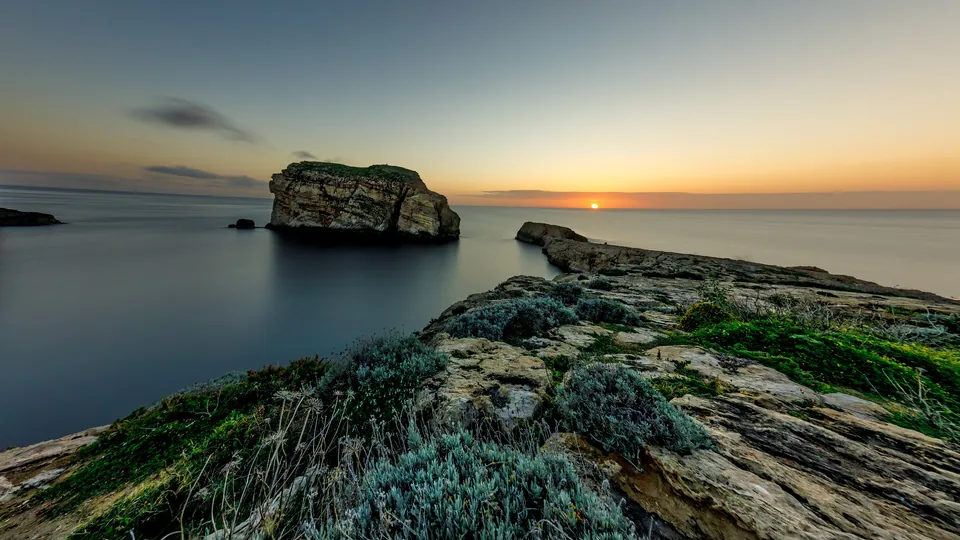
Gozo
A cliff-backed corner of the west coast where a shallow lagoon connects to the open sea through a natural tunnel, with the Blue Hole and Fungus Rock alongside. Small boats run through the tunnel when the sea is calm.
Good to know. The Azure Window arch collapsed into the sea in a storm in 2017 and no longer exists — older photographs of it still circulate, so it needs saying before arriving. The rock around the lagoon is uneven and unfenced with deep water beside it, and the boat trips only run in calm conditions.
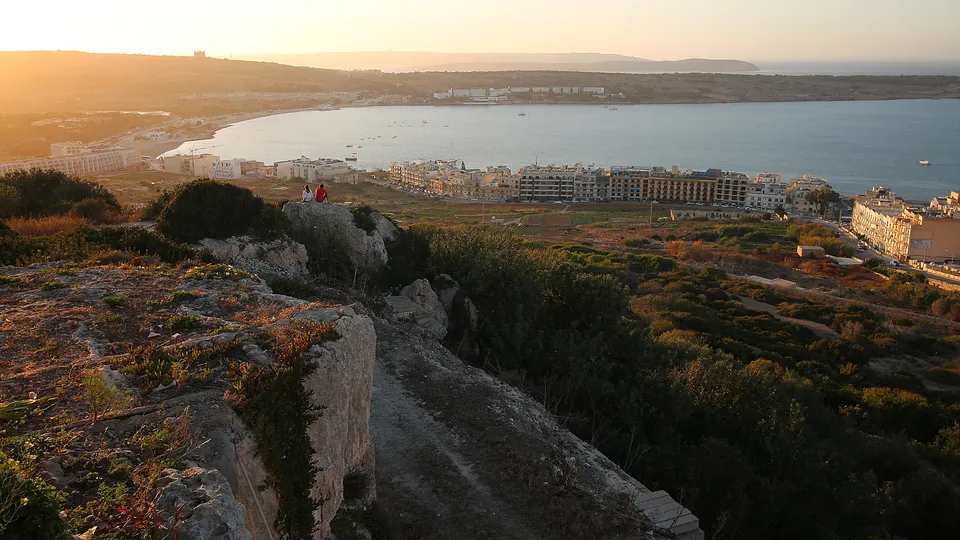
Mellieħa
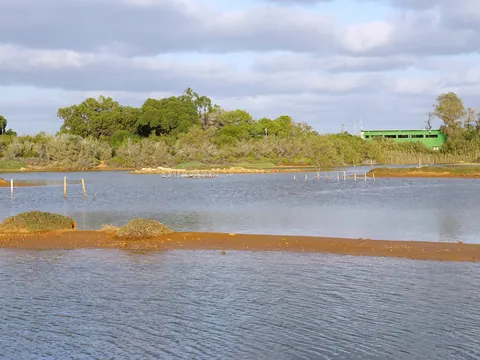
The largest sandy beach in Malta, a long shallow bay where the water stays standing-depth a long way out, with water-sports operators, kiosks and sunbed hire along it and a bird reserve behind.
Good to know. Being the island's default beach makes it the busiest: the car park and the coast-road lay-bys fill by mid-morning through July and August. There is almost no natural shade, so an umbrella is not optional, and the coast road runs directly behind the sand.
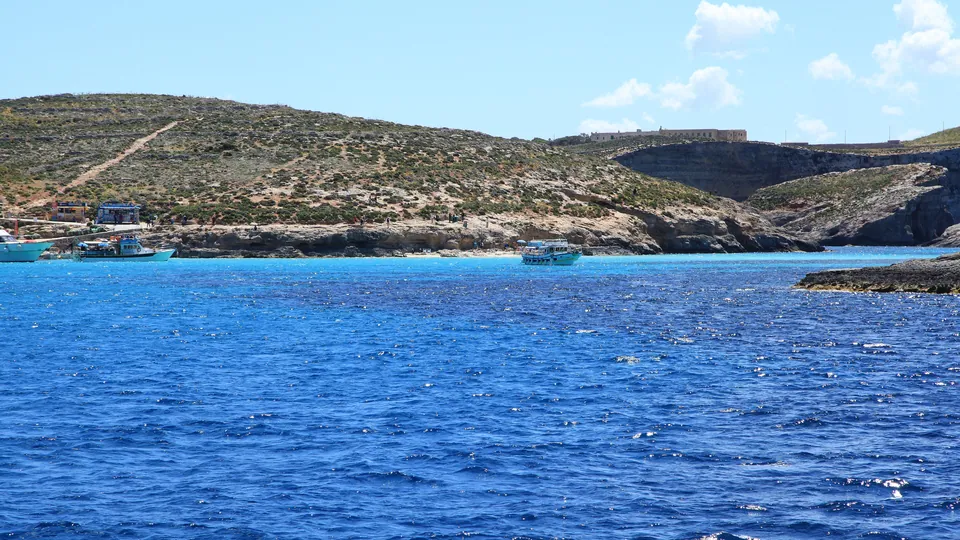
Mellieħa
Boat trips from Ċirkewwa and Marfa to the channel between Malta and Gozo, where a shallow sand-bottomed strait between Comino and Cominotto gives unusually clear turquoise water. Most operators also pass the caves and the smaller bays.
Good to know. Heavily oversold. The colour is real, but the lagoon is small and takes several hundred people at once in July and August, onto a narrow strip of sand with limited shade and limited toilets. The earliest and latest boats, or Comino's other bays, change the day completely — and crossings are cancelled in strong wind.
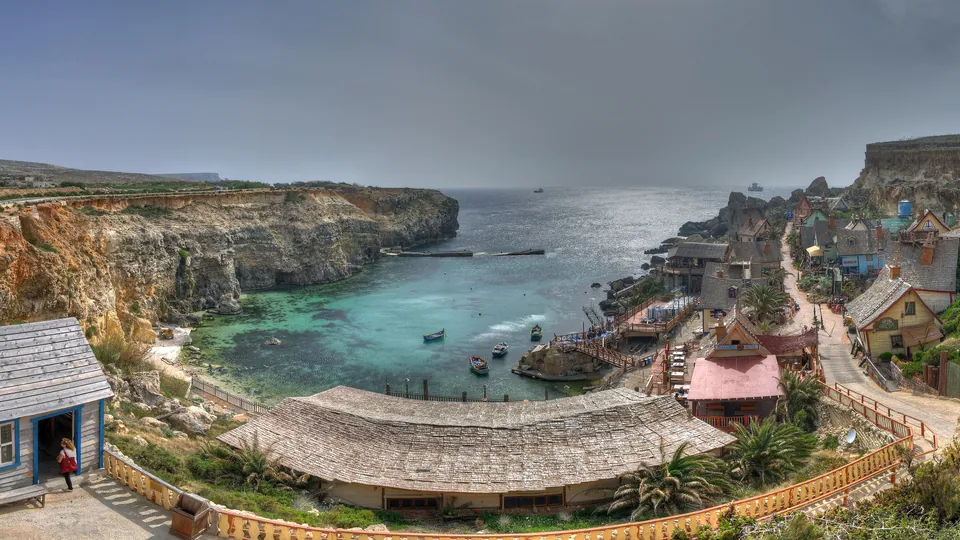
Mellieħa
The timber film set built at Anchor Bay in 1979 for a live-action Popeye film, kept as a family attraction with pools, boat rides, shows and a small funfair among the original buildings.
Good to know. The site is a steep, stepped hillside above a cove, so it is hard work with a pushchair and unsuitable for anyone with limited mobility. The appeal falls off sharply above about ten, and much of the water and show programme runs only through the summer season.
Some links on this page are affiliate links. If you book through one, the price is the same for you and we may earn a commission. How this works.
There is no rail or tram anywhere on the islands. Buses reach almost every village, use a flat fare and radiate from Valletta, which means a cross-island trip often involves changing there and taking well over an hour. In July and August the coastal routes are frequently standing-room and sometimes drive past full stops. Harbour ferries are the exception and are genuinely quick: Sliema to Valletta takes about ten minutes, and a second route crosses to the Three Cities. Gozo is reached by the Ċirkewwa–Mġarr car ferry, about 25 minutes, or by a passenger-only fast ferry from Valletta.
A little driving. Buses reach most places, but slowly and crowded in summer, so a car mainly buys back time. It earns its cost on Gozo, where bus frequency outside the Victoria corridors is low, and on the days a family wants Golden Bay, the Dingli cliffs or the temple sites. Against it: parking in Sliema and St Julian's is difficult and almost entirely on-street, lanes in the old towns are narrow, and driving is on the left.
€
€120
Budget · per day, family of four
€€
€200
Mid-range · per day, family of four
€€€
€350
Higher-end · per day, family of four
Planning estimates based on published prices at the time of writing, in shoulder season. Peak months, school holidays and city-centre accommodation all push the figure higher.
Easy with children, and heavily Italian-influenced — pasta and pizza are on almost every menu, at every price point. The local staples that children take to are pastizzi, flaky pastry parcels of ricotta or mushy peas sold from hole-in-the-wall shops for small change, and ftira, a flat sourdough loaf filled with tuna, olives and tomato. Rabbit stew (fenkata) is the national dish and worth knowing about before it appears on a menu. British influence means full breakfasts and roast lunches are easy to find in the resort areas, and dinner is served earlier than in Spain or Greece. Tap water is desalinated and safe but tastes of it, so most families buy bottled.
With kids
Most of Malta's coast is flat rock, and a family expecting sand within walking distance of any seafront hotel will be disappointed. The substantial sandy beaches are Mellieħa Bay (Għadira) and Golden Bay in the north-west and Ramla Bay on Gozo. If a beach day has to be walkable rather than a bus ride, that narrows the choice of base to Mellieħa.
Health & safety
The islands are bare limestone with very few trees, and the beaches, bastions and temple sites are all fully exposed. An umbrella, hats and a mid-afternoon indoor plan are the difference between a workable July day and an abandoned one.
Getting around
A surprise for most European visitors, and the village lanes are narrow enough that the smallest available car is the right one. Roundabouts are busy, signposting is in English, and parking in Sliema and St Julian's is street-only and genuinely hard.
Getting around
The Tallinja Explore card covers unlimited bus travel for a week and is straightforward value for a family based in one place and travelling by bus daily. It is wasted money alongside a hire car, or on a trip that is mostly beach days at the hotel.
Staying connected
Useful for families travelling from outside the EU, where roaming is not bundled. Bus times, ferry sailings and beach parking all get easier with maps working from the moment the plane doors open.
Some links on this page are affiliate links. If you book through one, the price is the same for you and we may earn a commission. How this works.