Budapest
Thermal baths, a railway run by children and a car-free island
- Suggested stay
- 3–5 days
- Best for ages
- 2+
Europe · 3 destinations
Hungary gives a family two things that are hard to find together in Europe: a major capital that can be seen on foot and by tram, and a genuinely cheap week once the flights are paid for. Thermal water runs under most of the country, so the default family activity is a bath complex with shallow pools and slides rather than another church, and Lake Balaton adds a warm, shallow inland sea that behaves like a beach holiday without the flight to the Mediterranean. The country is also flat and compact, which keeps transfers short and makes the train a realistic alternative to a hire car. The trade-offs are summer heat — July and August afternoons in Budapest and on the Great Plain regularly sit above 30°C with little shade — and a language with no useful relatives, so signage outside the main tourist areas takes work.
Suits up to 16
Budget
Family rooms, restaurant meals, museum tickets and public transport all sit well below the western European equivalent, which is what makes a longer stay affordable.
Most towns of any size have a bath complex, and the modern ones are built around shallow children's pools, slides and outdoor sections rather than quiet soaking.
Budapest has four metro lines, a dense tram network, riverboats and a funicular, and children under six travel free on all of it.
Lake Balaton's southern shore shelves so gradually that small children can wade a long way out, and the water warms far faster than the Adriatic.
Budapest is served by a wide range of low-cost and legacy routes, and it is the only airport most family trips here need.
Breaded cutlets, noodles, pancakes and soups suit cautious eaters, and most everyday dishes are seasoned rather than hot.
Thermal baths, a railway run by children and a car-free island
Shallow warm water, grass beaches and short transfers
Where to stay
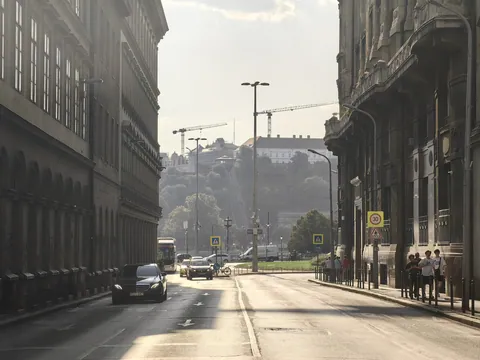
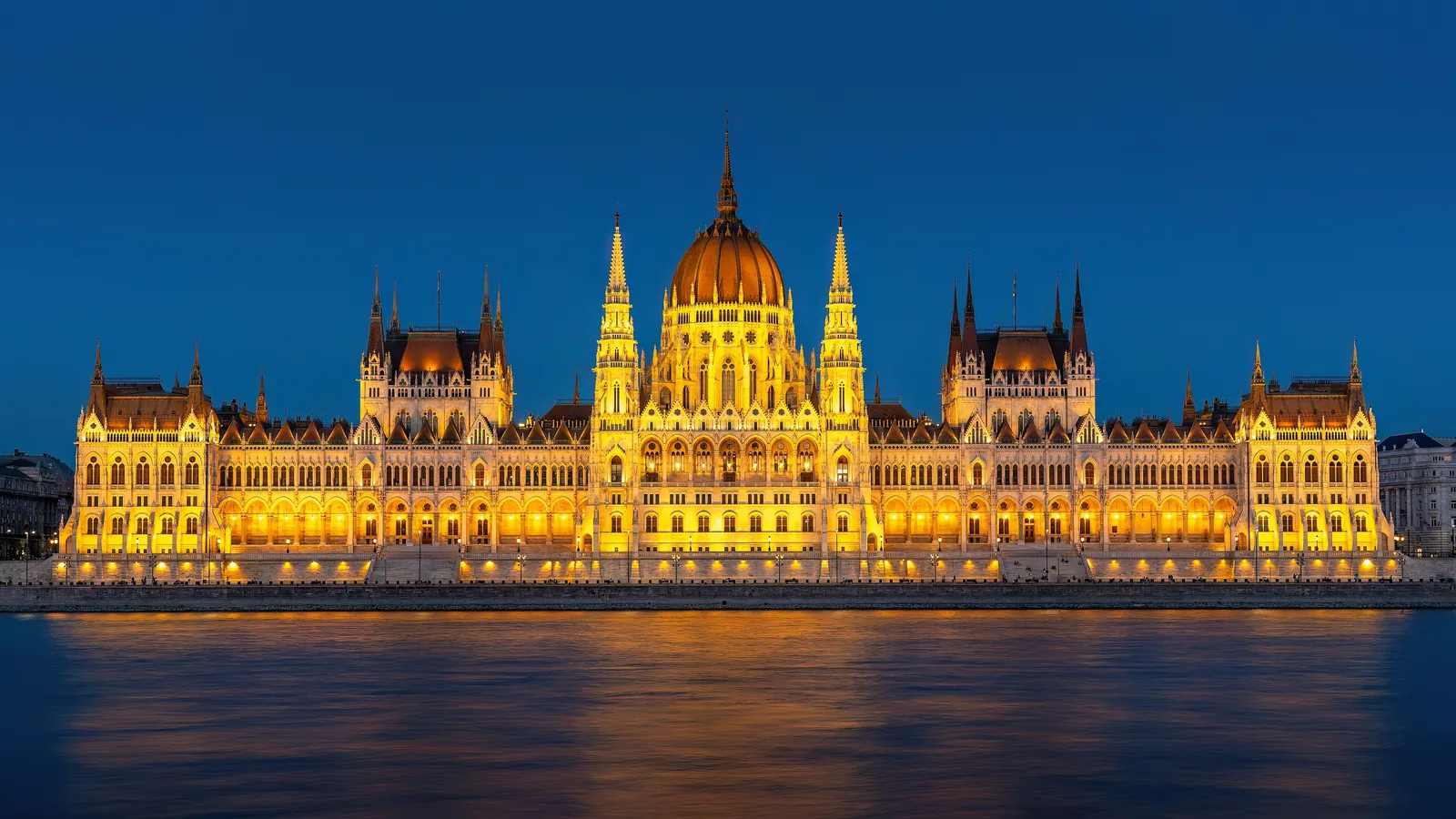
Conventional hotel stock in the flattest, most walkable part of the city, which means rooms for four, a lift and a breakfast buffet — the three things the old apartment districts most often lack — with the river, the Parliament and the Great Market within walking distance.
Fitting a family in
Family rooms here usually mean a double plus two singles, or two connecting doubles; some properties place the fourth person on a sofa bed counted inside the stated occupancy, so the bed configuration is worth confirming rather than the headline number.
Watch out. This is the most expensive district in the city and rates climb steeply in high summer. It is also an office and government quarter, so street level is quiet in the evening and the nearest playground is usually a tram ride away. Parking is paid and scarce, which matters for anyone arriving by car.
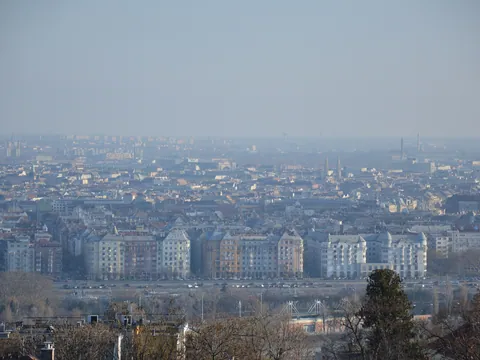
A residential grid a few tram stops from the centre where a two-bedroom apartment costs less than one central hotel room, and the Margaret Island bridge, ordinary supermarkets and neighbourhood playgrounds are all within a short walk — the practical choice for a stay of four nights or more.
Fitting a family in
Two-bedroom flats in interwar blocks are the standard family unit and sleep four to five, often with the fifth place on a living-room sofa bed. Rooms are larger and better proportioned than in the tourist districts.
Watch out. Many of these buildings have a small original lift or none at all, and the flat may be three or four floors up — the floor number matters more than the photographs. Nothing here is a sight, so every day starts with a tram ride, and air conditioning is not universal in older blocks that hold heat overnight.
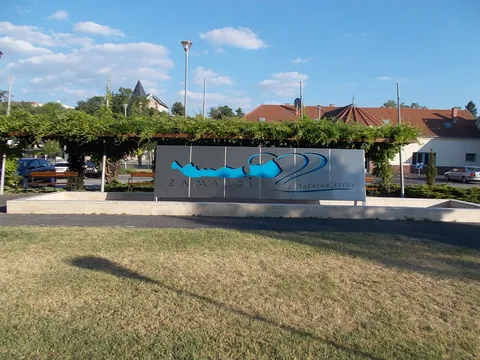
The cheapest way to do a Balaton week and the one that fits the shallow-water logic: self-catering a few streets back from a managed beach, with a garden or terrace for the evening and a kitchen for the meals that a beach day makes unpredictable.
Fitting a family in
Two-bedroom apartments and small holiday houses sleeping four to six are the standard stock, frequently with bunk beds in the second room and a sofa bed in the living area.
Watch out. Beach entry is charged on top of the room, the walk to the water crosses the shore railway line at a level crossing in many villages, and the nearest restaurants can be a drive away and shut outside July and August. Air conditioning is common but not standard, which matters in a 35°C week.
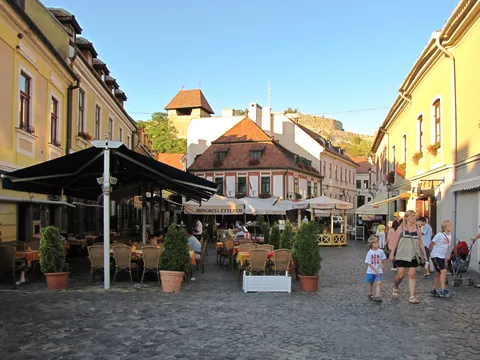
Eger is small enough that a central room removes transport from the trip entirely — the castle gate, the minaret, the basilica and the market are all a few minutes' walk, which is what makes a two-night stop with children workable.
Fitting a family in
Family rooms in baroque townhouses, often an attic conversion with sloping ceilings, or a double plus two singles in one space. Suites with a separate children's room exist but are limited in number.
Watch out. Old buildings here rarely have lifts and the attic rooms mean stairs with luggage and low headroom. The square hosts events and terrace crowds on summer evenings, so a courtyard-facing room is quieter, and driving to the door is often restricted with the nearest parking a street or two away.
Some links on this page are affiliate links. If you book through one, the price is the same for you and we may earn a commission. How this works.
Budapest
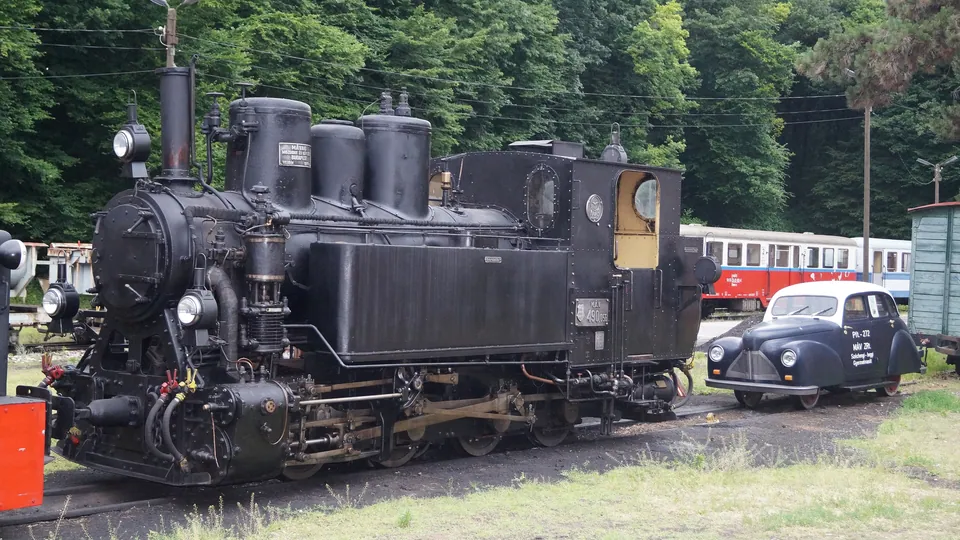
An 11-kilometre narrow-gauge line through the wooded Buda Hills between Hűvösvölgy and Széchenyi-hegy, staffed by children aged roughly 10 to 14 who sell and check tickets, give the signals and dispatch the trains, with only the locomotive crew adult. It connects at one end with the cogwheel railway and near the other with the chairlift, so the three can be ridden as a loop.
Good to know. Trains run to a sparse timetable — roughly every hour or two, thinner on weekdays and in winter, with steam only on selected days — so a missed departure means a long wait in the woods. The intermediate stations are trailheads with few facilities and little food, and the full loop with the cogwheel railway and the chairlift takes most of a day.
Budapest
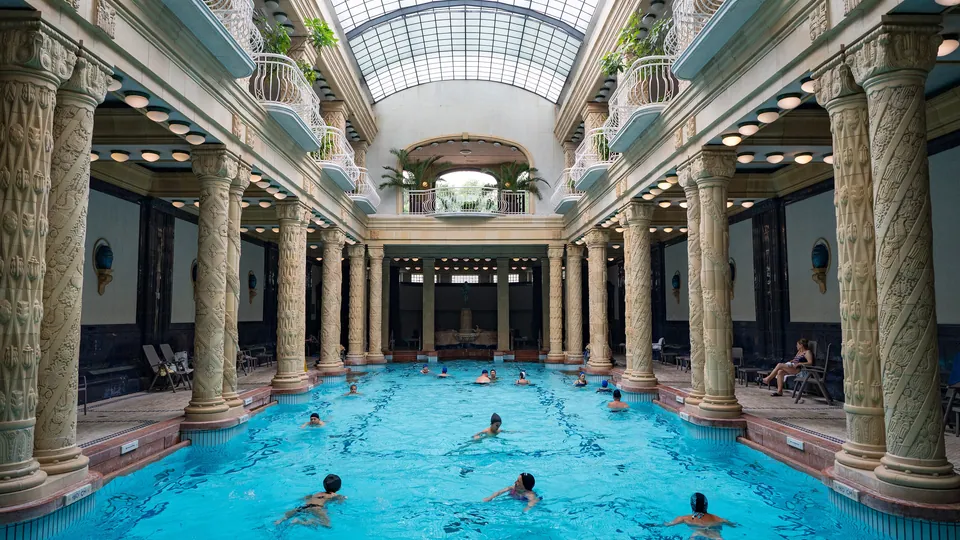
The city sits on more than a hundred thermal springs, and its bath complexes range from grand open-air pools in a city park to small historic Turkish baths under Ottoman domes and modern water parks with slides. For families the useful split is between the open-air and modern complexes, which have shallow children's pools, lawns and lifeguards, and the historic soaking baths, which are built for adults.
Good to know. Age rules differ by bath and are the thing to check first: several of the historic Turkish and spa baths set a minimum age or keep children out of the hot pools, and the evening bath parties are over-18 only. Thermal water above about 36°C is not suitable for long immersion by small children, so families use the cooler swimming and children's pools. Bring flip-flops, a towel and a padlock — lockers and cabins are usually hired separately from the entry ticket.
Budapest
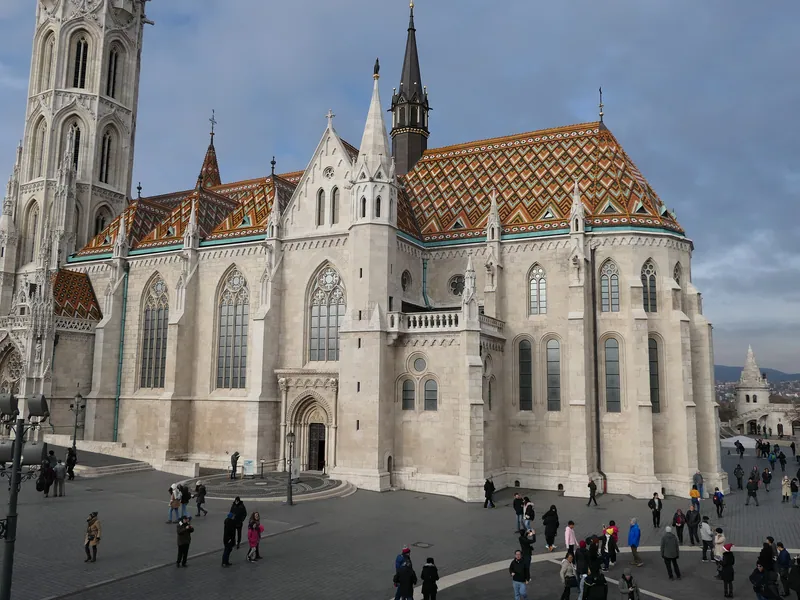
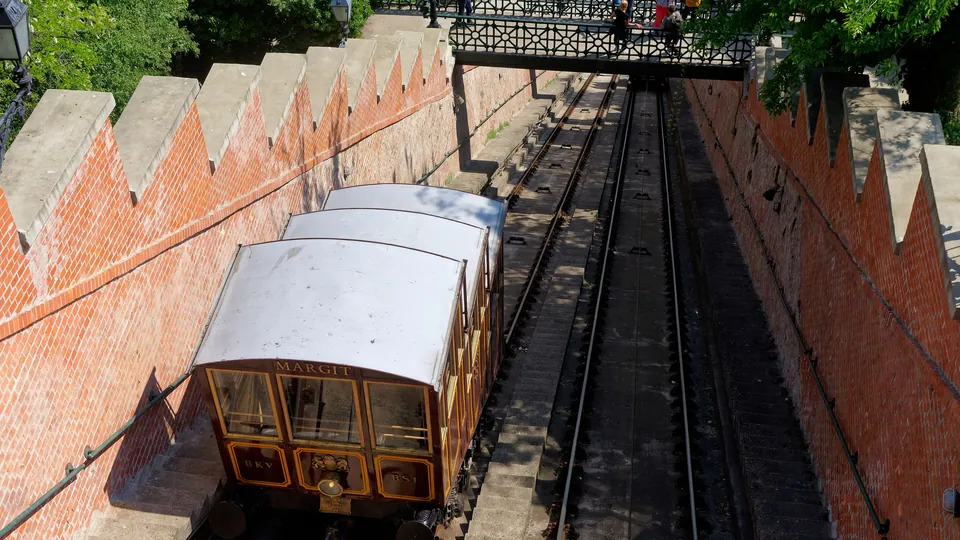
The Buda castle district, reached by a short 19th-century funicular that climbs from the Chain Bridge end to the palace gates in under a minute. On top are the palace courtyards, the Fisherman's Bastion terraces with the standard view over Parliament, Matthias Church and the Hungarian National Gallery.
Good to know. The funicular queue is the longest part of the visit in high season, and it closes for maintenance periodically, so the alternatives matter: bus 16 from Széll Kálmán tér and the walking path up from Clark Ádám tér both work. The district is cobbled, stepped in places and has very little shade, and the upper terraces of the Bastion are a paid area in daytime while the lower ones are free.
Lake Balaton
The managed public beaches from Siófok west to Fonyód, which are the reason families come to Balaton with small children: mown grass and trees rather than sand, changing rooms and showers, a lifeguarded roped-off area, and water that stays waist-deep for a hundred metres or more before it deepens.
Good to know. Nearly all of these beaches charge entry per person per day, and the shallow water that makes them safe also makes them bath-warm and slightly murky by August. The lake bottom is silt and gravel with patches of reed, so water shoes help, and the storm-warning beacons must be obeyed — a fast flash means leaving the water immediately, inflatables included.
Lake Balaton
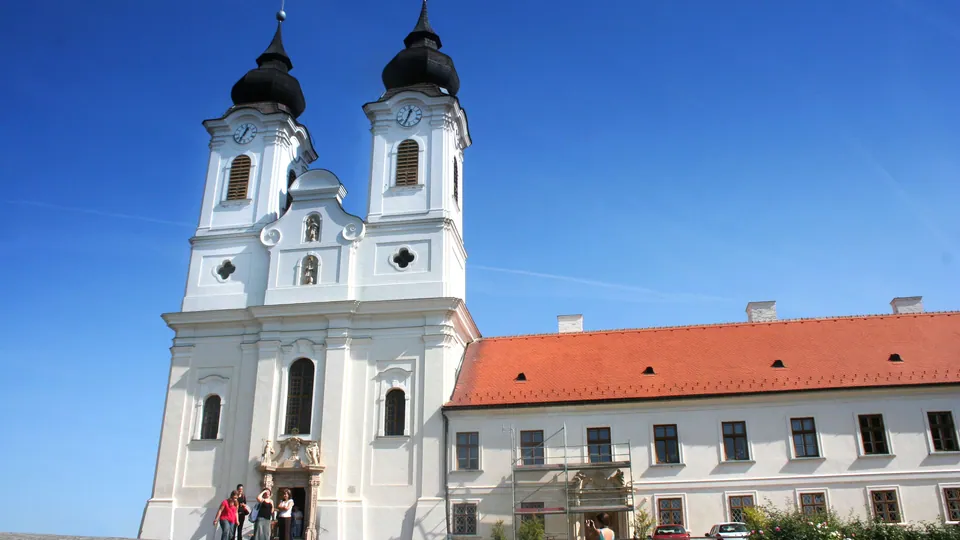
A hilly peninsula reaching most of the way across the lake from the northern shore, with a baroque abbey above the water, lavender fields that flower in June, an inner lake in a volcanic crater, and clifftop viewpoints over the narrowest point of Balaton. The Szántód car ferry lands just below it.
Good to know. The village sits on top of the hill and everything involves climbing: the walk up from the ferry and harbour is steep, and the lanes are cobbled and narrow with a carrier working better than a pushchair. Parking is limited and paid, and in July and August the lavender fields and the abbey terrace are crowded enough that early morning is the only calm slot.
Eger
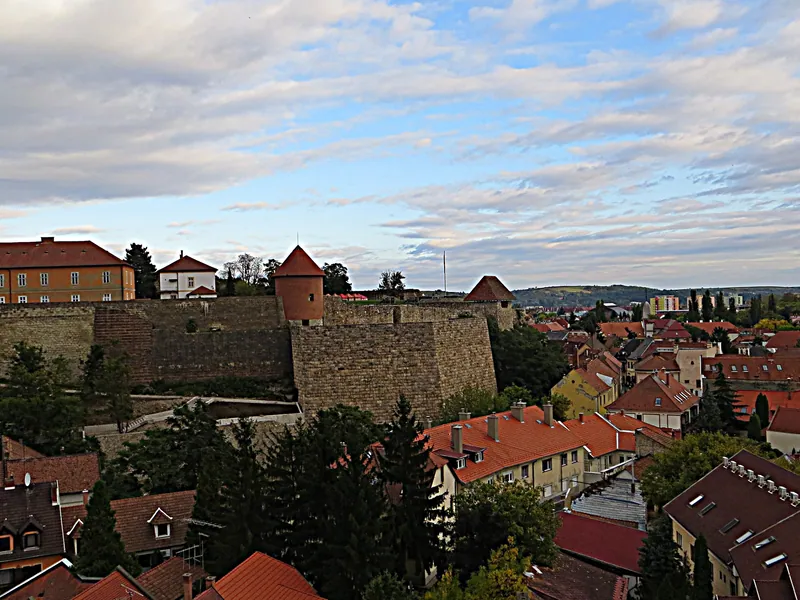
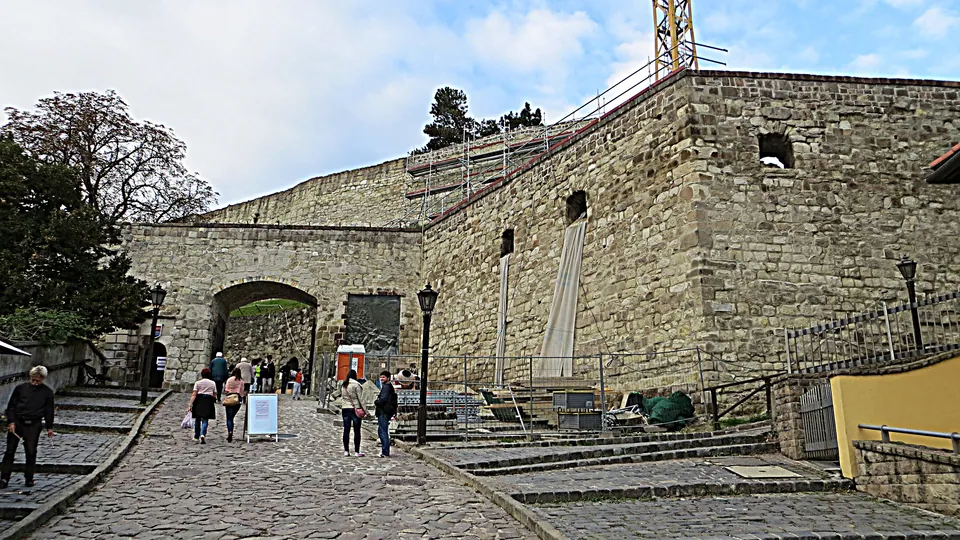
The fortress above the town, held in 1552 against a far larger Ottoman army in the siege that made Eger famous in Hungarian history. The site combines walls to walk with a museum in the bishop's palace, an underground casemate system cut into the rock, a waxworks of the siege and periodic archery and weapons displays in the courtyard.
Good to know. Tickets are sold in tiers and the cheapest one covers the grounds only, leaving out the casemates and the waxworks that children usually come for. The casemate tunnels are entered with a guide at set times, are cool and uneven underfoot, and the whole site is stepped and steep with cobbles, so a pushchair is a poor tool here.
Eger
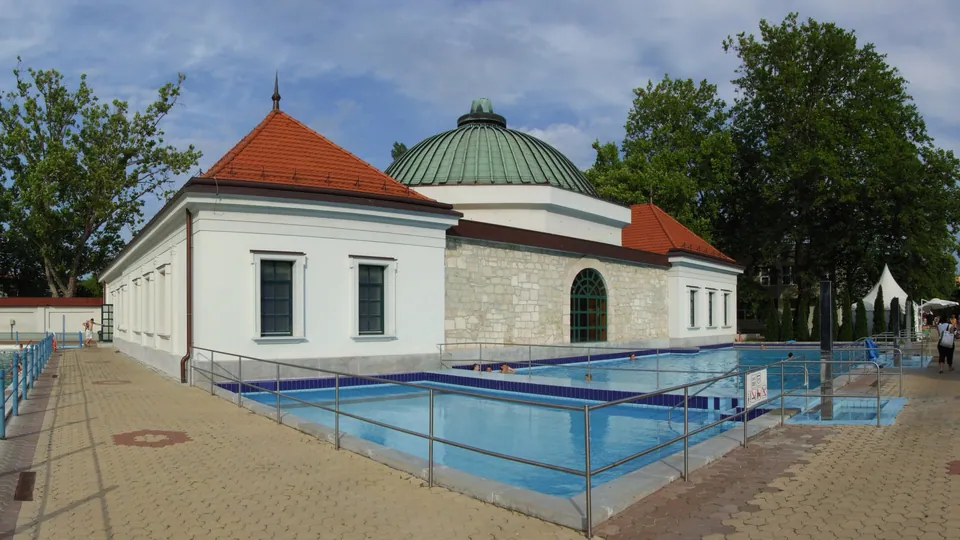
A bath complex in a park a short walk from the centre, combining thermal pools, a swimming pool, children's pools and slides, with a small historic Turkish bath of its own alongside the modern sections. A larger spa with terraced salt-hill pools sits a few kilometres away at Egerszalók.
Good to know. The historic Turkish bath section is an adult soaking space with its own rules and does not suit young children, while the outdoor pools and slides are the family part — worth confirming which ticket covers which building. Hot thermal water is not for long immersion by small children, and the outdoor sections run a summer season while the indoor pools stay open all year.
Eger
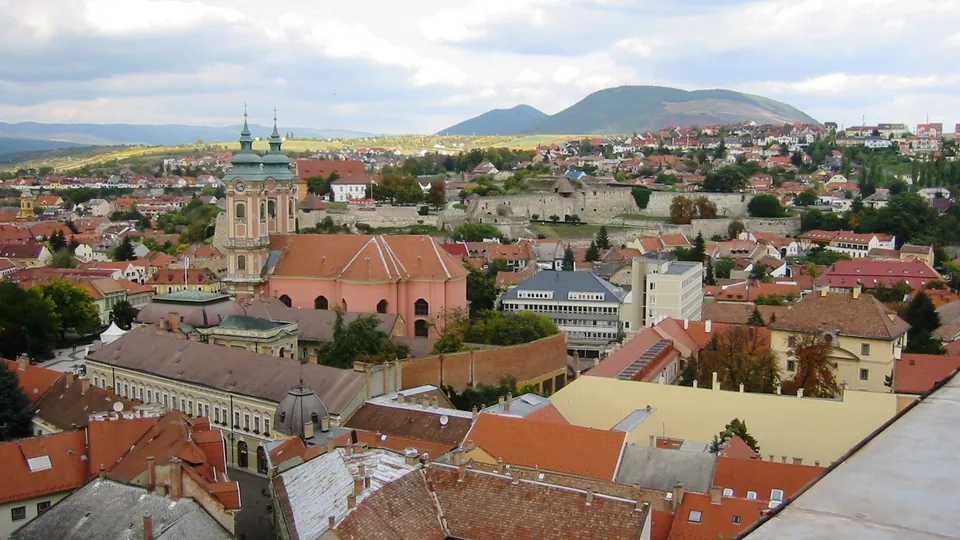
Two short, memorable climbs in the centre of town: the 40-metre Ottoman minaret, the northernmost surviving one in Europe, and the Specula at the top of the old Lyceum, an 18th-century camera obscura that uses a lens and mirror to project a live, moving image of the streets below onto a round table in a dark room.
Good to know. The minaret staircase is an extremely narrow, dark spiral with one line of traffic in both directions and a small platform at the top — genuinely unsuitable for anyone uneasy in tight spaces, and impossible with a toddler. The camera obscura needs daylight and clear-ish weather to work at all, runs to fixed session times, and is reached by a long stair climb with no lift.
Some links on this page are affiliate links. If you book through one, the price is the same for you and we may earn a commission. How this works.
The rail network radiates from Budapest, so almost everywhere useful is a direct train from one of the capital's three main stations: roughly two hours to the Balaton shore and about two hours to Eger. Intercity services carry reservations and are the comfortable option; slower stopping trains are cheap and often have no air conditioning, which matters in August. Volánbusz coaches cover the routes rail handles badly and reach Eger about as quickly as the train. Motorways are tolled by electronic vignette linked to the number plate, bought before the first motorway section rather than at a barrier.
A little driving. Budapest is better without one — parking in the central districts is paid, scarce and partly permit-only, and the transport network reaches everything a family wants. A car earns its cost on the Balaton shore, where the interesting beaches, the Tihany peninsula and the thermal complexes are strung along 70 kilometres of lake, and around Eger for the Szilvásvárad and Egerszalók day trips. Both destinations are reachable by train, so the car is a convenience rather than a requirement.
€
€100
Budget · per day, family of four
€€
€180
Mid-range · per day, family of four
€€€
€320
Higher-end · per day, family of four
Planning estimates based on published prices at the time of writing, in shoulder season. Peak months, school holidays and city-centre accommodation all push the figure higher.
Everyday Hungarian cooking is straightforward for children: rántott hús (breaded pork or turkey cutlet) with potatoes, chicken paprikash, noodle dishes and thick soups appear on almost every menu, and paprika here means colour and mild sweetness rather than heat — the hot version arrives separately in a tube or a small dish. Palacsinta (thin pancakes with jam, cheese or chocolate) is a dependable dessert or bribe, and lángos, a plate-sized disc of fried dough, is the standard beach and market snack. Portions are large enough for two young children to share one main. Mealtimes are central European, so an early family dinner is normal and kitchens in smaller towns can stop serving by 21:00.
Money & costs
Hungary is in the EU but not the eurozone. Cards work almost everywhere, including on transport apps and at most bath complexes, but places that accept euros set their own rate and it is a poor one. Standalone tourist exchange booths and airport bureaux are the expensive option; withdrawing forint from a bank ATM or paying by card is not.
With kids
Thermal complexes in Hungary fall into two groups. The historic Turkish and spa baths are built for adult soaking in hot mineral water, and several of them set a minimum age or bar children from parts of the building; the evening bath parties are strictly over-18. The modern and open-air complexes are the opposite, with shallow pools, slides and lifeguards. A bath's own site states its age rules, and it is worth reading before booking the hot one by mistake.
When to go
Midsummer afternoons regularly pass 30°C with a lot of stone and little shade in the city centres. The pattern that works is sightseeing until about 13:00, then a bath, a pool or a shaded park, then out again after 17:00 when the squares and the riverside come back to life.
Getting around
Hungarian motorways are enforced by camera against an electronic vignette registered to the number plate, with no toll booths to stop at. A car hired in Hungary usually has one already; a car driven in from Austria, Slovakia or Croatia does not, and the fine for a missing vignette is far larger than the pass.
Staying connected
EU and UK plans roam in Hungary at no extra charge. Families arriving from further afield need an eSIM or a local SIM, and it matters more here than in most of Europe because place names give a non-Hungarian speaker nothing to guess from, so maps and translation are doing real work.
Packing
Balaton beaches are usually grass rather than sand, the lake bottom is silt and gravel in places, and bath complexes have long stretches of wet concrete between pools. Cheap water shoes or pool slides get used every day of a Hungarian trip.
Some links on this page are affiliate links. If you book through one, the price is the same for you and we may earn a commission. How this works.