Europe · 3 destinations
Netherlands with Kids: Where to Stay, Cycling & When to Go
The Netherlands is small, flat and organised around the bicycle, which changes what a family day looks like: for children old enough to ride, the transport between stops becomes the activity rather than the cost of it. Distances are short enough that a coast day and a forest day can sit in the same week, trains reach almost every town, and English is spoken more or less universally. The trade-offs are real, though. The weather is grey, wet and windy in any month, so a trip planned entirely around outdoor days will lose some of them; Amsterdam accommodation is among the most expensive in Europe once the percentage-based city tourist tax is added; and the same cycling culture that makes the country easy also means fast bike traffic that treats a wandering pedestrian as the obstacle.
- Best for ages
- 3+
- Recommended trip length
- 6–10 days
- Budget level
- €€€
- Best time to visit
- Apr–Sep
Suits up to 16
Higher-end
Why the Netherlands works for families
The bike is the activity
The country is flat and laced with separated cycle paths, so a family that rides gets sightseeing and transport in the same hour.
Children travel cheaply on the trains
Dutch railways sell a flat-fare all-day child ticket for ages 4 to 11 travelling with an adult, and under-fours ride free.
A long, shallow North Sea coast
The Zeeland and Holland beaches shelve gently and widen dramatically at low tide, which suits paddling and digging more than swimming.
Forest and heath within an hour of the cities
The Veluwe is a genuine change of landscape reachable on a direct intercity train from Amsterdam or Utrecht.
Easy to ask for help
English is spoken almost everywhere, signage is bilingual in tourist areas, and public transport staff are used to families.

When to visit the Netherlands with kids
Late April to September has the long daylight and the warm-enough sea; the bulb fields around Lisse peak between late March and mid-May. October to March is dark by mid-afternoon, and most coastal towns close their pavilions and half their restaurants for the winter.
- Jan
- Feb
- Mar
- Apr
- May
- Jun
- Jul
- Aug
- Sep
- Oct
- Nov
- Dec
Where to stay
Family hotels in the Netherlands
We list areas and property types rather than single hotels: family-room availability changes constantly, and the area plus the room requirement is what survives contact with a booking engine.
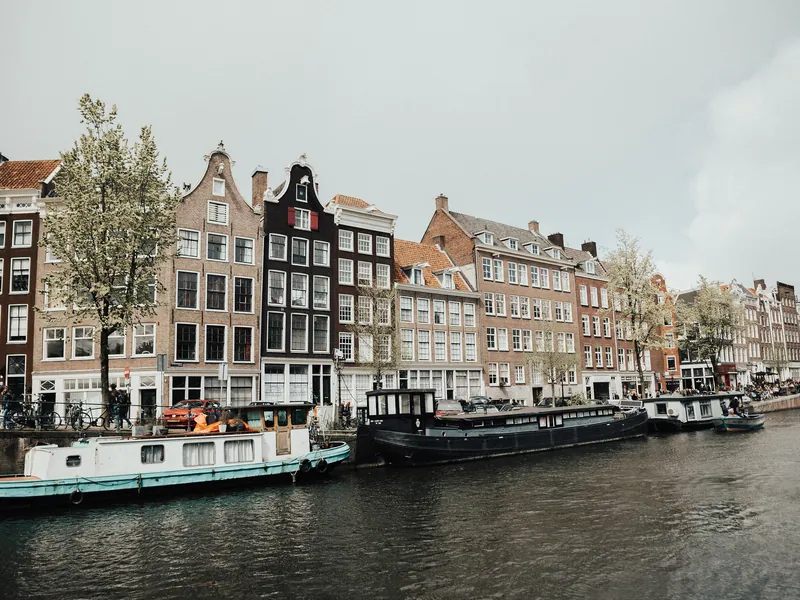
 Oud-West / De BaarsjesMid-range
Apartment in Oud-West
Two-bedroom flats in this belt of residential streets cost less than two hotel rooms in the canal ring and add the things a family actually uses in an expensive city: a kitchen, a washing machine and somewhere to sit once the children are asleep.
- Kitchen and washing machine
- Supermarkets and playgrounds on the same streets
- Trams into the centre in about ten minutes
- Vondelpark within walking distance
Fitting a family in
Two-bedroom units sleep four to five without a rollaway. Many are a single floor of a converted house, so confirm whether the second bedroom is a real room or a windowless box room before booking for two children.
Watch out. Dutch staircases in older buildings are extremely steep and narrow, and a great many apartments have no lift at all. Check the floor number and the lift explicitly if anyone is carrying a pushchair or a heavy case.
Check hotel prices — opens Klook in a new tab (affiliate link)Live availability for your dates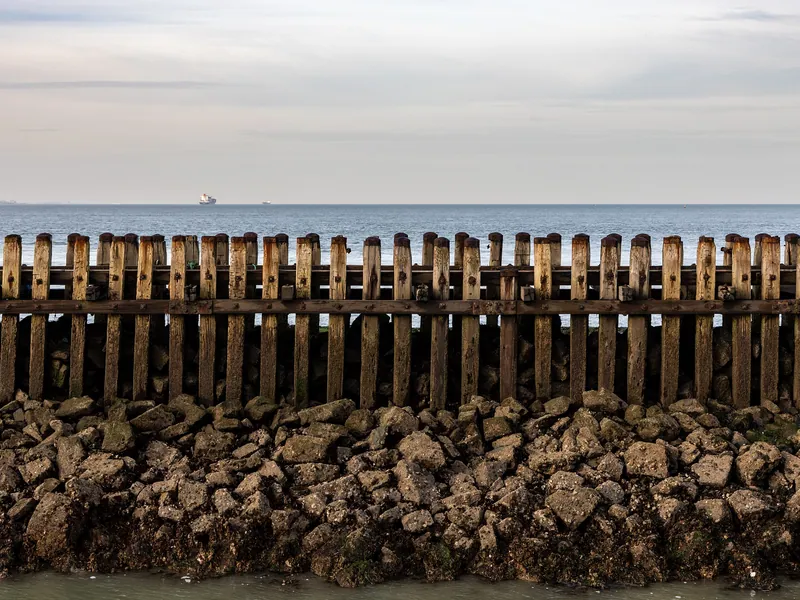 Walcheren coast — Domburg / OostkapelleMid-range
Self-catering apartment behind the Domburg dunes
A coastal week with children runs on a kitchen, a drying space for wet clothes and a beach that can be reached on foot, and an apartment a few hundred metres behind the dune ridge delivers all three without a car journey at each end of the day.
- Walking distance to a dune crossing and the beach
- Kitchen, washing machine and outdoor drying space
- Village shops and a bakery rather than a resort complex
- Flat cycle routes to neighbouring beaches
Fitting a family in
Two-bedroom apartments are the standard unit and sleep four; a third bedroom or a sleeping alcove appears mainly in the larger dune-side blocks. Linen and towels are often charged separately rather than included.
Watch out. The village empties out of season, with beach pavilions dismantled and many restaurants closed from roughly November to March. Summer stays are frequently Saturday-to-Saturday only, and compulsory end cleaning and tourist tax are added on arrival rather than shown in the headline rate.
Check hotel prices — opens Klook in a new tab (affiliate link)Live availability for your dates Otterlo / HoenderlooMid-range
Forest lodge near the Otterlo park gate
Staying within walking or cycling distance of a national park entrance removes the daily drive, the gate queue and the car charge, and it is what makes an early start for the deer at dawn realistic rather than theoretical.
- Walk or ride to the park entrance rather than drive
- Separate bedrooms and a kitchen in lodge-style units
- Forest directly outside for short walks with tired children
- Bike storage as standard
Fitting a family in
Lodges and bungalows here are sized by occupancy, with four- and six-person units standard. Some of the older stock is single-storey with a sleeping loft reached by a ladder-style stair, which does not suit very young children.
Watch out. These villages are small: one or two restaurants, limited shopping and nothing open late, so a car is effectively required for a proper supermarket run. Sites near the main road can carry traffic noise that the forest setting does not suggest.
Check hotel prices — opens Klook in a new tab (affiliate link)Live availability for your dates
Some links on this page are affiliate links. If you book through one, the price is the same for you and we may earn a commission. How this works.
Top family attractions in the Netherlands
What each one costs, how long it takes, which ages it suits and whether you need to book ahead.
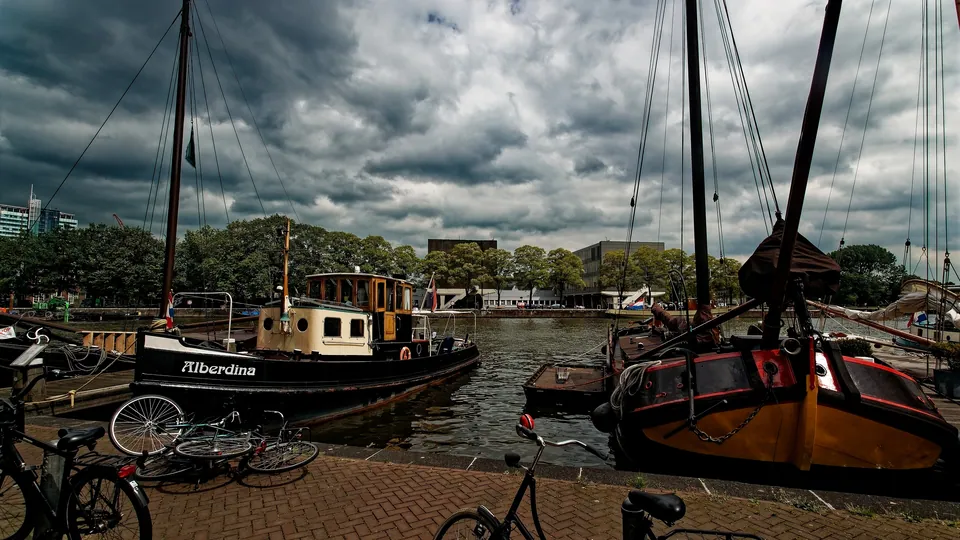 MuseumBook ahead
NEMO Science Museum
Amsterdam
A copper-green building shaped like a ship's hull beside the eastern docks, holding five floors of hands-on physics, chemistry and engineering exhibits aimed squarely at children rather than at adults reading captions. The stepped roof terrace is a public square with city views and is free to walk up without a museum ticket.
- Ages
- 5–13
- Time
- 3h
- Adult, from
- €20
Good to know. It is loud, busy and fully indoors, which makes it everyone's rainy-day plan at once; Dutch school holidays and wet weekends are the worst combination. Most exhibits assume a child can read and push a button, so under-fives get less from it than the ticket price suggests.
 Animals
Artis Royal Zoo
Amsterdam
A nineteenth-century zoo set inside a landscaped park in the Plantage district, combining animals with an aquarium, a butterfly house and a planetarium on one paved, walkable site a tram ride from the centre.
- Ages
- 2–11
- Time
- 4h
- Adult, from
- €27
Good to know. It is a historic city zoo, so enclosures are smaller and closer together than at a modern safari-style park, and parts of the site are usually under redevelopment. The microbe museum next door is a separate ticket and aimed at teenagers rather than young children.
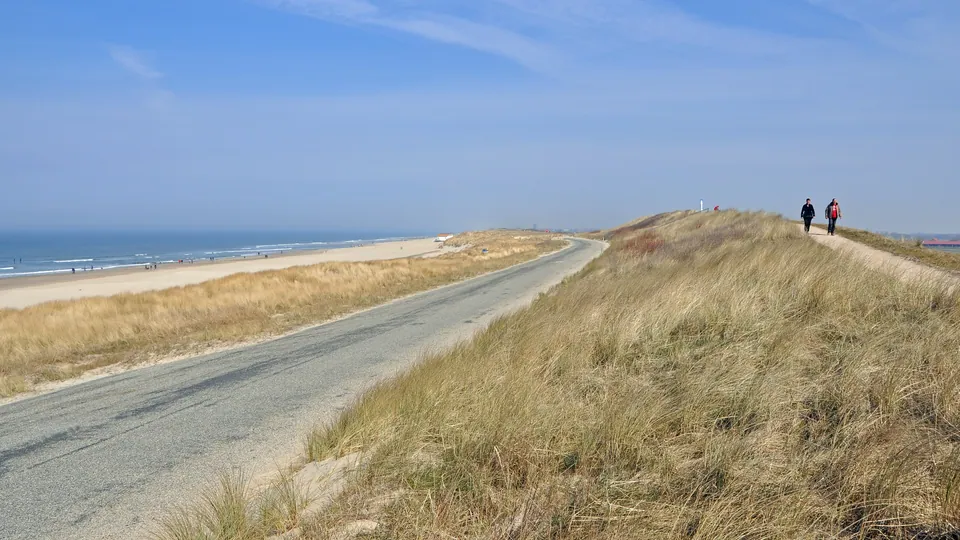 Water
Domburg beach and dunes
Zeeland
A wide North Sea beach below a dune ridge on the Walcheren coast, with a resort village directly behind it, seasonal beach pavilions on the sand and rental stands for kites, buggies and beach-sailing carts. The sand shelves very gently and low tide exposes a broad flat with warm shallow pools.
- Ages
- 0–14
- Time
- 4h
- Adult, from
- Free
Good to know. The wind is near-constant and is what makes a warm day feel cold, so a windbreak matters more than an umbrella. There is no shade on the sand at all, and the beach car parks at the main entrances charge and fill by mid-morning on summer weekends.
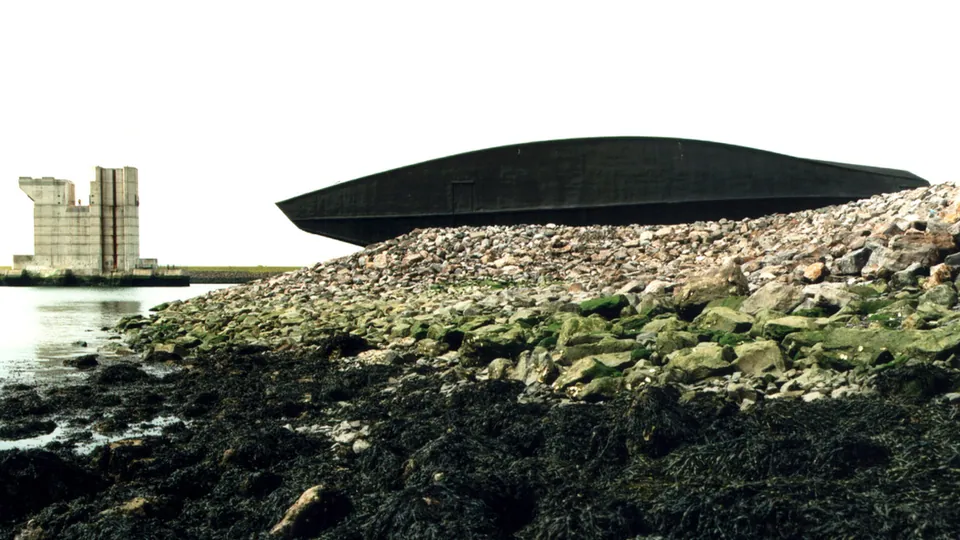 Culture
Oosterschelde storm surge barrier and Neeltje Jans
Zeeland
The nine-kilometre movable barrier that closes the Oosterschelde against storm surges, carrying the coast road between Schouwen-Duiveland and Noord-Beveland. The artificial island midway along it holds a visitor park explaining the 1953 flood and the Delta Works, with a seal pool, water play and a walk into the barrier structure itself.
- Ages
- 4–14
- Time
- 3h 30m
- Adult, from
- €20
Good to know. Almost all of it is outdoors on an exposed artificial island in the middle of an estuary, so it is the wrong choice on a wet or very windy day despite sounding like an indoor museum. It is reachable only by the coast road, which means a car or the seasonal bus.
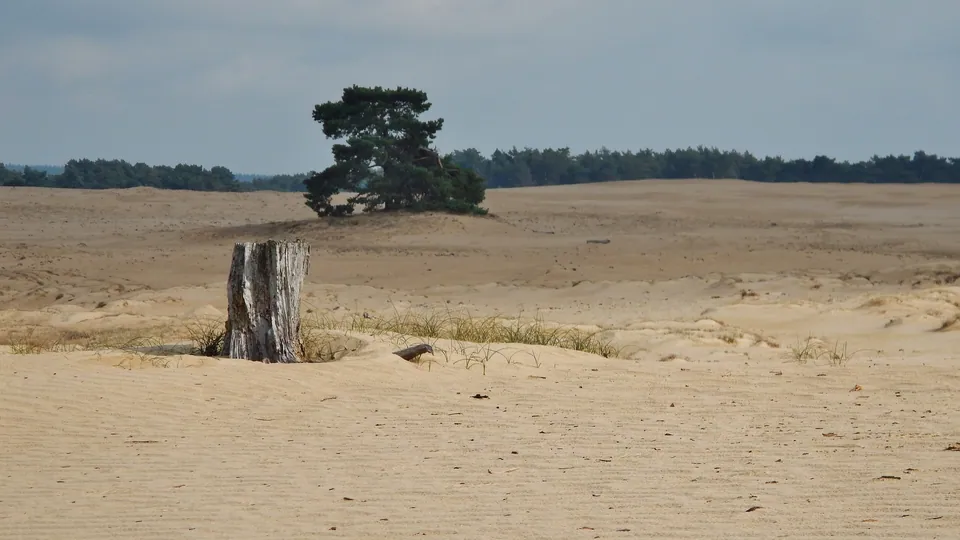 Nature
De Hoge Veluwe National Park
Veluwe
A fenced national park of forest, heath and drifting sand with around forty kilometres of car-free cycle paths, three entrance gates and roughly eighteen hundred white bicycles free to use with admission. Red deer, wild boar and mouflon live inside it and are watched from observation posts, and an underground museum at the visitor centre explains what lives beneath the sand.
- Ages
- 4–16
- Time
- 5h
- Adult, from
- €15
Good to know. Admission is charged per person including children, with a further charge to drive a car through the gate, so a family of four pays more than the headline figure suggests. Children's bikes and bikes with a child seat are a small part of the fleet and are gone by late morning on a sunny weekend.
 AnimalsBook ahead
Apenheul primate park
Veluwe
A primate park in the woods on the edge of Apeldoorn where several species, including squirrel monkeys, move freely through the visitor areas rather than behind glass, with gorillas and orangutans on wooded islands.
- Ages
- 3–12
- Time
- 4h 30m
- Adult, from
- €28
Good to know. It closes for the winter, running roughly from spring to early November, so it cannot be relied on as a rain-day plan out of season. Loose belongings have to go into a supplied closed bag because the free-roaming monkeys take anything carried in the open, and the site is hilly woodland with some steep paths.
Some links on this page are affiliate links. If you book through one, the price is the same for you and we may earn a commission. How this works.
Getting around the Netherlands
Intercity trains connect every city and most large towns at least twice an hour, and contactless bank cards now work as a ticket on the national railways and on most city trams, buses and metros. Children aged 4 to 11 need a separate flat-fare day ticket bought before boarding rather than a contactless tap. Bikes can be hired at almost every station and from town-centre shops, with child seats, tag-alongs and cargo bikes treated as ordinary stock rather than a special request.
Do you need a rental car?
A little driving. No car is needed for Amsterdam, and one is an active liability there given central parking costs and the park-and-ride system built to keep cars out. A car earns its keep on the Zeeland coast, where bus frequencies to the beach villages drop sharply outside July and August, and for reaching a holiday park on the Veluwe with luggage. Picking it up after the city days rather than at the airport is usually the cheaper order.
Is the Holland Travel Ticket worth it?
A one-day ticket covering trains, trams, buses and metro nationwide. It pays off only on a long cross-country day with several operators. For a family it rarely does, because children aged 4 to 11 already travel on a flat-fare day ticket and most family days involve one return train journey, not four.
What the Netherlands costs with a family
Typical daily spend for a family of four, excluding flights. Accommodation, food, local transport and one paid activity a day.
€
€170
Budget · per day, family of four
€€
€290
Mid-range · per day, family of four
€€€
€480
Higher-end · per day, family of four
Planning estimates based on published prices at the time of writing, in shoulder season. Peak months, school holidays and city-centre accommodation all push the figure higher.
Food in the Netherlands
Dutch everyday food is straightforward for cautious eaters: bread with cheese or hagelslag at breakfast, pancakes served as a full meal at pancake houses, chips with mayonnaise, and broodjes at every station. Supermarkets are good and close early compared with southern Europe. The adjustment for families arriving from France, Italy or Spain is the clock rather than the menu: kitchens often start dinner service around 17:30 and many stop taking orders by 21:00, so a late family dinner is harder to find than an early one.
Practical tips for the Netherlands
The things that are easy to get wrong and expensive to fix once you have arrived.
Getting around
Hire bikes for the whole stay, not by the day
Weekly rates are far cheaper than daily ones and remove the decision each morning. Ask specifically for hand brakes: a lot of Dutch rental bikes stop by pedalling backwards, which is disorienting for a visiting adult and unsafe for a child who has never used one.
Packing
Bring child helmets if the children will wear one
Almost nobody cycles in a helmet in the Netherlands and rental shops often carry none at all, or only adult sizes. A helmet that already fits is one of the few things genuinely worth the suitcase space.
Getting around
Buy the child train ticket before boarding
Children aged 4 to 11 travelling with an adult use a flat-fare all-day ticket, and it must be bought at a machine, counter or in the app rather than by tapping a card at the gate. Under-fours travel free and need nothing.
Packing
Pack for wind and rain in every month
There is no dry season. A packable rain jacket for each person, plus one warm layer even in July, is the difference between a wet day that carries on and a wet day that ends in the hotel.
Health & safety
Treat the red asphalt as a road
The reddish strip beside the pavement is a cycle lane carrying fast commuter traffic, and stepping onto it to take a photograph is the most common way visitors get hurt. Teaching children to look both ways before crossing it, exactly as for a road, is the whole safety briefing.
Money & costs
Shops open late and close early
Many shops do not open until midday on Sundays and some town centres stay closed on Monday mornings. Supermarket hours are longer, but planning a first-morning grocery run for the afternoon avoids a wasted walk.
Some links on this page are affiliate links. If you book through one, the price is the same for you and we may earn a commission. How this works.
Netherlands with kids: common questions
Is the Netherlands a good destination with young children?
Yes, with a caveat about age. It is flat, safe, English-speaking and short on long transfers, which suits every age. Children who can ride a bike independently, usually from around six, get considerably more out of it, because cycling is how the country is designed to be seen.
Do you need a car in the Netherlands?
Not for Amsterdam, where a car costs a great deal to park and saves nothing. A car is worth having for the Zeeland coast and for a holiday-park stay on the Veluwe, where luggage and out-of-season bus timetables make public transport awkward.
How many days is enough for a family trip?
Six to ten. Six covers a city and one rural region without rushing. Ten allows a city, the coast and a forest region, which is the combination that makes the country feel varied rather than small.
When is the best time to visit with kids?
May, June and September. Daylight is long, the crowds and prices sit below the July and August peak, and the weather is as reliable as it gets. Sea swimming really only works from July to early September.
Is cycling safe with children in the Netherlands?
Cycling is safer here than almost anywhere, because cycle paths are physically separated from car traffic and drivers expect bikes. The risk is on foot rather than on the bike: pedestrians who wander into a cycle lane are the ones who come off worst.
Is the Netherlands expensive for families?
Amsterdam is, particularly for accommodation once the percentage-based city tourist tax is added. Zeeland and the Veluwe are noticeably cheaper, and self-catering in an apartment or a holiday-park bungalow is what brings a week back into a mid-range budget.
Other destinations to compare
Every guide answers the same questions in the same order, so two countries take five minutes to compare rather than five evenings.
- Japan with Kids: Itineraries, Where to Stay & When to GoCulture, nature & adventure
- Italy with Kids: Itineraries, Where to Stay & When to GoMountains, lakes & cities
- Austria with Kids: Itineraries, Where to Stay & When to GoAlps, lakes & charming towns
- Cyprus with Kids: Itineraries, Where to Stay & When to GoSun, sea & family resorts