Europe · 4 destinations
Croatia with Kids: Where to Stay, Costs & When to Go
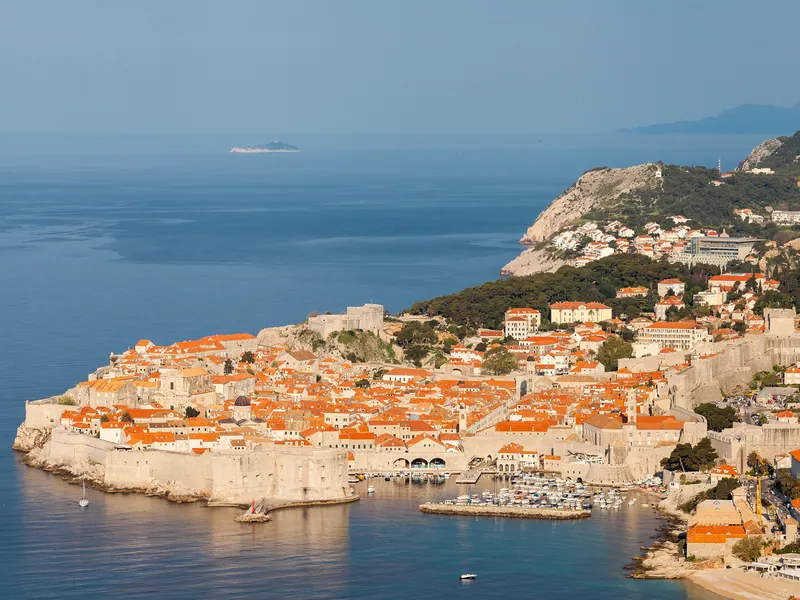
Croatia is a short flight from most of Europe and delivers an unusual combination for a family: Roman and medieval towns children can walk through in an hour, national parks built around water, and a sea that is calm, clear and shallow enough near the shore to reassure a nervous swimmer. The single fact most guides leave out is that the beaches are pebble, shingle and bare rock rather than sand — water shoes are close to essential and change how a beach day works. The other trade-offs are a coastline that is long and thin, so distances take longer than a map suggests, and a July and August peak when the walled towns and the ferry routes are at their most crowded and expensive.
- Best for ages
- 3+
- Recommended trip length
- 7–12 days
- Budget level
- €€
- Best time to visit
- May–Jun, Sep
Suits up to 16
Mid-range
Why Croatia works for families
Calm, clear, shallow-entry water
The Adriatic is unusually transparent and rarely has surf, which suits cautious swimmers far better than an ocean coast.
National parks built around water
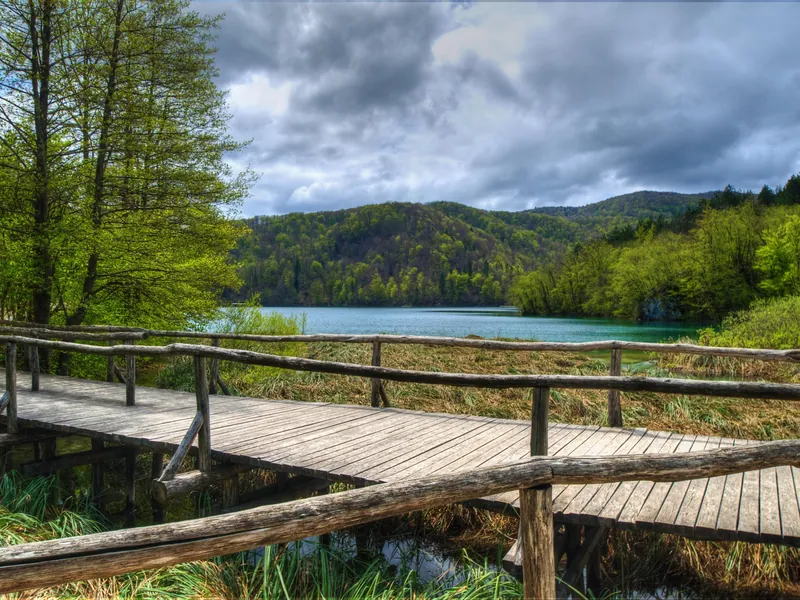
Plitvice and Krka are boardwalk-and-waterfall parks where the walking route is the attraction rather than a means to a viewpoint.
History at a scale children finish
A Roman arena, a lived-in imperial palace and a walled town are each an hour or two, not a full museum day.
Food cautious eaters recognise
Pizza, pasta, grilled meat and ice cream sit beside the grilled fish on almost every coastal menu.
Two to three hours from most of Europe
Four coastal airports mean a family can land close to the base rather than drive the length of the country.
Low crime and drinkable tap water
Everyday safety is high, and refillable bottles work everywhere, which matters on hot walking days.
Where to go in Croatia
The areas worth building a family trip around, and how long to give each.
When to visit Croatia with kids
June and September are the practical sweet spot: the sea is warm enough to swim, the old towns are walkable in the middle of the day, and accommodation sits well below the August peak. May is comfortable ashore and best for the waterfall parks when water levels are high, but the sea is still cold for most children.
- Jan
- Feb
- Mar
- Apr
- May
- Jun
- Jul
- Aug
- Sep
- Oct
- Nov
- Dec
Where to stay
Family hotels in Croatia
We list areas and property types rather than single hotels: family-room availability changes constantly, and the area plus the room requirement is what survives contact with a booking engine.
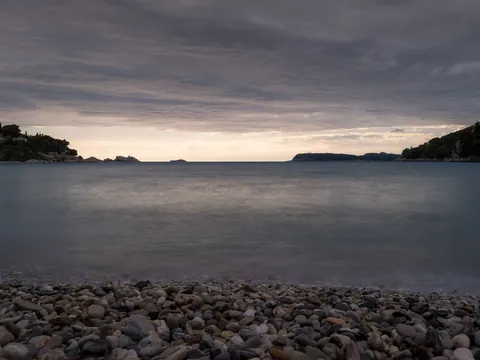 Lapad / Babin KukMid-range
Lapad — family hotel on the bay
The peninsula holds most of Dubrovnik's properties that genuinely sleep four in one room, and it pairs a pool with a swimmable cove and a flat pedestrian promenade — the only combination in the city that does not involve steps at every turn.
- Pools alongside shingle and pebble coves
- Flat car-free promenade with restaurants and playgrounds
- Frequent buses to the Pile gate on a flat fare
- Larger rooms and apartment-style units than the old town offers
Fitting a family in
Family rooms and connecting doubles are far more common here than inside the walls. Confirm the stated maximum occupancy rather than assuming a sofa bed, and check whether the quoted room faces the bay or the car park.
Watch out. The old town is a 15 to 25 minute bus ride each way, which adds up over a few days. Several hotels sit on the slope above the bay, so the walk back from the beach is a steep climb in the heat.
Check hotel prices — opens Klook in a new tab (affiliate link)Live availability for your dates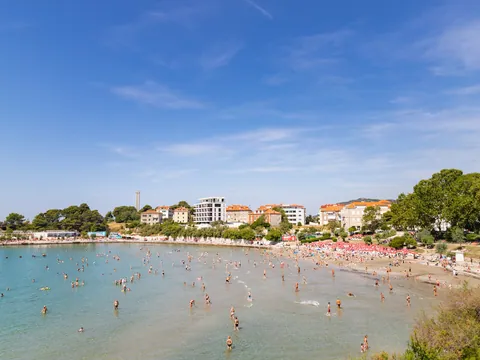 BačviceMid-range
Apartment above Bačvice bay
This is the only part of Split where the city's one shallow sandy beach and the Roman old town are both a walk away, which lets a family alternate sightseeing and swimming without a bus or a car on any day.
- Shallow sandy bay a few minutes downhill
- 10–15 minute walk to Diocletian's Palace and the ferry port
- Kitchens and washing machines in most units
- Local supermarkets and bakeries rather than tourist-priced cafés
Fitting a family in
Two-bedroom apartments in residential blocks are the norm and sleep four to five comfortably. Balconies are common; air conditioning is usually one unit in the living area rather than one per room, which matters in August.
Watch out. The bars directly behind the beach run very late in summer and the noise carries up the slope. Many blocks are walk-ups of three or four floors with no lift, and the return from the beach is uphill.
Check hotel prices — opens Klook in a new tab (affiliate link)Live availability for your dates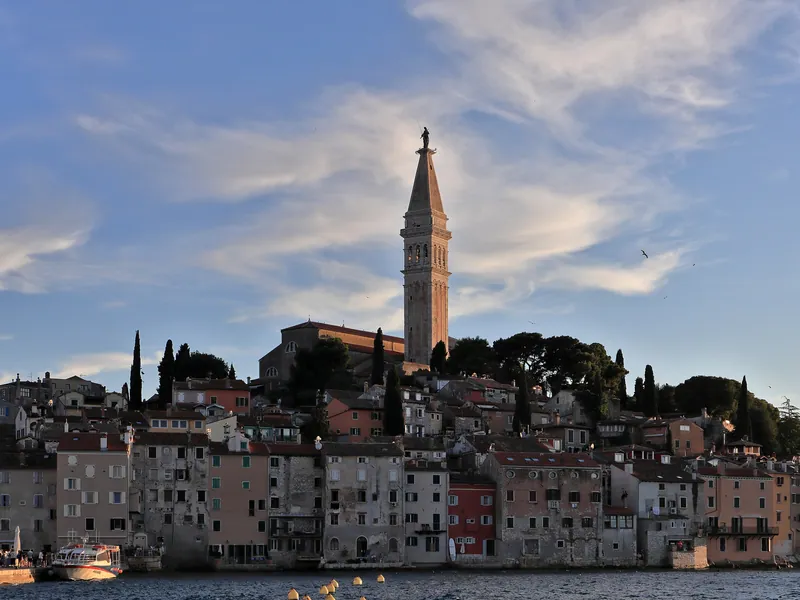 Zelena & Plava Laguna, PorečMid-range
Apartment village in the Poreč lagoon zone
These purpose-built complexes are the most self-contained family option in Croatia: pools, a waterpark, pine shade, playgrounds, flat paved paths and self-catering units inside one car-free area, so children can move around without an adult driving anywhere.
- Pool complexes and a large waterpark nearby
- Pine woodland shade over most of the site
- Flat paved coastal path for bikes and scooters
- Self-catering apartments with kitchens and terraces
Fitting a family in
One and two-bedroom apartments are the standard unit and sleep four to six. Sea-facing units cost noticeably more than the identical layout set back among the pines.
Watch out. The shoreline is rock slab and concrete bathing platform with ladders, not sand — the complexes are built around pools for a reason. The largest sites are a 30 to 40 minute walk or a shuttle ride from Poreč old town, so the atmosphere is resort rather than Croatian.
Check hotel prices — opens Klook in a new tab (affiliate link)Live availability for your dates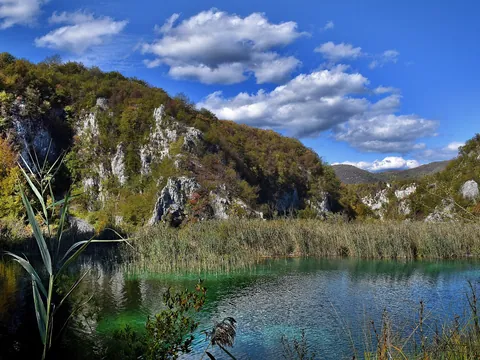 Entrance 2, Plitvička JezeraMid-range
Park-run hotel beside Entrance 2
Staying inside the park means walking to the gate for the first entry slot rather than driving in behind the coach groups, and half board matters in an area with very little else within reach after dark.
- Walking distance to Entrance 2 and the shuttle stop
- Half-board rates that remove the evening meal question
- Family rooms and connecting doubles
- Parking on site rather than the hourly park car parks
Fitting a family in
Family rooms and connecting doubles are standard, and a party of four normally fits without an extra bed. Triples are common, so confirm the fourth bed rather than assuming it.
Watch out. Rooms are dated and plain for the price, which is driven by location rather than comfort. Restaurants are canteen-style, busiest at fixed sittings, and there is nothing to do outside the park in the evening.
Check hotel prices — opens Klook in a new tab (affiliate link)Live availability for your dates
Some links on this page are affiliate links. If you book through one, the price is the same for you and we may earn a commission. How this works.
Top family attractions in Croatia
What each one costs, how long it takes, which ages it suits and whether you need to book ahead.
 Culture
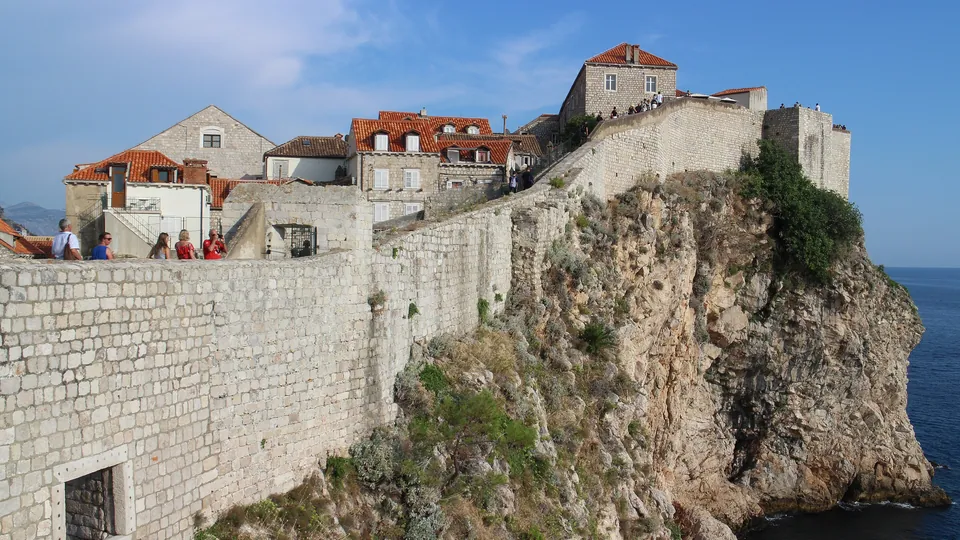
Dubrovnik city walls
Dubrovnik
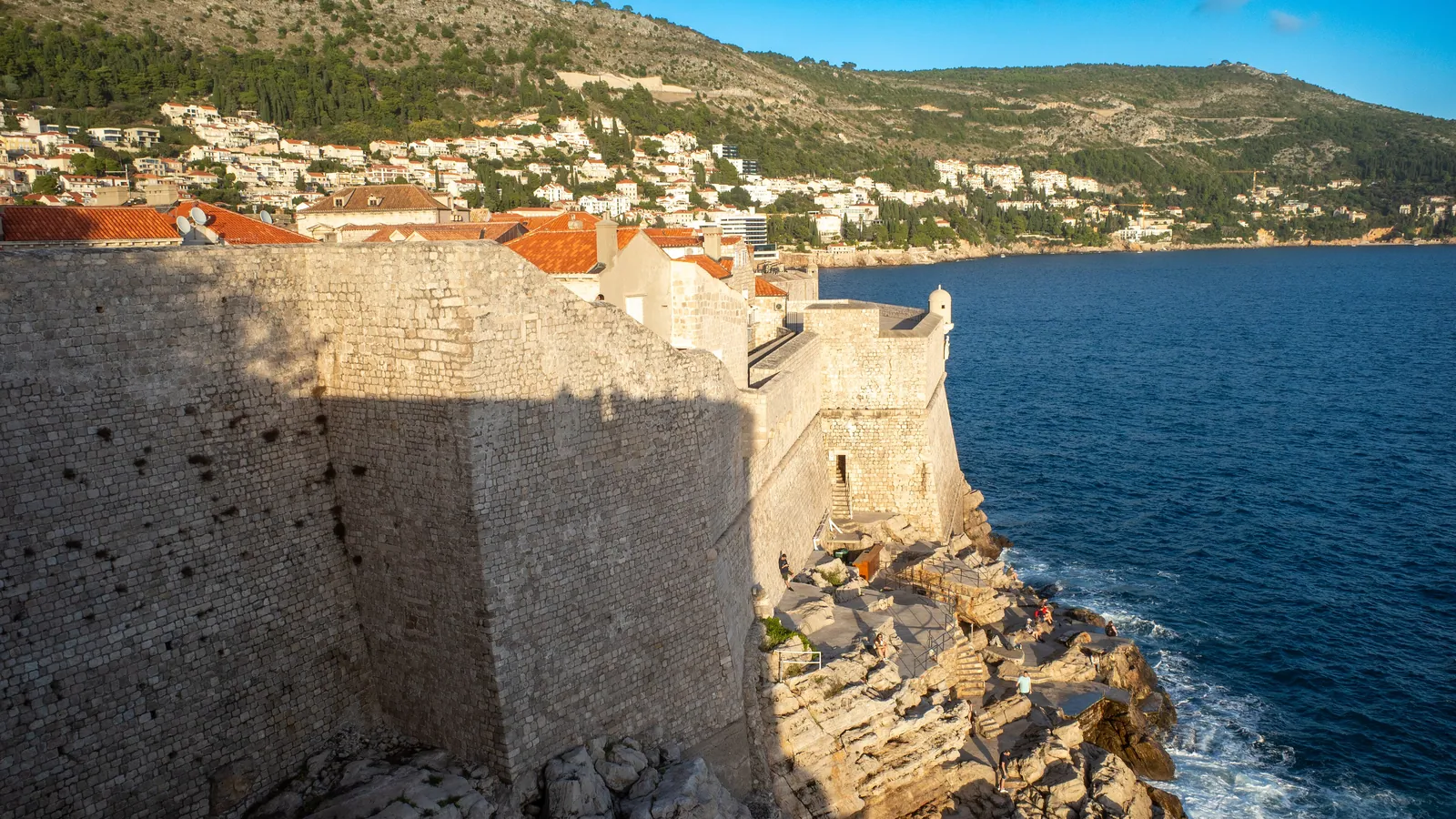
An intact circuit of defensive walls around the old town, walked as a raised loop roughly two kilometres long with views down onto rooftops, the harbour and the sea. The ticket normally also covers the separate Fort Lovrijenac across the bay.
- Ages
- 5–16
- Time
- 2h
- Adult, from
- €35
Good to know. Repeated flights of steep, uneven stone steps and almost no shade on the seaward side. Sections are one-way, so there is no turning back once committed, and pushchairs cannot be taken up at all. Queues build at the Pile gate entrance through the middle of the morning.
 Nature
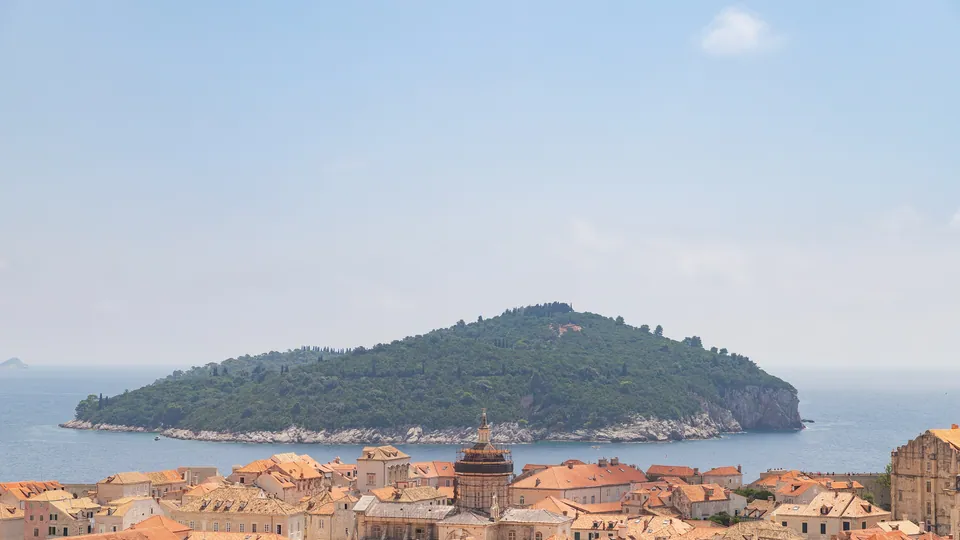
Lokrum island
Dubrovnik
A wooded island a short boat ride from the old port, with botanical gardens, free-roaming peacocks and rabbits, shaded paths and a small shallow saltwater lake that is the calmest swimming near the city.
- Ages
- 3–16
- Time
- 4h
- Adult, from
- €27
Good to know. Boats stop running in the evening and nobody may stay overnight, so the last sailing is a hard deadline. Sea entry is off rock with ladders rather than a beach, which makes water shoes necessary, and the peacocks approach food aggressively enough to upset small children.
 Culture
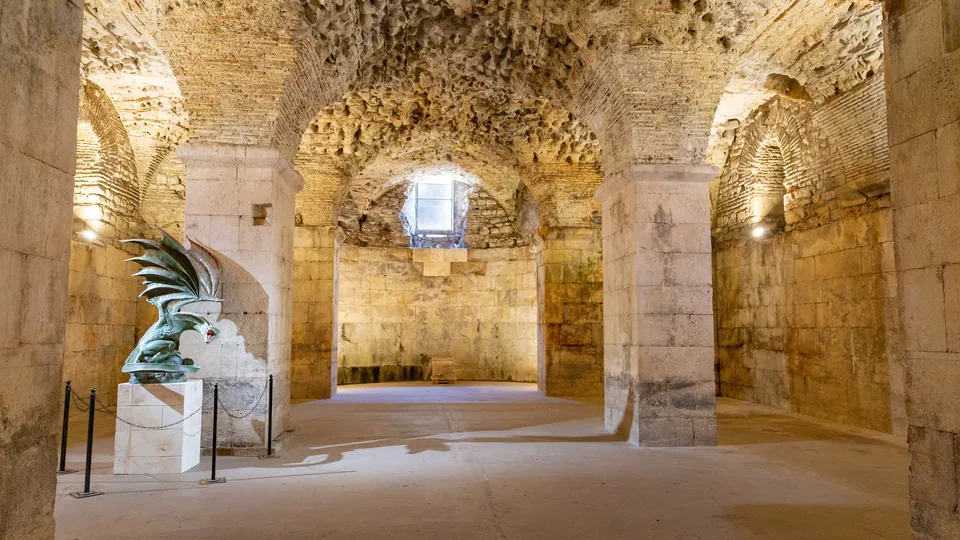
Diocletian's Palace & cellars
Split
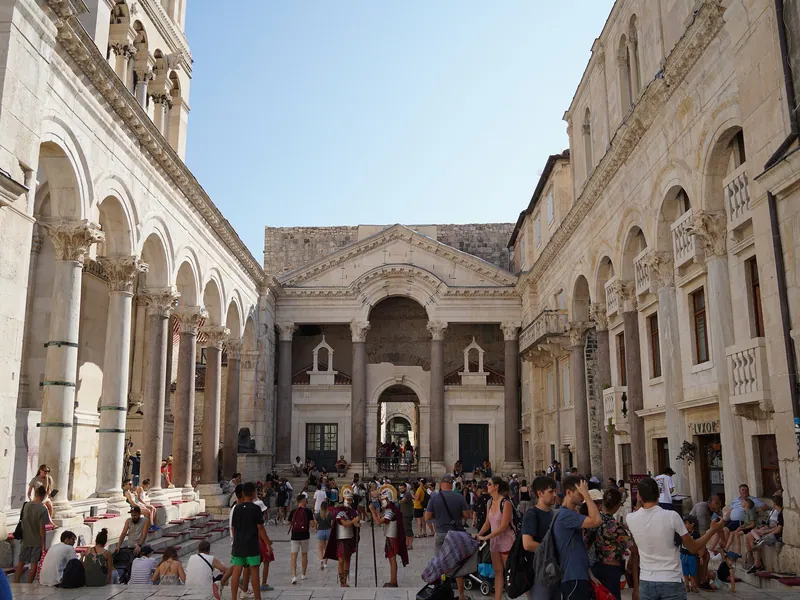
A late-Roman imperial palace that became the centre of the city, with lanes, squares and gates that are ordinary public streets. The vaulted substructures beneath it are ticketed and give the clearest sense of the original floor plan.
- Ages
- 5–16
- Time
- 2h 30m
- Adult, from
- €10
Good to know. The limestone paving is polished smooth and becomes slippery when wet. The lanes are a maze in which small children lose sight of adults quickly, and the bell tower climb beside the cathedral is a steep open staircase not suited to young children or anyone uneasy with heights.
 NatureBook ahead
Krka National Park
Split
A waterfall park about an hour north of Split, centred on the wide terraced cascades of Skradinski Buk, with a boardwalk loop, restored watermills and a boat approach from the town of Skradin.
- Ages
- 4–16
- Time
- 6h
- Adult, from
- €40
Good to know. Swimming below the falls has been banned since 2021, so this is a walking visit — families expecting a bathing day are the ones disappointed. The boardwalk loop has steps and little shade in places, and entry prices swing sharply between peak and shoulder season.
 Culture
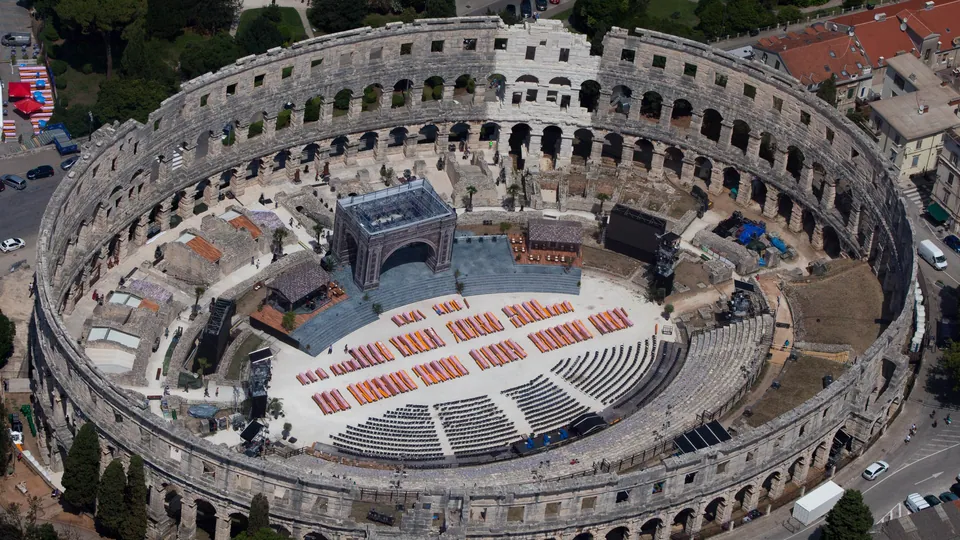
Pula Arena
Istria
A Roman amphitheatre on the edge of Pula harbour, among the most complete anywhere, with its full outer ring of arches standing. Underground chambers below the arena floor hold a small exhibition on Roman oil and wine production.
- Ages
- 4–16
- Time
- 1h 15m
- Adult, from
- €15
Good to know. The arena floor is uneven original stone with no shade whatsoever, which makes the middle of a July day hard work. Sections close on concert days, and the underground passages are narrow and dimly lit.
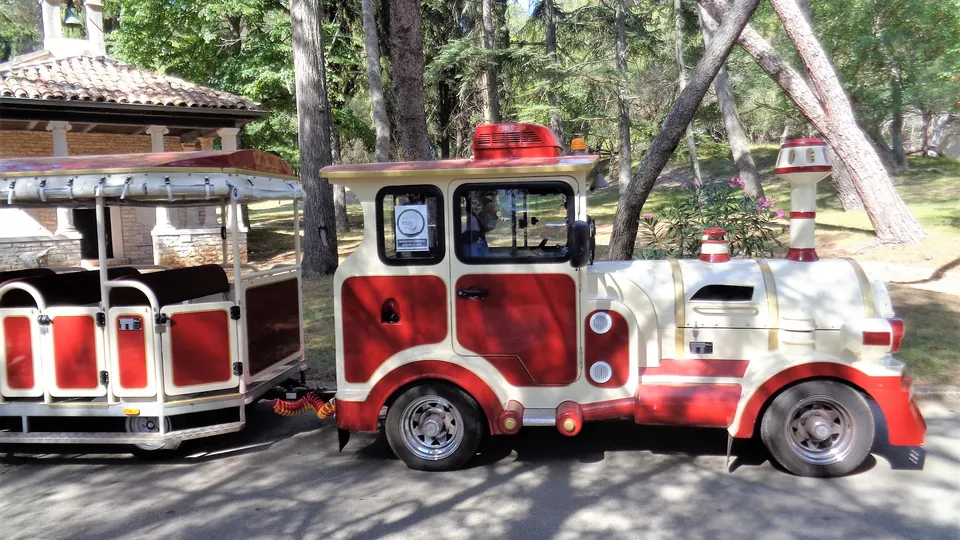 NatureBook ahead
Brijuni National Park
Istria
An archipelago reached by boat from Fažana, toured by open tourist train past a safari park of animals descended from diplomatic gifts, Roman remains and a set of preserved dinosaur footprints on the shoreline.
- Ages
- 4–14
- Time
- 4h 30m
- Adult, from
- €35
Good to know. Access is only by the official boat at fixed sailings, so the return time is fixed too and a tired child cannot leave early. The train tour keeps to a set route with limited shade, and summer sailings need booking ahead.
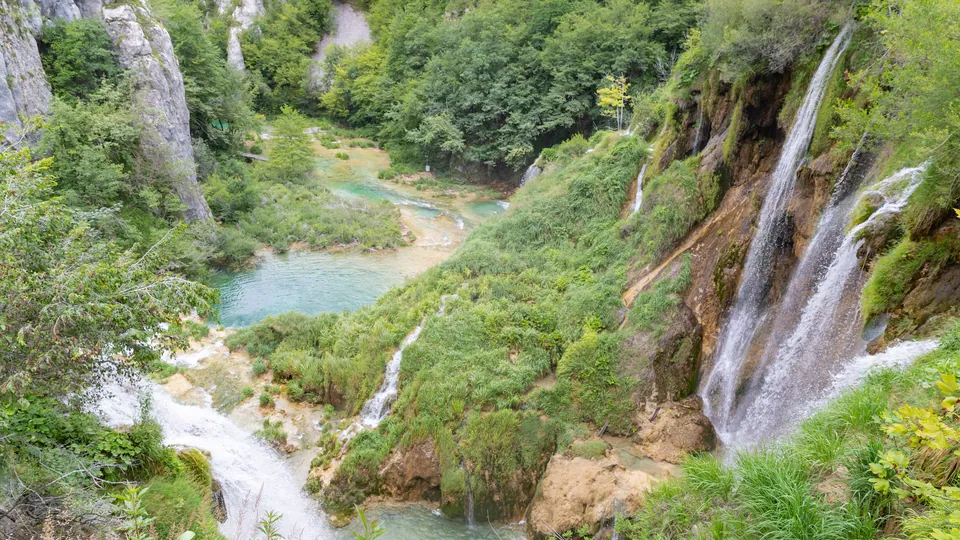 NatureBook ahead
Lower lakes & Veliki Slap
Plitvice Lakes
The shorter of the park's two lake systems, running down a canyon on boardwalks past a chain of cascades to Veliki Slap, the tallest waterfall in Croatia, with a viewing point above the gorge.
- Ages
- 4–16
- Time
- 3h
- Adult, from
- €40
Good to know. Boardwalks run directly over open water with no handrail in long stretches, and the return from the canyon floor is a sustained climb or a queue for the shuttle. Surfaces are wet and slippery near the falls, and pushchairs cannot be used.
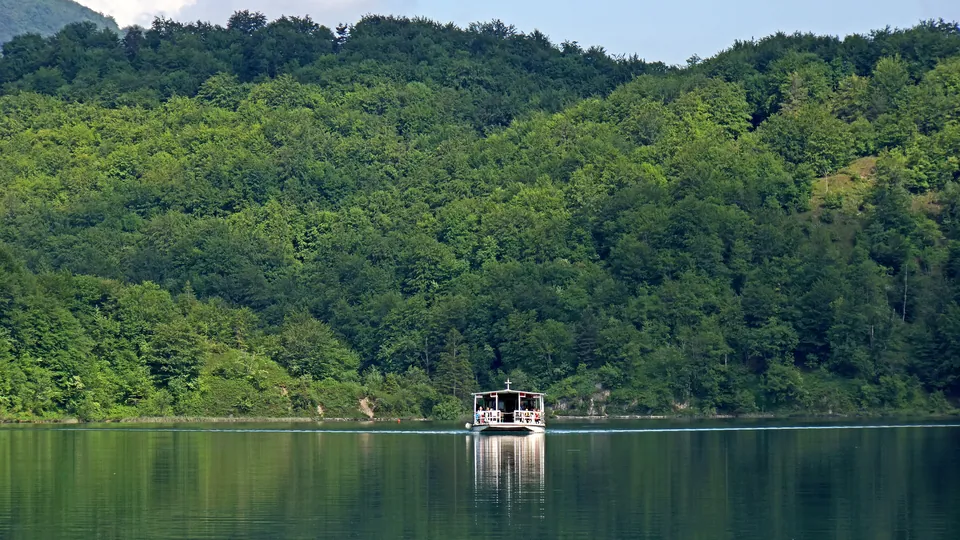 NatureBook ahead
Upper lakes & the Kozjak boat
Plitvice Lakes
The larger lake system, walked on boardwalks between terraced pools and linked to the rest of the park by an electric boat across Lake Kozjak. Both the boat and the panoramic shuttle buses are covered by the park ticket.
- Ages
- 5–16
- Time
- 5h
- Adult, from
- €40
Good to know. This is the same park ticket as the lower lakes rather than an additional charge, and the peak-season price is several times the winter one. Queues for the boat and shuttle are worst in the middle of the day and exposed to sun, the full circuit is five hours or more at a family pace with few places to cut it short, and the boardwalks are unfenced in places.
Some links on this page are affiliate links. If you book through one, the price is the same for you and we may earn a commission. How this works.
Getting around Croatia
The A1 motorway runs inland from Zagreb to Dalmatia and is fast and tolled; the old coastal road is far more scenic and far slower, with switchbacks that do not suit anyone prone to car sickness. The Pelješac Bridge, open since 2022, connects Dubrovnik to the rest of the country without the Bosnian border crossing that used to sit in the middle of the drive. Intercity coaches are the workhorse and reach every coastal town; trains are limited and do not run south of Split at all. Jadrolinija car ferries and passenger catamarans link the islands, with the catamarans faster, foot-passenger only, and prone to selling out in summer.
Do you need a rental car?
Moderate driving. Dubrovnik and Split work better without one — both old towns are closed to traffic and parking is expensive. A car is close to mandatory for Istria's hill towns and for reaching Plitvice, and it is what turns a two-base trip into a route. Most families rent for the inland and Istrian portion only.
What Croatia costs with a family
Typical daily spend for a family of four, excluding flights. Accommodation, food, local transport and one paid activity a day.
€
€130
Budget · per day, family of four
€€
€240
Mid-range · per day, family of four
€€€
€430
Higher-end · per day, family of four
Planning estimates based on published prices at the time of writing, in shoulder season. Peak months, school holidays and city-centre accommodation all push the figure higher.
Food in Croatia
Coastal menus lean Italian: pizza, pasta and risotto are everywhere alongside grilled fish, ćevapi and slow-cooked meat. Konoba taverns serve large shareable plates, which works well with children who want to try rather than commit. Two things surprise visitors: fresh fish is priced by the kilogram rather than per portion, so a whole fish for the table needs asking about before ordering, and peka — meat or octopus baked under an iron bell — has to be ordered several hours ahead. Dinner starts earlier than in Spain or Italy, from around 19:00, which suits families with young children.
Practical tips for Croatia
The things that are easy to get wrong and expensive to fix once you have arrived.
Packing
Pack water shoes before anything else
Croatian beaches are pebble, shingle or bare rock slab, and rocky entries can hold sea urchins. Rubber-soled water shoes turn a painful hobble into a normal swim and are the single most useful thing to bring. Buy them at home — coastal shops charge a premium in August and rarely stock small sizes late in the season.
Money & costs
The currency is the euro, not the kuna
Croatia adopted the euro in January 2023, so any guide, menu photo or price list quoting kuna is out of date. Cards are accepted almost everywhere, but small taverns, beach bars, parking machines and island ferry kiosks are more reliably cash.
Getting around
Never put an island crossing on a flight day
Catamarans are foot-passenger only and sell out days ahead in summer; car ferries carry more and cancel less. A strong bura wind can suspend sailings at short notice and occasionally closes exposed bridges to high-sided vehicles, so leave a night on the mainland before any flight home.
Getting around
Rent the car for part of the trip, not all of it
A car parked in Dubrovnik or Split costs money every day and is used on none of them. Picking it up when leaving the coast for Plitvice, Krka or Istria, and dropping it before the final city, usually saves more than the one-way fee costs.
Health & safety
Treat shade as the scarce resource
Stone old towns and pebble beaches both reflect heat and offer little natural cover, and rented umbrellas run out early on busy beaches. Front-load sightseeing to the morning, keep the middle of the day for water or indoors, and carry more drinking water than seems necessary.
Staying connected
Check whether roaming already covers it
Croatia is in the EU, so EU and UK mobile plans with roaming bundles usually work without any action. An eSIM is worth arranging in advance only for families travelling from outside that zone, where ferry timetables and maps are otherwise an expensive lookup.
Some links on this page are affiliate links. If you book through one, the price is the same for you and we may earn a commission. How this works.
Croatia with kids: common questions
Are Croatia's beaches sandy?
Almost none of them. The coast is pebble, shingle and rock slab, with a handful of genuinely sandy exceptions such as Bačvice in Split. Water shoes are close to essential, and a lightweight mat or thick towel makes lying on pebbles workable.
Is Croatia good for toddlers?
The sea suits them — calm, clear and shallow at the shore — but the ground does not. Pebble beaches are hard to crawl on, old towns are stepped and cobbled, and Plitvice's boardwalks rule out a pushchair. Istria's resort zones, with pools and flat promenades, are the easiest part of the country with under-fives.
Do you need a car in Croatia?
Not in Dubrovnik or Split, where the old towns are pedestrian and parking is expensive. A car is close to mandatory for Istria's hill towns and for reaching Plitvice on your own schedule. Renting for the inland leg only is the usual compromise.
When is the best time to visit Croatia with kids?
June and September. The sea is warm, the walled towns are bearable in the middle of the day, and prices sit below the August peak. July and August deliver the warmest water but also the fullest ferries, the longest queues and the highest accommodation rates of the year.
How long should a first family trip to Croatia be?
Seven to twelve days. A week covers one coastal base plus a national park comfortably. Ten to twelve allows two bases and a park without a long drive on more than one or two days — the country is long and thin, so combining Istria with Dubrovnik in a single week means spending most of it in the car.
Is the sea safe for children who are nervous swimmers?
Generally yes. The Adriatic has very little surf, almost no tide and exceptional visibility, so children can see the bottom and find their footing. The real hazards are the sharp entry underfoot, sea urchins on rocky bottoms, and beaches that drop off quickly a few metres out.
Other destinations to compare
Every guide answers the same questions in the same order, so two countries take five minutes to compare rather than five evenings.
- Japan with Kids: Itineraries, Where to Stay & When to GoCulture, nature & adventure
- Italy with Kids: Itineraries, Where to Stay & When to GoMountains, lakes & cities
- Austria with Kids: Itineraries, Where to Stay & When to GoAlps, lakes & charming towns
- Cyprus with Kids: Itineraries, Where to Stay & When to GoSun, sea & family resorts