Skip to content

Istria with Kids

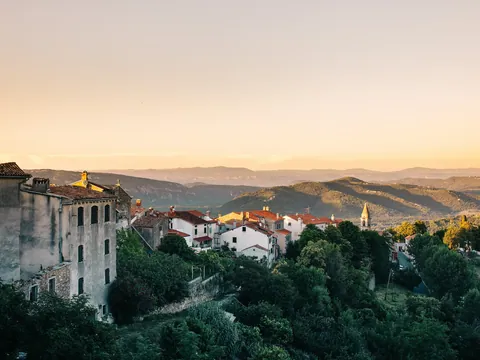
Istria is the heart-shaped peninsula at the top of the Adriatic, closer to Venice than to Dubrovnik and visibly shaped by it — bilingual signs, pasta and truffles on the menus, and Venetian bell towers above the harbours. It is the most family-engineered part of Croatia: pine-shaded resort zones around Poreč and Vrsar with pools, waterparks and flat cycle paths, a well-preserved Roman amphitheatre in Pula, and hill towns inland that are small enough to finish before anyone complains. Two honest caveats: the shoreline here is mostly rock slab and concrete bathing platforms with ladders rather than beach, and the region is spread out enough that without a car a family sees the resort and little else.

Best for ages
2+
Suggested stay
4–7 days
Best months
May–Jun, Sep–Oct
Daily budget
€220

Mid-range, family of four

Why Istria works with children

  • Resort zones designed around children

    The lagoon complexes near Poreč combine pools, waterparks, pine shade and self-catering apartments in one walkable area.

  • Roman history in a single hour

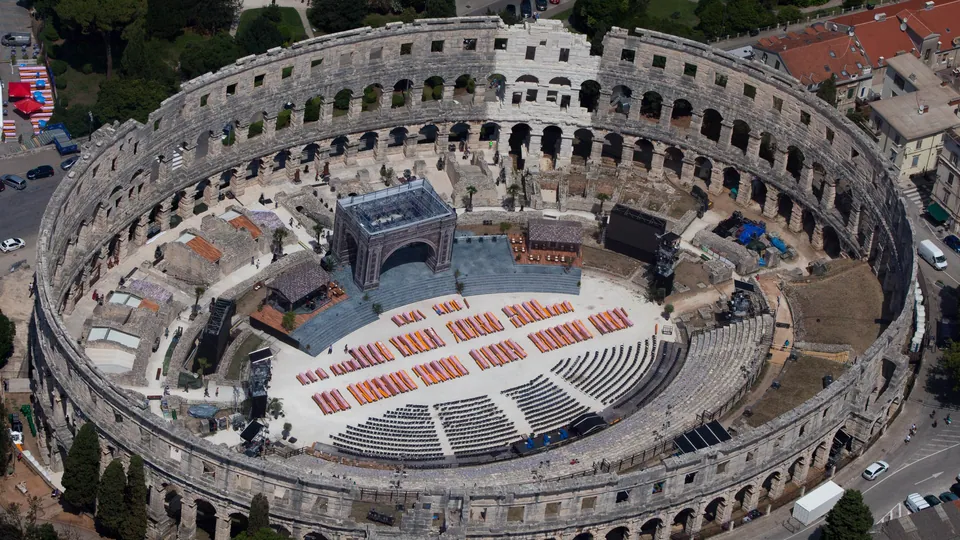
    Pula's amphitheatre is one of the best preserved anywhere and can be walked round in under an hour without a guide.

  • Flat cycling on an old railway

    The Parenzana rail trail runs inland on a disused line with gentle gradients, which suits family bikes far better than the coast road.

  • Menus cautious eaters recognise

    Pasta, pizza and gnocchi sit beside the truffle and seafood dishes on essentially every Istrian menu.

Where to stay

Best areas in Istria for families

4 areas cover most trips here; the difference is mainly resort holidays with young children versus pool villas and cooler nights.
  • Poreč lagoon zone (Zelena & Plava Laguna)

    Best for resort holidays with young children

    Purpose-built complexes in pine woodland with pools, a waterpark, apartment villages and a paved coastal path. The most self-contained option in Croatia, and the least Croatian-feeling.

  • Rovinj

    Best for atmosphere with a beach nearby

    A dense Venetian old town on a headland, with the Zlatni Rt pine park and its bathing rocks a walk to the south. Steep polished lanes and the highest prices in Istria.

  • Pula & Medulin

    Best for sightseeing plus shallow water

    The Roman city at the peninsula's tip, with the shallow, sheltered bays around Medulin a short drive on. Busier and more built-up than the west coast.

  • Central Istria (Motovun & Grožnjan)

    Best for pool villas and cooler nights

    Hilltop stone villages surrounded by vineyards and truffle woods, with rental houses that usually have a private pool. A car is mandatory and the coast is thirty to fifty minutes away.

Family hotel picks in Istria

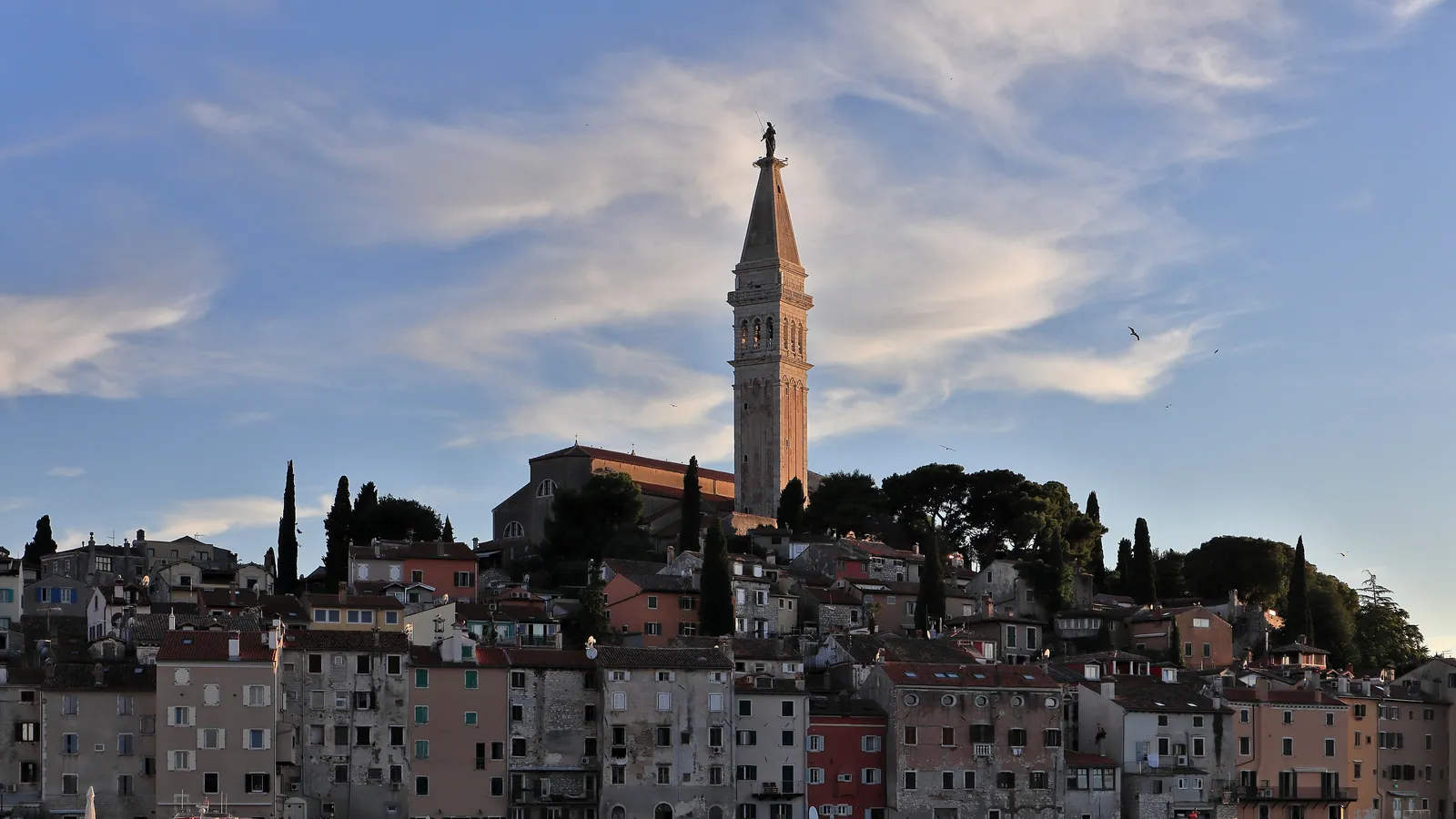
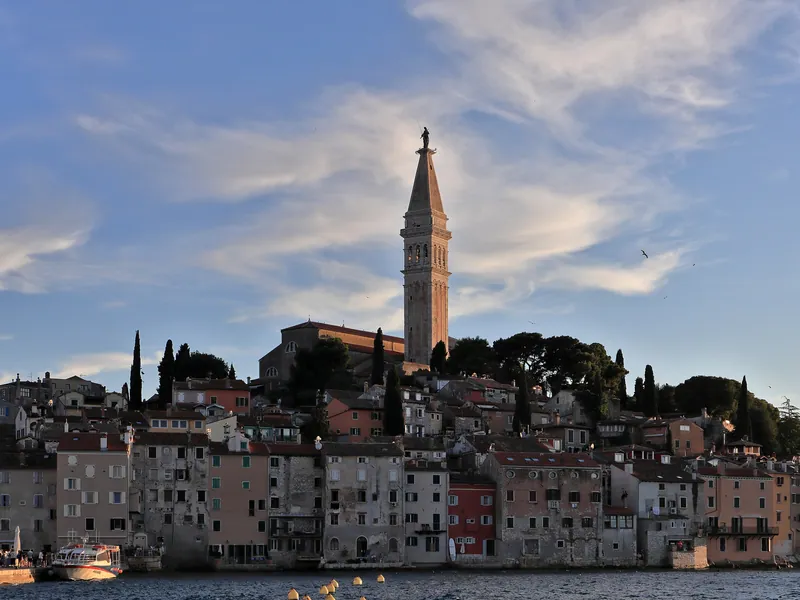
  • A church tower above the pastel houses of Rovinj on the Istrian coast
    Zelena & Plava Laguna, PorečMid-range

    Apartment village in the Poreč lagoon zone

    These purpose-built complexes are the most self-contained family option in Croatia: pools, a waterpark, pine shade, playgrounds, flat paved paths and self-catering units inside one car-free area, so children can move around without an adult driving anywhere.

    • Pool complexes and a large waterpark nearby
    • Pine woodland shade over most of the site
    • Flat paved coastal path for bikes and scooters
    • Self-catering apartments with kitchens and terraces

    Fitting a family in

    One and two-bedroom apartments are the standard unit and sleep four to six. Sea-facing units cost noticeably more than the identical layout set back among the pines.

    Watch out. The shoreline is rock slab and concrete bathing platform with ladders, not sand — the complexes are built around pools for a reason. The largest sites are a 30 to 40 minute walk or a shuttle ride from Poreč old town, so the atmosphere is resort rather than Croatian.

  • Stone house with a pool in the Istrian hinterland
    Central Istria (Motovun & Grožnjan area)Mid-range

    Stone house with a pool in the Istrian hinterland

    A private pool solves the problem the Istrian coast creates: children who want to jump straight into water rather than climb down a ladder onto rock. Inland houses also cost less than the coast in August and cool down properly at night.

    • Private pool and enclosed garden
    • Full kitchen and outdoor dining space
    • Parking at the door, with the hill towns 15–30 minutes away
    • Quiet enough for early bedtimes

    Fitting a family in

    Restored houses typically have three or four bedrooms and take a large family or two families, which is what brings the per-person cost down.

    Watch out. A car is mandatory and the access roads are narrow, winding and sometimes unsurfaced for the last stretch. The nearest beach is 30 to 50 minutes away, and shops and restaurants usually mean a drive, so the food shop has to be planned rather than improvised.

All family stays in Croatia

Some links on this page are affiliate links. If you book through one, the price is the same for you and we may earn a commission. How this works.

Things to do in Istria with kids

  • Pula Arena
    Culture

    Pula Arena

    Istria

    A Roman amphitheatre on the edge of Pula harbour, among the most complete anywhere, with its full outer ring of arches standing. Underground chambers below the arena floor hold a small exhibition on Roman oil and wine production.

    Ages
    4–16
    Time
    1h 15m
    Adult, from
    €15

    Good to know. The arena floor is uneven original stone with no shade whatsoever, which makes the middle of a July day hard work. Sections close on concert days, and the underground passages are narrow and dimly lit.

  • Brijuni National Park
    NatureBook ahead

    Brijuni National Park

    Istria

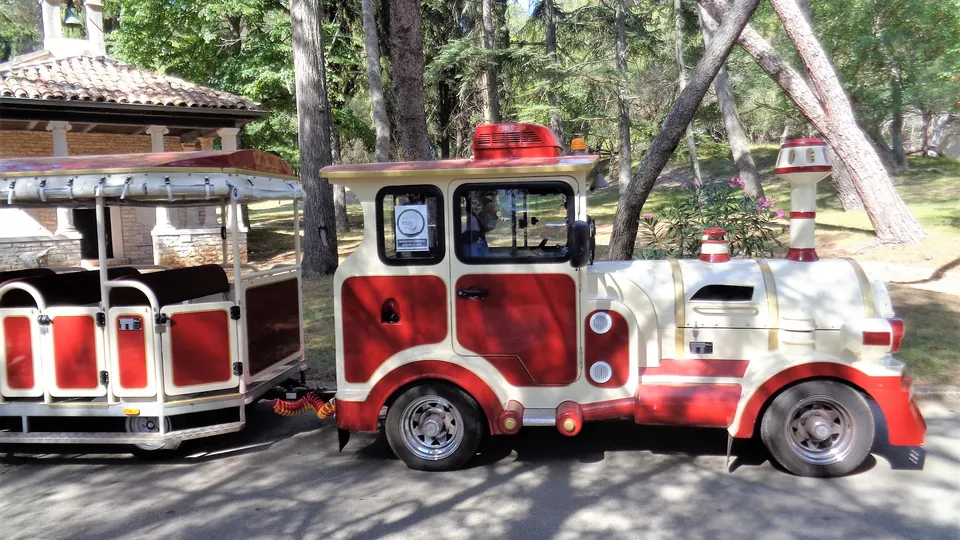
    An archipelago reached by boat from Fažana, toured by open tourist train past a safari park of animals descended from diplomatic gifts, Roman remains and a set of preserved dinosaur footprints on the shoreline.

    Ages
    4–14
    Time
    4h 30m
    Adult, from
    €35

    Good to know. Access is only by the official boat at fixed sailings, so the return time is fixed too and a tired child cannot leave early. The train tour keeps to a set route with limited shade, and summer sailings need booking ahead.

  • Rovinj old town & St Euphemia
    City

    Rovinj old town & St Euphemia

    Istria

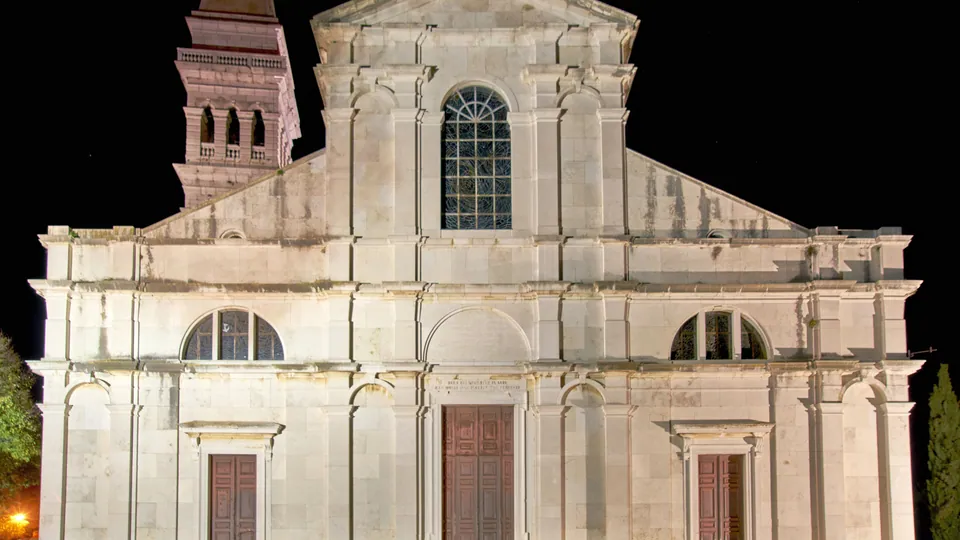
    A Venetian fishing town packed onto a small headland, with lanes climbing to a baroque church whose bell tower is the landmark of the whole coast. The streets and the harbour are free to walk; the tower charges a small separate entry.

    Ages
    4–16
    Time
    2h
    Adult, from
    Free

    Good to know. The lanes are steep and the stone is polished slippery, which is awkward with a pushchair and worse in the wet. The bell tower is a tall, steep wooden staircase with open treads and is not suitable for young children or anyone uneasy with heights.

Some links on this page are affiliate links. If you book through one, the price is the same for you and we may earn a commission. How this works.

Getting around Istria

A car is effectively required: the ipsilon motorway spine crosses the peninsula quickly, but the hill towns and the smaller bays have thin bus service outside July and August. Old-town centres in Rovinj, Poreč and Motovun are closed to traffic with paid car parks on the edge, and Motovun's involves a steep climb or a shuttle from below. Tourist road-trains and shuttle boats link the larger Poreč and Rovinj resort zones to their town centres, which is worth checking before deciding a complex is within walking distance.

Istria tips for families

  • With kids

    A waterpark day covers the rocky-beach gap

    Istria's bathing areas are largely rock and concrete platform, which some children take to and others refuse. The large waterpark near Poreč and the hotel pool complexes are what rescue a week for a child who wants to run into the water rather than climb down a ladder.

  • Getting around

    Park on the edge and walk in

    Every Istrian old town worth visiting is pedestrian, with paid parking outside the gate that fills by late morning in summer. Arriving before the middle of the day, or after four, is the difference between a five-minute walk and a twenty-minute one in full sun.

  • When to go

    One hill town per day is enough

    Motovun, Grožnjan and Hum are each an hour of steep cobbles and a viewpoint. Stringing three together in a day produces the same afternoon in three villages and a car full of complaints; pairing one with a river, a cave or a pool works far better.

  • Culture & etiquette

    Menus and signs are bilingual for a reason

    Istria has an official Italian-speaking minority, and place names appear in both languages — Poreč and Parenzo, Rovinj and Rovigno, Pula and Pola. Booking systems and road signs use both, which occasionally makes two names look like two destinations.

Istria with kids: common questions

Is Istria good for toddlers?
It is the easiest part of Croatia for under-fives. The resort zones have pools, shade, flat paths and apartments with kitchens, which solves most of what makes the rest of the coast hard work. The sea entries are still rock and ladder rather than sand.
Do you need a car in Istria?
For anything beyond a single resort, yes. Bus service between the coastal towns thins out sharply outside July and August, and the hill towns and inland attractions are barely served at all. A resort-only week can be done without one.
How many days is enough in Istria?
Four to seven. Four covers a resort base, Pula and one hill town. A full week allows Brijuni, a cave or waterpark day and time to do nothing, which is the point of this part of the country.
Are there sandy beaches in Istria?
Very few. The west coast is rock slab, concrete bathing platforms with ladders, and some shingle. The shallow bays around Medulin at the southern tip come closest to what most families picture, and water shoes remain the right call everywhere.