Skip to content

Lisbon with Kids

Lisbon is a low-rise capital spread across steep hills above a river so wide it reads as the sea, with a flat 18th-century grid at the bottom and viewpoints at the top of almost every climb. It works with children because the distances are short, the metro is cheap and the city's set pieces are outdoors — castle walls, riverside squares, a cable car, a series of funiculars that exist purely to save people the hill. The trade-off is that terrain: the calçada portuguesa paving is polished limestone that is slippery in rain and punishing for small pushchair wheels, and the famous Tram 28 in summer is a 40-minute queue followed by a standing-room ride with the city's most active pickpockets on board.

Best for ages
2+
Suggested stay
3–4 days
Best months
Mar–Jun, Sep–Oct
Daily budget
€230

Mid-range, family of four

Why Lisbon works with children

  • Funiculars and lifts do the climbing

    The Glória, Bica and Lavra funiculars and the Santa Justa lift are part of the ordinary transport network, so the steepest ascents can be ridden rather than walked.

  • One entirely flat district

    Parque das Nações is modern, level and step-free end to end, with the aquarium, a cable car, playgrounds and a river promenade — the reset day after two days of hills.

  • Cheap food children actually eat

    Grilled chicken houses, bread and soup at tascas, and market food halls where four people can each choose something different.

  • A long mild season

    Comfortable sightseeing weather from March to late October, and winters mild enough that outdoor days still work.

Where to stay

Best areas in Lisbon for families

4 areas cover most trips here; the difference is mainly a first visit with no car versus slow mornings by the river.
  • Baixa & Chiado

    Best for a first visit with no car

    The flat grid between the castle hill and Chiado, with every metro line, the trams and the riverside square within a few minutes' walk. Busy and touristed, and weekend nights are loud towards Cais do Sodré.

  • Príncipe Real & Avenida da Liberdade

    Best for more space and a quieter night

    Larger apartments and hotel rooms, a garden square with a playground and kiosks, metro at Rato or Avenida. The walk into town is downhill, which means the walk back is not.

  • Parque das Nações

    Best for young children and step-free days

    A modern riverside district built for the 1998 expo: wide level promenades, the Oceanário, a cable car and a shopping centre for wet days. About 20 minutes by metro from the centre, with little old-Lisbon atmosphere in the evening.

  • Belém

    Best for slow mornings by the river

    Monuments, lawns, the coach museum and the original pastry shop, all on flat ground by the water. Quiet after dark, and the tram in from the centre is crowded for most of the day.

Family hotel picks in Lisbon

  • Apartment in the Baixa grid
    Baixa / ChiadoMid-range

    Apartment in the Baixa grid

    The Baixa grid is the only genuinely flat part of central Lisbon, which matters more here than in most cities. A two-bedroom apartment costs less than two hotel rooms, adds a kitchen and a washing machine, and puts every metro line, the trams and the riverside square within a few minutes on level ground.

    • Kitchen and washing machine
    • Flat walking to metro, trams and the river
    • Supermarkets and markets at street level
    • Two separate bedrooms rather than one shared room

    Fitting a family in

    Two-bedroom units sleep four to five without a rollaway. Confirm whether the second bedroom has a real window — interior rooms are common in these 18th-century blocks.

    Watch out. The buildings are old: lifts are small, slow or absent altogether, and a fourth-floor walk-up is a different holiday with a pushchair. Weekend nights are noisy towards Cais do Sodré, and street-facing rooms hear it.

  • Family room in Parque das Nações
    Parque das NaçõesMid-range

    Family room in Parque das Nações

    The one district in Lisbon where a day with a pushchair or a tired toddler needs no planning at all: level ground everywhere, wide promenades, the aquarium and a cable car on the doorstep, and a shopping centre to retreat into when it rains.

    • Step-free throughout the district
    • Oceanário, science museum and playgrounds within walking distance
    • Metro to the centre in about 20 minutes
    • Direct rail and metro links to the airport side of the city

    Fitting a family in

    Modern builds here have more true family rooms and connecting doubles than the old centre, where a 'family room' is often a double with a sofa bed squeezed in.

    Watch out. It is a modern business and conference district with little of the atmosphere people come to Lisbon for, and it empties in the evening. Expect to commute in for dinner most nights.

All family stays in Portugal

Some links on this page are affiliate links. If you book through one, the price is the same for you and we may earn a commission. How this works.

Things to do in Lisbon with kids

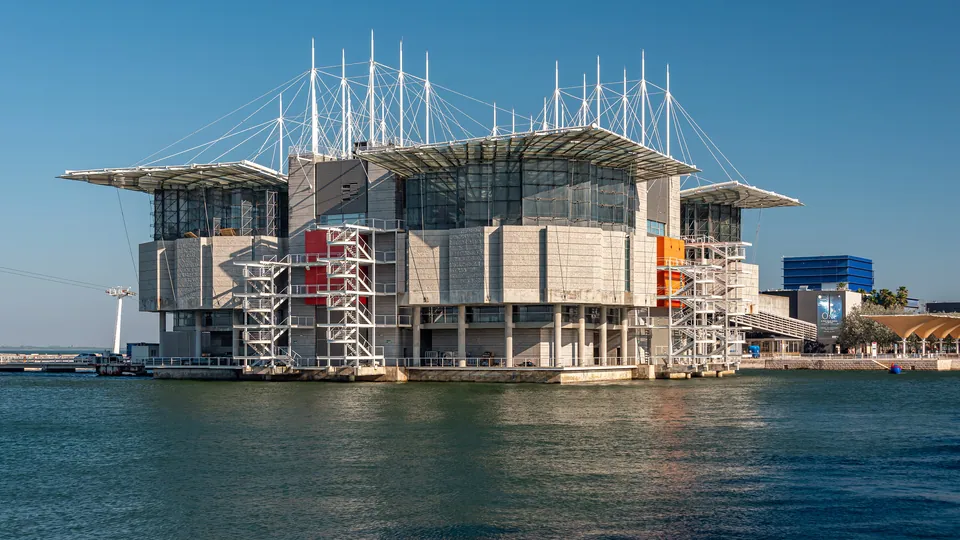
  • Oceanário de Lisboa
    AnimalsBook ahead

    Oceanário de Lisboa

    Lisbon

    One of Europe's largest aquariums, built around a single vast central tank that is visible from two levels, with themed habitats arranged around it. Entry is by timed slot and the whole route is step-free.

    Ages
    2–14
    Time
    2h 30m
    Adult, from
    €25

    Good to know. The busiest slots are late morning at weekends and on any rainy day. The route is a one-way spiral, so backtracking to a tank a child wants to see again means walking the loop; the darker habitat rooms can unsettle toddlers.

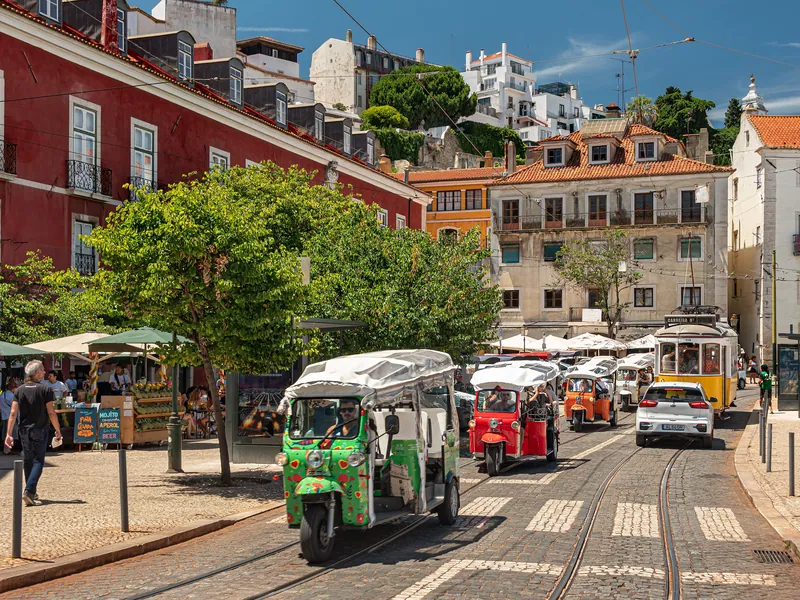
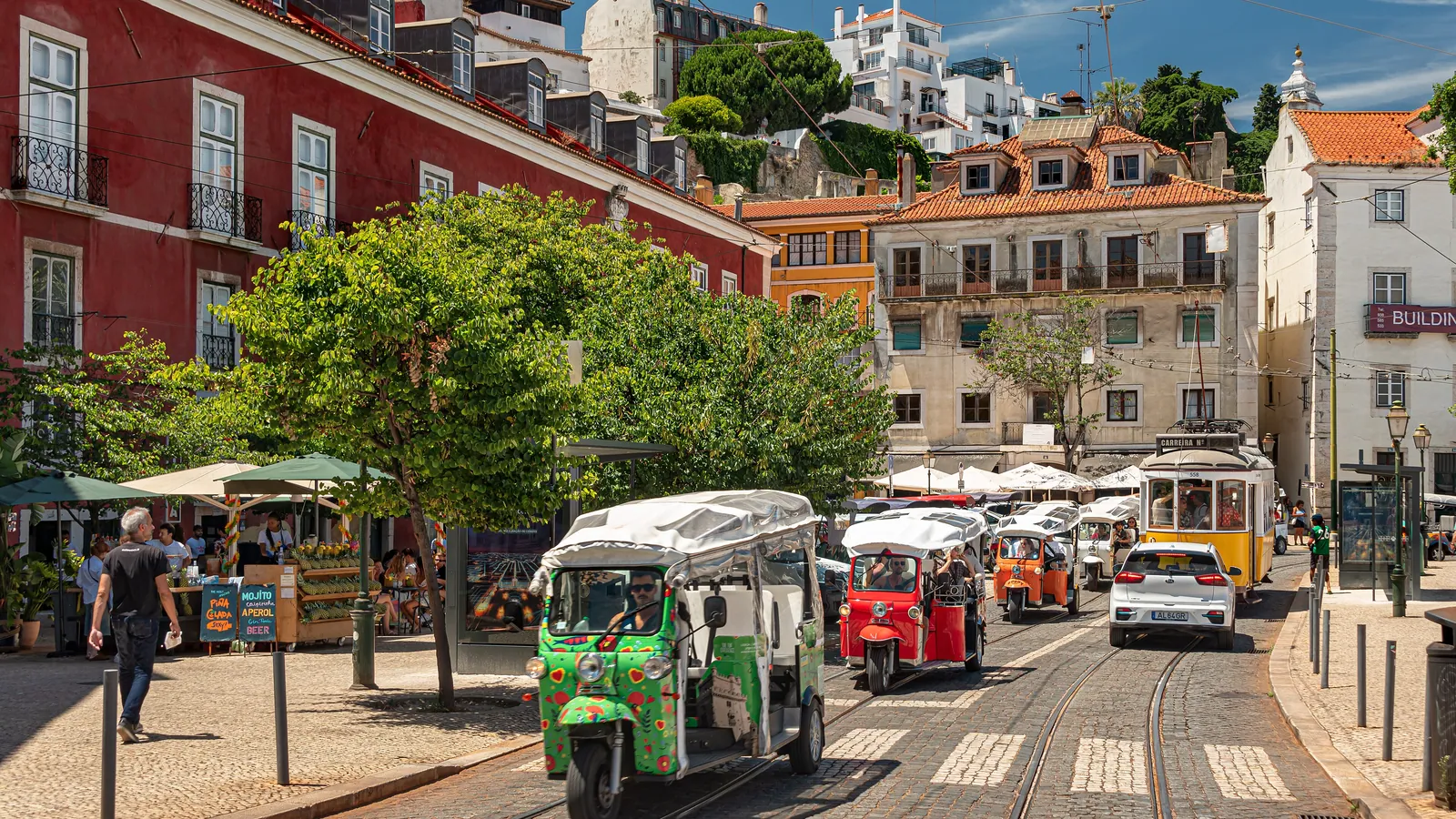
  • A yellow tram climbing a narrow street in the Alfama district of Lisbon
    City

    Tram 28 and the Alfama hills

    Lisbon

    A working wooden tram on a 1930s route that climbs through Alfama, Graça and the Estrela district on streets too narrow for buses. It is public transport rather than a tourist service, covered by an ordinary Viva Viagem fare.

    Ages
    4–16
    Time
    1h
    Adult, from
    €3

    Good to know. From mid-morning in season the queue at Martim Moniz is long and the tram is standing-room only, with no space for a pushchair and a known pickpocket problem. Boarding at the Graça end in the opposite direction avoids most of both.

  • Castelo de São Jorge
    CultureBook ahead

    Castelo de São Jorge

    Lisbon

    A hilltop Moorish castle with walkable ramparts, towers and terraced gardens over the old town and the river. The walls themselves are the attraction rather than any interior.

    Ages
    4–16
    Time
    2h
    Adult, from
    €15

    Good to know. The approach from Baixa is a steep cobbled climb — take a tram or the Rua da Madalena lifts instead. On the walls, several stretches have uneven stone steps and unfenced drops, and there is almost no shade at midday.

Some links on this page are affiliate links. If you book through one, the price is the same for you and we may earn a commission. How this works.

Getting around Lisbon

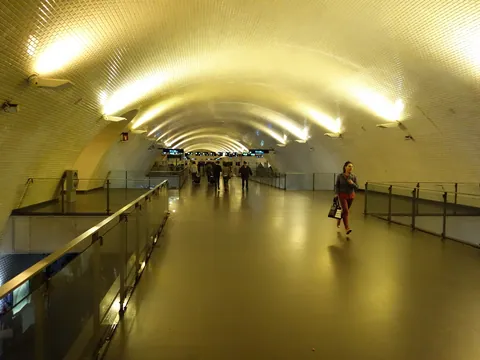
A Viva Viagem card costs a small one-off fee and then carries either pay-as-you-go credit or a 24-hour ticket covering the metro, Carris buses, trams, the funiculars and the Santa Justa lift. Each traveller needs their own card. The 24-hour ticket pays for itself the moment two funicular or lift rides are involved, because those cost several euros each as singles; for a day spent walking the flat grid it does not. Young children travel free and school-age children at half fare. Check step-free access before relying on the metro with a pushchair — several central stations have escalators and stairs only.

Lisbon tips for families

  • Getting around

    Ride up, walk down

    Take the metro, a funicular or a tram to the top of a hill and plan the sightseeing downhill from there. Doing it the other way round is what turns an afternoon in Alfama or Bairro Alto into a child sitting on a kerb refusing to move.

  • With kids

    Treat Tram 28 as an attraction, not transport

    From mid-morning in season the queue at Martim Moniz runs long and the tram itself is standing-room only. Boarding at the Graça end in the opposite direction, or riding tram 12 over part of the same hill, gets the same streets with a fraction of the wait.

  • When to go

    Book the indoor attractions before a wet day forces it

    The Oceanário and the castle both sell timed slots, and both fill fastest on rainy days and school holidays when every family in the city has the same idea. Holding a slot also removes the queue, which matters more with children than the price does.

  • Health & safety

    The tourist trams are pickpocket territory

    Trams 28 and 15, the Santa Justa lift queue and crowded metro platforms are the known spots. Bags zipped and worn in front is enough precaution; violent crime against visitors is rare.

Lisbon with kids: common questions

How many days do you need in Lisbon with kids?
Three to four. Three covers the old town and castle, Belém and a flat day at Parque das Nações. A fourth allows a beach trip down the Cascais line without compressing anything.
Is Lisbon manageable with a pushchair?
Partly. The Baixa grid, Belém's riverside and Parque das Nações are flat and wide. Alfama, Bairro Alto and the approaches to the castle are steep, stepped and paved in polished cobbles. A carrier or a light folding buggy travels far better than a full pram.
Can you go to the beach from Lisbon?
Yes. The train from Cais do Sodré reaches Estoril and Cascais in about 30–40 minutes, and Costa da Caparica is a ferry plus a bus. The water is open Atlantic and cold, and the Caparica surf beaches have strong currents, so swim only where there are lifeguards and flags.
Where should families stay in Lisbon?
Baixa or Chiado for a first visit on foot, Príncipe Real for more space and a quieter evening, Parque das Nações for young children and step-free days. What matters most is being within five minutes of a metro station.
Is Lisbon too hot in summer with children?
July and August regularly run into the mid-30s with very little shade on the hills, and heat waves push higher. It is workable if the day is front-loaded and the afternoon spent indoors or by the water, but May, June and September are considerably easier.