
Skip to content

Costa del Sol with Kids

The Costa del Sol is roughly 150 kilometres of Andalusian coast developed for package holidays from the 1960s onwards, and the most useful thing to say about it is that it is built up: apartment blocks, promenades, water parks and golf courses run more or less continuously from Málaga to Estepona. That density is exactly why it is easy with young children — shallow Mediterranean water with almost no swell, flat paved promenades, half-board hotels, pharmacies, supermarkets and a commuter train along the busiest stretch — and it is also why anyone hoping for an unspoilt village should look elsewhere. The strip is not uniform: Málaga at the eastern end is a working city with a pedestrianised centre and a serious cluster of art museums, Torremolinos and Benalmádena are the family-resort core, Marbella is the expensive end, and Nerja further east is smaller, steeper and quieter. The honest disappointment is the beaches themselves, which are dark grey-brown sand, coarse underfoot and narrow in places, and in July and August they come with peak prices and Spanish domestic crowds.

Best for ages
0+
Suggested stay
5–10 days
Best months
Apr–Jul, Sep–Oct
Daily budget
€230

Mid-range, family of four

Why Costa del Sol works with children

  • A commuter train along the resort strip

    The cercanías line links Málaga, the airport, Torremolinos, Benalmádena and Fuengirola every 20 minutes or so, which removes the car for the busiest stretch of coast.

  • Calm, shallow, patrolled water

    The Mediterranean here has almost no swell, and the resort beaches are flagged and lifeguarded in season with showers and rented shade on the sand.

  • Backups for the days the beach is not the answer

    Water parks, a compact immersive zoo, a cable car, caves and an aquarium all sit on or near the strip.

  • A city with real museums at one end

    Málaga holds a Picasso collection, a Pompidou outpost, a Roman theatre and a hilltop Moorish fortress inside a walkable centre.

  • The longest usable season on the mainland

    The coast is warm enough for a beach day from April into late October, and mild rather than cold through the winter.

Where to stay

Best areas in Costa del Sol for families

4 areas cover most trips here; the difference is mainly families who want a city as well as a beach versus quieter stays and cove swimming.
  • Málaga city

    Best for families who want a city as well as a beach

    A working Andalusian city with a pedestrianised centre, a cluster of art museums, a Moorish fortress on the hill and a city beach at La Malagueta, plus the airport and the high-speed rail station. More pavement and fewer pools than the resorts.

  • Torremolinos & Benalmádena

    Best for the family-resort core

    The densest concentration of family hotels, aparthotels, water parks and a marina, all on the train line and joined by a long level promenade. Purpose-built, busy and short on charm, with bar strips that are loud in August.

  • Marbella & Puerto Banús

    Best for higher-end stays

    Better-kept beaches, a well-planted old town and the most expensive hotels on the coast, with a yacht marina next door. There is no train west of Fuengirola, so this end means a car or the coastal bus.

  • Nerja & the eastern coast

    Best for quieter stays and cove swimming

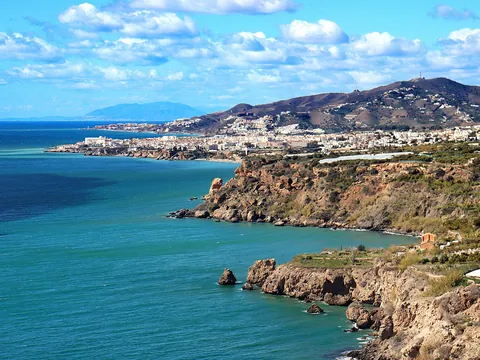
    A smaller clifftop town about an hour east of Málaga, with coves reached by steps, the Nerja caves nearby and the Sierra Almijara behind it. No railway, much less development, and beaches that involve a climb back up.

Family hotel picks in Costa del Sol

  • Beachfront family hotel or aparthotel at Benalmádena
    Benalmádena Costa / TorremolinosMid-range

    Beachfront family hotel or aparthotel at Benalmádena

    This is the stretch the coast was developed for: half-board and all-inclusive hotels with children's pools directly behind a shallow patrolled beach, a level promenade running for kilometres in both directions, and a train station that reaches Málaga and the airport in under half an hour.

    • Children's pools and shallow splash areas as standard
    • Half-board and all-inclusive boards serving at European mealtimes
    • Level seafront promenade for pushchairs and scooters
    • Cercanías train to Málaga, the airport and Fuengirola
    • Water parks, a marina and a cable car within a short bus ride

    Fitting a family in

    Family rooms, two-room suites and aparthotel units with a kitchenette sleeping four to five are the standard product here rather than an exception.

    Watch out. Much of the accommodation dates from the 1970s and 1980s and has been refurbished to wildly varying standards, so the age of the building and the date of its last refit matter more than the published category. Many hotels sit on the inland side of the coast road or well above the promenade, which means a walk or a lift down to the sand; the beaches are dark, coarse sand rather than fine; and the bar strips behind Benalmádena Costa and central Torremolinos are loud until late in August.

  • Apartment in Málaga's old centre
    Centro histórico / Soho, MálagaMid-range

    Apartment in Málaga's old centre

    A centre apartment turns the eastern end of the coast into a city break with a beach attached: the museums, the market, the Alcazaba and the pedestrianised streets are all on foot, La Malagueta beach is a fifteen-minute walk, and the airport and the resorts are on the train.

    • Pedestrianised centre with the museums and the market on foot
    • Kitchen and washing machine for a longer stay
    • Cercanías train to the airport and the resort strip
    • City beach and the port promenade within walking distance

    Fitting a family in

    Two-bedroom apartments in converted centre buildings sleep four to five and cost less than two hotel rooms, usually on one floor with a small balcony.

    Watch out. Almost nothing in the centre has a pool, which is a real gap in July and August. Older buildings often have a very small lift or none at all, the pedestrian lanes carry restaurant terraces that are noisy until well after midnight — an interior-facing bedroom is worth asking for — and the centre sits inside a restricted-traffic and low-emission zone that a hire car cannot drive into.

  • Apartment or aparthotel in Nerja
    Nerja / MaroMid-range

    Apartment or aparthotel in Nerja

    Nerja is the quiet end of the coast: a small clifftop town about an hour east of Málaga with coves instead of a resort strip, restaurants that price for residents as well as visitors, and mountains immediately behind it for a day out of the sun.

    • Small sheltered coves rather than a continuous resort beach
    • Walkable town with a market, supermarkets and playgrounds
    • The Nerja caves and the Maro cliffs nature reserve nearby
    • Kitchen for early suppers and beach picnics

    Fitting a family in

    One- and two-bedroom apartments with a terrace are the standard local product, sleeping four to six, and many complexes have a shared pool.

    Watch out. Most of the coves are reached by long flights of steps down the cliff, which is a genuine problem with a pushchair or a tired four-year-old, and the one easy town beach gets very busy. There is no railway, so a car or the coastal bus is needed for anything beyond the town, and a good deal of the accommodation is older holiday apartments whose upkeep varies a great deal.

All family stays in Spain

Some links on this page are affiliate links. If you book through one, the price is the same for you and we may earn a commission. How this works.

Things to do in Costa del Sol with kids

  • Caminito del Rey
    AdventureBook ahead

    Caminito del Rey

    Costa del Sol

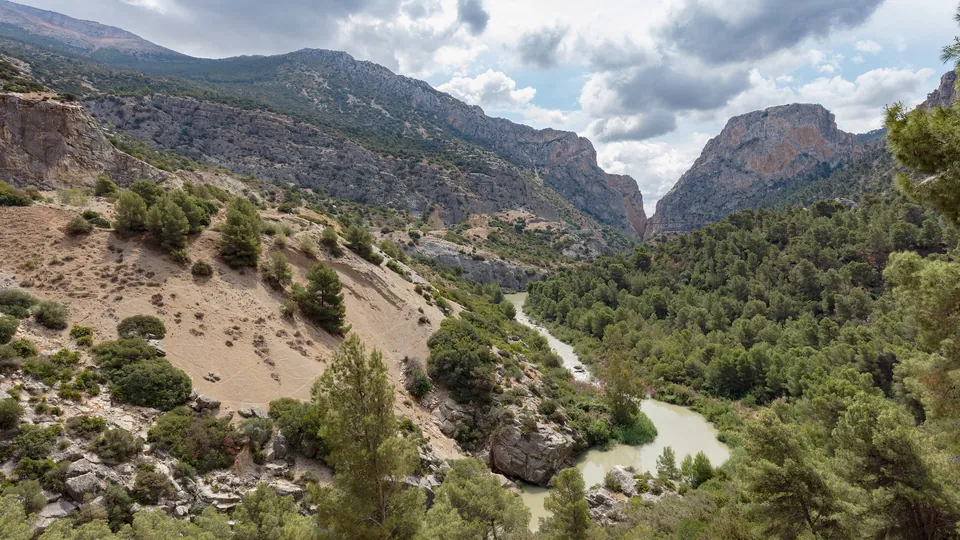
    A walkway bolted to the wall of the Gaitanes gorge about an hour inland from the coast: several kilometres of boardwalk and path along the cliff face, ending on a suspended bridge high above the river, walked one way with a shuttle bus back to the start.

    Ages
    8–17
    Time
    4h
    Adult, from
    €18

    Good to know. Entry is timed, capped daily and strictly one way, and it sells out weeks ahead for weekends and school holidays. There is a minimum age of eight, children must be accompanied, and pushchairs and baby carriers are not permitted. The route is exposed with very little shade, closes in high wind or storms, and the shuttle bus at either end adds most of an hour to the day.

  • Nerja caves
    NatureBook ahead

    Nerja caves

    Costa del Sol

    A cave system in the hills behind Nerja, opened as a visitor route through a sequence of very large chambers that includes one of the tallest natural stone columns anywhere, laid out as a self-guided walk on lit concrete paths.

    Ages
    4–16
    Time
    1h 30m
    Adult, from
    €15

    Good to know. The route is a near-continuous sequence of steps and ramps with no lift and no pushchair access, and the air stays cool and damp all year, so a layer is needed even in August. Entry is by timed slot and the summer sessions sell out. Lighting is deliberately dim in places, which some younger children dislike, and the site sits above the town rather than in it.

  • Bioparc Fuengirola
    Animals

    Bioparc Fuengirola

    Costa del Sol

    A compact immersive zoo in the middle of Fuengirola, built as four dense tropical habitats where the planting rather than the fencing does most of the separating, a few minutes' walk from a station on the Málaga–Fuengirola line.

    Ages
    2–14
    Time
    3h 30m
    Adult, from
    €24

    Good to know. The site is small, so it is a half-day rather than a full one, and the walkways are narrow and congested at weekends. The dense planting gives genuine shade, but the indoor sections are deliberately hot and humid and are unpleasant with a sleeping toddler. Many animals are inactive in the middle of a summer day, so the first or last two hours are worth more than the middle.

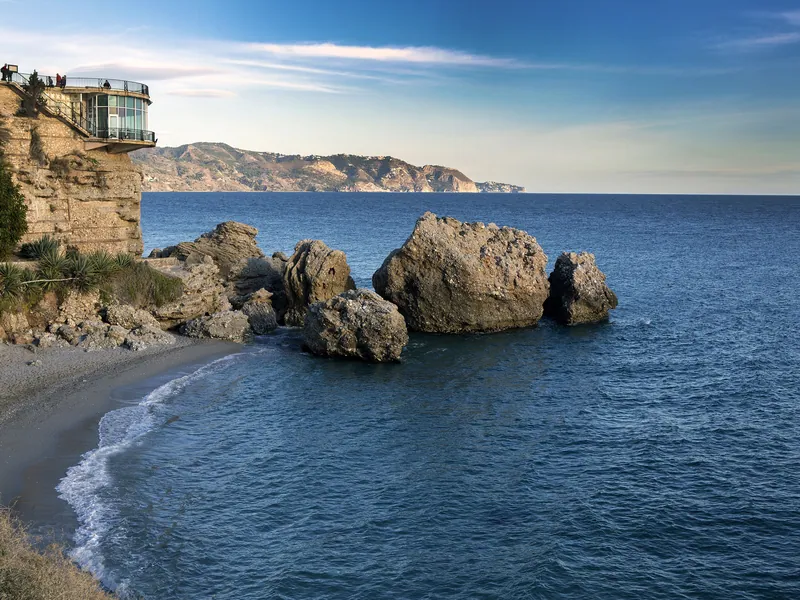
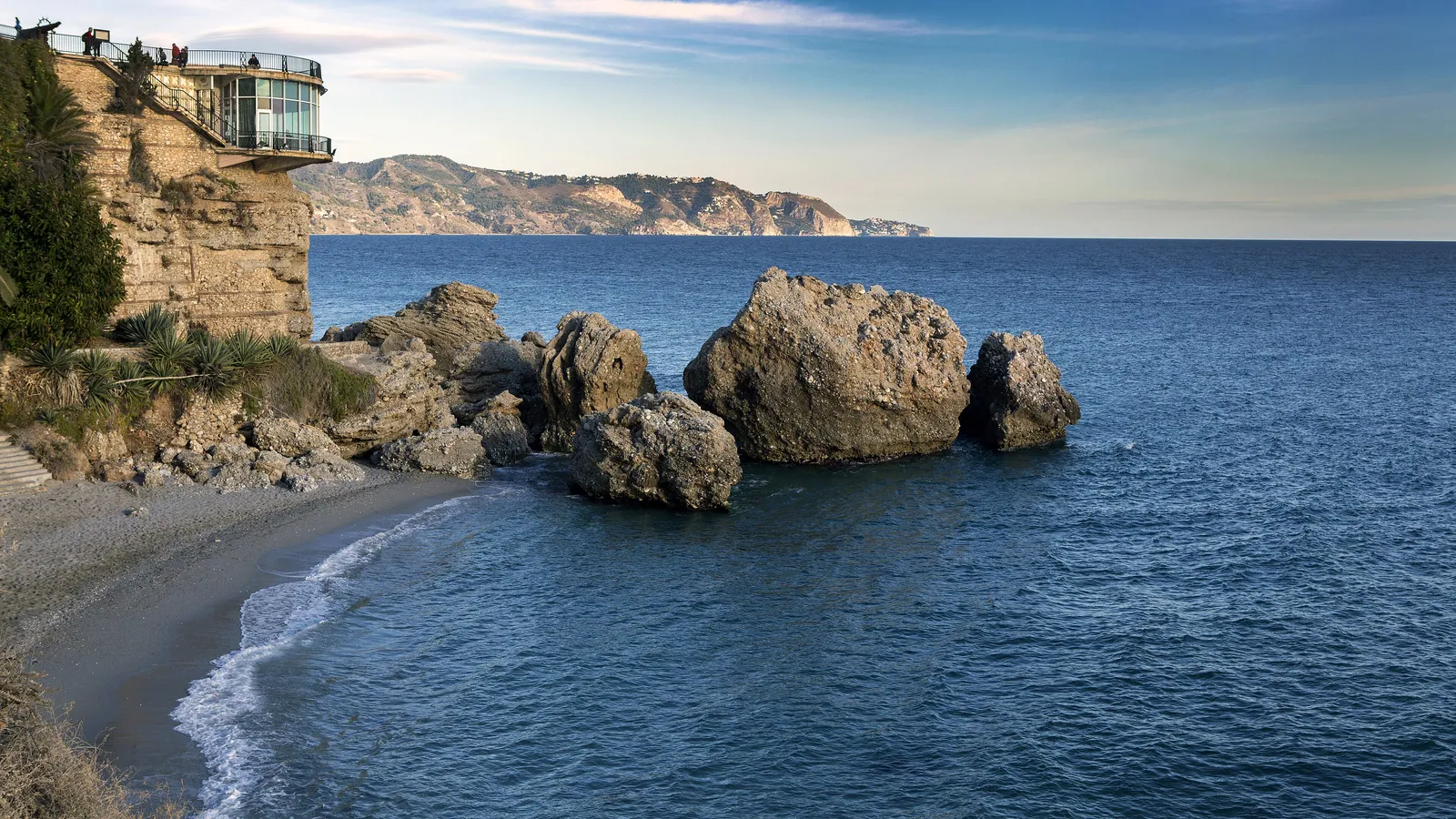
  • A palm-lined clifftop promenade above small sandy coves
    Culture

    Málaga: the Alcazaba, Gibralfaro and the Roman theatre

    Costa del Sol

    A Moorish palace-fortress rising straight out of the city centre with a Roman theatre at its foot, joined by a walled path to the Gibralfaro castle on the hill above and a view over the port, the cathedral and the bullring.

    Ages
    5–17
    Time
    2h 30m
    Adult, from
    €6

    Good to know. The climb from the Roman theatre through the Alcazaba and up to Gibralfaro is continuous, cobbled, ramped and almost entirely unshaded, which is hard work from late morning in summer. A lift from a side street reaches the upper part of the Alcazaba and a city bus climbs to the castle, which is how most families with young children do it. Surfaces are uneven throughout and a pushchair is impractical above the entrance courtyard.

Some links on this page are affiliate links. If you book through one, the price is the same for you and we may earn a commission. How this works.

Getting around Costa del Sol

The cercanías train is the thing to build a stay around: it runs from Málaga through the airport, Torremolinos, Benalmádena and Arroyo de la Miel to Fuengirola roughly every 20 minutes, cheaply, on a rechargeable card that several travellers can share, and it makes a hire car unnecessary for a hotel anywhere along it. West of Fuengirola — Marbella, Puerto Banús, Estepona — there is no train at all, only the coastal bus and the free and tolled motorways, so a car earns its cost there. Nerja and the coast east of Málaga are also bus-or-car only. In Málaga itself a car is a liability: the centre is pedestrianised, inside a low-emission zone, and its parking is underground and expensive.

Costa del Sol tips for families

  • Getting around

    Stay on the train line if you would rather not drive

    A hotel between Málaga and Fuengirola puts the airport, the city, the water parks and half a dozen beaches within a frequent, cheap train ride. West of Fuengirola the same holiday needs a hire car or a slow coastal bus.

  • Packing

    Expect dark, coarse sand and rented shade

    The sand along this coast is grey-brown, gritty and hot underfoot by midday, and the beaches are open with no natural shade at all. Sunbeds and umbrellas are rented by the day, and beach shoes make the walk to the water much easier for small children.

  • When to go

    The Caminito del Rey has to be booked weeks ahead

    The gorge walkway inland runs on timed, one-way, daily-capped entry with a minimum age, and it sells out well in advance for weekends and school holidays. It is also an hour's drive from the coast, which makes it a full day rather than an outing.

  • When to go

    August is the most expensive and most crowded month

    Spanish domestic holidays peak in August, when rates roughly double, the beaches are full and the promenades are busy late into the night. June, September and the first half of October deliver the same sea for far less.

Costa del Sol with kids: common questions

Is the Costa del Sol too built up for a family holiday?
It is genuinely built up — a near-continuous strip of apartment blocks and promenades from Málaga to Estepona. That is a fair criticism of the scenery and the reason it is straightforward with young children: shallow patrolled water, flat promenades, half-board hotels, pharmacies and a train. Families who want villages and empty coves are better served by the Costa Brava.
Which part of the Costa del Sol is best for families?
Benalmádena and Torremolinos for the combination of family hotels, water parks and the train line; Málaga for a city stay with a beach attached; Nerja for something quieter, accepting that its coves are reached by steps and that a car is needed.
Do you need a car on the Costa del Sol?
Not between Málaga and Fuengirola, where the cercanías train is frequent and covers the airport, the city and the main resorts. West of Fuengirola and east of Málaga there is no railway, so Marbella, Estepona and Nerja realistically need a car or the coastal bus.
What is there to do besides the beach?
Water parks and a marina at Benalmádena, an immersive zoo at Fuengirola, the Nerja caves, the Málaga museums and the Alcazaba, a cable car up Monte Calamorro, and the Caminito del Rey for older children. The coast is well supplied with wet-weather and too-hot-for-the-beach options.
Is the sea warm enough to swim?
From about June to October for most children, with August and September the warmest. April and May are pleasant for a beach day but the water is still cold enough that a long swim is unlikely, which is when a heated hotel pool matters.