
Skip to content

Naxos or Paros with Kids: Which Island Fits Your Family

Naxos and Paros are the two Cycladic islands that work as a family beach holiday rather than as a photograph. The difference is physical: Naxos has a west coast of long, wide, gently shelving sand at Agios Prokopios, Agia Anna and Plaka, where a small child can stand a long way out, which is the opposite of the cliffs and dark shingle that make Santorini so hard with young children. Naxos also has a working town, a mountainous interior of stone villages, and the marble Portara standing on an islet at the edge of its harbour. Paros, a short crossing away, adds a second harbour town and the shallow rock pools at Kolymbithres. The trade-off is wind — the meltemi can blow hard across these islands for three or four days at a stretch in July and August, which sandblasts the west-coast beaches and cancels the fast ferries that a two-island plan depends on.

Best for ages
0+
Suggested stay
7–10 days
Best months
May–Jun, Sep–Oct
Daily budget
€200

Mid-range, family of four

Why Naxos & Paros works with children

  • Sand that shelves slowly for a long way

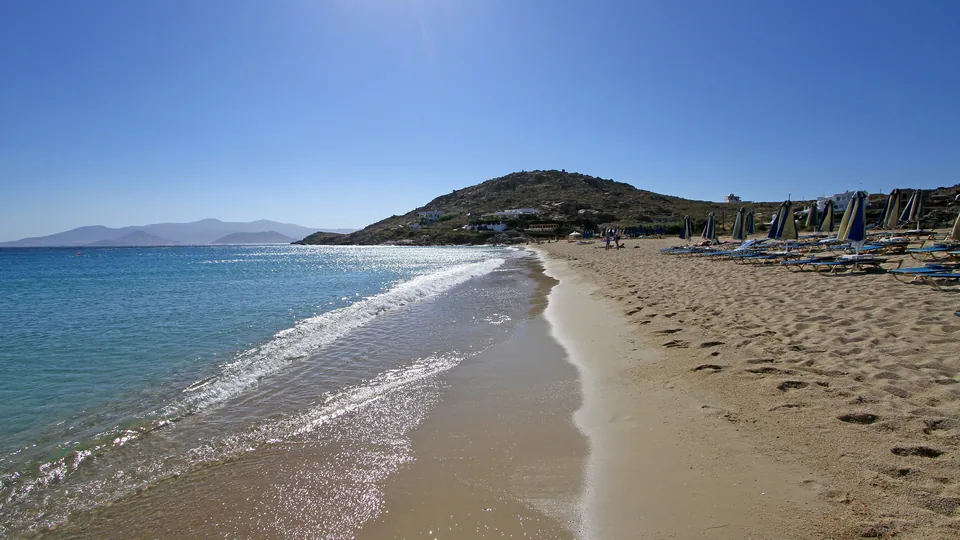
    Agios Prokopios, Agia Anna and Plaka form several kilometres of wide fine sand where the water stays shallow well out from the shore.

  • A marble doorway at the edge of the harbour

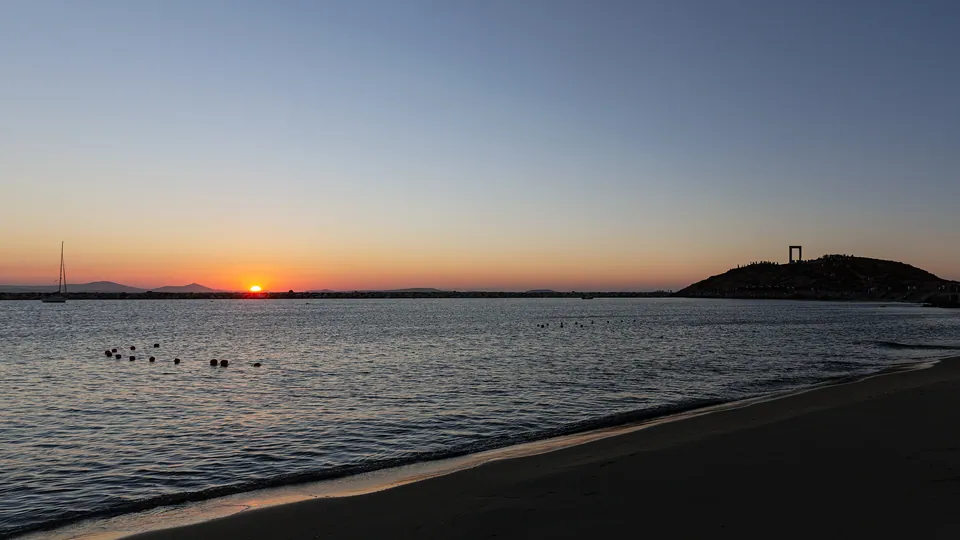
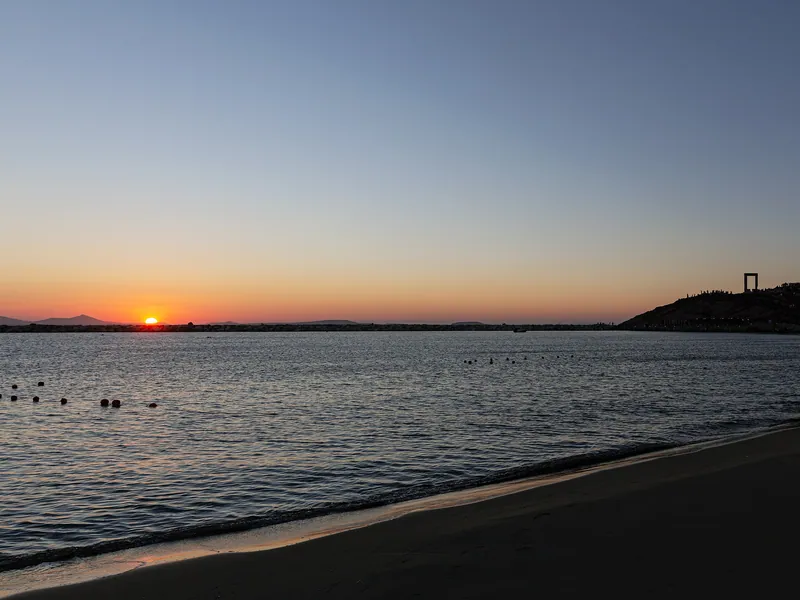
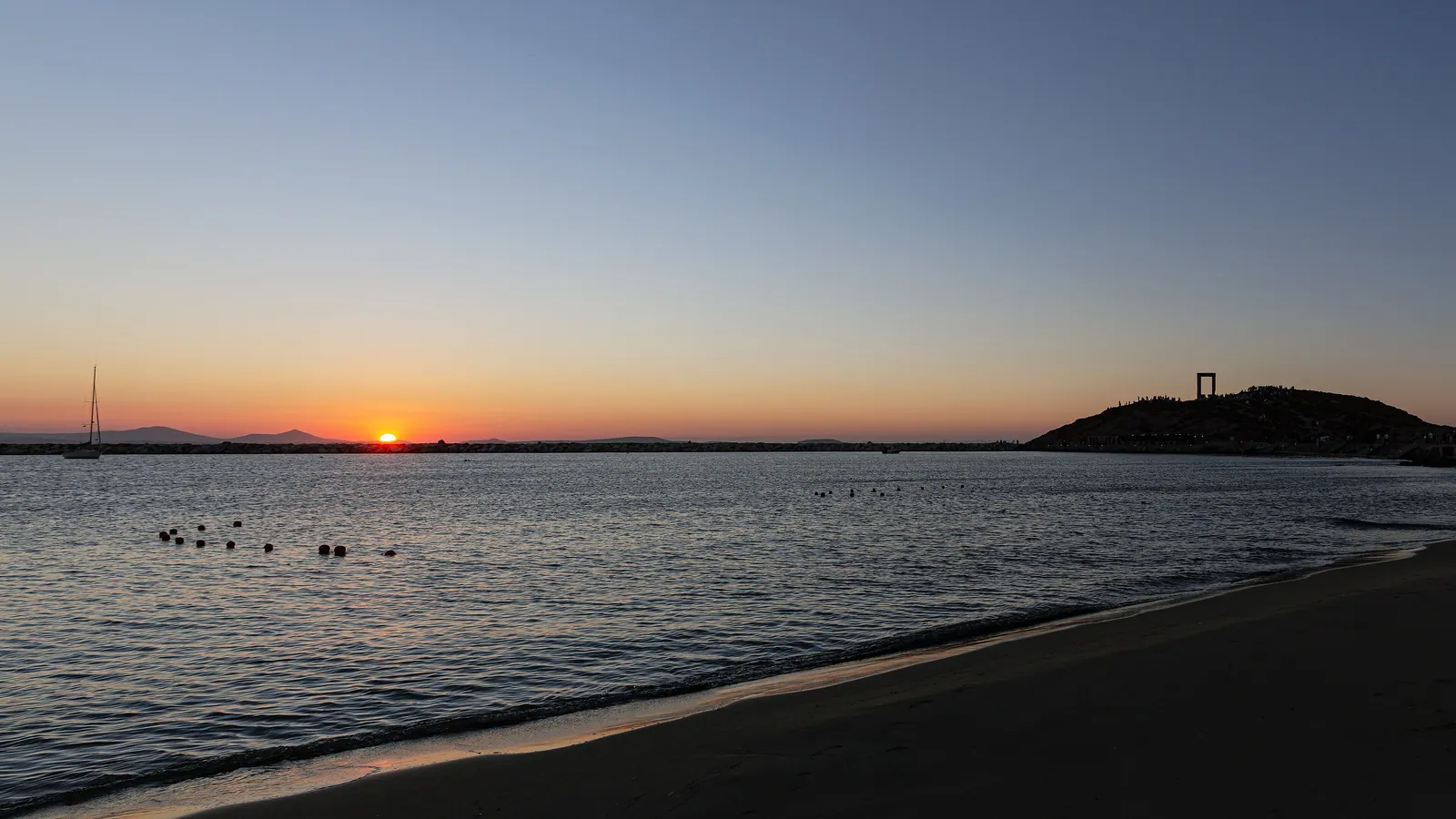
    The Portara, the unfinished gate of an ancient temple, stands on an islet joined to Naxos town by a causeway and costs nothing to walk out to.

  • A mountain interior, not only a coast

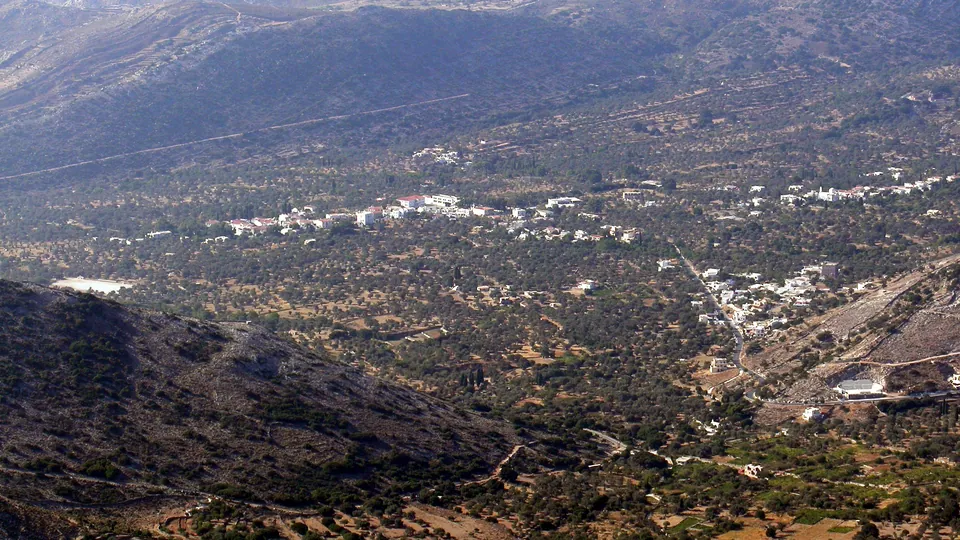
    Stone villages, terraced hillsides and the highest peak in the Cyclades sit half an hour inland, which gives somewhere cooler to go on a windy beach day.

  • Two islands on one short crossing

    Paros is close enough that a day trip is a sailing of well under two hours each way, with no internal flight and no need to move base.

  • Cheaper than the famous Cyclades

    Accommodation and eating out cost markedly less here than on Santorini or Mykonos for the same standard.

Where to stay

Best areas in Naxos & Paros for families

4 areas cover most trips here; the difference is mainly a base without a car versus the second island.
  • Naxos Town (Chora) & Agios Georgios

    Best for a base without a car

    The ferry port, the Portara, the bus station and most of the tavernas are here, and the shallow roped bay at Agios Georgios is a walk from the old town. The old town itself is a stepped marble maze that a pushchair cannot enter.

  • Agios Prokopios, Agia Anna & Plaka

    Best for young children and long sand

    The west-coast family strip, 10 to 20 minutes by bus from Chora, with studios and small hotels set behind the widest and shallowest sand on either island. The same coast takes the meltemi head-on, and the far end of Plaka has no facilities at all.

  • The Naxos mountain villages (Filoti, Halki, Apiranthos)

    Best for cooler days and a quieter stay

    Marble-paved villages on the shoulder of the island's highest ridge, several degrees cooler than the coast and with almost no other visitors in the evening. A car is needed for everything here, including reaching the sea.

  • Paros — Parikia & Naoussa

    Best for the second island

    Parikia is the ferry port and the practical side; Naoussa is a small fishing harbour with the rock pools of Kolymbithres a short drive away. Naoussa is the most expensive corner of the pair in August and its own beaches are small.

Family hotel picks in Naxos & Paros

  • Naxos — studios behind the west-coast sands
    Agios Prokopios / Agia Anna / PlakaMid-range

    Naxos — studios behind the west-coast sands

    Staying directly behind the shallowest sand on the island removes the daily drive or bus ride that makes a beach day with small children hard work, and a kitchenette covers breakfast and the meal that has to happen before a Greek dinner starts.

    • A few minutes' walk to wide, gradually shelving sand
    • Kitchenette for breakfasts and early dinners
    • Buses into Naxos town every half hour or so in season
    • Small shared pools rather than resort complexes

    Fitting a family in

    Studios sleeping three and two-room apartments sleeping four to five are the standard product along this strip; a genuine second bedroom is worth confirming, as many listings count a sofa in the living area.

    Watch out. The strip is fully exposed to the meltemi, much of it sits on unlit sand roads that are awkward with a pushchair after dark, choice thins sharply outside the June to September window, and the liveliest evening options are back in Chora.

  • Naxos — apartments around Chora and Agios Georgios
    Naxos Town (Chora) / Agios GeorgiosMid-range

    Naxos — apartments around Chora and Agios Georgios

    Basing in town means the ferry, the buses, the tavernas and a shallow roped bay are all within walking distance, which is what allows a family to skip the car entirely and still reach the beaches and the mountain villages.

    • Walking distance to the Agios Georgios bay and the harbour
    • Bus station for the beaches and the interior at the door
    • Tavernas, bakeries and a supermarket on foot
    • The Portara and the old town for an evening walk

    Fitting a family in

    One and two-bedroom apartments are plentiful on the flat ground between the port and Agios Georgios; old-town rooms are smaller and rarely sleep four.

    Watch out. Old-town buildings are reached by stepped lanes with luggage carried by hand and no lifts, the port end is noisy with early ferry arrivals and departures, and the town beach itself is narrow and crowded in high season.

  • Paros — small hotels around Naoussa and Parikia
    Naoussa / ParikiaHigher-end

    Paros — small hotels around Naoussa and Parikia

    A night or two on Paros turns a day trip into a second island without a second flight, and small hotels around Naoussa put the harbour, the bakeries and the Kolymbithres pools within a short drive of each other.

    • Harbour village on foot in the evening
    • Short drive or small boat to the Kolymbithres pools
    • Ferry port for the crossing back to Naxos and Athens
    • Pools at most properties, since the town beaches are small

    Fitting a family in

    Rooms are mostly built for two, with family configurations and interconnecting pairs available but limited; two-bedroom apartments exist a short way outside both towns and are the better fit for four.

    Watch out. Naoussa is the most expensive corner of either island in August, its own beaches are small and quickly full, the old harbour lanes are narrow and busy at night, and a car or bus is needed for the bigger sandy beaches further round the coast.

All family stays in Greece

Some links on this page are affiliate links. If you book through one, the price is the same for you and we may earn a commission. How this works.

Things to do in Naxos & Paros with kids

  • Agios Prokopios, Agia Anna & Plaka beaches
    Water

    Agios Prokopios, Agia Anna & Plaka beaches

    Naxos & Paros

    Several kilometres of continuous wide, fine sand on the west coast of Naxos, split into three named stretches, where the water stays shallow a long way out and the organised sections have sunbeds, shade and tavernas behind them.

    Ages
    0–14
    Time
    5h
    Adult, from
    Free

    Good to know. The whole coast faces the open sea and takes the meltemi directly, so on a windy day the sand blows and the shallows churn. Shade and facilities stop well before the southern end of Plaka, where the beach is undeveloped and partly naturist.

  • Portara & Naxos old town
    Culture

    Portara & Naxos old town

    Naxos & Paros

    The surviving marble doorway of an unfinished ancient temple, standing on an islet joined to Naxos town by a low causeway, with the stepped lanes of the Venetian old town and its hilltop castle immediately behind the harbour.

    Ages
    4–16
    Time
    1h 30m
    Adult, from
    Free

    Good to know. The causeway and the islet are bare unfenced rock with no railing and no shade, and the marble underfoot is uneven and slippery when wet. The old town above is a stepped maze with no pushchair route through it.

  • Mount Zas & the Tragaia villages
    Nature

    Mount Zas & the Tragaia villages

    Naxos & Paros

    The highest mountain in the Cyclades, climbed on a marked path from the chapel of Agia Marina above Filoti, with a cave on one flank and a cluster of stone villages and Byzantine chapels in the valley below it.

    Ages
    10–17
    Time
    5h
    Adult, from
    Free

    Good to know. The summit path is a two to three hour return scramble over loose marble with no shade, no water and no shelter, which realistically rules it out below about ten and in the middle of a summer day. The villages beneath it are a far easier alternative and reachable by bus.

  • A freestanding marble doorway on a low headland above the sea
    Water

    Kolymbithres & Naoussa, Paros

    Naxos & Paros

    A bay on the north coast of Paros where wind-worn granite has been sculpted into a series of small shallow pools and coves, with the fishing harbour and lanes of Naoussa a short drive or a small-boat hop across the bay.

    Ages
    2–14
    Time
    5h
    Adult, from
    Free

    Good to know. The pools are small and fill up quickly in high season, the rock is smooth but sharp at the waterline so water shoes help, and there is very little natural shade. Reaching it from Naxos means a ferry crossing that is a separate booking and the first thing cancelled in strong wind.

Some links on this page are affiliate links. If you book through one, the price is the same for you and we may earn a commission. How this works.

Getting around Naxos & Paros

Naxos town is the hub. Buses run from the port to the west-coast beach strip every half hour or so in season and out to the mountain villages a few times a day, which makes a beach week workable with no car at all. A car earns its place for the south-eastern beaches, the interior and the marble quarries; automatic transmission is a small share of the Greek fleet and has to be reserved months ahead, and the quad bikes rented on every corner are the wrong vehicle with small children. Between the islands, conventional ferries and high-speed catamarans both run the Naxos to Paros leg several times a day in summer. The fast craft are the first to be pulled when the meltemi is up and the slower ships ride the swell better for anyone prone to seasickness, so the sensible plan keeps a day of slack before a flight home rather than a tight connection.

Naxos & Paros tips for families

  • When to go

    The wind decides which beach works

    In July and August the meltemi can blow for three or four days without a break, and the open west coast is where it lands. The sheltered alternatives are the town bay at Agios Georgios and the south-east corner of Naxos, and a forecast checked the evening before is worth more than a favourite beach.

  • Getting around

    Keep a spare day before the flight home

    Sailings between the islands and back to Athens are weather-dependent, and high-speed services are cancelled in strong wind while slower ferries still run. A day of slack at the end of the trip is the only reliable protection, and it matters more than the cheapest crossing.

  • Getting around

    Hire a car rather than a quad

    Quad bikes are rented everywhere on both islands and are unsuitable for carrying children on unlit roads with no seat belts. A small automatic car costs more and has to be booked months ahead, because very few are in the island fleets.

  • With kids

    The town beach is the toddler option

    Agios Georgios is a shallow, roped bay within walking distance of Naxos town, which means no bus, no drive and a room to retreat to. It is narrow and busy in high season, and that is the trade for the convenience.

Naxos & Paros with kids: common questions

Which is better for families, Naxos or Paros?
Naxos, for the beaches. Its west coast has the longest and shallowest sand in this part of the Cyclades, food and rooms cost less, and the town works on foot. Paros is prettier around Naoussa and easier to reach by ferry, but its family beaches are smaller and its prices higher.
Is Naxos a better choice than Santorini with children?
For a beach holiday, considerably. Naxos has kilometres of gradually shelving sand, level ground behind it and a town that can be managed with a pushchair. Santorini has cliffs, hundreds of steps and no sandy beach near the caldera villages, and it suits older children on a short visit rather than a family week.
Do you need a car on Naxos?
Not for a beach week based in Chora or on the west-coast strip, which buses cover every half hour or so in season. A car becomes necessary for the mountain villages, the south-east beaches and anything off the main road, especially outside July and August when bus frequencies drop.
How windy are Naxos and Paros in July and August?
Windy enough to plan around. The meltemi blows from the north across the Cyclades through high summer, sometimes for several consecutive days, making exposed beaches uncomfortable and cancelling high-speed ferries. June, September and early October have the same sea temperature and far less of it.
How many days do Naxos and Paros need together?
Seven to ten, with one base rather than two if the children are small. A week on Naxos with a day trip to Paros works well; splitting the stay between the islands costs the better part of two days in ports and is worth it only on a longer trip.