Skip to content

Sicily with Kids

Sicily is a country-sized island with an active volcano in the middle of one side of it, and it holds more genuinely different things than any other single Italian region: Greek temples in better condition than most of those in Greece, baroque towns rebuilt wholesale after an earthquake, and sandy beaches on both the north and the south-east coasts. The thing that catches families out is scale. The island is around 250 kilometres across and only the north and east coasts have motorway, so Palermo to Siracusa is a three-and-a-half-hour drive rather than the hour the map implies, and any route through the interior is slower still. Inland summer heat is the second constraint and a severe one — interior temperatures above 40 °C are normal in July and August, and the archaeological sites have no shade at all — so a high-summer trip has to be built around the coast and the early morning.

Best for ages
5+
Suggested stay
7–10 days
Best months
Apr–Jun, Sep–Oct
Daily budget
€200

Mid-range, family of four

Why Sicily works with children

  • A volcano with a lift on it

    Etna is climbed by road, cable car and 4x4 rather than on foot, so children reach a black lava landscape at close to 2,900 metres.

  • Greek ruins that are still buildings

    The temples at Agrigento and Segesta stand close to complete, which needs no explaining to a child in the way a floor plan does.

  • Sand on two separate coasts

    Cefalù and San Vito lo Capo in the north, and the Siracusa and Noto coast in the south-east, both have shallow sandy beaches.

  • Street food eaten standing up

    Arancini, pizza by the slice, panelle and granita are cheap, everywhere, and need no menu or reservation.

  • Cheaper than the Italian mainland

    Apartments, restaurants and site entry all cost noticeably less than Tuscany, the lakes or the Amalfi Coast.

Where to stay

Best areas in Sicily for families

4 areas cover most trips here; the difference is mainly a first visit with etna in reach versus markets, mosaics and older children.
  • Taormina & the east coast

    Best for a first visit with etna in reach

    A cliff-top town with a Greek theatre looking straight at the volcano, Catania airport under an hour away and the Etna access roads about an hour inland. The town itself is steep, expensive and short of family rooms; the seafront hotels sit below it at Giardini Naxos and Letojanni.

  • Siracusa & the Val di Noto

    Best for baroque towns and the shortest drives

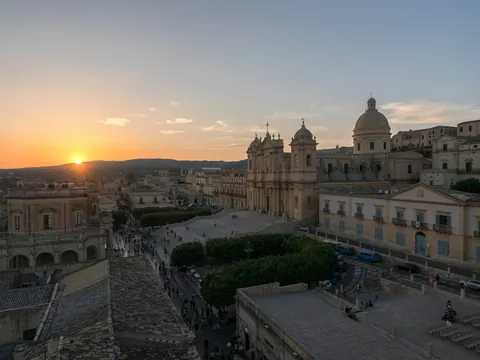
    The island old town of Ortigia, the Neapolis archaeological park, and the rebuilt baroque towns of Noto, Modica and Ragusa inland, with sandy beaches and the Vendicari reserve along the coast. Everything sits inside 40 minutes, which no other Sicilian base can claim.

  • Cefalù & the north coast

    Best for a beach week without daily driving

    A working town with a Norman cathedral, a long sandy beach and a station on the Palermo line — one of the very few places in Sicily where a family can stay and not get in a car every morning.

  • Palermo & the west

    Best for markets, mosaics and older children

    Palermo is loud, dense and extraordinary, with the Monreale mosaics above it and the beaches of San Vito lo Capo and Scopello an hour or more further west. Traffic, heat and broken pavements make it hard work with a pushchair.

Family hotel picks in Sicily

  • Apartment or family room in Cefalù
    Cefalù / north coastMid-range

    Apartment or family room in Cefalù

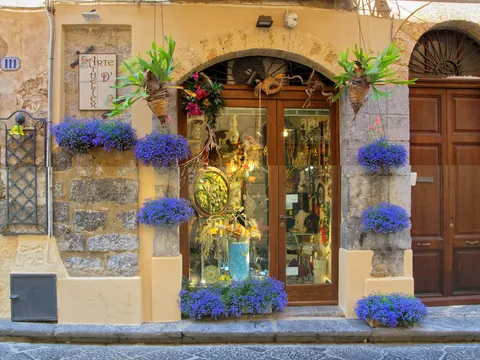
    It is the rare Sicilian base that works without driving every day: a long sandy beach, a walkable town with an ordinary high street and a Norman cathedral, and a station on the Palermo line for the days that need a change of scene.

    • Long sandy beach with shallow water and seasonal lifeguards
    • Walkable centre with supermarkets and everyday restaurants
    • Trains along the coast to Palermo in around an hour
    • Apartments with kitchens throughout the old town and the newer quarter

    Fitting a family in

    Two-bedroom apartments are the standard local product and cost less than two hotel rooms; hotel family rooms exist mainly in the larger properties outside the old town.

    Watch out. The old town is a grid of stepped lanes closed to vehicles and almost entirely without lifts, so luggage is carried the last stretch and parking is a paid lot on the edge. The beach is packed and the restaurants are at capacity through August, and the Rocca above the town is a steep unshaded staircase rather than a walk.
  • Seafront family hotels below Taormina
    Giardini Naxos / LetojanniMid-range

    Seafront family hotels below Taormina

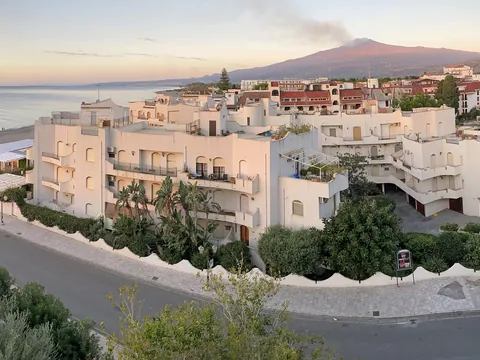
    Taormina itself is steep, costly and short of family rooms. The seafront towns underneath it have half-board hotels with pools, a level promenade and a bus or cable car up to the town, which is the practical way to combine Etna, the theatre and a swim in one stay.

    • Half-board and all-inclusive boards with early children's sittings
    • Pools, which matter because the beaches here are pebble
    • Level seafront promenade for pushchairs and scooters
    • Buses and a cable car up to Taormina; Catania airport under an hour

    Fitting a family in

    Family rooms, triples and interconnecting doubles are standard in the larger seafront properties, unlike in Taormina's small hillside hotels.

    Watch out. The beaches are pebble and coarse sand rather than fine sand, so water shoes are close to essential. The coast road and the railway run directly behind the seafront in places, which makes a sea-facing room quieter than a road-facing one, and many properties close entirely from roughly November to March.

  • Villa or farmhouse with a pool in the Val di Noto
    Noto / Modica / MarzamemiMid-range

    Villa or farmhouse with a pool in the Val di Noto

    The south-east has the shortest drives on the island, and a house with a pool turns the hot part of the day into a swim while keeping Siracusa, three baroque towns and several sandy beaches inside 40 minutes.

    • Private or shared pool for the afternoon heat
    • Kitchen and outdoor space, usually with a shaded terrace
    • Sandy beaches and the Vendicari reserve within half an hour
    • Noto, Modica and Ragusa each a short drive apart

    Fitting a family in

    Converted farmhouses and villas let as whole properties sleeping four to eight, frequently with a second bathroom, which usually costs less than two hotel rooms in Siracusa.

    Watch out. Access is often a few kilometres of unlit country lane, so a late arrival with tired children is slow going. Pools at smaller properties are frequently unfenced and unheated, there is rarely anything walkable nearby, and July and August are commonly sold as full weeks starting on a Saturday.

All family stays in Italy

Some links on this page are affiliate links. If you book through one, the price is the same for you and we may earn a commission. How this works.

Things to do in Sicily with kids

  • Mount Etna: the southern access and cable car
    Nature

    Mount Etna: the southern access and cable car

    Sicily

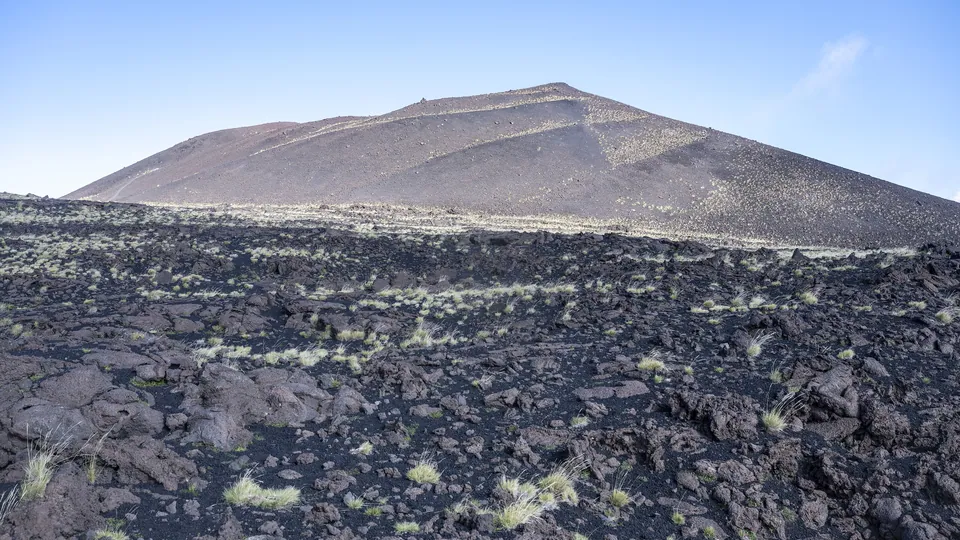
    One of the most active volcanoes in the world, over 3,300 metres high and approached by road to the Rifugio Sapienza car park at around 1,900 metres, where a cable car climbs to roughly 2,500 metres and guided 4x4 buses continue higher across the lava fields towards the summit craters.

    Ages
    6–17
    Time
    5h
    Adult, from
    €50

    Good to know. The upper station is typically 15 to 20 °C colder than the coast with strong wind, and families routinely arrive in shorts and turn back — warm layers and closed shoes matter as much in August as in April. Going above the cable car is only permitted with an authorised guide, and the cable car, the 4x4 tracks and the summit zone all close during eruptive activity, ash fall or high wind. The ground is loose volcanic gravel throughout, which rules out a pushchair.

  • Valley of the Temples, Agrigento
    Culture

    Valley of the Temples, Agrigento

    Sicily

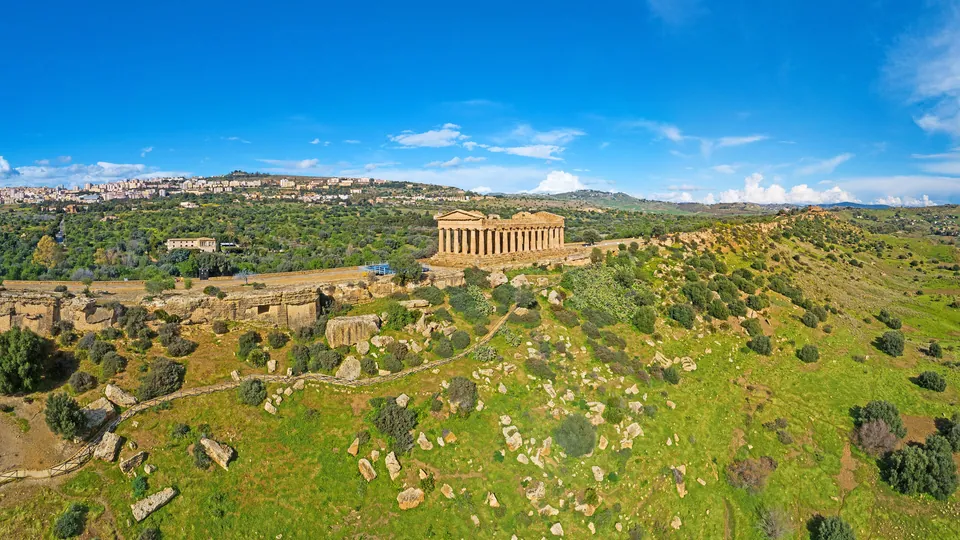
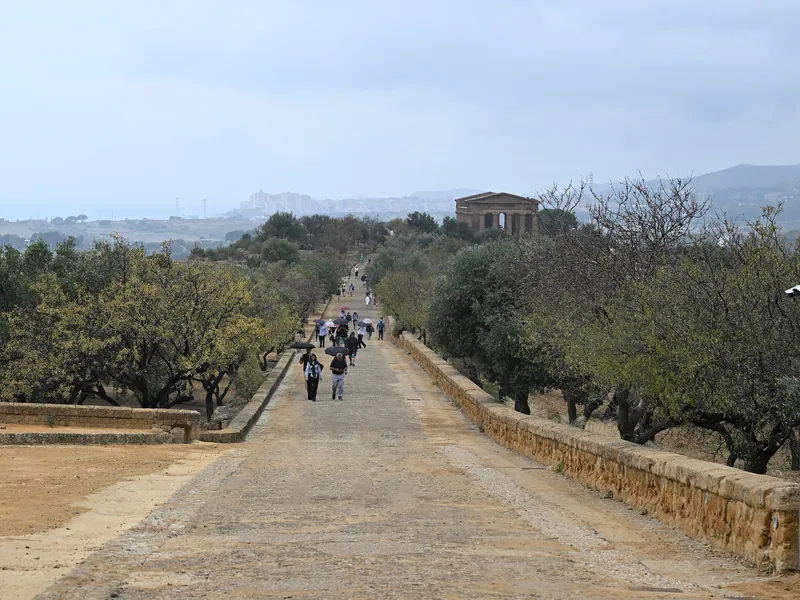
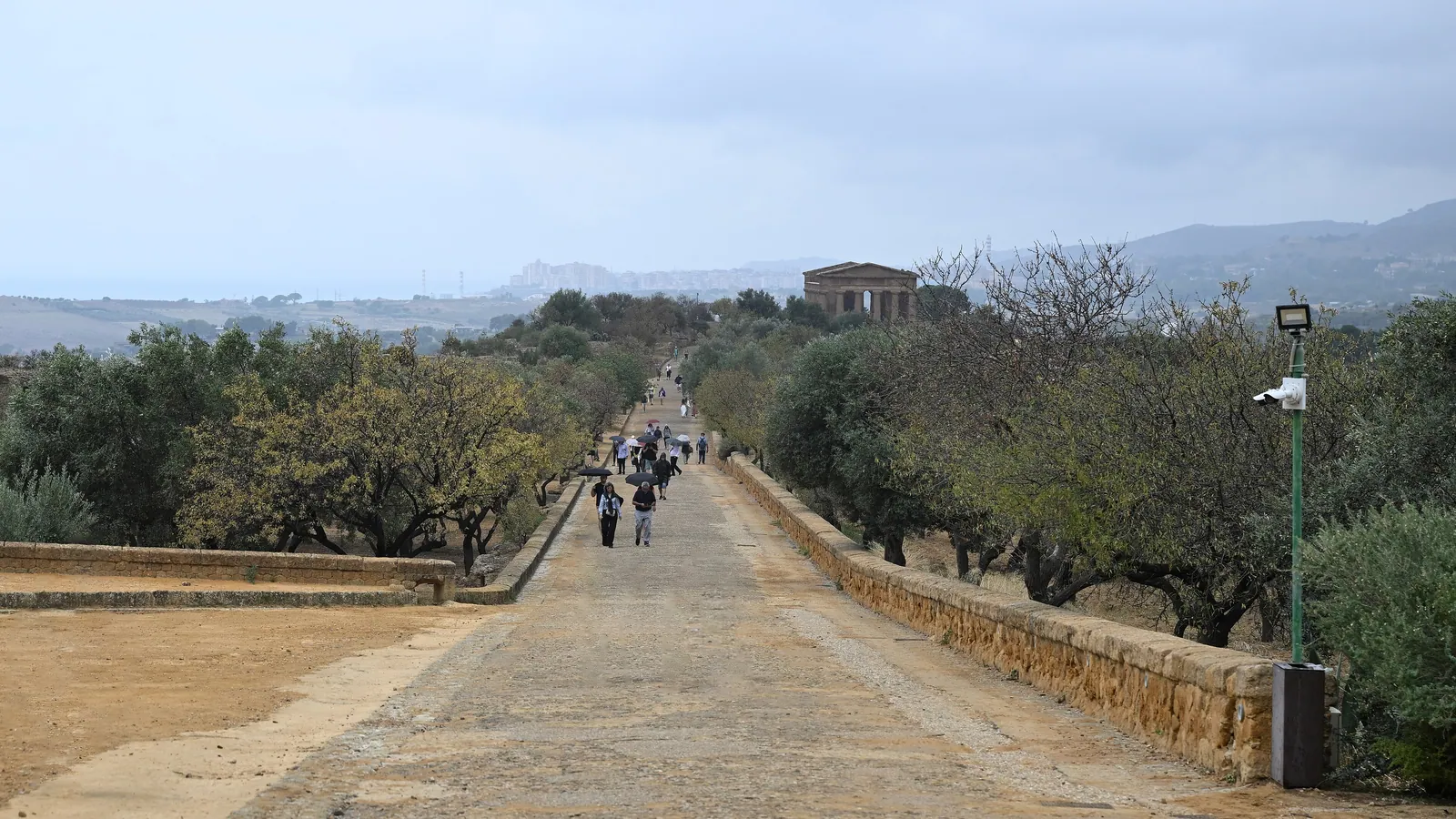
    A line of Greek Doric temples along a ridge above Agrigento, several of them substantially intact, set in a large archaeological park with an almond and olive garden at one end and a museum of the finds alongside.

    Ages
    6–17
    Time
    3h 30m
    Adult, from
    €12

    Good to know. The site is a linear walk of around three kilometres along a slope with almost no shade, and the two entrances sit at different heights — going in at the top and out at the bottom means a shuttle bus or a taxi back to the car. From late morning in summer it is punishing rather than merely hot; an opening-time or late-afternoon visit is a completely different experience.

  • Taormina's ancient theatre and Isola Bella
    Culture

    Taormina's ancient theatre and Isola Bella

    Sicily

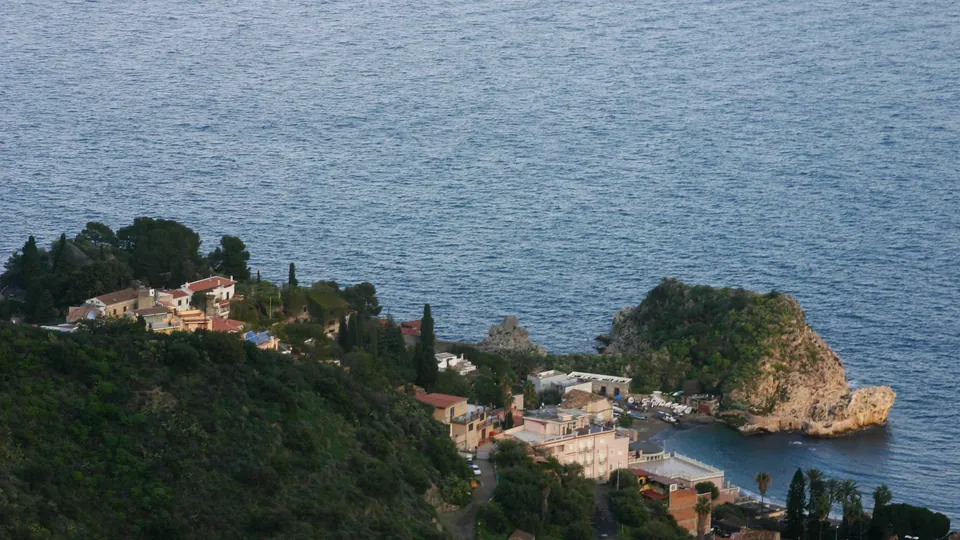
    A Greek theatre rebuilt by the Romans and cut into the hillside above Taormina, with Etna framed in the gap where the stage wall has fallen away, and a cable car down to the pebble beach and tied island of Isola Bella below the town.

    Ages
    5–17
    Time
    3h
    Adult, from
    €14

    Good to know. Taormina is a hilltop town reached by hairpins, with small expensive car parks that fill by mid-morning and stepped, steep streets inside. The theatre is open and unshaded and is sometimes partly occupied by staging for the summer concert season, which hides a good deal of the stone. The beach below is pebble, and the cable-car queue can run to half an hour in season.

  • A row of Doric temple columns on a dry ridge above the sea
    Culture

    Siracusa: Ortigia and the Neapolis park

    Sicily

    Two halves of one Greek city: the island old town of Ortigia, with a cathedral built inside a temple, a freshwater spring and swimming platforms off the sea wall, and the Neapolis archaeological park inland, holding a Greek theatre and the Ear of Dionysius, a tall narrow cave with an unusual echo.

    Ages
    5–17
    Time
    4h
    Adult, from
    €17

    Good to know. The archaeological park is white, open and unshaded, and the Greek theatre is often covered by staging and seating for the summer drama season, which hides most of the original stone. Ortigia is flat and walkable but its swimming is from ladders and rock platforms rather than a beach. Cars are best left in the car parks on the mainland side of the bridge.

Some links on this page are affiliate links. If you book through one, the price is the same for you and we may earn a commission. How this works.

Getting around Sicily

A car is the trip, and the drive times are the thing to get right before booking anything. Motorway runs along the north coast from Palermo to Messina and down the east coast to Siracusa, but there is no fast road across the middle, so an interior route averages closer to 60 km/h than 100 — Palermo to Siracusa is about three and a half hours and Taormina to Agrigento about three. Trains are cheap and genuinely useful on one corridor, Palermo to Cefalù, and slow or infrequent everywhere else. Every historic centre is a camera-enforced limited-traffic zone, so park outside and walk in; in Palermo and Catania, traffic is assertive and street parking is often an informal paid arrangement rather than a machine and a ticket.

Sicily tips for families

  • Getting around

    Halve the distance you expect to cover

    Only the north and east coasts have motorway; everything else is winding two-lane road through hills. Two bases — one on the east coast, one in the south-east or the north — beat a single base and a three-hour drive every other morning.

  • When to go

    Etna is a working volcano and access changes

    Eruptive episodes, ash fall and high wind close the cable car, the summit-zone tracks and occasionally Catania airport, sometimes at a few hours' notice. Check the day's status before driving up and keep a coastal alternative for that day.

  • Health & safety

    Inland Sicily in high summer is a different country

    Interior towns regularly exceed 40 °C, and Agrigento, Segesta and the Villa Romana del Casale have essentially no shade. In July and August the ruins are an 08:30 activity and the middle of the day belongs to the sea or a pool.

  • When to go

    The island fills with Italian holidaymakers in August

    Around Ferragosto on 15 August the beaches, ferries and coastal accommodation are taken by domestic visitors and prices peak. June and September deliver the same sea temperature with far more space.

Sicily with kids: common questions

How long do you need in Sicily with kids?
Seven to ten days, split between two bases. A week covers the east — Etna, Taormina and Siracusa — at a workable pace. Ten days allows the south-east or the north coast as well, without a long drive every other morning.
Do you need a car in Sicily?
For anything beyond a single town, yes. Buses link the main cities but not the beaches, the temples or the Etna access roads, and the railway is slow outside the Palermo to Cefalù corridor. A family staying only in Cefalù, or only in Siracusa, can manage without one.
Can children go up Mount Etna?
Yes, to a point. A road reaches about 1,900 metres, a cable car continues to roughly 2,500, and 4x4 buses go higher with an authorised guide. The upper stations are cold, windy and thin-aired even in August, and access is suspended during eruptive activity or high wind.
Which part of Sicily is best for families?
The east and south-east: Etna, Taormina, Siracusa and the Val di Noto sit within short drives of each other and of sandy beaches. Cefalù on the north coast is the better choice for a beach week that needs no daily driving at all.
Is Sicily too hot in summer with children?
On the coast it is manageable with an early start and an afternoon in the sea. Inland it is not — interior temperatures above 40 °C are normal in July and August and the archaeological sites are unshaded. April to June, September and October are far easier months.