Skip to content

Pennsylvania

Philadelphia with Kids

Philadelphia is the most manageable large city in this part of the country to visit with children, largely because of a decision made in 1682: William Penn laid it out as a flat numbered grid around five public squares, and Center City still is one. Almost everything a family comes for sits inside a rectangle a person can walk across in forty minutes — the Independence-era sites at one end, a covered market in the middle, and a run of museums along a single boulevard at the other, including a science museum built around exhibits children are meant to touch and one of the strongest dedicated children's museums anywhere in the country. It is also markedly cheaper than New York for the same kind of trip, and the trains from both New York and Washington take between one and two hours, which makes it a workable two- or three-day stop rather than a destination in itself. Two honest caveats. The founding-history sites are the main draw and they are genuinely wasted on children much under seven, who will get more from the zoo and the museums. And the older streets of Old City and Society Hill are cobbled, which is picturesque and hard work with a pushchair.

Best for ages
5+
Suggested stay
2–4 days
Best months
Apr–Jun, Sep–Oct
Daily budget
€290

Mid-range, family of four

Why Philadelphia works with children

  • The founding sites are free and close together

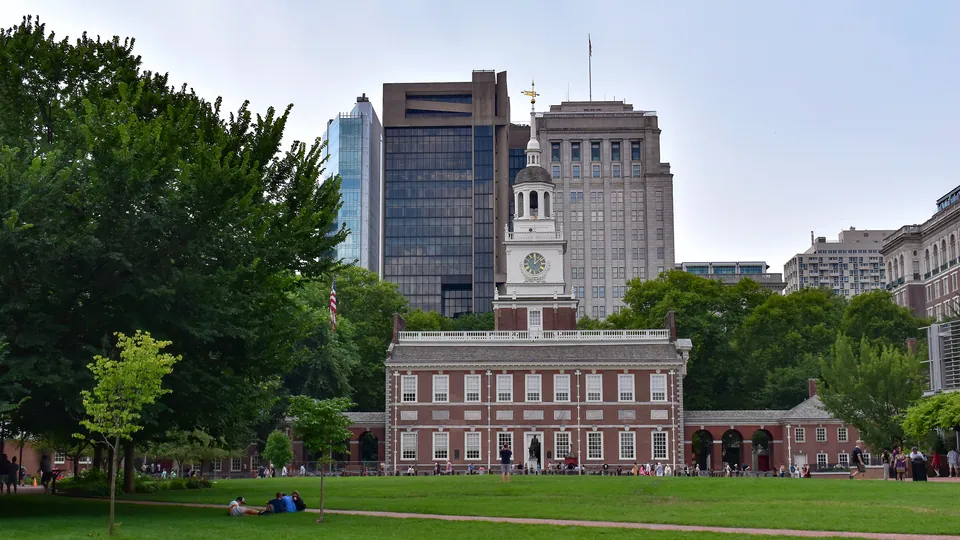
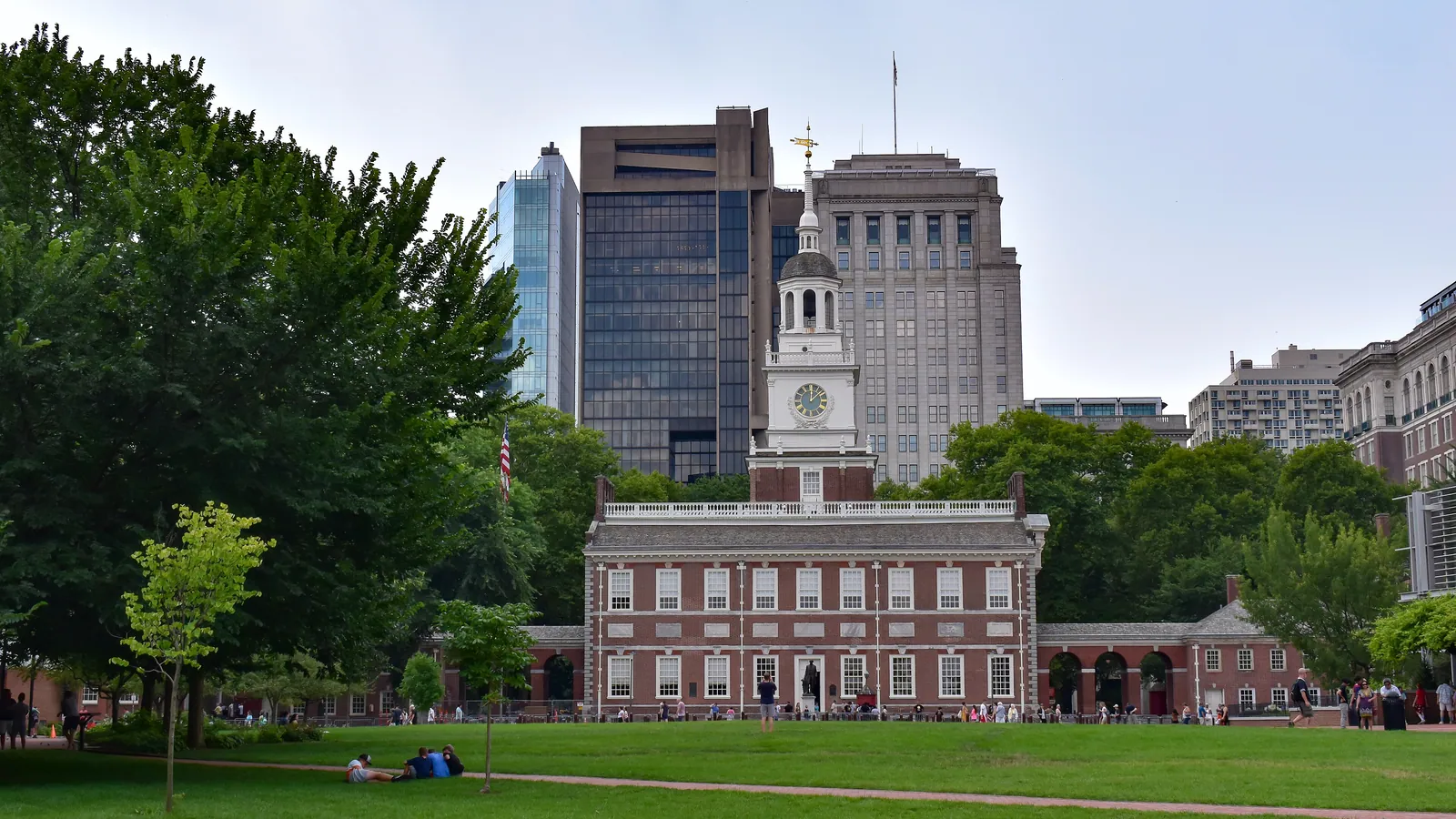
    Independence Hall, the Liberty Bell, the President's House site and the surrounding national park occupy a few walkable blocks and charge no admission.

  • Museums built to be touched

    A science museum with a walk-through heart and a children's museum with a restored 1908 carousel, both aimed squarely at under-twelves.

  • Flat, gridded and genuinely walkable

    Center City is a numbered grid with almost no gradient, so most days here need no transport at all beyond shoes.

  • A covered market instead of a restaurant decision

    Reading Terminal Market has traded on the same site since 1893 and lets four people eat four different things at one table.

  • Big-city sights at a smaller-city price

    Hotel rates, eating out and attractions all sit well below New York for a trip of the same shape, and several of the headline sites are free.

Where to stay

Best areas in Philadelphia for families

4 areas cover most trips here; the difference is mainly first visits and walking-led trips versus lower rates and easy onward trains.
  • Center City / Rittenhouse Square

    Best for first visits and walking-led trips

    The commercial core, with the widest choice of hotels, a large public square with a playground on one side, and everything from the market to the museums within a walk. Rates here are often lower at weekends than midweek, which is the reverse of a resort town.

  • Old City & Society Hill

    Best for history-focused stays

    The eighteenth-century quarter around Independence National Historical Park, with converted warehouse apartments and small hotels. Quiet in the evening on the Society Hill side, considerably less so around Second and Market at weekends, and the cobbled streets are hard going with wheels.

  • Fairmount & the Parkway

    Best for museum days and green space

    The residential blocks behind the art museum, on the boulevard that carries most of the city's museums and leads into a very large riverside park. A fifteen to twenty minute walk to Center City, and much calmer at night.

  • University City

    Best for lower rates and easy onward trains

    Across the Schuylkill around the two university campuses and the main intercity station, so onward travel and the airport train are on the doorstep. Cheapest of the four, quieter in summer when the students leave, and separated from the historic core by a river crossing that is dull on foot.

Family hotel picks in Philadelphia

  • Family room near Rittenhouse Square
    Center City / Rittenhouse SquareMid-range

    Family room near Rittenhouse Square

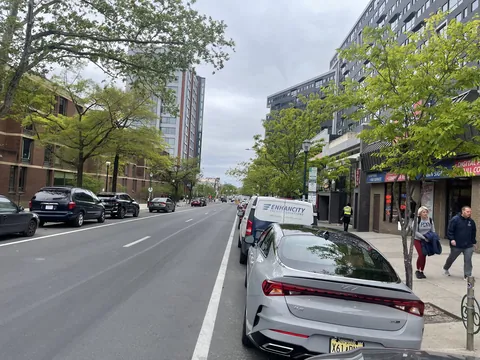
    Center City is flat, gridded and small enough that a base here removes transport from most days: the market, the museum boulevard and the historic quarter are all walkable from around Rittenhouse Square. The square itself has green space and a playground a block away, which matters at the end of a museum day.

    • Walking distance to Reading Terminal Market and the Parkway museums
    • Rittenhouse Square and a neighbourhood playground nearby
    • Both subway lines and the airport train within reach
    • Restaurants at every price point, most seating children early

    Fitting a family in

    Much of this area's stock is business-led, which means a large share of standard rooms hold one king bed and sleep two. Filter specifically for two double beds or a suite, and confirm four as the stated maximum.

    Watch out. Rates here are often higher midweek than at weekends, the reverse of a resort town, so a Friday-to-Sunday stay is usually the cheaper shape. The blocks immediately around the bus terminal and the north side of Market Street are bleak after dark. Hotel parking is charged nightly and is expensive enough to change the maths on hiring a car at all.
  • Apartment or small hotel in Old City
    Old City / Society HillHigher-end

    Apartment or small hotel in Old City

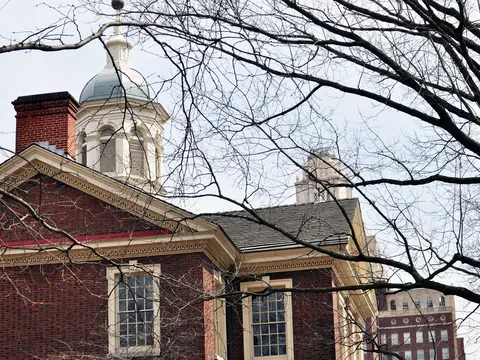
    The eighteenth-century quarter wraps around Independence National Historical Park, so the historic sites are a five-minute walk and can be done early before the tour queues build. Converted warehouse apartments here are larger than Center City hotel rooms and usually come with a kitchen, which suits a longer stay.

    • Independence Hall and the Liberty Bell on foot
    • Kitchens in most apartment conversions
    • Riverfront parks and the Race Street Pier a short walk east
    • Quiet residential streets on the Society Hill side

    Fitting a family in

    One- and two-bedroom loft conversions commonly sleep four to five without a rollaway. In the small hotels, family rooms exist but are limited in number and go early for spring weekends.

    Watch out. The streets here keep their original stone setts and uneven brick pavements, which are hard work with a pushchair and unpleasant with a wheeled suitcase. Second and Market has a late bar scene at weekends that carries several blocks, so the Society Hill side is the quieter half. Some warehouse conversions are walk-ups, and a fourth-floor loft with no lift is a different holiday with a toddler.

  • Suite hotel in University City
    University City / 30th Street StationBudget

    Suite hotel in University City

    The cheapest of the walkable areas, and the most convenient for arriving and leaving: the main intercity station is here, the airport train runs from it, and trips from New York or Washington start and end without crossing the city. Suite hotels serving visiting academics tend to have kitchens and separate sleeping areas as standard.

    • Intercity trains and the airport line at 30th Street Station
    • Kitchens and separate sleeping areas common in the stock
    • Campus green space and cafes rather than tourist retail
    • Trolley and subway links straight into Center City

    Fitting a family in

    Studio and one-bedroom suites with a kitchen and a sofa bed are the normal product and sleep four without a supplement in most cases.

    Watch out. The historic sites are across the Schuylkill, which is a twenty-five to thirty-minute walk over a bridge that is dull and exposed, so most days start with a train or trolley ride rather than a stroll. The area is quiet in the evening and much of it empties out over the summer, which is the reason the rates are lower. Dining is student-priced and correspondingly limited in range.

All family stays in United States

Some links on this page are affiliate links. If you book through one, the price is the same for you and we may earn a commission. How this works.

Things to do in Philadelphia with kids

  • Independence National Historical Park
    CultureBook ahead

    Independence National Historical Park

    Philadelphia

    A few walkable blocks of the eighteenth-century city, preserved as a national park: Independence Hall, where both the Declaration of Independence and the Constitution were debated and signed; the Liberty Bell in its own glass-walled centre; Congress Hall; and the open-air President's House site, which documents the executive mansion and the nine enslaved people George Washington held in that household. Admission to all of it is free.

    Ages
    7–17
    Time
    4h
    Adult, from
    Free

    Good to know. Independence Hall is entered only on a timed tour, and although the ticket is free beyond a small reservation charge it is released in advance and runs out early on summer days. The Liberty Bell needs no ticket but everyone passes an airport-style security screening, which is where the queue forms rather than at the exhibit. The content is talk, text and rooms behind ropes, so children much under seven get little from it — the President's House site, being outdoors and short, holds attention better. The slavery history here is stated plainly by the park and is worth raising with older children beforehand.

  • The Franklin Institute
    MuseumBook ahead

    The Franklin Institute

    Philadelphia

    A science museum on the Parkway built around exhibits children operate rather than read: a two-storey walk-through model of the human heart, a working steam locomotive on the floor, electricity and sports-science halls, a planetarium and a large-format cinema.

    Ages
    4–14
    Time
    3h 30m
    Adult, from
    €23

    Good to know. The planetarium, the big-screen cinema and the touring exhibitions are ticketed on top of general admission, so a family that wants all of it should price the combination rather than adding as it goes. The walk-through heart involves a narrow climb in a confined space and a queue that moves slowly; it is not for anyone claustrophobic and it is the single busiest thing in the building. Weekday mornings in term time bring large school groups.

  • Philadelphia Zoo
    Animals

    Philadelphia Zoo

    Philadelphia

    The oldest zoo in the country, chartered in 1859 and open since 1874, on a compact wooded site in West Philadelphia. Its distinguishing feature is a network of mesh trails overhead, through which big cats, primates and other animals travel above the visitor paths rather than staying in one enclosure.

    Ages
    1–12
    Time
    4h
    Adult, from
    €24

    Good to know. The site is small for the number of animals and it is almost entirely outdoors, so a wet day pushes everyone into a handful of small indoor houses at once. The overhead trails run on a rotation, which means the animals are not necessarily up there when a family walks beneath. Parking is charged separately and fills on weekends; the trolley and bus routes from Center City avoid that.

  • Reading Terminal Market
    Food

    Reading Terminal Market

    Philadelphia

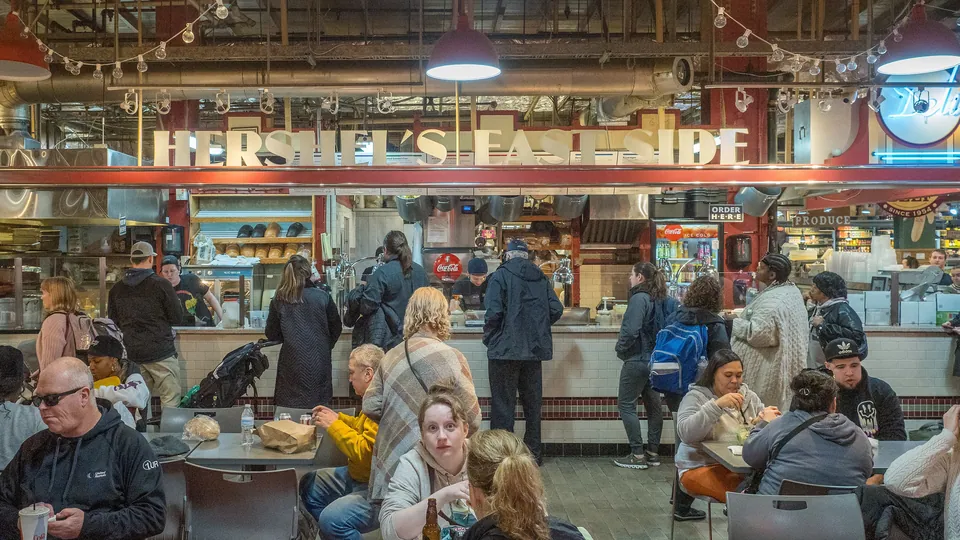
    A covered market trading on the same site since 1893, under the shed of a former railway terminal in the middle of Center City. Around a hundred stalls sell cooked food, produce, baked goods and Pennsylvania Dutch specialities, with shared tables in the centre.

    Ages
    3–16
    Time
    1h
    Adult, from
    Free

    Good to know. Free to walk through, and useful precisely because four people can eat four different things at one table. It is at its most crowded and loudest during a weekday lunch hour and whenever a large event fills the convention centre next door, and seating is shared and limited at those times. Several of the Pennsylvania Dutch stands trade on fewer days of the week than the rest of the market, so a specific stall is not guaranteed on any given day.

Some links on this page are affiliate links. If you book through one, the price is the same for you and we may earn a commission. How this works.

Getting around Philadelphia

Most of a family trip here happens on foot: Center City is flat, the streets are numbered, and the walk from Independence Hall to Reading Terminal Market takes about fifteen minutes. Where distance does appear — the zoo, the Parkway museums, the stadium district — the SEPTA network covers it with two subway lines, a set of trolleys and regional rail, paid by contactless card or a stored-value key card. Accessibility is mixed in the same way as most older American systems: the newer stations and every bus have step-free access, several of the older subway stations do not, and it is worth checking a specific station rather than assuming. The airport is connected to Center City by a regional rail line in around twenty-five minutes, which avoids a taxi entirely. Arriving by train from New York or Washington puts a family at 30th Street Station, one stop or a twenty-minute walk from the centre. A car is a liability rather than an asset inside the city — parking is expensive and the historic streets are narrow — but it is the only sensible way to reach Valley Forge, Longwood Gardens or the Pennsylvania Dutch country to the west.

Philadelphia tips for families

  • With kids

    Under-sevens should skip most of the founding history

    Independence Hall is a guided tour of rooms behind ropes and the Liberty Bell is a queue followed by an exhibition of text. Children under about seven get very little from either. The Please Touch Museum in Fairmount Park, the zoo and the science museum are the version of Philadelphia that works at that age, and an adult can do the history in a couple of hours while the other half of the family is elsewhere.

  • When to go

    Independence Hall is free but ticketed

    Entry to the building is by timed tour ticket for most of the year. The tickets cost nothing beyond a small reservation charge, but they are released in advance and run out early on summer days, so reserving before arriving is the difference between going in and looking at the outside. The Liberty Bell next door needs no ticket, but everyone passes through an airport-style security screening, which is where the queue actually forms.

  • Food

    Use the market as the default lunch

    Reading Terminal Market solves the problem of four people wanting four different things, and sits between the historic sites and the museums. It is at its worst in the middle of a weekday lunch hour and when a large convention is on next door, so eating early or late makes it considerably calmer. Several of the Pennsylvania Dutch stands trade on fewer days than the rest of the market.

  • Packing

    The old streets are cobbled

    Old City and Society Hill keep their original stone setts and brick pavements, including Elfreth's Alley. They are hard on small wheels and on anyone with a mobility issue. A carrier, or a buggy with larger wheels, makes that half of the city considerably easier.

Philadelphia with kids: common questions

How many days do you need in Philadelphia with kids?
Two to four. Two covers the Independence sites and one museum. Three adds the zoo or a full day on the museum boulevard, and four allows a trip out to Valley Forge or the Pennsylvania Dutch country. It also works well as a two-night stop between New York and Washington, both of which are under two hours away by train.
What age do children need to be for Philadelphia's historic sites?
Around seven and up for the founding-history sites themselves, which are tours, text and objects behind glass. Below that, the city still works, but through the children's museum, the science museum and the zoo rather than Independence Hall. Teenagers studying the period get more out of it than any other city in the country.
Do the Independence sites cover slavery?
Yes, and directly. The President's House site at Sixth and Market is an open-air installation on the ground where Washington and Adams lived while in office, and it documents the nine enslaved people Washington held in that household, including Ona Judge and Hercules, who both escaped. It is free, outdoors and takes about twenty minutes. Nearby museums and park programming address the same history, and it is worth preparing older children for the subject rather than meeting it cold.
Is Philadelphia walkable with a pushchair?
Center City is: flat, gridded and paved, with kerb ramps at most crossings. Old City and Society Hill are not, because they retain cobbled streets and uneven brick pavements. Buses and newer stations are step-free; several older subway stations are not, so a specific station is worth checking rather than assumed.
When is the best time to visit Philadelphia with kids?
April to June and September to October. Summer is hot and humid with high humidity holding overnight, and the outdoor sites offer little shade. Winter is cold but the main attractions are indoors and both hotel rates and queues fall sharply.

More of United States