Skip to content

Georgia

Savannah with Kids

Savannah was laid out in 1733 on a grid punctuated by public squares, and twenty-two of the original twenty-four survive — shaded by live oaks hung with Spanish moss, each with benches and a monument, spaced so that a walk across the historic district is broken by a green space every two or three minutes. That geometry is what makes the city unusually easy with children: there is always somewhere to sit, and nothing is more than a mile from anything else. The city's wealth came from cotton and rice shipped out of the river below the bluff, and from the enslaved labour that produced both, and the museums that deal with this are among the city's best — one of the earliest surviving urban slave quarters in the South stands behind a house museum a short walk from the main square. The honest trade-offs are a summer that is hot, humid and buggy, a riverfront reached by steep and genuinely hazardous cobbled ramps and stairs, and an evening culture in the historic district that revolves around open-container drinking in a way families notice.

Best for ages
5+
Suggested stay
2–4 days
Best months
Mar–May, Oct–Nov
Daily budget
€350

Mid-range, family of four

Why Savannah works with children

  • A square to stop in every two minutes

    Twenty-two shaded public squares broken through the grid mean a walk with small children has a built-in rest every block or so.

  • Slavery interpreted in the buildings that housed it

    An intact urban slave quarters behind a downtown house museum, and one of the country's oldest Black congregations a few squares away.

  • A public park with a fountain and playgrounds

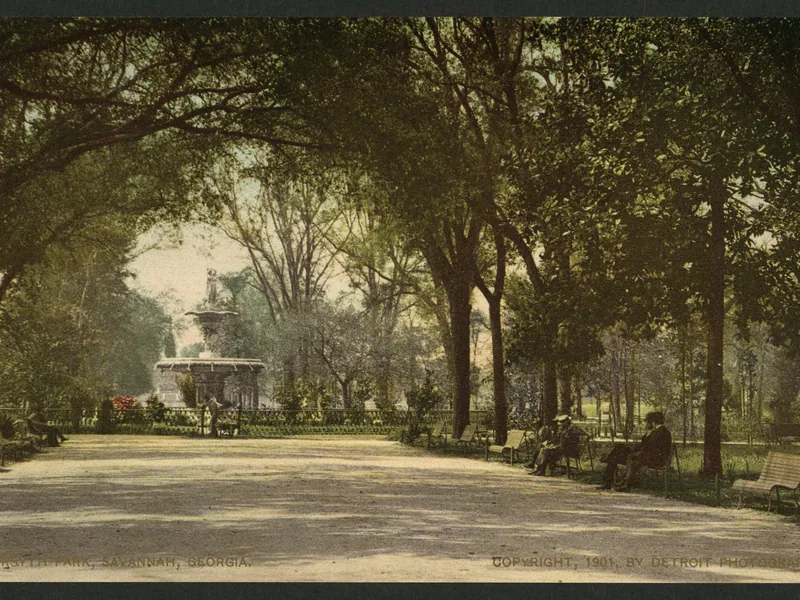
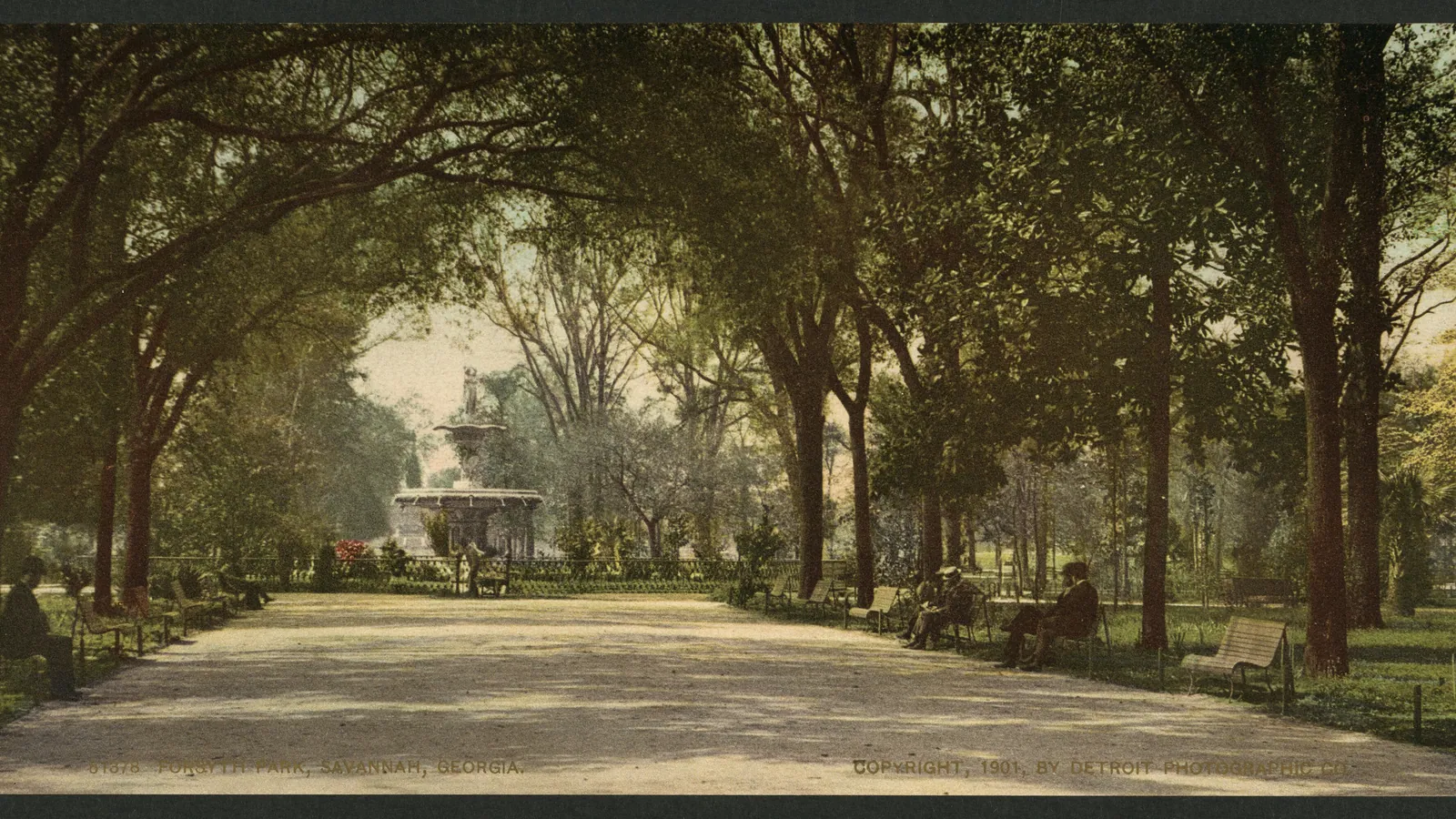
    Forsyth Park anchors the southern end of the district with lawns, a café, playgrounds and the fountain most people picture.

  • An Atlantic beach twenty-five minutes east

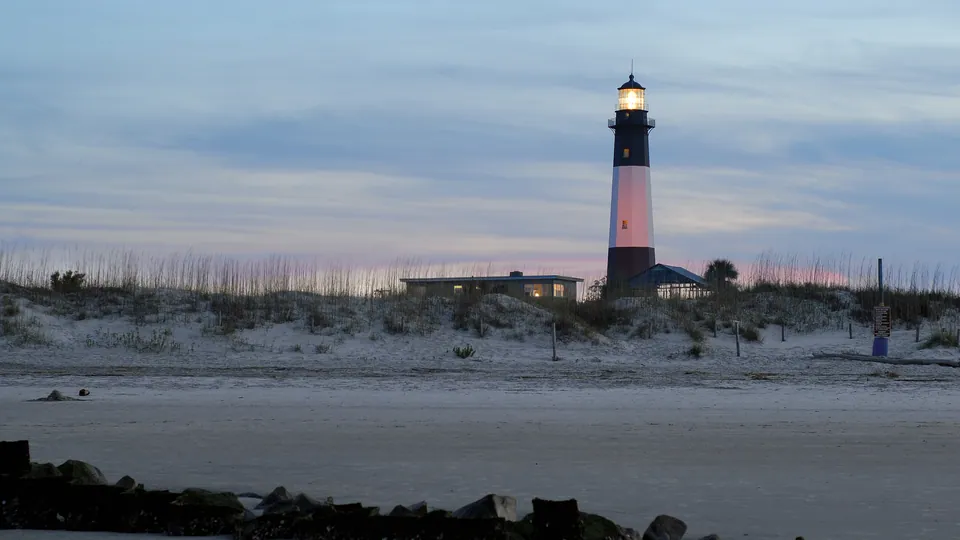
    Tybee Island has wide sand, a pier and a climbable lighthouse, which turns a two-day city visit into a four-day one.

  • The historic district is a walk, not a drive

    The grid is about a mile square, flat, and served by free shuttle buses, so a car can stay parked for the whole city portion.

Where to stay

Best areas in Savannah for families

4 areas cover most trips here; the difference is mainly first visits, walkable stays versus beach-led stays.
  • The Historic District squares

    Best for first visits, walkable stays

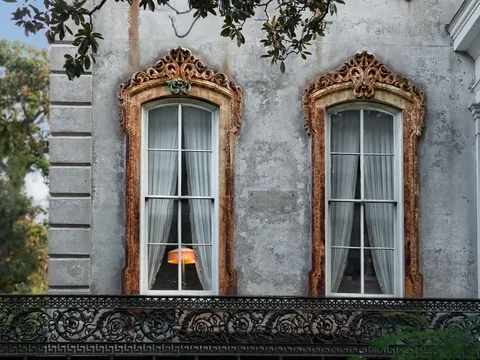
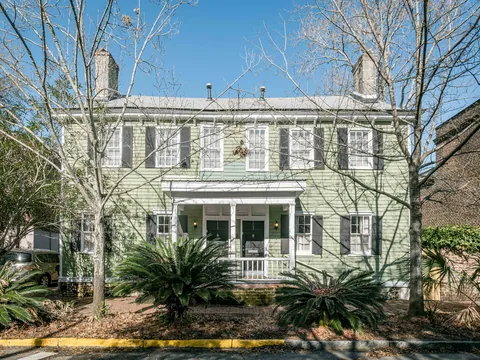
    The grid between the river and Forsyth Park, where the inns, the house museums and most of the restaurants are. Almost all accommodation here is converted historic buildings, which means stairs, no lift and paid parking a street away.

  • The Victorian District and Forsyth Park

    Best for families wanting space and a playground

    Immediately south of the park, with larger houses let as whole-floor apartments and a genuine neighbourhood feel. Ten to twenty minutes' walk further from the river, which is a trade most families are happy to make.

  • River Street

    Best for a short visit rather than a base

    The old cotton warehouses below the bluff, now bars, sweet shops and restaurants, reached by steep stone stairs and ballast-stone ramps. Loud at night, uneven underfoot, and the place where the open-container culture is most visible.

  • Tybee Island

    Best for beach-led stays

    A small barrier-island town twenty-five minutes east, with beach houses, a pier and a lighthouse. Quiet, limited shopping, and every trip into the city is a drive with metered parking at the other end.

Family hotel picks in Savannah

  • Inn or suite beside a Historic District square
    Historic District squaresHigher-end

    Inn or suite beside a Historic District square

    The squares are the destination, and a base among them means the whole city visit happens on foot with a shaded bench every two minutes, which is what makes the walking manageable with small children.

    • Flat walking to the squares, the museums and the restaurants
    • Courtyards and small pools at some properties
    • Free shuttle-bus loops through the district
    • Breakfast commonly included

    Fitting a family in

    Converted townhouses give irregular rooms; two-queen rooms for four exist but are a minority, and suites with a sofa bed are the usual answer for five.

    Watch out. Historic buildings mean stairs and sometimes no lift, and parking is a paid garage a street or two away rather than on site. Streets around the busier squares carry evening tour groups and, in a city that allows drinking outdoors downtown, a late-night soundtrack at weekends.

  • Whole-floor apartment in the Victorian District
    Victorian District / Forsyth ParkMid-range

    Whole-floor apartment in the Victorian District

    Space, a kitchen and a parking spot beside the city's main park and its playgrounds, ten to twenty minutes' flat walk further out than the squares and priced accordingly.

    • Full kitchen and laundry
    • Park with playgrounds and a café at the end of the street
    • Off-street or residential parking at many properties
    • Quieter evenings than the squares

    Fitting a family in

    Two- and three-bedroom apartments occupying one floor of a large Victorian house, sleeping five or six.

    Watch out. These are old houses divided into flats: steep entrance stairs, no lift, and sound carrying between floors are all common. The character of the streets changes over a short distance south and west of the park, so the walking route back after dark is worth looking at before booking.

  • Beach-house rental on Tybee Island
    Tybee IslandMid-range

    Beach-house rental on Tybee Island

    Turns a two-day city trip into a week by adding sand, a kitchen and somewhere for children to be outdoors, with the historic district still twenty-five minutes away.

    • Walking distance to the beach from most of the island
    • Full kitchen, laundry and an outdoor shower
    • Off-street parking, which the island's meters make valuable
    • Twenty-five minutes from the Savannah squares

    Fitting a family in

    Two- and three-bedroom raised beach houses sleeping six to eight are the standard product.

    Watch out. Every city outing is a drive that ends in metered downtown parking, and the island's shops and restaurants are limited, so a supermarket run on the way out is part of the plan. Summer lets are frequently weekly with a fixed changeover day, and the island is fully exposed to Atlantic storms in hurricane season.

All family stays in United States

Some links on this page are affiliate links. If you book through one, the price is the same for you and we may earn a commission. How this works.

Things to do in Savannah with kids

  • The squares and Forsyth Park
    City

    The squares and Forsyth Park

    Savannah

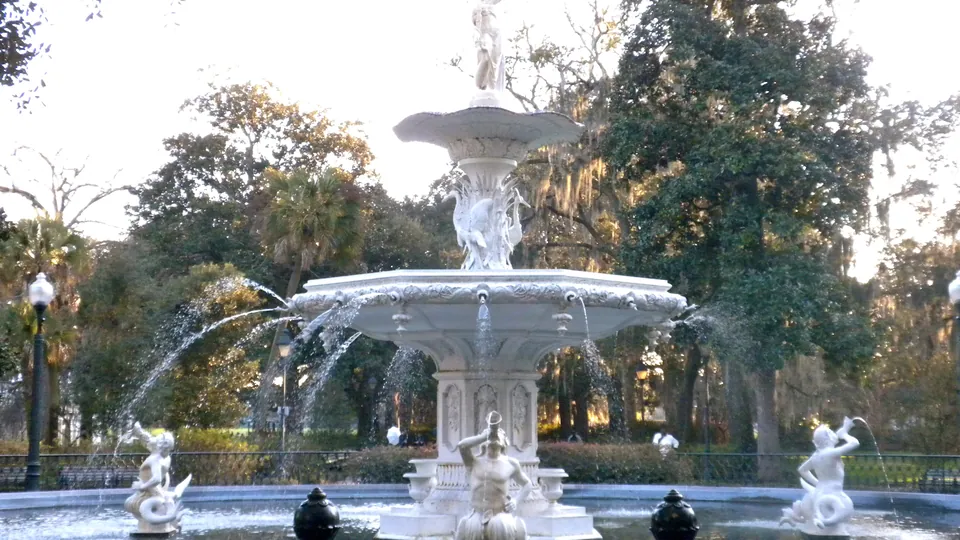
    The 1733 town plan, still intact: twenty-two of the original twenty-four public squares broken through a grid of streets, each shaded by live oaks and furnished with benches and monuments, running south to a thirty-acre park with playgrounds, lawns, a café and the fountain the city is known for.

    Ages
    0–16
    Time
    3h
    Adult, from
    Free

    Good to know. The walk is flat and paved and works with a pushchair, which is the main reason the city is easier with small children than it looks. Shade is continuous in the squares and absent on the connecting streets, and in July and August the humidity makes midday walking hard work. Biting midges are worst around dawn and dusk in spring and early autumn.

  • Owens-Thomas House and Slave Quarters
    Museum

    Owens-Thomas House and Slave Quarters

    Savannah

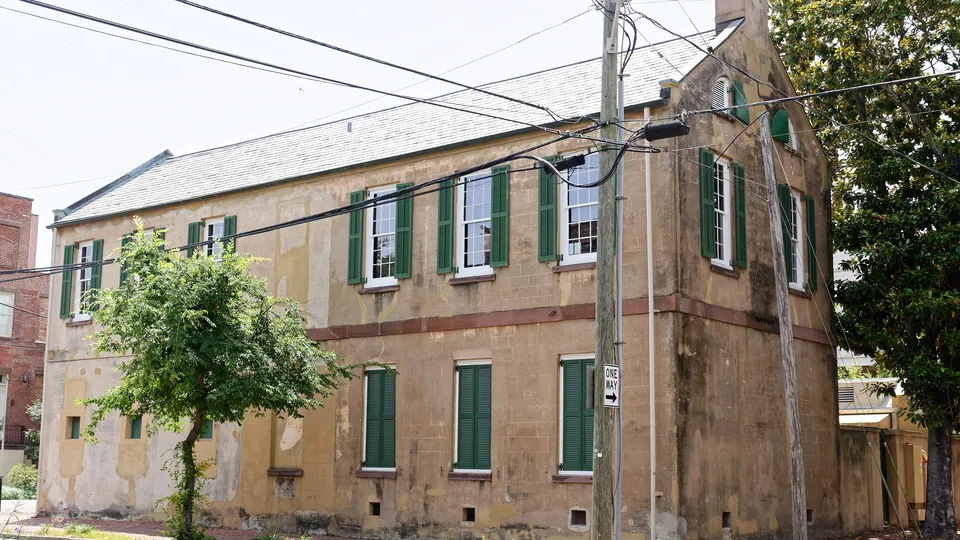
    An 1819 townhouse on Oglethorpe Square whose carriage block behind it contains one of the earliest intact urban slave quarters in the South, with original blue-pigmented ceiling paint still in place. The guided tour is built around the lives of the enslaved people who worked in the house rather than around its architecture.

    Ages
    8–17
    Time
    1h 30m
    Adult, from
    €20

    Good to know. Entry is by timed guided tour, and the quarters are a low-ceilinged outbuilding reached across a courtyard. The interpretation is direct and is the point of the visit; younger children will follow the rooms but not the argument. A single ticket usually also covers the museum's two other sites nearby, which is worth knowing before buying three separate entries.

  • Tybee Island and the lighthouse
    Water

    Tybee Island and the lighthouse

    Savannah

    A barrier-island beach town twenty-five minutes east of the city, with wide Atlantic sand, a fishing pier, a small marine science centre and a black-and-white lighthouse standing beside a preserved fort battery.

    Ages
    0–16
    Time
    5h
    Adult, from
    €12

    Good to know. Parking across the island is metered and paid through an app, with no free option near the beach, and the lots fill early on summer weekends. The lighthouse is a climb of well over a hundred steps with no lift and a narrow spiral at the top. Lifeguard coverage on the beach is seasonal and limited to marked stretches.

  • The white cast-iron fountain in Forsyth Park, Savannah, framed by live oaks hung with Spanish moss
    Museum

    Georgia State Railroad Museum and Children's Museum

    Savannah

    A pre-Civil War railway works on the western edge of the historic district, with a surviving roundhouse, turntable and smokestack and a handful of operating locomotives. The roofless ruins of the adjoining buildings have been converted into an outdoor children's museum of sound tunnels, maze walls and water play.

    Ages
    2–12
    Time
    3h
    Adult, from
    €15

    Good to know. The children's museum is entirely outdoors, which makes it unusable in heavy rain and punishing at midday in high summer — mornings are the window. Short train and handcar rides run on a seasonal schedule rather than continuously. It is a fifteen-minute walk or a short drive west of the main squares, across a busy road junction.

Some links on this page are affiliate links. If you book through one, the price is the same for you and we may earn a commission. How this works.

Getting around Savannah

The historic district is flat, about a mile square and best done on foot, with free shuttle buses looping through it and a free ferry crossing the river to the convention centre — the ferry is a short, cheap boat ride that children enjoy for its own sake. Parking downtown is metered on the street and cheaper in the municipal garages, and enforcement is active on weekdays. A car is needed for Tybee Island, for the railroad museum complex on the western edge and for the Gullah heritage museum south of the city. Two surfaces deserve advance thought: the ballast-stone ramps and staircases down to River Street are steep, worn and slippery when wet, and a pushchair should use the lift in the nearby city buildings or the gentler eastern ramps rather than the stairs.

Savannah tips for families

  • With kids

    Do not take a pushchair down the River Street stairs

    The historic ramps and staircases from Bay Street down to the river are uneven ballast stone, steep, and slick after rain, and they injure people every year. There are lifts inside the public buildings on Bay Street and a gentler ramped approach at the eastern end, both of which take an extra five minutes and are the right choice with a pushchair or a tired child.

  • Health & safety

    Spring brings gnats, summer brings both

    Biting midges, known locally as no-see-ums or sand gnats, are worst in spring and early autumn around dawn and dusk and are not much troubled by ordinary repellent; the products sold locally are more effective. From June to September the heat and humidity make midday walking hard work with children, and shade is the reason the squares exist.

  • When to go

    Mid-March is a city-wide event

    Savannah holds one of the country's largest St Patrick's Day parades, and for several days around it the historic district is full, hotel rates rise sharply and minimum stays appear. It is worth either planning for deliberately or avoiding entirely, but not stumbling into.

  • Culture & etiquette

    Downtown allows drinking in the street

    A long-standing city ordinance permits an alcoholic drink in a plastic cup outdoors within the historic district, which is why bar-crawl and ghost-tour groups are a constant presence on the squares after dark. It is rarely disorderly, and it does change the atmosphere of an evening walk with young children, particularly around River Street and at weekends.

Savannah with kids: common questions

Is Savannah good for children?
Better than its reputation as an adults' weekend city suggests. The squares make the walking easy, Forsyth Park has playgrounds and a fountain, the children's museum is an outdoor site in a former railway works, and a beach sits twenty-five minutes east. The limits are summer heat, biting gnats in spring and an evening drinking culture downtown.
How does Savannah present the history of slavery?
Several sites deal with it directly. The Owens-Thomas House is interpreted around the enslaved people who lived in its quarters, one of the earliest intact urban slave dwellings in the South. The First African Baptist congregation, organised in 1773, is among the oldest Black congregations in the country. South of the city, the Pin Point Heritage Museum tells the story of a Gullah-Geechee community in the oyster factory where it worked.
Is Savannah walkable with a pushchair?
The historic district mostly is — it is flat, gridded and paved, with squares to stop in. The exceptions are the cobbled and ballast-stone streets near the river and the stairs down to River Street, which should be avoided in favour of the lifts on Bay Street.
Is Tybee Island worth the drive?
Yes, as a full day rather than an afternoon. It is about twenty-five minutes each way, with wide Atlantic sand, a pier, a small aquarium and a lighthouse that is a long climb of stairs with no lift. Parking is metered across the whole island and fills early on summer weekends.
How many days does Savannah need?
Two to four. Two covers the squares, a house museum and Forsyth Park. Four adds Tybee Island, the railroad museum and time to do the historic district at a child's pace rather than a walking tour's.

More of United States