Skip to content

Washington

Seattle with Kids

Seattle is a port city wedged between Puget Sound and Lake Washington, with the Olympic Mountains on one horizon and the Cascades and Mount Rainier on the other, and it is unusually compact for an American city of its size. The attractions families come for cluster in two walkable groups — the waterfront and Pike Place Market at one end, and the Seattle Center campus of museums and the Space Needle at the other — with a monorail linking them. The rain reputation is worth correcting rather than defending: Seattle records fewer millimetres in a year than London or Milan, but spreads them as grey drizzle across a great many days between October and May, while July and August are among the driest and most reliable summer months anywhere in the country. The real trade-offs are the hills, which are steep enough to matter with a pushchair, and the fact that the scenery everyone associates with the Pacific Northwest is a one- to two-hour drive away rather than in the city.

Best for ages
3+
Suggested stay
3–5 days
Best months
May–Sep
Daily budget
€390

Mid-range, family of four

Why Seattle works with children

  • The ferries are public transport and an outing at once

    State ferries cross Puget Sound from the downtown terminal to Bainbridge Island and Bremerton on a walk-on fare, with mountains on both sides of the crossing.

  • Two clusters, not a sprawl

    Seattle Center puts a science centre, a music and pop-culture museum, a children's museum, a glass garden and the Space Needle inside one campus a child can walk across.

  • A dry, mild summer

    July and August are reliably rain-free with daytime highs typically in the low twenties, which is warm enough for full days outdoors and cool enough for them to be pleasant.

  • Mountains, volcanoes and rainforest within a drive

    Mount Rainier, the North Cascades and the Olympic Peninsula are each reachable as a long day trip by car from the city.

  • Markets and food halls rather than sit-down meals

    Pike Place and the neighbourhood food halls let each child choose separately, which removes most of the friction from eating out.

Where to stay

Best areas in Seattle for families

4 areas cover most trips here; the difference is mainly first visits with no car versus swapping the city for quiet, with the city still reachable.
  • Downtown & the waterfront

    Best for first visits with no car

    Pike Place Market, the aquarium, the ferry terminal and the light rail from the airport are all here, and the rebuilt waterfront promenade is flat. It is also the steepest part of the city — the grid climbs sharply away from the water, so a few blocks inland can mean a serious hill.

  • Seattle Center & Lower Queen Anne

    Best for families doing the museum cluster

    Immediately beside the science centre, the Space Needle and the children's museum, with the monorail into downtown from the same campus. Quieter in the evening than downtown, apart from nights when the arena has an event.

  • Ballard & Fremont

    Best for longer stays in a residential neighbourhood

    Low-rise neighbourhoods north-west of the centre with rental houses, playgrounds and the Ballard Locks, where a fish ladder lets children watch salmon climb through in summer. No light rail reaches here yet, so it is bus or car into the centre.

  • Bainbridge Island

    Best for swapping the city for quiet, with the city still reachable

    A 35-minute walk-on ferry from downtown, with a small waterfront town, beaches and forest. It suits families who want space, at the cost of building the day around a ferry timetable.

Family hotel picks in Seattle

  • Seattle — family room near the downtown waterfront
    Downtown / WaterfrontHigher-end

    Seattle — family room near the downtown waterfront

    Puts Pike Place Market, the aquarium, the ferry terminal and the light rail from the airport inside a walk, which removes transport from most days and makes a car unnecessary for a city-only stay.

    • Walking distance to Pike Place Market and the ferry terminal
    • Light rail from the airport to a station in the same district
    • Flat rebuilt waterfront promenade for pushchairs
    • Restaurants and food halls open late

    Fitting a family in

    American double-queen rooms sleep four without a rollaway and are the standard family product here; suites with a separate living area exist and cost a clear step more.

    Watch out. Parking is charged nightly on top of the room rate and is rarely worth paying for a city stay. The grid climbs steeply away from the water, so a hotel that looks four blocks from the ferry can be four blocks uphill — check the contours, not just the distance. Street noise is real on the main avenues.

  • Seattle — apartment with a kitchen near Seattle Center
    Lower Queen Anne / Seattle CenterMid-range

    Seattle — apartment with a kitchen near Seattle Center

    A kitchen and a separate bedroom next door to the science centre, the children's museum and the Space Needle, with the monorail into downtown from the same campus — which turns the museum cluster into a walk rather than a journey.

    • Kitchen and laundry in most units
    • Monorail to downtown in two minutes
    • Seattle Center museums and lawns across the street
    • Flatter streets than the downtown grid

    Fitting a family in

    One- and two-bedroom apartments sleep four to five properly; studios with a sofa bed are common and tight for a family of four.

    Watch out. The arena on the same campus holds concerts and matches, and those evenings bring crowds, traffic and higher prices to the surrounding streets. The area is quiet after the museums close, and the walk into the main downtown shopping and dining district is longer and hillier than the map suggests.

  • Seattle — house or apartment rental in Ballard or Fremont
    Ballard / FremontMid-range

    Seattle — house or apartment rental in Ballard or Fremont

    Residential neighbourhoods north of the ship canal with more space for the money, level streets, playgrounds and the locks where children can watch salmon climb a fish ladder in summer — the setup that works for a stay of a week or more.

    • Whole houses and garden flats with kitchens and laundry
    • Flat streets and neighbourhood playgrounds
    • Ballard Locks and the fish ladder within walking distance
    • Weekend farmers' markets and casual restaurants

    Fitting a family in

    Two- and three-bedroom houses are the normal unit here and sleep five or six comfortably, usually with a garden or deck.

    Watch out. No light rail reaches these neighbourhoods yet, so getting into the centre means a bus, a rideshare or a car — and a car brings residential parking rules with it. It is a 20- to 35-minute journey into downtown, which counts against it for a short first visit.

All family stays in United States

Some links on this page are affiliate links. If you book through one, the price is the same for you and we may earn a commission. How this works.

Things to do in Seattle with kids

  • Pike Place Market
    Food

    Pike Place Market

    Seattle

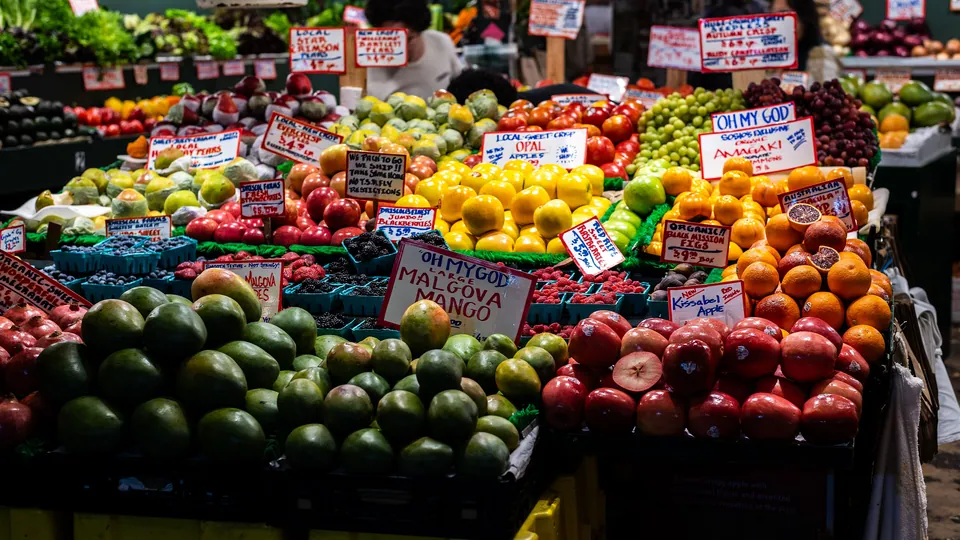
    A working public market on the downtown waterfront bluff, open since 1907, built over several levels with fish stalls, produce, bakeries, craft stands and small shops folded into the floors below the main arcade. Entry is free and most of the appeal for children is the fishmongers throwing whole salmon across the counter.

    Ages
    3–16
    Time
    2h
    Adult, from
    Free

    Good to know. The aisles are narrow and shoulder-to-shoulder from late morning onwards, which makes a pushchair genuinely difficult — a carrier is easier. The lower levels are reached by stairs and a lift that is easy to miss, and the market sits on a steep slope, so the walk back up from the waterfront is a climb. Most stalls wind down in the afternoon.

  • Space Needle & Seattle Center
    CityBook ahead

    Space Needle & Seattle Center

    Seattle

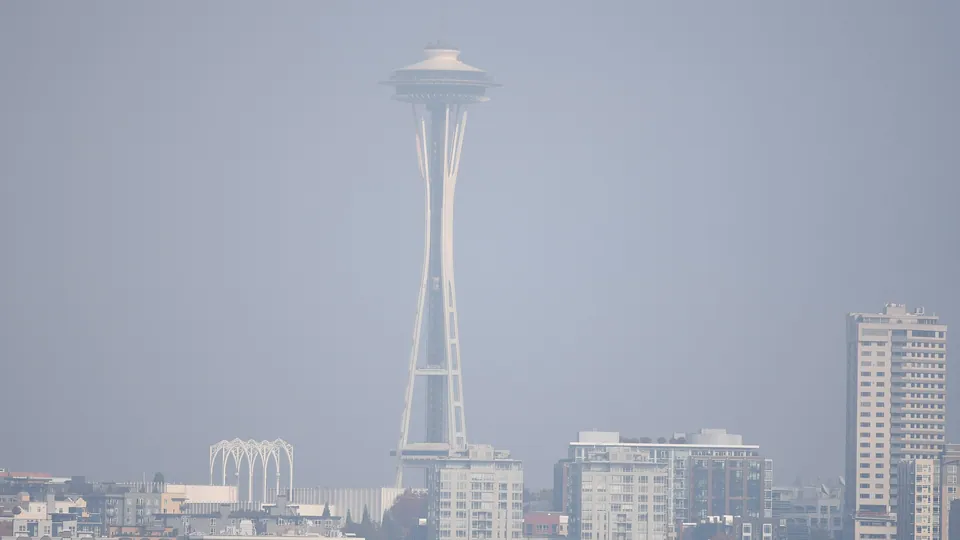
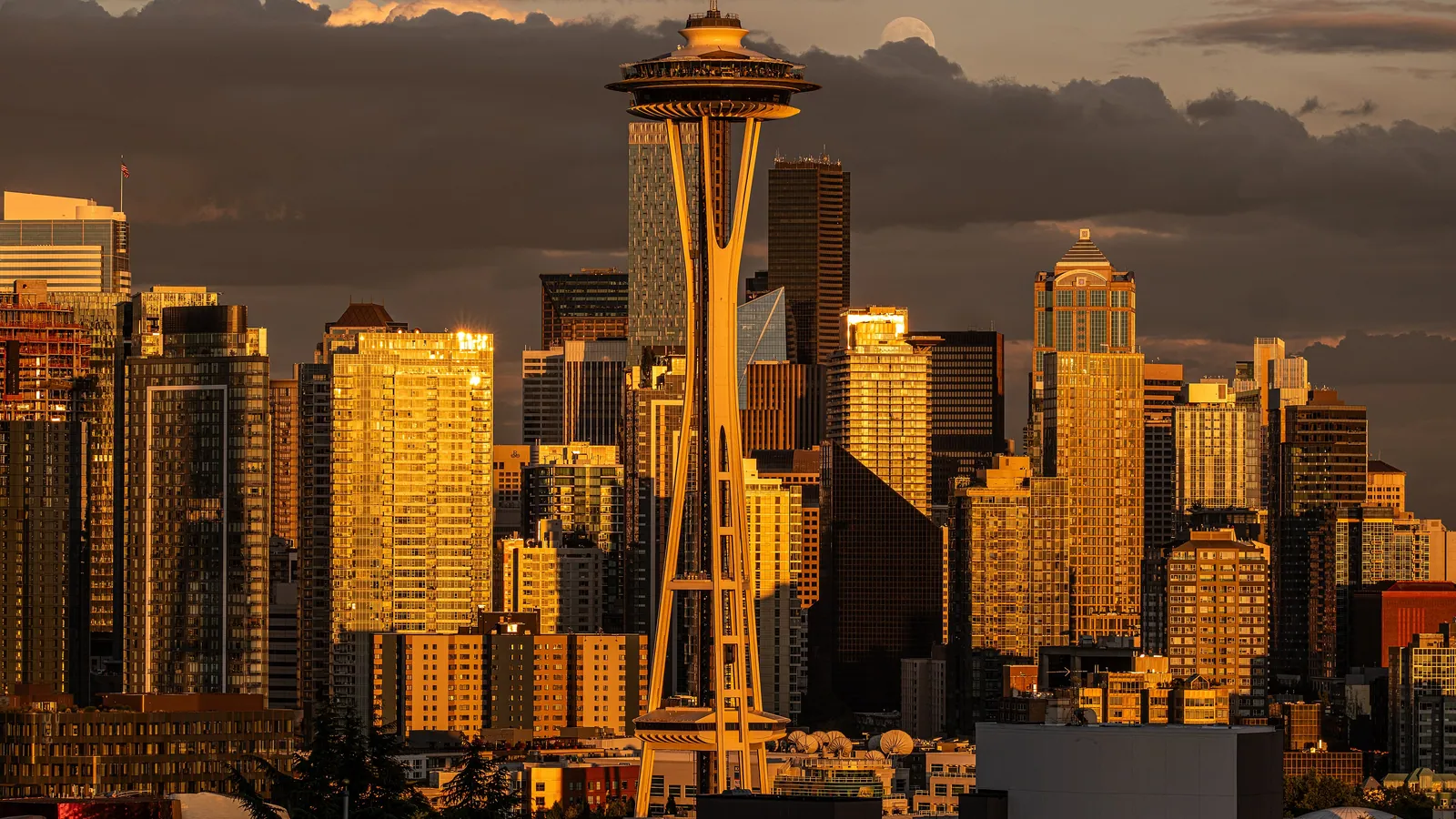
    The 1962 World's Fair tower and the campus around it, which also holds a science centre, a pop-culture and music museum, a children's museum, a glass and garden exhibit and an arena. The tower's upper level has floor-to-ceiling glass and a rotating glass floor beneath it.

    Ages
    4–16
    Time
    2h
    Adult, from
    €35

    Good to know. Tickets are sold for timed entry and the cheapest slots go first, but the more important check is visibility: low cloud sits over the city for much of the year and will erase the view entirely, so buying a fixed slot days ahead is a gamble outside summer. Children who dislike heights find the glass floor difficult rather than exciting.

  • Pacific Science Center
    Museum

    Pacific Science Center

    Seattle

    A hands-on science museum on the Seattle Center campus, with a tropical butterfly house, a planetarium, a large-format cinema, a dinosaur hall and water and physics exhibits aimed squarely at primary-school ages.

    Ages
    2–12
    Time
    3h
    Adult, from
    €22

    Good to know. This is the reliable wet-day option, which also means it is busiest exactly when the weather is bad. The planetarium and the large-format cinema are ticketed separately from general entry. The butterfly house is kept hot and humid and is entered through a double-door airlock with a staff check on the way out, which small children find slow.

  • Bainbridge Island ferry
    Water

    Bainbridge Island ferry

    Seattle

    A 35-minute state ferry crossing from the downtown terminal to Bainbridge Island, with the Seattle skyline behind and the Olympic Mountains ahead. The island end has a small walkable waterfront town with a museum, beaches and a park within a short walk of the dock.

    Ages
    1–16
    Time
    4h
    Adult, from
    €9

    Good to know. Walk on rather than driving — the vehicle queue in summer can run to more than one sailing, while foot passengers board straight from the terminal. The passenger fare on this route is typically collected in the westbound direction only, so the return is included. The outdoor decks are cold and windy even in July, and the sailing frequency drops enough in the evening that the return time is worth checking before leaving the dock.

Some links on this page are affiliate links. If you book through one, the price is the same for you and we may earn a commission. How this works.

Getting around Seattle

A car is not needed for a city-only stay and is an expensive liability downtown, where hotel parking is charged nightly on top of the room. Link light rail runs directly from the airport into downtown and north through the city on a single line, an ORCA card covers the trains, buses, the streetcar and the water taxi, and the monorail connects Westlake to Seattle Center in two minutes. Washington State Ferries carry foot passengers cheaply from the downtown terminal, and on the central Puget Sound routes the passenger fare is typically collected westbound only, so the return leg costs nothing extra. Hire a car for the days that leave the city — Mount Rainier, the North Cascades and the Olympic Peninsula have no practical alternative — and return it rather than paying to park it between those days.

Seattle tips for families

  • Packing

    Pack a hood, not an umbrella

    Rain outside high summer arrives as persistent light drizzle rather than downpours, and locals almost universally use waterproof jackets with hoods instead of umbrellas. A packable rain layer for every child is worth more here than a heavy coat, because the temperature rarely drops far.

  • Getting around

    Take the train in from the airport

    Link light rail runs from a station attached to the airport terminal straight into downtown in around 40 minutes, for a fraction of a taxi and without the motorway traffic. With luggage and children it is a level walk rather than a shuttle bus, which is the part that matters after a long flight.

  • When to go

    Treat Mount Rainier as a full day, and check access first

    The drive to the Paradise side of Mount Rainier takes roughly two hours each way, snow lingers on the high trails into July, and timed-entry reservations for the busiest park corridors have operated in recent summers. Check the park's own current requirements before setting off, because the system has changed more than once and arriving without a reservation on a summer weekend can mean being turned around.

  • With kids

    Look at the contours before booking, not just the map

    Downtown is built on a steep grade running up from the water, and a hotel that appears four blocks from the ferry terminal can be four blocks uphill. Families with a pushchair do better on the flat strip along the waterfront, near Seattle Center, or on the level neighbourhood streets north of the ship canal.

Seattle with kids: common questions

Does it really rain all the time in Seattle?
Not in the way the reputation suggests. Seattle has many more rainy days than most European cities but a lower annual rainfall total than London, because the rain comes as light drizzle rather than heavy downpours. July and August are genuinely dry, and that is the window families should aim for.
Do you need a car in Seattle with kids?
Not for the city itself. Light rail reaches downtown from the airport, the monorail links the two main attraction clusters, and the ferries are walk-on. A car earns its cost only for day trips to Mount Rainier, the Cascades or the Olympic Peninsula, and parking downtown is expensive enough that hiring one just for those days usually works out cheaper.
How many days do you need in Seattle?
Three to five. Three covers Pike Place, the waterfront, the Seattle Center museums and a ferry crossing. Five allows a full day in the mountains and a slower neighbourhood day without rushing.
Is Seattle manageable with a pushchair?
In parts. The waterfront promenade, the Seattle Center campus and the neighbourhood streets north of the ship canal are flat and easy. The downtown grid is not — several streets climb steeply away from the water, and Pike Place Market itself is a crowded multi-level building with narrow aisles.
When is the best time to visit Seattle with children?
Late June to early September, which is the dry season and the only reliable window for the mountains. May and September are quieter and mostly pleasant but carry a real chance of grey, damp days, and high trails at Mount Rainier may still be under snow in June.

More of United States