Skip to content

New York

New York City with Kids

New York works with children for a reason that is easy to miss from the outside: it is small. Manhattan is about 21 km long and 3.7 km wide, the street grid above 14th Street is numbered and almost impossible to get lost in, and the subway runs 24 hours, so the gap between a museum morning and a park afternoon is a ten-minute ride rather than a logistical exercise. The city also holds an unusually deep bench of attractions built for children — a natural history museum on the scale of a small country's national collection, 843 acres of park with roughly twenty playgrounds in it, ferries, an aquarium and a beach reachable on a normal subway fare. Two things push against all of that. Hotel rooms are small and expensive by the standards of anywhere else in this catalog, and a standard room that genuinely sleeps four has to be hunted for rather than assumed. And the subway, which is the thing that makes the city easy, is largely not step-free: only around a third of its 472 stations have a lift, and the rest are stairs, which is a daily constraint rather than an occasional one for anyone travelling with a pushchair.

Best for ages
4+
Suggested stay
4–6 days
Best months
Apr–Jun, Sep–Oct
Daily budget
€460

Mid-range, family of four

Why New York City works with children

  • A 24-hour network, one flat fare

    The subway charges the same fare for one stop or twenty and runs all night, so distance stops being a factor in planning a day.

  • Attractions that span the whole age range

    Dinosaur halls and playgrounds for younger children; observation decks, skateparks and record shops for teenagers, in the same neighbourhoods.

  • Central Park is a full day, not a photo stop

    Four kilometres of paved, pushchair-friendly paths, a zoo, a carousel, rowing boats and playgrounds at nearly every entrance.

  • A lot of the best of it is free

    The Staten Island Ferry, the Brooklyn Bridge walkway, the High Line, the memorial plaza and every park cost nothing.

  • Eating out needs no plan and no reservation

    Pizza by the slice, diners, delis and food halls all serve children at any hour without booking or a formal sitting.

Where to stay

Best areas in New York City for families

4 areas cover most trips here; the difference is mainly first visits and short stays versus more room for the money.
  • Midtown West / Hell's Kitchen

    Best for first visits and short stays

    The densest cluster of large hotels in the city, walking distance to Times Square, the Hudson River piers and several subway lines. It is also the loudest and most crowded part of Manhattan, and the blocks change character sharply from one avenue to the next — the exact street matters more here than the district name.

  • Upper West Side

    Best for families with young children

    Residential, with Central Park on one side and Riverside Park on the other, the natural history museum in the middle and a supermarket on most corners. The trade-off is fewer hotels, more apartment-style stays, and a 15–25 minute ride to anything downtown.

  • Lower Manhattan / Financial District

    Best for value in a walkable core

    Office district that empties at the weekend, which is why rooms are often cheaper than Midtown for the same size. The ferry terminals, the memorial plaza, the Brooklyn Bridge and the seaport are all on foot from here.

  • Downtown Brooklyn / Brooklyn Heights

    Best for more room for the money

    Larger rooms and apartments, a waterfront park with playgrounds and views back at Manhattan, and several subway lines converging. Costs 15–25 minutes each way to Midtown, and some of the local stations have no lift.

Family hotel picks in New York City

  • Family room in Midtown West
    Midtown West / Hell's KitchenMid-range

    Family room in Midtown West

    This is where the large-format hotels are, which in New York is the difference between one room for four people and two rooms. It also puts a family within a few minutes of more subway lines than anywhere else in the city, so no day starts with a long connection, and Ninth Avenue behind it is a continuous run of inexpensive restaurants that seat children without a booking.

    • Rooms with two double beds rather than one king
    • Several subway lines within a five-minute walk
    • Hudson River piers and playgrounds a few blocks west
    • Late-opening casual restaurants along Ninth Avenue

    Fitting a family in

    Look for a room listed as having two double or two queen beds and stating four as the maximum occupancy. New York rooms are small and many are capped at two or three occupants by fire code regardless of how the beds look, and a party of four can be turned away at check-in on that basis.

    Watch out. The character of these blocks changes sharply from one avenue to the next, and the streets immediately around Times Square and the bus terminal are crowded and loud well into the night — the exact address matters far more than the district name. A nightly 'destination' or 'facility' fee is common here and is usually excluded from the rate quoted at booking.

  • Two-bedroom apartment on the Upper West Side
    Upper West SideHigher-end

    Two-bedroom apartment on the Upper West Side

    A residential neighbourhood with Central Park on one side and Riverside Park on the other, the natural history museum in the middle, and supermarkets rather than souvenir shops. A separate bedroom and a kitchen change how a trip with young children runs: early bedtimes work, breakfast happens before leaving, and jet lag is survivable.

    • Kitchen and laundry in the building
    • Central Park and its playgrounds at the end of the block
    • Supermarkets and pharmacies rather than tourist retail
    • Express subway lines running down the west side

    Fitting a family in

    Two-bedroom units generally sleep four to five comfortably, which is rare in Manhattan. Aparthotels and licensed serviced apartments are the reliable product here; check whether the second bedroom is a real room or a windowless interior space, which is common in older conversions.

    Watch out. New York restricts short-term letting tightly, so whole-apartment rentals for stays under thirty nights are scarce and often not legal — the dependable options are aparthotels and licensed serviced suites, and a listing that looks like a bargain may be neither. Many older buildings are walk-ups with no lift. It is also 15–25 minutes to anything downtown, which is fine on a five-day trip and tedious on a two-day one.

  • Suite or apartment-hotel in Downtown Brooklyn
    Downtown Brooklyn / Brooklyn HeightsBudget

    Suite or apartment-hotel in Downtown Brooklyn

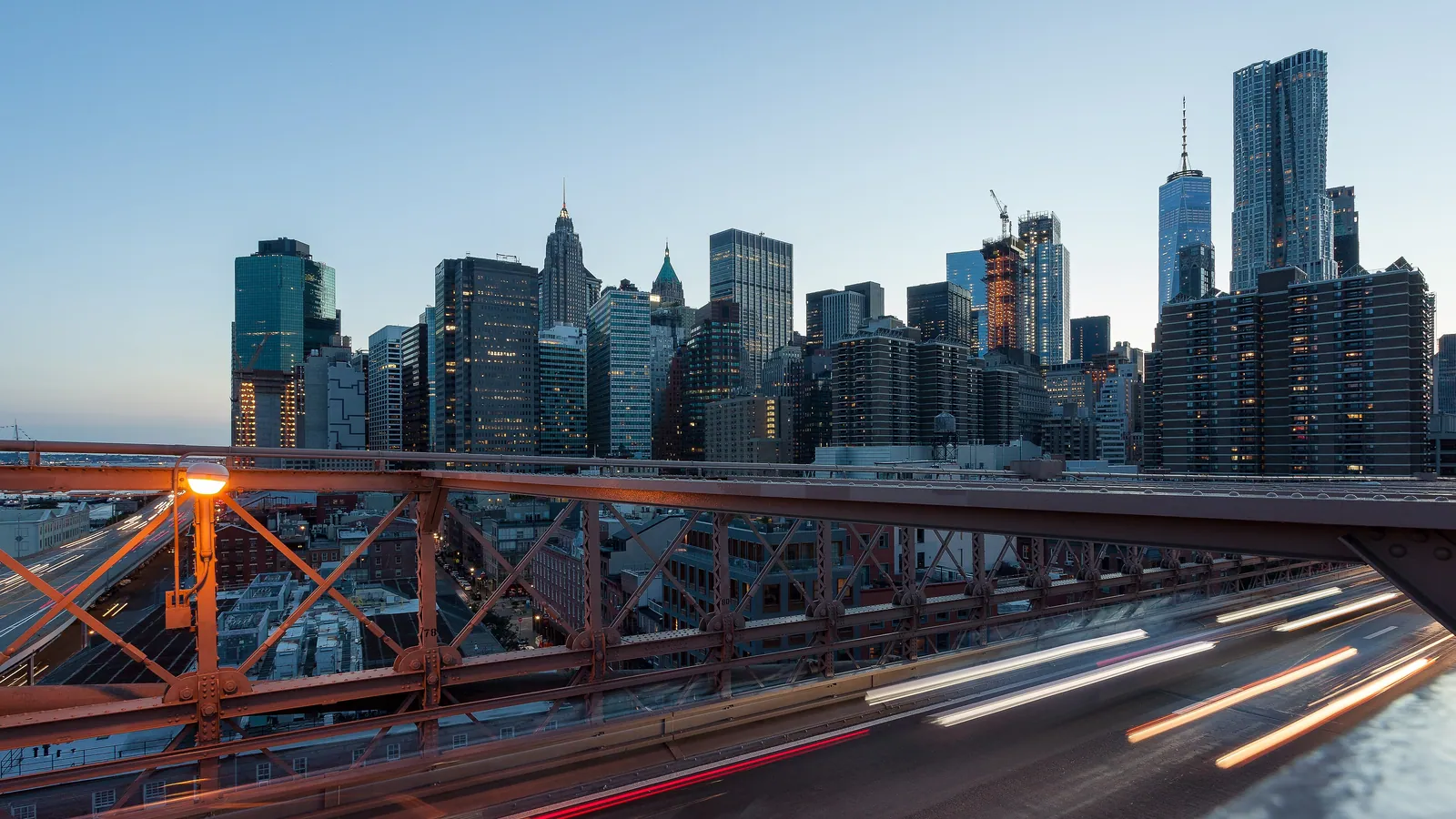
    The cheapest way to get a room that actually fits a family without leaving the walkable city. Rates run below Manhattan for the same square metres, a dozen subway lines converge within a few blocks, and Brooklyn Bridge Park along the waterfront has playgrounds, a carousel and the best free view of Manhattan there is.

    • Larger rooms and suites than equivalent Manhattan rates buy
    • Brooklyn Bridge Park and its playgrounds within walking distance
    • Multiple subway lines and the Brooklyn Bridge walkway on foot
    • Neighbourhood restaurants that are quiet by early evening

    Fitting a family in

    Suites and apartment-hotel studios in this area more often sleep four on a genuine sofa bed plus two beds rather than a folding cot. Confirm the sleeping arrangement in writing, because 'suite' is used loosely.

    Watch out. Cheapest here still means expensive by any other standard in this catalog — this is the bottom of the New York market, not a budget option. Add 15–25 minutes each way to most Manhattan plans, and note that several Brooklyn stations have no lift, so a step-free route out of the neighbourhood needs checking rather than assuming. Downtown Brooklyn itself is an office and civic district that is bleak on a Sunday.

All family stays in United States

Some links on this page are affiliate links. If you book through one, the price is the same for you and we may earn a commission. How this works.

Things to do in New York City with kids

  • American Museum of Natural History
    MuseumBook ahead

    American Museum of Natural History

    New York City

    One of the largest natural history collections in the world, on Central Park West: fossil halls holding mounted dinosaur skeletons, dioramas of African and North American mammals, a blue whale suspended over the ocean hall, and the Rose Center planetarium. The Gilder Center wing, opened in 2023, adds an insectarium and a walk-through butterfly vivarium.

    Ages
    3–16
    Time
    3h 30m
    Adult, from
    €26

    Good to know. Far too large to see in one visit — families who pick two floors and stop do better than families who attempt the building. Entry is by timed slot and slots go early in school holidays. The planetarium space show and some special exhibitions are ticketed separately from general admission. The 81st Street subway station has a lift and an entrance inside the museum, which is unusual for this system and worth using.

  • Central Park
    Nature

    Central Park

    New York City

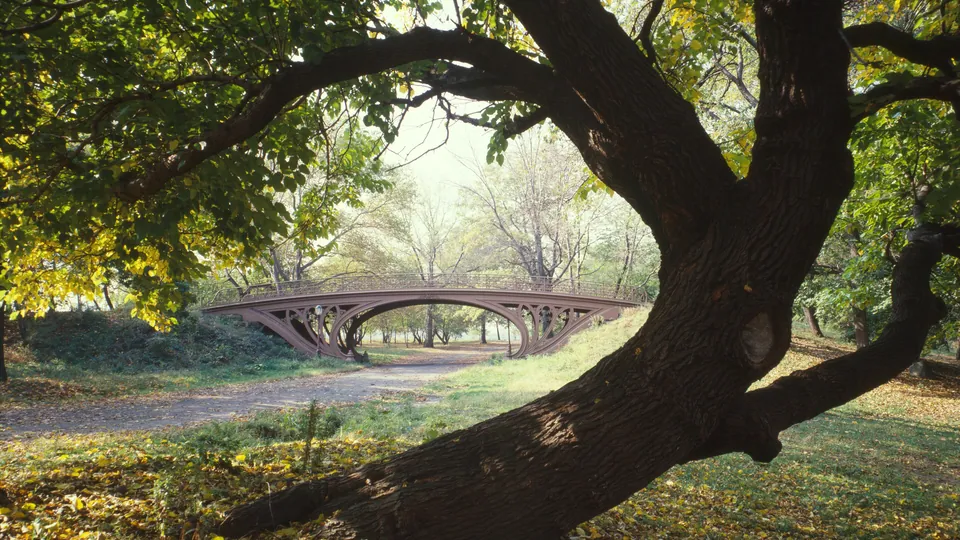
    843 acres of designed landscape running four kilometres up the middle of Manhattan, containing roughly twenty playgrounds, a small zoo, a carousel, a boating lake, open meadows and the Bethesda Terrace. Free to enter, open from early morning to late at night, and paved throughout.

    Ages
    0–16
    Time
    3h
    Adult, from
    Free

    Good to know. The scale catches people out: walking the full length is about an hour without stopping, so it is worth entering at the gate nearest the intended playground rather than at the southern corner by default. Paths are paved and pushchair-friendly, but there is very little shelter from rain and limited shade on the open lawns. The zoo and the carousel are ticketed separately; everything else is free.

  • Statue of Liberty & Ellis Island
    CultureBook ahead

    Statue of Liberty & Ellis Island

    New York City

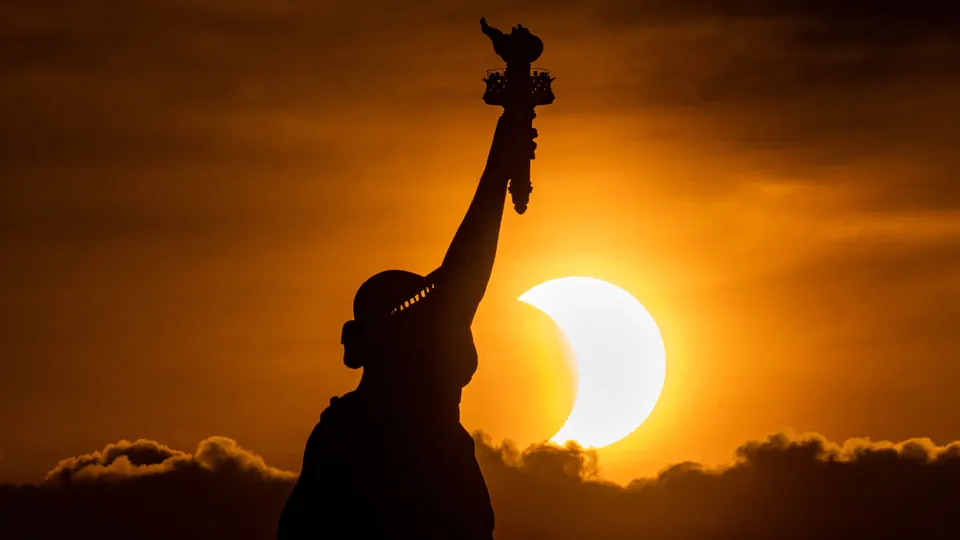
    A ferry from Battery Park calls at Liberty Island and then at Ellis Island, where the immigration station that processed arrivals for six decades is now a museum with a searchable passenger database. One ferry ticket covers both islands and the grounds; pedestal and crown access are separate, limited tickets.

    Ages
    6–16
    Time
    5h
    Adult, from
    €24

    Good to know. Budget most of a day: the ferry is the only way across, everyone passes airport-style security before boarding, and the queue at Battery Park is longest from mid-morning. Crown access is a climb of 162 steps up a narrow spiral staircase with no lift and a minimum height of about 122 cm, and those tickets are released months ahead and sell out. Families who only want to see the statue can ride the Staten Island Ferry instead, which is free, needs no booking and passes it at a distance.

  • 9/11 Memorial & Museum
    CultureBook ahead

    9/11 Memorial & Museum

    New York City

    Two square reflecting pools set in the footprints of the towers, ringed by the names of those killed, inside a public plaza of oak trees. Beneath the plaza, a museum records the attacks and their aftermath through recovered objects, recordings and a historical exhibition.

    Ages
    10–17
    Time
    2h 30m
    Adult, from
    €32

    Good to know. The outdoor memorial plaza is free, open to everyone and quiet. The museum is ticketed and publishes its own guidance recommending the historical exhibition for visitors aged ten and older; that exhibition sits behind a separate entrance with an advisory so it can be skipped while still seeing the rest. Families with younger children can visit the plaza alone without entering the museum at all.

Some links on this page are affiliate links. If you book through one, the price is the same for you and we may earn a commission. How this works.

Getting around New York City

The subway is the fastest way to cross the city and the cheapest, with a single flat fare paid by tapping a contactless bank card or phone at the gate; taps from the same card are capped over a seven-day period, so a weekly pass is rarely worth buying separately. Young children under about 112 cm travel free with a paying adult. The hard constraint is accessibility: roughly a third of the 472 stations have a lift, entrances are frequently stairs straight down from the pavement, and a lift that exists may serve only one of four platforms. A family with a pushchair should plan on carrying it down steps several times a day, or use a carrier and a folding buggy instead. Every city bus, by contrast, has a ramp and kneels to the kerb — buses are fully step-free and much slower, which makes them a good swap for short crossing-town hops rather than long journeys. Above 14th Street the grid is numbered and walking is genuinely practical: twenty north–south blocks is about a mile. Of the three airports, Newark and JFK both connect to the city by an AirTrain into a rail line, while LaGuardia has no rail link at all and is reached by bus or taxi.

New York City tips for families

  • Packing

    Decide about the pushchair before the flight

    Most subway stations are stairs only, and the ones with lifts often have a single lift at one end of a long platform. A carrier for a toddler, or a light folding buggy one adult can lift one-handed, travels far better here than a full pram. Buses are all ramp-equipped and are the step-free fallback when a station is not.

  • When to go

    Book the three or four things that sell out, walk into the rest

    Statue of Liberty crown tickets, the observation decks at sunset and timed museum slots in school holidays genuinely sell out weeks ahead. Almost everything else — parks, bridges, ferries, most galleries — absorbs a walk-up. Booking a rigid slot for every day of a city trip with children is how a schedule breaks.

  • Money & costs

    The free version is often the better one

    The Staten Island Ferry passes the Statue of Liberty at a distance, runs around the clock, costs nothing and needs no booking — for a family that only wants to see the statue rather than climb it, it replaces a half-day ticketed trip. The same logic covers the Brooklyn Bridge walkway, the High Line and the memorial plaza.

  • With kids

    Check the stated maximum occupancy, not the bed count

    Many New York hotel rooms are legally capped at two or three occupants regardless of how the beds look, and a family of four can be refused at check-in. Look for rooms described as having two double beds and listing four as the maximum. Separately, a nightly 'destination' or 'facility' fee is common and is usually excluded from the quoted rate.

New York City with kids: common questions

How many days do you need in New York with kids?
Four to six. Four covers one big museum, Central Park, a downtown day and a ferry or bridge walk without rushing. Six allows a beach or zoo day out in Brooklyn or the Bronx and a slower pace, which matters more with children under eight than adding another landmark.
Is the New York subway pushchair friendly?
Largely not. Around a third of the 472 stations have a lift and the rest are reached by stairs, so a pushchair usually has to be carried. City buses are the step-free alternative — every one has a ramp and kneels — but they are much slower. Many families use a carrier or a buggy light enough to lift with one hand.
Where should families stay in New York?
Midtown West for the widest choice of large rooms and the shortest walk to the most subway lines; the Upper West Side for a quieter, residential base beside Central Park and the natural history museum; the Financial District or Downtown Brooklyn for more space at a lower nightly rate. What matters most is being within a few minutes of a station on a line that reaches where you are going.
Is the 9/11 Memorial and Museum suitable for children?
The memorial plaza outdoors is free, open to all ages and handled quietly. The museum publishes its own guidance recommending its historical exhibition for visitors aged ten and older, and that guidance is the one to plan from rather than a general age rule. Younger children can visit the plaza and the surrounding park without entering the museum.
When is the best time to visit New York with kids?
Late April to June and September to October. Both give long daylight, usable park weather and no extremes. July and August are hot and humid with little shade on the avenues, and January and February are genuinely cold, though a winter trip buys much lower hotel rates and short museum queues.

More of United States