
Skip to content

Louisiana

New Orleans with Kids

New Orleans sits inside a bend of the Mississippi in southeast Louisiana, much of it below sea level and kept dry by levees, canals and pumps — the first fact to absorb about the place, and the reason the failure of that system during Hurricane Katrina in 2005 flooded roughly four-fifths of the city. For a family the workable city is a short string of neighbourhoods along a streetcar line: the French Quarter's 1720s grid at one end, the Garden District's antebellum houses in the middle, and City Park at the other, a park larger than New York's Central Park holding a fairy-tale playground, a 1906 carousel, an art museum and a free sculpture garden. It is also a city whose nineteenth-century wealth rested on the largest slave market in the United States, and the museums and historic sites here now say so plainly rather than dress it up as romance. Two trade-offs are real and neither is subtle: Bourbon Street is an adult nightlife strip that families should route around in the evening, and summer is punishing — afternoons above 33°C with humidity to match, a thunderstorm most days, and a hurricane season running from June into November.

Best for ages
5+
Suggested stay
3–5 days
Best months
Feb–Apr, Oct–Nov
Daily budget
€300

Mid-range, family of four

Why New Orleans works with children

  • The streetcar is the sightseeing

    Four lines on a flat fare connect the Quarter, the Garden District, the museums and City Park. The St Charles line runs in green 1920s cars and is the ride as much as the journey.

  • A park bigger than Central Park

    City Park holds a stand of mature live oaks, a storybook playground, a restored 1906 wooden carousel, the art museum and a sculpture garden that costs nothing to walk into.

  • Children eat well without a children's menu

    Beignets, po-boys, red beans and rice and jambalaya are cheap, filling and mostly not chilli-hot. Restaurants serve early, and many of the best-known places are counter service.

  • Live music in daylight

    Brass bands and street musicians play in Jackson Square and around the French Market through the afternoon, and some listening rooms admit all ages because they are not bars — worth checking a venue's own policy rather than assuming either way.

Where to stay

Best areas in New Orleans for families

4 areas cover most trips here; the difference is mainly families who want to walk everywhere versus museum-led trips and bigger rooms.
  • Lower French Quarter (below St Ann, toward Esplanade)

    Best for families who want to walk everywhere

    The residential, riverside end of the Quarter, around Royal, Chartres and Decatur below Jackson Square. Everything in the old city is on foot, the streets are quiet by nine in the evening, and the Riverfront streetcar runs along the levee — a different proposition from the blocks around Bourbon, which start a few streets inland.

  • Bourbon Street

    Best for not families

    A concentrated strip of bars, clubs and adult venues where carrying an open alcoholic drink on the street is legal and the noise runs into the early hours. Minors cannot enter the bars, the pavements are unpleasant by mid-evening, and several hotels advertised simply as French Quarter sit on or beside it. Check the street address, not the neighbourhood name.

  • Garden District & Uptown

    Best for quiet nights and more space for the money

    Leafy streets of nineteenth-century houses strung along the St Charles streetcar, with the zoo and Audubon Park at the far end. Apartments and guesthouse rooms cost less than the Quarter and come with gardens and kitchens; the cost is a twenty- to forty-minute streetcar ride into the centre each way.

  • Warehouse & Arts District

    Best for museum-led trips and bigger rooms

    The converted warehouse blocks between the Quarter and the river bend, where the larger suite hotels are and where the World War II museum sits. It is a ten-minute walk to Canal Street and the streetcar lines, and it is quiet in the evening in a way that means finding dinner takes a short walk.

Family hotel picks in New Orleans

  • Lower French Quarter — guesthouse rooms and suites toward Esplanade
    French Quarter, below St AnnHigher-end

    Lower French Quarter — guesthouse rooms and suites toward Esplanade

    The residential end of the old city, where the whole Quarter, the French Market, the riverfront and the streetcar are on foot, and the streets go quiet in the evening — the walkability of a central base without the nightlife that comes with the rest of it.

    • Everything in the French Quarter within a ten-minute walk
    • Courtyard buildings, many with a pool
    • Riverfront streetcar along the levee
    • Quiet residential streets after dark

    Fitting a family in

    Converted townhouses run to suites and one- or two-bedroom apartments that sleep four to five; standard doubles in the same buildings are small, and cots take up most of the floor.

    Watch out. These are eighteenth- and nineteenth-century buildings, which means steep stairs, narrow corridors and lifts that are small or absent, and courtyards carry sound between rooms. Parking is a paid garage several streets away rather than on site, and Bourbon Street is only a few blocks inland, so confirm exactly which block the address is on.


  • Garden District — apartment rentals on the streetcar line
    Garden District / UptownMid-range

    Garden District — apartment rentals on the streetcar line

    More space and a kitchen for less than a Quarter room, on leafy residential streets where children can be outside in the evening, with the St Charles streetcar at the end of the block and the zoo and Audubon Park at the other end of it.

    • Kitchen, washing machine and a garden or porch
    • St Charles streetcar to the centre and to the zoo
    • Quiet residential streets with grocery shops nearby
    • Noticeably lower nightly rates than the French Quarter

    Fitting a family in

    Whole-floor apartments in double shotgun houses are the common product — two bedrooms, a living room and a kitchen sleeping four to five without a sofa bed.

    Watch out. The streetcar into the centre takes twenty to forty minutes each way and the historic cars have steep steps, no air conditioning and no level boarding, which is a long ride on a hot afternoon with a tired child. The Uptown streets are uneven, with pavements lifted by oak roots, and short-term rental rules here change, so confirm a listing is licensed before paying.

  • Warehouse & Arts District — suite hotels near the river
    Warehouse & Arts DistrictMid-range

    Warehouse & Arts District — suite hotels near the river

    The larger, newer rooms in the centre of the city, in converted warehouse blocks a ten-minute walk from the Quarter and next door to the museums, with lifts, air conditioning that works and enough floor space for four people and luggage.

    • Suites and two-room layouts with lifts throughout
    • Ten minutes' walk to Canal Street and the streetcar lines
    • Museums and the children's attractions in the same district
    • On-site or adjacent garage parking

    Fitting a family in

    Suite hotels here are built for it — separate sleeping and living areas sleeping four to five, with kitchenettes in the apartment-style buildings.

    Watch out. It is quiet in the evening in a way that means dinner is a walk rather than a decision made at the door, and the district empties at weekends outside event dates. The nearest streetcar stops are on Canal Street, not at the door.

All family stays in United States

Some links on this page are affiliate links. If you book through one, the price is the same for you and we may earn a commission. How this works.

Things to do in New Orleans with kids

  • The French Quarter and Jackson Square
    Culture

    The French Quarter and Jackson Square

    New Orleans

    The original city, laid out as a grid in the 1720s and rebuilt in brick and iron after two eighteenth-century fires, which is why the architecture reads Spanish rather than French. Jackson Square sits at its centre in front of the cathedral, with the French Market, the riverfront levee walk, street musicians and the beignet cafés all within a few blocks.

    Ages
    4–16
    Time
    3h
    Adult, from
    Free

    Good to know. Bourbon Street runs through the middle of the Quarter and is an adult nightlife strip, unpleasant with children from mid-evening onward; carrying an open alcoholic drink on the street is legal here, so it is visible everywhere rather than confined to the bars. Walk the riverside streets — Royal, Chartres, Decatur — instead. The pavements are uneven brick and flagstone with high kerbs and few dropped edges, which makes a pushchair hard work, and there is very little shade at midday.

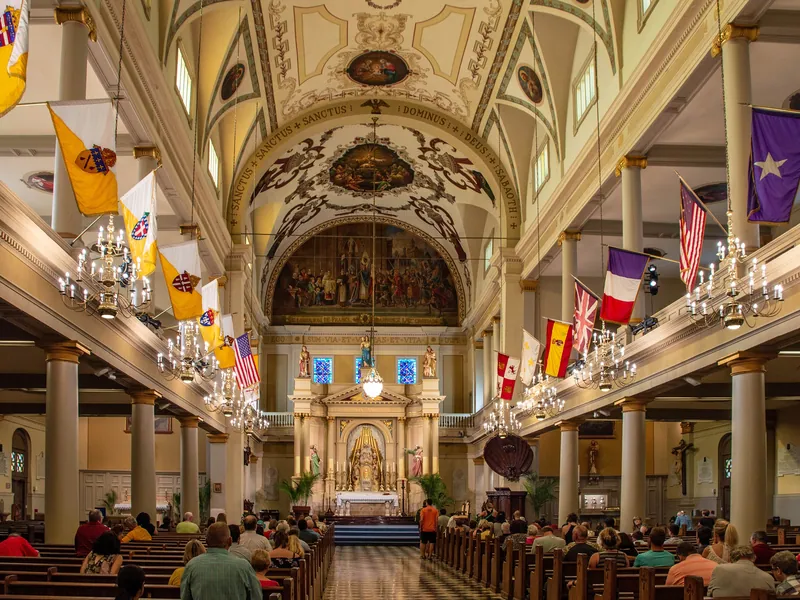
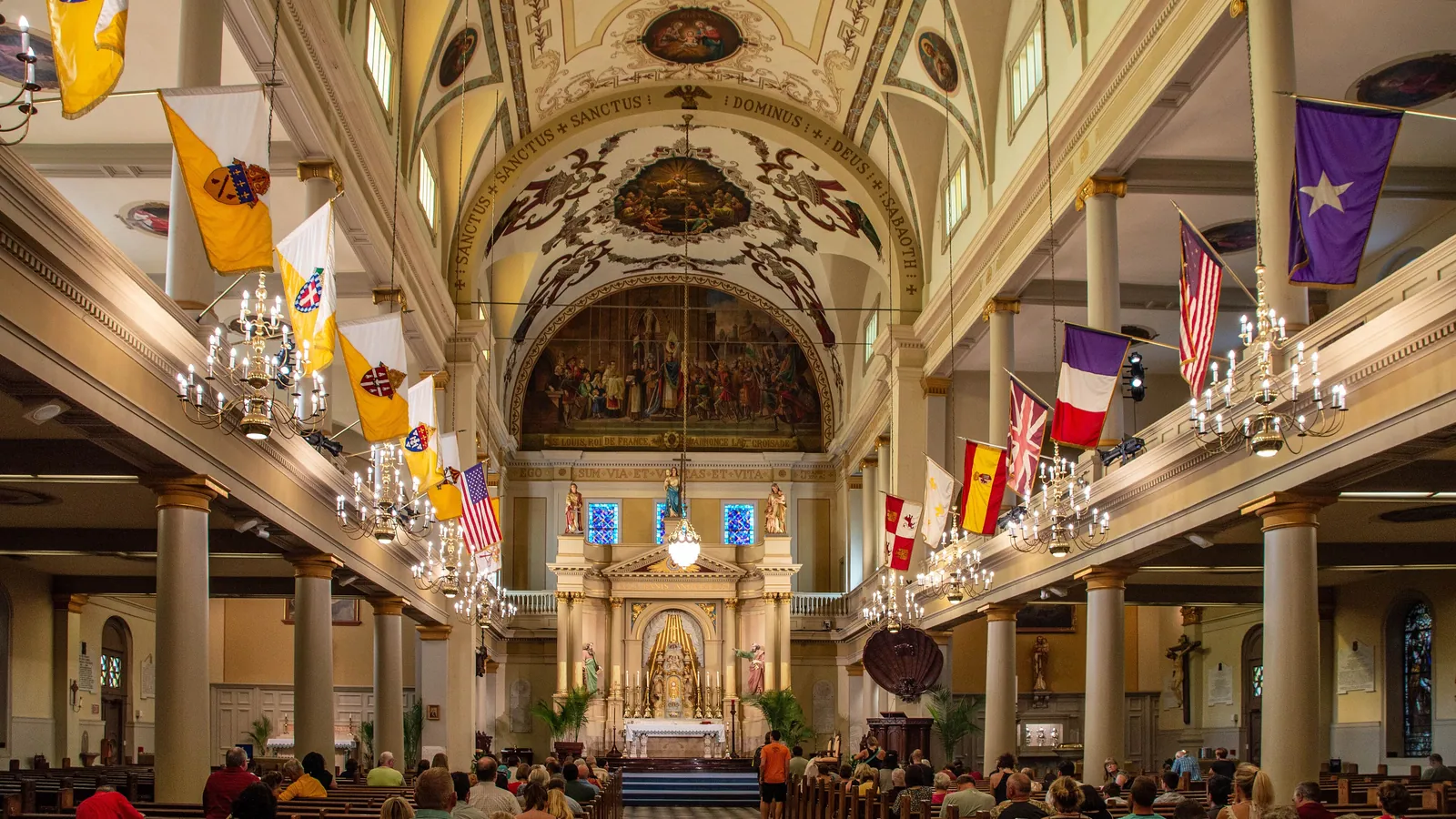
  • The three spires of St Louis Cathedral rising above Jackson Square in the French Quarter of New Orleans.
    Nature

    City Park, Storyland and the carousel

    New Orleans

    A park larger than New York's Central Park at the end of the Canal streetcar line, holding a very large stand of mature live oaks, lagoons, the city art museum, a free outdoor sculpture garden, a storybook playground built around fairy-tale sets, and a wooden carousel dating from 1906 under a conservatory pavilion.

    Ages
    1–12
    Time
    4h
    Adult, from
    €10

    Good to know. The park is free to enter and the sculpture garden costs nothing, but the playground and the carousel sit inside a separate ticketed amusement area, which runs on a seasonal and weekend-weighted calendar rather than daily. The distances inside the park are long and some of it is unshaded open ground, so the streetcar arrival point and the destination inside can be a twenty-minute walk apart.

  • Audubon Zoo
    Animals

    Audubon Zoo

    New Orleans

    The city zoo, set among live oaks inside Audubon Park uptown at the far end of the St Charles streetcar line, best known for a large Louisiana swamp exhibit built as a walk through cypress and bayou with alligators, and a splash area for small children in summer.

    Ages
    2–12
    Time
    4h
    Adult, from
    €25

    Good to know. The streetcar stops on St Charles, not at the gate — it is a walk of roughly fifteen minutes through the park to the entrance, which is pleasant in March and hard in August. Shade is better than most American zoos because of the oaks, but the swamp boardwalk is exposed, and the splash area operates seasonally. Tickets are cheaper bought online than at the gate.

  • The National WWII Museum
    MuseumBook ahead

    The National WWII Museum

    New Orleans

    A multi-building campus in the Warehouse District covering the American experience of the Second World War, with restored aircraft hung in a pavilion, a submarine experience, oral histories and a separate cinema attraction. It is in New Orleans because the landing craft used on D-Day were designed and built here.

    Ages
    9–16
    Time
    4h
    Adult, from
    €35

    Good to know. The subject is war and the exhibits do not soften it — footage of combat and of the camps, weapons, and personal accounts of death. It suits older children with an existing interest and is a long, dark, dense visit for anyone younger. The campus is large enough that a full pass with the cinema and the submarine experience is a whole day; buying the base ticket and choosing one add-on is usually the better call with children.

Some links on this page are affiliate links. If you book through one, the price is the same for you and we may earn a commission. How this works.

Getting around New Orleans

Streetcars and walking cover most of a family trip, on a flat fare with one-day and three-day Jazzy Passes sold by the transit operator. Two things to know before relying on them: the historic St Charles cars have steep steps, no air conditioning and no level boarding, while the Canal, Riverfront and Rampart lines use newer air-conditioned cars, and the Quarter's pavements are narrow, uneven brick and flagstone with high kerbs, which makes a pushchair harder work than the flat map suggests. A hire car is close to a liability in the centre, where parking is expensive, heavily permit-zoned and towed on street-cleaning days; most swamp tours and River Road plantation tours include hotel pickup precisely because of that, so many families skip the car and use ride-hail for the two or three trips it cannot reach.

New Orleans tips for families

  • With kids

    Check the block, not the neighbourhood

    Bourbon Street is a nightlife district, not a sight, and a hotel sold as French Quarter can be on it or one street away. Families are better placed below St Ann toward Esplanade, or on the riverside streets. Put the address on a map and look at what occupies the surrounding corners before booking.

  • When to go

    From June to September, plan the afternoon indoors

    Heat and humidity peak in the early afternoon and a thunderstorm most days arrives on top of it. A day built around a morning outside and an air-conditioned museum, aquarium or long lunch from about one o'clock onward is a day that finishes; the same day built around walking is one that gets abandoned.

  • Getting around

    Book the swamp or River Road trip with pickup

    The nearest swamp boat tours and the River Road plantation museums are roughly an hour out of the city, and almost all of them sell a seat that includes collection from a central hotel, which removes the parking problem entirely. If the plan includes a plantation site that tells the story from the perspective of the enslaved people who lived there, read that site's own published guidance on children's ages first — several of them state plainly that the tour is not designed for young children.

  • Health & safety

    Travelling in hurricane season changes what cover is worth

    The Atlantic hurricane season runs from the start of June to the end of November, with the highest activity from August into October. Direct hits are uncommon in any single year, but named storms cause flight cancellations and closures far more often than they cause damage. Cover bought before a storm is named is worth reading closely; cover bought afterwards generally excludes it.

New Orleans with kids: common questions

Should families stay on Bourbon Street?
No. It is a dense strip of bars and adult venues where open containers of alcohol are legal on the street and the noise runs late. The quieter lower end of the French Quarter is a few minutes' walk away and is a completely different place; so is the Garden District, twenty minutes out on the streetcar.
Is the French Quarter suitable for children?
Most of it, in daylight and in the evening away from Bourbon. Jackson Square, the French Market, the riverfront and the Royal Street blocks are ordinary walkable city. The pavements are uneven brick with high kerbs, which is the main practical obstacle with a pushchair.
Do families need a car in New Orleans?
Not for the city itself — the streetcars, walking and occasional ride-hail cover it, and parking in the centre is expensive and heavily restricted. A car only earns its keep if the plan includes several trips out to the swamps, the River Road or the Gulf coast, and even then most operators offer hotel pickup.
When is Mardi Gras, and should families be there for it?
The season runs from 6 January to Mardi Gras day, the Tuesday before Ash Wednesday, whose date moves each year; the large parades fall in the last two weekends. The Uptown parades along St Charles are the family-watched ones, with stepladder seats and catches thrown to children, while the Quarter is not. Hotel prices rise steeply and whole streets close, so it is a decision to make deliberately rather than by accident.
How hot does New Orleans get in summer?
Afternoons run above 33°C from June through September with humidity that makes it feel considerably hotter, and a thunderstorm most days. It is workable with an indoor afternoon built into every day, and genuinely hard without one.

More of United States