
Skip to content

Hawaii

Oahu with Kids

Oahu is the most developed of the Hawaiian islands: it holds the state capital, the airport almost every visitor arrives through, and the only public transport network in the state worth relying on. For families that makes it the easiest island to arrive on and the one where a car is genuinely optional for part of a stay. The single most important thing to understand before booking is that the island's safest water and its most dangerous water are forty minutes apart and the difference is seasonal rather than visible in a photograph. The south and east shores and the sheltered lagoons are family swimming; the north shore between roughly November and March produces surf measured in metres, a violent shore break and conditions that are a spectator sport rather than a swim. Beyond the water, the island holds a national war memorial built over a sunken ship, rainforest valleys and volcanic craters directly behind the city, and a road network that jams hard at commuting hours.

Best for ages
2+
Suggested stay
5–8 days
Best months
Apr–Oct
Daily budget
€430

Mid-range, family of four

Why Oahu works with children

  • Water calm enough for small children, if you pick the shore

    A fringing reef makes the Waikiki shoreline unusually gentle, the windward bays are sheltered, and the man-made lagoons on the west side are almost waveless.

  • Rainforest and craters behind the city

    Valley trails, waterfalls and a walk to the rim of a tuff cone all start within half an hour of the main hotel district.

  • The one Hawaiian island where a car is optional

    An island-wide bus network and a rail line across the west side mean a Waikiki-based stay can work without hiring a car every day.

  • History that is not scenery

    Pearl Harbor is a national memorial and a war grave, and the island's museums hold the deepest Hawaiian and Pacific collections anywhere.

  • Warm water and warm air all year

    Sea temperatures stay in the mid-twenties year-round and rarely dip, which removes the cold-water problem that limits beach days on the mainland coast.

Where to stay

Best areas in Oahu for families

4 areas cover most trips here; the difference is mainly first visits, and stays without a car versus summer stays and older children.
  • Waikiki

    Best for first visits, and stays without a car

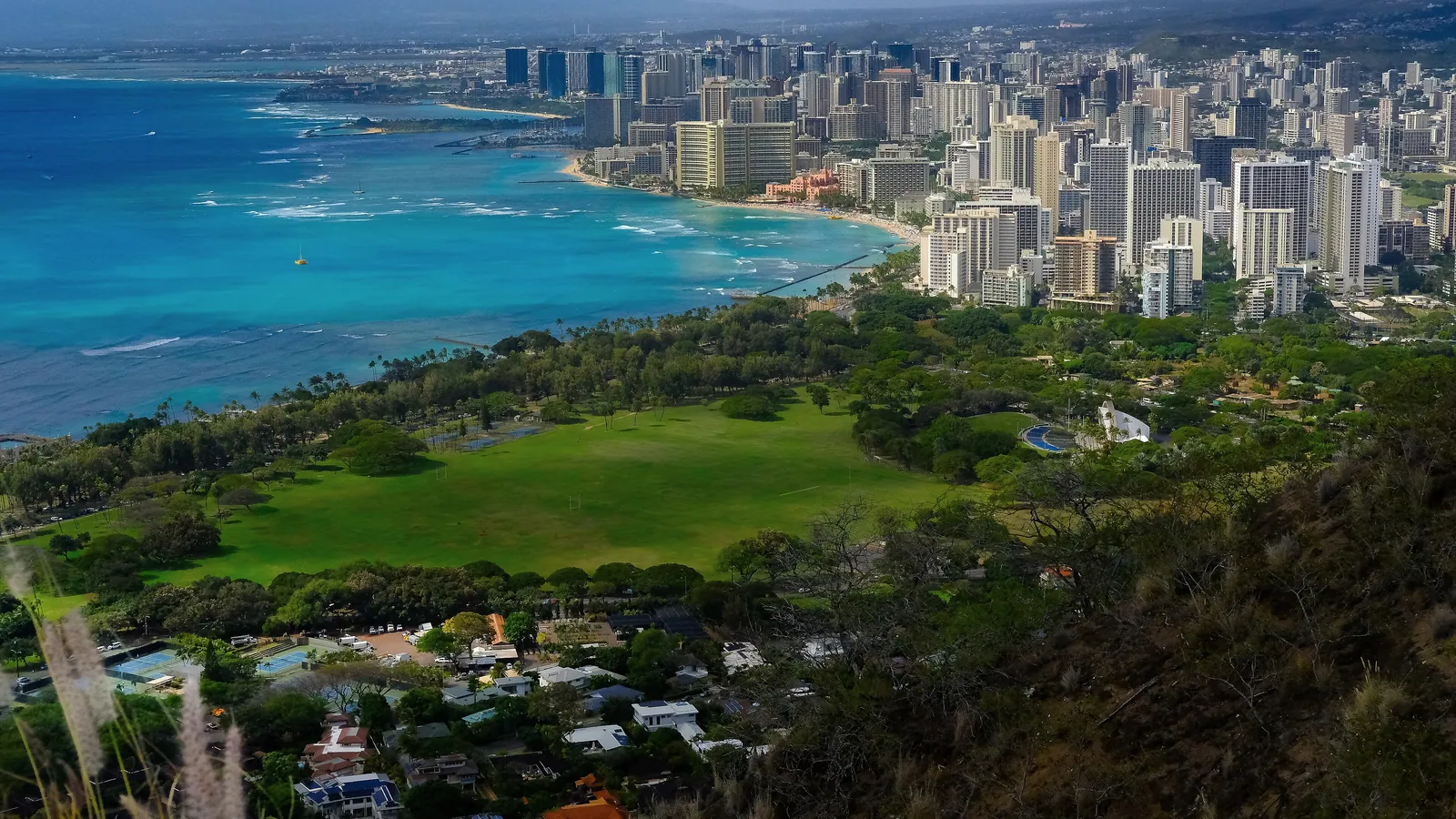
    A dense high-rise district on a reef-protected beach, with everything walkable and buses to the rest of the island from the main avenue. It is crowded, the nightly resort fees and paid parking are close to universal, and an advertised ocean view can be a gap between two towers.

  • Ko Olina

    Best for families with small children who want calm water

    Four sheltered man-made lagoons on the dry west side, each a crescent of sand behind a rock wall, with grass and showers behind them. It is roughly 40 kilometres from Waikiki, the dining is confined to the resorts and one shopping centre, and a car is needed for anything beyond the lagoons.

  • Kailua & the windward coast

    Best for quiet beach days away from the high-rises

    Low-rise residential neighbourhoods on the east side facing long turquoise bays sheltered by an offshore reef. There are almost no hotels here and Oahu restricts short-term rentals outside the designated resort areas, so legal accommodation is genuinely scarce and beach parking is limited.

  • The North Shore

    Best for summer stays and older children

    A rural coast of small towns, farm stands and famous surf breaks, about an hour from Honolulu. In summer the water here is often flat and swimmable; in winter it is the opposite, and the same beaches carry high-surf warnings for weeks at a time.

Family hotel picks in Oahu

  • Oahu — condo with a kitchen a few streets back from Waikiki beach
    WaikikiMid-range

    Oahu — condo with a kitchen a few streets back from Waikiki beach

    A kitchen and a separate bedroom within a walk of the most sheltered city beach in the state, on bus routes to the rest of the island — which is what makes a Waikiki stay workable without hiring a car for the whole trip.

    • Kitchen and laundry in many units
    • Walk to the reef-protected Kuhio Beach pools
    • Island-wide bus routes from the main avenue
    • Supermarkets and casual food within walking distance

    Fitting a family in

    One-bedroom units with a sofa bed in the living room sleep four; genuine two-bedroom units exist and are a significant price step rather than a small one.

    Watch out. A nightly resort fee and separate paid parking are near-universal here and are not in the advertised rate, so the real nightly cost is well above the headline. This is a dense high-rise district, so an 'ocean view' can be a gap between two towers, and traffic noise reaches the lower floors. Blocks further inland mean crossing busy avenues to reach the sand.
  • Oahu — resort condo or villa beside the Ko Olina lagoons
    Ko Olina (west Oahu)Higher-end

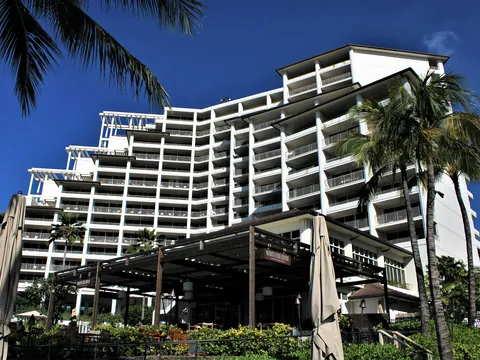
    Oahu — resort condo or villa beside the Ko Olina lagoons

    Four man-made lagoons, each a crescent of sand behind a rock breakwater, give the calmest and shallowest salt water on the island — which for families with small children removes the ocean-safety problem that shapes the rest of an Oahu trip.

    • Sheltered, nearly waveless lagoons with sand bottoms
    • Grass, showers and a paved path linking the four lagoons
    • Kitchens in most condominium and villa units
    • Dry, sunny west-side weather

    Fitting a family in

    One- and two-bedroom condominiums and villas sleep four to six with a kitchen and a washing machine, which is the practical alternative to two hotel rooms.

    Watch out. It is around 40 kilometres from Waikiki and can take an hour or more in traffic, so it is a base rather than a launch point, and a car is needed for anything beyond the lagoons. Eating out is confined to the resorts and one shopping centre and is expensive. The lagoons are sheltered by their walls rather than consistently patrolled, so normal water supervision still applies.

  • Oahu — house rental on the windward coast or the North Shore
    Kailua / North ShoreHigher-end

    Oahu — house rental on the windward coast or the North Shore

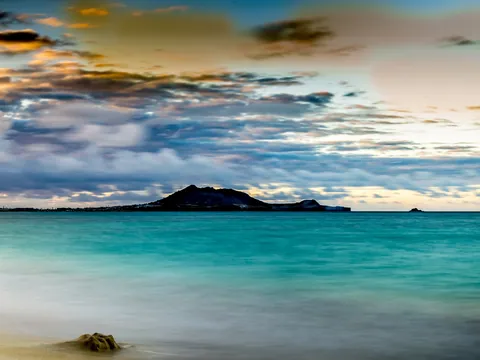
    Low-rise local neighbourhoods rather than a hotel district, with long reef-sheltered turquoise bays on the windward side and farm stands, small towns and famous surf on the north — the version of Oahu families picture before they arrive.

    • Whole houses with kitchens, laundry and outdoor space
    • Sheltered windward bays and long quiet beaches
    • Neighbourhood shops, farm stands and local restaurants
    • Space for a family that wants to cook and slow down

    Fitting a family in

    Two- and three-bedroom houses sleeping six are the standard unit, usually with a garden, a lanai and somewhere to rinse sand and boards.

    Watch out. Oahu restricts short-term rentals outside the designated resort areas, so legal supply is genuinely scarce, listings appear and disappear, and it is worth confirming a property is permitted before paying. There are effectively no hotels in Kailua and beach parking there is tightly limited. On the North Shore, winter surf makes the nearest beaches unswimmable for weeks at a time and it is an hour or more back to Honolulu.

All family stays in United States

Some links on this page are affiliate links. If you book through one, the price is the same for you and we may earn a commission. How this works.

Things to do in Oahu with kids

  • Hanauma Bay Nature Preserve
    WaterBook ahead

    Hanauma Bay Nature Preserve

    Oahu

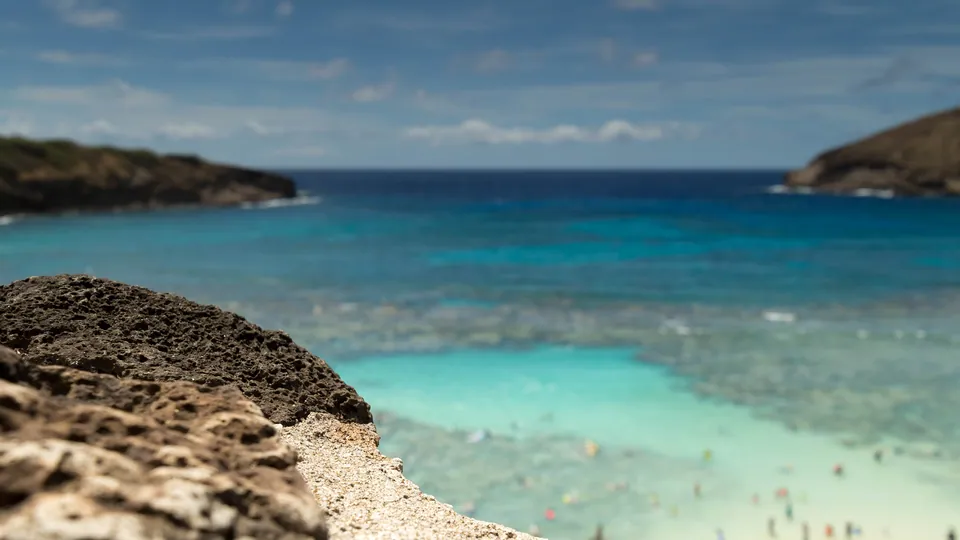
    A flooded volcanic crater on the south-east corner of the island, now a protected marine preserve, where a shallow reef inside the bay's arms creates the most sheltered snorkelling on Oahu. Access is controlled, there is an entry fee for non-residents, and visitors watch a conservation briefing before going down to the water.

    Ages
    5–16
    Time
    4h
    Adult, from
    €23

    Good to know. A reservation system is in place and the bay closes for part of every week to let the reef recover, but the exact mechanism has changed several times — check the preserve's own page close to the date rather than trusting a guide. The walk down to the beach is a steep paved ramp with a paid shuttle for the return. The reef is shallow enough that standing on it is both how the coral gets damaged and how people cut their feet, and only mineral sunscreen is permitted. Conditions here are usually gentle but the bay is still open ocean at its mouth.

  • Pearl Harbor National Memorial
    CultureBook ahead

    Pearl Harbor National Memorial

    Oahu

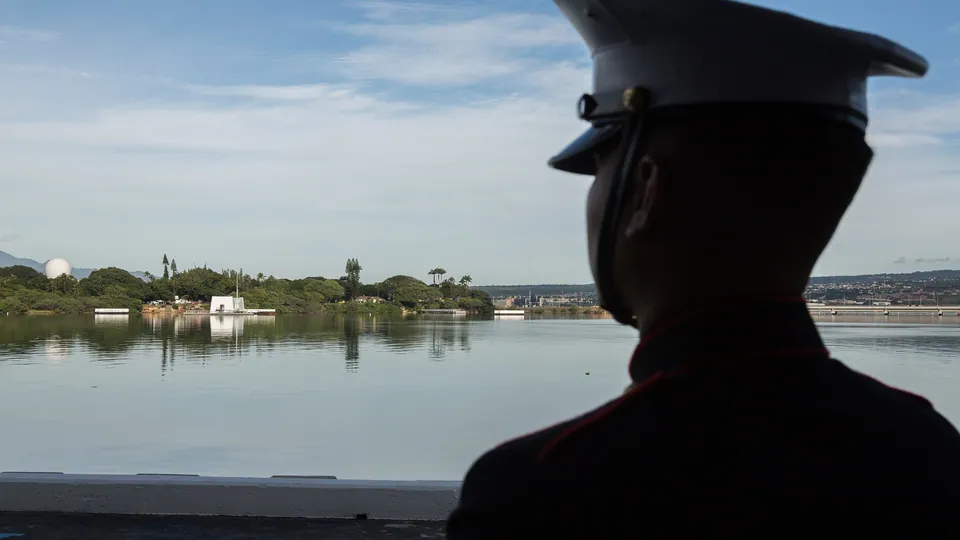
    The memorial site of the 7 December 1941 attack, west of Honolulu. The visitor centre and its outdoor exhibits are free to enter; a boat runs from it to the USS Arizona Memorial, a white structure built across the sunken battleship, where most of the crew killed on board remain inside the wreck. Separately ticketed historic ships and a museum sit on the adjacent island.

    Ages
    8–16
    Time
    4h
    Adult, from
    Free

    Good to know. This is a war grave as much as a historic site, and the memorial itself is a place where silence is asked for — the park's own guidance discourages bringing very young children on the memorial programme, and that guidance is worth following rather than testing. Bags of any kind are not permitted at the visitor centre and paid storage is provided outside. Tickets for the boat to the memorial are released on a fixed schedule and go quickly; a limited number are held back for same-day collection. The programme can be suspended at short notice in rough water or for maintenance.

  • Diamond Head (Lēʻahi)
    AdventureBook ahead

    Diamond Head (Lēʻahi)

    Oahu

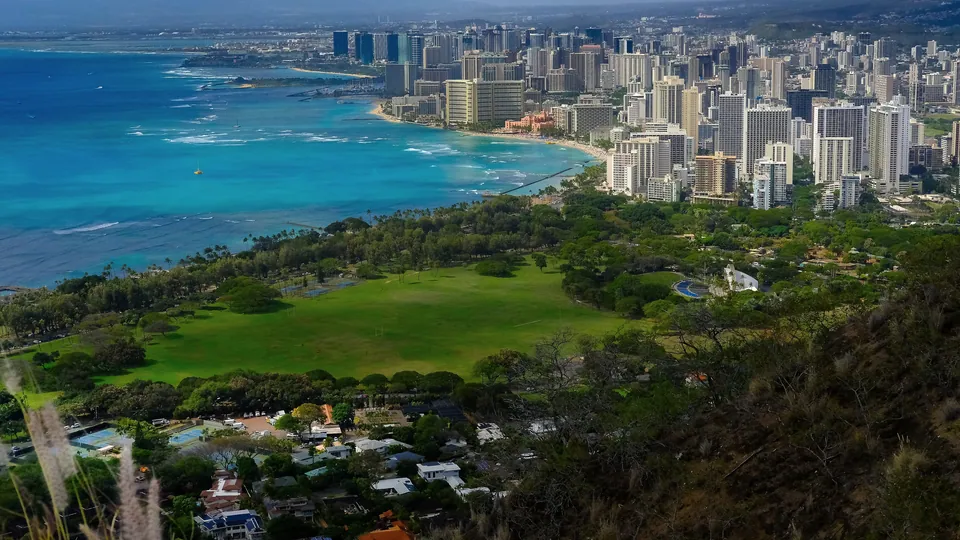
    A volcanic tuff cone at the eastern end of Waikiki, with a trail climbing from the crater floor to an old military observation post on the rim and a view back along the whole south shore. The route is roughly 1.3 kilometres each way with around 170 metres of ascent.

    Ages
    6–16
    Time
    2h 30m
    Adult, from
    €5

    Good to know. A reservation system for entry and parking has applied to out-of-state visitors, so this is not a walk that can be decided on at the gate — book it in advance. The trail is exposed with no shade at all and gets punishing after mid-morning, which makes an early slot worth more than a convenient one. The upper section includes steep concrete stairs, a narrow lit tunnel and a spiral staircase, so it is not possible with a pushchair above the crater floor and is hard work for under-sixes.

  • Waikiki & Kuhio Beach
    Water

    Waikiki & Kuhio Beach

    Oahu

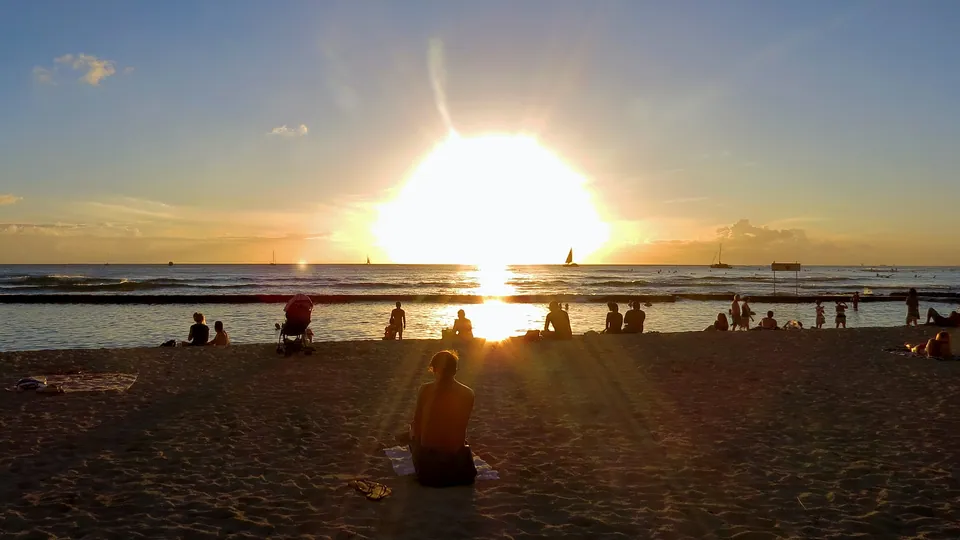
    The city beach below the Waikiki hotel district, protected by an offshore reef that flattens the swell before it reaches the sand. Low stone walls at Kuhio Beach hold back near-still pools that work for small children, and the gentle surf further out is why beginner surf and outrigger canoe lessons concentrate here.

    Ages
    0–16
    Time
    4h
    Adult, from
    Free

    Good to know. This is the gentlest water on the island and it is still the ocean — the reef has gaps where water drains back out, and lifeguard towers and posted flags are there for a reason. The reef itself is sharp and close to the surface in patches at low tide, so reef shoes help. The beach is genuinely crowded through the day, and the sand is narrow in places at high tide.

Some links on this page are affiliate links. If you book through one, the price is the same for you and we may earn a commission. How this works.

Getting around Oahu

A Waikiki-based trip can be run largely on foot and on TheBus, which covers the whole island on a flat fare and is the practical backup to everything else. A rail line runs across the west side of the island and is being extended in stages towards the airport and downtown Honolulu, so how useful it is depends on when the trip happens — check what has opened rather than assuming. A car is still needed for the North Shore, the windward bays and the trailheads, but it does not need to be hired for the whole stay: Waikiki hotels charge nightly for parking on top of the room, and the main highway across the south of the island is heavily congested at commuting hours. Hiring for the two or three days that leave the city is the pattern that usually costs least.

Oahu tips for families

  • Health & safety

    Ocean safety here is the whole trip, not a footnote

    Hawaii's surf, rip currents and shore break are the leading cause of visitor deaths in the state, and a large number of beaches have no lifeguard at all. The state publishes daily beach-condition and hazard information for the island's beaches, and the standard advice is to swim only at lifeguarded beaches, ask the guard about the day's conditions before going in, never turn your back on the water, and keep out entirely when high-surf warnings are posted. A calm-looking beach in the morning can be dangerous by afternoon.

  • Packing

    Reef-safe sunscreen is the law, not a suggestion

    Hawaii prohibits the sale of sunscreens containing oxybenzone and octinoxate because of the damage they do to coral, so the sun cream brought from home may not be permitted and mineral formulations based on zinc oxide or titanium dioxide are what is sold locally. Rash vests and swim shirts cover most of the problem for children and cut down how much cream is needed at all.

  • When to go

    Pick the shore by the season, not by the photograph

    North-facing shores are calm in summer and dangerous in winter; south-facing shores get their bigger swells in summer and are calmer in winter. That is why the same beach appears in one guide as a family swimming spot and in another as a professional surf break. For a winter trip, families swim on the south and east sides and visit the North Shore to watch.

  • Getting around

    Hire a car for the days you leave town, not the whole stay

    Waikiki charges for parking nightly on top of the room rate, and the district itself is walkable with buses to most of the island. Two or three separate rental days for the North Shore, the windward coast and the trailheads usually costs less than a week of parking, and avoids sitting in rush-hour traffic on the days it is not needed.

Oahu with kids: common questions

Is it safe to swim on Oahu's North Shore with children?
In summer, often yes — the same beaches can be flat and calm between roughly April and October. In winter they are not: the north shore produces very large surf, powerful rip currents and a heavy shore break from about November to March, and it is a place to watch rather than swim. Families swimming in winter use the south and east shores and the sheltered lagoons instead.
Do you need a reservation for Hanauma Bay?
A reservation system is in place for non-residents, along with a conservation-education requirement before going down to the water, an entry fee and a weekly closure for the reef. The details of how and when slots are released have changed more than once, so check the bay's official page shortly before the trip rather than relying on a guide.
Is Pearl Harbor suitable for children?
It is a national memorial and a war grave rather than a museum, and the memorial itself stands over a sunken ship where most of the crew who died remain. The visitor centre's outdoor exhibits work for a wide age range, but the site's own guidance discourages bringing very small children on the memorial programme and asks for silence on the memorial. Bags are not allowed at the visitor centre and paid storage is provided instead.
Do you need a car on Oahu?
Not for the whole trip. Waikiki is walkable, the island-wide bus network is cheap and extensive, and a rail line serves the west side. A car is needed for the North Shore, the windward bays and most trailheads, so many families hire one for two or three days rather than for the full stay.
How many days do you need on Oahu with kids?
Five to eight. Five covers the Waikiki beaches, one hike, one snorkelling day and Pearl Harbor. Eight allows the North Shore, the windward coast and a genuine rest day, which matters given how long the flight is from Europe.

More of United States