Skip to content

Zakopane with Kids

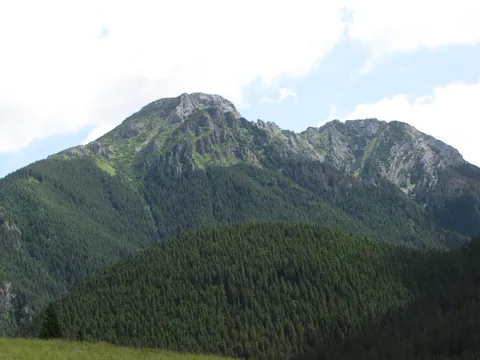
Zakopane sits at the foot of the Tatras, the only genuinely alpine range in Poland, and it does two distinct jobs: a summer walking base and a winter snow resort. What makes it workable with children is that the range's family terrain and its famous terrain are different places — the limestone valleys on the western side, Kościeliska and Chochołowska, are wide, gently graded gravel roads through meadows, while the exposed chained ridges that fill the photographs are several hours above them. A funicular and a cable car do the climbing for anyone who wants height without the ascent. The drawbacks are crowd and queue. This is Poland's own holiday town before it is anyone else's, so the July and August school holidays, the long weekends and the winter season fill it to a degree most foreign visitors underestimate, and the lifts are the pinch point — the cable car to Kasprowy Wierch sells a capped number of timed tickets that go early, and the funicular queue at the bottom station can swallow an hour of the morning.

Best for ages
4+
Suggested stay
3–5 days
Best months
Jan–Feb, Jun, Sep
Daily budget
€170

Mid-range, family of four

Why Zakopane works with children

  • The lifts do the climbing

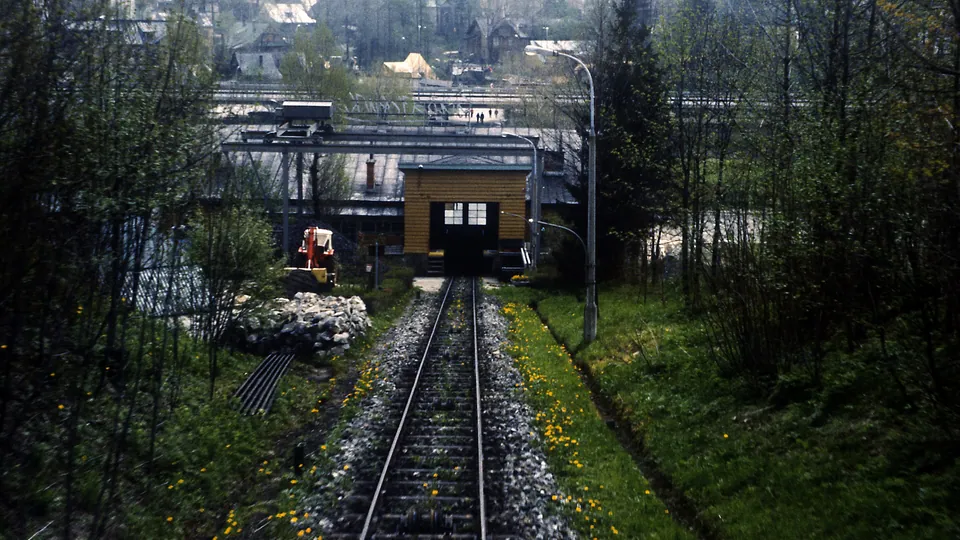
    A funicular from the centre and a cable car from Kuźnice both deliver a summit view without a child having to walk up to it.

  • Valley floors a pushchair can manage

    Dolina Kościeliska and Dolina Chochołowska are wide, hard-surfaced and gently graded for kilometres, unlike the ridges above them.

  • A distinct mountain culture, not a theme of one

    Highlander wooden architecture, smoked oscypek cheese and folk music are working local traditions rather than a display put on for visitors.

  • Cool in summer, snow-reliable in winter

    Valley temperatures stay comfortable through July, and the resorts around Zakopane hold snow through a normal winter season.

  • A mountain holiday at a fraction of alpine prices

    Lift tickets, pensions and mountain-hut meals all cost far less than the equivalent in Austria, Switzerland or the Dolomites.

Where to stay

Best areas in Zakopane for families

4 areas cover most trips here; the difference is mainly car-free stays and first visits versus value on the kraków side.
  • Krupówki & the centre

    Best for car-free stays and first visits

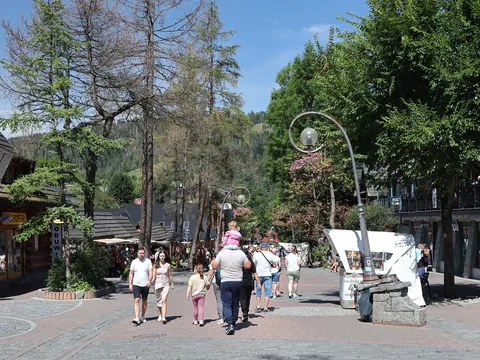
    The pedestrian main street and the blocks around it, with restaurants, the funicular and the bus station within walking distance. Also the noisiest and most crowded part of town in season, and parking is difficult.

  • Kościelisko

    Best for quiet, space and a walking-led trip

    A strung-out village of wooden houses west of Zakopane, closer to the best family valleys and considerably calmer. A car or a bus is needed for everything, the lanes are steep and unlit, and shops are not within walking distance.

  • Bukowina & Białka Tatrzańska

    Best for thermal pools and wet-weather insurance

    Villages twenty to thirty minutes east, built around large geothermal pool complexes with outdoor water in the snow, plus family ski areas. Everything here needs a car, and the pools are at their most crowded on exactly the rainy and winter days they are most wanted.

  • Murzasichle & Poronin

    Best for value on the kraków side

    Pension-and-guesthouse villages between Zakopane and the main road, cheaper and quieter, with views towards the range. Getting into town means a bus or a drive, and the Zakopianka traffic is felt here first.

Family hotel picks in Zakopane

  • Pension or guesthouse near Krupówki
    Krupówki & the centreMid-range

    Pension or guesthouse near Krupówki

    A pensjonat in the centre is the version of Zakopane that works without a car: the funicular, the restaurants and the bus station for the trailheads are all on foot, and this style of property routinely offers half board, which removes the nightly question of where four people are eating in a packed resort town.

    • Funicular, main street and bus station on foot
    • Half board widely available
    • Family rooms and wooden chalet-style annexes
    • Drying space for boots and wet gear

    Fitting a family in

    Family rooms sleeping four are standard in this property type, frequently as a double plus two singles in one room rather than two connected rooms, so the layout is worth checking before booking.

    Watch out. The centre is the loudest and most crowded part of town through the season, and Krupówki carries evening noise. Parking is difficult and often charged separately, and older wooden buildings mean stairs rather than lifts.
  • Wooden chalet or apartment in Kościelisko
    KościeliskoMid-range

    Wooden chalet or apartment in Kościelisko

    Kościelisko trades walkability for calm and position: it sits closer to the two valleys that actually suit children, the views across to the range are from the garden rather than from a queue, and a whole wooden house with a kitchen costs less than a central family room in high season.

    • Closer to the Kościeliska and Chochołowska valley trailheads
    • Whole-house rentals with kitchens and gardens
    • Quiet at night, with space for children outside
    • Parking at the property

    Fitting a family in

    Chalets and apartments are sized for groups, so four to six people in two or three bedrooms is the normal unit rather than the exception.

    Watch out. Nothing is within walking distance — shops, restaurants and the funicular all mean a car or a bus, and the lanes are steep, narrow and unlit at night. Bus frequencies drop sharply outside the season, which makes a car close to necessary here.

All family stays in Poland

Some links on this page are affiliate links. If you book through one, the price is the same for you and we may earn a commission. How this works.

Things to do in Zakopane with kids

  • Gubałówka funicular
    Nature

    Gubałówka funicular

    Zakopane

    A short funicular from the edge of the town centre up to the Gubałówka ridge at around 1,120 metres, which faces the Tatras across the valley and gives the range's best full panorama without a climb. The top has grass slopes, food stalls and a summer slide, and the walk along the ridge is easy.

    Ages
    2–16
    Time
    2h
    Adult, from
    €8

    Good to know. The queue at the bottom station is the real cost in high season and can run to an hour in the middle of a summer or winter day; early morning or late afternoon is a different experience entirely. The ridge top is an open grass slope with unfenced viewpoints, and the marked path back down on foot is steep, rooty and slippery when wet.

  • Dolina Kościeliska
    Nature

    Dolina Kościeliska

    Zakopane

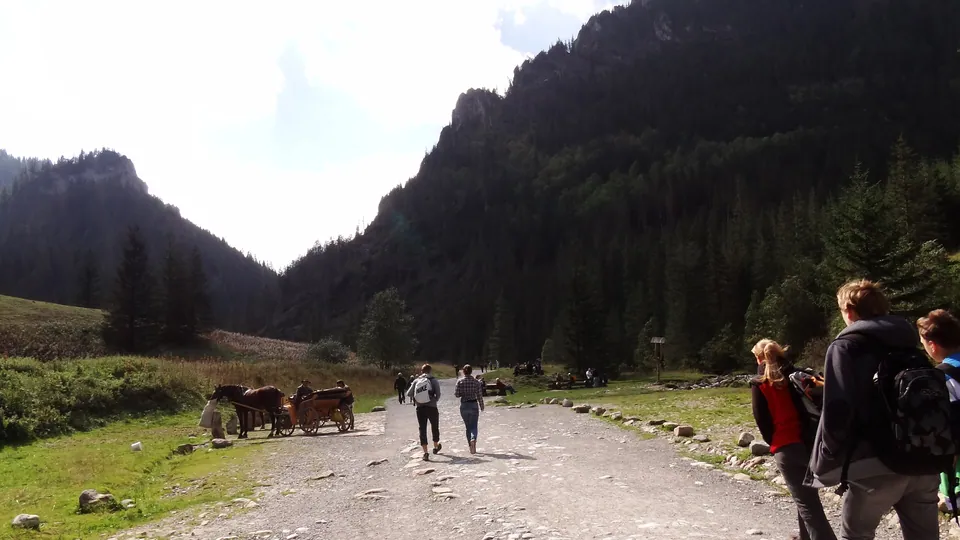
    A limestone valley west of Zakopane whose floor is a wide, hard-surfaced road climbing gently between cliffs and meadows to a mountain hut about seven kilometres in, with a show cave on a side path partway up. It is the Tatras at a gradient a family can actually walk, and horse-drawn carts cover part of the distance.

    Ages
    3–16
    Time
    4h
    Adult, from
    €4

    Good to know. Tatra National Park charges a per-person entry fee at the Kiry gate, reduced for children and payable on arrival, and the car park there fills early on peak days. The valley floor is easy, but the Mroźna cave side path is a steep, wet, partly unlit scramble that is a different proposition from the walk in, and the hut is the only reliable food or toilet stop.

  • Kasprowy Wierch cable car
    AdventureBook ahead

    Kasprowy Wierch cable car

    Zakopane

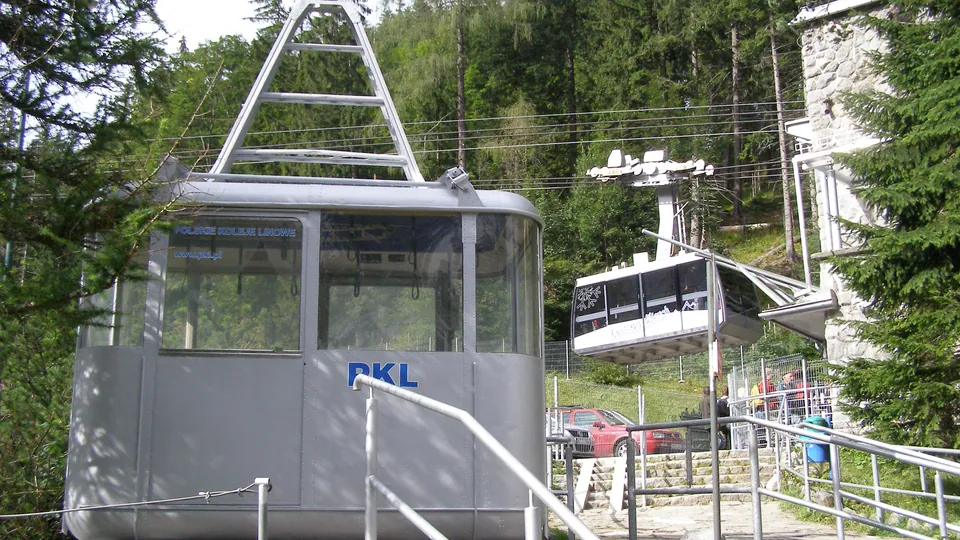
    A two-stage cable car from Kuźnice to the summit of Kasprowy Wierch at just under 2,000 metres, on the ridge that forms the Slovak border, with a high-alpine view in both directions from the top station. The ride takes about twenty minutes and is the only way to reach that altitude here without a long ascent.

    Ages
    5–16
    Time
    3h
    Adult, from
    €20

    Good to know. Tickets are sold for capped time slots and the summer and winter slots go early in the day, so this needs booking rather than deciding on the morning. The service suspends in high wind, lightning or poor visibility with no notice, the summit is exposed and can sit ten to fifteen degrees colder than the valley, and walking down instead of riding is a long exposed descent rather than a shortcut.

Some links on this page are affiliate links. If you book through one, the price is the same for you and we may earn a commission. How this works.

Getting around Zakopane

The centre is compact and walkable, and the funicular starts from it. Everything else runs on buses and private minibuses from the Zakopane bus station to the trailheads — Kiry for the Kościeliska valley, Palenica Białczańska for Morskie Oko — and they fill early on peak mornings, as do the trailhead car parks, several of which now take advance reservations. Tatra National Park charges a per-person entry fee at the gates, reduced for children, payable on the spot. Getting here is the other half of the question: trains from Kraków take around three hours, buses and minibuses are faster on a clear road, and the Zakopianka jams on Friday afternoons and Sunday evenings in a way that can add an hour or more to either.

Zakopane tips for families

  • When to go

    The day is decided before eight in the morning

    Trailhead car parks, the Morskie Oko minibuses and the Kasprowy Wierch cable car all fill in the first hours of the day in high season, and the cable car sells a capped number of timed slots that are gone long before lunch. Booking a slot in advance and starting early is the difference between a walk and a queue.

  • With kids

    Morskie Oko is a long road walk, not a hike

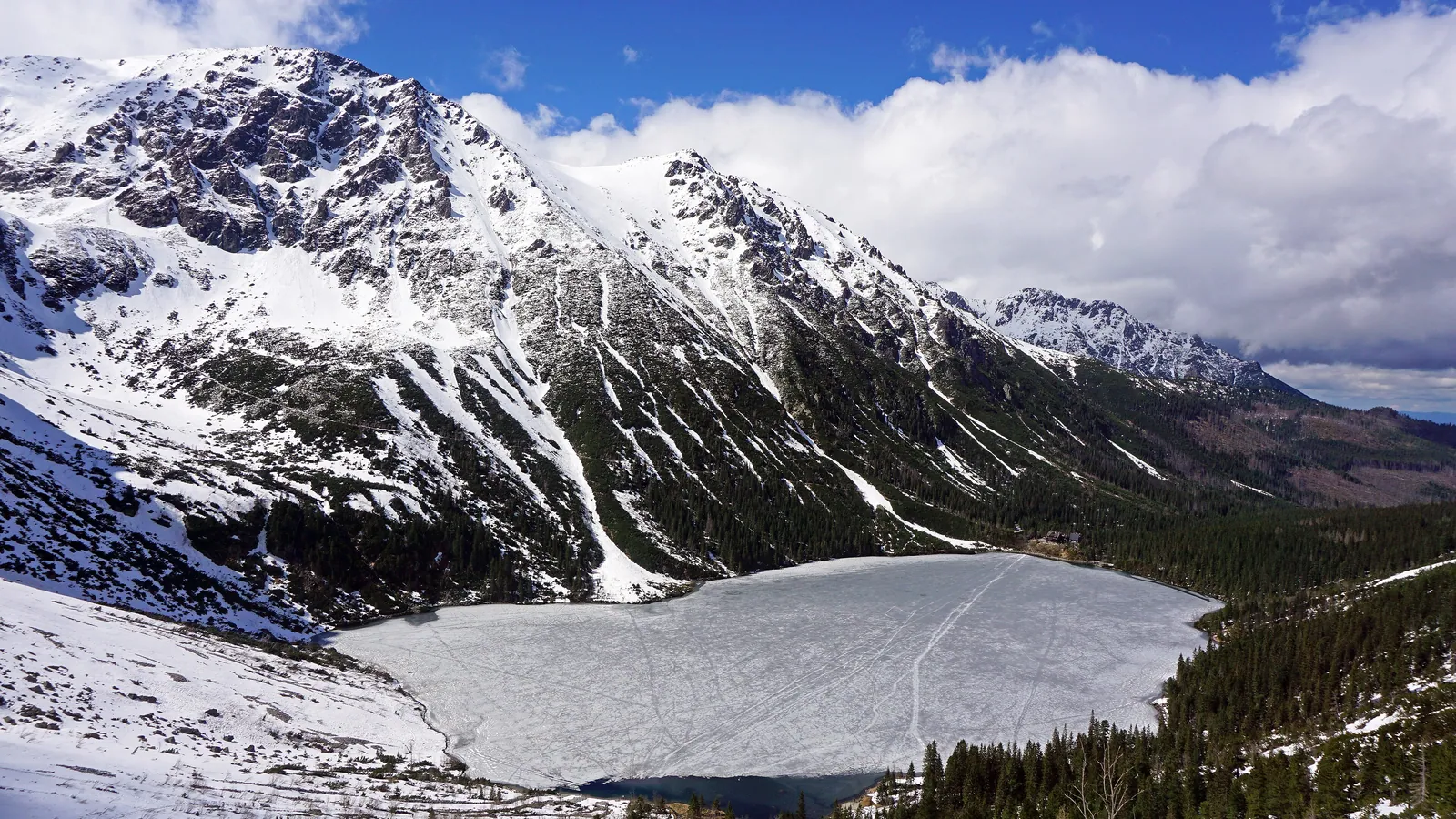
    The famous lake is reached by roughly nine kilometres of asphalt road each way from Palenica Białczańska, steadily uphill, with horse-drawn carts covering part but not the steepest final stretch. It is eighteen kilometres round trip on a hard surface in the middle of a crowd — the western valleys deliver the same idea at a third of the distance.

  • Health & safety

    Come down before the afternoon builds

    Summer thunderstorms here build fast and hit the ridges hardest. Giewont's chained summit section, with its steel cross, has a record of lightning strikes with fatalities, and the high chained routes are not family terrain in any weather. Plan to be off the tops by early afternoon.

  • Getting around

    This is the leg of a Poland trip worth renting a car for

    The trailheads, the thermal pools and the valley villages are spread across rural roads with bus frequencies that drop sharply outside the season. Picking a car up on the way out of Kraków and dropping it on the way back turns three awkward days into easy ones without paying for parking in the cities.

Zakopane with kids: common questions

Does Zakopane work with young children who cannot hike?
Yes. The funicular gives a summit view with no walking, the pedestrian main street and the wooden villages are an afternoon in themselves, the western valleys are flat for kilometres, and the geothermal pools nearby are the standing answer to bad weather.
Which Tatra walk suits a pushchair?
Dolina Kościeliska is the usual answer — a wide, hard-surfaced valley road climbing gently for about seven kilometres to a mountain hut, with horse carts covering part of it. Dolina Chochołowska is similar and longer. Morskie Oko is asphalt but far too long and too steadily uphill to be pleasant with a buggy.
Do you need a car in Zakopane?
More than anywhere else in Poland. Buses and minibuses reach the main trailheads but fill early and thin out off-season, and the thermal pools and valley villages are awkward without one. A car picked up for the mountain leg only is the usual compromise.
When is Zakopane least crowded?
Early June and the second half of September. The Polish school holidays in July and August, the long weekends around public holidays and the winter ski season all fill the town, the trails and the lift queues to a degree that changes the character of a visit.
Is the Kasprowy Wierch cable car suitable for children?
The ride itself is fine and short, and the constraints are practical ones. Tickets are capped per time slot and sell out early, the service suspends in high wind or storms, and the summit at just under 2,000 metres is exposed and can be ten to fifteen degrees colder than the valley. Walking down instead of riding is a long, exposed descent rather than a shortcut.