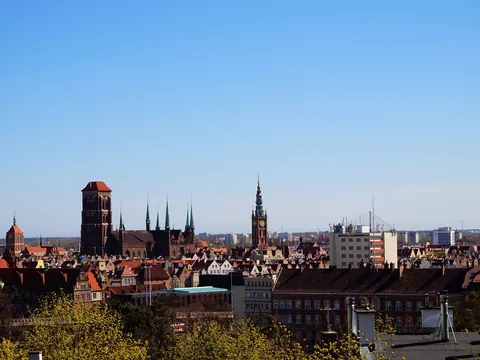
Skip to content

Gdańsk with Kids

Gdańsk is the southern end of a line of three cities — Gdańsk, Sopot and Gdynia — strung along a single commuter railway, and that railway is the reason it works as a family base: the reconstructed merchant city, the country's most popular beach and a modernist port with an aquarium are all stops on the same line, ten to twenty minutes apart. The beaches themselves are the surprise for anyone expecting a grey northern coast, being wide, fine, pale sand backed by pine woods and dunes, and shelving gently enough for small children to wade a long way out. The sea, however, is cold: in the best fortnight of August it commonly sits around 18 to 20°C, and an offshore wind can pull that down several degrees within a day. The other thing to plan around is that this is where the Second World War started, so the city's major museums are powerful and heavy, and a family cannot do three of them in a row.

Best for ages
4+
Suggested stay
3–5 days
Best months
May–Sep
Daily budget
€175

Mid-range, family of four

Why Gdańsk works with children

  • One commuter line links everything

    SKM trains run every few minutes between the old town, Sopot's beach and Gdynia, so a base is chosen once and the rest is a short ride.

  • Wide pale sand, gently shelving

    The Baltic beaches here are genuine sand rather than shingle, backed by pine and dune, with flagged and patrolled sections in the season.

  • A Hanseatic city rebuilt from records

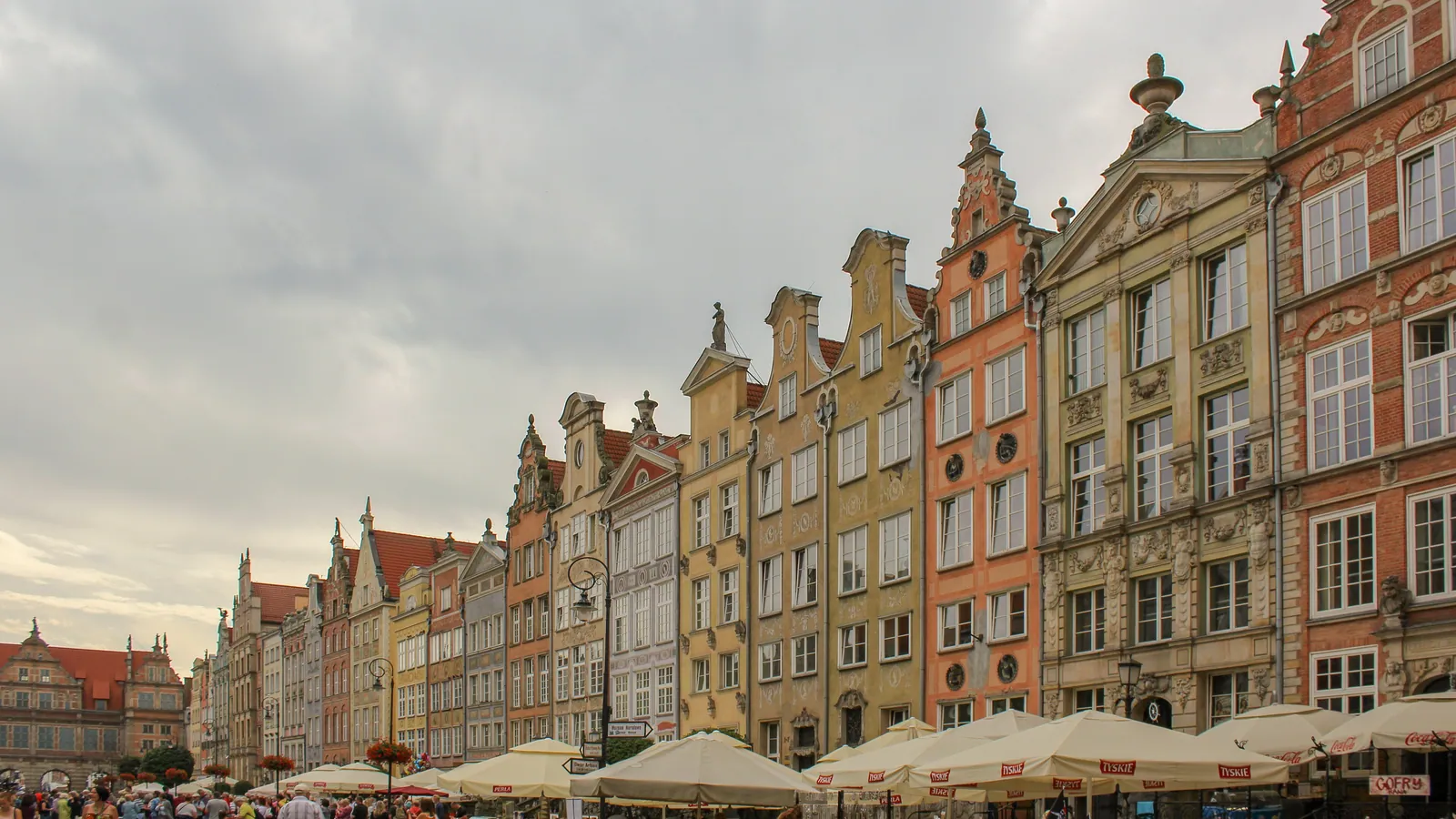
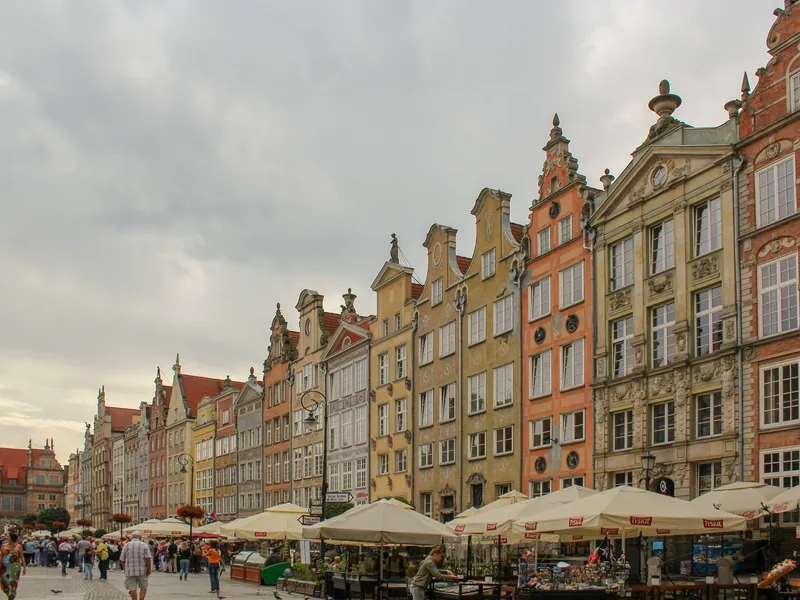
    The gabled merchant houses on Długi Targ were reconstructed after 1945, and saying so out loud is usually the most interesting part of the walk.

  • Cool summers rather than punishing ones

    Peak-season days typically sit in the low to mid twenties, which suits families who struggle with a Mediterranean August.

  • A cheap seaside holiday by European standards

    Apartments in the beach districts and eating out on the coast both cost a fraction of the North Sea or the Adriatic equivalent.

Where to stay

Best areas in Gdańsk for families

4 areas cover most trips here; the difference is mainly sightseeing-led stays versus longer stays and wet-weather back-ups.
  • Główne Miasto (Main Town)

    Best for sightseeing-led stays

    The reconstructed core, flat and entirely walkable, with the museums and the waterfront on the doorstep. Apartments sit above restaurants that serve late, the streets are cobbled, and the nearest swimming is a tram ride away.

  • Sopot

    Best for beach-first family trips

    The spa town in the middle of the Tri-City, with the widest and busiest beach of the three, the long wooden pier and a pedestrian street of restaurants. It is also the most expensive base on this coast and the busiest in August, and the main street is loud on summer weekends.

  • Brzeźno & Jelitkowo

    Best for families wanting sand without sopot prices

    Gdańsk's own beach districts, on the tram line, with the same sand, boardwalks over the dunes and quieter promenades. A twenty to twenty-five minute tram ride from the old town, and noticeably dead outside the season.

  • Gdynia & Orłowo

    Best for longer stays and wet-weather back-ups

    A modernist port city at the northern end of the line with an aquarium on the pier, a cliff-backed beach at Orłowo and the lowest accommodation prices of the three. Less pretty, and every evening in the old town is a train ride.

Family hotel picks in Gdańsk

  • Apartment in the Main Town
    Główne MiastoMid-range

    Apartment in the Main Town

    A flat in the reconstructed core puts the museums, the waterfront and the commuter station within a few flat minutes, which is what a sightseeing-led stay needs, and the same train that reaches the station reaches the beach in a quarter of an hour. Kitchens matter more here than usual because the weather can turn an evening indoors.

    • Kitchen and washing machine
    • Museums and the waterfront on foot
    • SKM commuter trains to Sopot and Gdynia from the nearby station
    • Flat streets throughout the Main Town

    Fitting a family in

    Two-bedroom apartments in reconstructed merchant houses and newer infill blocks sleep four to five; layouts in the historic buildings are narrow and often split over two levels.

    Watch out. Apartments above the restaurant streets are loud until late in summer, and the core has essentially no parking. The nearest swimming is a tram or train ride away, which is the trade against a beach-district base.

  • Family hotel or aparthotel near Sopot's beach
    SopotHigher-end

    Family hotel or aparthotel near Sopot's beach

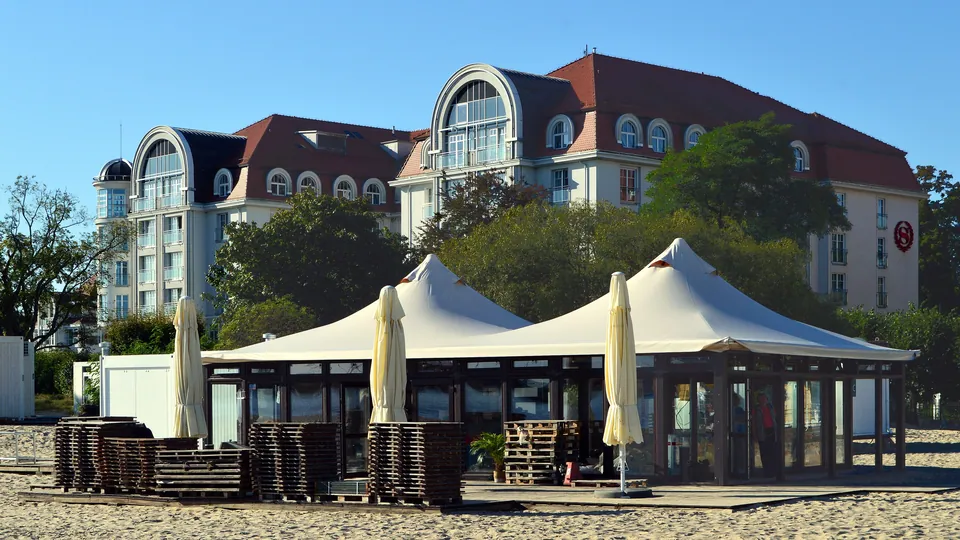
    Sopot is where the sand, the pier and the restaurants are in one walkable strip, and the hotels here are the ones built for a seaside holiday rather than a city break — pools, family rooms and breakfast arrangements that assume small children. The commuter train also keeps Gdańsk's museums fifteen minutes away.

    • Walking distance to the beach and the pier
    • Indoor pools and spa facilities as weather insurance
    • Family rooms and connecting doubles more common than in the cities
    • SKM trains to Gdańsk and Gdynia at high frequency

    Fitting a family in

    Purpose-built seaside hotels carry genuine four-person rooms and connecting doubles, which are much harder to find in the city apartments; aparthotels here add kitchens.

    Watch out. This is the most expensive base on the Polish coast and it is fullest in the Polish school holidays. The Monte Cassino strip is loud on summer weekends, and out of season a good share of the seafront businesses close, which leaves the town quiet in a way families do not always expect.

  • Tall ornamented merchant houses along a wide pedestrian street
    Brzeźno & JelitkowoMid-range

    Apartment in Jelitkowo or Brzeźno

    These are Gdańsk's own beach districts, with the same sand and dune boardwalks as Sopot at meaningfully lower prices, on a tram line into the old town. For a stay long enough to want both beach days and museum days, this is the compromise that does not overpay for either.

    • Beach and dune boardwalks within walking distance
    • Trams into the Main Town on a flat fare
    • Kitchens, washing machines and larger flats than the old town
    • Seafront parks and playgrounds along the promenade

    Fitting a family in

    A mix of newer seaside apartment blocks and 1970s stock; two-bedroom units sleeping four to five are common, and the newer buildings are the ones with lifts and balconies.

    Watch out. The old town is a twenty to twenty-five minute tram ride each way, which adds up over several days. The area is genuinely quiet outside the season, with a fair number of seafront places shut, and the older blocks vary a lot in condition.

All family stays in Poland

Some links on this page are affiliate links. If you book through one, the price is the same for you and we may earn a commission. How this works.

Things to do in Gdańsk with kids

  • Główne Miasto and the waterfront
    City

    Główne Miasto and the waterfront

    Gdańsk

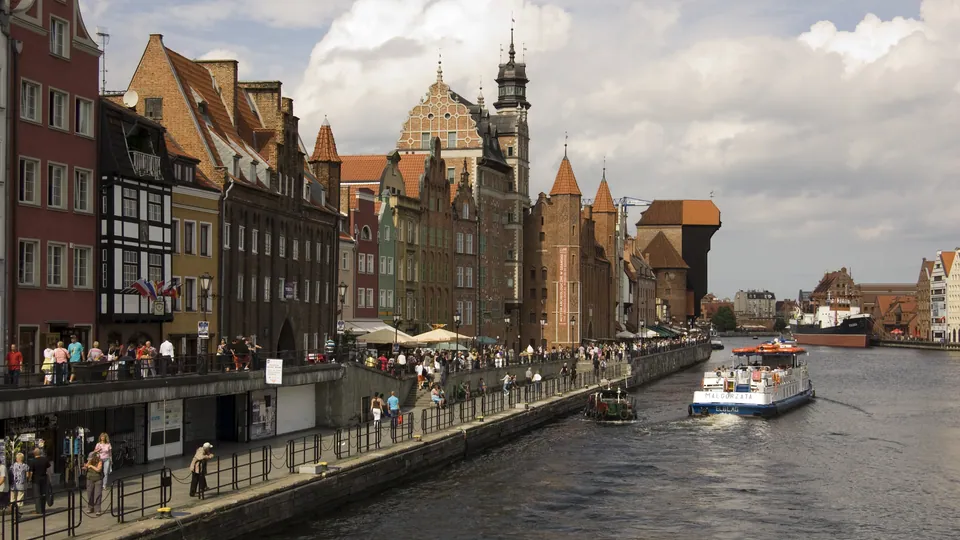
    The reconstructed merchant core: the broad Długi Targ with the Neptune fountain, the gates at either end, the amber shops on Mariacka's stepped terraces, and the medieval port crane on the Motława waterfront. Free to walk, flat, and small enough to cover in a morning with breaks.

    Ages
    3–16
    Time
    2h 30m
    Adult, from
    Free

    Good to know. Almost all of it is a post-1945 reconstruction, which is worth telling children before they are told by a plaque. The streets are cobbled and rattle a light pushchair, and the church and town-hall tower climbs are long stair-only ascents with no lift, which rules them out for small children.

  • Museum of the Second World War
    MuseumBook ahead

    Museum of the Second World War

    Gdańsk

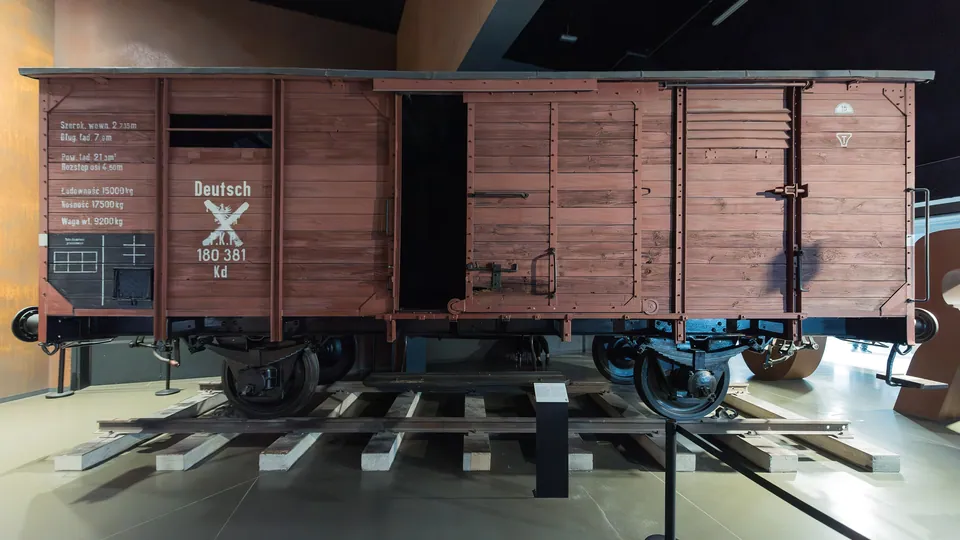
    A very large permanent exhibition, mostly below ground, covering the war from its causes to its aftermath with a strong emphasis on civilian experience. It is one of the most substantial museums in the country and sits a short walk from the reconstructed old town.

    Ages
    11–16
    Time
    2h 30m
    Adult, from
    €8

    Good to know. The main exhibition runs to several thousand square metres and includes graphic material on occupation, deportation and mass killing; it is heavy going and takes two to three hours at an adult's pace, which makes it a poor fit for under-tens. Timed tickets are worth booking in the high season.

  • Sopot beach and pier
    Water

    Sopot beach and pier

    Gdańsk

    The best-known beach on the Polish coast: wide pale sand, a gentle shelf that keeps the water shallow a long way out, dune and pine behind it, and a long wooden pier running out into the bay. Fifteen minutes by commuter train from central Gdańsk, so it works as an afternoon rather than a separate base.

    Ages
    0–16
    Time
    3h 30m
    Adult, from
    Free

    Good to know. The sea is cold — typically 18 to 20°C at the height of August, and several degrees lower after an offshore wind drives upwelling — so a wetsuit top buys a child considerably more time in the water. The pier is ticketed in the high season and is crowded at its landward end, and the beach itself is at its busiest in the Polish school holidays.

Some links on this page are affiliate links. If you book through one, the price is the same for you and we may earn a commission. How this works.

Getting around Gdańsk

The SKM commuter railway is the backbone, running the length of the Tri-City at high frequency, and the Gdańsk trams cover the beach districts the trains do not reach. The trap worth knowing is that SKM tickets and the city tram and bus tickets are separate systems — a ticket for one is not valid on the other — and a combined metropolitan ticket exists precisely because visitors keep getting this wrong. Buy whichever covers the day's plan rather than assuming one ticket does everything. In summer, water trams cross the bay to Westerplatte and the Hel peninsula, which turns a transfer into the outing itself, and the airport connects to the main station by both train and bus.

Gdańsk tips for families

  • Packing

    Treat the beach day as a weather gamble

    The sand is excellent and the water is cold, and the wind is the variable that decides the day. Windbreaks are standard kit on this coast for a reason, a long-sleeved rash top extends a child's time in the sea considerably, and every beach day needs an indoor alternative held in reserve.

  • Getting around

    The train ticket and the tram ticket are not the same

    SKM runs on its own fares between the three cities while trams and buses run on the city system, and travelling on the wrong one counts as travelling without a ticket. Inspectors do check, and the combined metropolitan ticket is the straightforward answer for a family crossing between them repeatedly.

  • With kids

    Pick one war museum, not three

    The Museum of the Second World War, the Westerplatte site and the European Solidarity Centre are all substantial and all emotionally heavy, and stacking them exhausts adults before children. One in a three-day stay, with a beach or a boat trip either side of it, is the version that works.

Gdańsk with kids: common questions

How cold is the Baltic in summer?
Around 18 to 20°C through July and August in a normal year, which most children tolerate and most adults notice. It is genuinely cold either side of those months, and an offshore easterly can trigger upwelling that drops the temperature several degrees in a day even in the middle of summer.
Should families stay in Gdańsk or Sopot?
Gdańsk for a sightseeing trip, Sopot for a beach one. The commuter train makes the choice less consequential than it looks — the two are about fifteen minutes apart — so the real trade-off is Sopot's better sand and higher prices against Gdańsk's museums and cheaper apartments.
Is Gdańsk's old town original?
No. Most of the Main Town was destroyed in 1945 and rebuilt over the following decades, with the merchant facades reconstructed from surviving records and photographs. Older children usually find the story of the rebuild more interesting than an intact old town would have been.
How many days do you need in Gdańsk with kids?
Three to five. Three covers the Main Town, one museum and a beach day. Five allows Sopot and Gdynia properly, a boat trip across the bay, and the slack that makes a cold, wet afternoon a non-event rather than a lost day.
Is it pushchair friendly?
Mostly. The Main Town and the seafront promenades are flat, the SKM platforms and newer trams are step-free, and boardwalks cross the dunes to the sand. The historic streets are cobbled, and the Gothic church tower climbs are stairs only.