Skip to content

Warsaw with Kids

Warsaw is a rebuilt capital rather than a preserved one: the city was systematically destroyed in 1944, and the old town standing today was reconstructed from pre-war surveys, drawings and eighteenth-century paintings, which is why it holds a UNESCO listing for the reconstruction itself. For a family, though, the draw is not the history. It is the Copernicus Science Centre, among the largest hands-on science museums in Europe and the rare attraction a child has to be dragged out of; a set of parks big enough to lose an afternoon in; and a transport network where one flat-fare ticket covers the metro, the trams, the buses and the train in from the airport. The trade-off against Kraków is spread — Warsaw's good things are scattered across a large city, so days involve more riding and less wandering, and the headline attractions run on timed tickets that need booking before arrival.

Best for ages
4+
Suggested stay
2–4 days
Best months
May–Sep
Daily budget
€175

Mid-range, family of four

Why Warsaw works with children

  • A science centre that holds a whole afternoon

    Copernicus is hands-on across several floors, with a planetarium, and is the reliable answer to a wet day or a bored ten-year-old.

  • An old town rebuilt from paintings

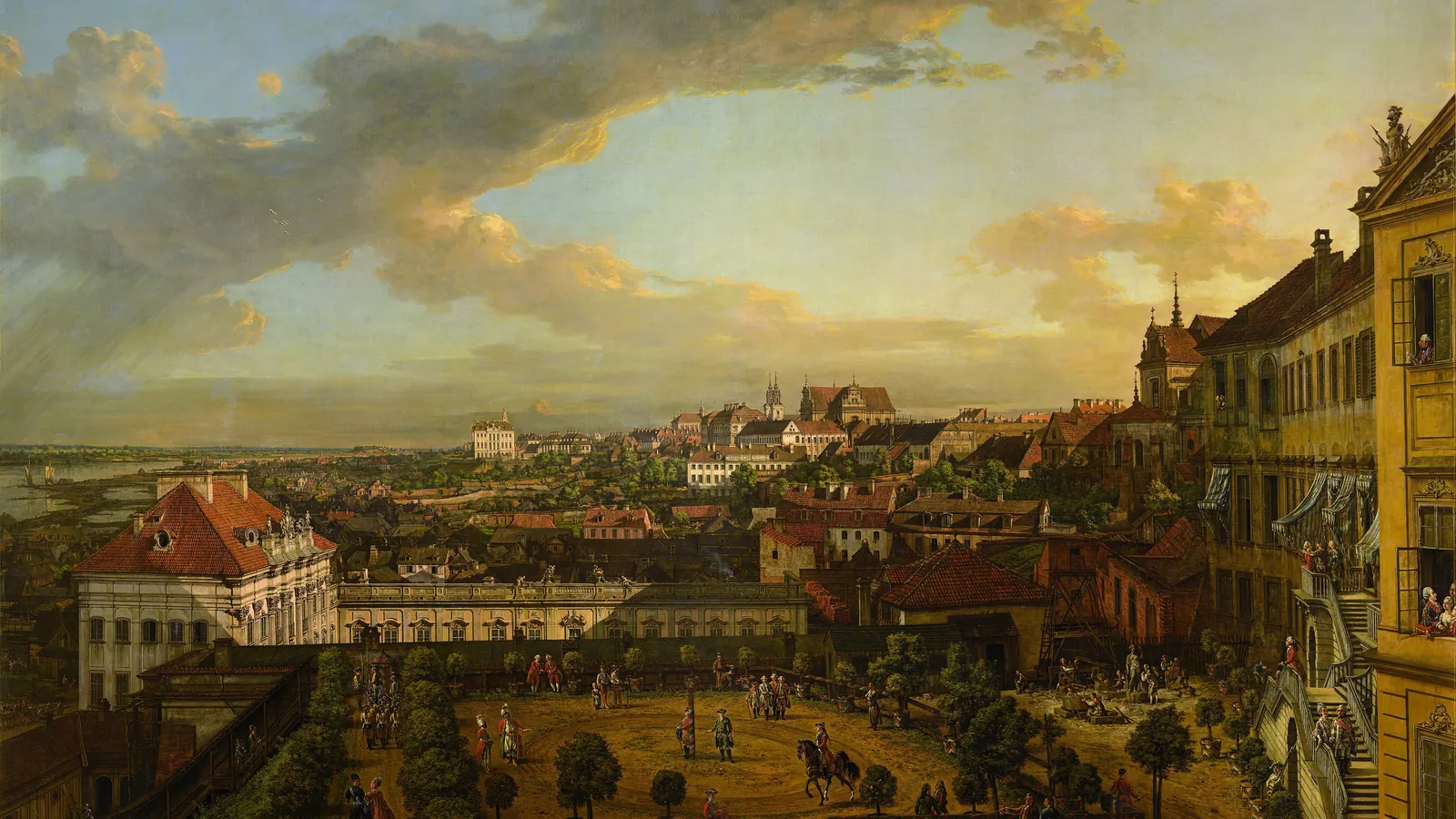
    The reconstruction used pre-war records and Bellotto's cityscapes as references, and the fact that none of it is original is the interesting part.

  • Parks on a scale that surprises visitors

    Łazienki has palaces, peacocks and tame red squirrels, and the wooded Vistula bank runs the length of the city with beaches on the far side.

  • One ticket for the whole network

    Two metro lines, dense trams, buses and the airport train share a single time-based fare, and the metro is the step-free option.

  • Capital-city prices that are not capital-city prices

    Eating out, museum entry and family apartments all cost well under the western European capitals Warsaw is otherwise comparable to.

Where to stay

Best areas in Warsaw for families

4 areas cover most trips here; the difference is mainly short stays leaning on transport versus longer stays and better value.
  • Śródmieście (Centrum)

    Best for short stays leaning on transport

    The interchange district, where every metro and tram line meets, so nothing in the city is more than a short ride away. It is an office-and-shopping quarter rather than a pretty one, and the main arteries carry traffic noise.

  • Stare Miasto & Nowe Miasto

    Best for families who want the pretty version

    The reconstructed old and new towns, walkable, car-free in the core and lined with squares and terraces. Touristed, short on supermarkets, and the furthest base from the science centre.

  • Powiśle & Solec

    Best for balancing the river and the centre

    Between the escarpment and the Vistula, within walking distance of Copernicus and the riverside boulevards, with modern flats and a calmer feel. The climb up the escarpment to the old town is real, and evening options are thinner.

  • Mokotów

    Best for longer stays and better value

    A residential district south of the centre with parks, playgrounds, ordinary shops and family-sized flats at lower prices. Twenty to thirty minutes by metro or tram from the sights, with little for a visitor within walking distance.

Family hotel picks in Warsaw

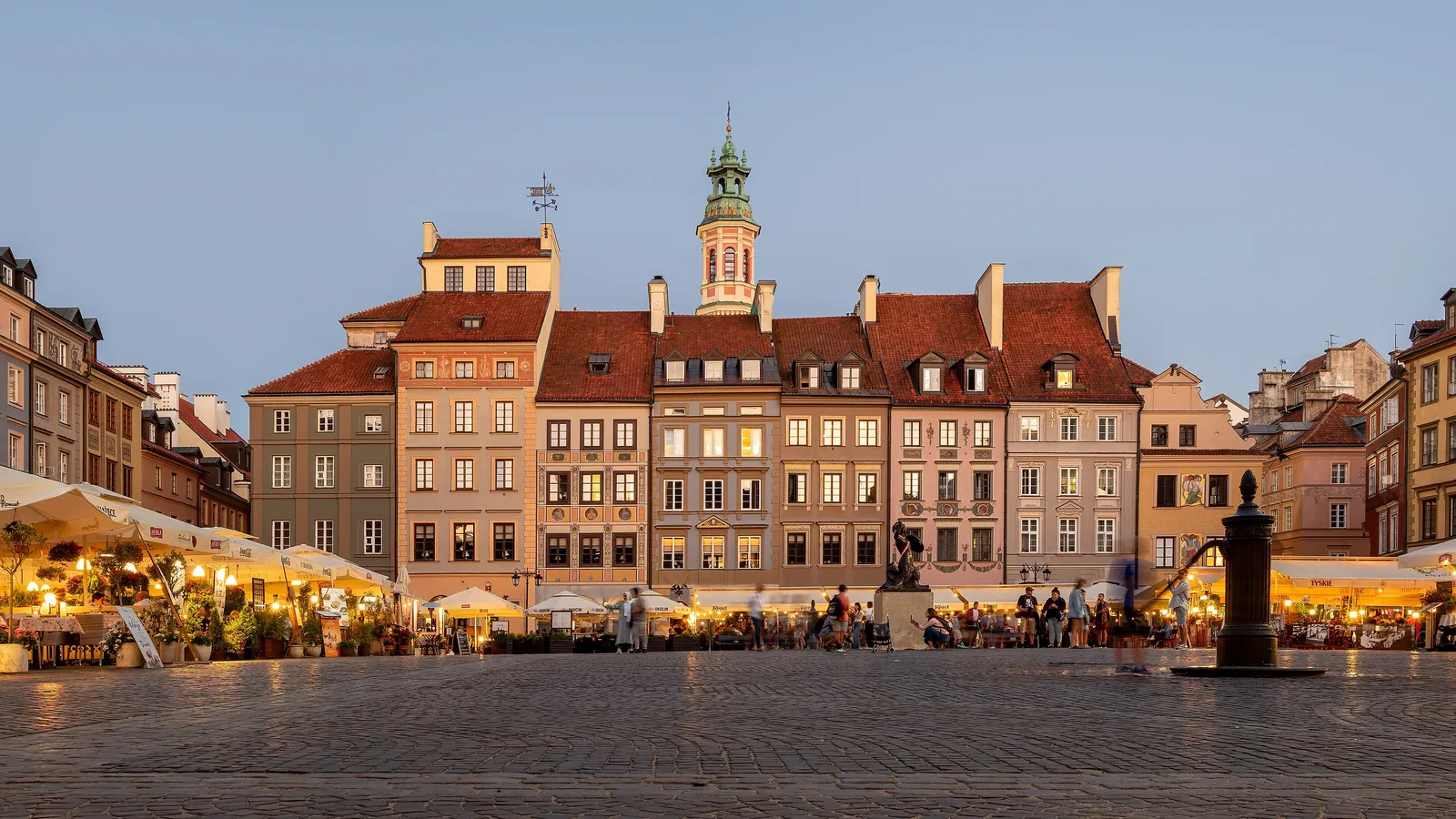
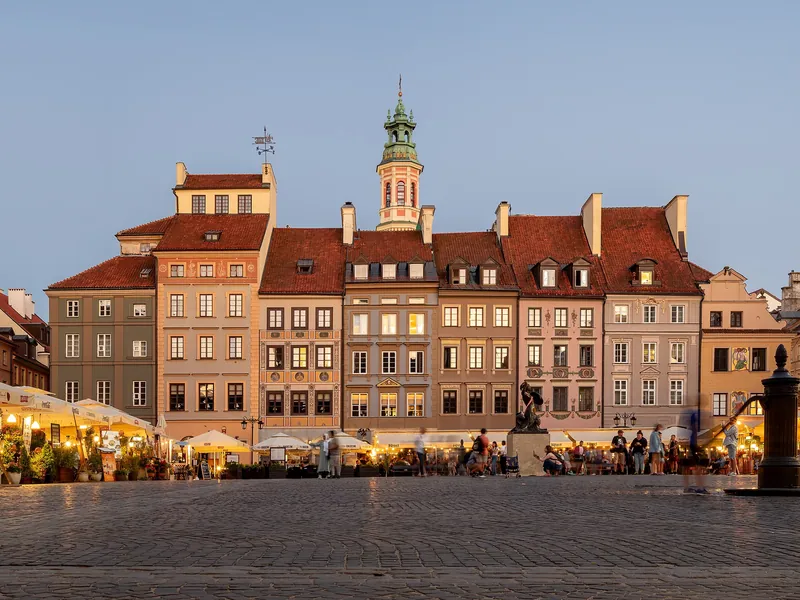
  • A square of reconstructed pastel townhouses with a central statue
    Powiśle & SolecMid-range

    Apartment in Powiśle by the river

    Powiśle solves Warsaw's main family problem, which is distance: the science centre, the river boulevards and the footbridge to the wild east bank are all walkable, and a metro station connects the rest of the city in minutes. The buildings are mostly modern, which in practice means lifts and rooms laid out for four.

    • Copernicus and the Vistula boulevards on foot
    • Metro station within walking distance
    • Lifts and step-free access in modern blocks
    • Kitchen and washing machine

    Fitting a family in

    Purpose-built two-bedroom flats sleep four to five with a real second bedroom, and many include a cot on request.

    Watch out. The escarpment between the river and the old town is a genuine climb, so the pretty part of the city is uphill rather than level. Everyday shops and evening options are thinner here than in the centre.

  • Aparthotel in Śródmieście
    Śródmieście (Centrum)Mid-range

    Aparthotel in Śródmieście

    In a city where the good things are scattered, sitting on the interchange is worth more than sitting somewhere attractive: every metro and tram line meets here, the airport train ends here, and no attraction is more than a short ride away. Aparthotel blocks also mean a kitchen, a lift and a reception that holds luggage on a travel day.

    • Every metro and tram line within walking distance
    • Airport train terminates at the central station
    • Kitchen, lift and luggage storage
    • Supermarkets and pharmacies open late

    Fitting a family in

    One- and two-bedroom serviced apartments sleep four to five; the two-bedroom units are the ones worth paying for, since studio layouts put everyone in one room.

    Watch out. This is an office and shopping district rather than a pretty one, and parts of it are dead in the evenings and at weekends. Rooms facing the main arteries carry traffic and tram noise, so a high floor or an inner aspect is worth requesting.

All family stays in Poland

Some links on this page are affiliate links. If you book through one, the price is the same for you and we may earn a commission. How this works.

Things to do in Warsaw with kids

  • Copernicus Science Centre
    MuseumBook ahead

    Copernicus Science Centre

    Warsaw

    A hands-on science centre on the Vistula bank with several floors of working exhibits, a robotics theatre and a planetarium in a separate building alongside. Almost everything is designed to be pushed, pulled or built, which is why it holds children long past the point most museums lose them.

    Ages
    6–16
    Time
    3h 30m
    Adult, from
    €10

    Good to know. Entry is timed with a daily cap, and weekend and school-holiday slots sell out well in advance — arriving without a ticket in high season usually means being turned away. It is genuinely loud and crowded inside, which is hard on sensory-sensitive children, and the planetarium is a separate ticket again.

  • Old Town and the Royal Castle
    Culture

    Old Town and the Royal Castle

    Warsaw

    The reconstructed old town, rebuilt from pre-war surveys and paintings after the city's destruction in 1944 and UNESCO-listed for the reconstruction itself. The market square, the barbican and the castle on Castle Square are all free to walk between; the castle interiors are separately ticketed.

    Ages
    5–16
    Time
    2h
    Adult, from
    Free

    Good to know. The castle interiors are a quiet, adult-paced visit through furnished state rooms, so a family with young children usually does better staying outside. The lanes are cobbled, and Castle Square is the single busiest point in the city on a summer evening.

  • Łazienki Park
    Nature

    Łazienki Park

    Warsaw

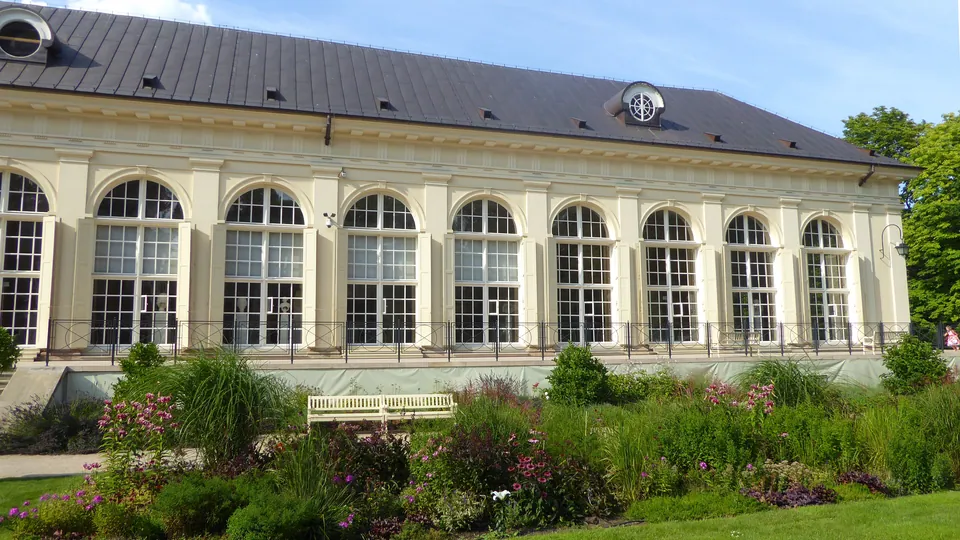
    A large royal park south of the centre with a palace built on an island in an ornamental lake, an amphitheatre, peacocks and a population of red squirrels tame enough to approach. Free to enter, flat, and the closest thing the city has to a whole day outdoors without leaving it.

    Ages
    0–14
    Time
    2h 30m
    Adult, from
    Free

    Good to know. It is big enough that the far gates are a long walk from the nearest tram stop, so it is worth choosing an entrance rather than arriving at whichever one appears first. The ornamental water is unfenced, the summer Sunday concerts draw large crowds to the central section, and feeding the squirrels is discouraged however willing they look.

Some links on this page are affiliate links. If you book through one, the price is the same for you and we may earn a commission. How this works.

Getting around Warsaw

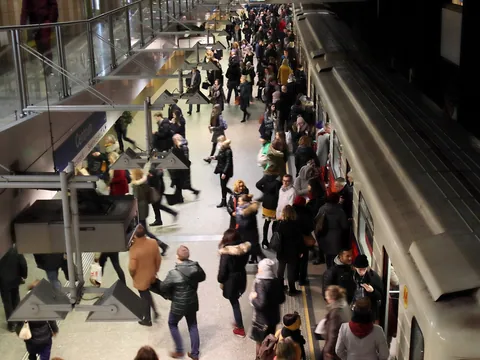
One ZTM ticket covers the metro, trams, buses and the local trains inside the city zone, including the run in from Chopin airport, and the common bands are twenty and seventy-five minutes plus a twenty-four-hour option. The youngest children travel free and school-age fares are reduced, with the bands posted at the machines. The metro is the pushchair-friendly part of the network, with lifts at the stations a visitor is likely to use, while the tram fleet is a mix of high-floor and low-floor stock, so a step up is still possible. Distances are long enough that walking between two sights is often a worse idea than it looks on a map.

Warsaw tips for families

  • When to go

    Book the science centre the moment dates are fixed

    Entry is timed with a daily cap, and weekend and school-holiday slots go well in advance. Turning up without a ticket in high season usually means being turned away, and the planetarium is a separate booking again.

  • With kids

    Cross the river for the wild bank

    Directly opposite the city centre the Vistula's eastern bank is undeveloped — sand, willow and a wooded path, reachable by footbridge — and it is where the city goes on a hot evening. It is natural riverbank, so it is unfenced and unlit, and the river itself is fast, cold and not for swimming.

  • Getting around

    One ticket really does cover everything

    Unlike the Tri-City coast, Warsaw puts the metro, trams, buses and city trains on a single fare, so a twenty-four-hour ticket per adult usually beats buying journeys and removes the arithmetic. It also covers the airport train, which is worth knowing on arrival.

Warsaw with kids: common questions

Is Warsaw's old town original?
No, and that is the point of it. Around eighty-five per cent of the city was destroyed by 1945, and the old town was rebuilt over the following two decades from pre-war records, measured surveys and Bellotto's paintings. It is on the UNESCO list specifically as a reconstruction, which older children tend to find more interesting than an intact old town.
What age is the Copernicus Science Centre best for?
Roughly six and up gets the most from it, and it holds that age for three hours or more. Younger children enjoy parts of it but tire in the noise and the crowds, which are considerable at weekends.
How many days do you need in Warsaw with kids?
Two to four. Two cover the science centre and the old town. Three or four add Łazienki, the river and a second museum without stacking two indoor days together.
Kraków or Warsaw with children?
Kraków for one city on a short trip: it is compact, prettier and easier to walk with children. Warsaw earns its place on a longer trip, in poor weather, or with a science-minded child, because its indoor attractions and its parks are both considerably better.
Is Warsaw walkable with a pushchair?
Within a district, yes — the parks, the boulevards and the rebuilt old town are all flat and smooth. Between districts the distances are long, so the metro does the work; it is step-free, while some trams still require a step up.