Skip to content

Cornwall with Kids

Cornwall has the genuine article: wide Atlantic beaches of proper sand, with surf schools, seasonal lifeguard cover and rock pools that refill twice a day. The north coast delivers the big waves and the big sand, the south coast gives sheltered creeks and calmer water for small children, and the whole county is small enough that both are within an hour of each other. Two things need respecting. It is a long way from London — roughly five hours by car or train, and the county funnels onto essentially one main road that gums up completely on summer changeover days. And the Atlantic is cold: sea temperatures peak around 16–17°C in late summer, so children swim in wetsuits, not swimsuits.

Best for ages
2+
Suggested stay
5–7 days
Best months
May–Sep
Daily budget
€290

Mid-range, family of four

Why Cornwall works with children

  • Real surf beaches with lifeguards

    The main north-coast beaches are patrolled through the summer season with flagged swimming zones, and surf schools run group lessons from the same sand.

  • The tide is the timetable

    Low tide opens rock pools, cave-backed coves and firm walking sand that simply do not exist six hours later, which gives a beach day a structure children follow.

  • Two coasts, two temperaments

    Toddlers get sheltered south-coast water and estuary beaches; older children get north-coast surf, coast-path walks and coasteering.

  • Food that suits a beach day

    Pasties, beach cafés and harbour fish-and-chip shops feed a sandy family without a sit-down meal or a change of clothes.

Where to stay

Best areas in Cornwall for families

3 areas cover most trips here; the difference is mainly surfing and big beaches versus scenery, galleries and car-free arrival.
  • North coast: Newquay to Padstow

    Best for surfing and big beaches

    The widest sand, the most surf schools and the most lifeguarded beaches, plus the largest choice of family accommodation. Also the busiest, and the water is exposed Atlantic with rip currents.

  • South coast: Falmouth to the Helford

    Best for younger children and calmer water

    Sheltered beaches, wooded creeks, boat trips and a gentler feel. Beaches are smaller and rockier, and fewer of them carry seasonal lifeguard cover.

  • West Penwith: St Ives and Penzance

    Best for scenery, galleries and car-free arrival

    Turquoise bays, a mainline station at Penzance and a branch line into St Ives fed by a park-and-ride at St Erth. The lanes out to the far-west coves are single-track with almost no parking.

Family hotel picks in Cornwall

  • Self-catering cottage near the north-coast beaches
    Newquay / PadstowMid-range

    Self-catering cottage near the north-coast beaches

    A beach week generates wet wetsuits, sandy towels and salty clothes every single day, and a cottage with a washing machine, an outdoor tap and somewhere to hang things is the difference between that being manageable and being the holiday.

    • Kitchen, washing machine and drying space
    • Off-street parking, which beach car parks cannot guarantee
    • Walking distance to sand at the better-placed ones
    • Enclosed garden at many properties

    Fitting a family in

    Two and three-bedroom cottages sleep four to six. Bunk rooms are common and are usually the smallest room in the house, so check which child is sleeping where before booking.

    Watch out. Peak-season lets run Saturday to Saturday with a seven-night minimum, and August rates can be double or triple the shoulder season. Many cottages sit on steep, narrow lanes with exactly one parking space, which is a problem for a family arriving in two cars.

  • Small hotel on the sheltered south coast
    Falmouth / HelfordMid-range

    Small hotel on the sheltered south coast

    The south coast's sheltered beaches and creek water suit children too young for north-coast surf, and a serviced hotel removes the cooking and cleaning that self-catering adds to a trip with a toddler.

    • Calmer, shallower water than the Atlantic side
    • Breakfast included at most properties
    • Boat trips and ferries from the harbour towns
    • Shorter drives between beaches than on the north coast

    Fitting a family in

    Family rooms sleeping four exist but are limited in number at small properties; interconnecting rooms are the alternative and cost close to two rooms.

    Watch out. South-coast beaches are smaller and rockier than the north's, and fewer of them have seasonal lifeguard cover. Older seafront buildings frequently have stairs and no lift, and sea-facing rooms are also the noisy ones in July and August.

All family stays in United Kingdom

Some links on this page are affiliate links. If you book through one, the price is the same for you and we may earn a commission. How this works.

Things to do in Cornwall with kids

  • Eden Project
    NatureBook ahead

    Eden Project

    Cornwall

    Two enormous linked biomes in a former china-clay pit, one recreating a rainforest and one a Mediterranean climate, with outdoor gardens and a children's play area.

    Ages
    4–16
    Time
    4h
    Adult, from
    €42

    Good to know. The Rainforest Biome is deliberately hot and humid and is genuinely uncomfortable for some children; there is a cooled room part-way round for anyone who needs it. The site is a quarry, so the return from the biomes is a long uphill walk unless the land train is running, and that queues.

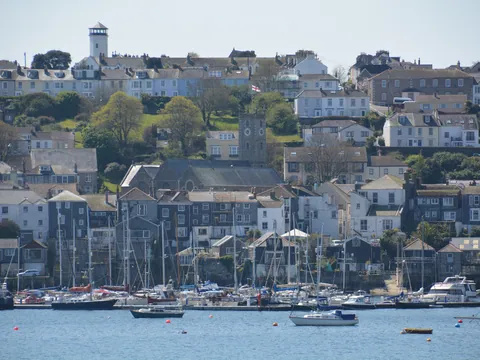
  • A harbour town above pale sand and clear water in Cornwall
    AdventureBook ahead

    Surf lesson at Fistral Beach

    Cornwall

    Group beginner surf lessons on Newquay's main surf beach, with boards and wetsuits included and instructors working in waist-deep white water.

    Ages
    8–17
    Time
    2h
    Adult, from
    €45

    Good to know. Minimum ages vary between schools and are usually set around eight for group lessons, with lower ages only in private or family sessions — confirm before booking for a younger child. Lessons are moved or cancelled when the swell is too big, which is a normal occurrence rather than a rare one.

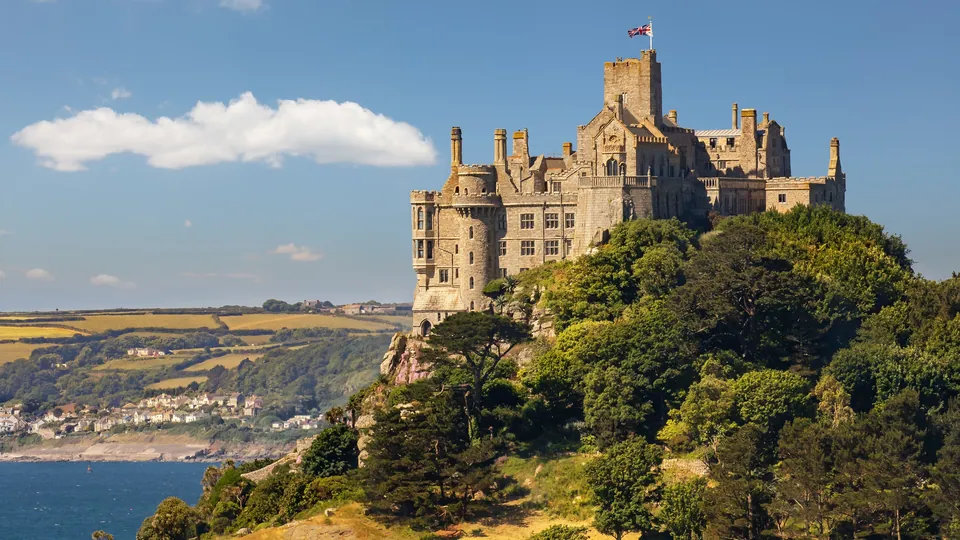
  • St Michael's Mount
    CultureBook ahead

    St Michael's Mount

    Cornwall

    A castle and garden on a tidal island off Marazion, reached on foot across a granite causeway at low tide and by small boat when the sea covers it.

    Ages
    5–16
    Time
    2h 30m
    Adult, from
    €22

    Good to know. The causeway is cobbled, uneven and underwater for much of the day, so the tide dictates the visit and the boats do not run in rough weather. The climb to the castle is steep and stepped, with no pushchair access above the harbour.

Some links on this page are affiliate links. If you book through one, the price is the same for you and we may earn a commission. How this works.

Getting around Cornwall

A car reaches the beaches and coves that buses do not, and the drive from London is roughly five hours before summer traffic. The car-free alternative is genuinely usable in the far west: the sleeper or day train to Penzance, then the St Ives branch line from St Erth, where the park-and-ride exists precisely because St Ives itself has no parking to speak of. Beach car parks fill by mid-morning in August, many are app-only with poor mobile signal, and arriving or leaving midweek avoids the Saturday changeover crawl on the main road into the county.

Cornwall tips for families

  • When to go

    Check the tide before choosing the beach

    Rock pools, caves and the widest sand appear at low tide and vanish at high. Several small coves shrink to nothing or cut off their access path at high water, so a tide table decides which beach works this morning.

  • Health & safety

    Swim between the red and yellow flags

    The north-coast beaches have rip currents strong enough to matter, and the flagged zone is positioned each day to avoid them. Lifeguard cover is seasonal and runs set hours, so an out-of-season or early-evening swim has no safety net.

  • Packing

    Hire wetsuits rather than pack them

    Sea temperatures peak around 16–17°C in late summer, which is too cold for most children to stay in for long in a swimsuit. Surf schools include wetsuits in a lesson, and beach shops hire child sizes by the day.

  • Getting around

    Travel midweek, not on a Saturday

    Cornwall's self-catering stock changes over on Saturdays, which loads the county's single main artery in both directions at once. A midweek arrival can save a couple of hours and the end of everyone's patience.

Cornwall with kids: common questions

How long does it take to get to Cornwall from London?
Roughly five hours by car to the Newquay area without traffic, and about five hours by train to Penzance. Summer Saturdays regularly add one to two hours to the drive.
Is the sea warm enough for children to swim?
Not without a wetsuit for most children. The water peaks around 16–17°C in August and September, which is swimmable in a wetsuit for hours and uncomfortable in a swimsuit within minutes.
Do you need a car in Cornwall?
For most of the county, yes — the beaches and coves sit beyond a thin bus network. The exception is the far west, where the Penzance mainline and the St Ives branch line make a car-free stay workable.
Which coast suits younger children better?
The south. Falmouth and the Helford have sheltered beaches and creek water, while the north coast's appeal is surf that small children cannot use safely.
How many days is enough in Cornwall?
Five to seven. Fewer makes the long journey a poor trade, and a week allows for the two or three days that will be too wet or too windy for the beach.