Skip to content

Kanazawa with Kids

Kanazawa came through the Second World War largely undamaged, so its samurai lanes, teahouse district and one of Japan's three great landscape gardens survive as part of a working city rather than as reconstructions. For families it is the compact, low-stress alternative to Kyoto: the garden, the castle park, the samurai quarter and the covered market sit inside one walkable radius, and the crowds are a fraction of Kyoto's in the same weeks. The trade-off is weather — Kanazawa sits on the Sea of Japan coast and is one of the wettest cities in the country, so an indoor plan is not optional.

Best for ages
5+
Suggested stay
2–3 days
Best months
Apr–Jun, Sep–Nov
Daily budget
€210

Mid-range, family of four

Why Kanazawa works with children

  • Districts that survived intact

    Earthen-walled samurai lanes and wooden teahouse streets, still lived in rather than rebuilt for visitors.

  • Craft workshops children can finish

    Applying gold leaf to chopsticks or a small box takes under an hour and produces something to take home.

  • Kyoto's kind of sights without Kyoto's queues

    The headline garden and castle park rarely need timed tickets, and rooms cost noticeably less.

  • Everything inside a small radius

    A flat loop bus links the station, the market, the garden and both historic districts in under 40 minutes.

Where to stay

Best areas in Kanazawa for families

3 areas cover most trips here; the difference is mainly shinkansen arrivals and larger rooms versus atmosphere over convenience.
  • Kanazawa Station

    Best for shinkansen arrivals and larger rooms

    The widest choice of hotels with quad rooms and the loop-bus terminus, about 10 minutes by bus from the garden.

  • Korinbo & Katamachi

    Best for walking to the garden

    The central shopping and restaurant district, a short flat walk from Kenrokuen and the castle park, with the most places open in the evening.

  • Higashi Chaya area

    Best for atmosphere over convenience

    Wooden teahouse streets and small guesthouses across the river. Quiet at night, further from the station, and with little open late.

Family hotel picks in Kanazawa

  • Kanazawa Station — quad rooms and the loop bus
    Kanazawa StationMid-range

    Kanazawa Station — quad rooms and the loop bus

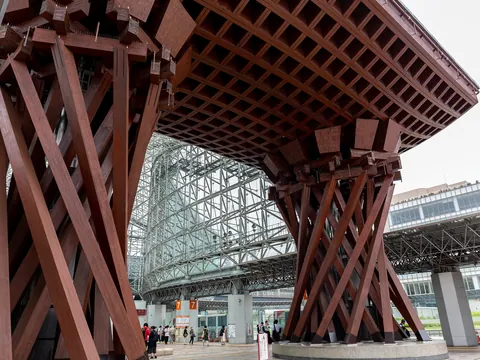
    The station end has the newest hotels and the highest concentration of rooms that genuinely sleep four, and the loop bus to the garden, the market and both historic districts leaves from the terminal below.

    • Loop bus to every main sight from the station terminal
    • Covered access between the station and most hotels, which matters in a wet city
    • Omicho Market a short bus ride or a 15-minute walk away

    Fitting a family in

    Newer station-side hotels carry more quad and connecting rooms than the centre. Twin rooms with an extra bed are common but tight for four.

    Watch out. A 25-minute walk or a bus ride from Kenrokuen and the restaurants of Katamachi, so every evening ends with a journey back.

  • Korinbo & Katamachi — apartments near the garden
    Korinbo / KatamachiMid-range

    Korinbo & Katamachi — apartments near the garden

    The central district is flat, walkable to Kenrokuen and the castle park, and has the most restaurants open in the evening — which removes the bus journey at the end of a wet day.

    • Walking distance to Kenrokuen, the castle park and the samurai district
    • A kitchen and a washing machine for a stop in the middle of a long trip
    • Restaurants and covered shopping within a few minutes

    Fitting a family in

    Two-bedroom apartments are available and usually cheaper than two hotel rooms, which is rarely true elsewhere in Japan.

    Watch out. Older buildings often have no lift, and check-in is frequently by keybox with nobody on site — awkward if a train runs late.

All family stays in Japan

Some links on this page are affiliate links. If you book through one, the price is the same for you and we may earn a commission. How this works.

Things to do in Kanazawa with kids

  • Kenrokuen garden & Kanazawa Castle park
    Nature

    Kenrokuen garden & Kanazawa Castle park

    Kanazawa

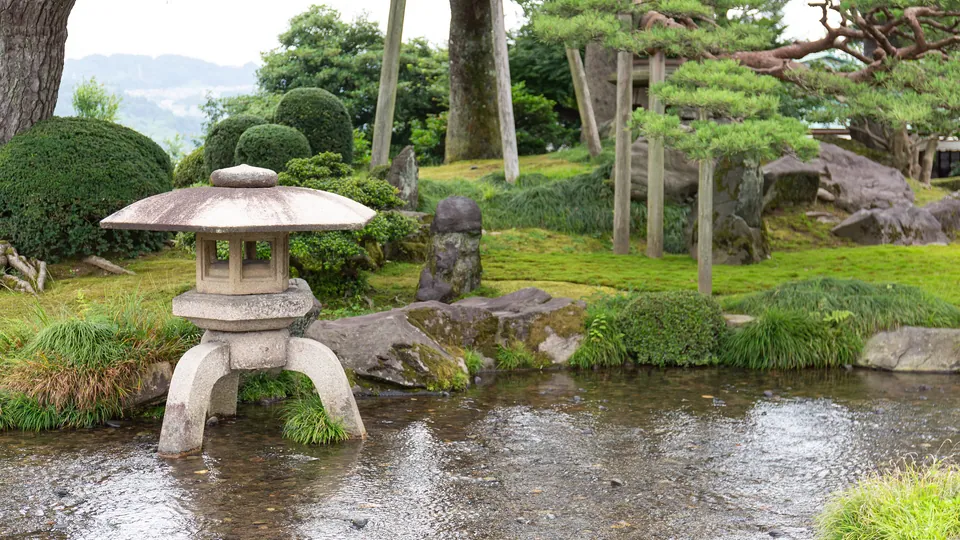
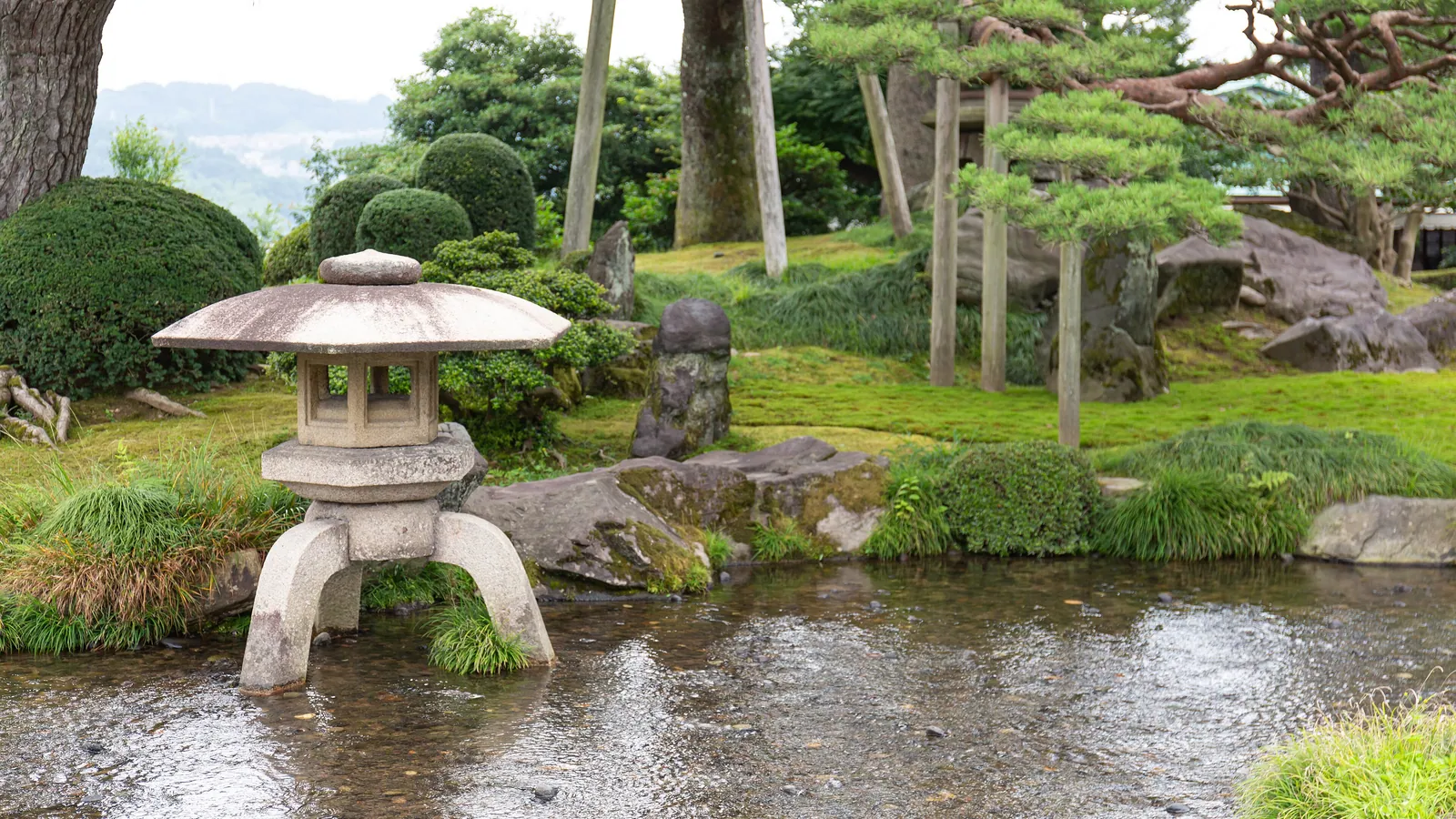
    One of Japan's three great landscape gardens — ponds, streams, teahouses and a stone fountain spread across a hillside — with the reconstructed gates and open lawns of the castle park directly across the road.

    Ages
    4–17
    Time
    2h 30m
    Adult, from
    €3

    Good to know. Gravel paths with gentle slopes and some stepped sections: passable with a buggy but not smooth. It is a garden to walk in with nothing to climb on, so pair it with the castle lawns rather than making it the whole morning.

  • Gold-leaf workshop
    CultureBook ahead

    Gold-leaf workshop

    Kanazawa

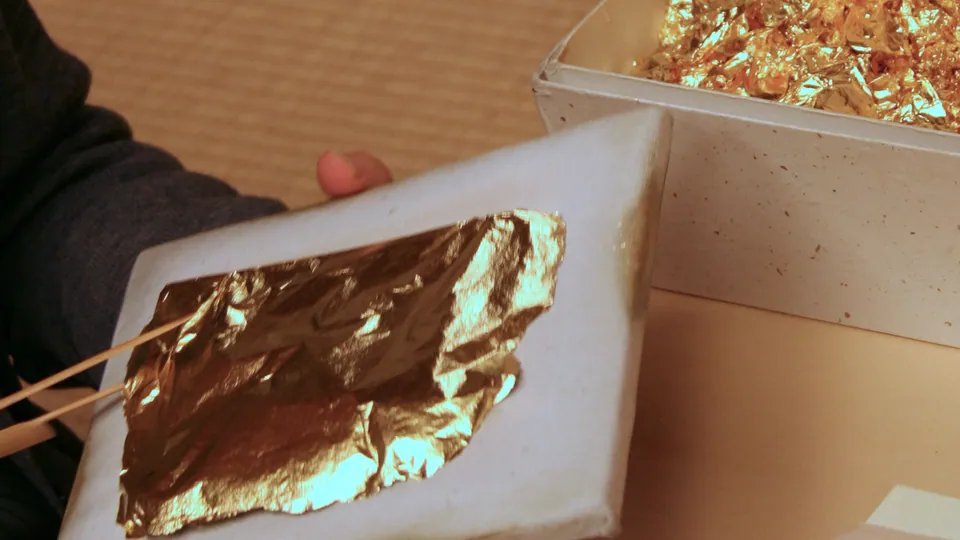
    Kanazawa produces almost all of Japan's gold leaf. Workshops in and around the Higashi Chaya district let visitors apply leaf to chopsticks, a small dish or a box and take the finished piece away the same day.

    Ages
    5–16
    Time
    1h 15m
    Adult, from
    €15

    Good to know. Sessions are small and book out, particularly at weekends and in Japanese school holidays. Gold leaf is thinner than tissue paper and moves in any draught, so younger children usually need an adult's hands on the piece with them.

  • Higashi Chaya & Nagamachi samurai district
    Culture

    Higashi Chaya & Nagamachi samurai district

    Kanazawa

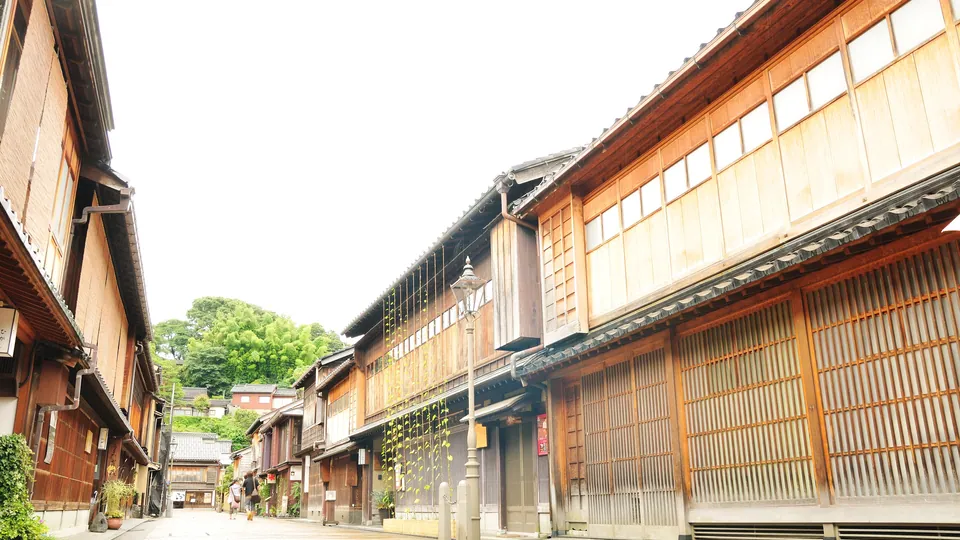
    Two surviving historic quarters on opposite sides of the centre: a street of wooden teahouses where geisha still perform, and a lane network of earthen-walled samurai residences with a restored house and garden open to visitors.

    Ages
    6–16
    Time
    2h 30m
    Adult, from
    €5

    Good to know. These are lived-in streets rather than an attraction site, so there is little to do beyond walking and looking — two short visits work far better than one long one with children. Interiors require shoes off and have steep, narrow wooden staircases.

Some links on this page are affiliate links. If you book through one, the price is the same for you and we may earn a commission. How this works.

Getting around Kanazawa

The Kanazawa Loop Bus circles the main sights from the station in both directions on a flat fare, which is the simplest option with children; a one-day bus pass pays for itself from about four rides. The centre is flat enough to walk between the garden, the castle park and the samurai district. Arriving from Tokyo is a direct Hokuriku Shinkansen of roughly two and a half hours; from Kyoto or Osaka the route now involves a change of train at Tsuruga, which is worth knowing before promising anyone a direct journey.

Kanazawa tips for families

  • Packing

    Pack rain gear whatever the month

    Kanazawa is among the wettest cities in Japan and the rain arrives in short heavy bursts at any time of year. Hotels lend umbrellas; waterproof shoes in children's sizes are the harder thing to improvise on the day.

  • With kids

    Book a gold-leaf workshop rather than another temple

    Kanazawa produces almost all of Japan's gold leaf. Application sessions onto chopsticks, a dish or a small box are short, children keep the result, and the attention span holds in a way it does not on a fourth shrine.

  • Food

    Use the covered market for lunch

    Omicho Market has seafood counters and cooked stalls under one roof, which solves both lunch and a wet hour without a reservation.

Kanazawa with kids: common questions

Is Kanazawa a good alternative to Kyoto with children?
For a shorter stay, often yes. The garden, castle park, samurai district and teahouse streets sit in one walkable area, the crowds are far lighter, and almost nothing needs booking weeks ahead. Kyoto still has the more famous individual sites and better onward connections.
How many days do you need in Kanazawa?
Two. One covers Kenrokuen, the castle park and a craft workshop; the second covers the samurai and teahouse districts, the market and the contemporary art museum. One night works if you arrive in the morning.
How do you get to Kanazawa from Kyoto or Osaka?
By limited express to Tsuruga and then the Hokuriku Shinkansen, with one change on the way. From Tokyo the Shinkansen runs direct in about two and a half hours.
Is Kenrokuen worth it with young children?
It is a walking garden rather than a playground, so budget an hour rather than a morning. The paths are gravel and mostly gentle, with ponds, bridges and a fountain that hold attention, and the castle park next door has open lawns to run on.