Skip to content

Hokkaido with Kids

Hokkaido is Japan's northern island, and it runs on a different calendar from the rest of the country — no rainy season, a short cool summer of flower fields around Furano and Biei, and a winter that buries the island under some of the most reliable snow anywhere. What it gives families is the space Honshu does not: a zoo built so the animals cross above and below the visitors, roadside volcanic steam and hot springs, and long drives through farmland where nothing is crowded. The planning assumptions from a Tokyo and Kyoto trip do not transfer here. Distances are measured in hours rather than minutes, the rail network is thin outside the Sapporo corridor, a Japan Rail Pass buys far less than it does on the Shinkansen, and a hire car is close to essential — which is unusual in Japan and is the single fact that changes how this destination is planned. The other trade-off is the season: outside roughly late June to early September, and the deep-winter months, much of what families come for is either closed or under snow.

Best for ages
4+
Suggested stay
5–8 days
Best months
Jan–Feb, Jun–Sep
Daily budget
€230

Mid-range, family of four

Why Hokkaido works with children

  • Flower fields instead of temples

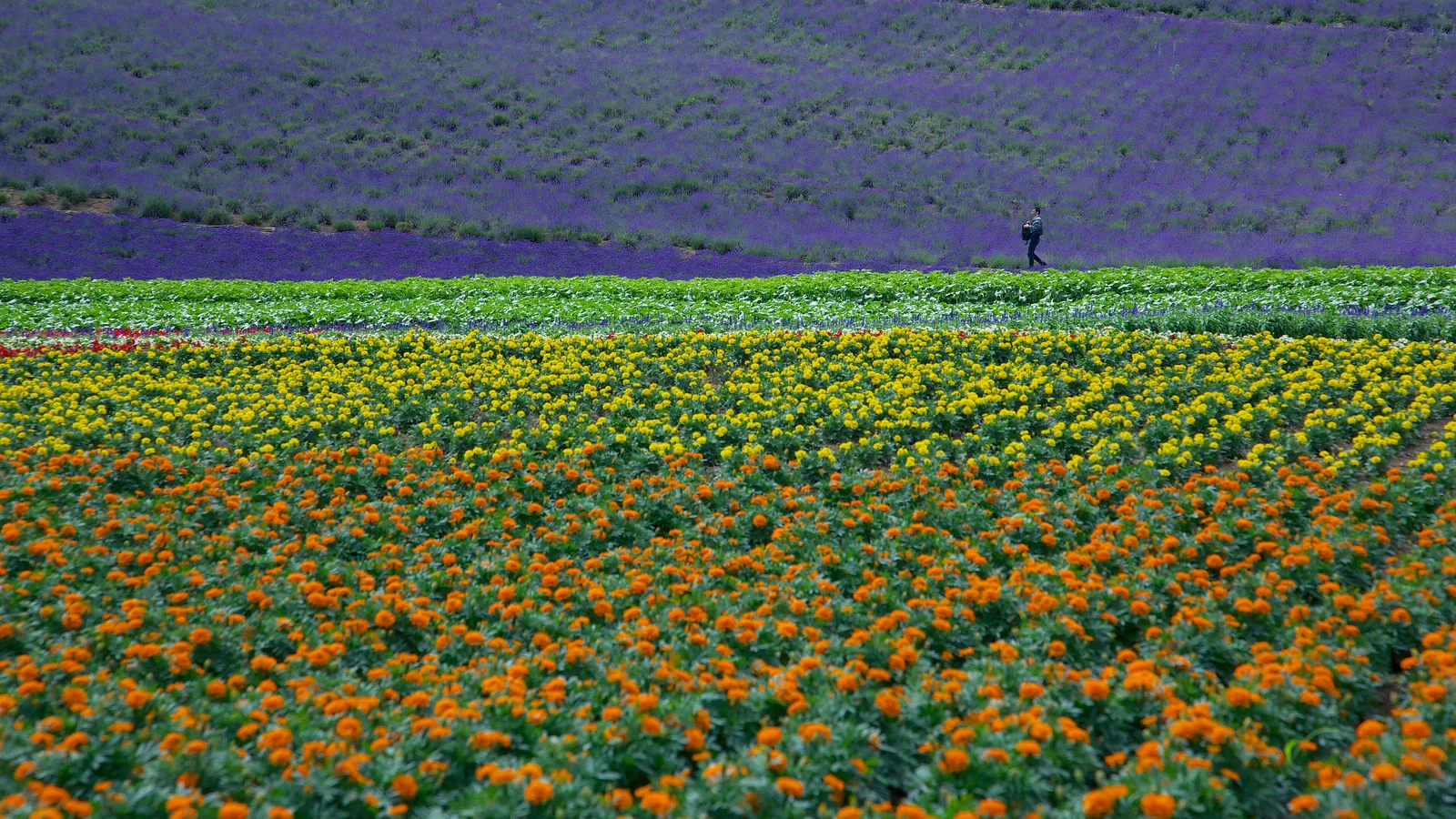
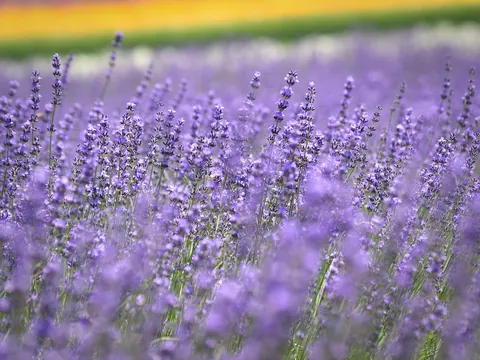
    The farmland around Furano and Biei is planted in bands of colour across rolling hills, with the lavender at its peak for a few weeks in July.

  • A zoo designed around movement

    Asahiyama's enclosures route animals over and under the visitor path — a glass tube through the seal pool, a dome inside the polar bears' water, penguins walked through the grounds in winter.

  • A summer without the mainland's heat

    There is no rainy season here, and July highs sit in the mid-twenties while Kyoto and Osaka are at 35 degrees with high humidity.

  • Dairy, corn and crab

    Milk, butter, sweetcorn, potatoes, soft ice cream, ramen and soup curry — closer to what children already eat than anywhere else in Japan.

  • The driving is the trip, and it is not optional

    Long, straight, empty roads between volcanoes and farmland, and almost nothing beyond the Sapporo corridor that a train reaches usefully.

Where to stay

Best areas in Hokkaido for families

4 areas cover most trips here; the difference is mainly arrival, a car-free start and february versus a winter trip built around snow.
  • Sapporo

    Best for arrival, a car-free start and february

    The one part of Hokkaido where a family functions without driving: a rapid train from the airport into the station building, a subway, covered arcades and an underground concourse that matters at minus eight, plus Odori Park and the winter festival. It is also the least distinctive part of the island, so every landscape day starts with a journey out of it.

  • Furano, Nakafurano and Biei

    Best for the flower fields and the zoo

    The central hill belt, two and a half hours from Sapporo, with small family-run pensions, farm produce at the roadside and ski lifts on the same slopes in winter. Asahiyama Zoo is around an hour further north. Very little is open in the evening, and the lavender weeks fill the roads and the rooms at the same time.

  • Noboribetsu and Lake Toya

    Best for one hot-spring night on the way through

    The south-west, roughly an hour and a half from the airport, where a steaming volcanic valley feeds a street of hot-spring hotels and a caldera lake sits behind it. Convenient for breaking a long drive, but these are resort towns with fixed dinner times and little to do after them.

  • Niseko and Rusutsu

    Best for a winter trip built around snow

    The ski areas south-west of Sapporo, with the most English-language ski school and childcare provision in Japan and snowfall measured in metres. January and February rates are the highest on the island, and outside the snow season there is little reason to be there.

Family hotel picks in Hokkaido

  • Sapporo Station and Odori — rooms on the subway
    Sapporo (Station / Odori)Mid-range

    Sapporo Station and Odori — rooms on the subway

    Sapporo is the one place on the island where a family needs no car, which makes it the sensible first and last stop: the airport train arrives inside the station building, the subway and a long underground concourse link the station to Odori without going outside, and the food halls and arcades absorb a wet or a freezing day.

    • Rapid train from New Chitose airport into the station building
    • Underground walkway between the station and Odori, which matters at minus eight
    • Department-store food halls and covered shopping arcades
    • The widest choice of triple and quad rooms on the island

    Fitting a family in

    The business-hotel chains around the station carry most of the city's triples and quads and the rooms are small. Apartment-style rooms with a kitchenette suit four better and are easier to find here than anywhere else in Hokkaido.

    Watch out. Rates and availability across the whole city tighten sharply for the February festival week and the New Year period. Sapporo is also the least distinctive part of the island, so every landscape day begins with a two-hour journey out and ends with the same one back.
  • Pension or farm stay in the Furano and Biei hills
    Furano / Nakafurano / BieiMid-range

    Pension or farm stay in the Furano and Biei hills

    Staying in the hills removes the two-and-a-half-hour drive from Sapporo at both ends of the best day of the trip, and puts the flower farms, the Biei loop and Asahiyama Zoo all within about an hour. The small pensions cook dinner on site, which solves the evening in an area where almost nothing is open after dark.

    • Flower farms, the Biei hill loop and the zoo all within about an hour
    • Dinner and breakfast cooked on site at most pensions
    • Roadside dairy, sweetcorn and melon in season
    • Ski lifts on the same slopes from December

    Fitting a family in

    Pensions have only a handful of rooms each, some Japanese-style with futons that sleep four in one room. Confirm whether children's meals are included and at what age a child is charged as an adult, and book July months in advance.

    Watch out. A car is not optional here and the dinner sitting is fixed and early. There is nothing to walk to in the evening, the lavender weeks sell out the whole area, and in winter the same roads need snow-driving confidence.

  • Onsen hotel at Noboribetsu or Lake Toya
    Noboribetsu / Lake ToyaHigher-end

    Onsen hotel at Noboribetsu or Lake Toya

    One hot-spring night is the standard way to break the long leg between the airport and the rest of the island, and it is the rare Japanese room type where four or five people sleep in one space without paying for two rooms. The larger family-oriented properties here serve a buffet dinner rather than a fixed multi-course meal, which works considerably better with children.

    • Tatami rooms that sleep four or five on futons
    • Dinner and breakfast normally included in the rate
    • Indoor and outdoor baths on site, with private baths at family-oriented properties
    • The steam valley or the lake shore within walking distance

    Fitting a family in

    One room per family is the norm. Confirm whether children's meals are included, at what age a child is charged as an adult, and whether a private bath can be reserved rather than queued for.

    Watch out. Dinner sittings are fixed and early and the towns have very little open afterwards. Public baths are gender-separated and many restrict visible tattoos. Rates including two meals are high next to a city hotel, and a night here is only worth buying if the route passes this way anyway.

All family stays in Japan

Some links on this page are affiliate links. If you book through one, the price is the same for you and we may earn a commission. How this works.

Things to do in Hokkaido with kids

  • Asahiyama Zoo
    Animals

    Asahiyama Zoo

    Hokkaido

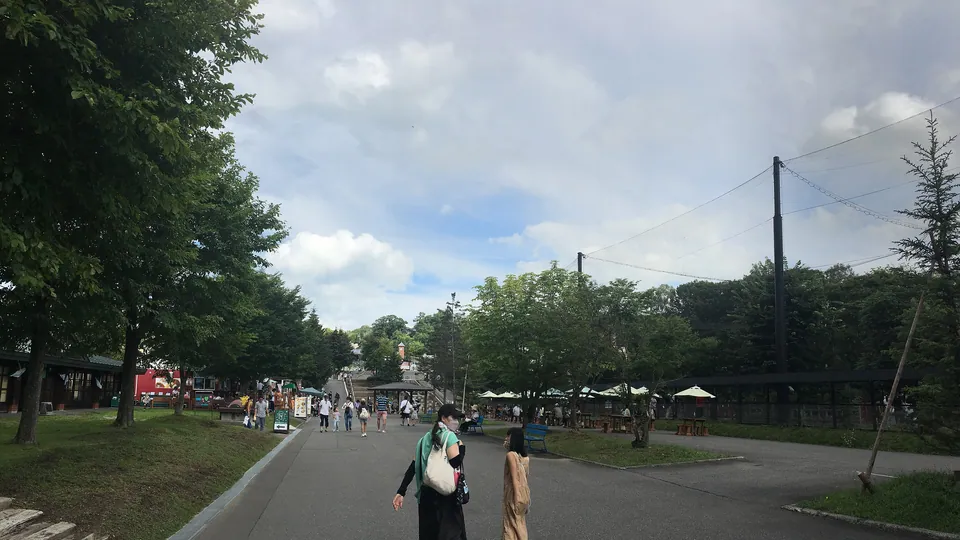
    A hillside zoo at Asahikawa laid out so the animals cross the visitor route rather than sit beside it: a glass tube through the seal pool, a dome inside the polar bears' water, an orangutan high wire above the path, and a penguin walk through the grounds on winter days.

    Ages
    2–14
    Time
    4h
    Adult, from
    €6

    Good to know. It is around an hour from Furano and two from Sapporo, so without a base nearby it consumes a whole day. The site climbs a hill along a single long spine, which is a lot of walking for small children and hard work with a pushchair. The winter penguin walk runs only on scheduled days in the coldest months and does not exist in summer, and feeding times concentrate the crowds at particular enclosures.

  • Furano and Biei flower fields
    Nature

    Furano and Biei flower fields

    Hokkaido

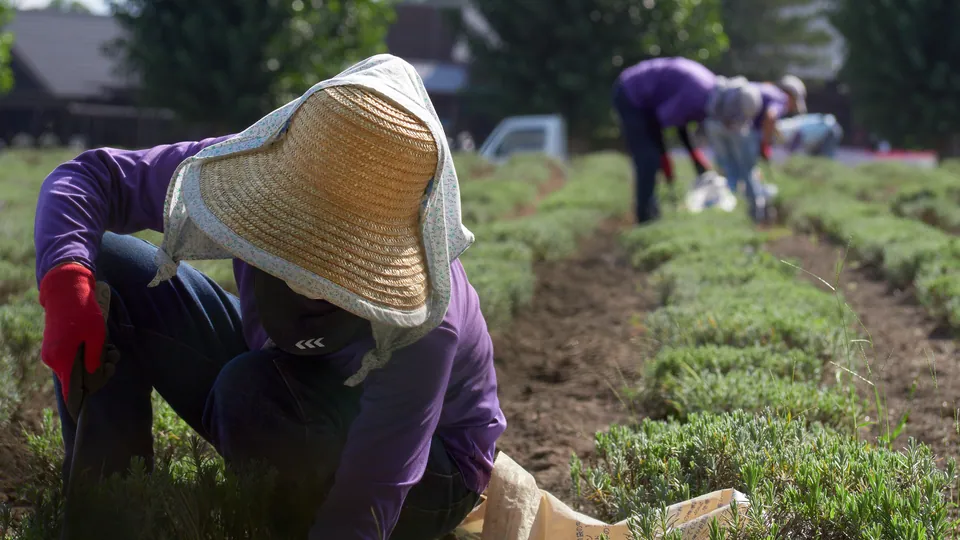
    A belt of rolling farmland in central Hokkaido planted in bands of colour, with lavender farms that open their slopes free of charge, a few chair lifts and tractor carts, and the Biei hills adding patchwork fields and single landmark trees on a short driving loop.

    Ages
    3–16
    Time
    4h
    Adult, from
    Free

    Good to know. Lavender peaks for a few weeks from early July, and outside that window most of the stripes are green. Inside it the farm car parks and the approach roads are at capacity by mid-morning. These are working farms, so the rows are not to be walked into, and there is no shade and no shelter anywhere on the hills. The sites are several kilometres apart with no useful bus between them.

  • Noboribetsu Jigokudani
    Nature

    Noboribetsu Jigokudani

    Hokkaido

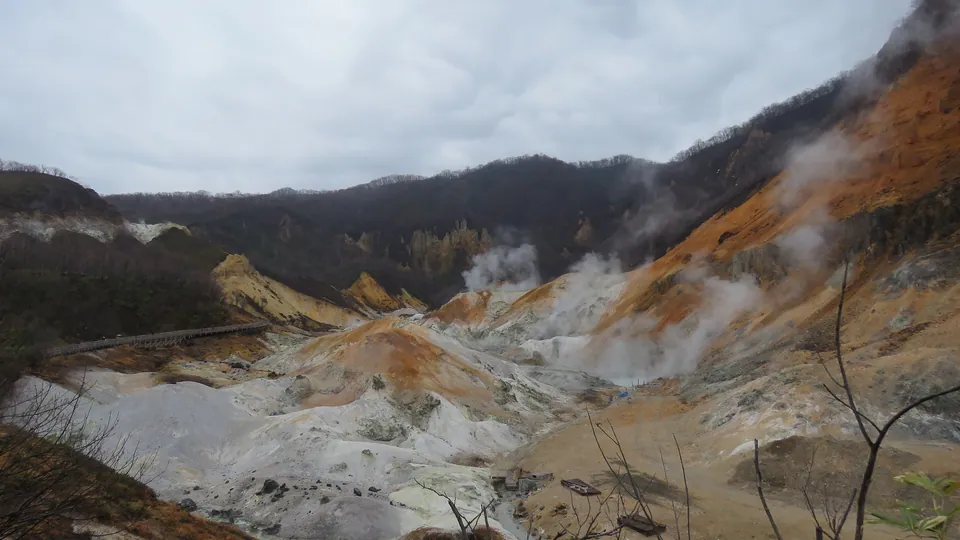
    A steaming volcanic valley above the hot-spring town of Noboribetsu, with sulphur vents, boiling ponds and bare grey rock, crossed by a boardwalk from the car park and ringed by short forest trails, feeding the bath houses in the street below.

    Ages
    4–16
    Time
    2h
    Adult, from
    Free

    Good to know. The sulphur smell is strong and some children find it genuinely unpleasant. The boardwalk is unshaded, hot underfoot in summer and slippery when wet, and the trails beyond the main viewing loop climb steadily and close under snow. If a bath in the town is part of the plan, public onsen are gender-separated and many restrict visible tattoos, so a private or family bath needs confirming when the room is booked.

  • Odori Park and the Sapporo winter festival
    City

    Odori Park and the Sapporo winter festival

    Hokkaido

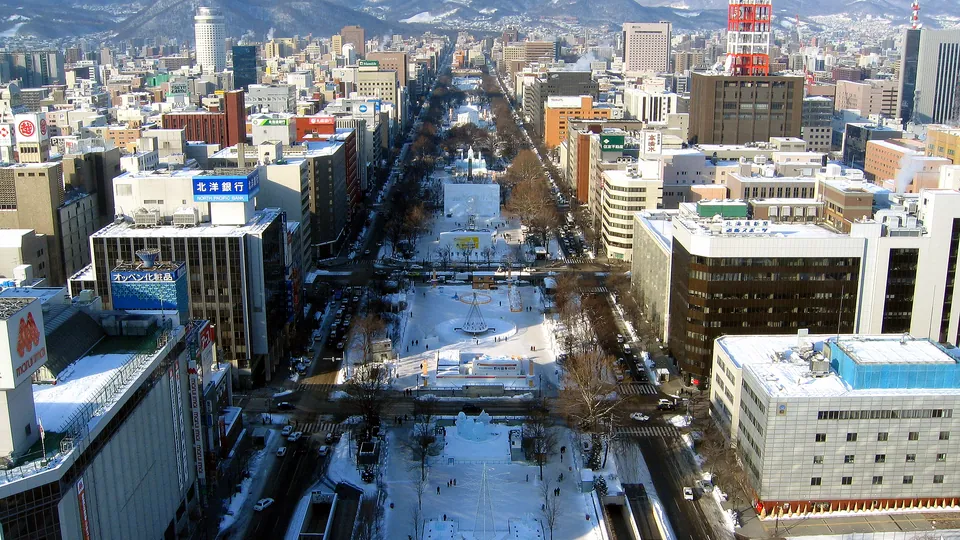
    The long linear park that cuts across central Sapporo and serves as the city's event ground: large snow and ice sculptures in the first week of February, food stalls and lawns in summer, and a television tower at the eastern end with a view down the whole strip.

    Ages
    4–16
    Time
    2h
    Adult, from
    Free

    Good to know. The February festival is free and entirely outdoors, which means several hours in temperatures well below freezing on compacted ice, with limited places to warm up nearby and the sculpture sites split across more than one location in the city. In summer the park is a pleasant lawn with stalls rather than an attraction, and it does not carry a day on its own.

Some links on this page are affiliate links. If you book through one, the price is the same for you and we may earn a commission. How this works.

Getting around Hokkaido

A hire car changes this destination more than anywhere else in Japan. Rail is useful in one corridor — New Chitose airport to Sapporo and on to Asahikawa, with a branch towards Furano that runs a fuller service in summer — and thin to useless everywhere else, so a nationwide Japan Rail Pass is poor value here and the JR Hokkaido area passes are the ones to price instead. Distances are the thing to plan around: Sapporo to Noboribetsu is roughly two hours, to Furano about two and a half, and to the eastern national parks five or more, which puts them outside a week-long trip based in the west. In winter the roads are snow-covered as a matter of course; rentals come on winter tyres, but a family with no winter-driving experience is better served by trains, coaches and hotel transfers than by a car.

Hokkaido tips for families

  • Getting around

    Book the car before the rooms

    Rental stock on the island is finite and goes early for the lavender weeks, the New Year period and February. Automatics are standard but English navigation is not, and a child seat is legally required for younger children and has to be reserved with the car. An expressway toll pass is worth adding if the route includes the long legs.

  • When to go

    The lavender window is narrower than the season

    The purple rows peak from roughly early July to early August, and inside that window the farms, their car parks and the approach roads are at capacity by mid-morning. Either side of it the hills are still worth the drive for the patchwork fields and the other crops, but not for lavender — a trip sold to children on the photographs will disappoint in mid-June.

  • Packing

    Winter here needs boots, not another coat

    Daytime temperatures of minus five to minus ten are ordinary in January and February, and city pavements are compacted ice rather than snow. Insulated boots with a real grip pattern matter more than an extra layer, and because indoor heating is strong, everything above the boots wants to come off easily.

  • Health & safety

    Brown bears are a genuine constraint on the trails

    Hokkaido has a substantial brown bear population, and trailheads post closures and sighting notices that are meant to be read rather than walked past. With children, stay on open, signposted, well-used routes, make noise, and treat a closure as final. The flower fields, the hot-spring valleys and the zoo need none of this, so it only affects the days that go into forest.

Hokkaido with kids: common questions

How many days does Hokkaido need?
Five to eight, based in the west. That covers Sapporo, the Furano and Biei fields, Asahiyama Zoo and a hot-spring night with the driving spread out. It does not work as a two-night add-on to a Tokyo and Kyoto route, because the flight plus the distances consume most of that.
Do you need a car in Hokkaido?
Outside Sapporo, effectively yes. Trains serve the airport, Sapporo and Asahikawa usefully and a seasonal branch reaches Furano, but the flower fields, the hot-spring towns and the coasts all assume a car. This is the one part of Japan where the rail-first approach that works on Honshu does not hold.
Is a Japan Rail Pass worth it for Hokkaido?
Usually not. A nationwide pass earns its cost on the Shinkansen corridors, and the Hokkaido legs a family actually makes are short and few. For a rail-based trip, price the JR Hokkaido area passes against individual tickets instead.
When is the best time to visit Hokkaido with kids?
Late June to early September for the flower fields, the cool air and the absence of a rainy season, or January and February for snow. The shoulder months are the weakest: the summer attractions have either not opened or have closed, and the snow is either not there yet or going.
Is Hokkaido too cold in winter for children?
It is genuinely severe rather than merely cold, with daytime temperatures often below minus five and wind on top of that, so outdoor time has to be planned in short blocks with somewhere warm at the end of each one. With proper boots and layers it works well, and the snow is the reason to come.