Skip to content

The Baltic Coast with Kids

Germany's Baltic shore is where German families take their own summer holiday: a run of coast from the Fischland-Darss peninsula through Warnemuende and out to the islands of Ruegen and Usedom. It is unusually easy with small children. The sand is white and runs for kilometres rather than sitting in coves, the sea is almost tideless and shelves gently from the shore, the resort promenades are flat with boardwalks onto the beach, and the Strandkorb — the hooded wicker chair rented by the day or the week — turns a windy afternoon into a comfortable one. Ruegen adds a narrow-gauge steam railway linking the east-coast resorts, so moving between beaches is itself the outing. The trade-offs are all seasonal: the usable window is roughly mid-June to early September, the water rarely climbs above about 20 degrees, the German school holidays fill both the resorts and the prices, and jellyfish drift inshore during warm spells.

Best for ages
0+
Suggested stay
5–8 days
Best months
Jun–Sep
Daily budget
€230

Mid-range, family of four

Why The Baltic Coast works with children

  • Kilometres of white sand, not coves

    The main resort beaches run for several kilometres and are wide enough that even a peak-season crowd spreads out along them.

  • Almost no tide and a gentle shelf

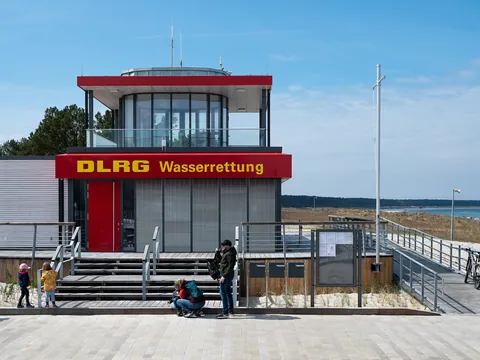
    The Baltic has a negligible tidal range and the bottom drops away slowly, so the shallows stay shallow and the main resort sections are guarded through the season.

  • A steam railway between the resorts

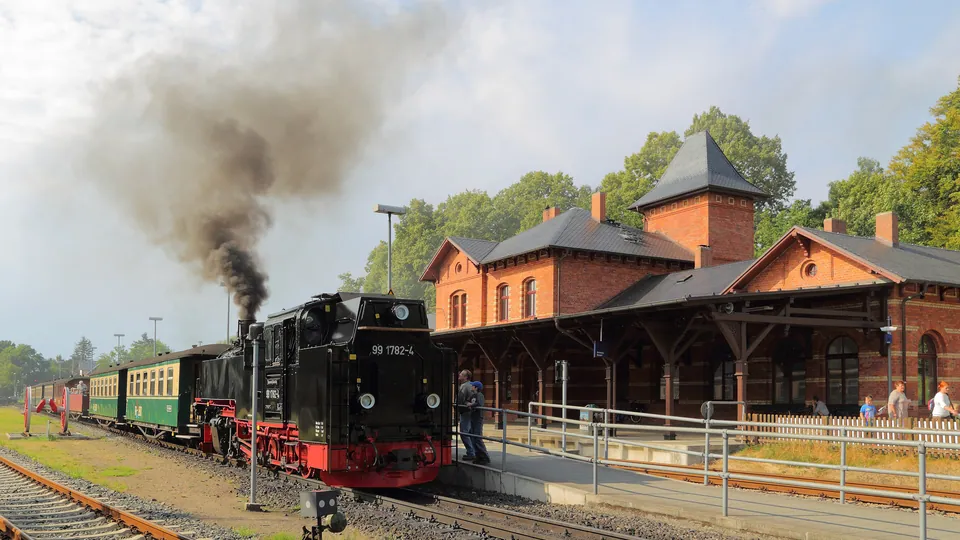
    The narrow-gauge Rasender Roland runs to an ordinary timetable between Putbus, Binz, Sellin and Goehren, so changing beach becomes a train ride children ask for.

  • The Strandkorb solves the wind

    A hooded, lockable wicker chair rented on the sand gives shelter, shade and somewhere to leave the bags, which is what makes a cool, breezy day workable.

  • Chalk cliffs and pine forest behind the beach

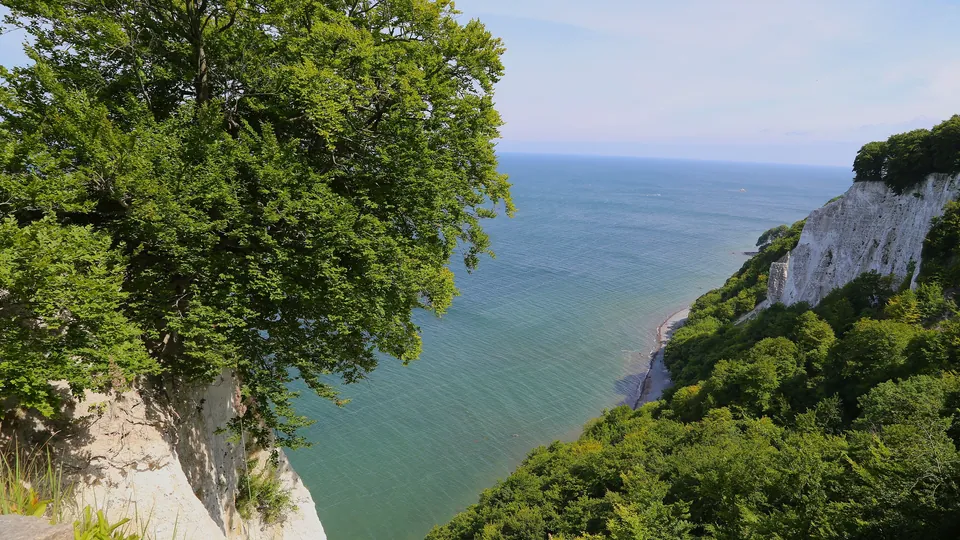
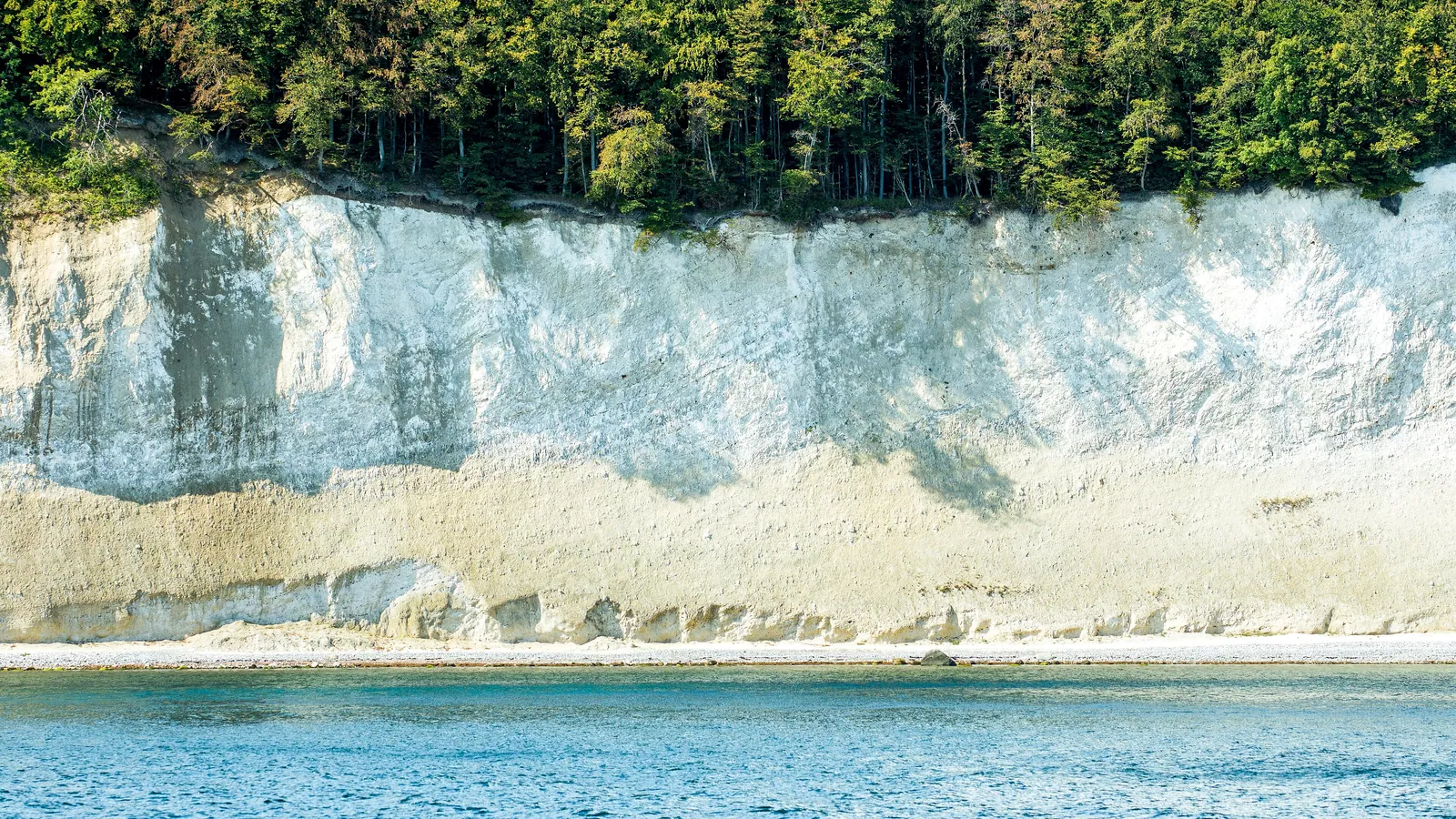
    The Jasmund cliffs on Ruegen and the wind-bent pine forest of the Darss put a completely different kind of day within a short drive of the sand.

Where to stay

Best areas in The Baltic Coast for families

4 areas cover most trips here; the difference is mainly facilities, and doing it without a car versus promenade walking and the sunniest statistics.
  • Binz, Sellin and Goehren, east Ruegen

    Best for facilities, and doing it without a car

    The classic resort strip of white balconied villas, piers and the widest beaches, with the steam railway calling at all three towns. It is also the busiest and most expensive part of the coast, and holiday flats here sell Saturday to Saturday in high summer.

  • Warnemuende and the Rostock coast

    Best for the easiest arrival

    Long-distance trains reach Rostock and an S-Bahn runs out to the beach, so a car-free week genuinely works here. The beach is the widest on the coast, but cruise ships dock beside the old harbour and the promenade takes their passengers and Rostock's day trippers at the same time.

  • Fischland-Darss-Zingst

    Best for quiet, cycling and forest

    Thatched villages such as Ahrenshoop, Prerow and Zingst sitting behind a forested dune belt, with cycle paths in place of a promenade. One road serves the whole peninsula, so summer changeover days queue, and out of season most of it is closed.

  • Usedom: Bansin, Heringsdorf and Ahlbeck

    Best for promenade walking and the sunniest statistics

    Three linked resorts sharing one of the longest promenades in Europe, which continues across the Polish border. The island has its own railway running its length, but it is the furthest corner of the coast from the motorway network.

Family hotel picks in The Baltic Coast

  • Holiday flat in a resort villa in Binz or Sellin
    Binz / Sellin, RuegenHigher-end

    Holiday flat in a resort villa in Binz or Sellin

    East Ruegen has the highest concentration of holiday flats on the coast and they are priced per unit rather than per person, so a two-bedroom flat with a kitchen and a balcony costs less than two hotel rooms. The beach, the promenade, the restaurants and a steam-railway station are all within walking distance, which means several days can pass without touching the car.

    • Kitchen, washing machine and a balcony for wet swimming things
    • Beach and promenade within a short walk
    • Rasender Roland station in town
    • Supermarkets, bakeries and a pharmacy at street level

    Fitting a family in

    Two-bedroom flats sleep four to six and are quoted per unit. Bed linen, towels and the final clean are frequently charged on top, so the headline nightly rate is not the total.

    Watch out. High summer sells Saturday to Saturday only, books months ahead and carries the highest rates on the coast. The resort villas are period buildings with narrow staircases and often no lift, the promenade strip stays loud late into the evening in August, and the visitor tax is added per person per night at check-in.
  • Holiday house behind the dunes on the Darss
    Prerow / Zingst / AhrenshoopMid-range

    Holiday house behind the dunes on the Darss

    The peninsula is built around bicycles rather than cars, and a house behind the dune forest puts the beach at the end of a path instead of across a main road. For a family that wants the sand without a resort strip, this is the quiet version of the same coast, and the cycle network reaches three villages and two shores from the door.

    • Cycle paths from the door to the beach and between the villages
    • Forest belt rather than a road between the house and the sea
    • Outdoor space, and a garden at most properties
    • Thatched village centres instead of a promenade

    Fitting a family in

    Two- and three-bedroom houses sleep four to six, are priced per unit, and often include bicycles or sit next door to a hire shop.

    Watch out. A single road serves the whole peninsula, so changeover days queue badly, and a car is still needed for anything beyond the villages. Each village has one small supermarket and a short list of kitchens, most of which close out of season, and Ahrenshoop is priced as an art-colony resort rather than a beach village.

  • Family room near the Warnemuende beach and S-Bahn
    Warnemuende / RostockMid-range

    Family room near the Warnemuende beach and S-Bahn

    This is the one base on the coast a family can reach and use entirely by train: long-distance services into Rostock, an S-Bahn out to the beach, and the widest beach on the coast a few minutes' walk from the station. The harbour channel, the lighthouse and the ferries also give children something to watch on the days the wind rules out the sand.

    • S-Bahn to Rostock and onward long-distance trains
    • Wide guarded beach within a few minutes' walk
    • Harbour channel, lighthouse and ferries as the daily entertainment
    • Restaurants open year-round rather than for the season only

    Fitting a family in

    Hotels here list genuine family rooms and connecting doubles more often than the holiday-flat resorts do. German listings frequently count a sofa bed in the maximum occupancy, so the bed configuration is worth confirming rather than the headline number.

    Watch out. Cruise ships dock beside the old channel and put several thousand people onto the same promenade for a day at a time, and Rostock's own weekend crowds use the same beach. There is very little natural shade anywhere along it, and the visitor tax applies here as elsewhere on the coast.

All family stays in Germany

Some links on this page are affiliate links. If you book through one, the price is the same for you and we may earn a commission. How this works.

Things to do in The Baltic Coast with kids

  • Rasender Roland steam railway
    Adventure

    Rasender Roland steam railway

    The Baltic Coast

    A narrow-gauge steam railway running to a scheduled timetable across east Ruegen between Putbus, Binz, Sellin and Goehren, hauled by working locomotives with open-window carriages and a guard who walks the train.

    Ages
    2–14
    Time
    1h 30m
    Adult, from
    €15

    Good to know. It is a real service rather than a heritage ride, so it is slow, hot in summer, and smoke and cinders reach anyone sitting beside an open window. Carriages fill completely in the peak weeks and seats cannot be reserved, so a family of four may not sit together. A single leg of twenty to thirty minutes is enough for most children, where the full run and back is over two hours.

  • Koenigsstuhl and the Jasmund chalk cliffs
    Nature

    Koenigsstuhl and the Jasmund chalk cliffs

    The Baltic Coast

    The highest of the chalk cliffs on Ruegen's north-east coast, standing around 118 metres above the sea inside a national park of beech forest, with a visitor centre, a viewing structure out over the cliff edge and forest and shore trails below it.

    Ages
    5–16
    Time
    3h
    Adult, from
    €12

    Good to know. Private cars cannot reach the site in season: parking is at Hagen or Sassnitz and the last stretch is a shuttle bus or a forest walk of around half an hour. The cliffs are active and collapse without warning, so sections of the shore below are closed and the clifftop fencing is there for a reason. The shore here is flint shingle rather than sand, and the steps down to it are long.

  • Ozeaneum Stralsund
    MuseumBook ahead

    Ozeaneum Stralsund

    The Baltic Coast

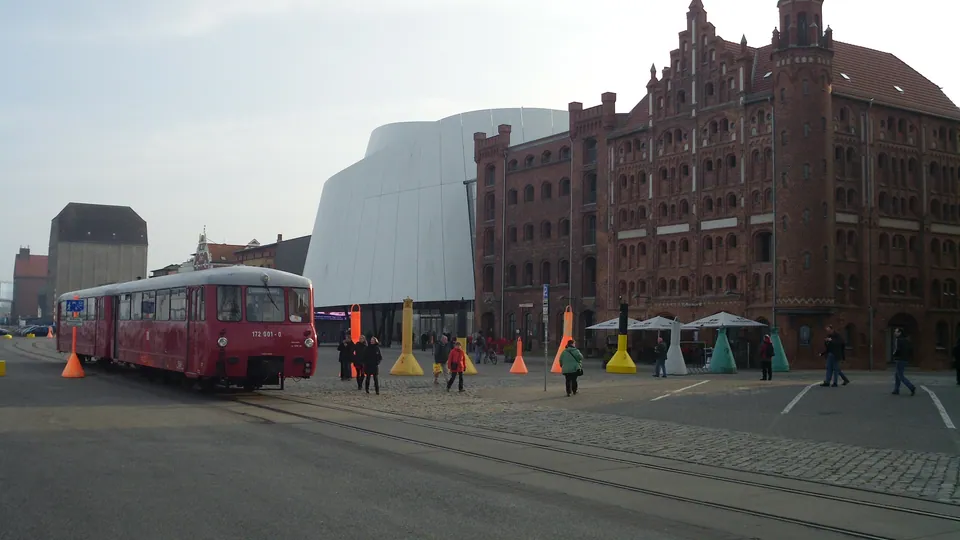
    A large aquarium and ocean museum on the harbour island at Stralsund, working through the Baltic, the North Sea and the open Atlantic in successive tank halls, with a darkened hall of life-size whale models and a rooftop enclosure of Humboldt penguins.

    Ages
    3–14
    Time
    3h 30m
    Adult, from
    €20

    Good to know. It is the region's wet-weather plan, which means everybody arrives on the day the beach fails and timed slots sell out; buying ahead is effectively required in the school holidays. The route is a long one-way climb through several floors and buildings with limited scope to go back, and the whale hall is deliberately very dark and loud, which unsettles some younger children.

  • Darss Weststrand and the Darsser Ort shore
    Nature

    Darss Weststrand and the Darsser Ort shore

    The Baltic Coast

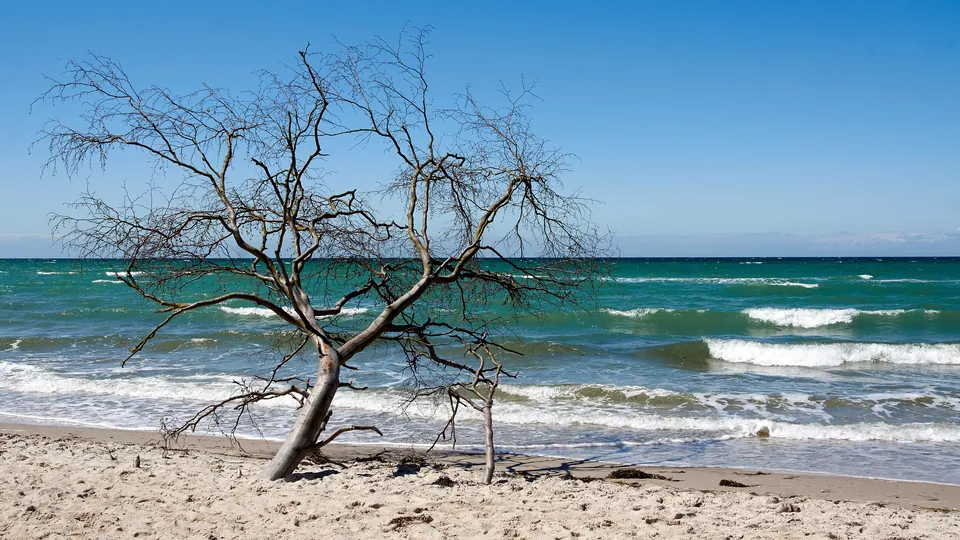
    An undeveloped national-park beach on the west-facing side of the Darss peninsula, backed by wind-bent pine forest and scattered with driftwood, reached on foot or by bicycle along forest tracks from Prerow.

    Ages
    5–16
    Time
    3h 30m
    Adult, from
    Free

    Good to know. There are no facilities, no lifeguard, no kiosk and no vehicle access: the shortest approach is three to four kilometres of forest track each way, which is comfortable on bicycles and long on foot with young children. It faces the prevailing wind, so it is cooler and rougher than the resort beaches, and national-park rules prohibit fires and restrict dogs.

Some links on this page are affiliate links. If you book through one, the price is the same for you and we may earn a commission. How this works.

Getting around The Baltic Coast

This is one of the better German coasts to do without a car. Long-distance trains reach Rostock, Stralsund and Binz, an S-Bahn runs out to the Warnemuende beach, the narrow-gauge Rasender Roland connects the east Ruegen resorts, and the Usedom island railway runs the length of that island. Bicycles are the practical local transport almost everywhere, and hire shops in every resort carry child seats and trailers. The bottleneck is road access: everything driving onto Ruegen funnels through the crossings at Stralsund and everything onto the Darss through a single road, and in July and August the Saturday changeover queues for hours. The resort visitor card, charged per person per night with the room, often includes local buses or a discount on them, so it is worth collecting rather than simply paying the charge.

The Baltic Coast tips for families

  • With kids

    Rent a Strandkorb for the week, not the day

    The hooded chairs are rented from an attendant on each beach section, by the day or by the week, and the weekly rate is far cheaper per day. In the peak fortnights the best sections run out, so it is worth arranging on the first morning rather than the third. It is shade, windbreak and bag store in one, and on this coast it is the difference between two hours on the beach and six.

  • Getting around

    Do not arrive or leave on a summer Saturday

    Holiday lets here almost all run Saturday to Saturday, and the roads onto Ruegen and the Darss are single crossings, so the entire coast changes over at once. Arriving midweek, or before about nine on a Saturday morning, removes a queue that regularly runs to hours with children in the back.

  • Health & safety

    Check the lifeguard board before the first swim

    Warm, still spells push jellyfish inshore. Most are harmless moon jellies, but the stinging lion's mane appears later in the summer, and the lifeguard huts post what is currently in the water. Beach shoes and a look at the board handle it, and a bad jellyfish week is the week to use the hotel pool instead.

  • When to go

    Expect the sea to be colder than the weather

    Baltic water temperatures sit around 17 to 20 degrees in July and August and reach the low twenties only after a sustained heatwave. Children generally swim regardless; adults often do not. A long-sleeved swim top or a thin wetsuit extends a child's time in the water by hours and takes up almost no luggage space.

The Baltic Coast with kids: common questions

How warm is the Baltic Sea in summer?
Roughly 17 to 20 degrees in July and August, occasionally into the low twenties after a long warm spell, and colder than that either side of the season. The shallows over the sandbars warm faster than the open water, which is where younger children end up spending the day.
When is the season on the German Baltic coast?
Effectively mid-June to early September. Outside it the resorts stay open and the promenades are walkable, but swimming stops, many kitchens close for the winter, and the beach services including the Strandkorb hire are packed away.
Where should families stay on the Baltic coast?
Binz or Sellin on Ruegen for the widest range of facilities and the steam railway, Warnemuende if arriving by train and staying car-free matters most, and the Fischland-Darss for quiet, forest and cycling. Usedom's linked resorts suit a promenade-based stay but take the longest to reach.
Do you need a car on the Baltic coast?
No, if the trip is based in Warnemuende, east Ruegen or Usedom, all of which have rail and local buses, with bicycles covering the rest. A car helps on the Fischland-Darss and for reaching the Jasmund cliffs, though the cliff site itself has to be approached by shuttle bus in season.
Is the Baltic coast good with a pushchair?
Better than most beach regions. The resort promenades are flat and paved, boardwalks run onto the sand at the main sections, and the towns are compact. Soft sand still needs wide wheels, and the older resort villas frequently have stairs and no lift.
How busy does it get in the German school holidays?
Full. The northern states break up from late June and the rest follow through July and August, and this coast is the domestic destination they travel to, so accommodation books months ahead and rates rise sharply. Early June is quieter but the sea is still cold; the first half of September is the better compromise, with the water close to its warmest and the resorts emptying.